


Activities by Age
The same activity lands very differently at three and at seven. These pages group ideas by what tends to work at each age — as a starting point, not a rule.
Activities
-
1 Year Old Activities | Gentle Discovery
One-year-olds learn the way scientists do — by touching, mouthing, dropping, and repeating everything. The best activities for 1 year olds are gloriously simple: safe objects to explore, water to splash, and textures to squish, all with you nearby narrating the wonder. These idea
-
2 Year Old Activities | Screen-Free Play
Two-year-olds are glorious chaos: endlessly curious, fiercely independent, and done with every activity in about eleven minutes. The best 2 year old activities are simple, sensory, and repeatable — things your toddler can start, explore, and master without frustration. This guide
-
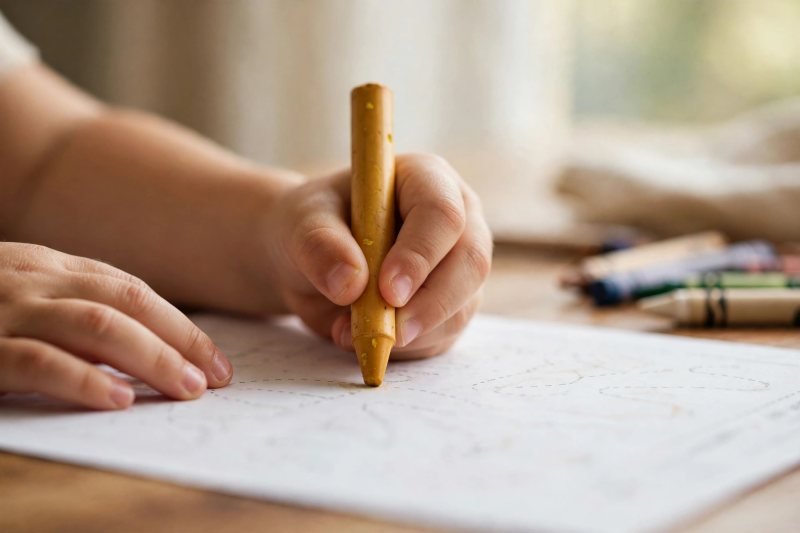
Letter Tracing Worksheets for Pre-K: Uppercase and Lowercase A–Z
These letter tracing worksheets give pre-K children clear uppercase and lowercase A–Z practice. Follow the right formation order, keep sessions short, and turn tracing into playful learning with rainbow writing, dot markers and playdough.
-
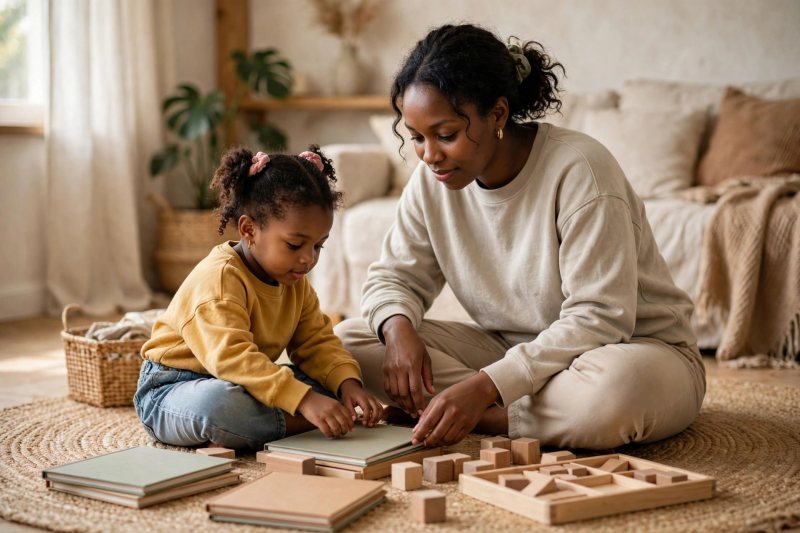
Homeschool Preschool Curriculum: The 10 Best Options for 2026 (Reviewed by a Parent)
A parent's honest review of 10 homeschool preschool curriculum options for 2026 — what each programme includes, who it suits best, and how to choose without spending a fortune.
-
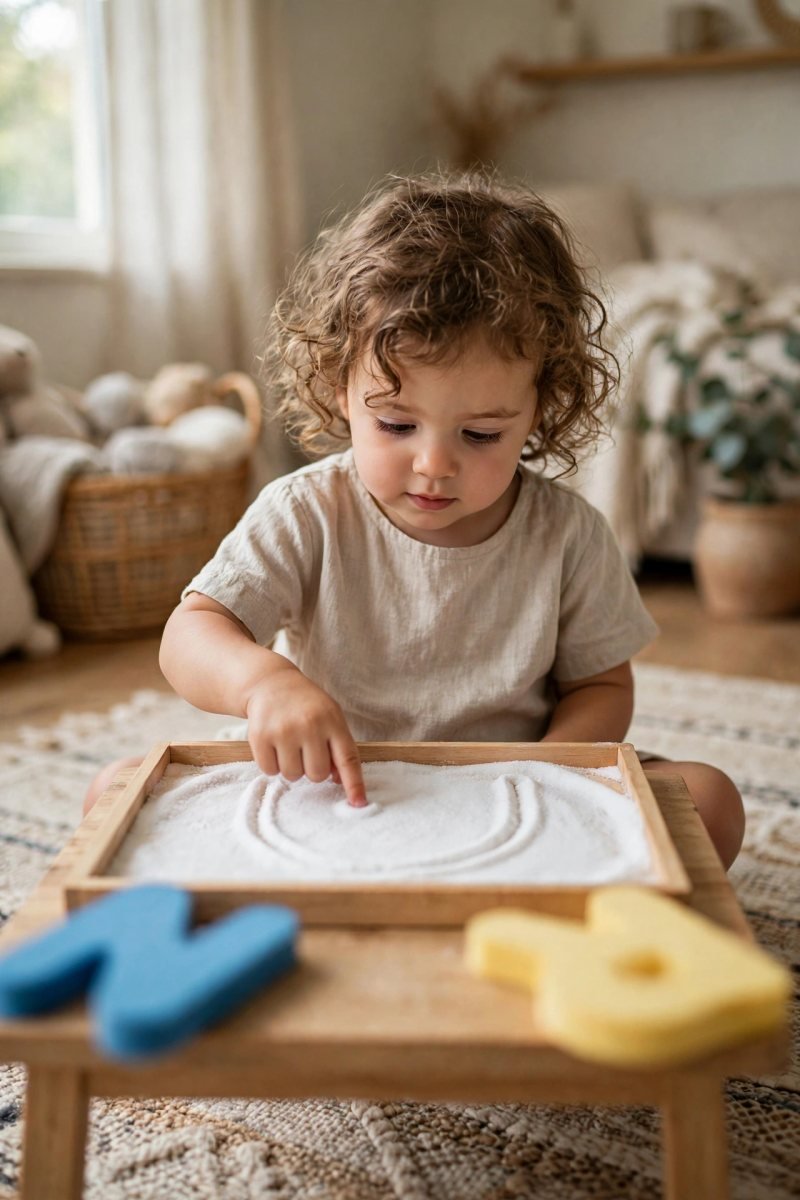
Alphabet Activities for Toddlers: 25 Simple Ways to Introduce Letters
Twenty-five no-worksheet alphabet activities for toddlers aged 2–3: sensory letter play, songs and rhymes, letter hunts, DIY alphabet books and playful games — all using things families already own. Start with the letters in your child's name.
-
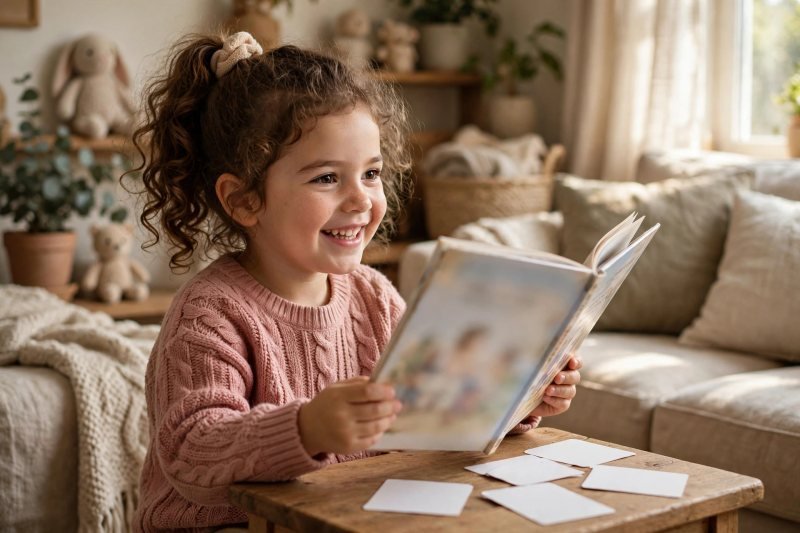
Sight Words for Kindergarten: The First 40 Words to Master
A friendly, honest guide to the 40 sight words for kindergarten children learn first — what sight words actually are, the full list grouped for practice, and low-pressure games that make learning them stick without worksheets or stress.
-
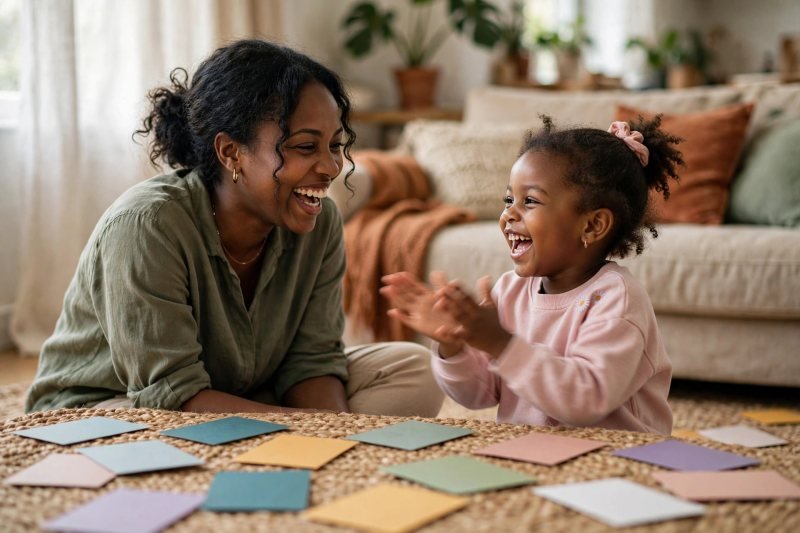
Phonics Activities for Preschoolers: 25 Playful Ways to Learn Sounds
Twenty-five playful phonics activities for preschoolers aged 4–5 that build letter-sound skills through rhyme games, sound hunts, blending practice and simple word building — all hands-on, all joyful.
-
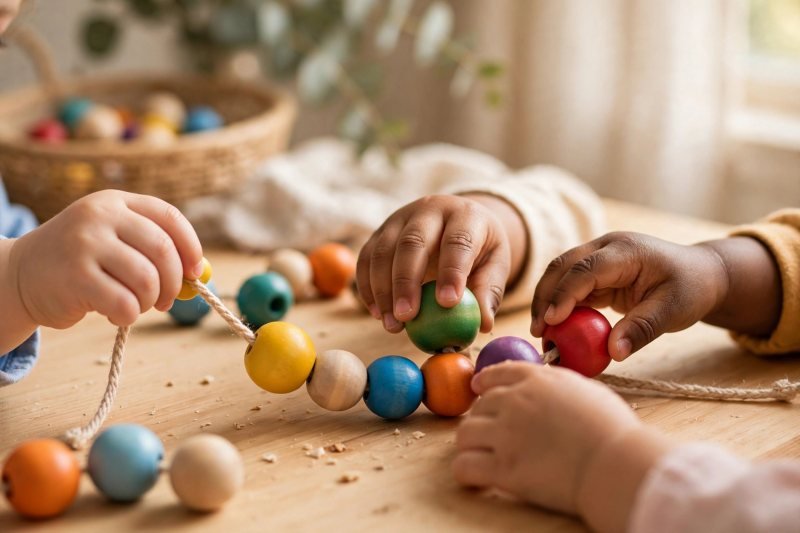
Fine Motor Activities for Preschoolers: 20+ Play-Based Ideas
Looking for fine motor activities for preschoolers that genuinely build writing-ready hands? These 21 play-based ideas — cutting, threading, playdough, tweezers and pincer-grasp games for ages 3–4 — use things you already own and take minutes to set up.
-
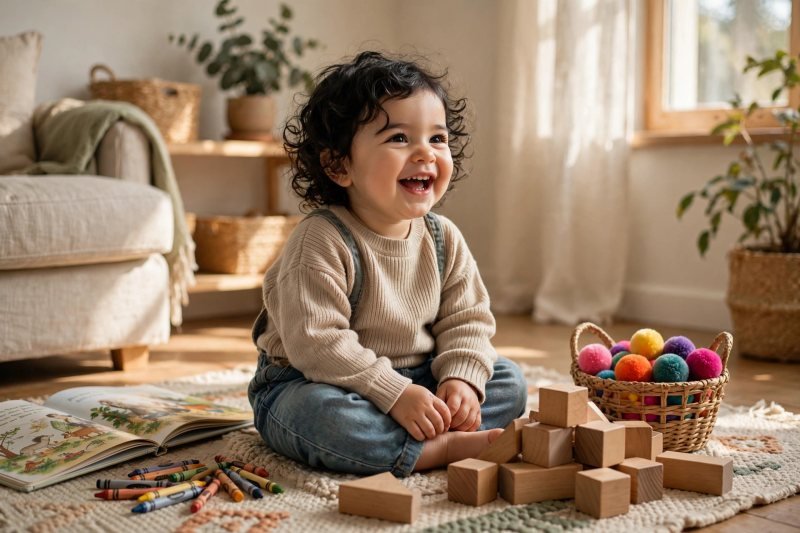
Toddler Learning Activities at Home: 30 Ways to Teach Your 2-Year-Old
Simple toddler learning activities at home that teach your 2-year-old language, counting, colours and fine-motor skills through play — 30 ideas from things you already own, five to fifteen minutes each.
-
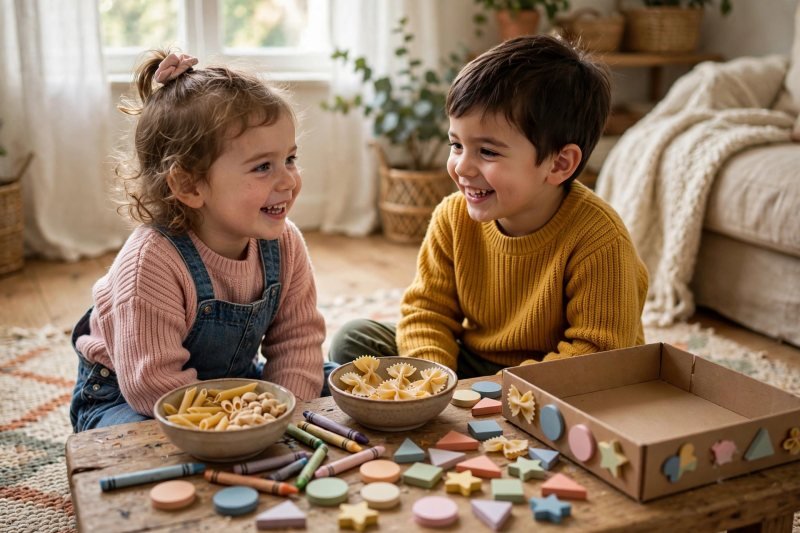
Preschool Learning Activities at Home: 40 Play-Based Ideas for 3–4-Year-Olds
Forty play-based preschool learning activities at home for 3–4-year-olds — phonics, early maths, science, art, fine motor and pretend play, all using things you already own.
-
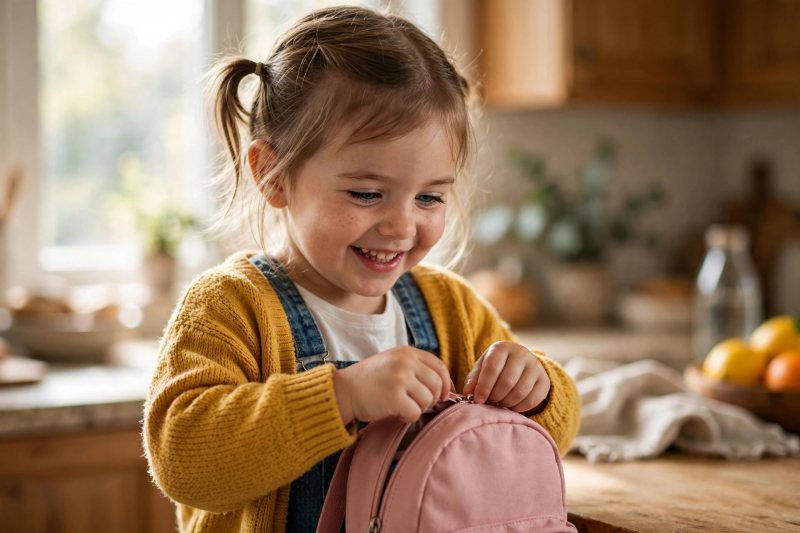
Kindergarten Readiness Checklist: 30 Skills Teachers Actually Look For (Free Printable)
A teacher-realistic kindergarten readiness checklist with 30 practical skills — from buttoning coats to sharing crayons — plus a free printable to track progress together.
-
1 Year Old Activities | Gentle Play
One-year-olds are brand-new scientists: everything gets touched, tasted, dropped, and investigated. The best 1 year old activities honor that curiosity with safe, simple sensory experiences — no fancy toys required. These ideas suit young toddlers around 12–24 months, with your p
-
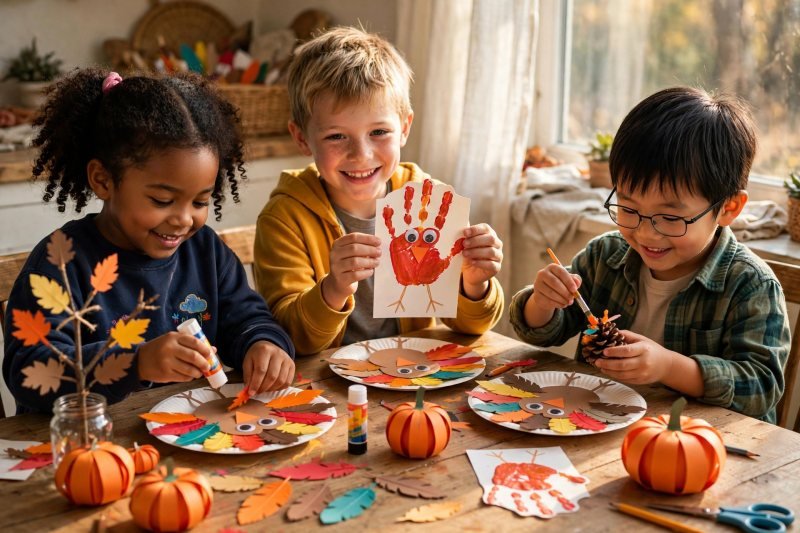
20 Easy Thanksgiving Crafts for Kids (Turkey Approved)
Looking for thanksgiving crafts for kids that go beyond the same old handprint turkey? These 20 easy Thanksgiving crafts use things you already have at home — paper plates, toilet rolls, flour, dried beans — and every idea lists the age, the time, and the mess level up front.
-
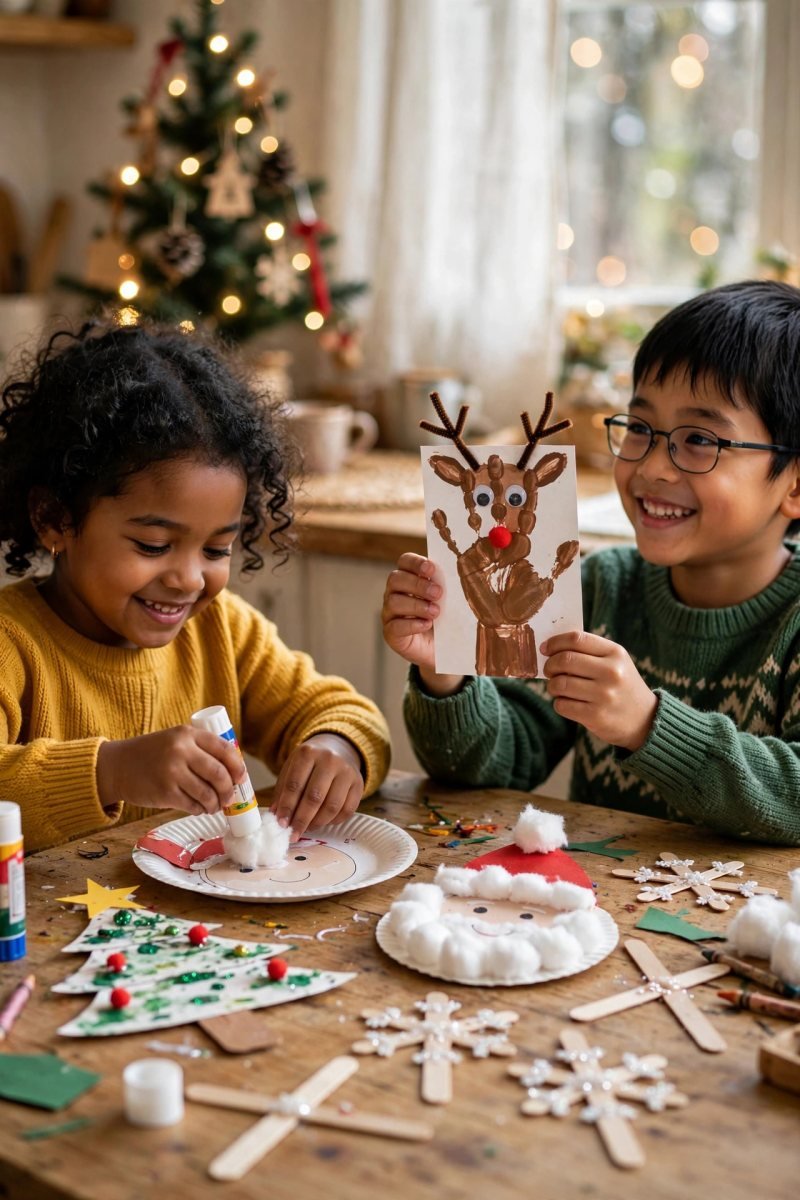
25 Easy Christmas Crafts for Kids (With Free Templates)
Looking for christmas crafts for kids that don't require a craft-store run, a glitter cleanup operation, or a screen to keep anyone busy? You've come to the right place. These 25 easy Christmas crafts use things you already have at home.
-
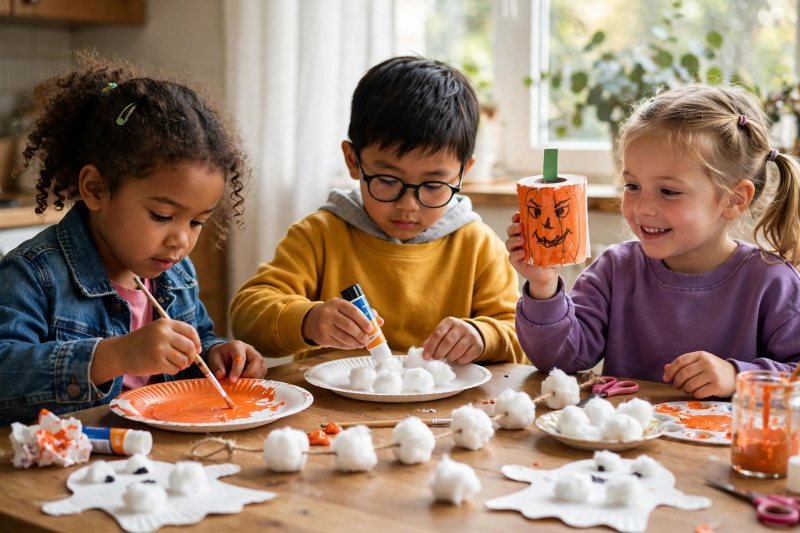
25 Not-So-Spooky Halloween Crafts for Kids
Looking for halloween crafts for kids that keep the fun without the frights? These 25 not-so-spooky Halloween crafts use things you already own — paper plates, toilet rolls, flour, crayons — and every idea lists the age, the time, and the mess level up front, so you can pick one in seconds.
-
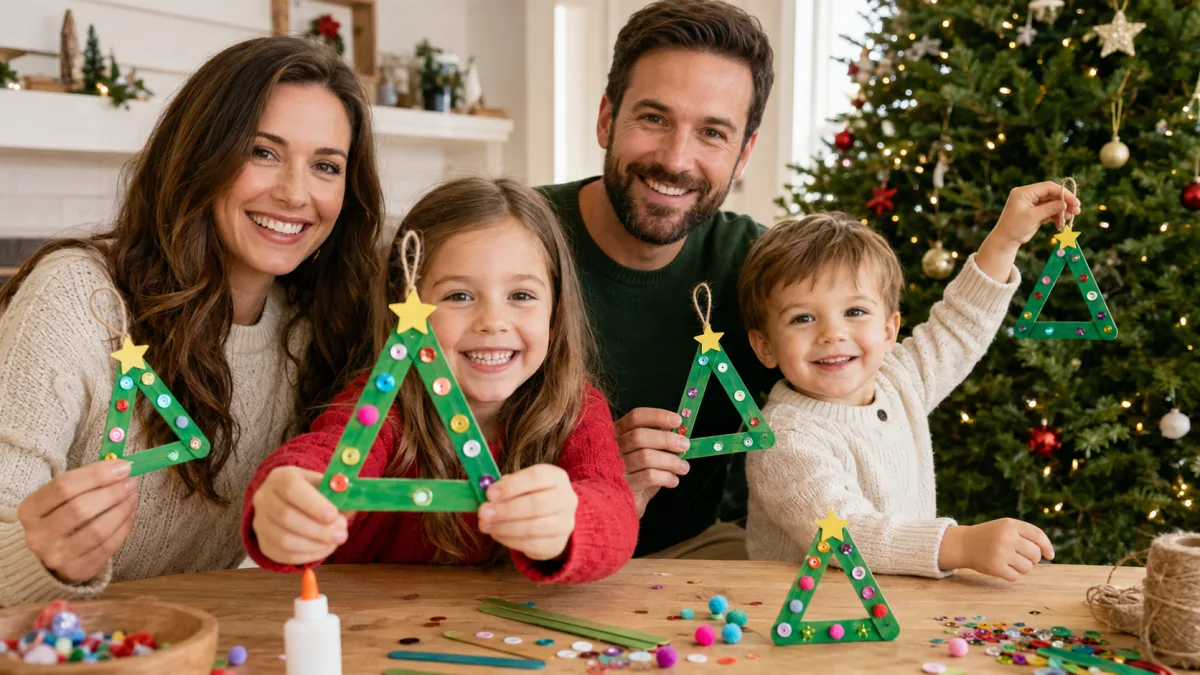
Popsicle Stick Christmas Trees
Three sticks, a triangle, and as much decorating as they have patience for.
-
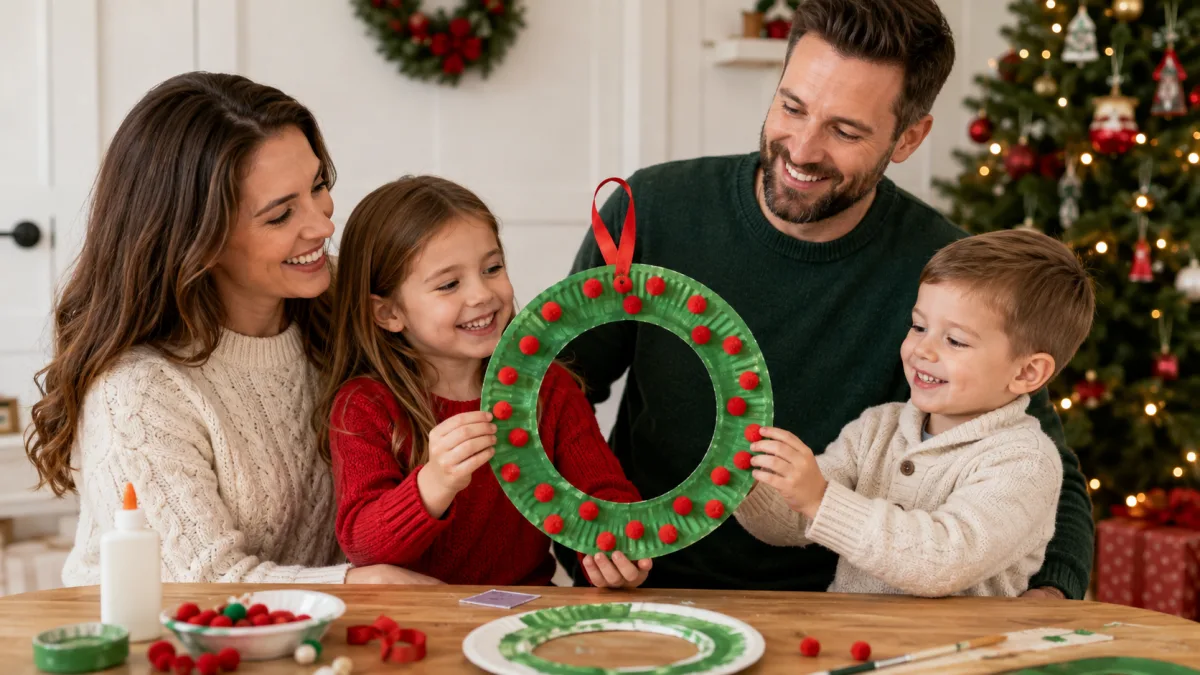
Paper Plate Christmas Wreath
Cut the middle out of a paper plate and you have a wreath that takes any decoration you like.
-
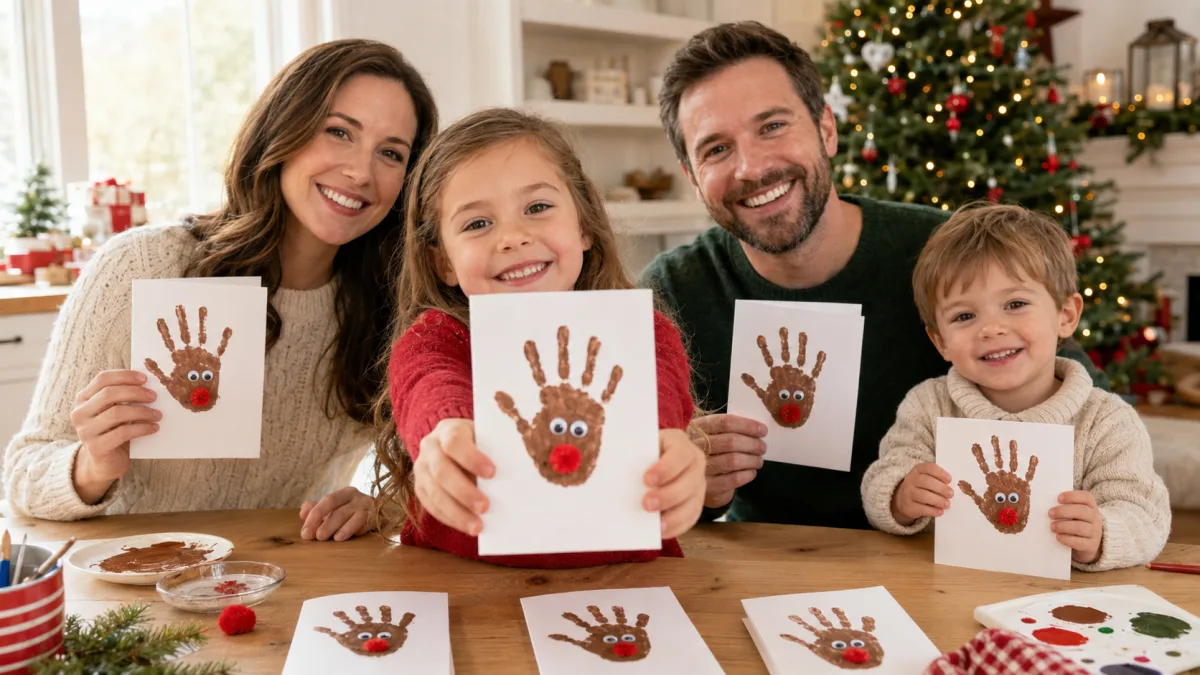
Handprint Reindeer Cards
A hand, upside down, is a reindeer. Nobody sees it until you show them.
-
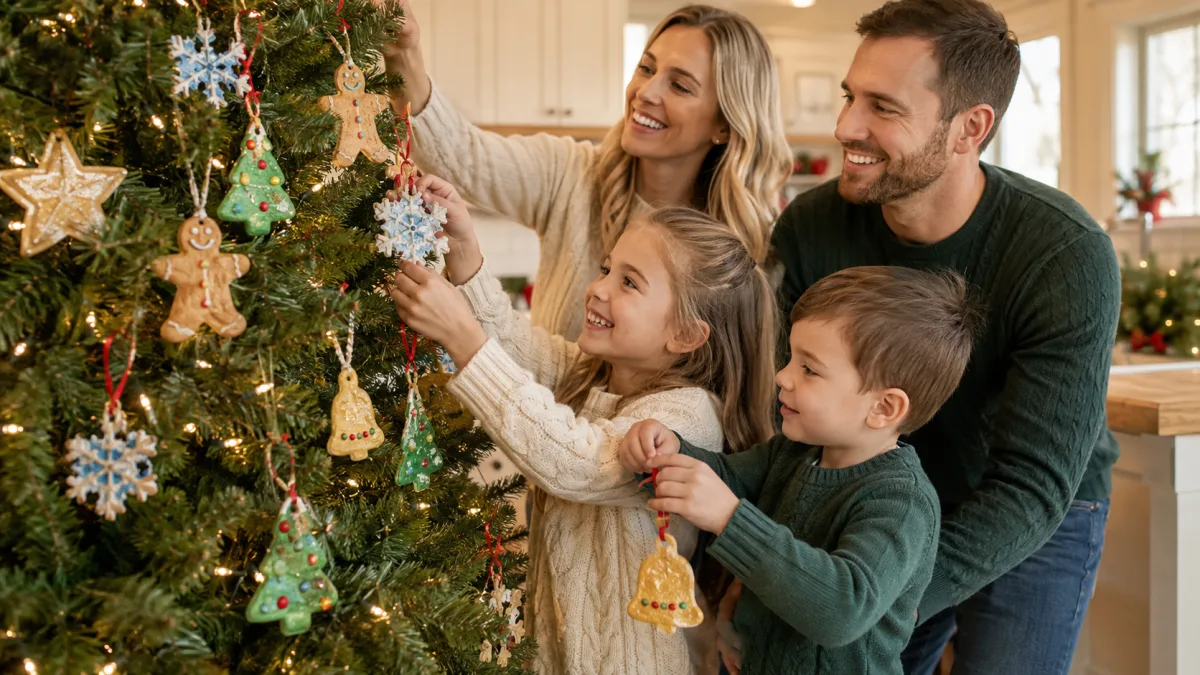
Salt Dough Christmas Ornaments
Flour, salt and water become something you hang on the tree every year after.
-
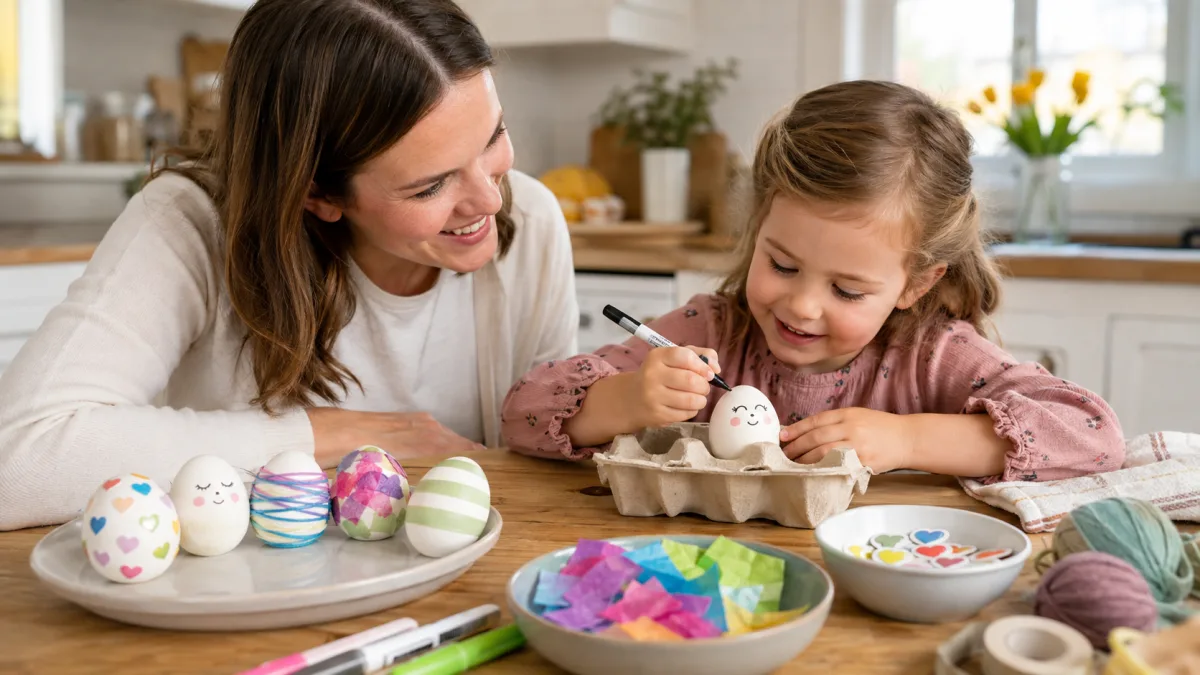
Five Ways to Decorate an Egg With No Dye
Stickers, felt tips, wool, tissue paper and tape. All five work on a hard-boiled egg and none of them stain anything.
-
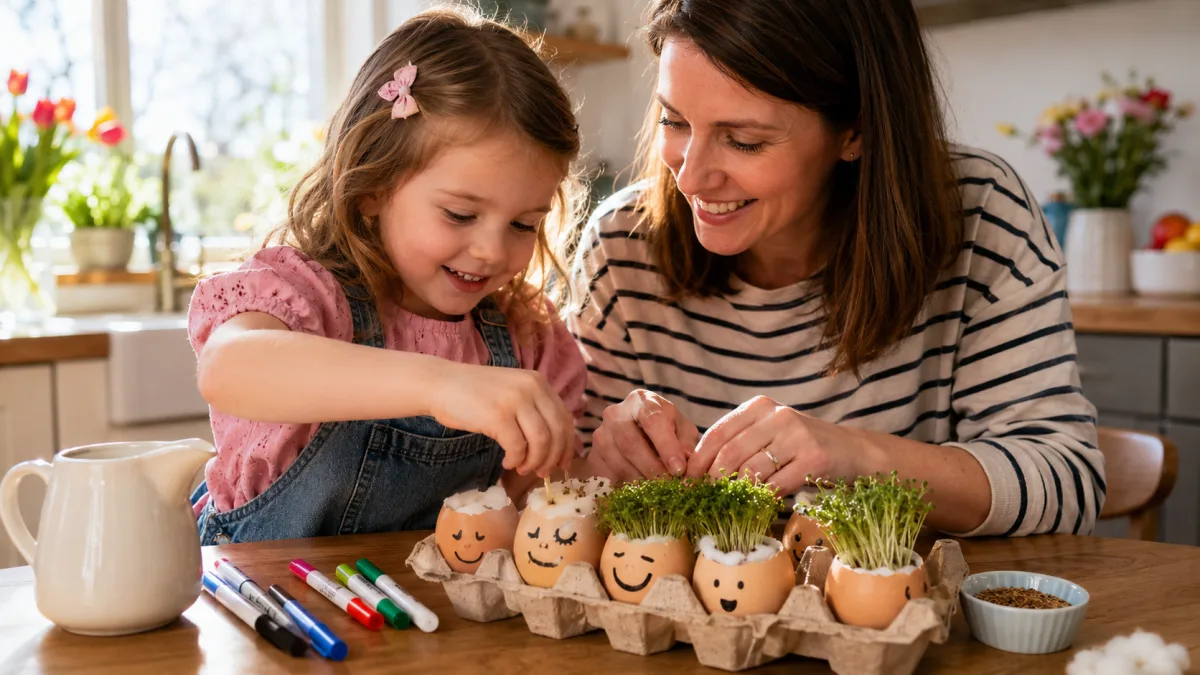
Grow Hair on an Eggshell
Half an eggshell, a face drawn on, cotton wool and cress seeds. In a week it has green hair you can eat.
-
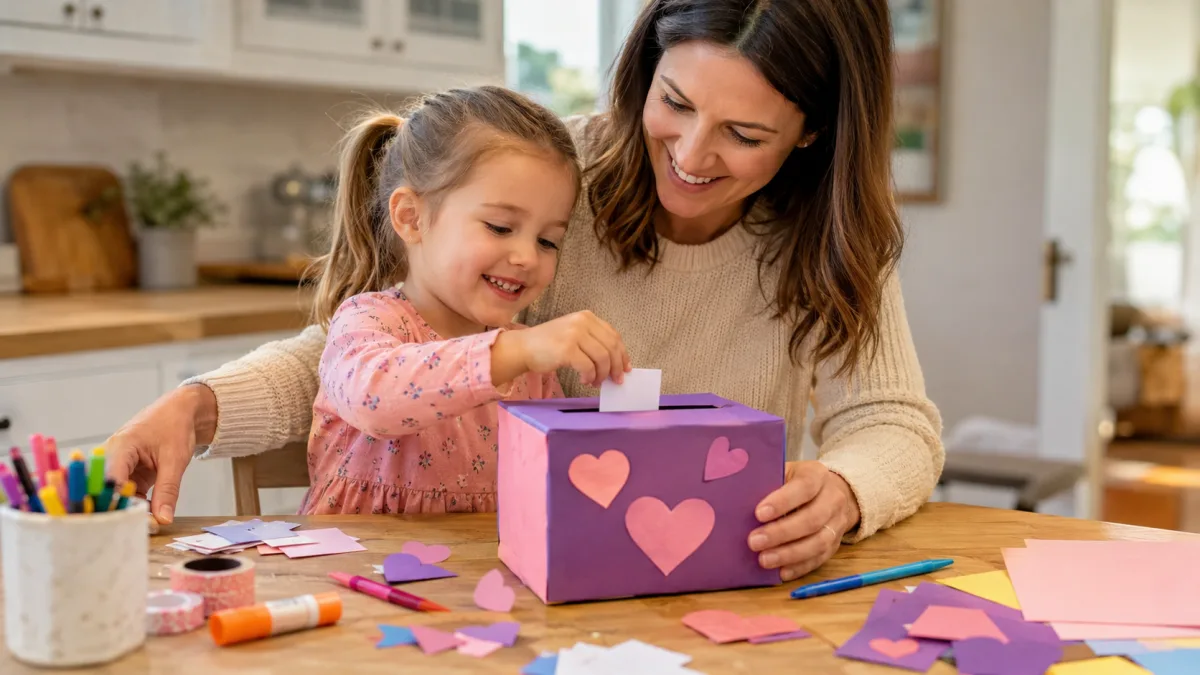
A Post Box for Kind Notes
A cereal box with a slot cut in it. Everyone posts a note about somebody else, and you read them out at dinner.
-
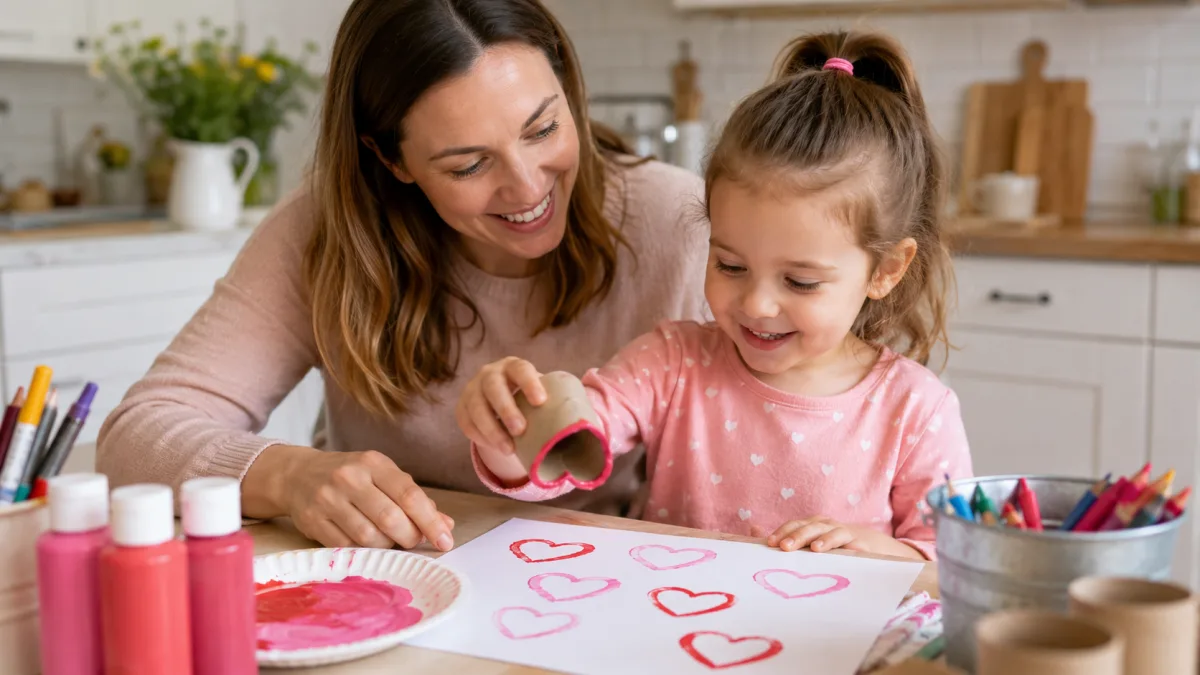
Print Hearts With a Cardboard Tube
Squash a kitchen roll tube into a heart shape and use it as a stamp. One tube makes forty hearts.
-
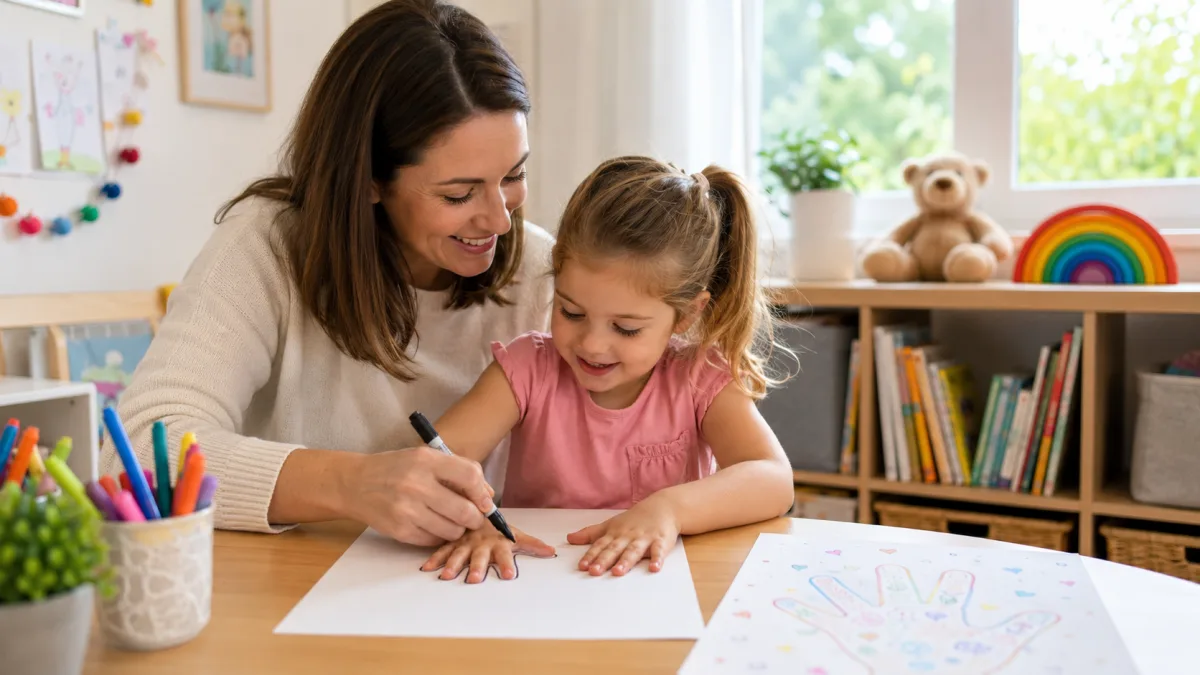
Draw Round Their Hand and Keep It
One sheet, once a year: their hand, their height, and three things they can do now that they could not last year.


Browse activities by age
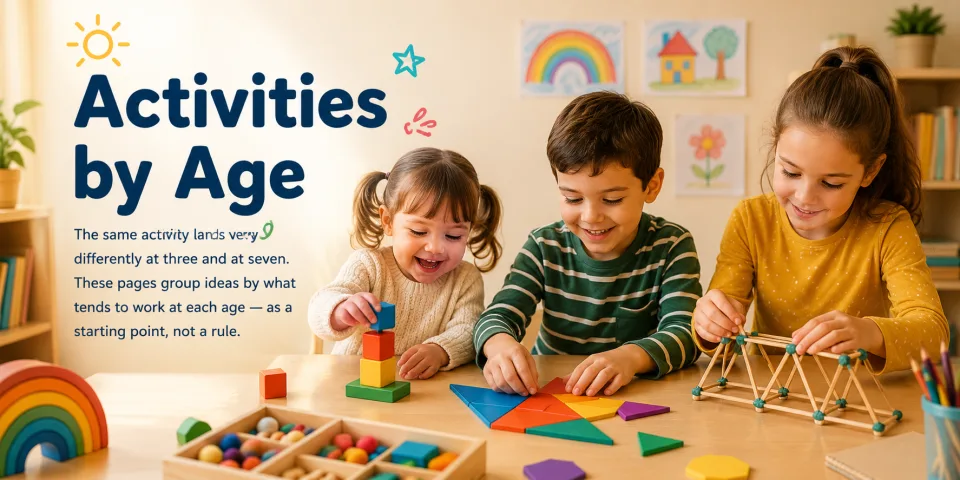
Ages here are a guide to attention span, hand strength and how much help a child is likely to need — not a judgement about what your child should be doing. You know them; if an activity for five-year-olds suits your three-year-old, use it.
Most activities also include a note on making them simpler for a younger child or more demanding for an older one, which is what makes them work for siblings playing together.
What you'll find here
-
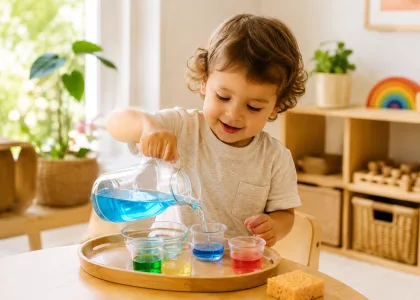
Toddlers, 2–3
Short, repeatable and very hands-on. Pouring, posting, squishing, filling and tipping out again. Expect five focused minutes and be delighted by ten.
-
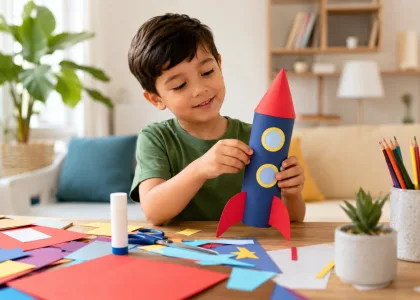
Preschool, 4–5
Longer projects with a beginning, a middle and something to show at the end. This is the age where an activity can hold up for half an hour.
-
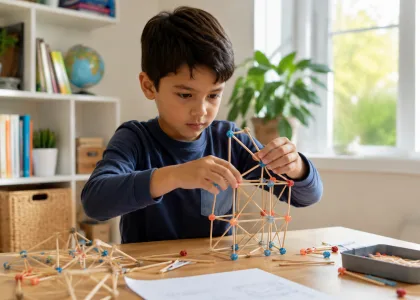
Early school, 6–8
Ideas with a challenge in them — building something that has to work, a puzzle with a right answer, a game with a rule they can argue about.
Every activity page repeats its age range at the top, so you never have to remember which section you came in through.