


Playing Independently
Building the stretch where they play alone.
Playing alone is built rather than waited for, and the way it is built is by staying close and gradually saying less — not by leaving the room and hoping for the best.
The progression that works in most houses: the same time each day, an activity they can already do without help, you in the room but not joining in, then out of the room for two minutes, then longer.
Expect it to go backwards when they are tired, ill or something has changed at home. That is normal. For activities that suit it, see independent play under Activities.
Activities
-
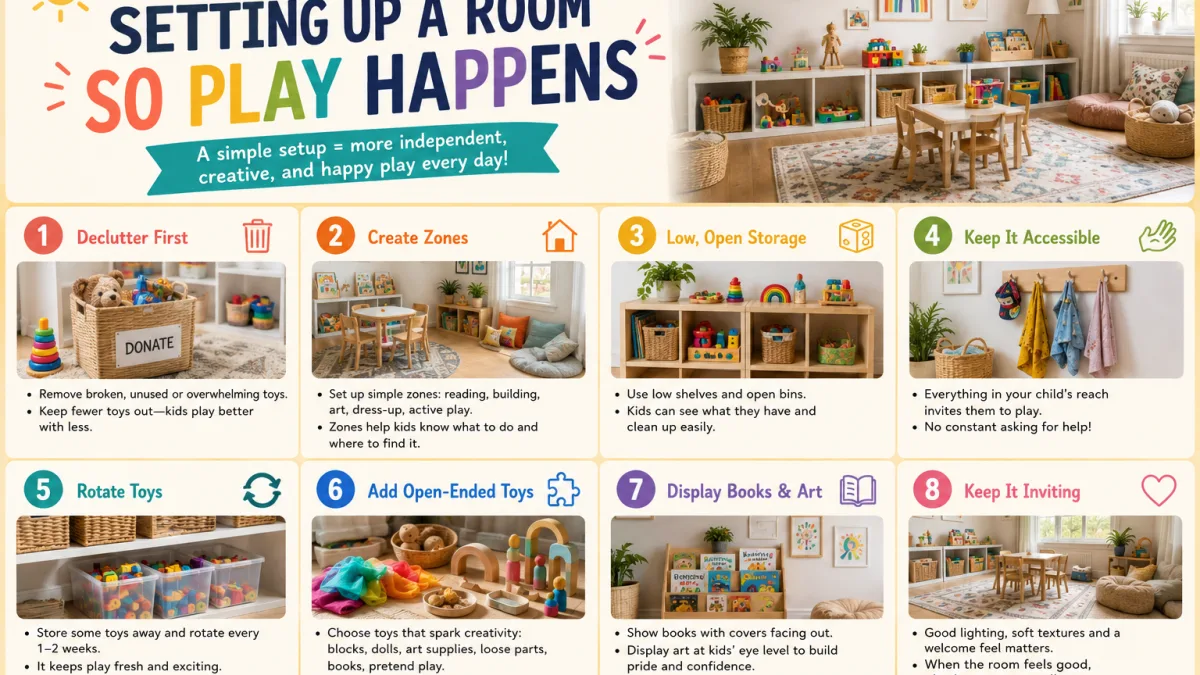
Setting Up a Room So Play Happens Without You
The highest-leverage thing on this whole site. Fewer things out, at their height, in containers they can open.
-
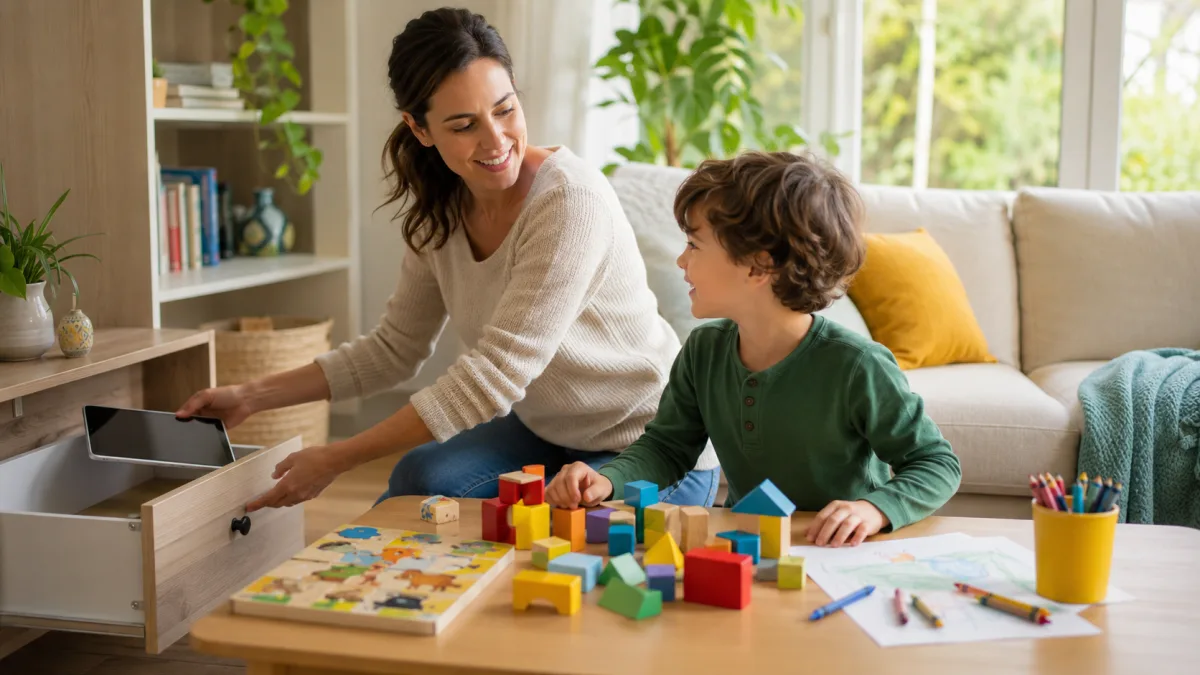
Less Screen Time, Without the Argument
What actually works is not willpower. It is having something else already out on the table, and the tablet not in the room.
-
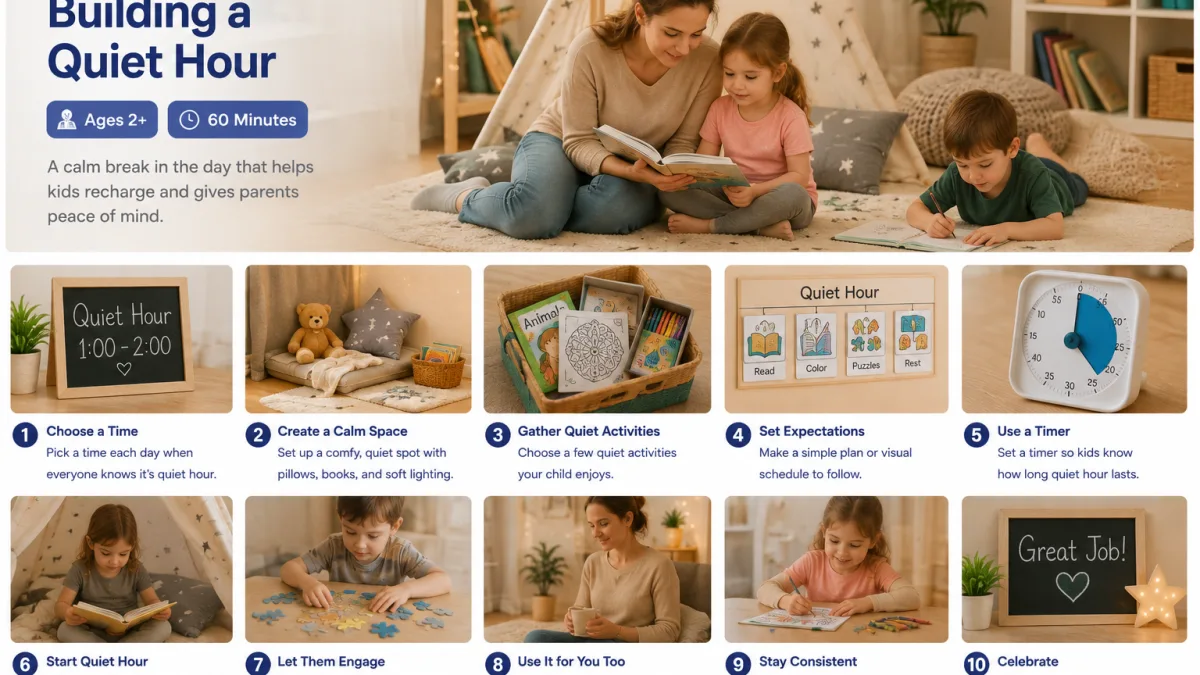
Building a Quiet Hour After the Naps Stop
Quiet time is learnable. Start at ten minutes, same time every day, with a small box of things that only appear then.
-
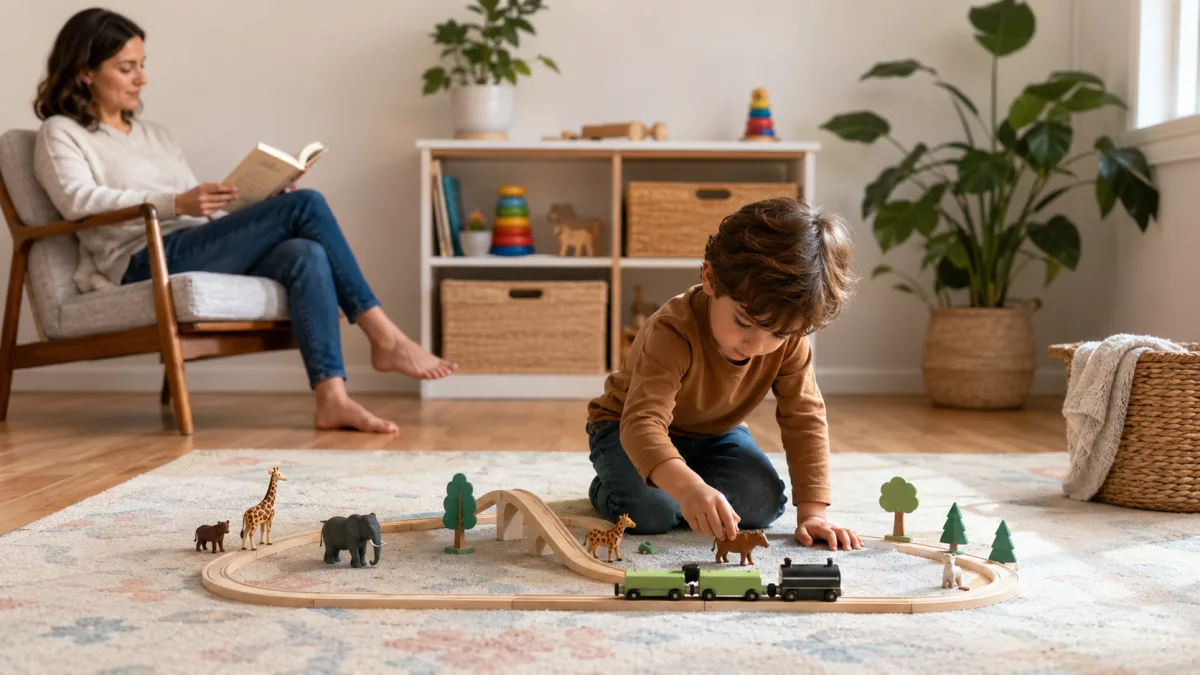
Teaching a Child to Play Alone
It is built, not waited for. Stay in the room, say less, and leave for two minutes before you leave for twenty.
-
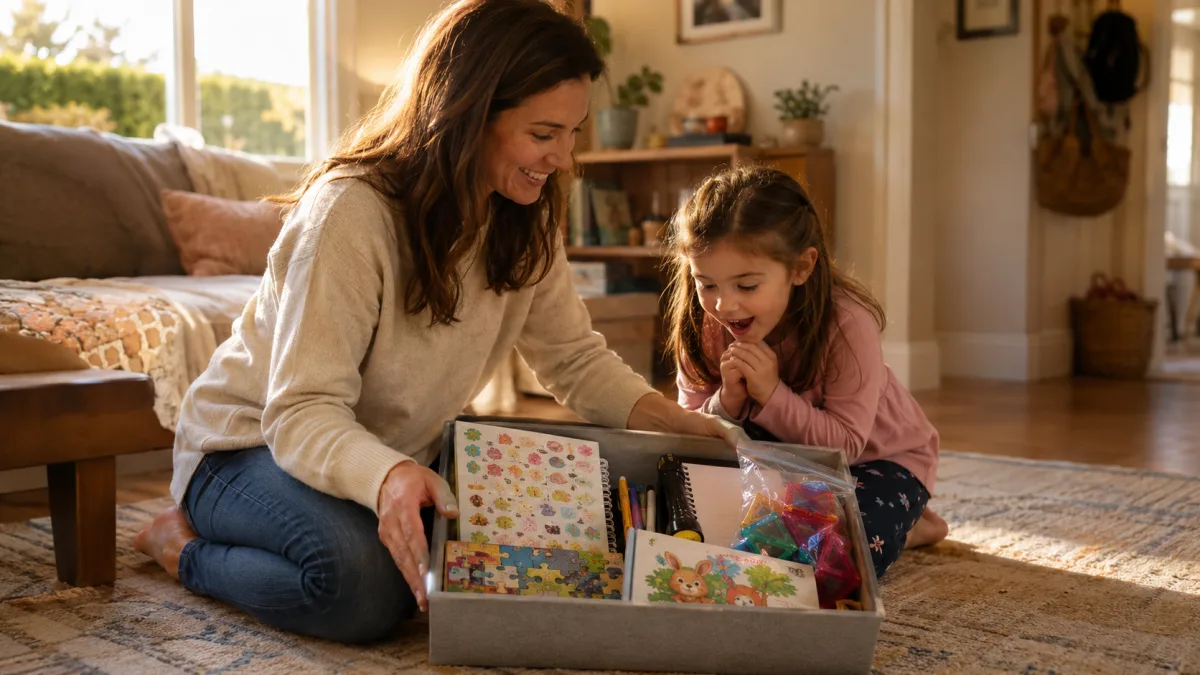
A Quiet Box for the Difficult Hour
One box, five or six calm things, brought out only when everything is falling apart. It works because it is rare.