


Learn Through Play
Letters, numbers, shapes and early science — through play, not worksheets. The learning is real; it just does not look like school.
Activities
-
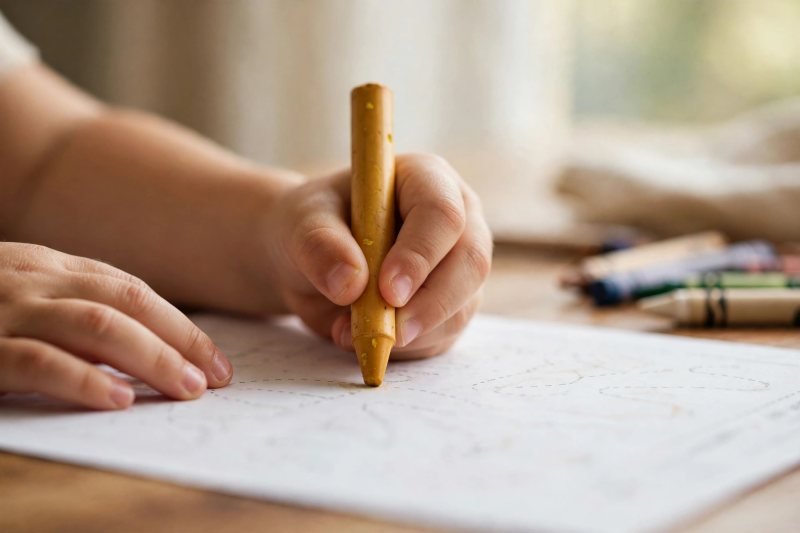
Letter Tracing Worksheets for Pre-K: Uppercase and Lowercase A–Z
These letter tracing worksheets give pre-K children clear uppercase and lowercase A–Z practice. Follow the right formation order, keep sessions short, and turn tracing into playful learning with rainbow writing, dot markers and playdough.
-
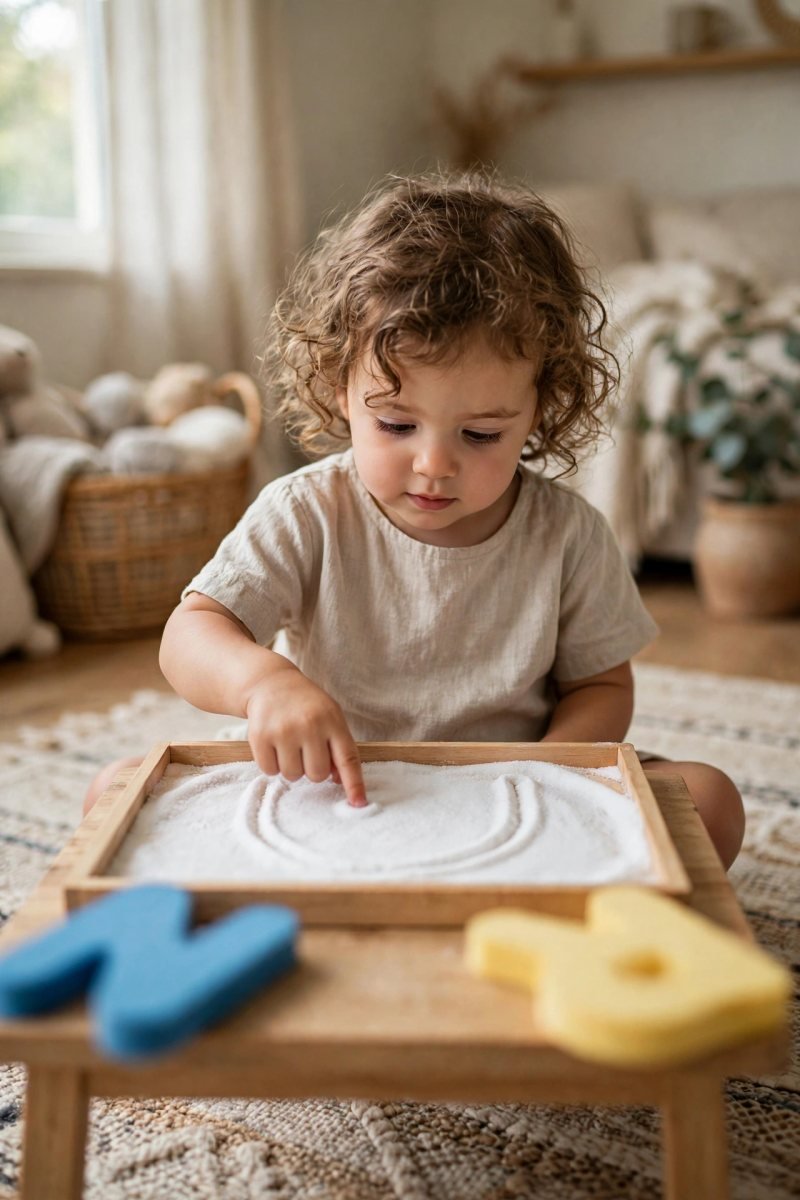
Alphabet Activities for Toddlers: 25 Simple Ways to Introduce Letters
Twenty-five no-worksheet alphabet activities for toddlers aged 2–3: sensory letter play, songs and rhymes, letter hunts, DIY alphabet books and playful games — all using things families already own. Start with the letters in your child's name.
-
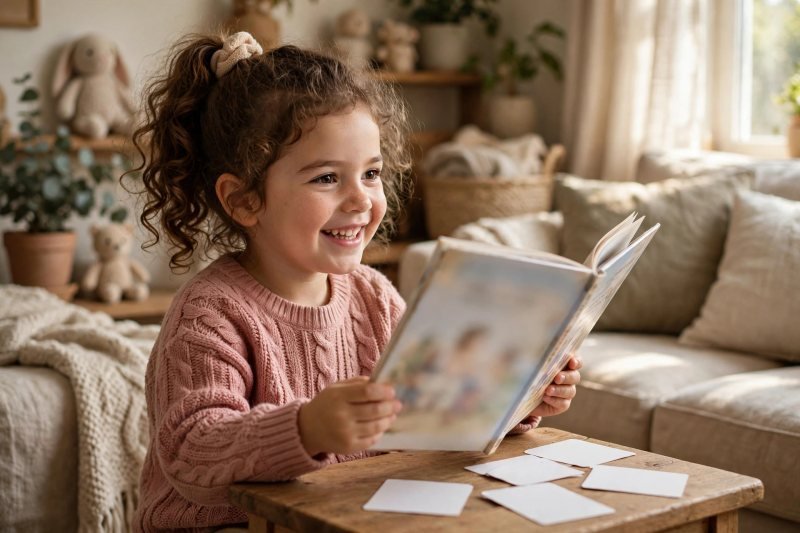
Sight Words for Kindergarten: The First 40 Words to Master
A friendly, honest guide to the 40 sight words for kindergarten children learn first — what sight words actually are, the full list grouped for practice, and low-pressure games that make learning them stick without worksheets or stress.
-
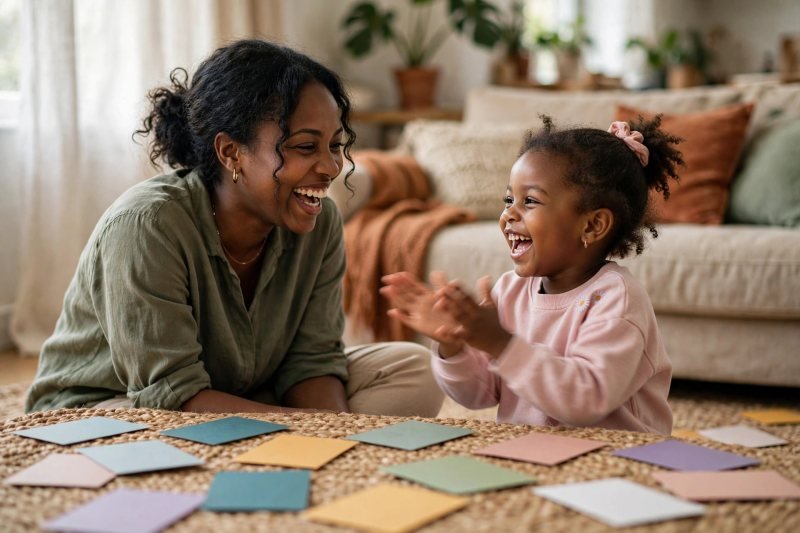
Phonics Activities for Preschoolers: 25 Playful Ways to Learn Sounds
Twenty-five playful phonics activities for preschoolers aged 4–5 that build letter-sound skills through rhyme games, sound hunts, blending practice and simple word building — all hands-on, all joyful.
-
Kindergarten Readiness Checklist: 30 Skills Teachers Actually Look For (Free Printable)
A teacher-realistic kindergarten readiness checklist with 30 practical skills — from buttoning coats to sharing crayons — plus a free printable to track progress together.
-
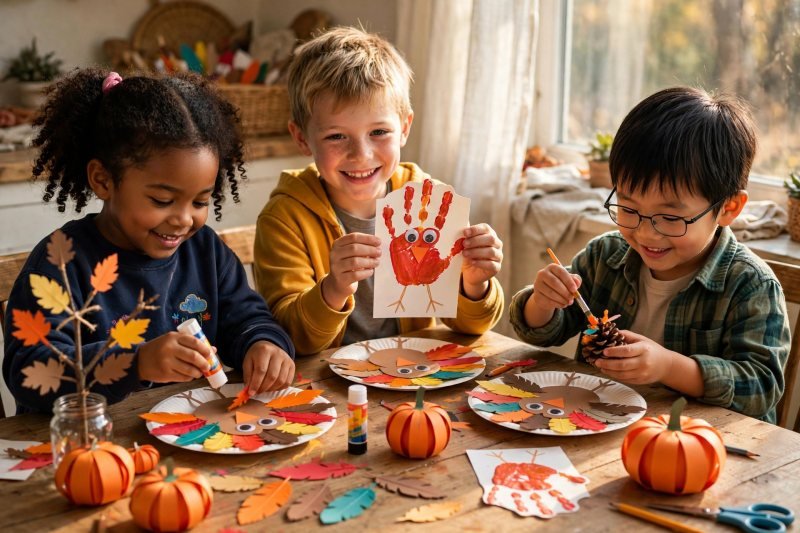
20 Easy Thanksgiving Crafts for Kids (Turkey Approved)
Looking for thanksgiving crafts for kids that go beyond the same old handprint turkey? These 20 easy Thanksgiving crafts use things you already have at home — paper plates, toilet rolls, flour, dried beans — and every idea lists the age, the time, and the mess level up front.
-
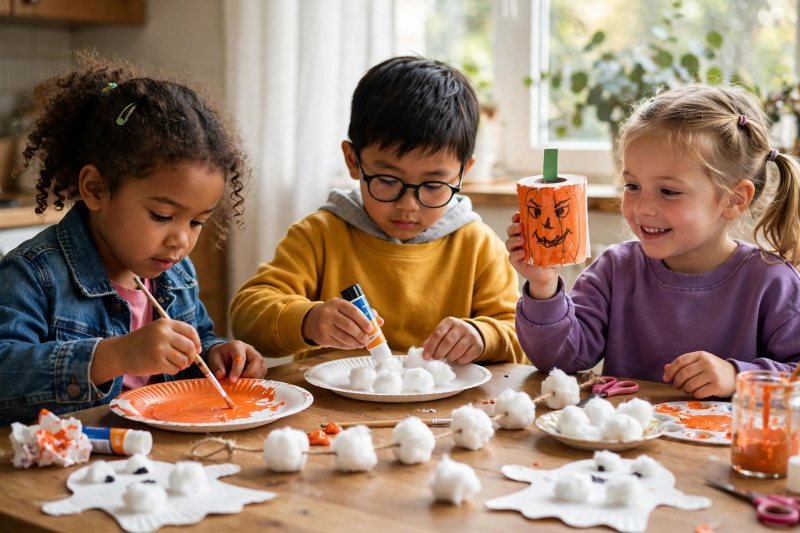
25 Not-So-Spooky Halloween Crafts for Kids
Looking for halloween crafts for kids that keep the fun without the frights? These 25 not-so-spooky Halloween crafts use things you already own — paper plates, toilet rolls, flour, crayons — and every idea lists the age, the time, and the mess level up front, so you can pick one in seconds.
-
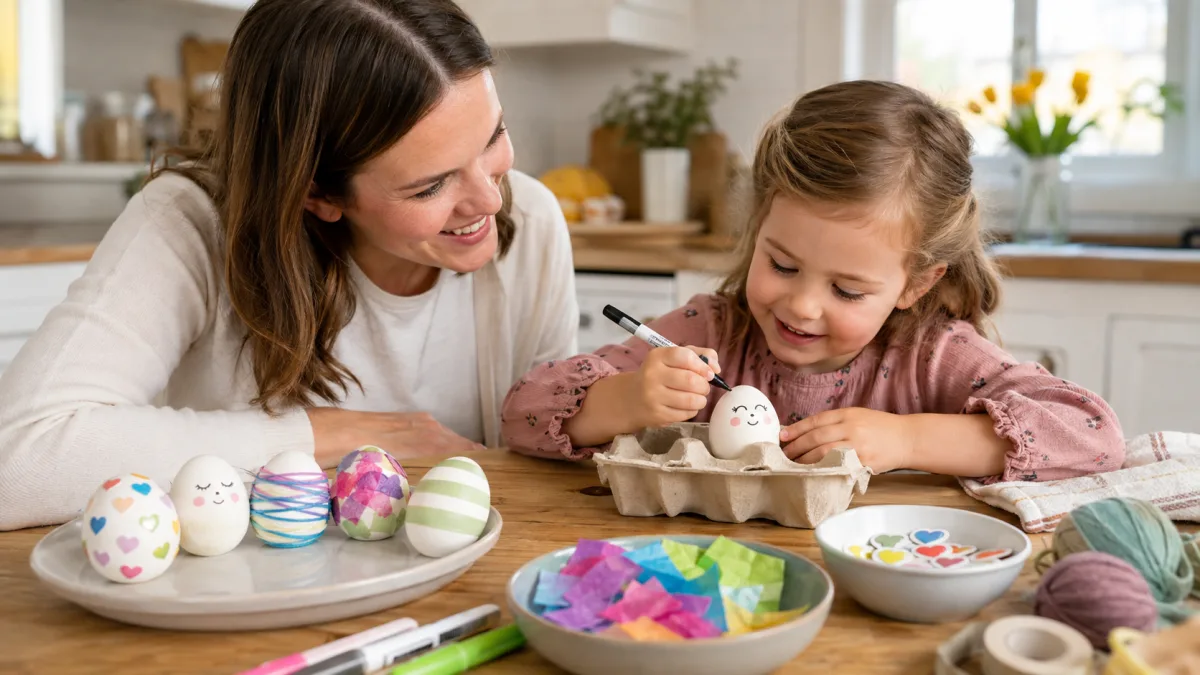
Five Ways to Decorate an Egg With No Dye
Stickers, felt tips, wool, tissue paper and tape. All five work on a hard-boiled egg and none of them stain anything.
-
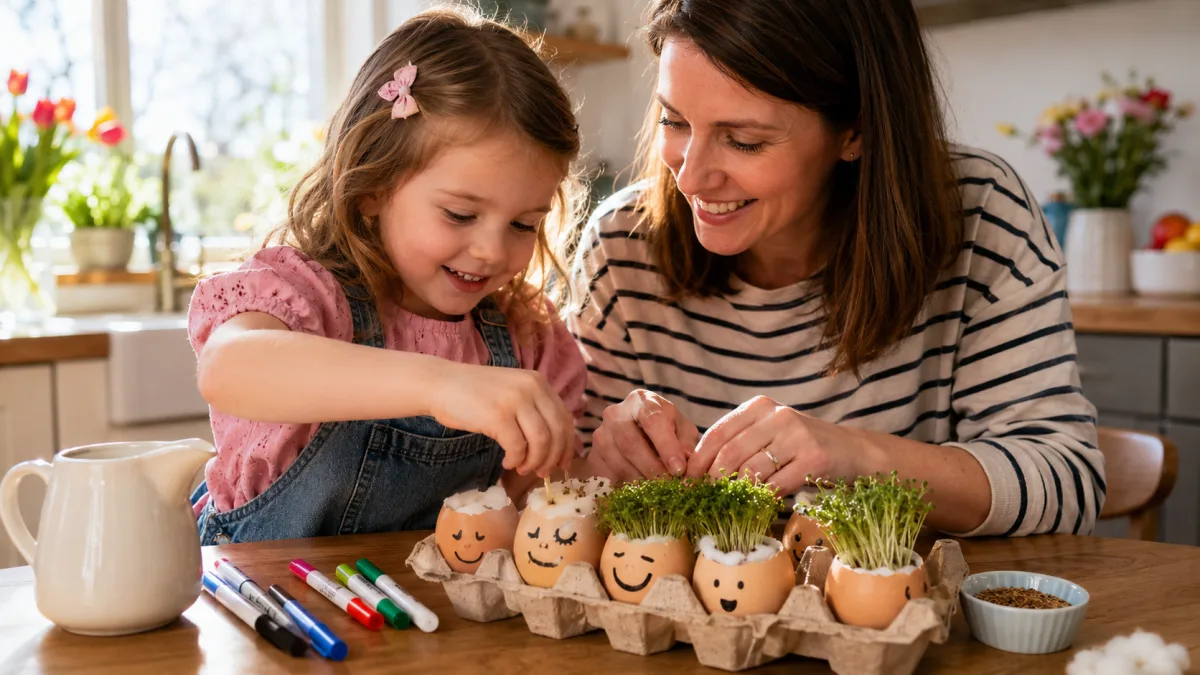
Grow Hair on an Eggshell
Half an eggshell, a face drawn on, cotton wool and cress seeds. In a week it has green hair you can eat.
-
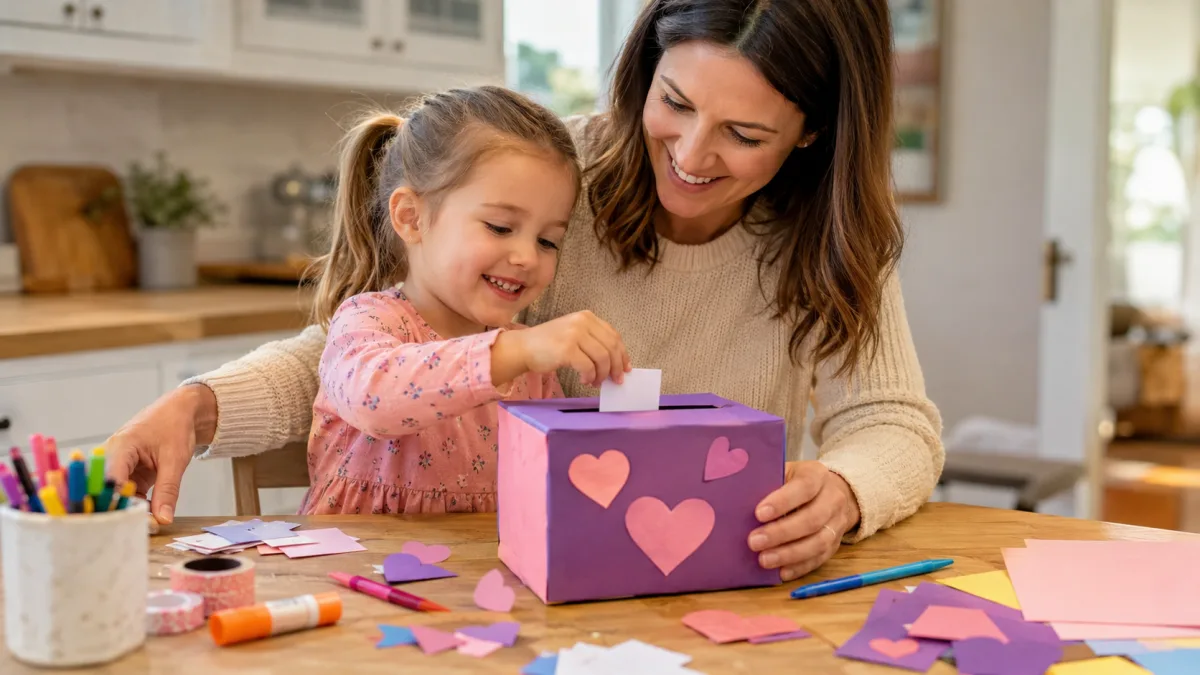
A Post Box for Kind Notes
A cereal box with a slot cut in it. Everyone posts a note about somebody else, and you read them out at dinner.
-
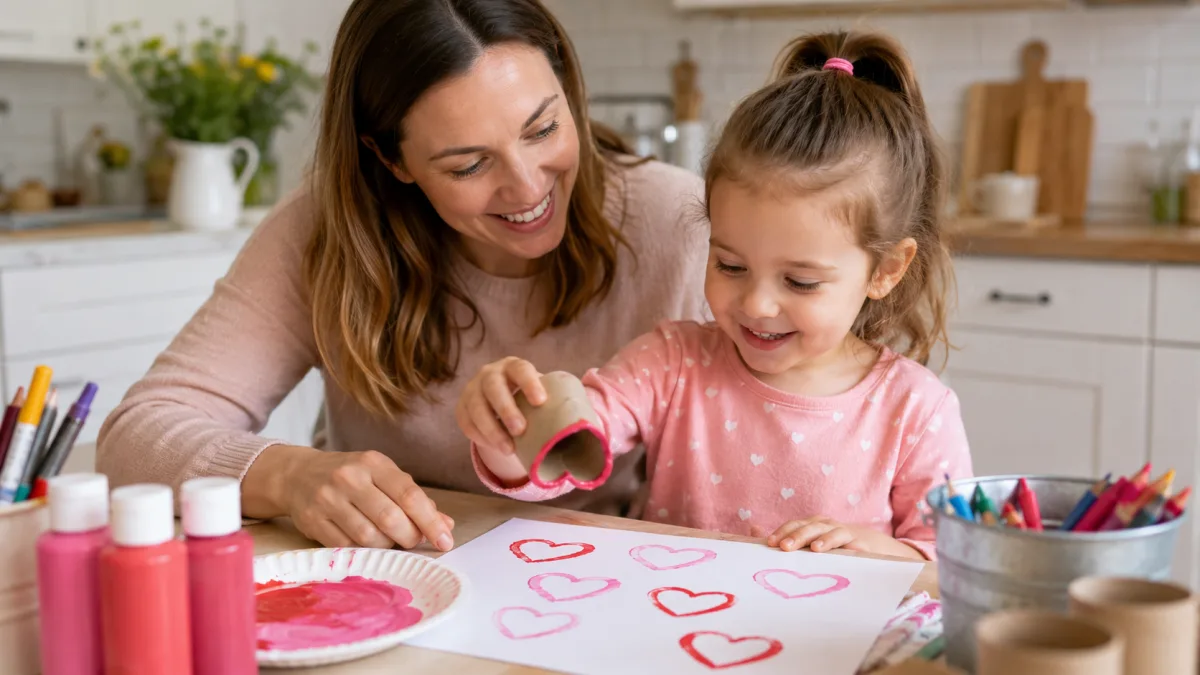
Print Hearts With a Cardboard Tube
Squash a kitchen roll tube into a heart shape and use it as a stamp. One tube makes forty hearts.
-
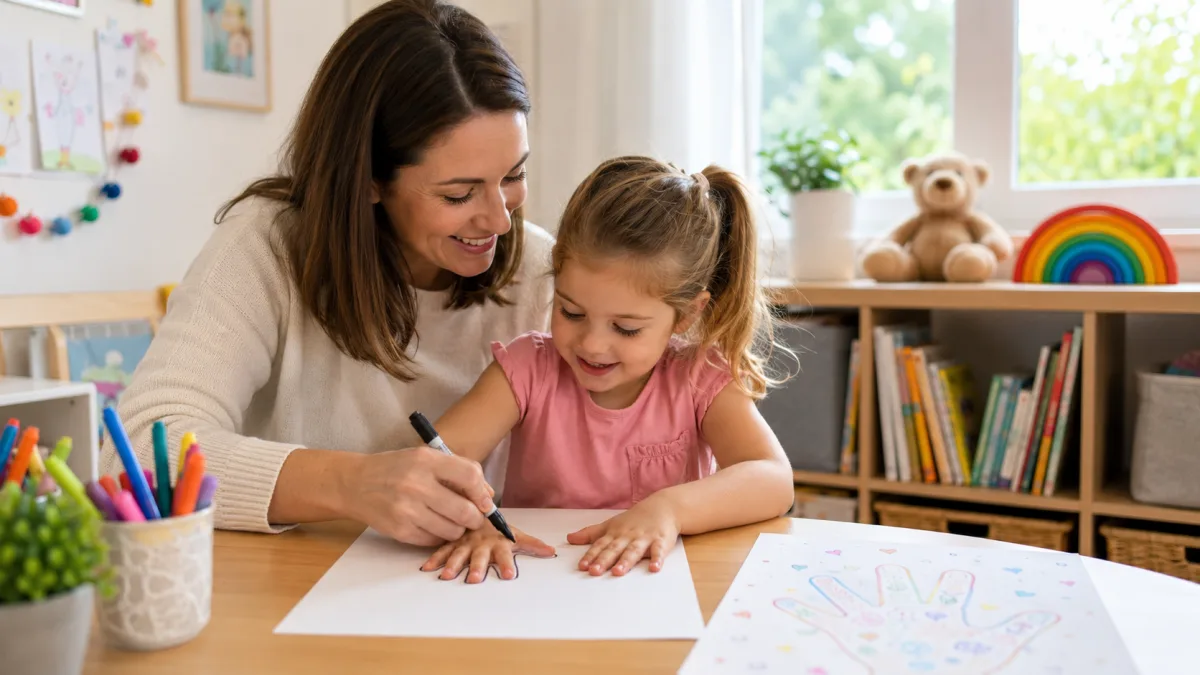
Draw Round Their Hand and Keep It
One sheet, once a year: their hand, their height, and three things they can do now that they could not last year.
-
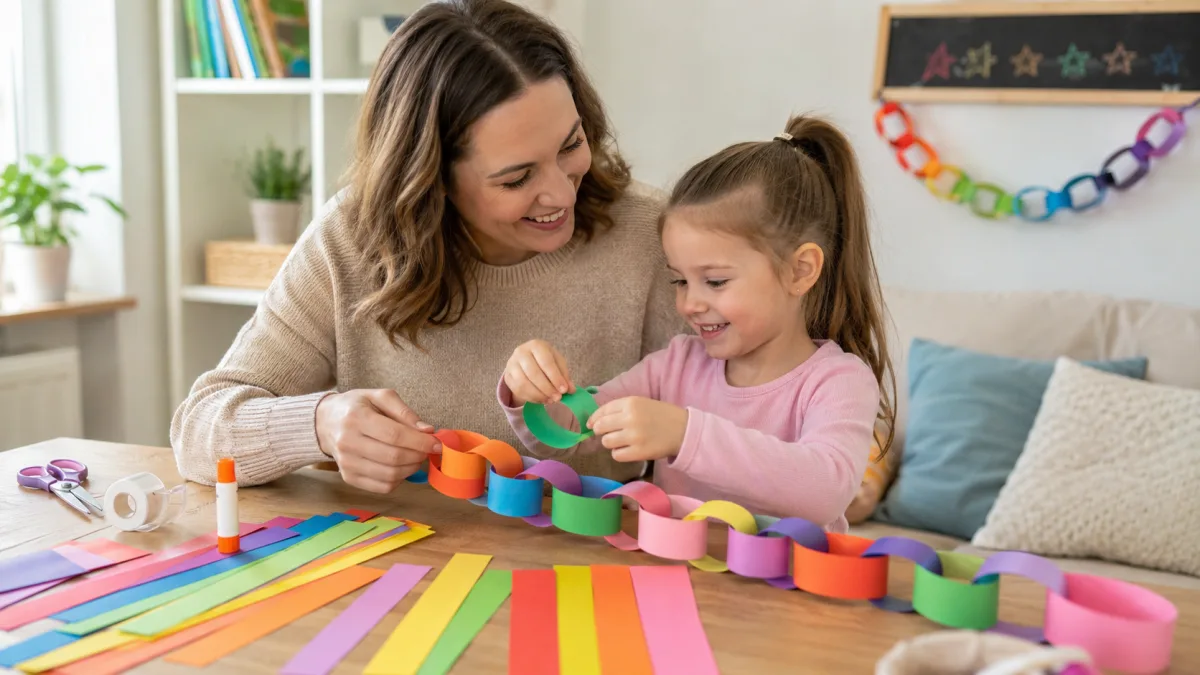
A Countdown Chain
One paper loop per day, torn off each morning. It makes waiting visible, which is what small children need.
-
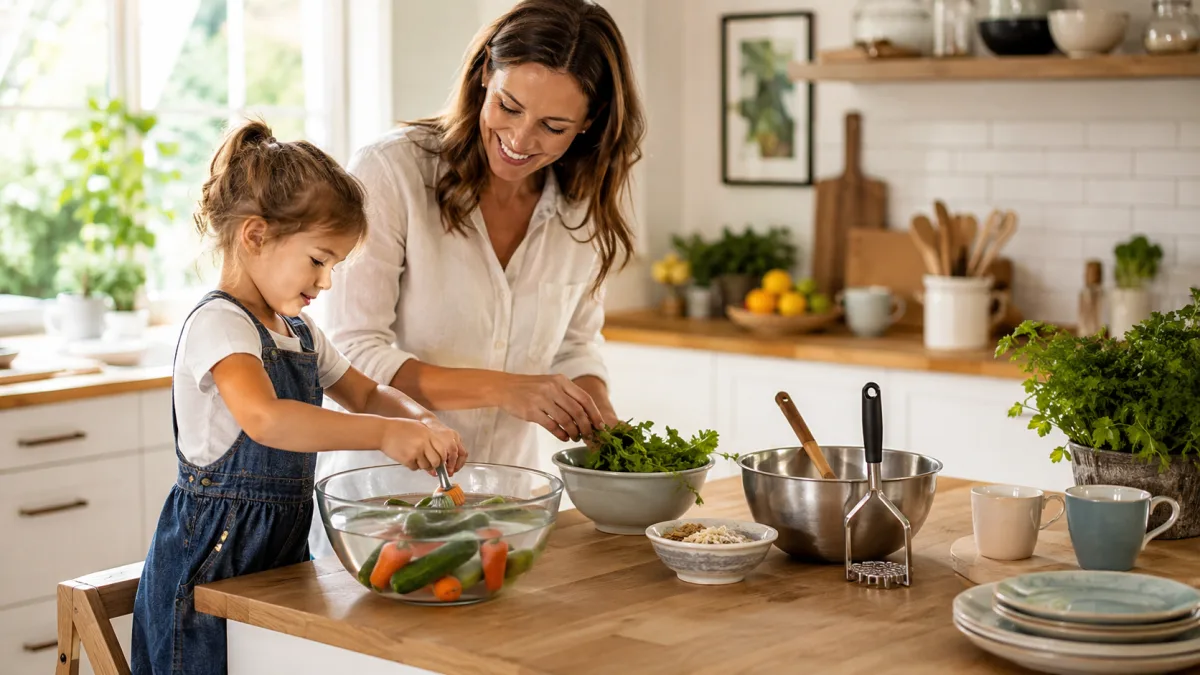
Real Kitchen Jobs a Small Child Can Actually Do
Washing, tearing, stirring and sprinkling. Eight jobs that are genuinely useful on a busy cooking day.
-
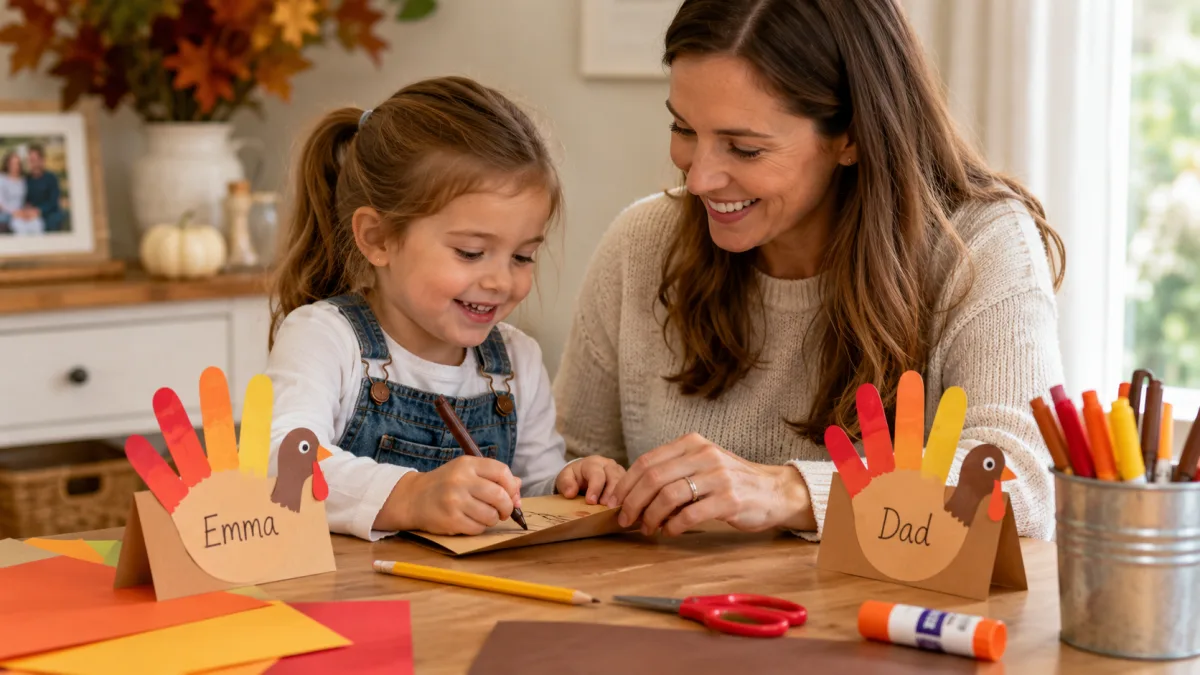
Handprint Turkeys for the Table
Draw round their hand, turn it into a turkey, write a name on it. Everyone gets one at their place.
-
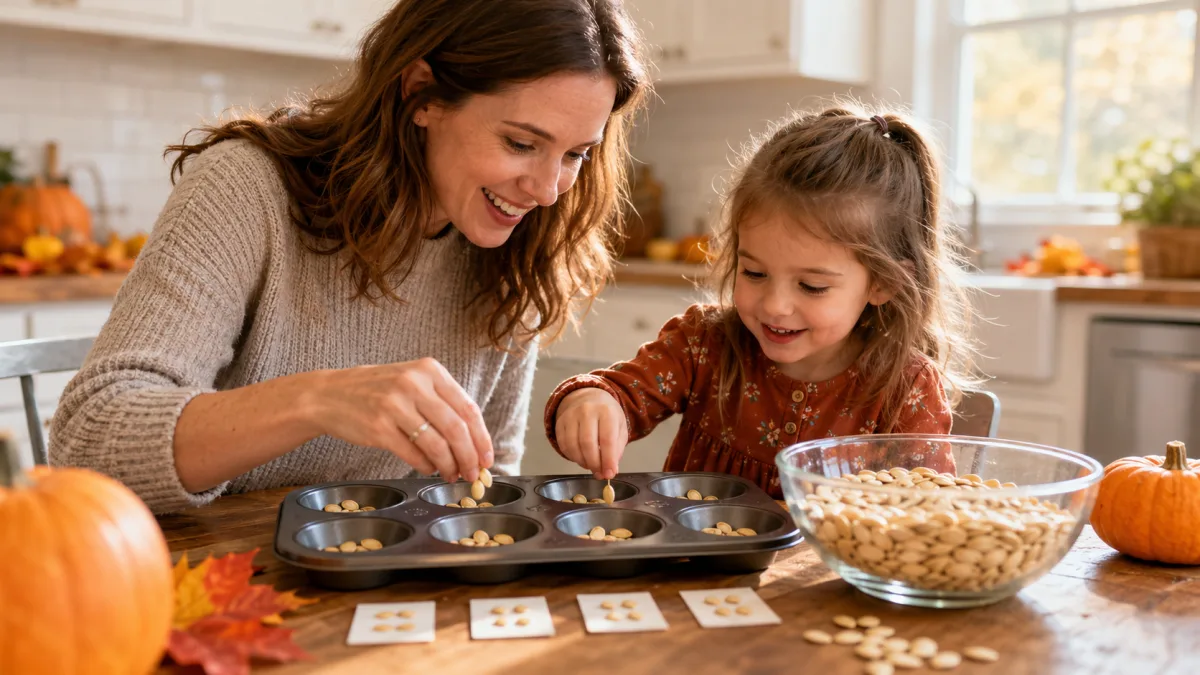
Count the Pumpkin Seeds
Wash and dry the seeds from your pumpkin, then turn them into a counting game that lasts all week.
-
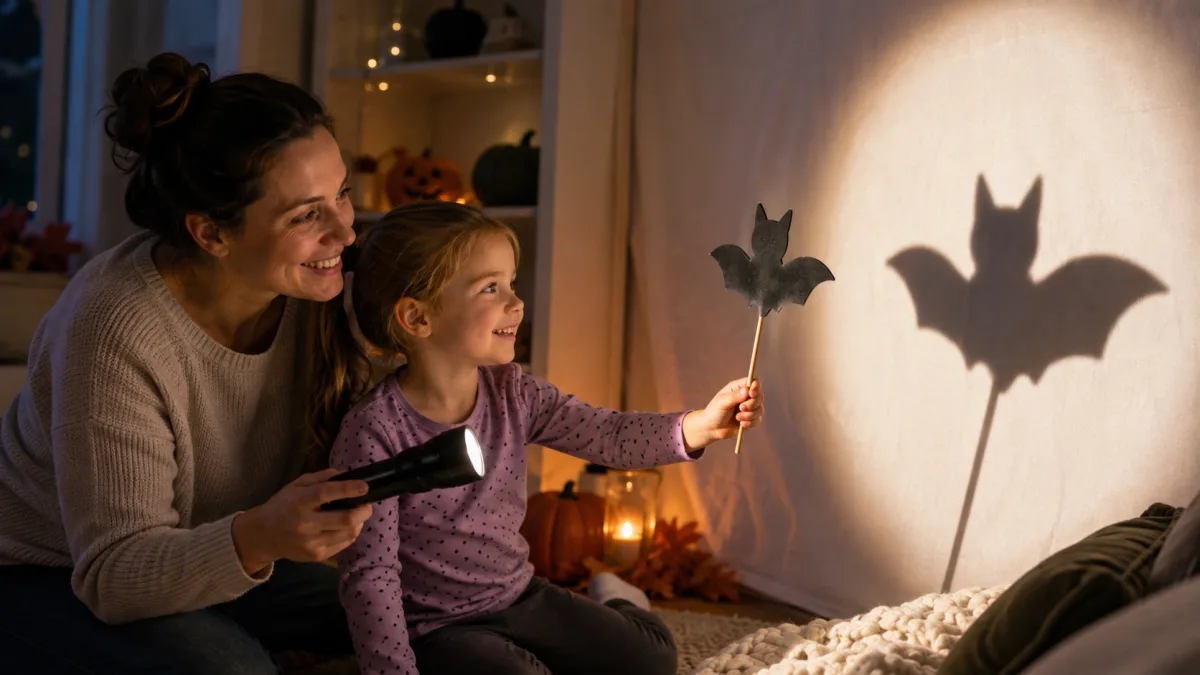
Spooky Shadow Puppets
Cut a bat and a cat from card, tape them to straws, and put on a show against the wall with a torch.
-
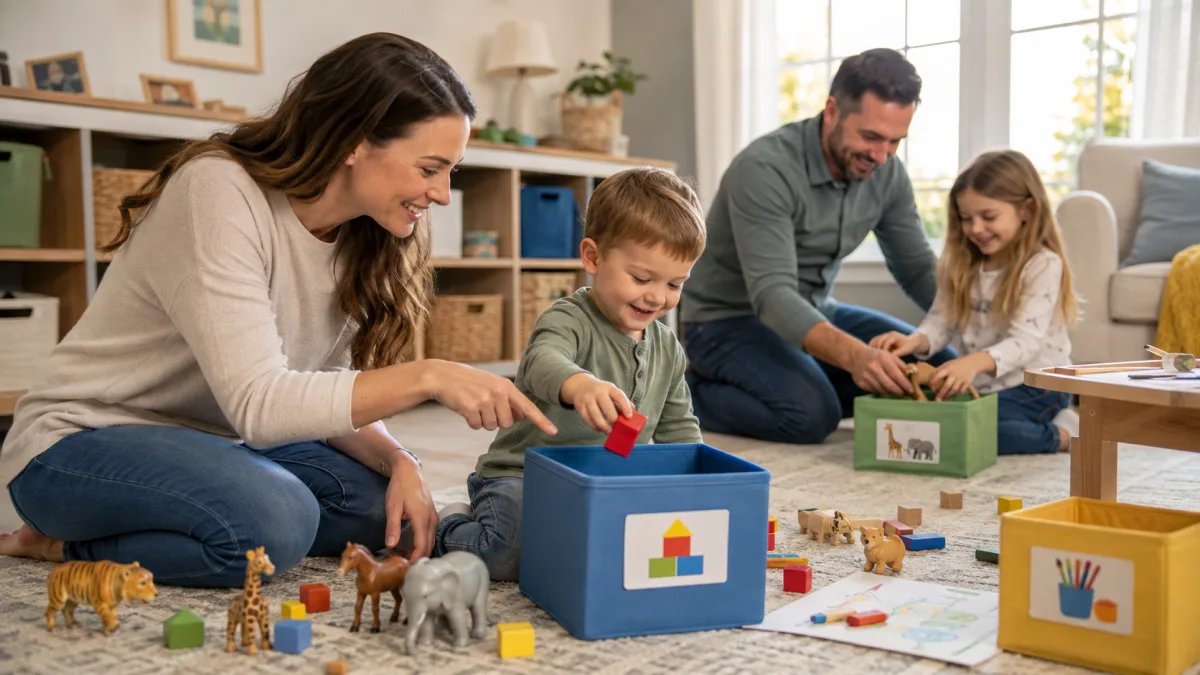
Tidying Up Without the Battle
"Tidy up" is an impossible instruction. "Put the blocks in the blue box" is a job a three-year-old can finish.
-
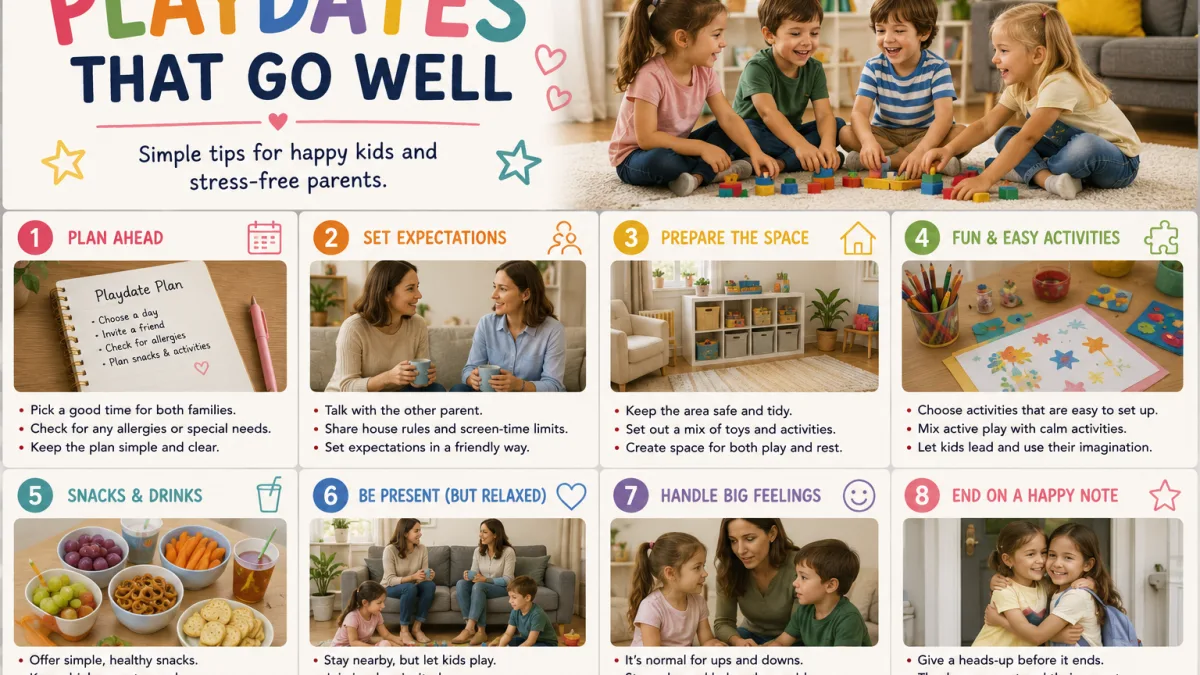
Making a Playdate Go Well
Put the precious toys away first, have one activity that needs two people, and finish while it is still going well.
-
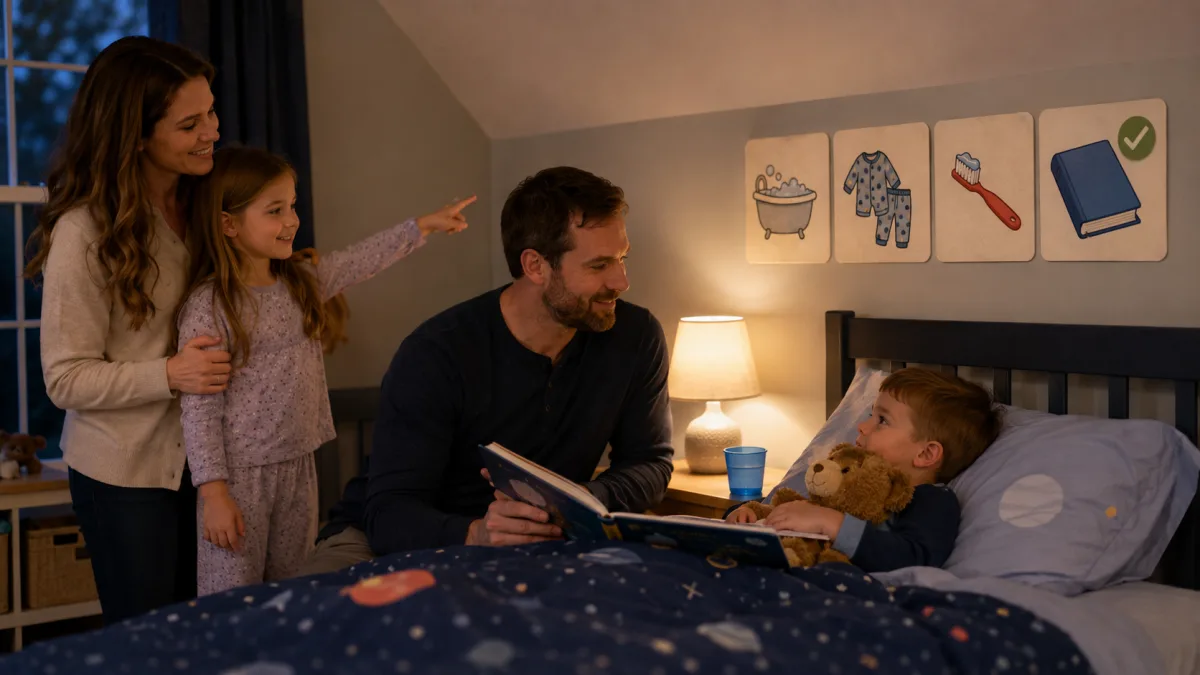
Making Bedtime Shorter
Most bedtime trouble is a routine problem, not a sleep problem. Fewer decisions, same order, clear last thing.
-
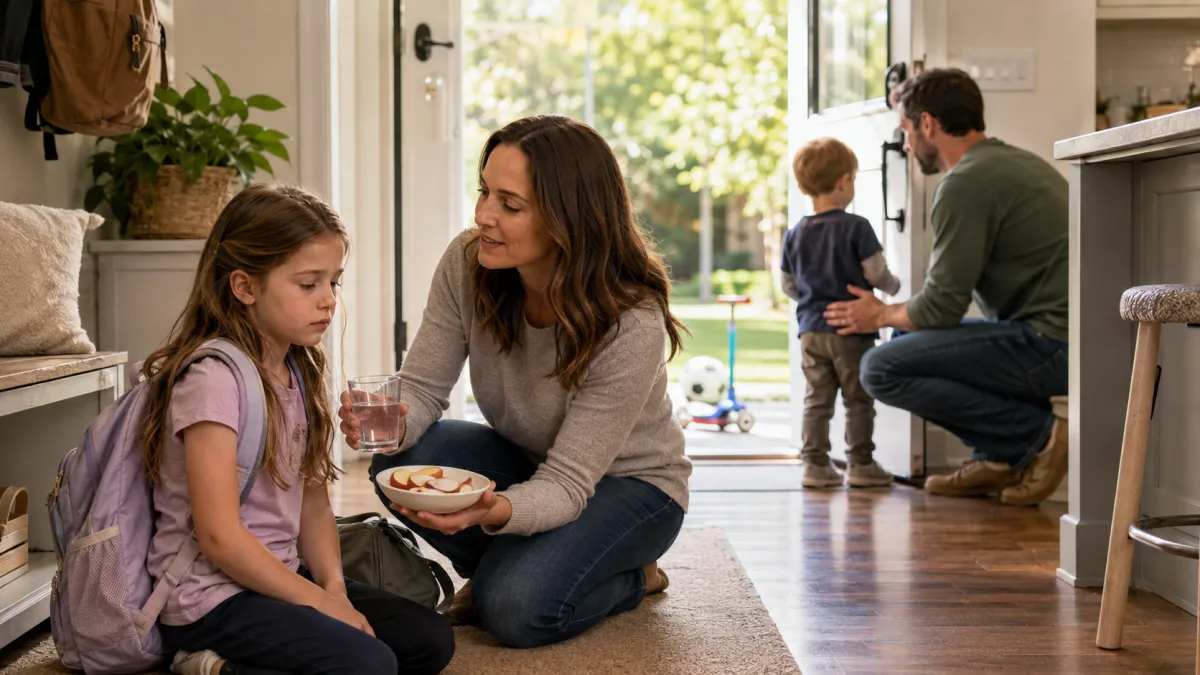
The Hour After School Is Always the Hardest
A child who held it together all day falls apart the moment they see you. Food first, questions much later.
-
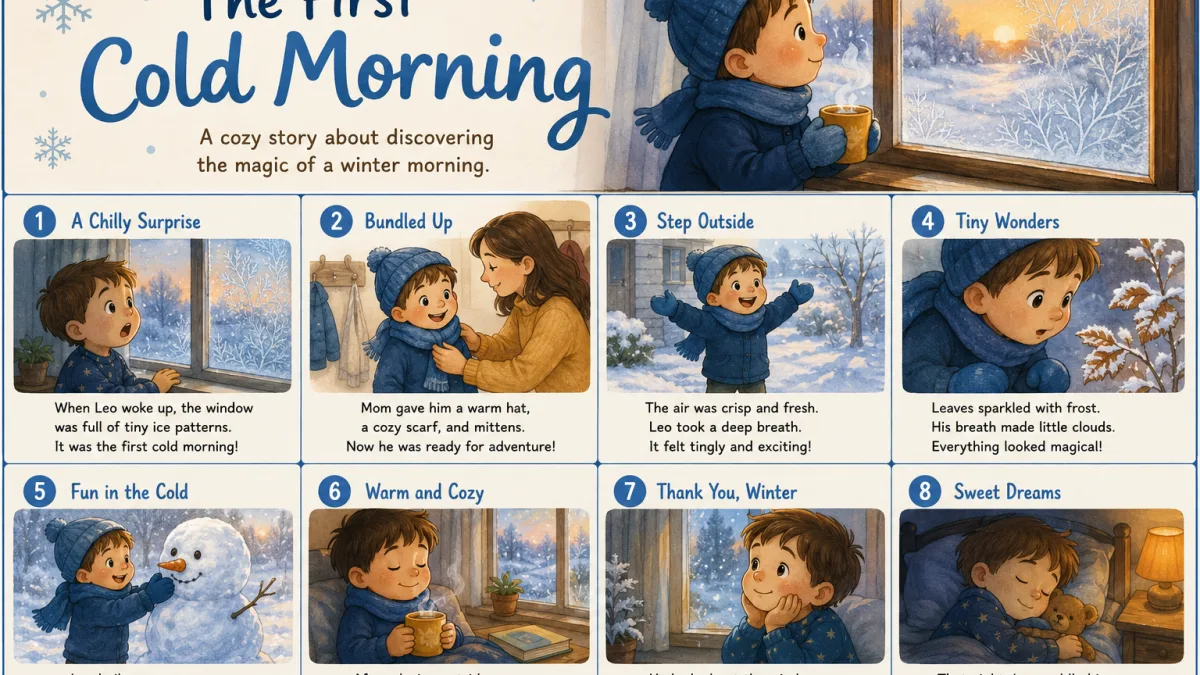
The First Cold Morning
A seasonal story about the morning you can suddenly see your own breath.
-
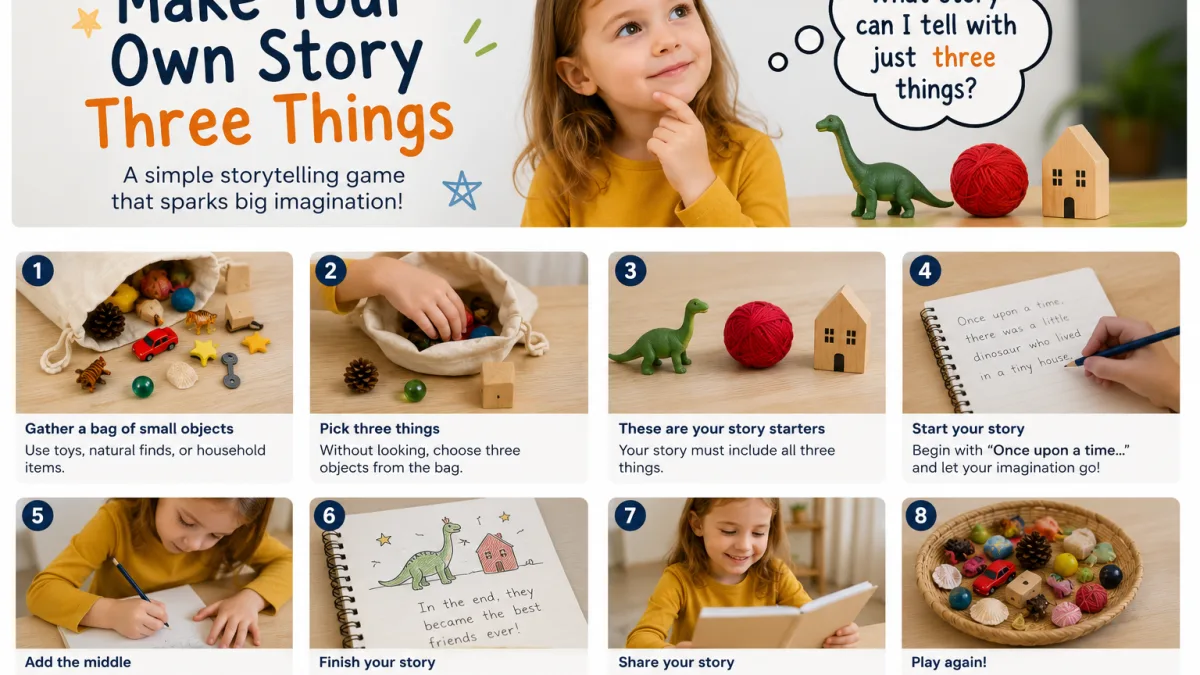
Make Up a Story With Three Things
A character, a place, and something going wrong. That is enough for almost any child to be away.
-
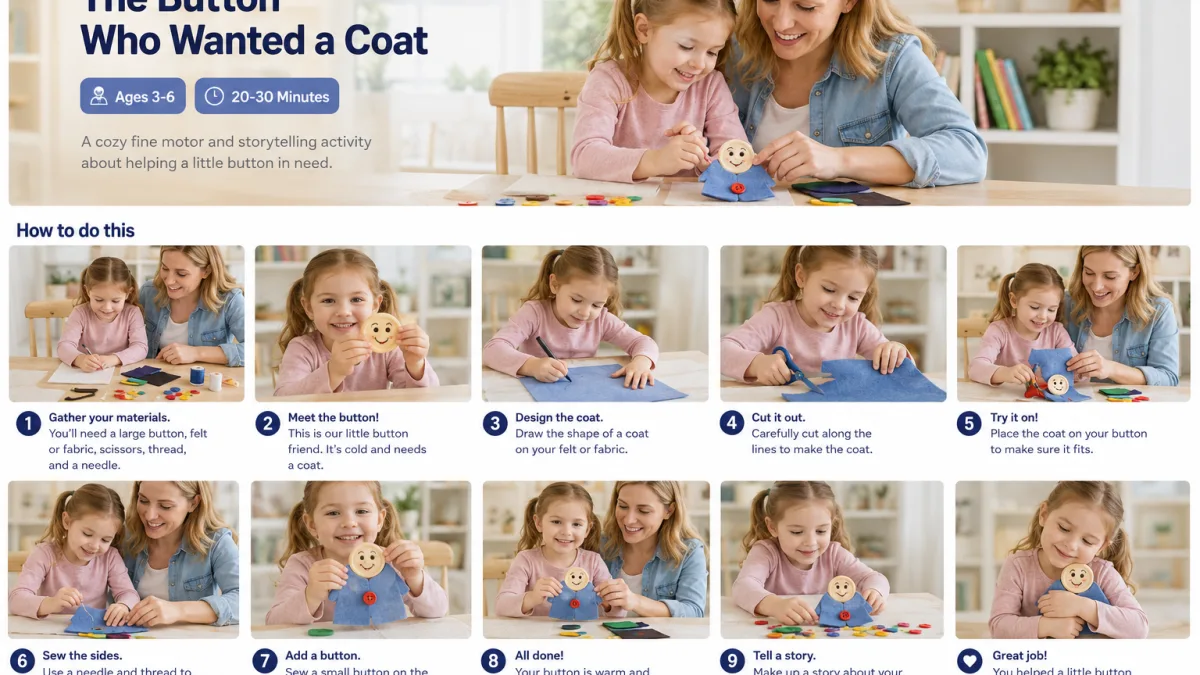
The Button Who Wanted a Coat
A story about a lost button, and then a jar of real buttons to sort afterwards.


Browse learn through play
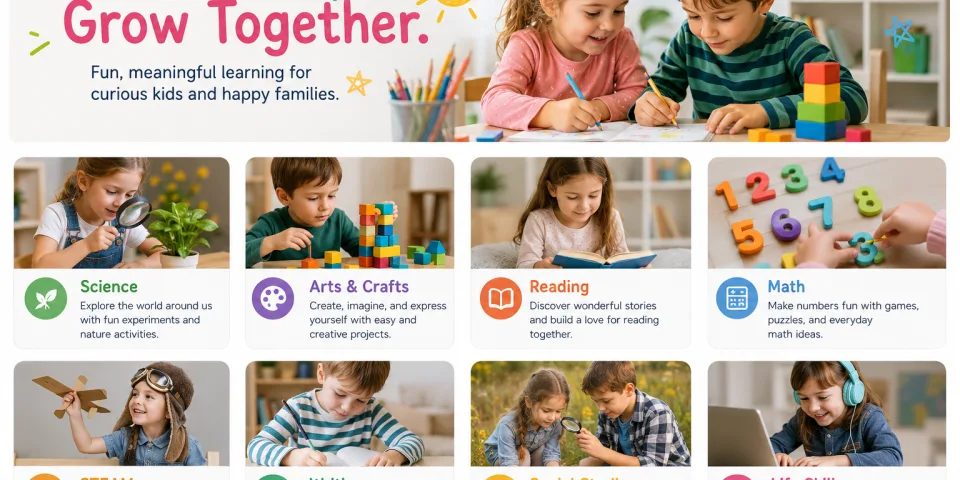
Young children learn by doing things with their hands and talking about them out loud. An alphabet hunt around the living room teaches letter recognition more durably than a page of tracing, because the child is moving, choosing and explaining while they do it.
So the activities in this section have a learning goal, and each one says plainly what it is practising — letter sounds, counting one-to-one, sorting by a rule, noticing what changed. That way you can pick what your child is interested in rather than what a curriculum says comes next.
What you'll find here
-
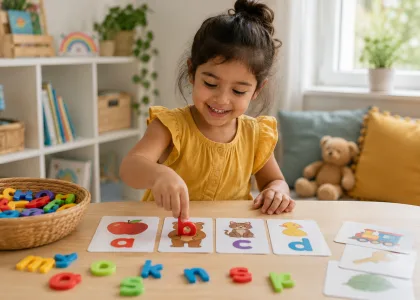
Letters and sounds
Recognising letters, hearing the sound at the start of a word, and eventually putting them together. Games and hunts rather than drills.
-
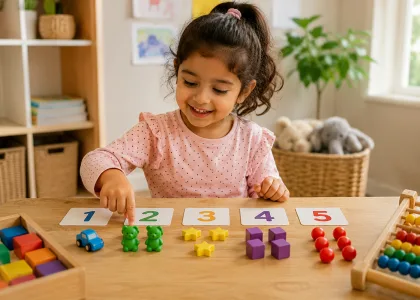
Numbers and counting
Counting things that are really there, matching a number to an amount, and spotting patterns — the groundwork that makes later maths make sense.
-
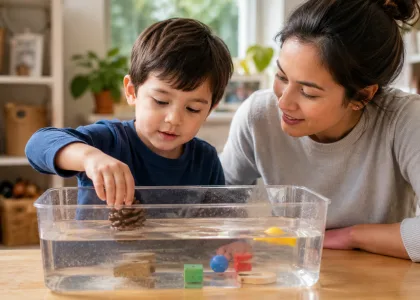
Science and noticing
Will it sink? What happens if we add more? Simple experiments with a question at the start and a conversation at the end.
None of this is a substitute for what your child does at nursery or school, and none of it is developmental advice. It is play that happens to teach something.