


Learn Through Play
Letters, numbers, shapes and early science — through play, not worksheets. The learning is real; it just does not look like school.
Activities
-
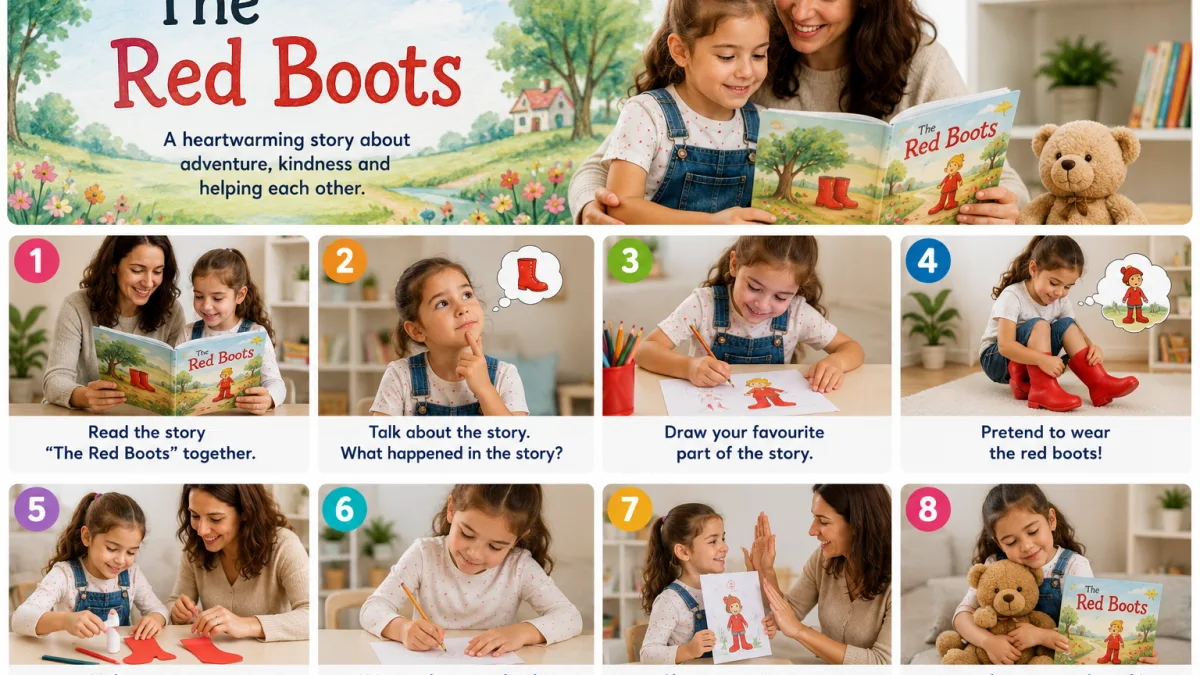
The Red Boots
A story for a child who is starting to read some of it themselves. Short words, short lines, and a puddle.
-
Goodnight, Everything
A slow bedtime story that says goodnight to one thing after another, and gets quieter as it goes.
-
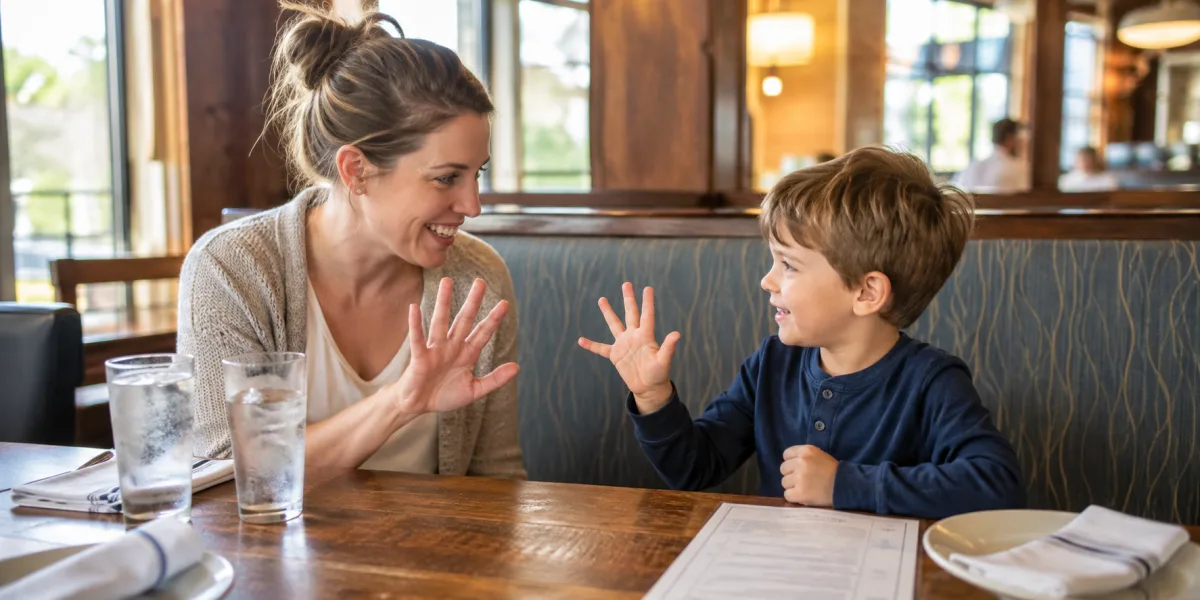
Five Games for the Wait Before the Food
No bag, no crayons, nothing to drop on the floor. Five games that need only the two of you and a table.
-
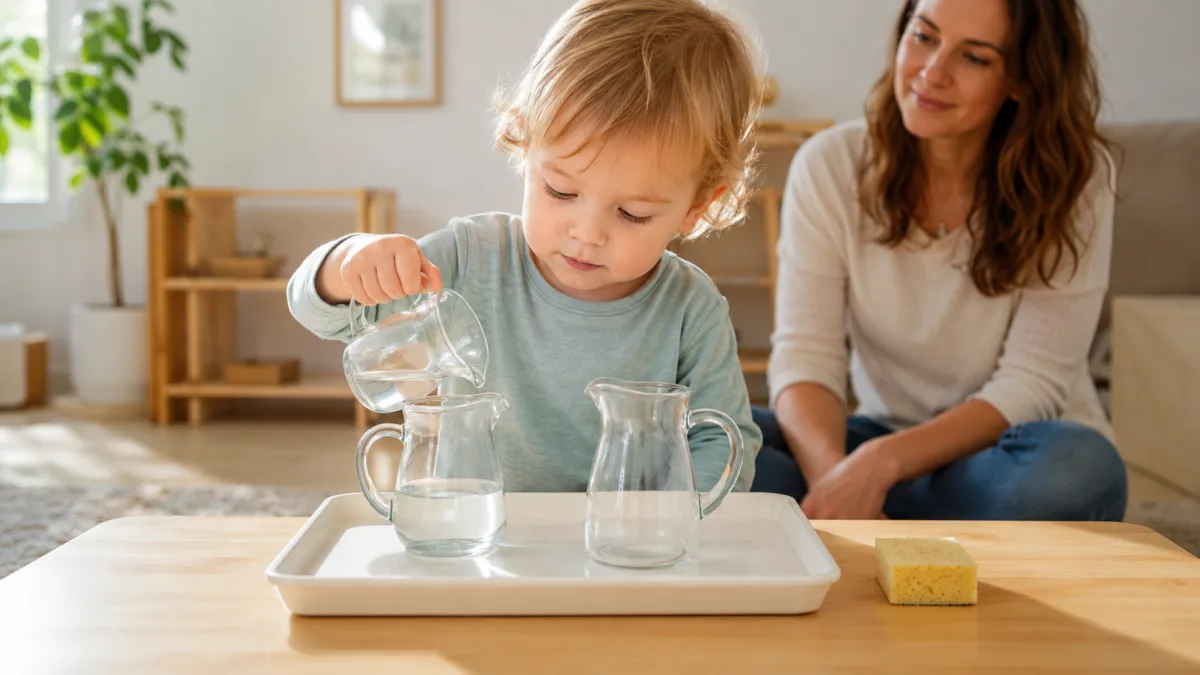
A Pouring Station
Two small jugs, a tray, and water. Absorbing, genuinely useful, and a child can do it entirely alone.
-
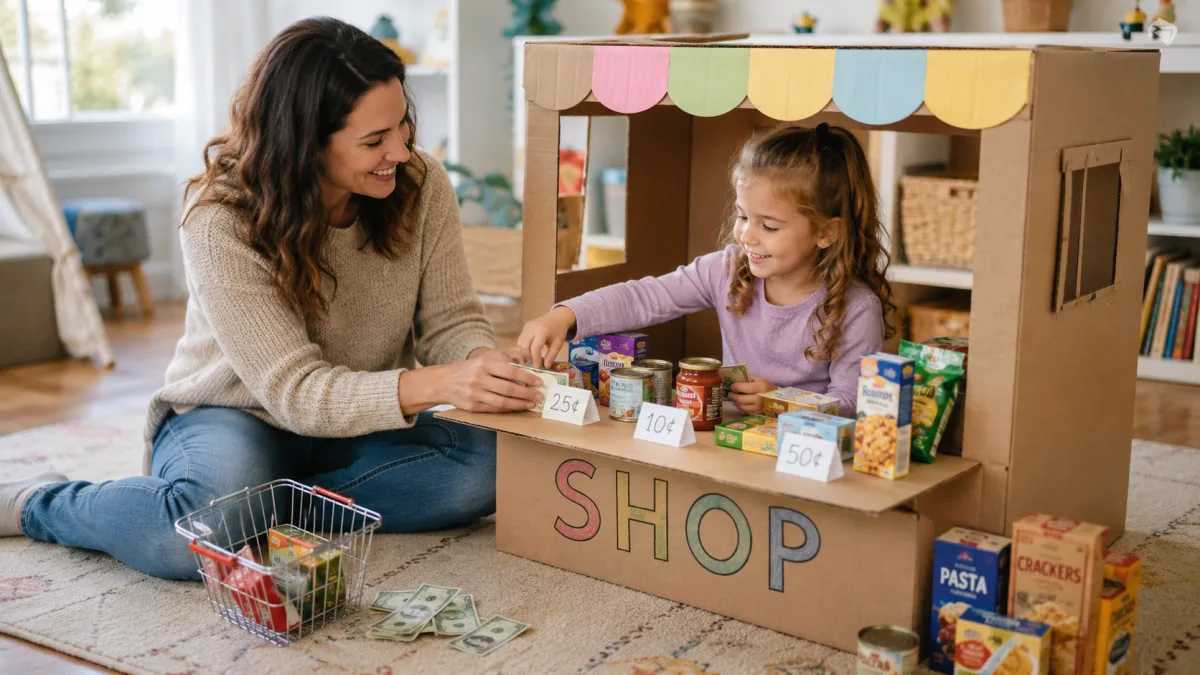
Turning a Box Into a Shop
A delivery box, a marker and whatever is in the cupboard. Then step back, because the play runs itself.
-
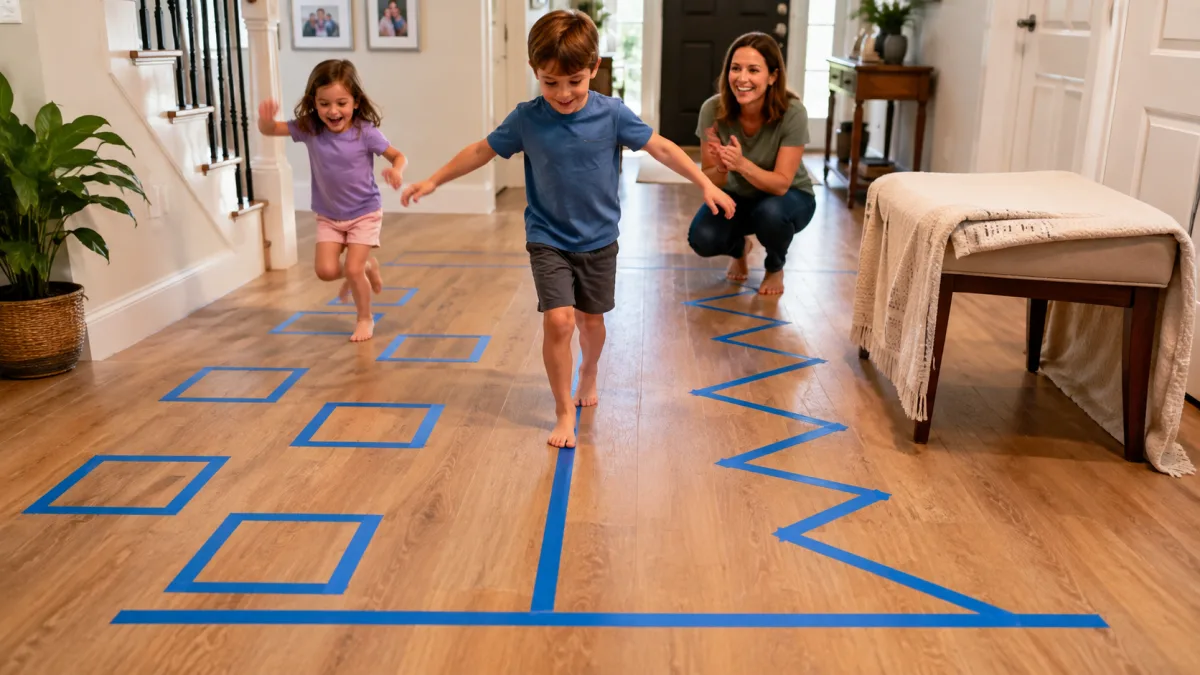
A Masking Tape Obstacle Course
One roll of tape turns a hallway into a course to balance, jump and crawl along. Works in a flat, upstairs, in the rain.
-
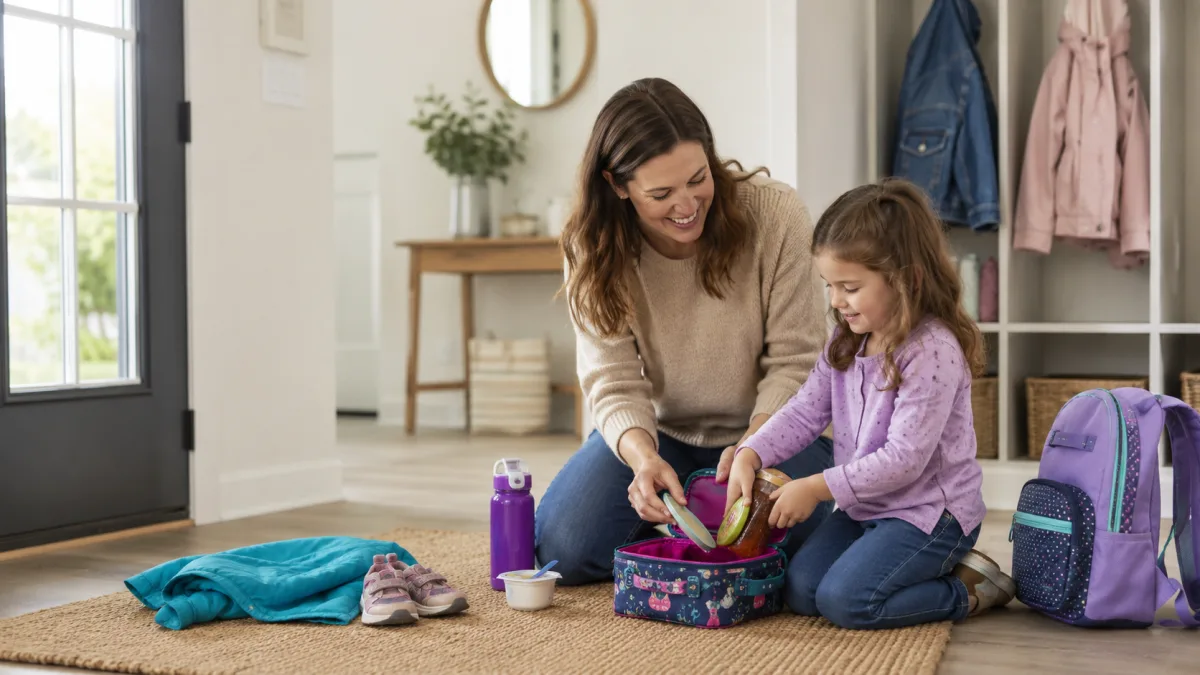
Practising the Bits That Actually Worry Them
Not the alphabet — the lunchbox, the buttons, the shoes and finding the toilet. The things that decide whether a first week goes well.
-
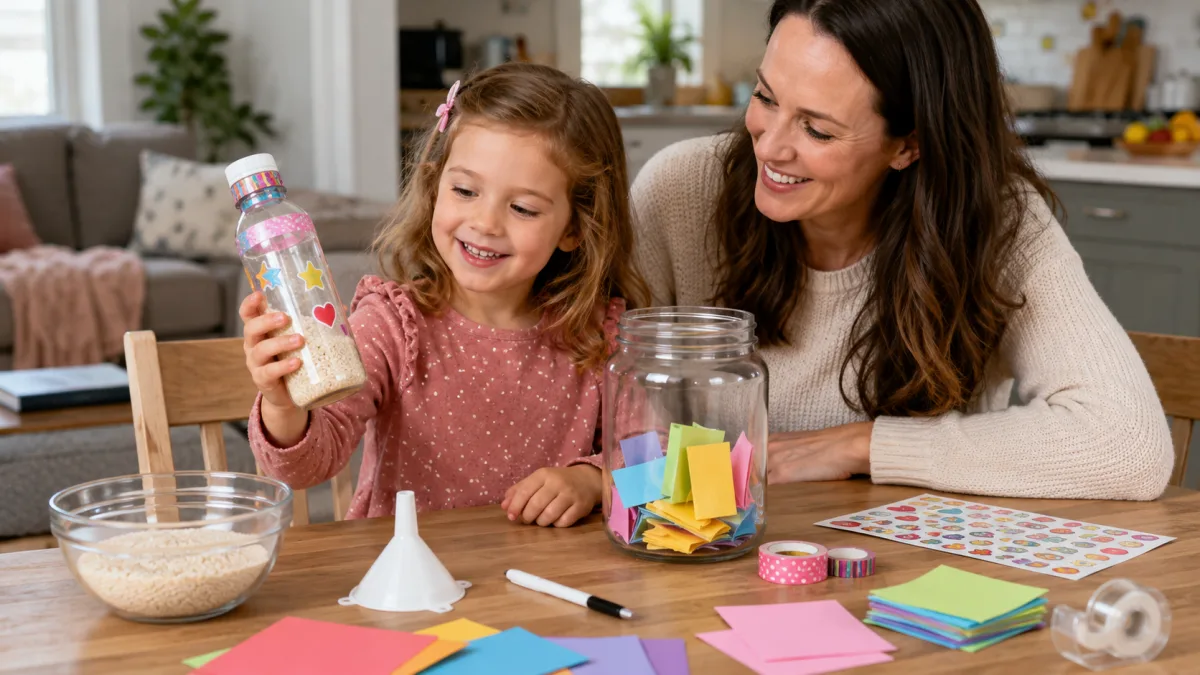
Noisy Shakers and a Jar of Good Things
One loud activity and one quiet one. Make shakers for the countdown, and a jar to look back at next year.
-
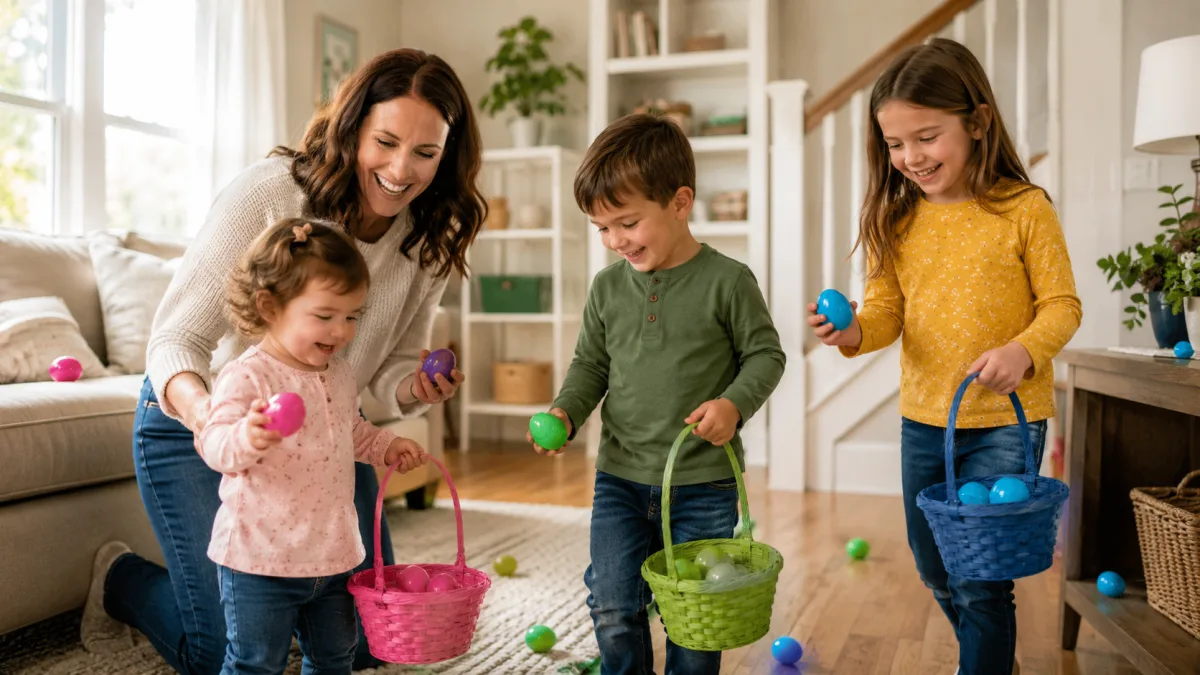
An Egg Hunt That Works for Every Age
The same hunt, three difficulty levels, so a two-year-old and a seven-year-old can play together without either being bored.
-
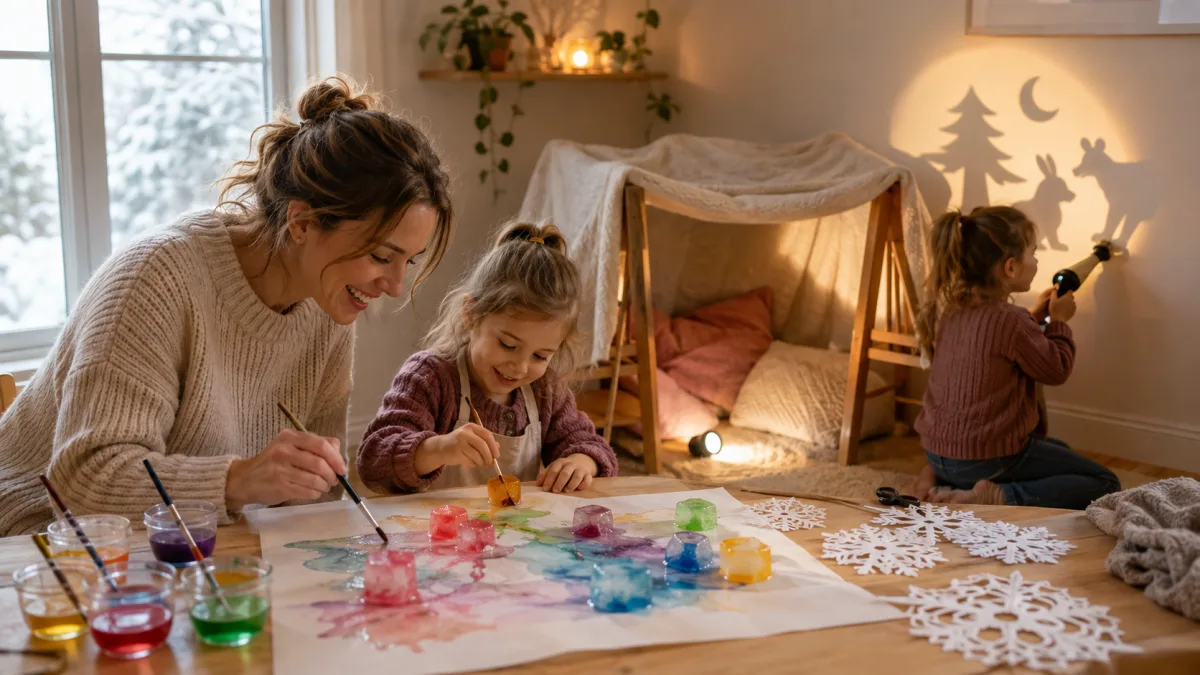
Winter Play When It Is Too Cold to Go Out
Ice, torches, dens and paper snowflakes. The four things that reliably fill a dark afternoon.
-
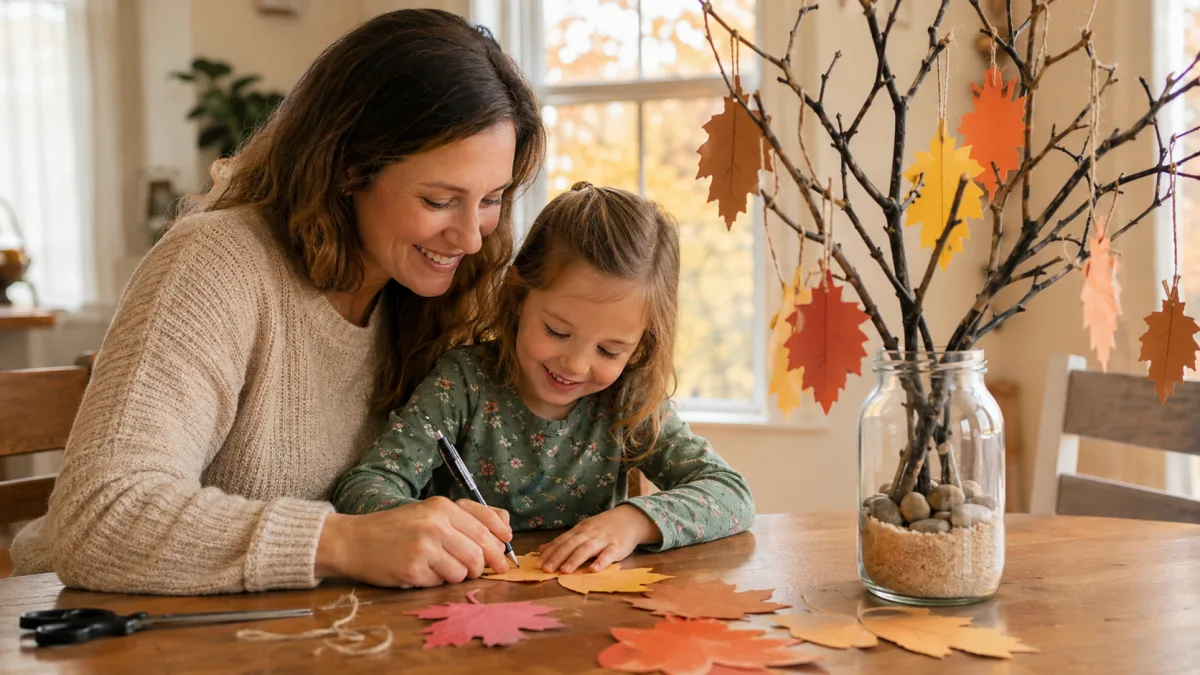
A Thankful Tree
A branch in a jar and a paper leaf each day. Small, slow, and it ends up being the thing everyone reads at the table.
-
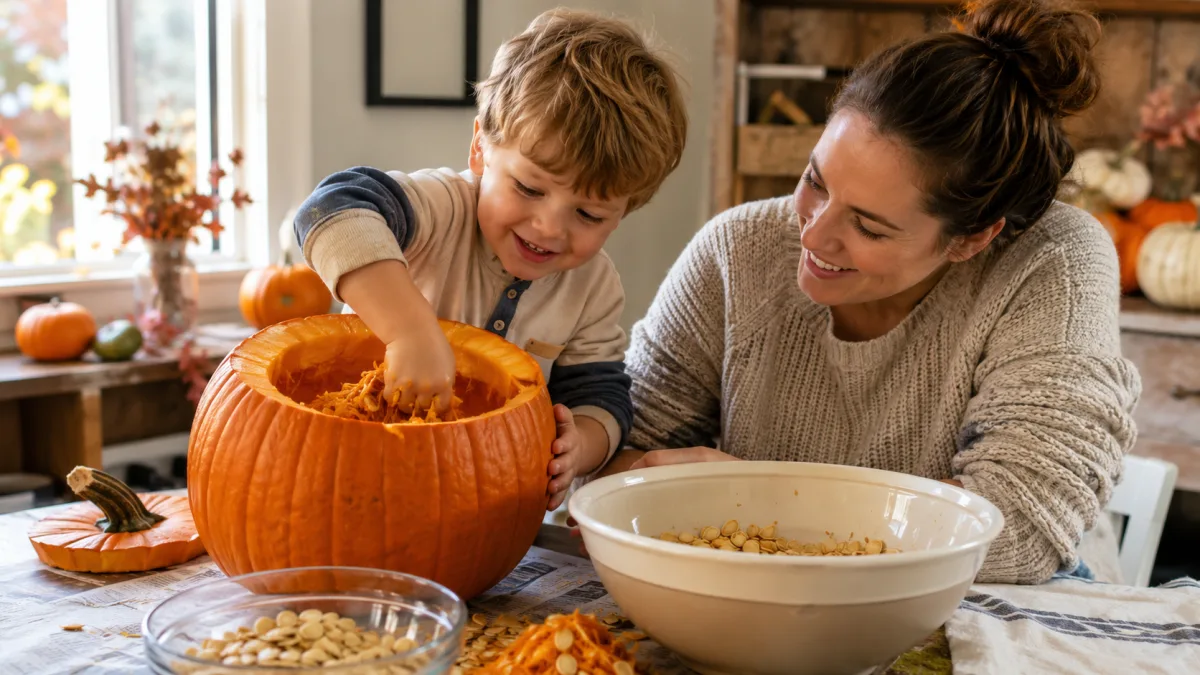
Scooping Out a Pumpkin
The insides are the best part. Scooping is a proper sensory activity, and the washed seeds do a week of counting afterwards.
-

Collect the Leaves, Then Sort Them
A bag, a walk, and a kitchen table. The collecting is half of it and the sorting is the other half.
-
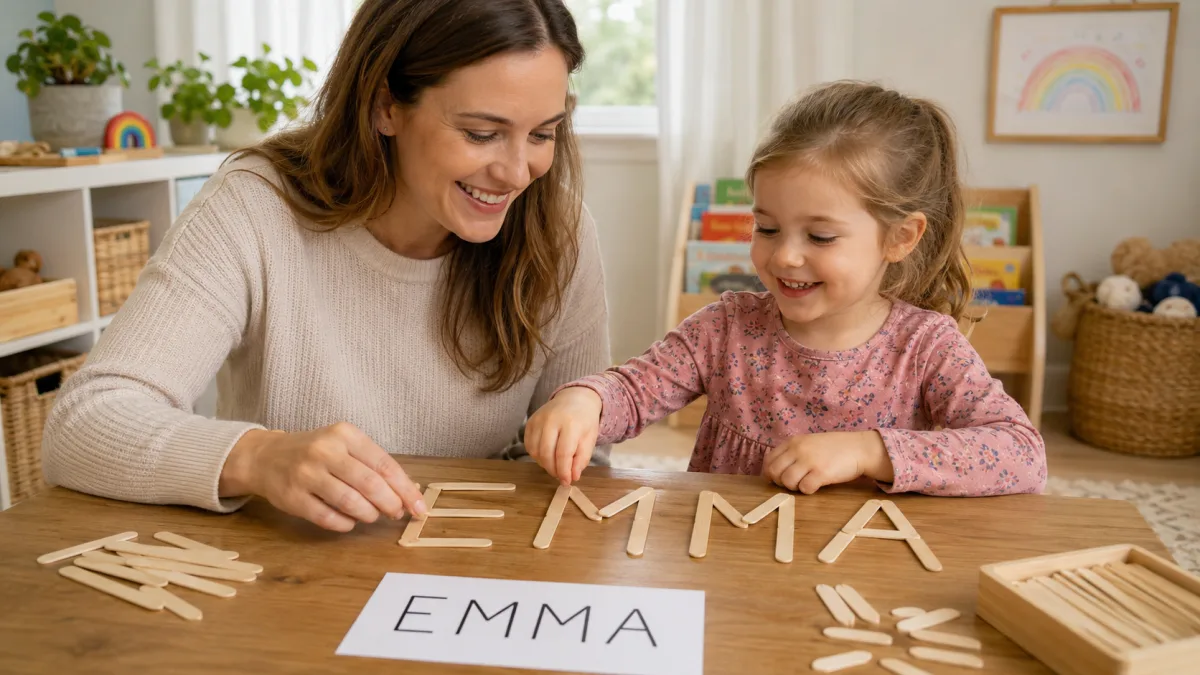
Building Your Name Out of Sticks
Straight lines make most capital letters. Lolly sticks, twigs or straws turn letter shapes into something you build rather than draw.
-
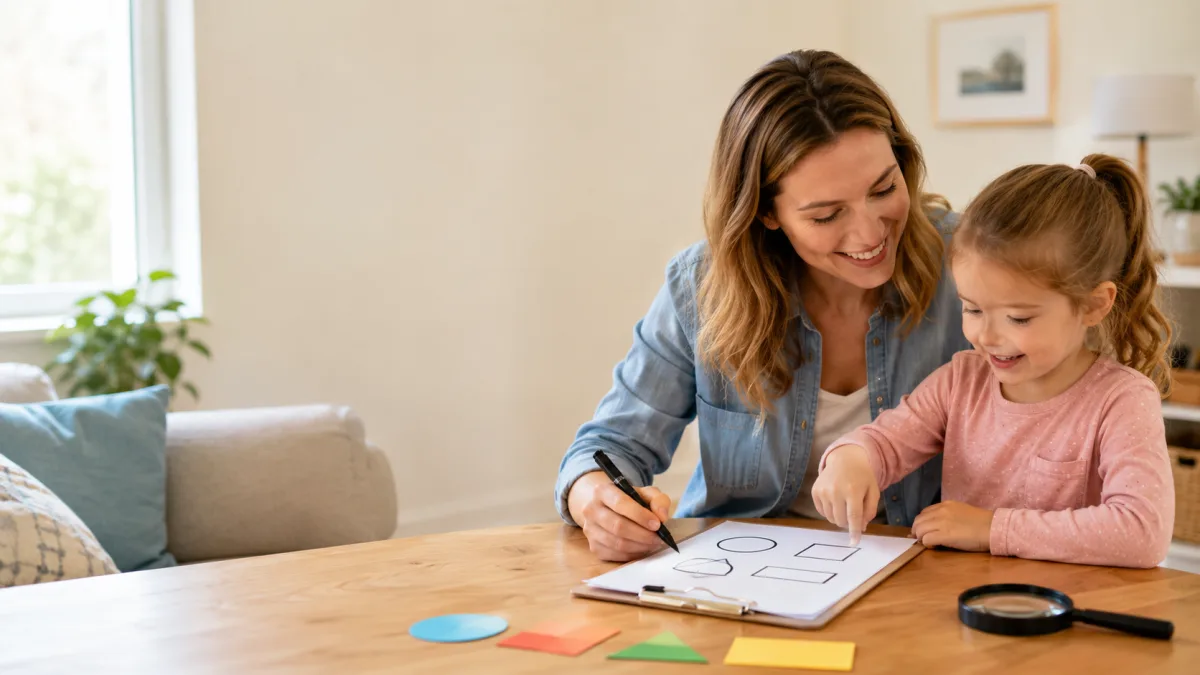
A Shape Hunt Round the House
Circles, squares and triangles are already everywhere. Give them a list and let them find them.
-
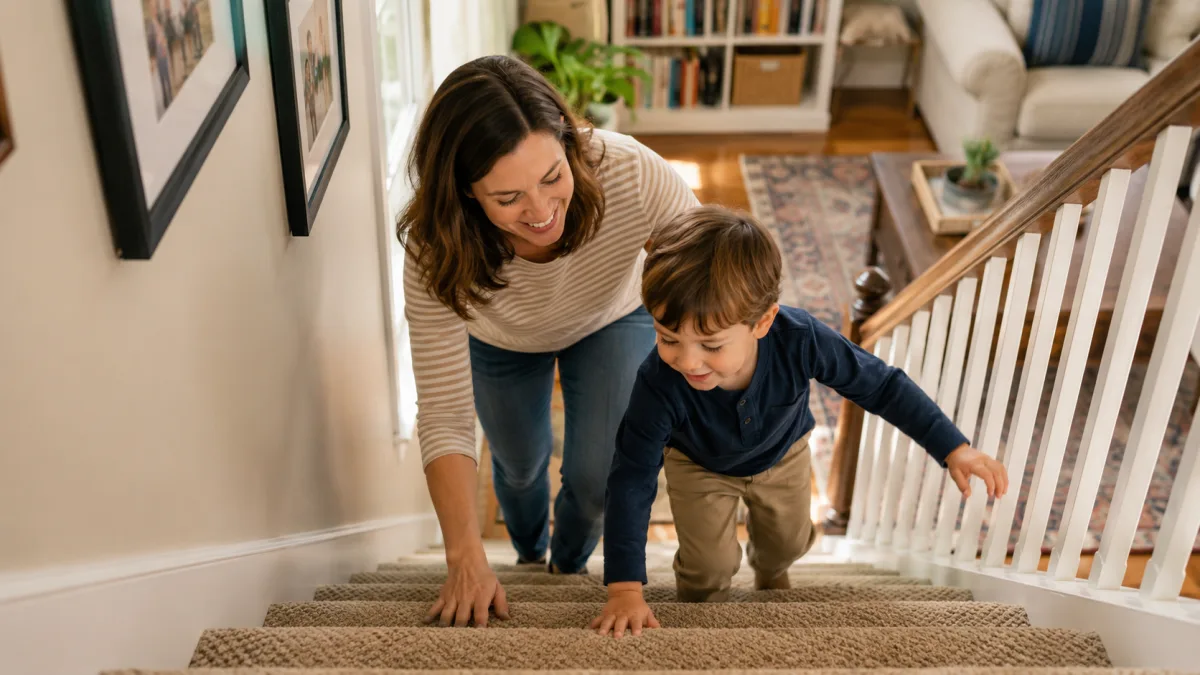
Counting the Stairs (and Everything Else)
Not really an activity — a habit. Counting things out loud all day does more for early maths than any worksheet.
-
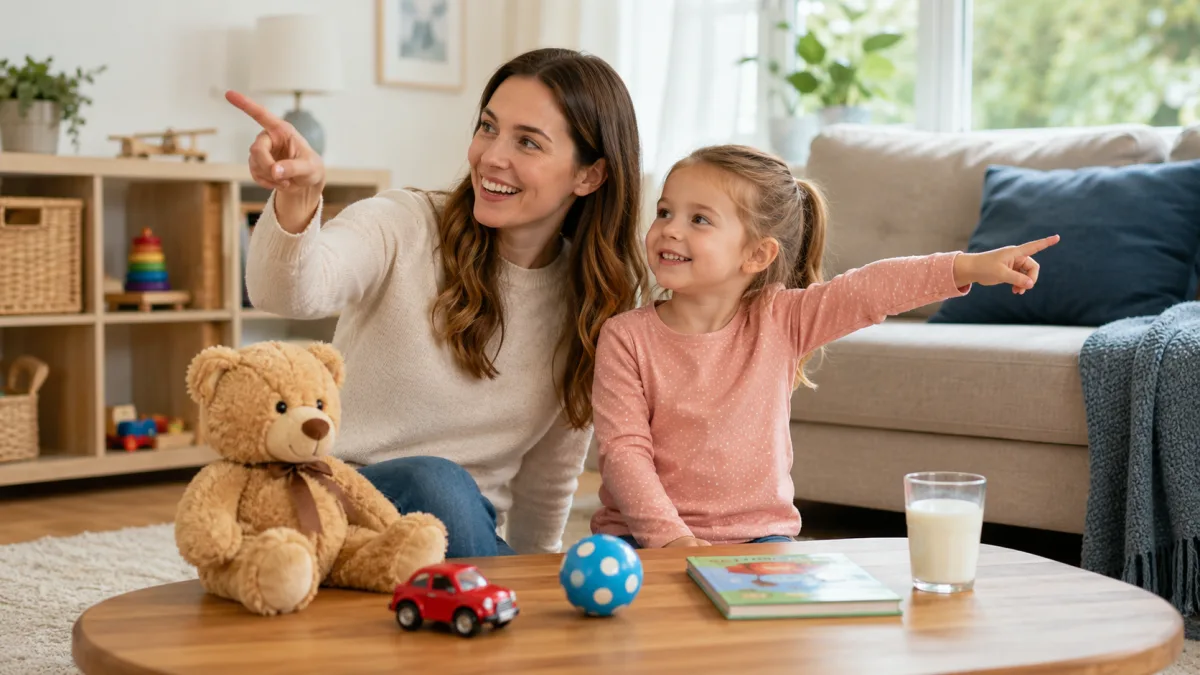
I Spy, But With Sounds
The same game you already know, played with the sound a word starts with instead of the letter. Needs nothing at all.
-
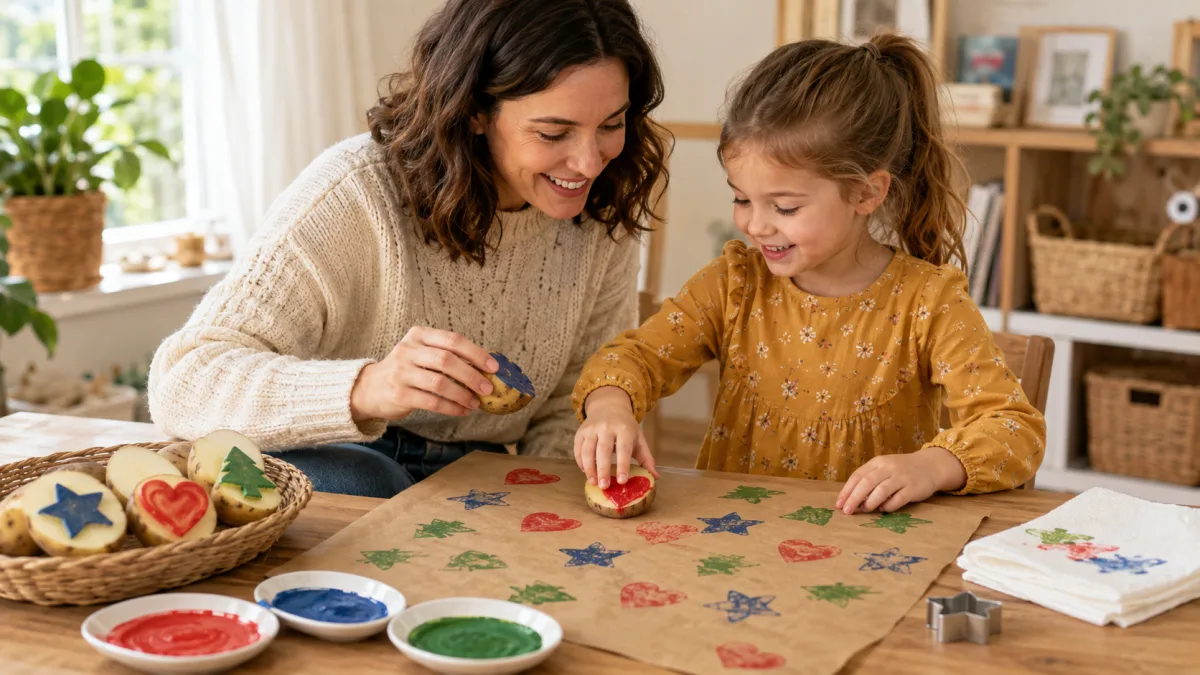
Printing Your Own Wrapping Paper
A halved potato, a shape cut into it, and a roll of plain paper. It looks far better than it has any right to.
-
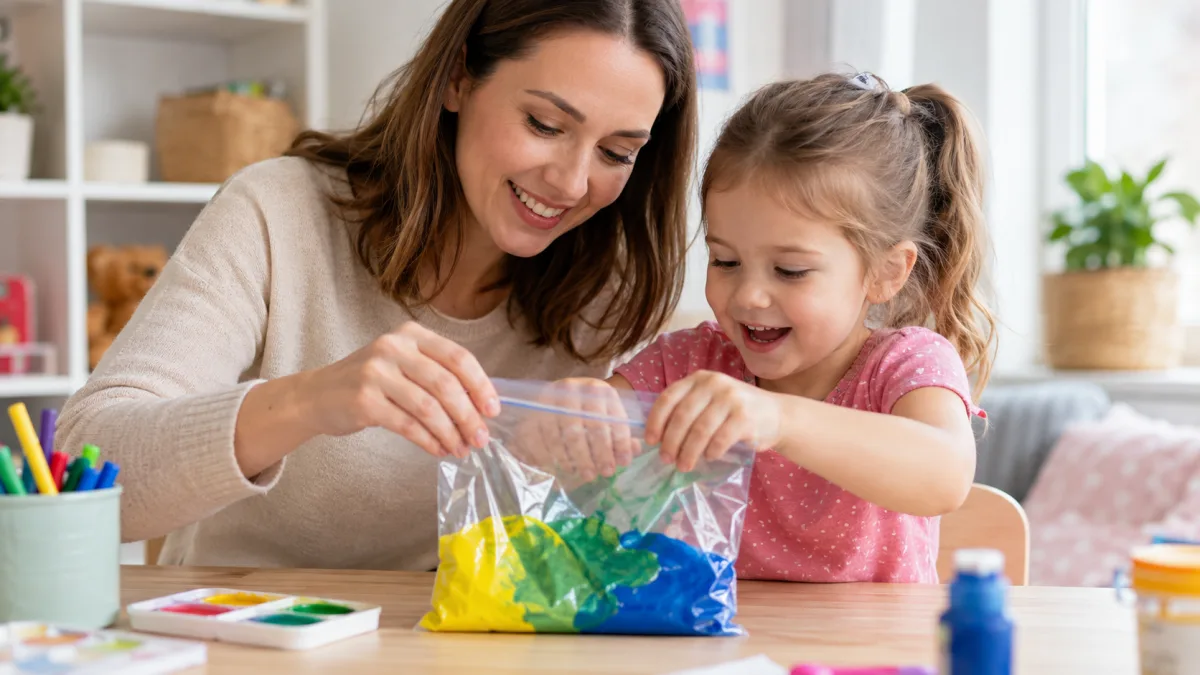
Mixing Colours Without the Mess
Two blobs of paint sealed in a freezer bag. They squash it, the colour changes, and nothing gets on anything.
-
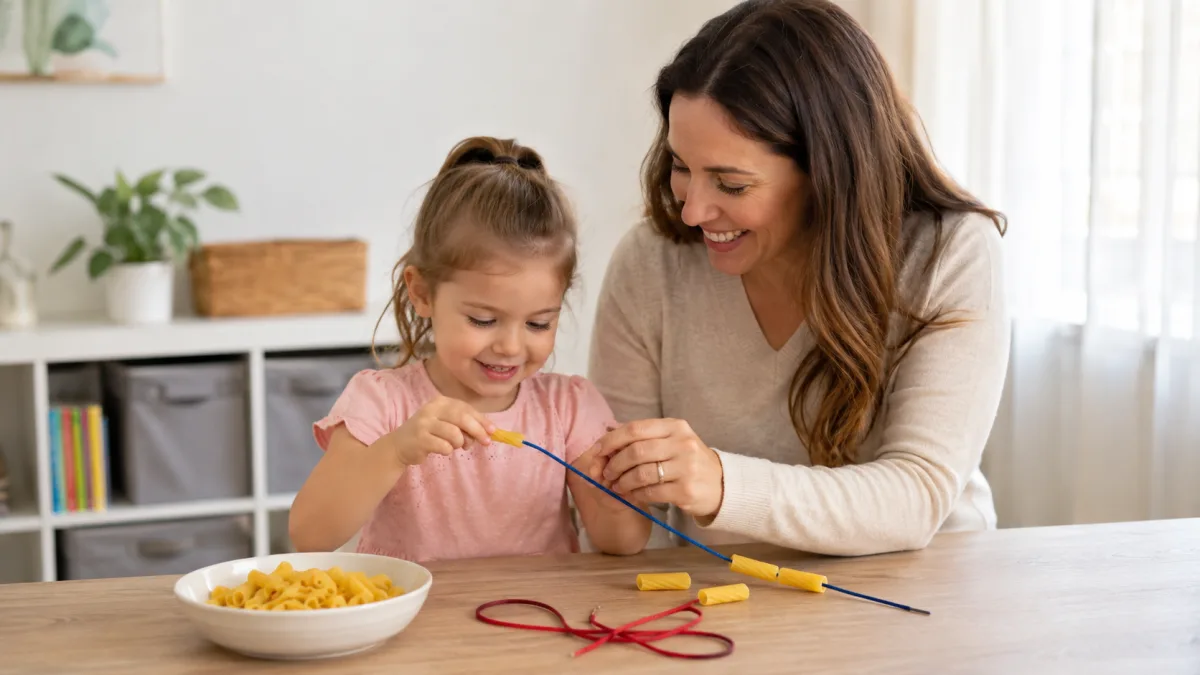
Threading Pasta Necklaces
Dry pasta tubes and a shoelace. Quiet, absorbing, and one of the best things you can do for a small hand.
-
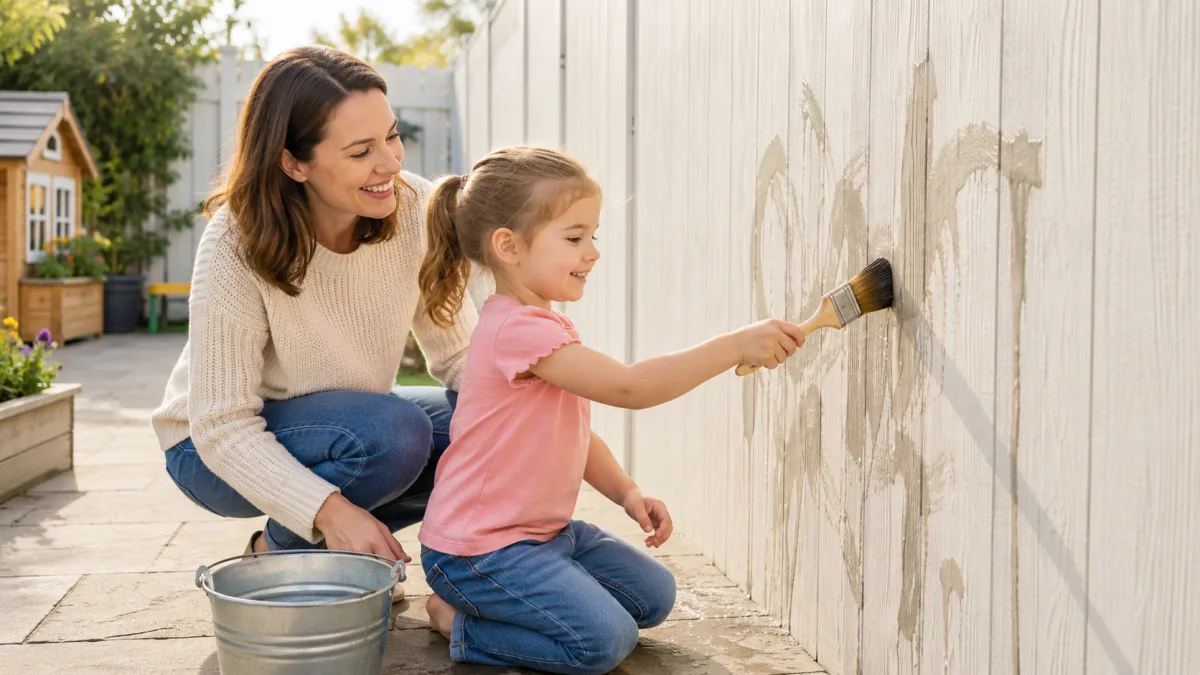
Painting With Water
A bucket of water and a big brush. They paint the wall, the fence and the path, it dries, and they do it again. No mess at all.
-
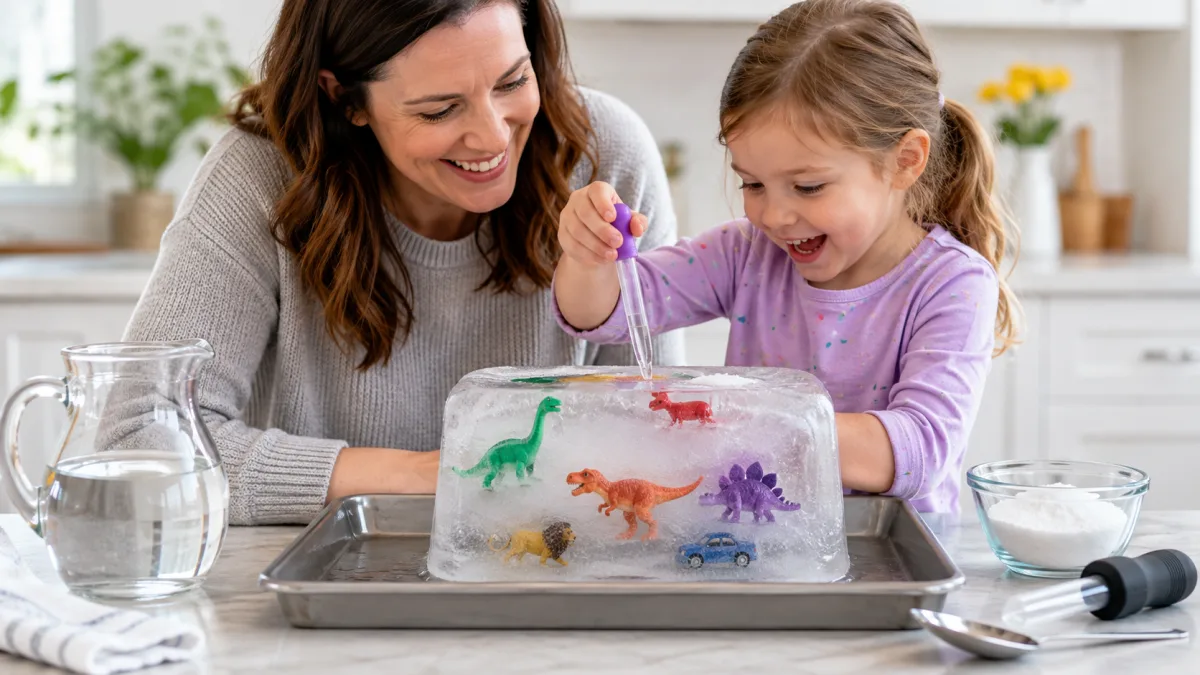
Rescue the Frozen Toys
Freeze small toys in a tub of water overnight, then hand over warm water, salt and a spoon. It buys a genuinely quiet hour.
-
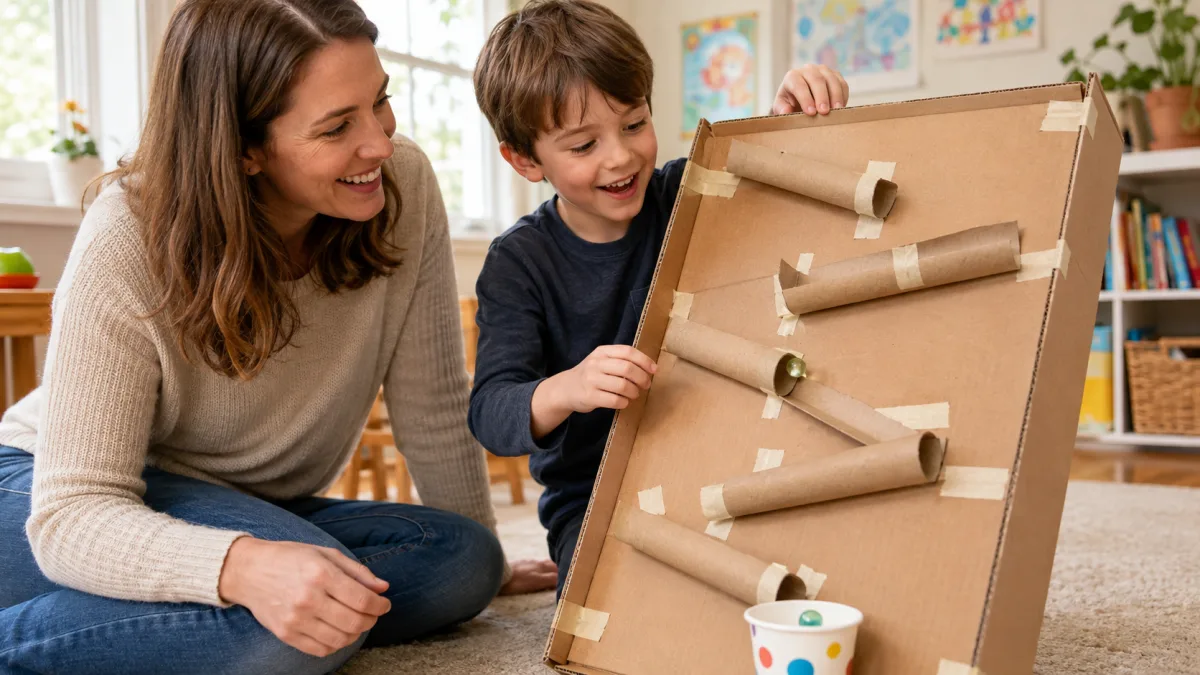
Cardboard Box Marble Run
Cut a delivery box into ramps and tape them inside the lid. It never works first time, and that is the entire point of it.
-
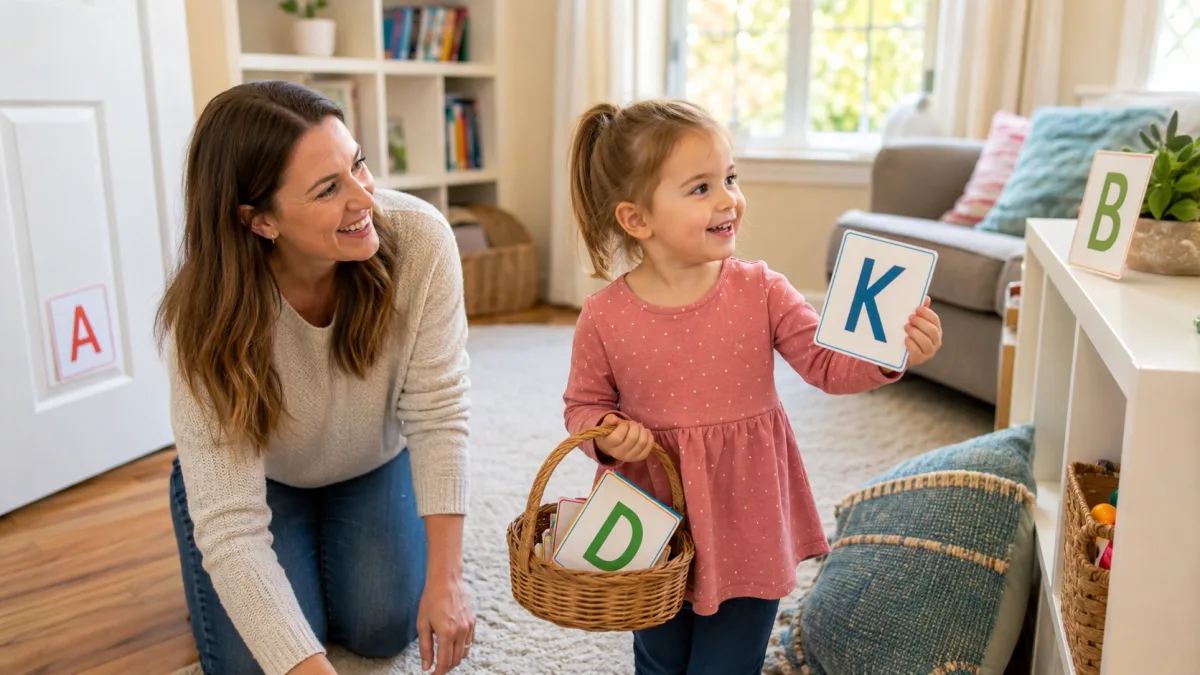
Alphabet Hunt Around the House
Hide letters around one room and send your child to find them. No preparation beyond writing on some paper, and it teaches letter recognition better than a worksheet.
Browse learn through play
Young children learn by doing things with their hands and talking about them out loud. An alphabet hunt around the living room teaches letter recognition more durably than a page of tracing, because the child is moving, choosing and explaining while they do it.
So the activities in this section have a learning goal, and each one says plainly what it is practising — letter sounds, counting one-to-one, sorting by a rule, noticing what changed. That way you can pick what your child is interested in rather than what a curriculum says comes next.
What you'll find here
-
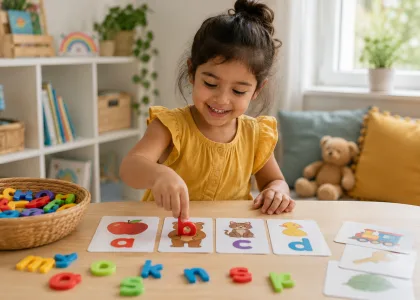
Letters and sounds
Recognising letters, hearing the sound at the start of a word, and eventually putting them together. Games and hunts rather than drills.
-
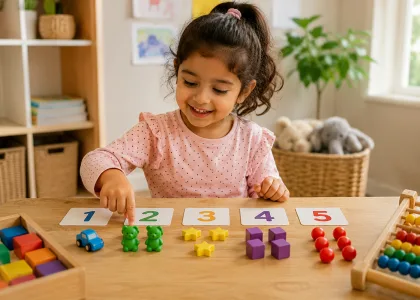
Numbers and counting
Counting things that are really there, matching a number to an amount, and spotting patterns — the groundwork that makes later maths make sense.
-
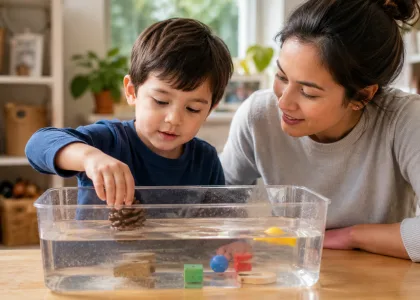
Science and noticing
Will it sink? What happens if we add more? Simple experiments with a question at the start and a conversation at the end.
None of this is a substitute for what your child does at nursery or school, and none of it is developmental advice. It is play that happens to teach something.