


Early Elementary
Activities for Early Elementary.
Children this age can read the steps, gather what they need and work independently, so the activities are pitched as challenges rather than instructions.
Multi-stage projects, buildings that have to hold weight, experiments with something to measure, and games they can teach somebody else all work well.
The most common failure is pitching too low. If it looks easy, it will be refused — add a constraint rather than an explanation.
Activities
-
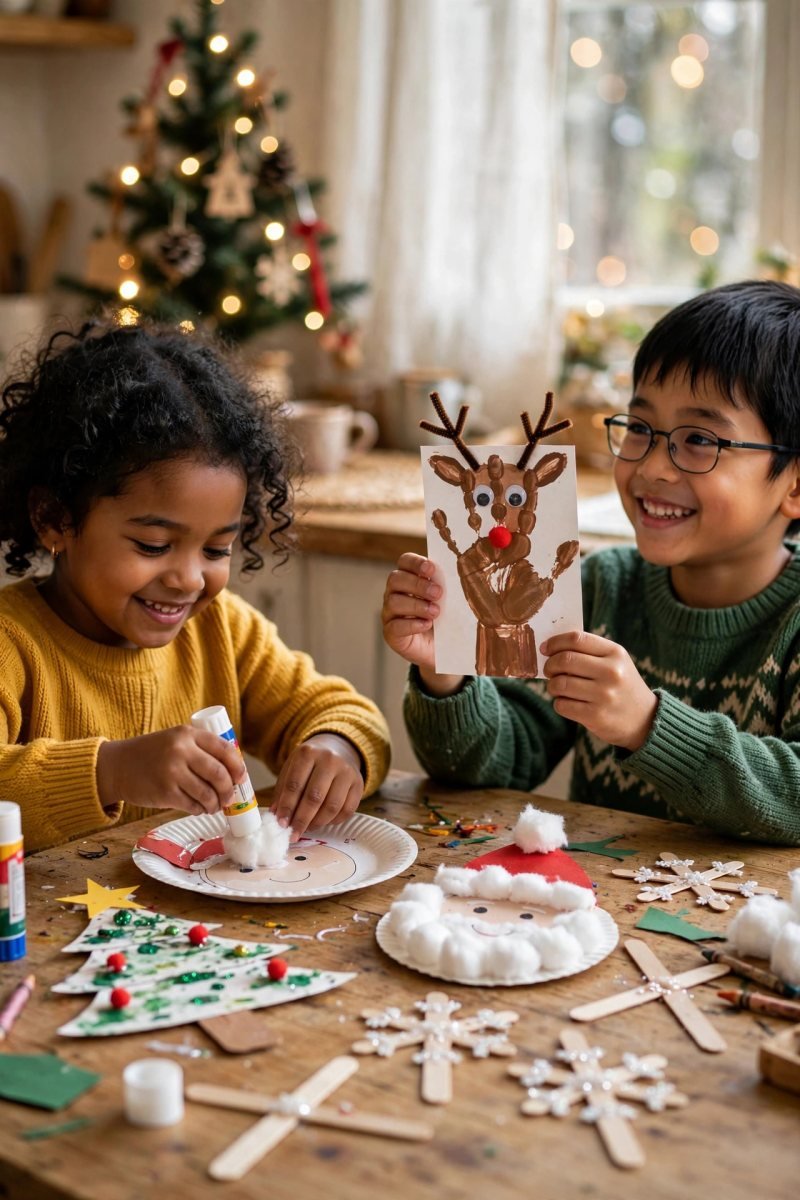
25 Easy Christmas Crafts for Kids (With Free Templates)
Looking for christmas crafts for kids that don't require a craft-store run, a glitter cleanup operation, or a screen to keep anyone busy? You've come to the right place. These 25 easy Christmas crafts use things you already have at home.
-
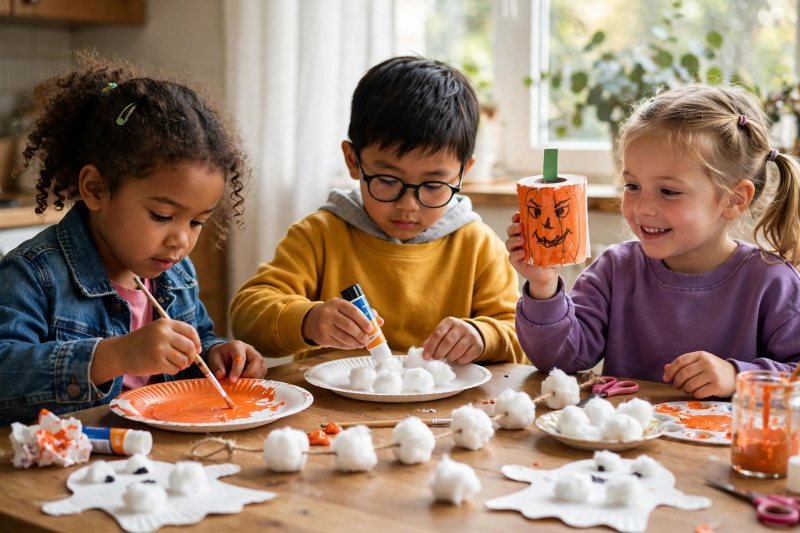
25 Not-So-Spooky Halloween Crafts for Kids
Looking for halloween crafts for kids that keep the fun without the frights? These 25 not-so-spooky Halloween crafts use things you already own — paper plates, toilet rolls, flour, crayons — and every idea lists the age, the time, and the mess level up front, so you can pick one in seconds.
-
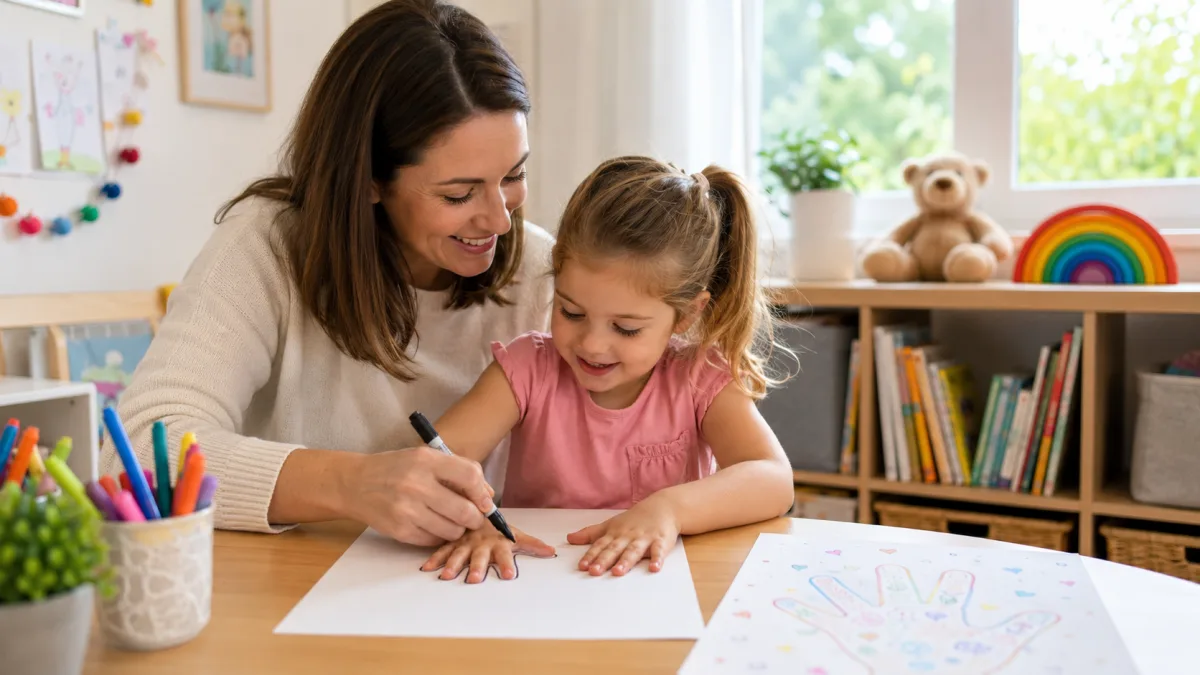
Draw Round Their Hand and Keep It
One sheet, once a year: their hand, their height, and three things they can do now that they could not last year.
-
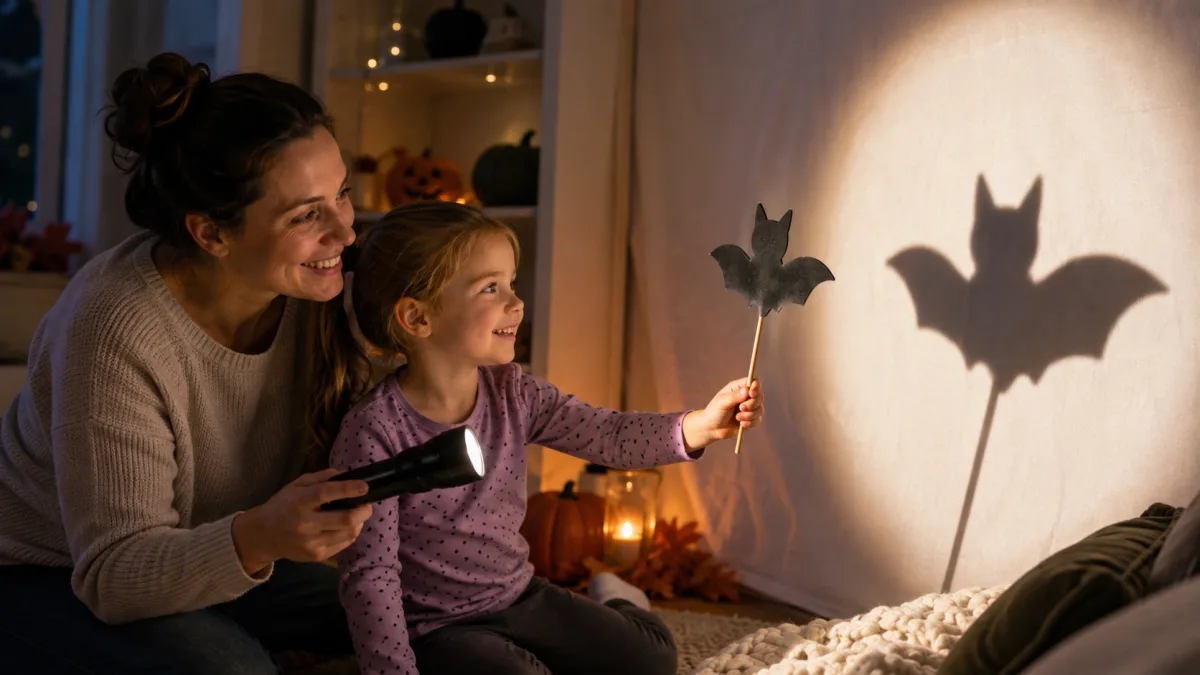
Spooky Shadow Puppets
Cut a bat and a cat from card, tape them to straws, and put on a show against the wall with a torch.
-
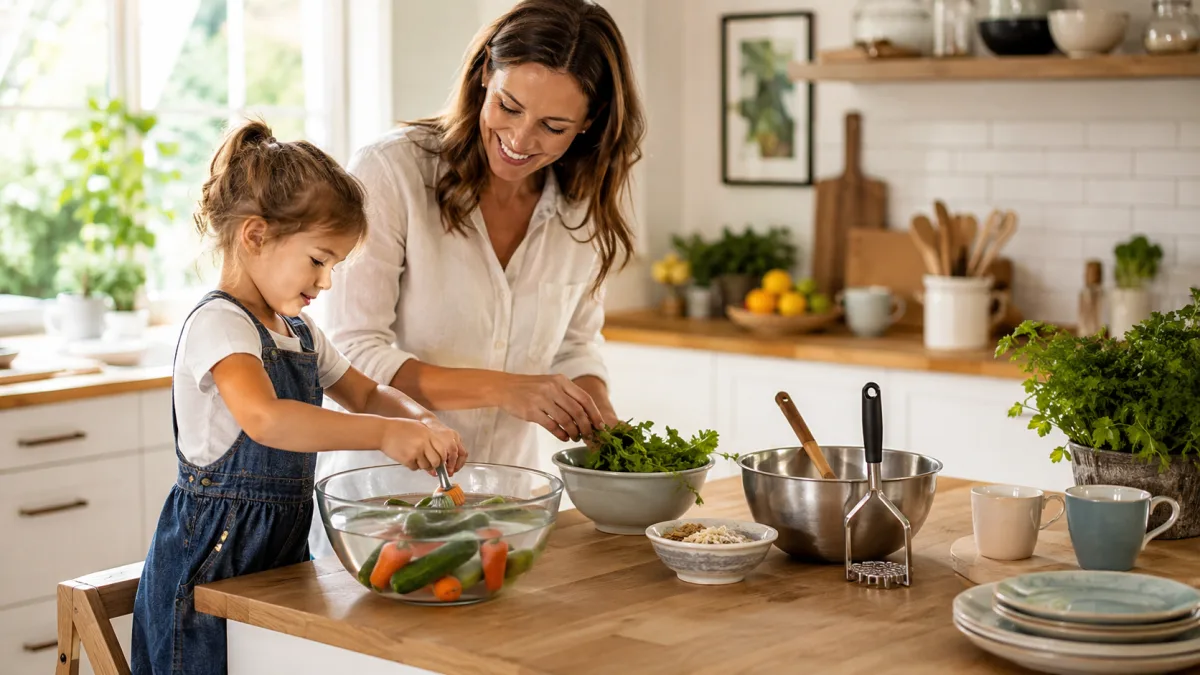
Real Kitchen Jobs a Small Child Can Actually Do
Washing, tearing, stirring and sprinkling. Eight jobs that are genuinely useful on a busy cooking day.
-
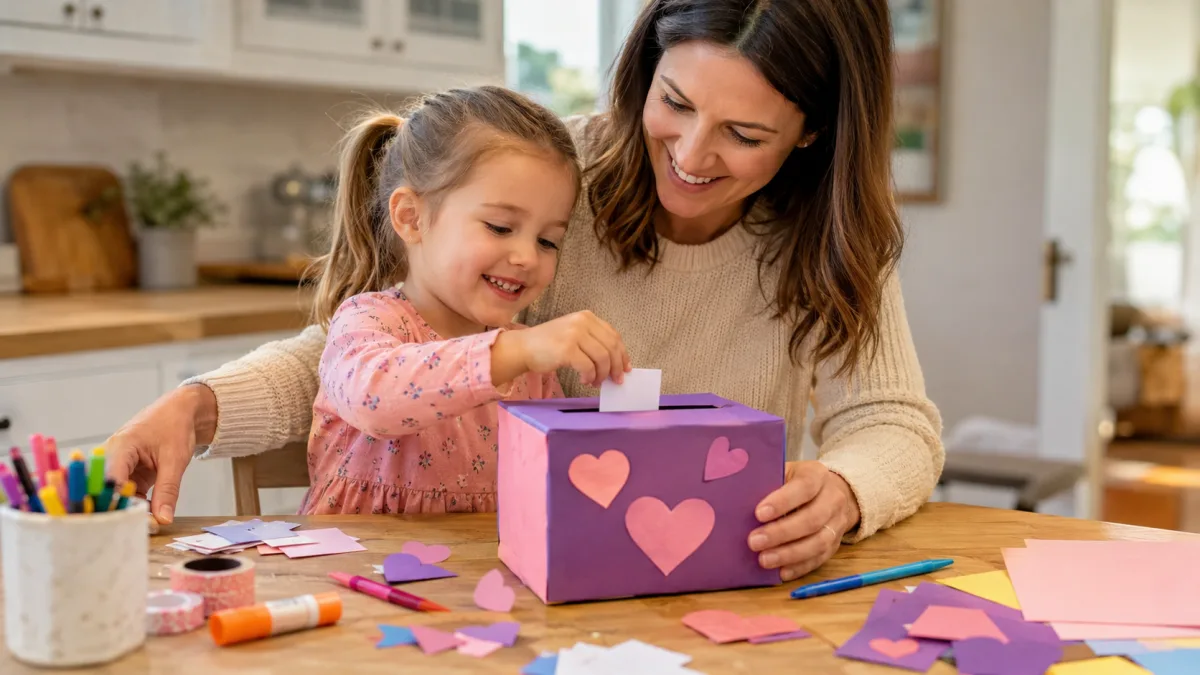
A Post Box for Kind Notes
A cereal box with a slot cut in it. Everyone posts a note about somebody else, and you read them out at dinner.
-
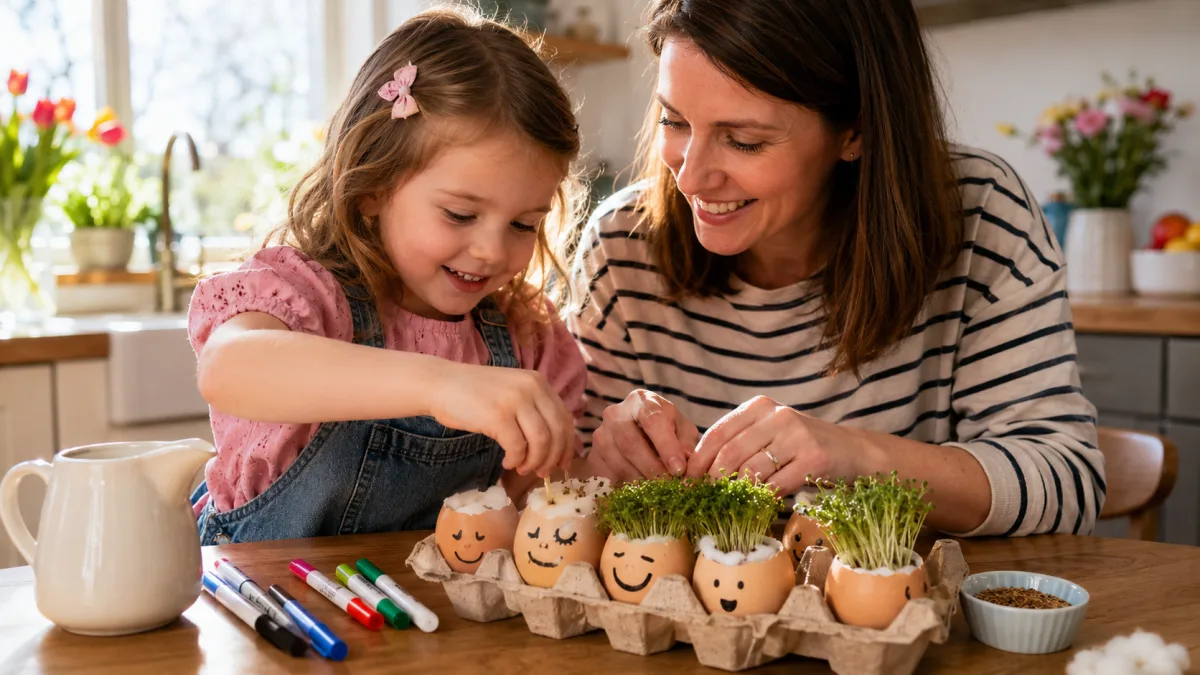
Grow Hair on an Eggshell
Half an eggshell, a face drawn on, cotton wool and cress seeds. In a week it has green hair you can eat.
-
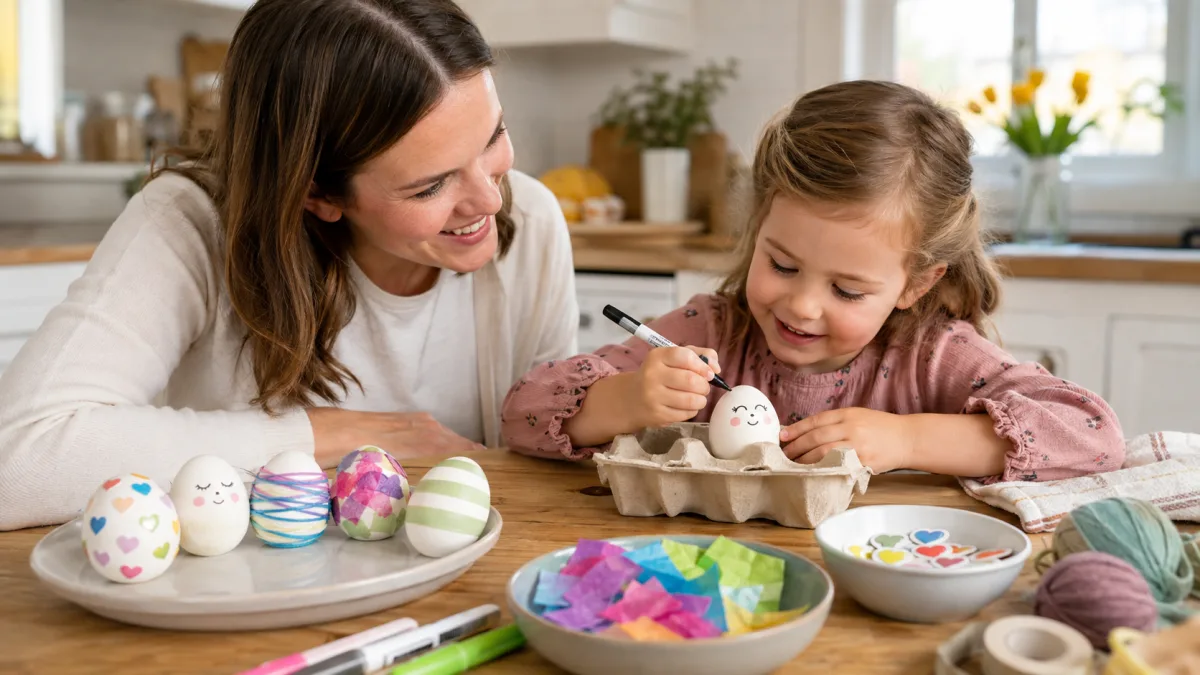
Five Ways to Decorate an Egg With No Dye
Stickers, felt tips, wool, tissue paper and tape. All five work on a hard-boiled egg and none of them stain anything.
-
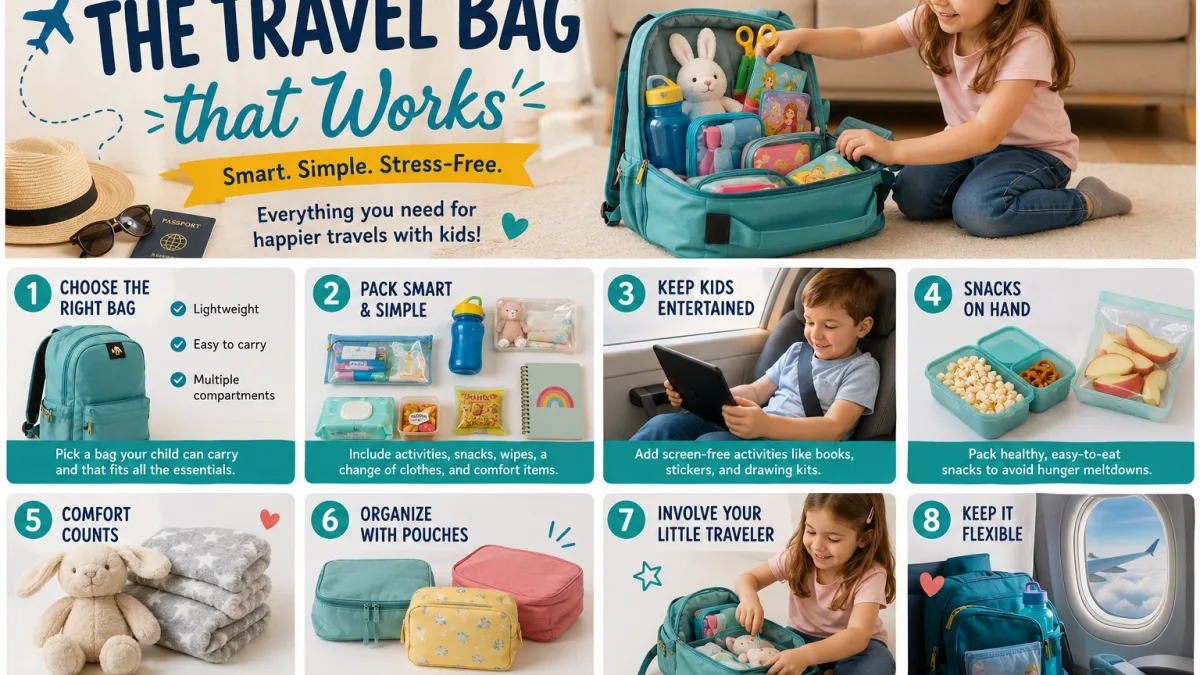
What to Actually Put in the Travel Bag
Several small things, handed out one at a time. That single rule matters more than anything you put in it.
-
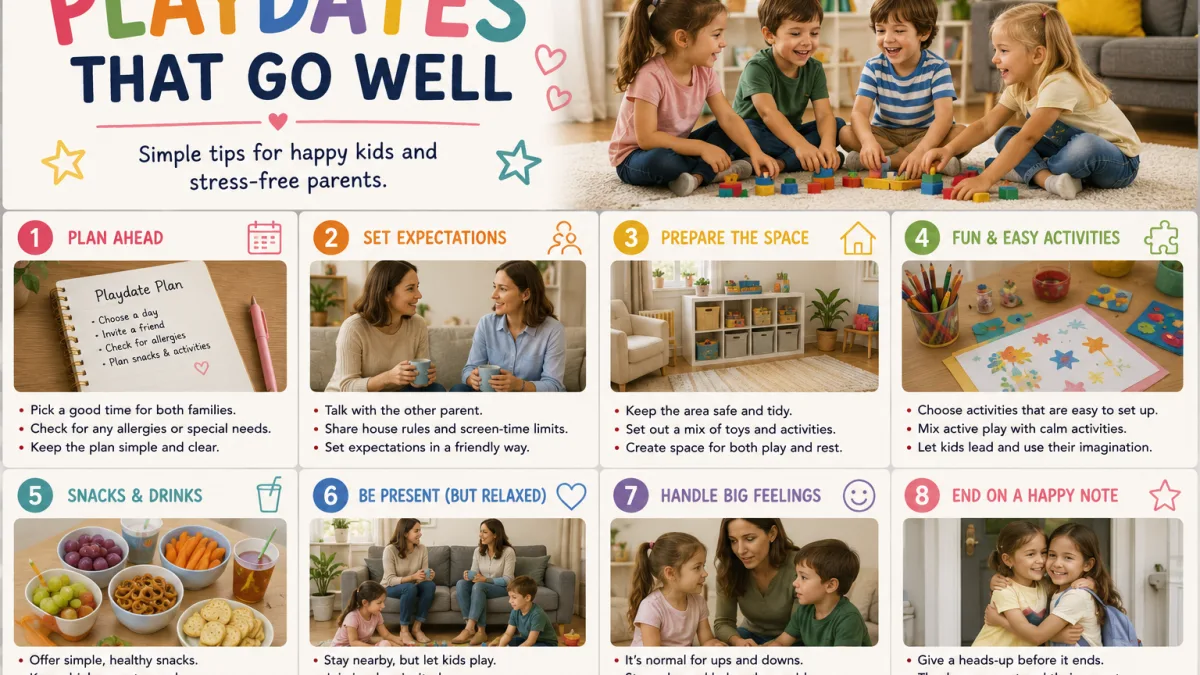
Making a Playdate Go Well
Put the precious toys away first, have one activity that needs two people, and finish while it is still going well.
-
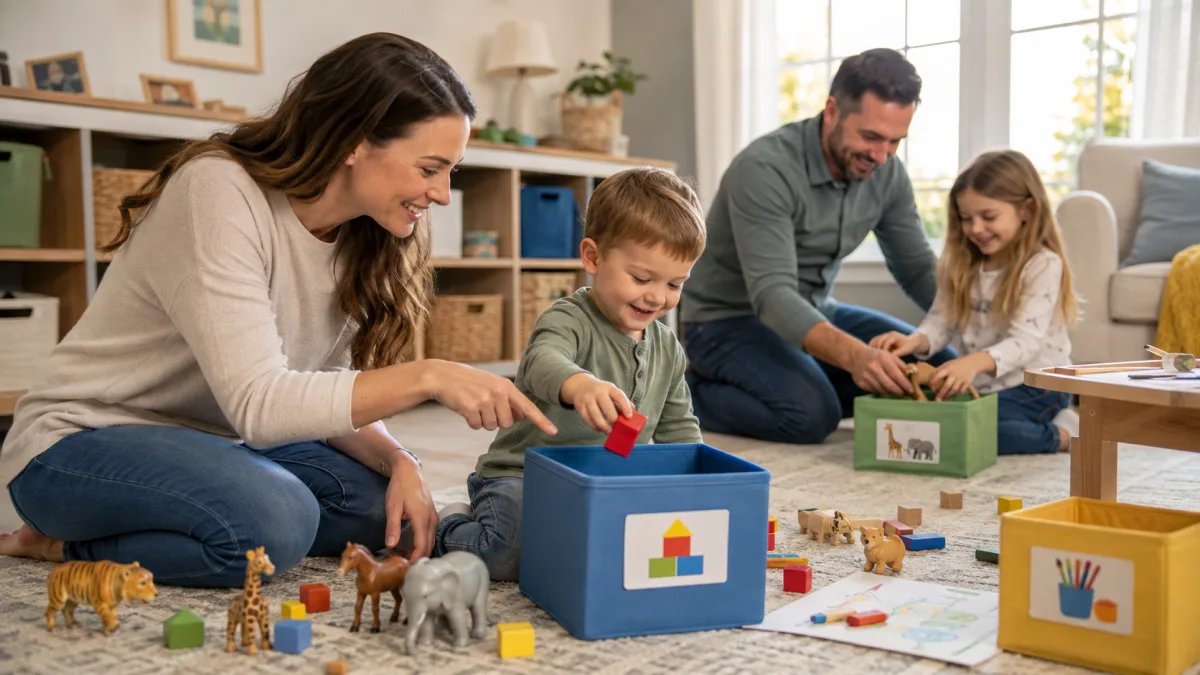
Tidying Up Without the Battle
"Tidy up" is an impossible instruction. "Put the blocks in the blue box" is a job a three-year-old can finish.
-
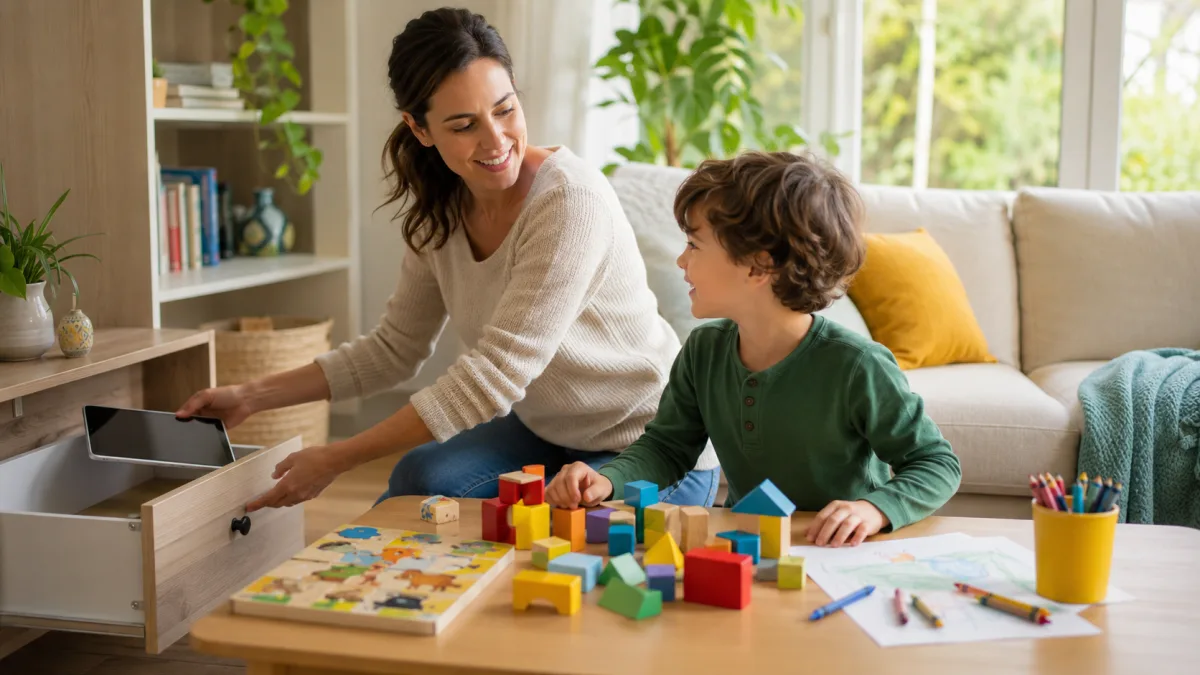
Less Screen Time, Without the Argument
What actually works is not willpower. It is having something else already out on the table, and the tablet not in the room.
-
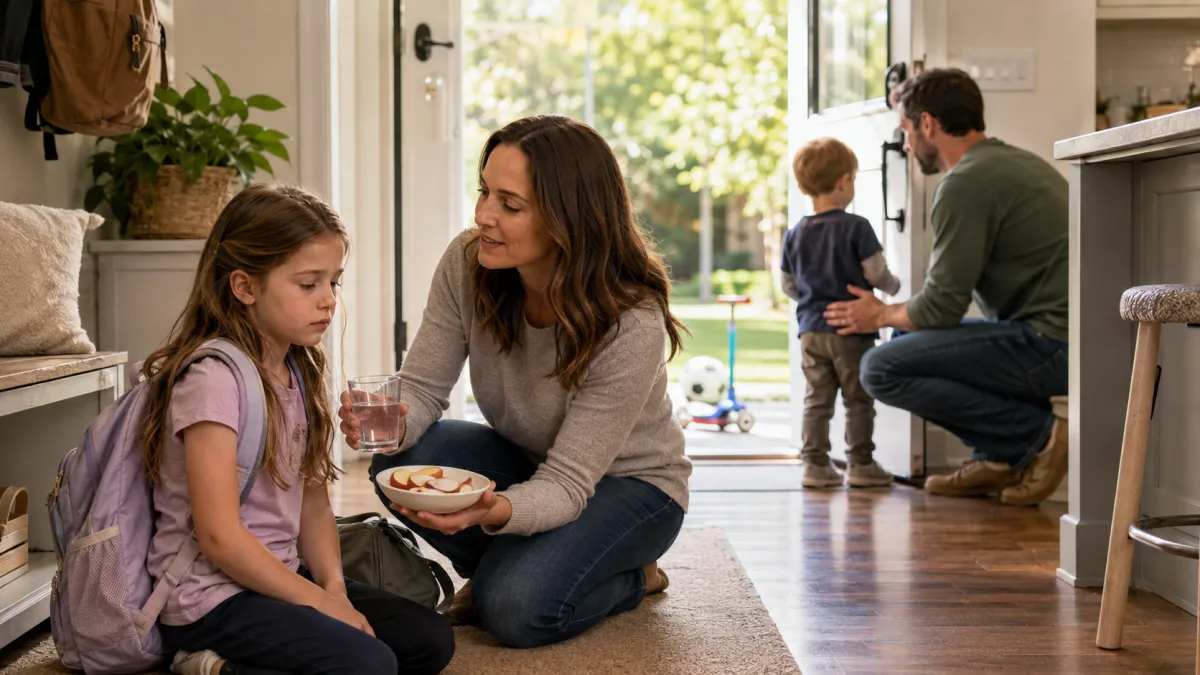
The Hour After School Is Always the Hardest
A child who held it together all day falls apart the moment they see you. Food first, questions much later.
-
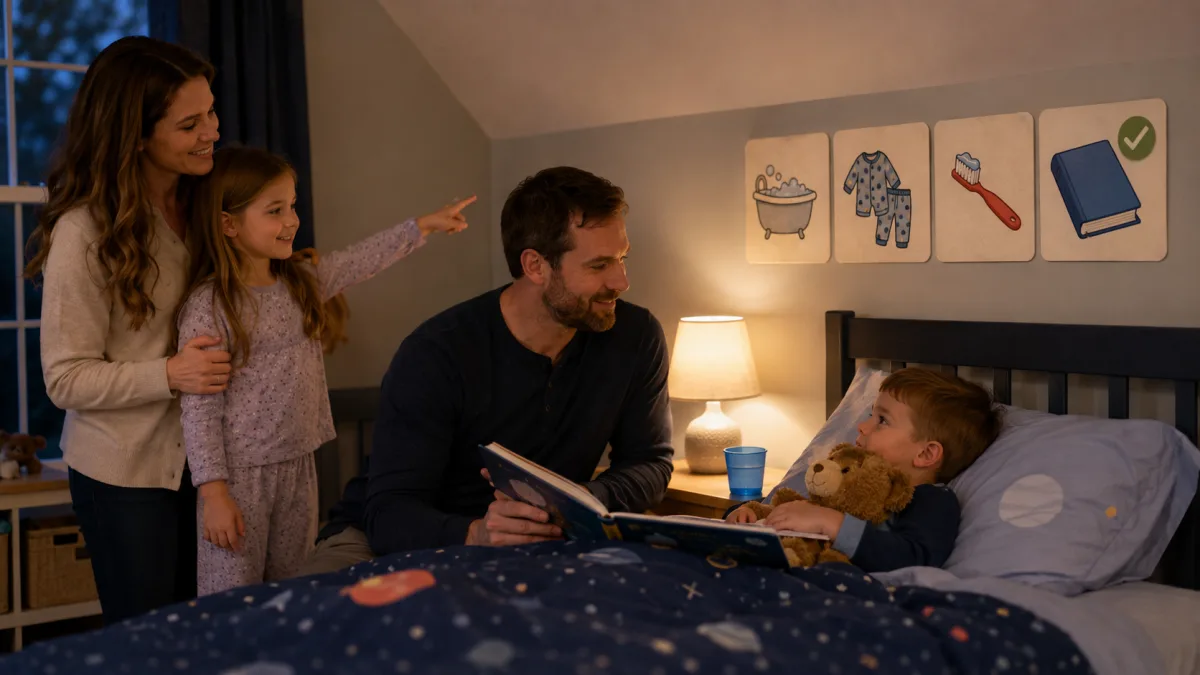
Making Bedtime Shorter
Most bedtime trouble is a routine problem, not a sleep problem. Fewer decisions, same order, clear last thing.
-
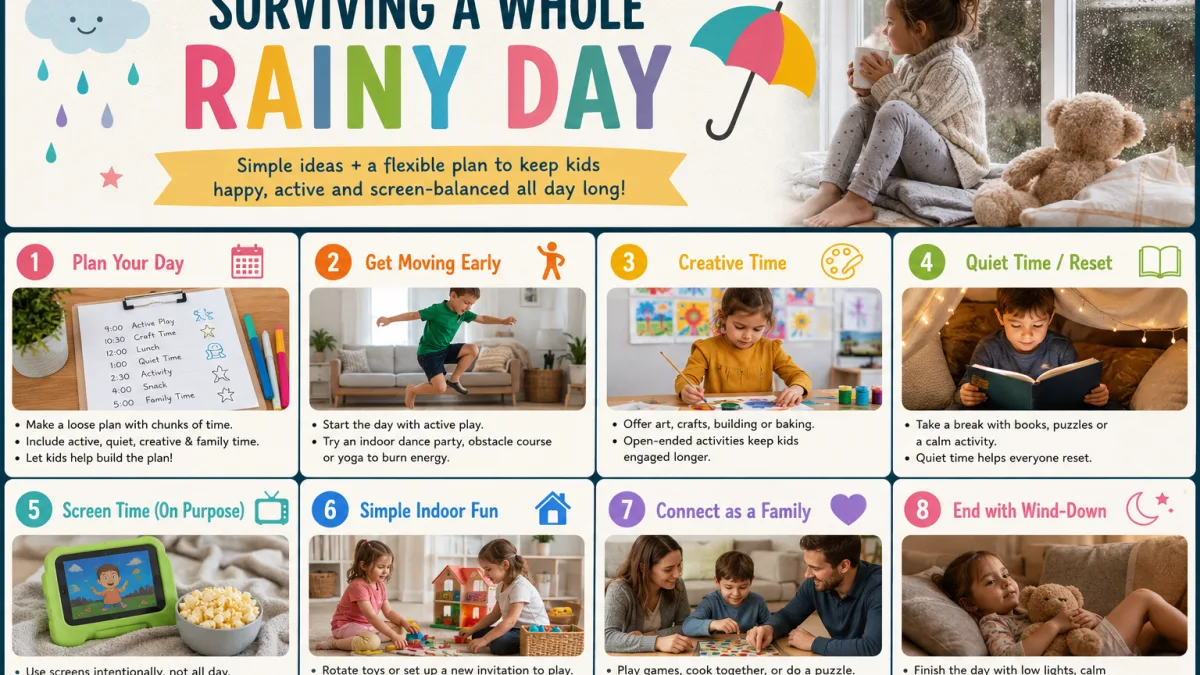
The Shape of a Rainy Day
A whole day indoors needs a shape, not a list. Energy first, then absorbing, then quiet, then food — repeated.
-
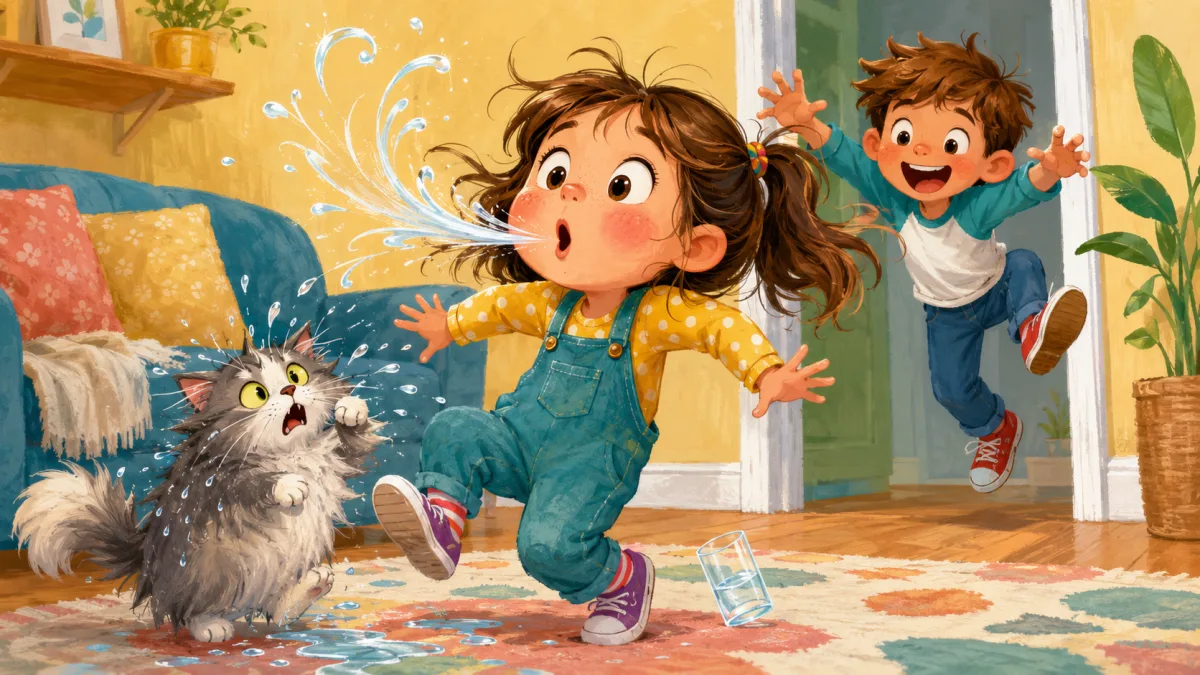
The Very Loud Hiccup
A read-aloud story with a noise in it that everybody has to make. Loud, silly, and not for bedtime.
-
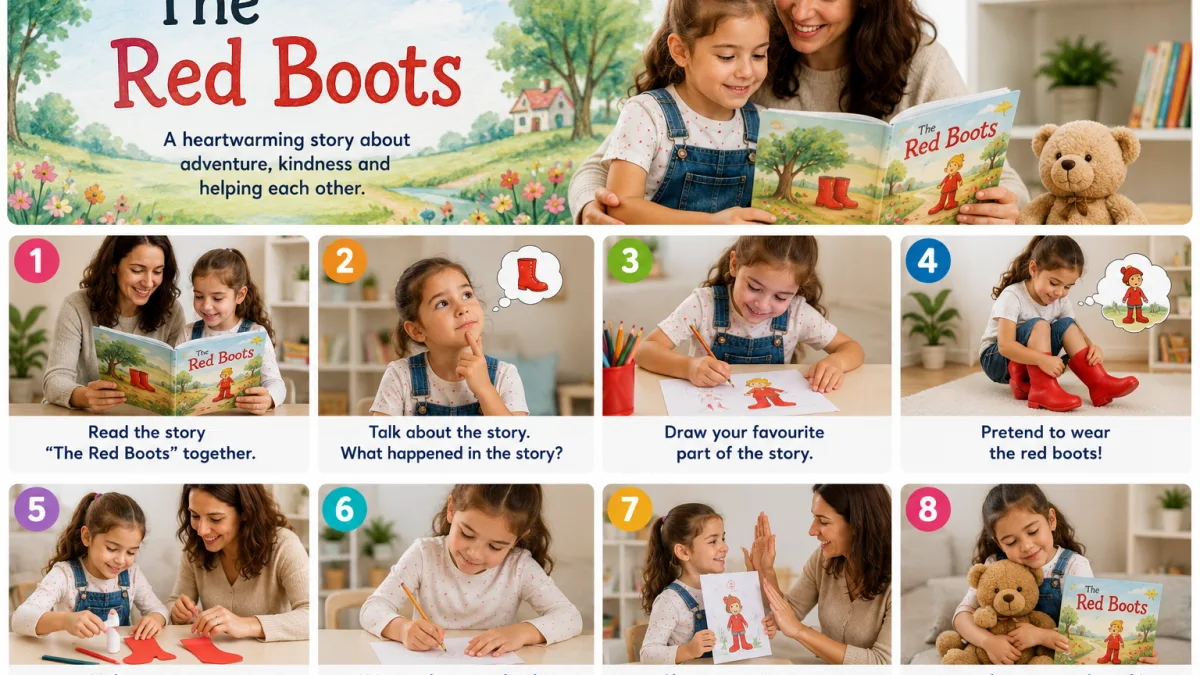
The Red Boots
A story for a child who is starting to read some of it themselves. Short words, short lines, and a puddle.
-
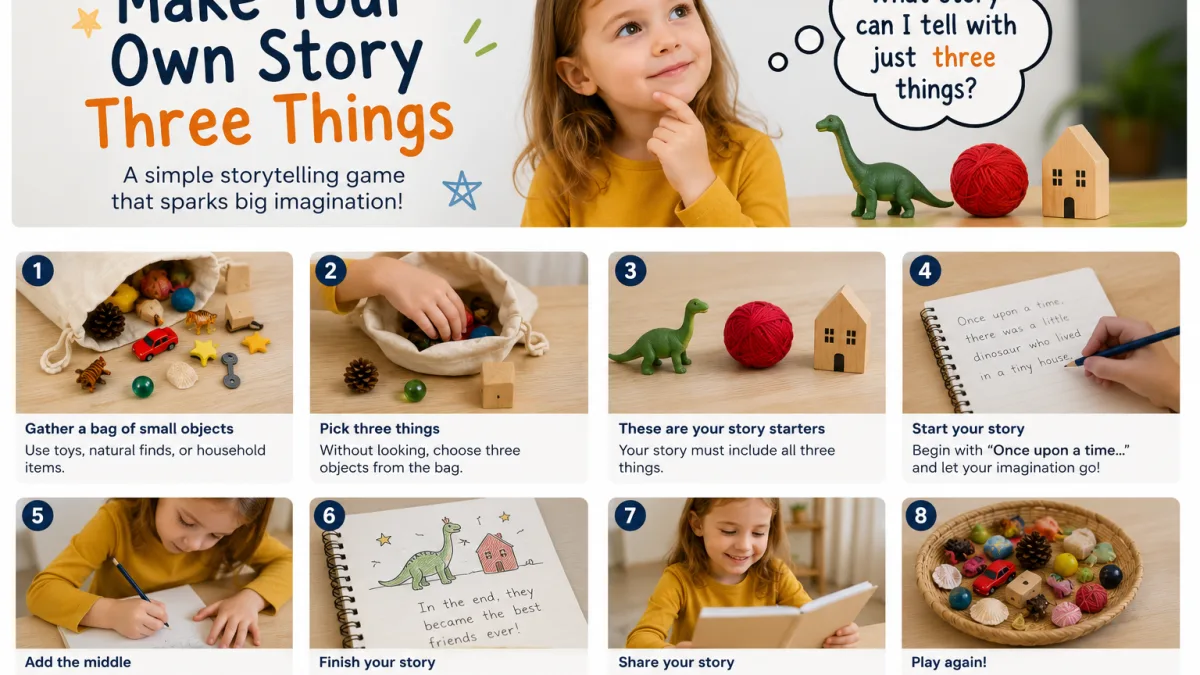
Make Up a Story With Three Things
A character, a place, and something going wrong. That is enough for almost any child to be away.
-
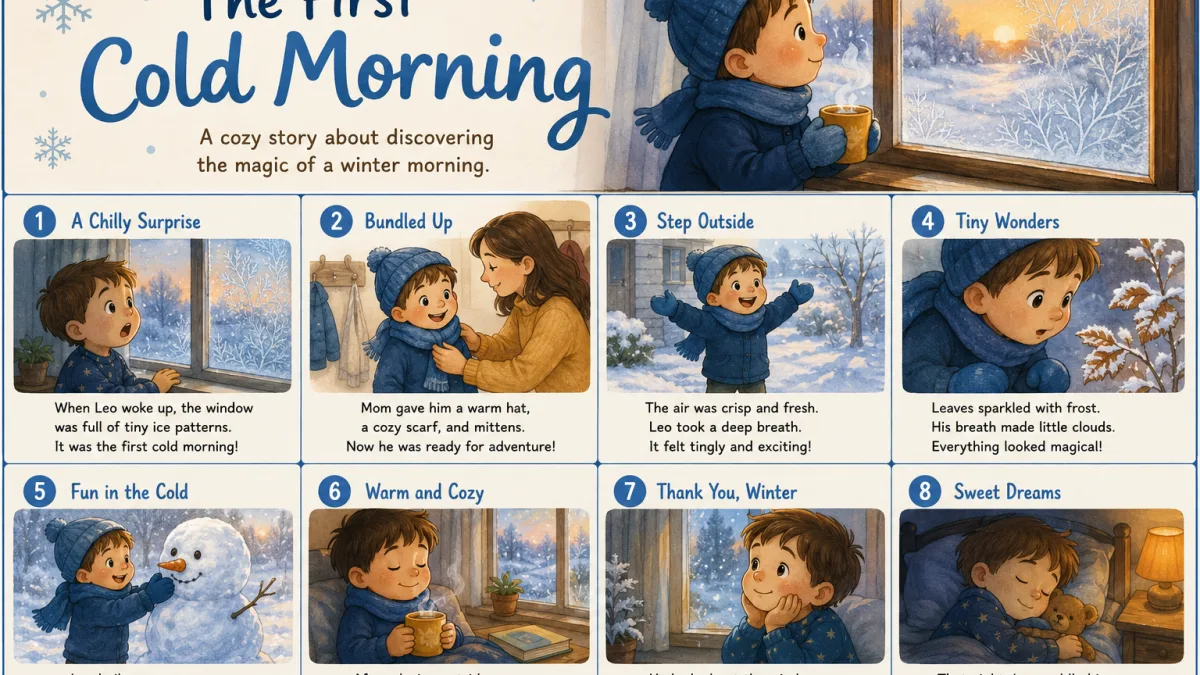
The First Cold Morning
A seasonal story about the morning you can suddenly see your own breath.
-
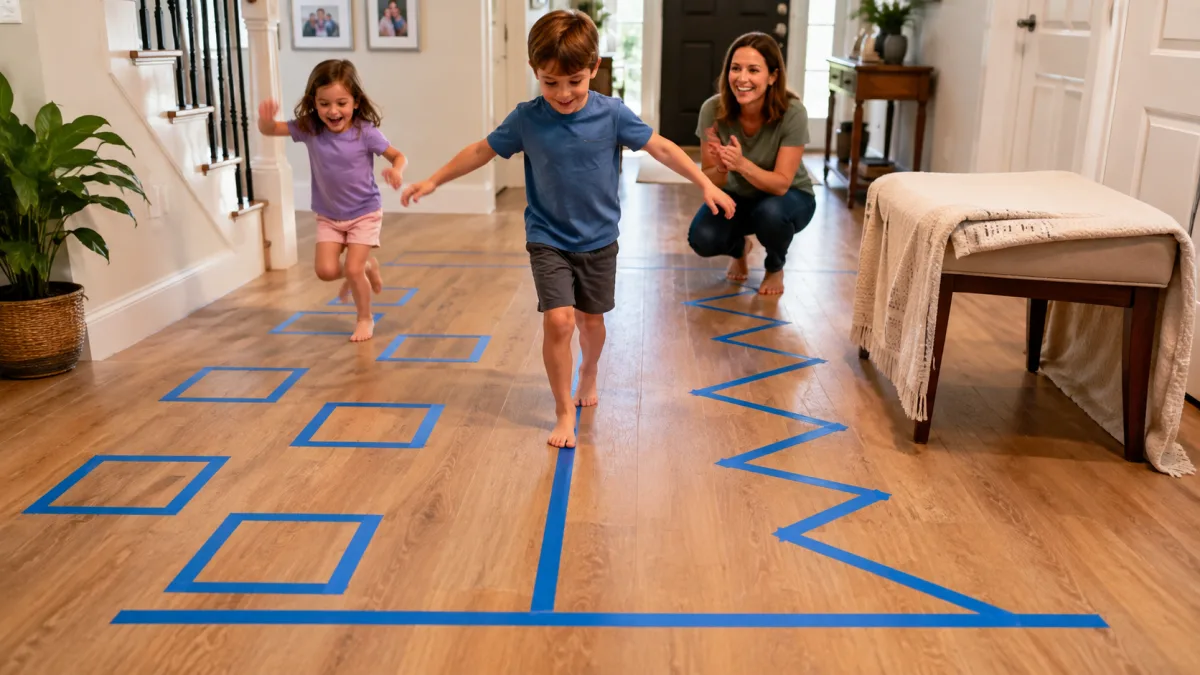
A Masking Tape Obstacle Course
One roll of tape turns a hallway into a course to balance, jump and crawl along. Works in a flat, upstairs, in the rain.
-
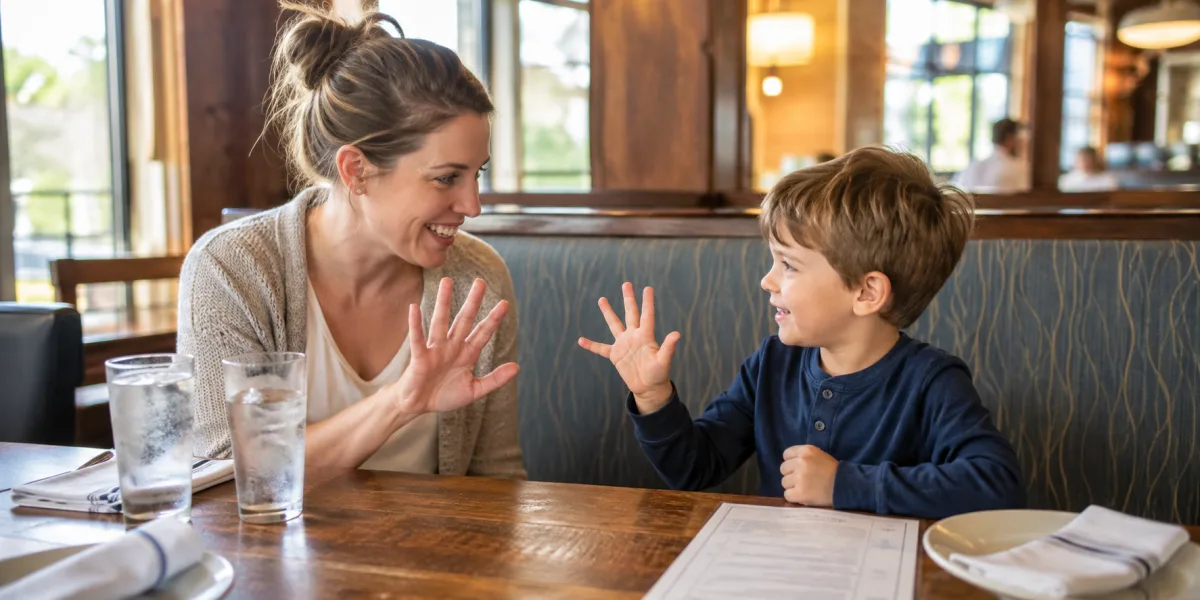
Five Games for the Wait Before the Food
No bag, no crayons, nothing to drop on the floor. Five games that need only the two of you and a table.
-
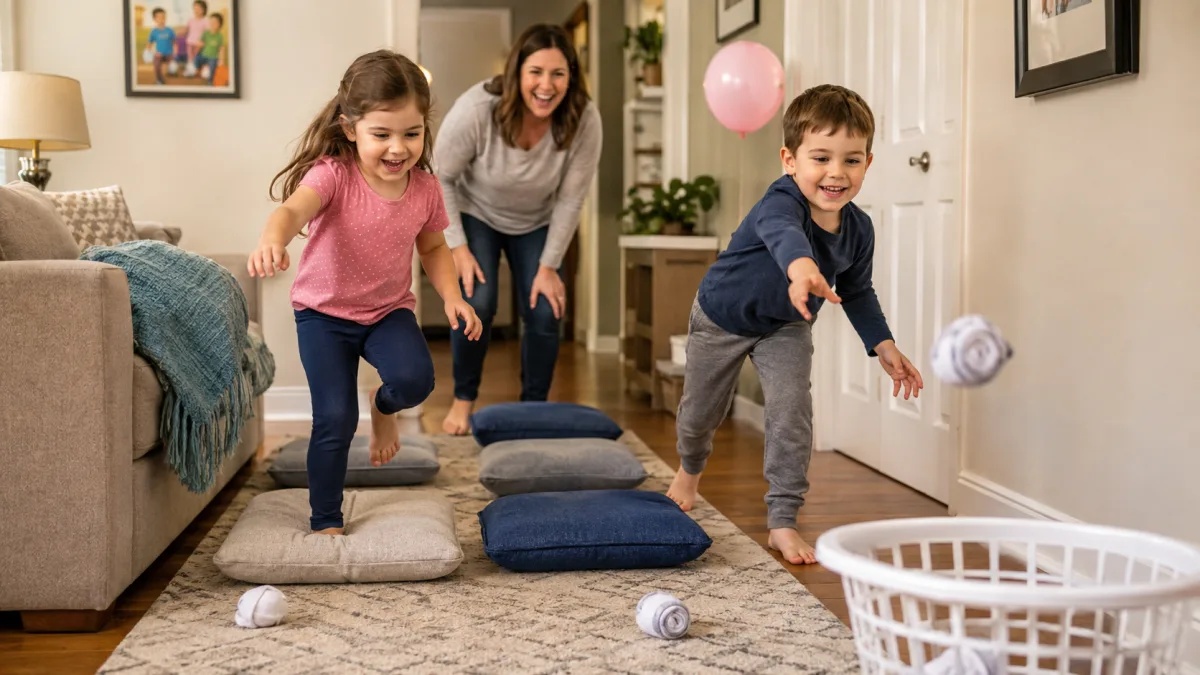
Getting the Energy Out in a Small Room
Four ways to wear a child out indoors without breaking anything or annoying the neighbours downstairs.
-
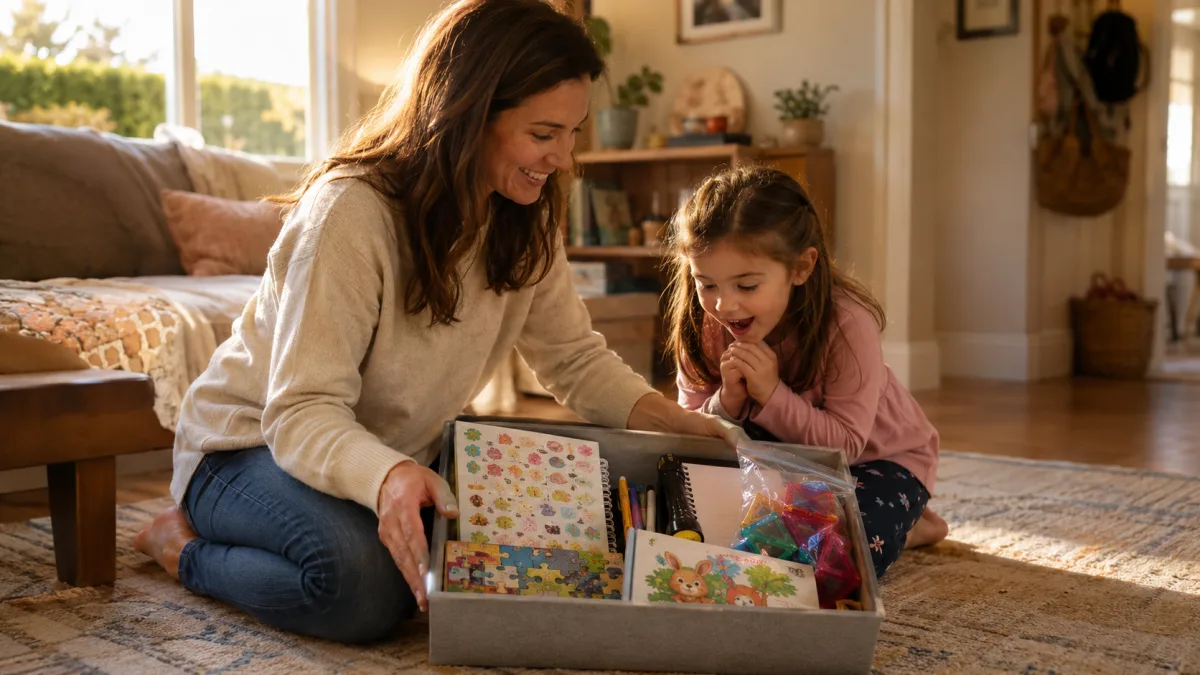
A Quiet Box for the Difficult Hour
One box, five or six calm things, brought out only when everything is falling apart. It works because it is rare.
-
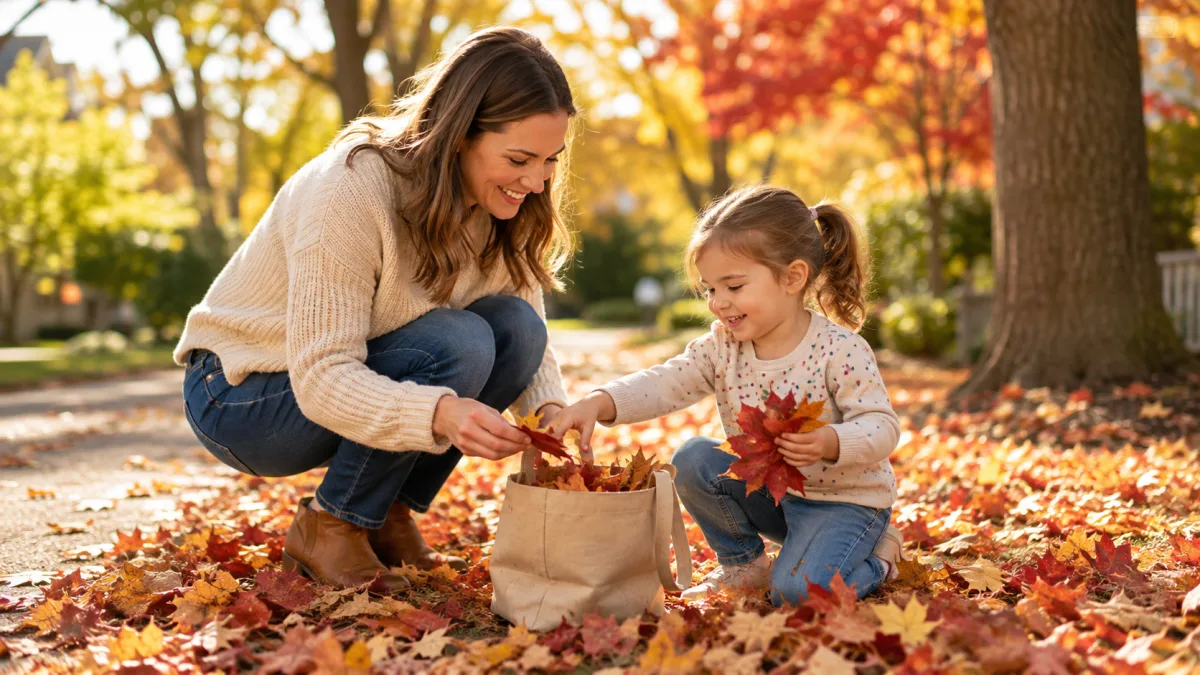
Collect the Leaves, Then Sort Them
A bag, a walk, and a kitchen table. The collecting is half of it and the sorting is the other half.

