


Activities by Age
The same activity lands very differently at three and at seven. These pages group ideas by what tends to work at each age — as a starting point, not a rule.
Activities
-
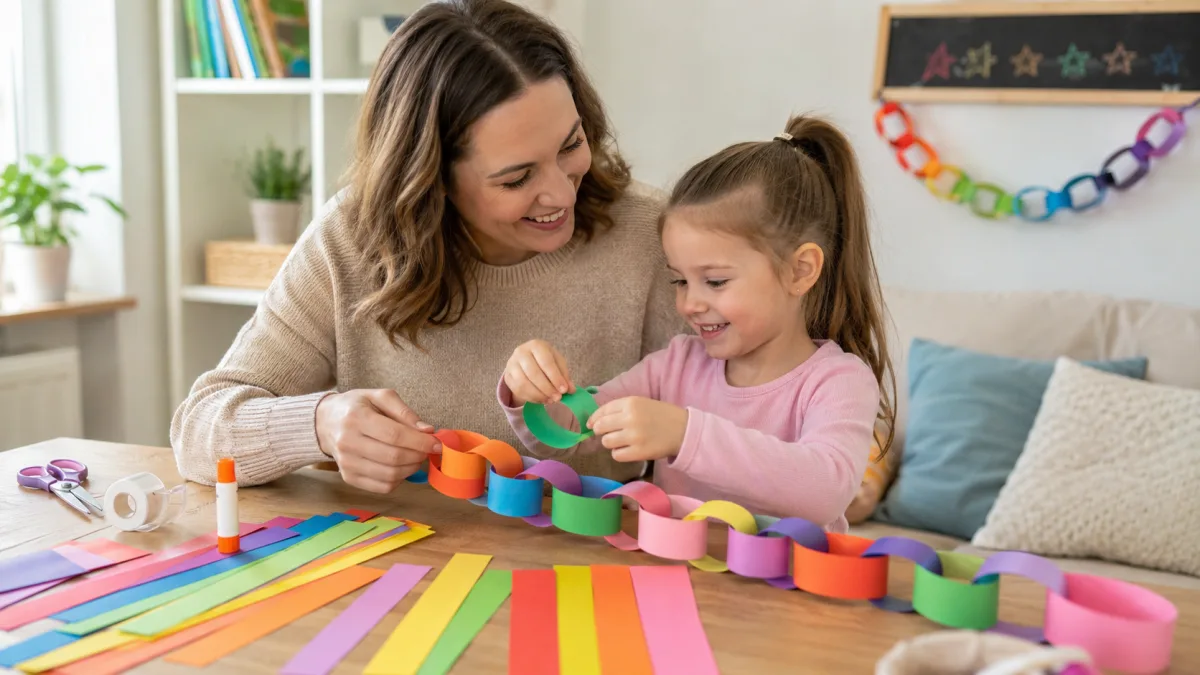
A Countdown Chain
One paper loop per day, torn off each morning. It makes waiting visible, which is what small children need.
-

Real Kitchen Jobs a Small Child Can Actually Do
Washing, tearing, stirring and sprinkling. Eight jobs that are genuinely useful on a busy cooking day.
-
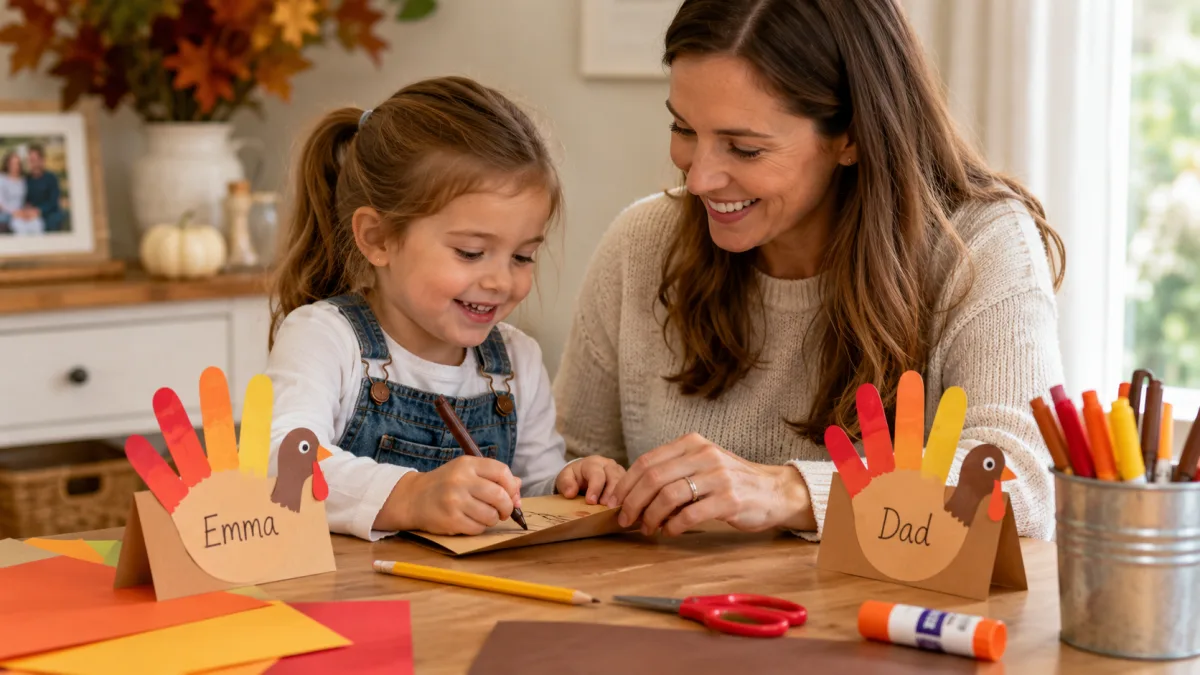
Handprint Turkeys for the Table
Draw round their hand, turn it into a turkey, write a name on it. Everyone gets one at their place.
-

Count the Pumpkin Seeds
Wash and dry the seeds from your pumpkin, then turn them into a counting game that lasts all week.
-

Spooky Shadow Puppets
Cut a bat and a cat from card, tape them to straws, and put on a show against the wall with a torch.
-
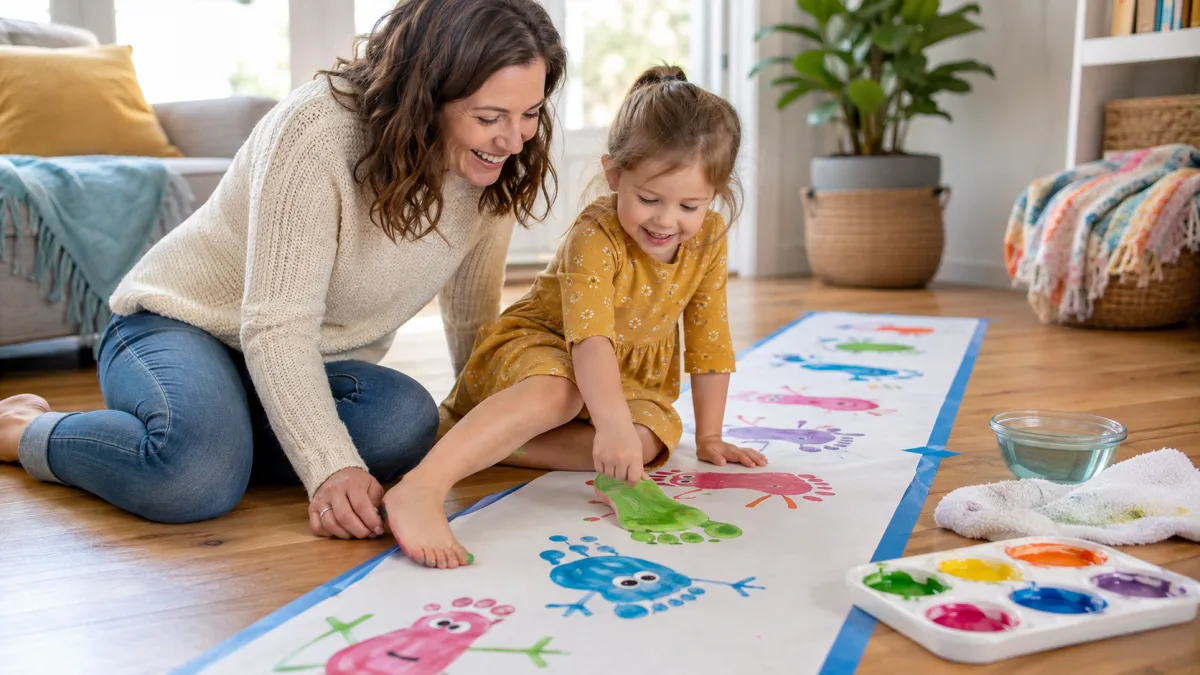
Monster Feet Painting
Paint the bottom of their feet and walk them down a roll of paper. Messy, hilarious, and over in ten minutes.
-
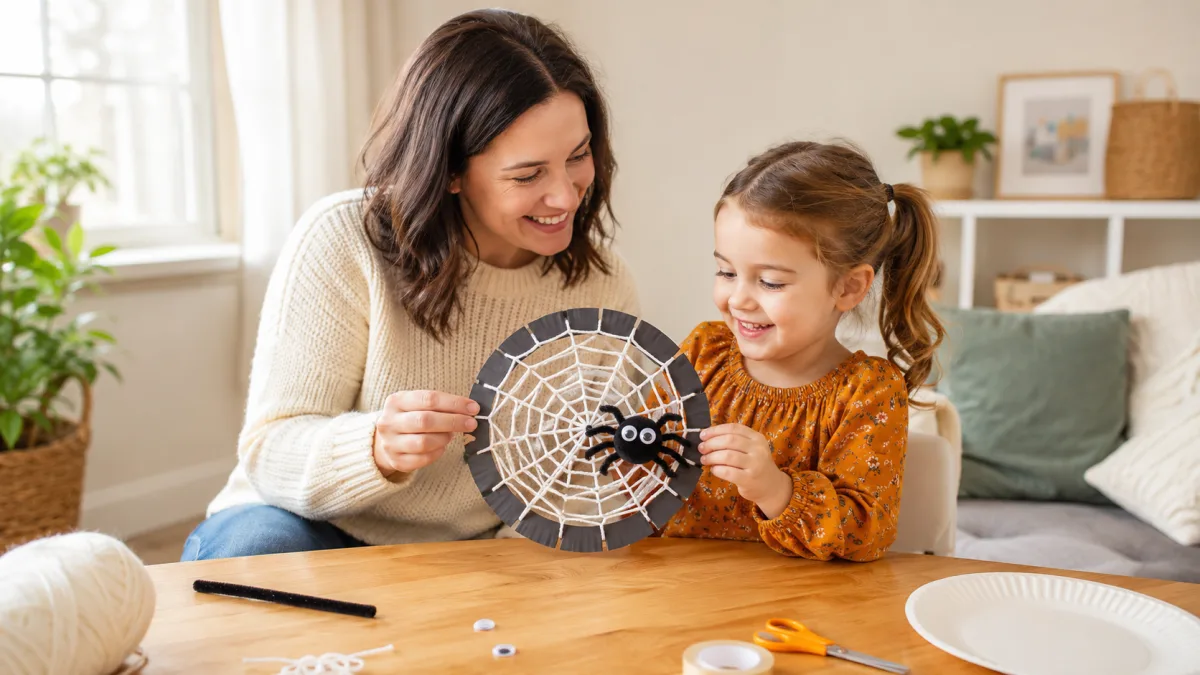
Weave a Spider Web
Snip notches round a paper plate, wind wool across it, and you have a web. Good threading practice hiding inside a Halloween craft.
-
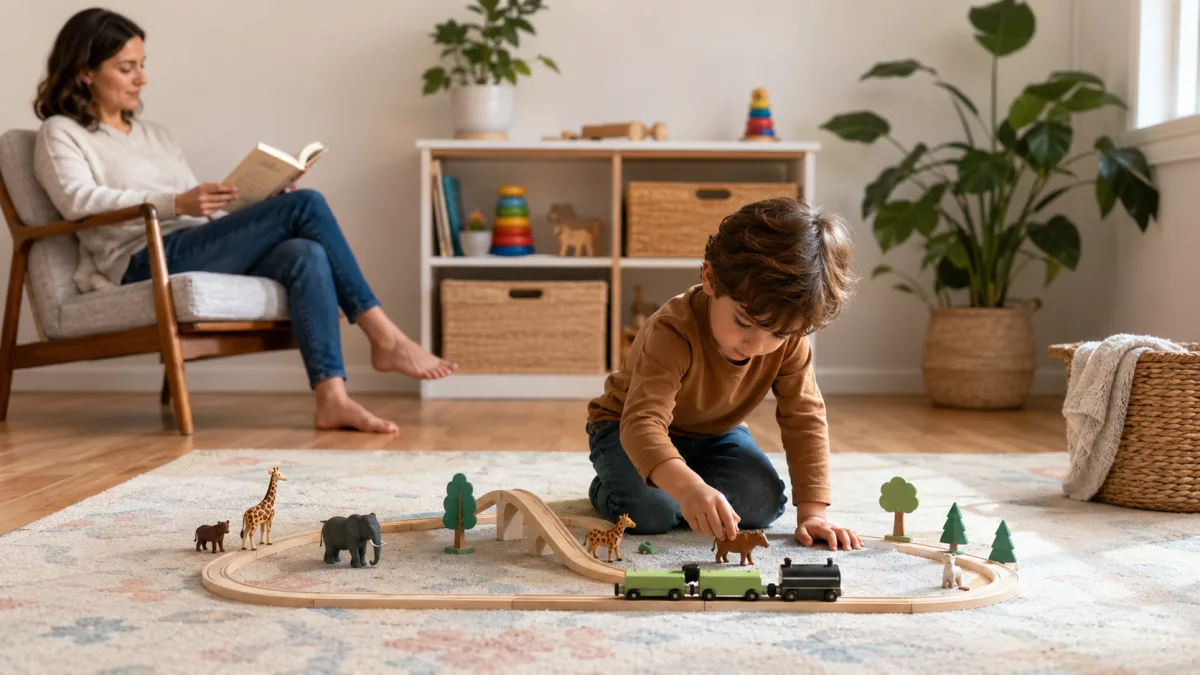
Teaching a Child to Play Alone
It is built, not waited for. Stay in the room, say less, and leave for two minutes before you leave for twenty.
-
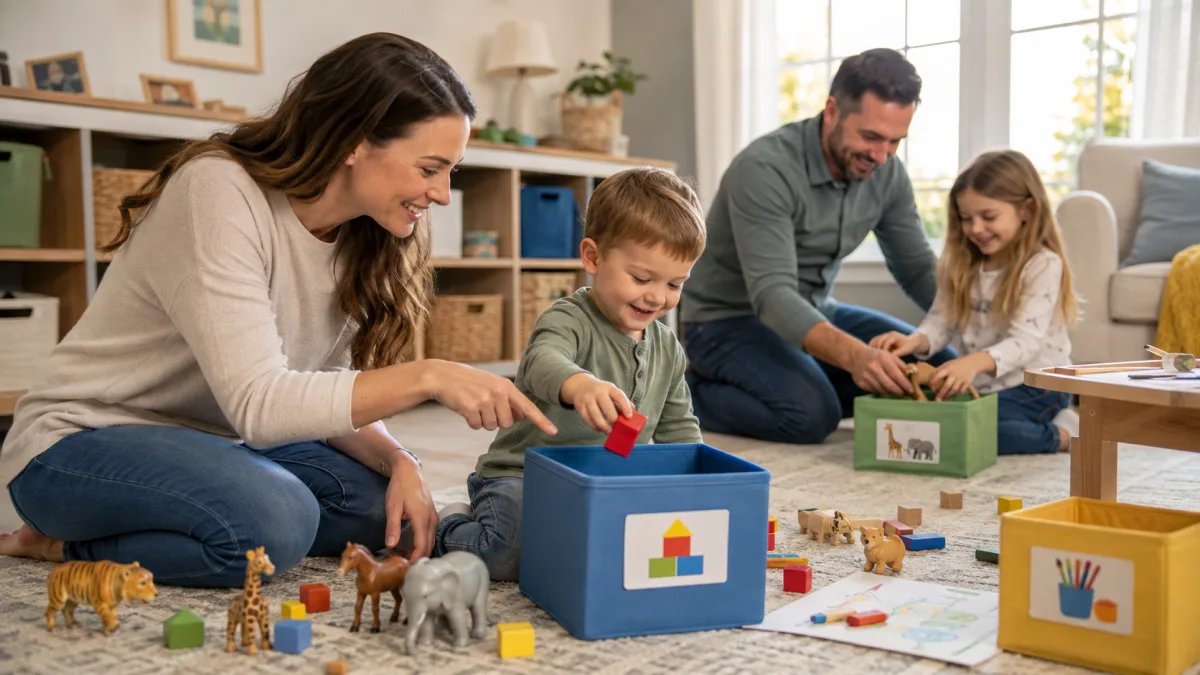
Tidying Up Without the Battle
"Tidy up" is an impossible instruction. "Put the blocks in the blue box" is a job a three-year-old can finish.
-
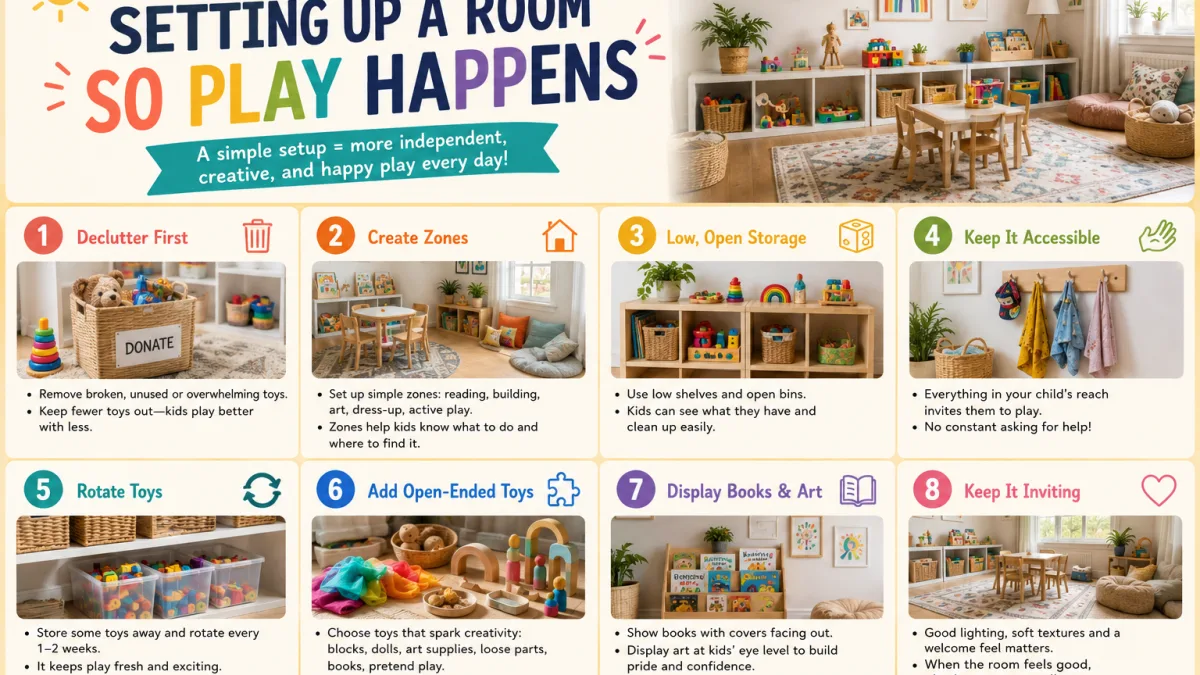
Setting Up a Room So Play Happens Without You
The highest-leverage thing on this whole site. Fewer things out, at their height, in containers they can open.
-
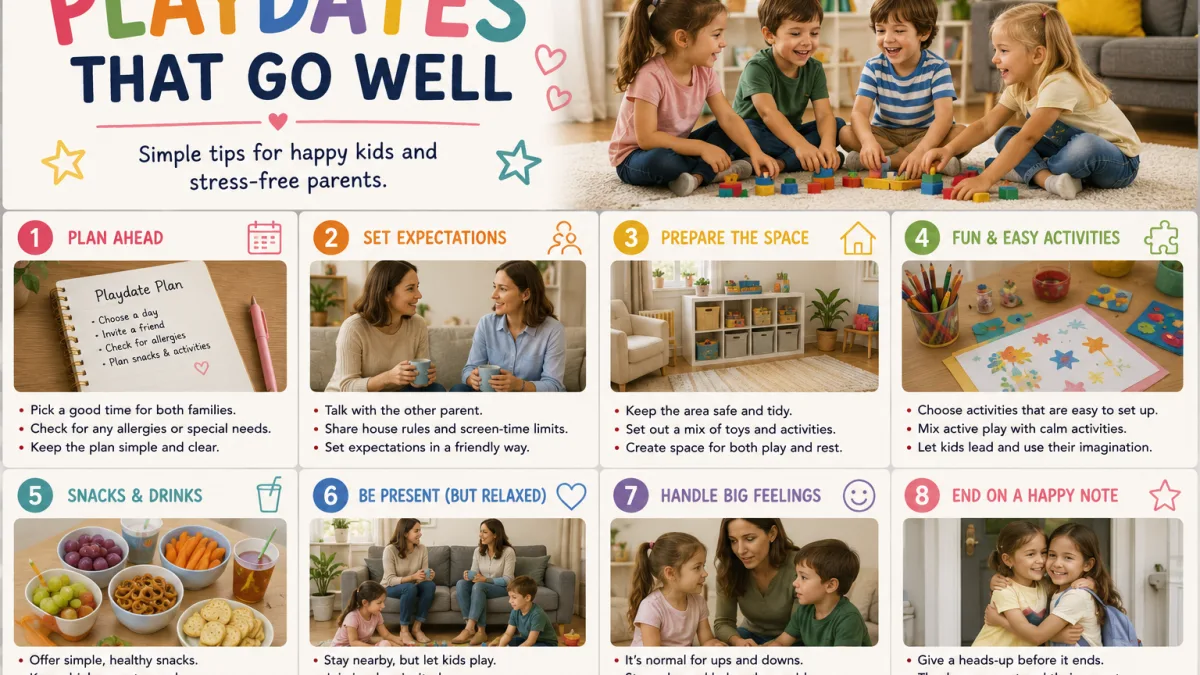
Making a Playdate Go Well
Put the precious toys away first, have one activity that needs two people, and finish while it is still going well.
-
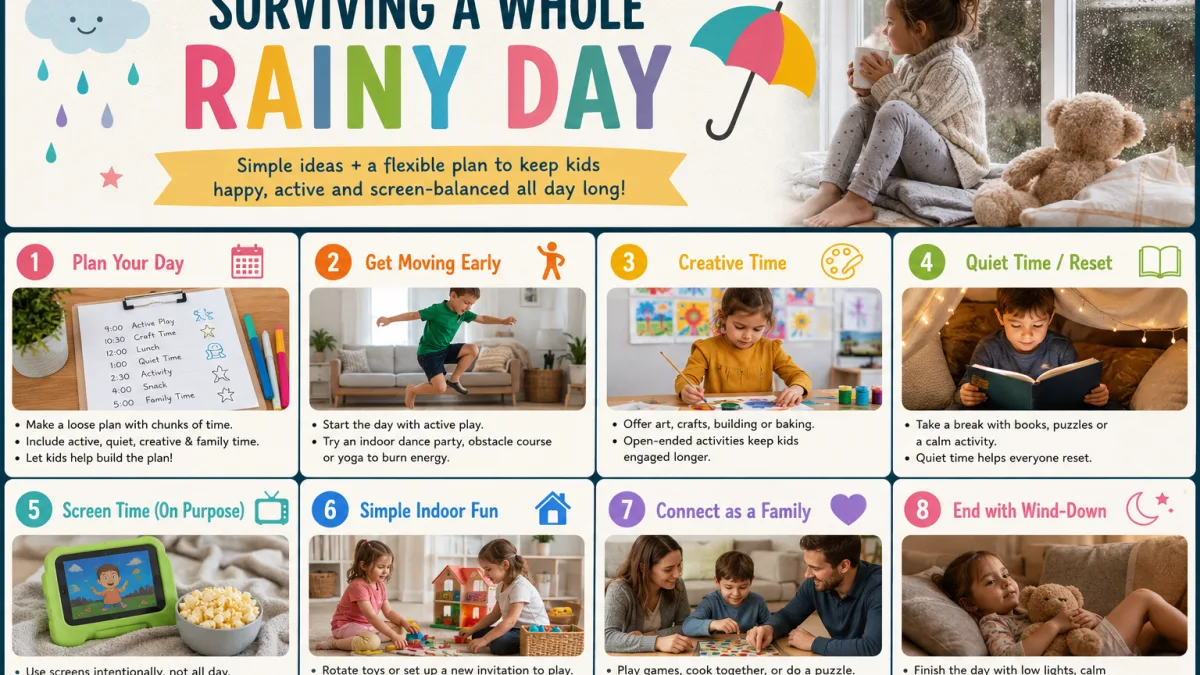
The Shape of a Rainy Day
A whole day indoors needs a shape, not a list. Energy first, then absorbing, then quiet, then food — repeated.
-

What to Actually Put in the Travel Bag
Several small things, handed out one at a time. That single rule matters more than anything you put in it.
-

Making Bedtime Shorter
Most bedtime trouble is a routine problem, not a sleep problem. Fewer decisions, same order, clear last thing.
-

The Hour After School Is Always the Hardest
A child who held it together all day falls apart the moment they see you. Food first, questions much later.
-
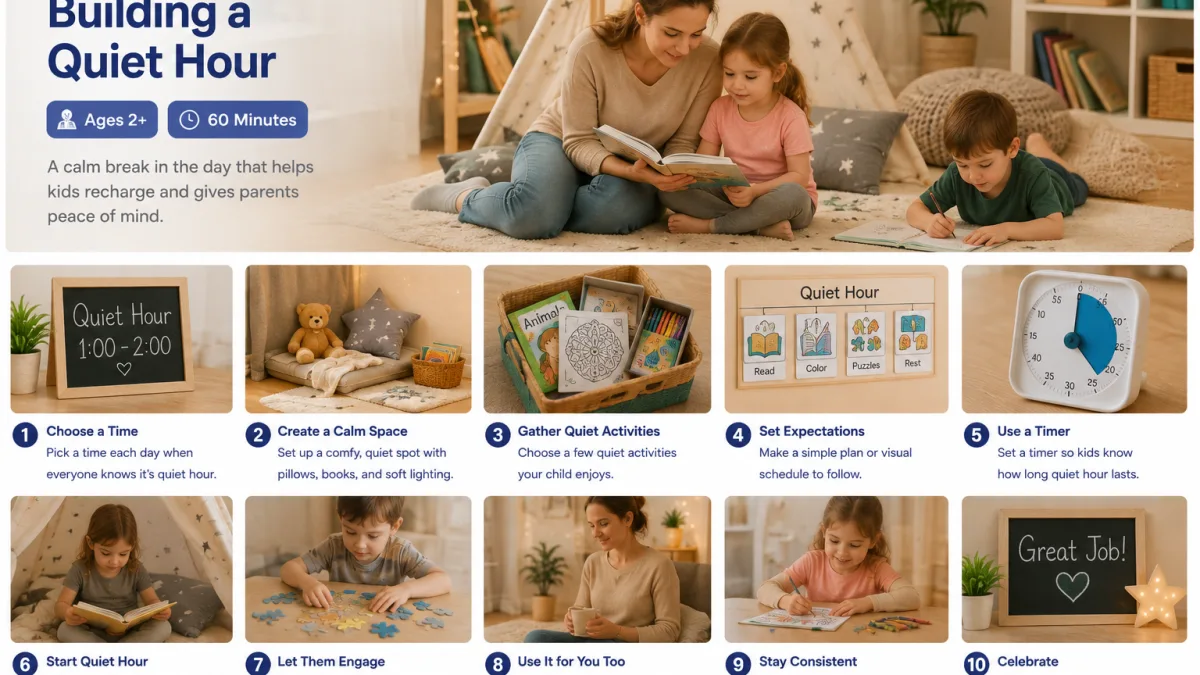
Building a Quiet Hour After the Naps Stop
Quiet time is learnable. Start at ten minutes, same time every day, with a small box of things that only appear then.
-
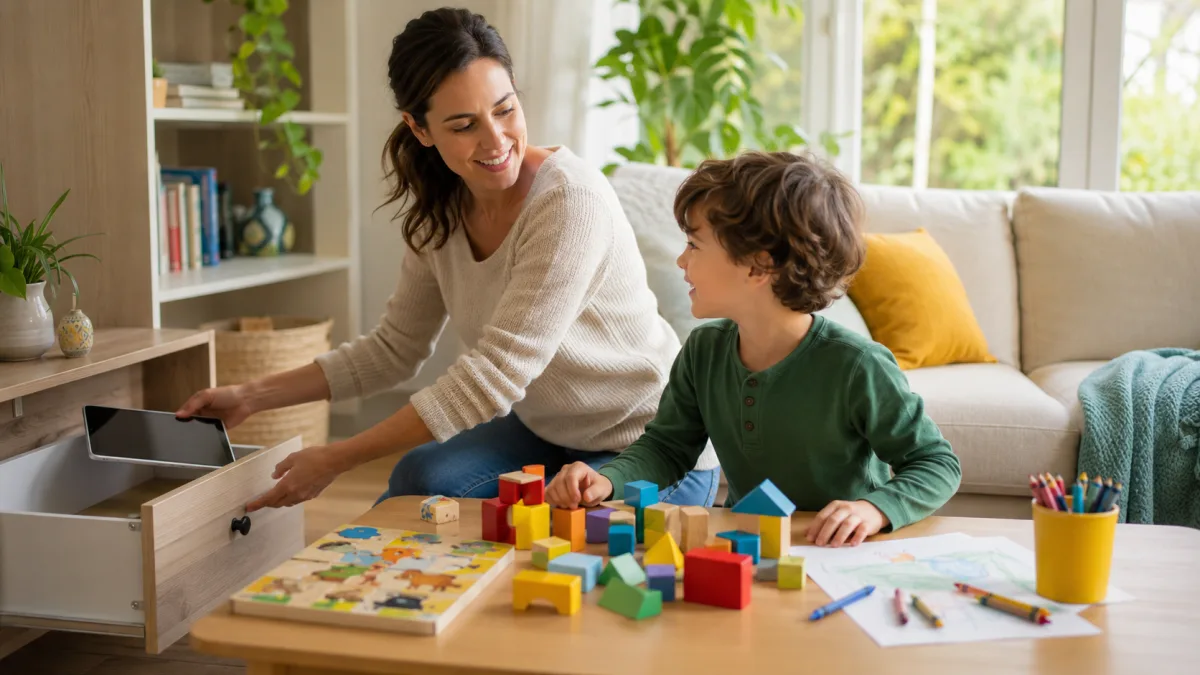
Less Screen Time, Without the Argument
What actually works is not willpower. It is having something else already out on the table, and the tablet not in the room.
-
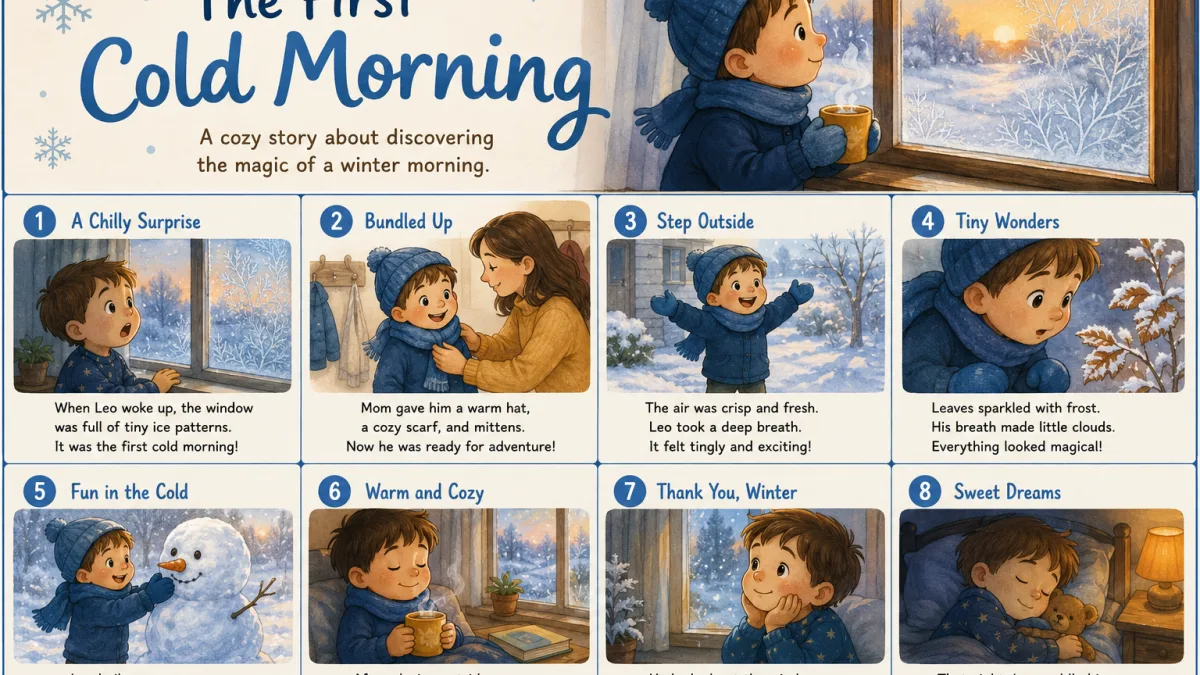
The First Cold Morning
A seasonal story about the morning you can suddenly see your own breath.
-
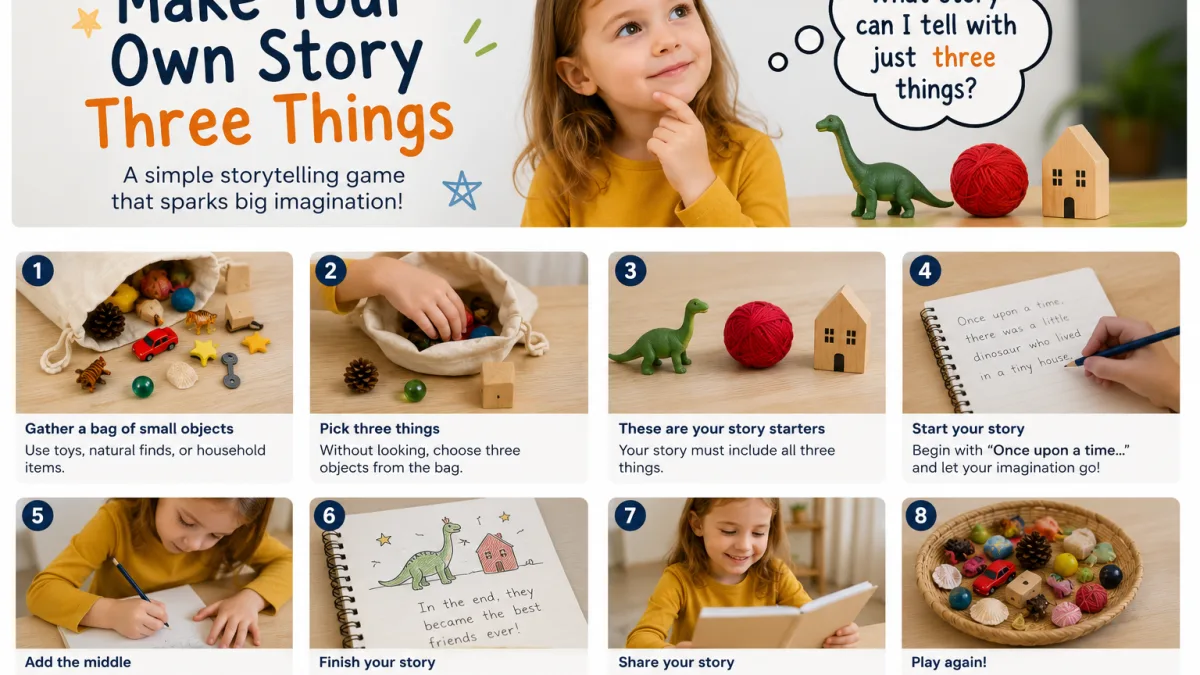
Make Up a Story With Three Things
A character, a place, and something going wrong. That is enough for almost any child to be away.
-
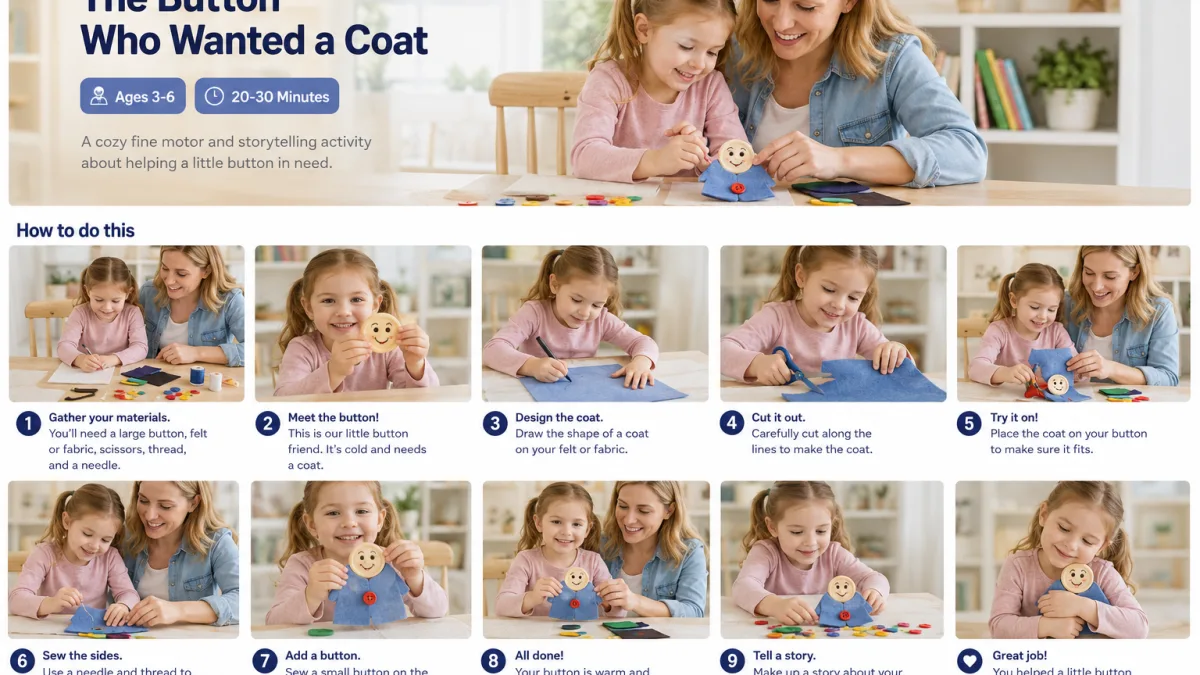
The Button Who Wanted a Coat
A story about a lost button, and then a jar of real buttons to sort afterwards.
-
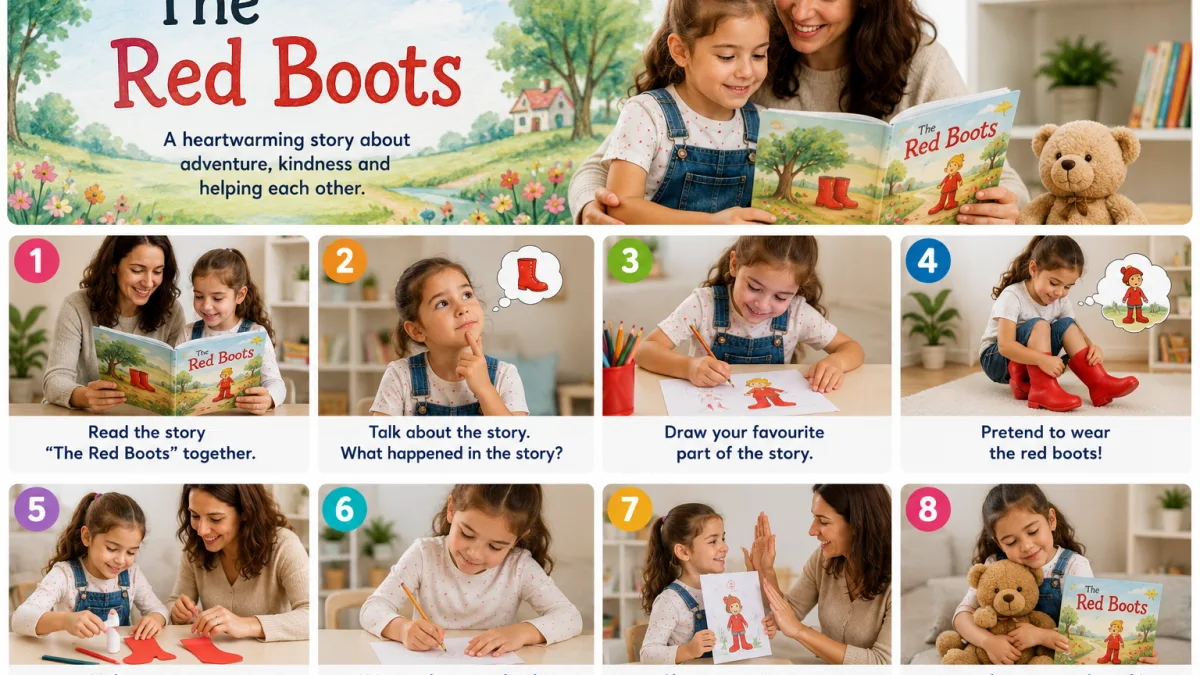
The Red Boots
A story for a child who is starting to read some of it themselves. Short words, short lines, and a puddle.
-
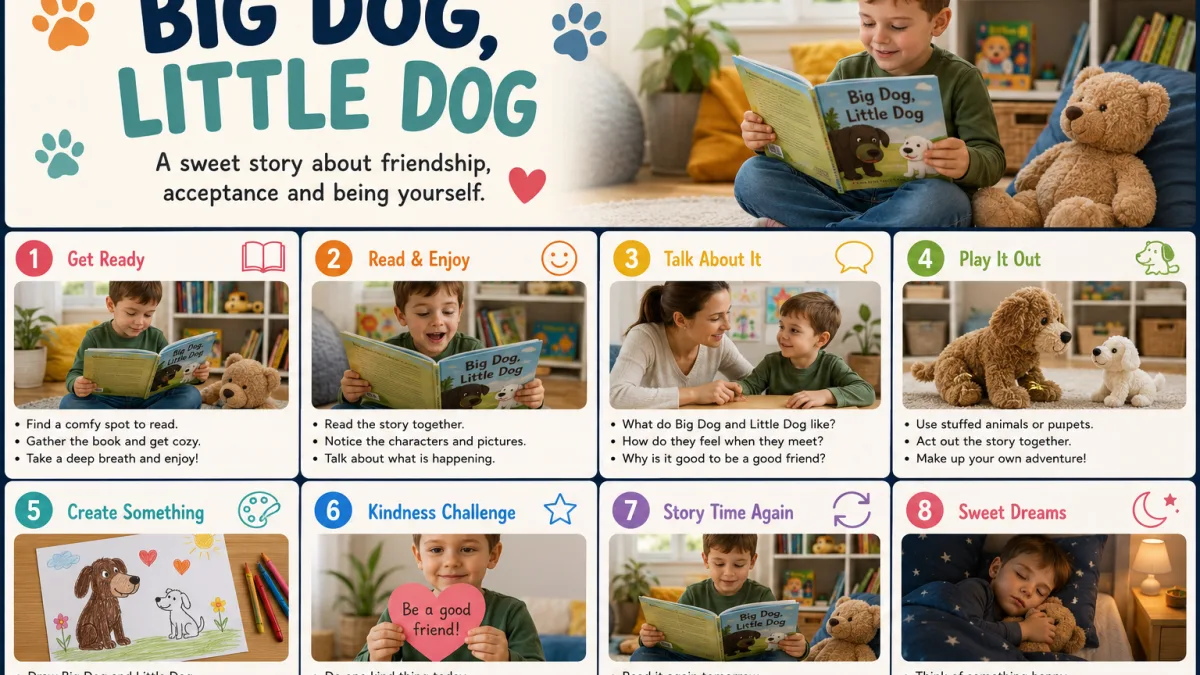
Big Dog, Little Dog
For the youngest listeners. Very short, very repetitive, and about dogs, which helps.
-

The Very Loud Hiccup
A read-aloud story with a noise in it that everybody has to make. Loud, silly, and not for bedtime.
-

Goodnight, Everything
A slow bedtime story that says goodnight to one thing after another, and gets quieter as it goes.
Browse activities by age
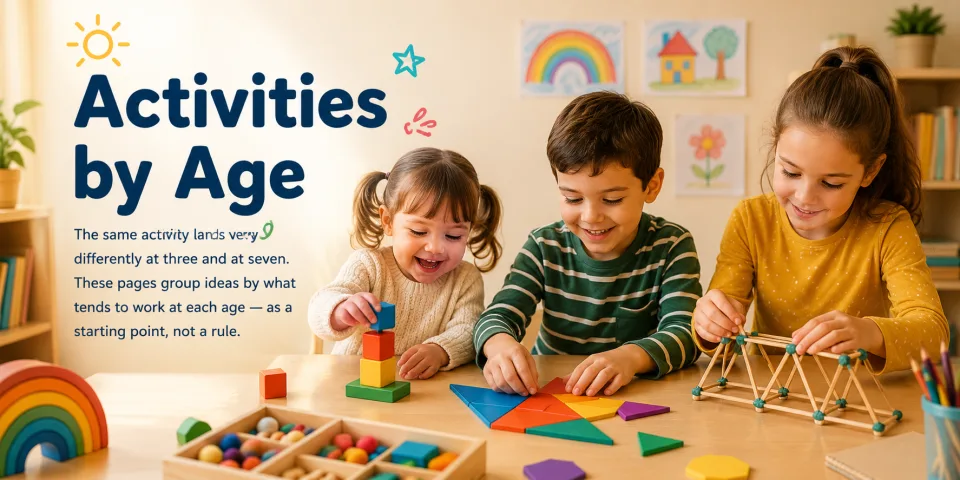
Ages here are a guide to attention span, hand strength and how much help a child is likely to need — not a judgement about what your child should be doing. You know them; if an activity for five-year-olds suits your three-year-old, use it.
Most activities also include a note on making them simpler for a younger child or more demanding for an older one, which is what makes them work for siblings playing together.
What you'll find here
-

Toddlers, 2–3
Short, repeatable and very hands-on. Pouring, posting, squishing, filling and tipping out again. Expect five focused minutes and be delighted by ten.
-
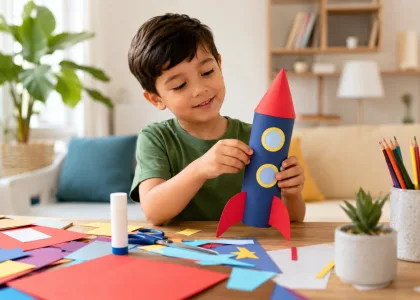
Preschool, 4–5
Longer projects with a beginning, a middle and something to show at the end. This is the age where an activity can hold up for half an hour.
-
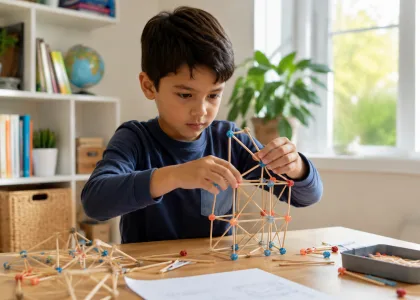
Early school, 6–8
Ideas with a challenge in them — building something that has to work, a puzzle with a right answer, a game with a rule they can argue about.
Every activity page repeats its age range at the top, so you never have to remember which section you came in through.