


Activities by Age
The same activity lands very differently at three and at seven. These pages group ideas by what tends to work at each age — as a starting point, not a rule.
Activities
-
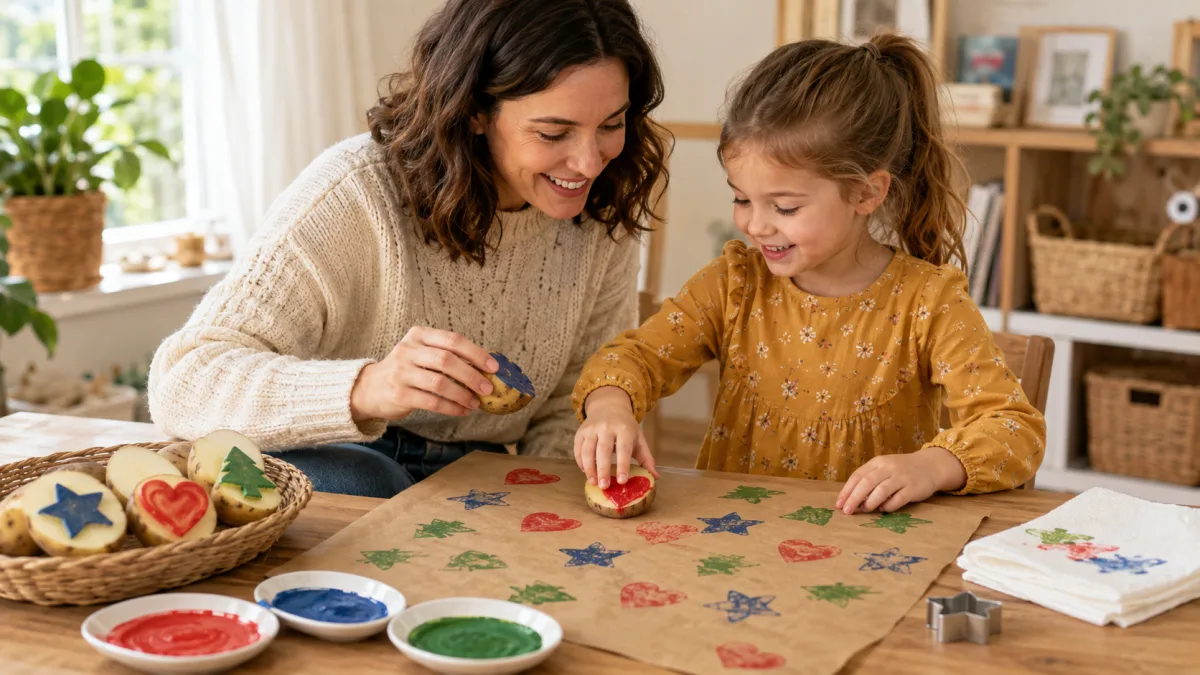
Printing Your Own Wrapping Paper
A halved potato, a shape cut into it, and a roll of plain paper. It looks far better than it has any right to.
-
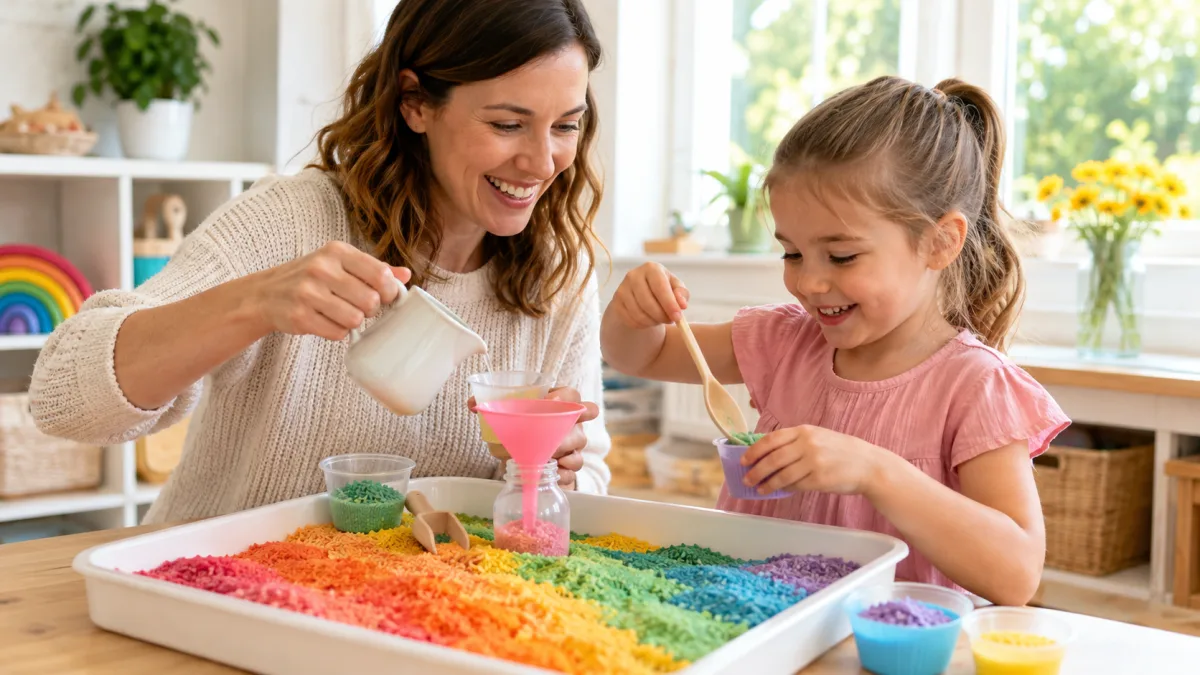
Rainbow Rice Sensory Tray
Dye a bag of rice in five colours, tip it into a tray, and hand over some cups and spoons. Ten minutes of setting up buys an hour of quiet scooping.
-
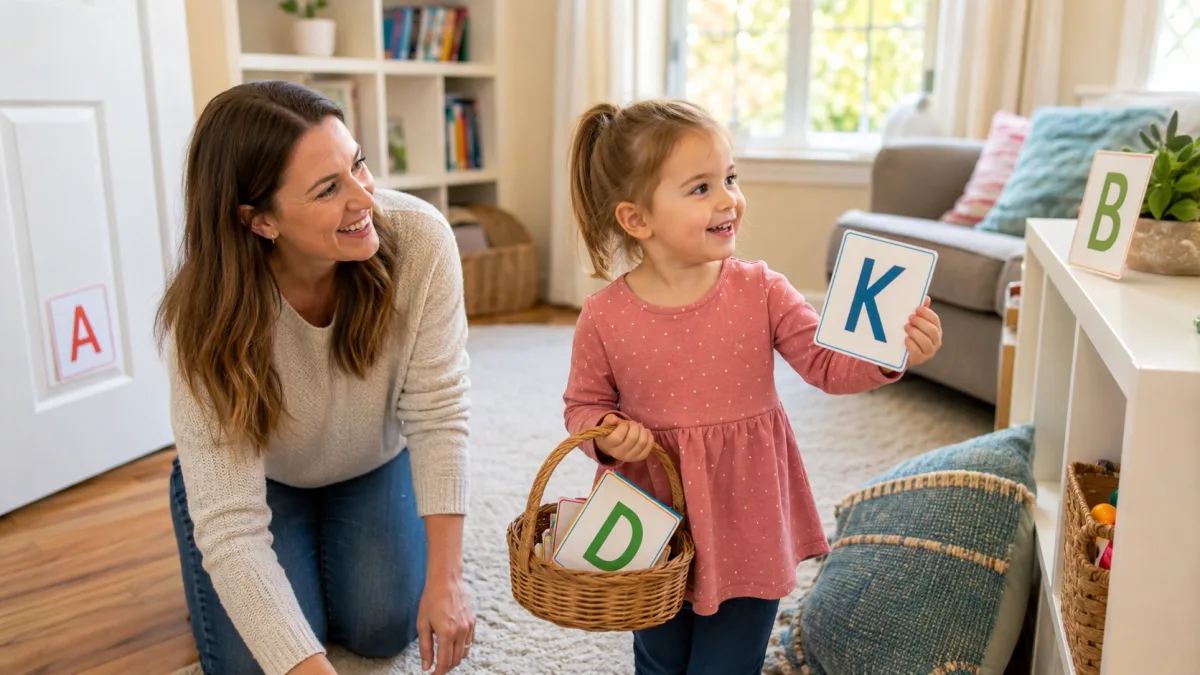
Alphabet Hunt Around the House
Hide letters around one room and send your child to find them. No preparation beyond writing on some paper, and it teaches letter recognition better than a worksheet.
-
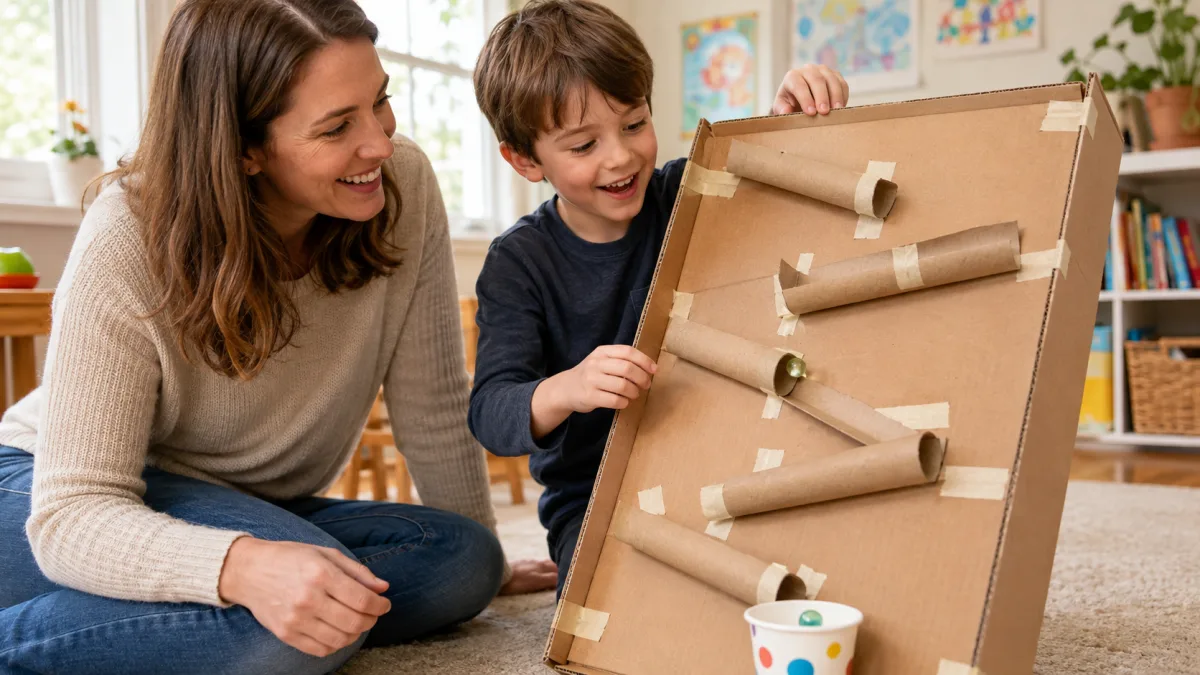
Cardboard Box Marble Run
Cut a delivery box into ramps and tape them inside the lid. It never works first time, and that is the entire point of it.
Browse activities by age
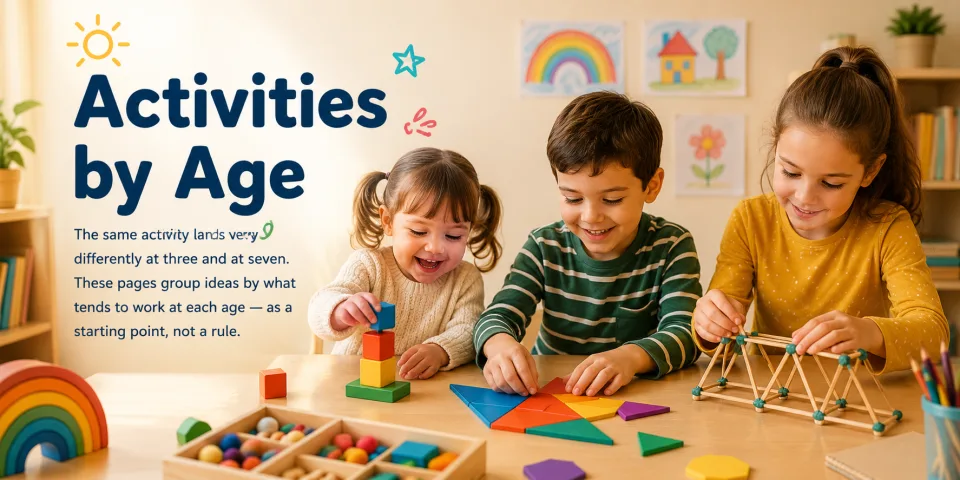
Ages here are a guide to attention span, hand strength and how much help a child is likely to need — not a judgement about what your child should be doing. You know them; if an activity for five-year-olds suits your three-year-old, use it.
Most activities also include a note on making them simpler for a younger child or more demanding for an older one, which is what makes them work for siblings playing together.
What you'll find here
-
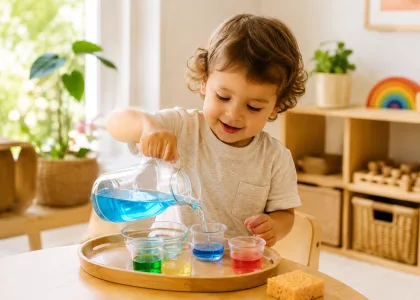
Toddlers, 2–3
Short, repeatable and very hands-on. Pouring, posting, squishing, filling and tipping out again. Expect five focused minutes and be delighted by ten.
-
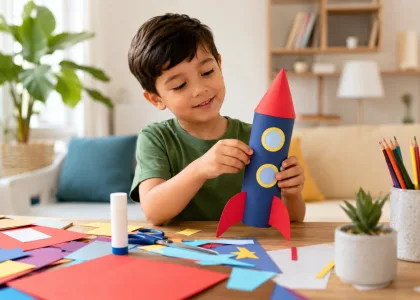
Preschool, 4–5
Longer projects with a beginning, a middle and something to show at the end. This is the age where an activity can hold up for half an hour.
-
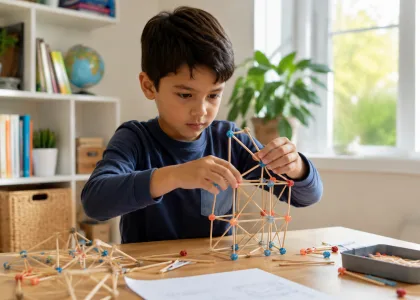
Early school, 6–8
Ideas with a challenge in them — building something that has to work, a puzzle with a right answer, a game with a rule they can argue about.
Every activity page repeats its age range at the top, so you never have to remember which section you came in through.