


'SH' Words: 40 Digraph Words for 1st Grade Readers
Master the sh digraph with 40 real sh words for 1st grade readers — ship, fish, brush and more — sorted by where sh sits in the word, plus a quiet 10-step routine of listening games, sorting, and reading practice.
The sh digraph is s + h making one sound — /ʃ/, like the bedtime shhh. This list gives 1st grade readers 40 real sh words grouped by position: 16 starting with sh (ship, shark), 10 with sh in the middle (cushion, mushroom), and 14 ending in sh (fish, brush), plus whisper games and sorting practice that make the pattern stick.

The short version
- sh is a digraph: two letters, one sound (/ʃ/).
- Grouping words by sh position (start, middle, end) makes the pattern visible.
- Listening games come before reading games — hearing sh makes spotting sh easier.
- 10–15 minute daily sessions beat one long sitting.
- Every word on the list is a genuine sh digraph — no s+h tricksters.
- Age
- Ages 6–8
- Prep
- 10 min
- Play time
- 15 min
- Mess
- None
- Difficulty
- Easy
- Where
- Indoor
Why kids love this
The sh sound is one your child has known since preschool — the bedtime shhh. This session turns it into a reading superpower: a whisper game where sh words are secret signals, a sorting race where cards whoosh into three baskets, and a reading round where every word feels like a win because the child already hears the sound in it. That "I already knew that!" moment is pure fuel for a new 1st grade reader.
What you'll need
- 40 index cards or paper cut into cards, and a thick marker pen
- The 40-word list below (printed or on your phone)
- 3 small baskets or bowls
- A hand mirror
- Star stickers
- One familiar picture book
Before you start
1. Write the 40 sh words large and lowercase, one per card, grouped as below: sh at the start (16), sh in the middle (10), sh at the end (14). Every card must be a word where sh makes the single /ʃ/ sound.
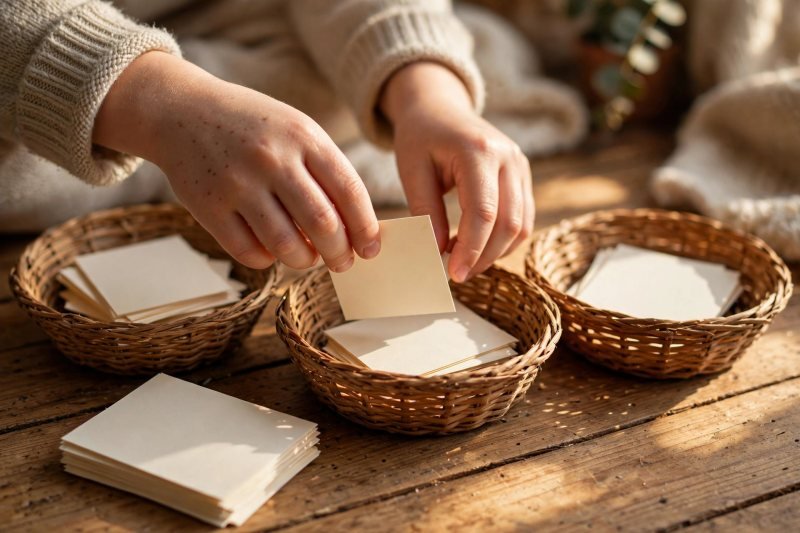
2. Set the three baskets in a row — one for each position of sh. A quick picture on each (a ship at the card's left edge, a mushroom in the middle, a fish at the right) marks the pile without any readable letters.
3. Read the list aloud to yourself once. These are everyday words — ship, shell, fish, brush — no tricksters.
4. Keep it short: 10 to 15 minutes, ending on a success. Digraphs stick through repetition over days, not one long sitting.
How to do it
-
The whisper that starts everything. Finger to your lips, breathe a long shhh, and let your child copy you. "That sound is a reading team. Today we hunt for words hiding it."

-
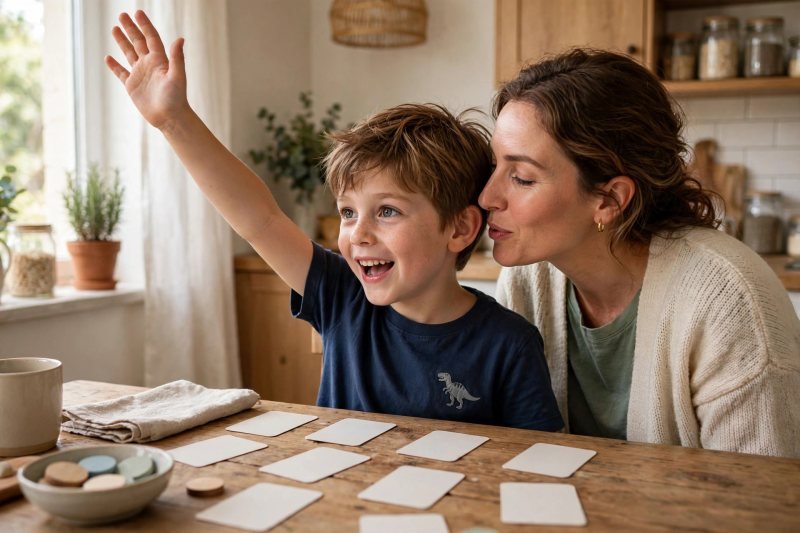
Quiet ears. Whisper a mix of words: ship, banana, fish, apple, brush, dinosaur. Your child raises a hand only for the sh words. If they can hear sh, they can find sh.
-
Mouths in the mirror. In the mirror, make the sh shape together: lips rounded and pushed out, teeth hidden. Compare with a big smiling "ee." Say ship, shop, fish slowly and watch the lips move.

-
The position sort. Tip the face-down cards on the table. Flip one, read it together, and ask: "Where is the sh — start, middle, or end?" Drop it in the matching basket. This is the real lesson: the same sound sits in different spots.
-
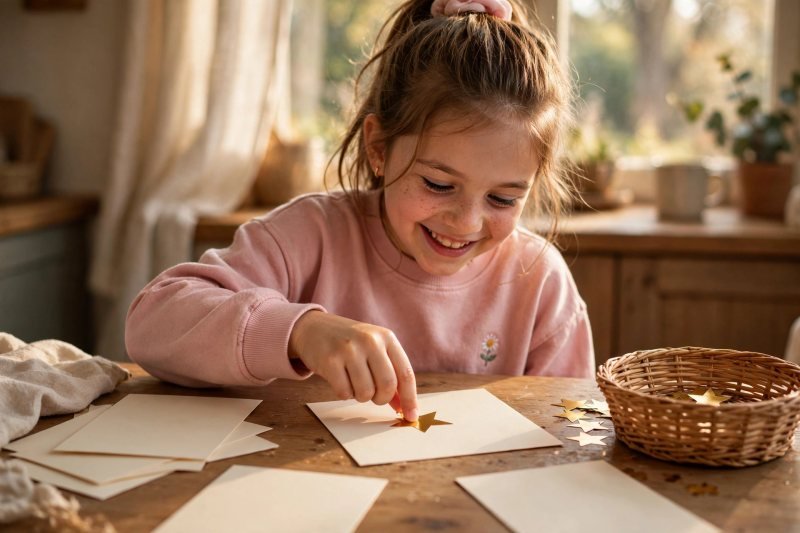
Read round one: sh at the start. Spread the 16 start-cards face-up and take turns reading: ship, shell, shark, shirt, sheep, shop, short, shout, shine, share, shadow, shape, shower, shy, shake, shelf. Star every card your child reads without help.

-
Read round two: sh at the end. The 14 end-cards: fish, brush, wash, wish, dish, cash, crash, splash, rush, trash, fresh, bush, blush, crush. Ask which pile felt easier — most kids say the end ones, because sh closes the word like a soft door.
-
Read round three: sh in the middle. The 10 trickiest: dishes, washing, wishing, cushion, finish, mushroom, pushed, ashes, bushes, rushes. Stretch the middle — "cu-shhh-ion" — and clap the syllables first if it helps.

-
Shout or whisper. Shuffle all 40. Your child draws and reads one: sh at the start = whisper the whole word; sh at the end = say it clear and proud; sh in the middle = say it like an echo. The position rule becomes a memory game.

-
Sh-word detective. Open a familiar picture book and hunt for hiding sh words — she, fish, wish, shoe, shop. When your child spots one, they whisper "sh!" and point. Real books are where the pattern pays off. For more listening games, our rhyming words for preschoolers list doubles as sound play.

-
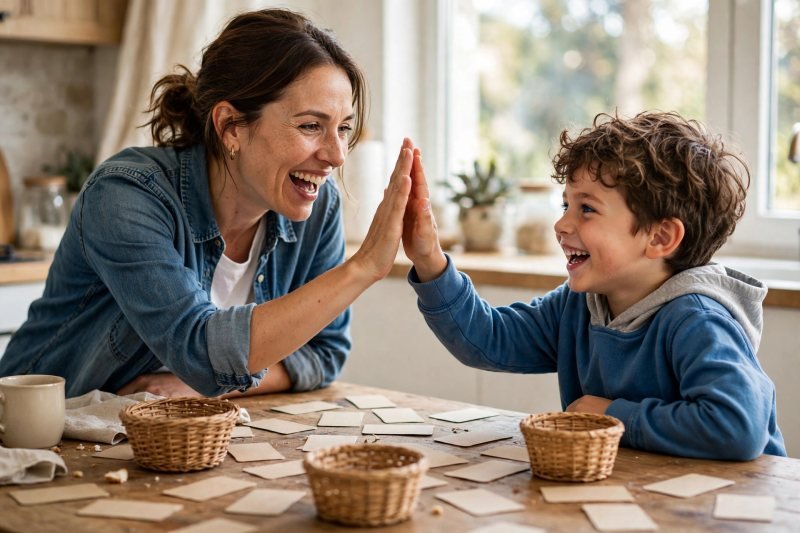
High-five round-up. Line up the three baskets. Your child picks a favorite card from each pile and reads it one last time: "You just read 40 sh words — that is a whole digraph." Sticker, high five, done.


Make it easier
Play only the 16-card "sh at the start" pile as a first session. Echo-read: you say the word first, your child repeats, then reads the card alone. Skip Step 7 until the start and end piles feel easy. You read the cards while your child does the sorting — sorting is real phonics work too. Not ready for digraphs yet? Start with our CVC words list and come back to sh once those feel easy.
Make it harder
Add ch cards from our digraph activities session and have your child name the digraph in each word. Write each word after reading it — sh in the middle takes real thought to spell. Build a sentence with two sh words: "The shark washes the dishes." Beat-the-clock: how many of the 40 can they read in three minutes, then try again tomorrow. Finish the week with our sight word games — instant-recognition games that keep the 40 words fresh.
Other ways to play it
- Sh whisper relay: whisper a sh word to the first stuffed animal in a row and pass it down — the last one "says" it aloud.
- Fishing for sh: lay cards face-down on a blanket "sea"; the rod only catches a card your child reads correctly.
- Mystery bag: hide sh objects (shell, brush, shirt) in a bag — pull one out, name it, say where the sh sits.
How it changes by age
- Ages 6–7 (1st grade): the sweet spot — sh arrives in most reading classes in 1st grade, so this lines up with school.
- Age 8: use the full 40 words plus the "make it harder" spelling round; strong 8-year-olds can hunt sh words in chapter books alone.
- Under 6: the listening games (Steps 1–2) and the mirror game work now; save the card reading for later.
What they're learning
Phonics: a digraph is two letters making one sound — s and h merge into /ʃ/, as in ship. Word structure: the same letter pair can sit at the start, middle, or end of a word, and its position changes how the word looks and sounds when read. Blending and segmenting: stretching cu-shhh-ion practices pulling a word apart and rebuilding it — our blending sounds activities build the same stretch-and-say skill. Print awareness: spotting sh words in a real book shows the pattern lives outside worksheets.
Clearing up
Card scraps go in recycling; wipe the table if markers smudged it. Rubber-band the three piles separately so tomorrow's session starts ready. Star stickers peel off, so the cards can be reused for other word lists.
Questions parents ask
What are sh words for 1st grade?
How many sh words are on this list?
How do you teach the sh digraph to a 1st grader?
Why does my child confuse sh and ch?
What comes after the sh digraph in phonics?
Are there any trick sh words to avoid?
Ten to fifteen minutes a day for a week beats one long session — digraphs are a rhythm skill.
If your child reads all 40 in one sitting, do not add more words. Repeat the set with the "make it harder" rounds — fluency comes from rereading, not novelty.
Once sh is solid, the natural next digraph is ch. Teach them one at a time so the two do not blur together. If your child is still sounding out every word, our how to teach a child to read guide is the place to start before the card rounds.
The 40 sh words, grouped by position.
Which sh words start with sh? The 16-word warm-up round: ship, shell, shark, shirt, sheep, shop, short, shout, shine, share, shadow, shape, shower, shy, shake, shelf
Which sh words have sh in the middle? The 10 trickiest — save for last: dishes, washing, wishing, cushion, finish, mushroom, pushed, ashes, bushes, rushes
Which sh words end with sh? The 14 closers — most children read these easiest: fish, brush, wash, wish, dish, cash, crash, splash, rush, trash, fresh, bush, blush, crush
Parent note: every word here uses sh as a genuine digraph — two letters, one /ʃ/ sound. Words where s and h sit next to each other but keep separate sounds (like mishap) are left off, because they confuse beginning readers.

save it for later
Pin this for the next rainy afternoon
Keep it on a board so it is there when you need it, rather than when you happened to find it.
Save to Pinterest


