


Satin Pillowcases and Bonnets for Kids: Do They Help Hair?
Do satin pillowcases and bonnets help kids' hair? The honest answer: a satin pillowcase for kids can reduce friction against the pillow, which often means fewer tangles and less morning frizz — especially for curly and wavy hair. Here is how to choose, fit, and trial one fairly.
A satin pillowcase for kids can help hair in one specific way: its smooth surface reduces friction against the pillow, so hair slides instead of rubbing, which often means fewer tangles, less frizz, and easier morning detangling — most noticeably on curly, wavy, or long hair. Bonnets add protection for active sleepers. Neither changes hair growth or type.

The short version
- The mechanism is friction reduction only — less rubbing overnight means less tangling and frizz by morning.
- Pillowcase suits still sleepers and headwear refusers; a bonnet travels with active sleepers and longer hair.
- Judge by criteria, not brands: a genuinely slippery face, secure pillowcase closure, a soft wide bonnet band, and a proper fit.
- Prep matters: detangle gently ends-up and contain hair loosely before bed, every night of the trial.
- Run a fair two-week trial against a written baseline before deciding — all outcomes are honest data.
- Age
- Ages 4–5
- Prep
- 10 min
- Play time
- 5 min
- Mess
- Some
- Difficulty
- Easy
- Where
- Indoor
Why kids love this
Kids love the parts that feel like a ritual: a smooth, cool pillow that feels fancy, or a bonnet that becomes their "sleep hat" — a signal that the day is done. When the morning detangle takes two minutes instead of ten, and nobody cries at the brush, the whole bedtime routine gets easier for everyone.
What you'll need
- One satin pillowcase in your child's pillow size (or one satin bonnet — see step 2 for choosing)
- A second pillowcase or bonnet for wash rotation
- A wide-tooth comb or detangling brush for the bedtime prep
- A small spray bottle of plain water for morning refresh (optional)
- Soft hair ties with no metal parts for a loose bedtime braid or puff (optional)
- Your usual gentle shampoo and conditioner for wash days
Before you start
1. Wash the new pillowcase or bonnet before the first night, following its care label — this softens the fabric and removes any manufacturing finish. 2. Take a "before" note: for three mornings, jot down how long detangling takes and how tangled your child's hair is on waking. The trial in step 10 is only fair with a baseline. 3. Introduce the idea at a calm moment, not at bedtime: let your child feel the smooth fabric and choose which night to start. 4. Keep the rest of the routine identical during the trial — same wash schedule, same products — so any change you see is honest.
How to do it
-
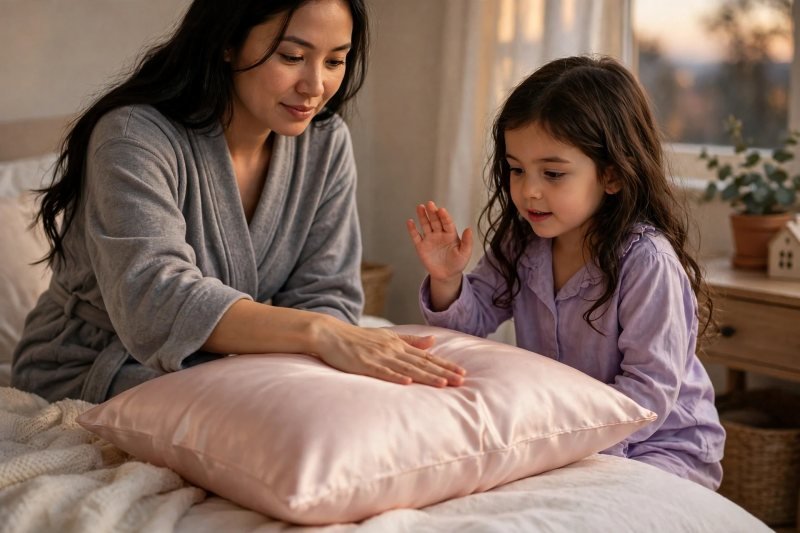
Start with the honest answer: satin reduces friction, and friction is the nighttime problem. Here is what a satin pillowcase for kids actually does, stated plainly: hair slides across a smooth satin surface instead of gripping and rubbing against a rougher cotton weave, and less rubbing overnight generally means less tangling, less frizz, and fewer of those flattened, matted patches at the back of the head by morning. That is the whole mechanism — friction reduction. Satin does not make hair grow, does not repair damage, and does not change your child's hair type; no pillowcase or bonnet can honestly promise those things, and you should be skeptical of any claim that does. Where the difference shows most is on curly, wavy, coily, and long hair, which tangles and frizzes more readily; on short, straight, fine hair the change may be subtle. Say this to your child in kid terms: "Your new pillow is slippery, so your hair can slide instead of getting rubbed into knots while you sleep." Honest expectations set: now choose the format your child will actually keep on.
-
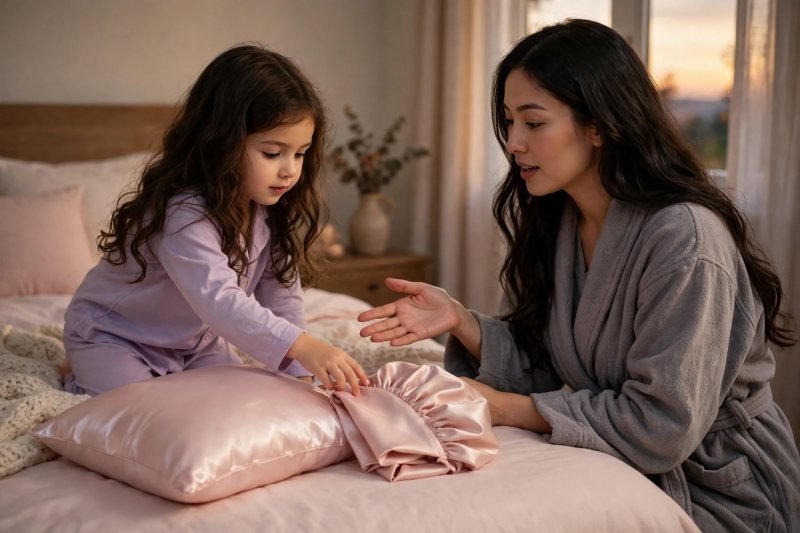
Choose pillowcase or bonnet by how your child sleeps, not by hype. A pillowcase protects hair only while the head stays on the pillow; a bonnet travels with the head. Choose the pillowcase if your child sleeps fairly still, dislikes anything on their head, or shares the bedtime routine with a sibling who would pull a bonnet off in five minutes. Choose the bonnet if your child is an active sleeper who ends the night sideways or upside down, has longer hair that escapes the pillow entirely, or loves dress-up rituals enough to wear a "sleep hat" proudly. Some families use both on the wildest sleepers. There is no wrong first choice — there is only the one that survives your child's actual night. Say the choice out loud together: "Pillow or hat — which one will still be there in the morning?" Format chosen: fit and feel decide whether it stays on.
-
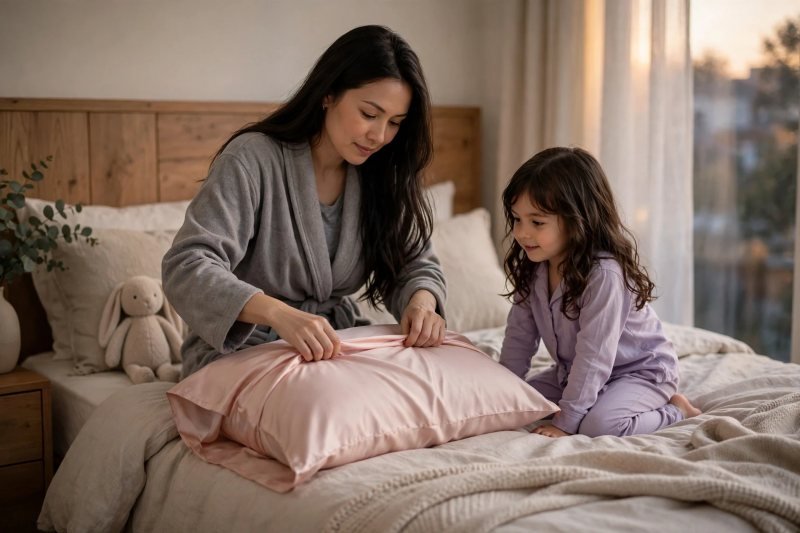
Judge fit and fabric by criteria, never by brand names. For a pillowcase, the criteria are: satin weave with a genuinely smooth, slippery face (run your palm across it — it should glide, not drag); a secure closure, ideally an envelope fold or hidden zipper, so the pillow does not slide out at 2 a.m.; and the right size for your child's pillow so the surface stays taut rather than bunching. For a bonnet, the criteria are: a wide, soft elastic band that sits on the hairline without leaving a mark by morning; enough room inside for your child's full hair without compressing it flat; and smooth seams on the inside. Whichever you choose, it should feel cool and slick, survive a gentle wash without going rough, and contain no scratchy tags against the neck. You are buying a surface and a fit, not a logo. Shop the same criteria-first way this sunscreen-for-kids guide to choosing by label teaches — check the facts on the item, not the packaging. Criteria checked: the first night needs a two-minute hair prep.
-
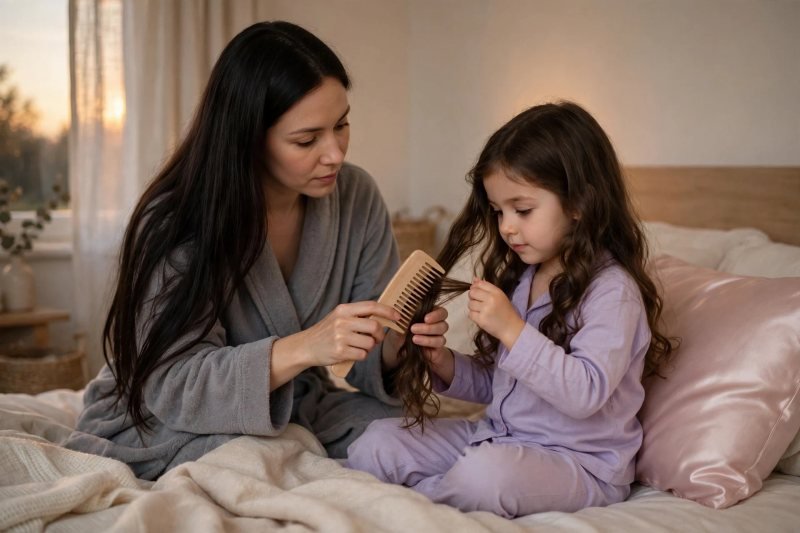
Prep the hair before bed: detangle gently, then contain it loosely. Satin protects hair that goes to bed tidy; it cannot untangle hair that goes to bed knotted. Build a two-minute prep into the routine: detangle gently with a wide-tooth comb or detangling brush, working from the ends upward in small sections; then contain the hair loosely — a soft, metal-free tie in a low loose braid, a loose puff, or simply smoothed down for short hair. Say the script while you work: "Ends first, gentle hands, then your hair gets its pajamas too." Keep the prep identical to what you already do on wash nights as part of a simple routine — the same calm sequencing that makes a kids skincare routine of simple steps stick works here: same order, same words, every night. Hair prepped: now the pillowcase or bonnet goes on.
-
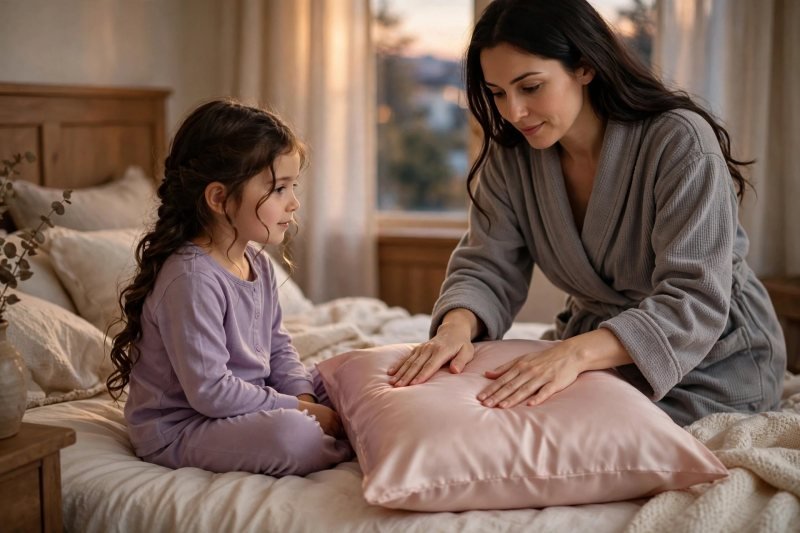
Put the pillowcase on taut, or the bonnet on with the band at the hairline. For the pillowcase: fit it snugly over the pillow, smooth the top face flat with your palm, and check the closure is fully shut so no pillow edge peeks out to rub against. For the bonnet: gather the hair gently upward, place the bonnet over the hair, and settle the band along the hairline — not across the forehead's middle, not over the ears' tops unless your child prefers it — then do the shake test: one gentle head shake should not dislodge it, and your child should report "comfy," not "tight." Adjust once, then stop fussing; a bonnet that gets re-adjusted five times becomes a game, not a sleep cue. Say: "Slippery pillow ready" or "Sleep hat on — night-night hair." On it goes: the first morning is a data point, not a verdict.
-
Run the first three nights as observation, and fix comfort problems immediately. For the first three nights, your only jobs are comfort and notes. If the bonnet is on the floor by morning, note roughly when it likely came off (active sleepers often lose it in the first hour) and try the pillowcase instead — or pair both. If the pillowcase slides or bunches, refit it tighter or tuck the excess envelope flap firmly. If your child complains of feeling hot, that is real feedback: satin can feel warmer than cotton to some sleepers, and a bonnet especially traps warmth — a child who runs hot may do better with the pillowcase alone. Write down the morning tangle report each day in the same quick style as your baseline: minutes to detangle, and a one-word tangle rating. Counting the mornings together can even become a game — these counting games for preschoolers turn the daily count into play your child looks forward to. Three nights in: the routine itself becomes the habit in the next step.

-
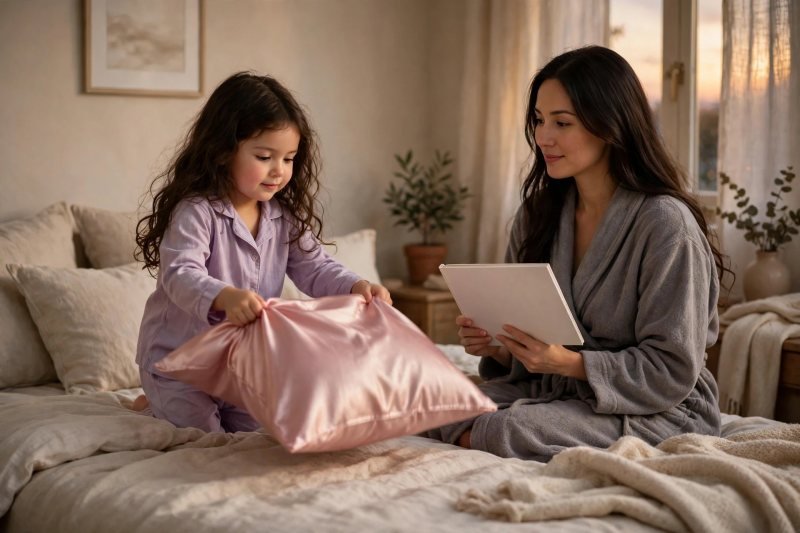
Make it a bedtime ritual, not a hair chore. The families who keep this up are the ones whose child owns a piece of it: your child carries the bonnet to bed, or flips the pillow to the "cool smooth side" themselves, or leads the script — "Hair pajamas!" — as the last step before the story. Keep the order fixed: bathroom, pajamas, hair prep, pillowcase or bonnet, story, lights. A fixed order is what turns a new object into a sleep association within about two weeks, and it pairs naturally with the other first-hair milestones parents manage at this age, like the ones in this toddler first haircut guide — calm, predictable, child-paced. If a night is missed (sleepovers, travel, laundry day), restart without commentary the next night; rituals survive gaps, lectures do not. The story itself can do double duty as language play — rhyming words for preschoolers make a bedtime story interactive without adding a single minute. Ritual set: mornings get their own two-minute routine.
-
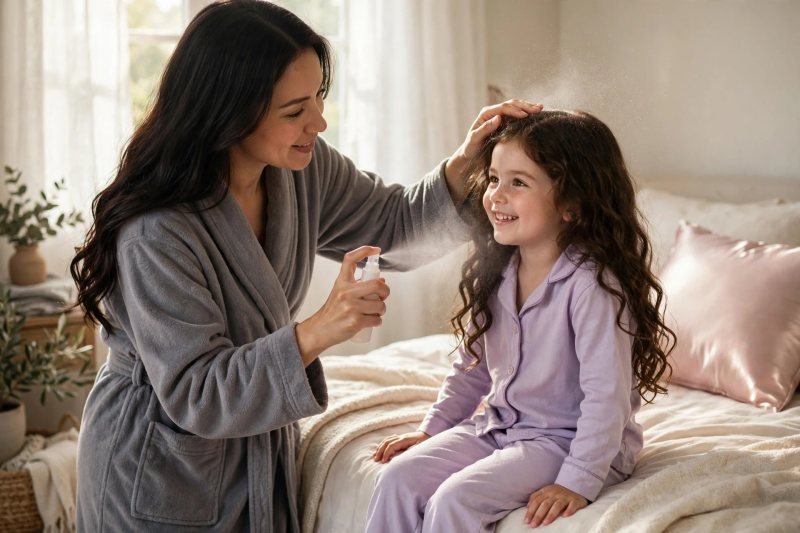
Handle mornings gently: refresh, don't re-brush from scratch. Morning hair on satin usually needs less rescue, but it still needs a kind hand: check the back of the head first (the classic rub zone); smooth with your palms; use a light mist of plain water from the spray bottle to reactivate curls or settle frizz; and detangle only the sections that need it, ends upward, rather than brushing the whole head out of habit. If your child wears the bonnet, remove it after they are fully awake — pulling it off a half-asleep child tangling hair at the band line is the one rookie mistake to avoid. Say the morning line: "Let's see how your hair slept." Some mornings the honest answer will be "beautifully"; some will be "like a bird nested in it" — both get the same gentle two minutes. If a hat goes on over the finished hair, these toddler sun hats cover the styles that stay put without flattening the morning's work. Mornings handled: the satin itself needs a wash rhythm to stay slippery.
-
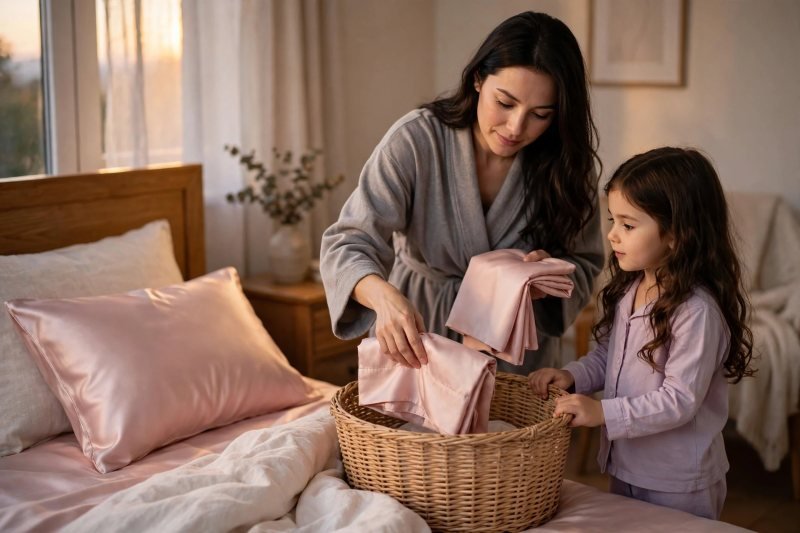
Wash and rotate so the smooth surface stays smooth. Satin only reduces friction while it stays smooth, and product buildup, drool, and general kid life rough it up over time. Wash the pillowcase or bonnet about once a week — more often during illness — following its care label (typically a gentle cycle, cool water, and air-drying or low heat keeps most satin smoothest longest). This is why the materials list includes a second one: rotation means bedtime never waits on the laundry. At each wash, do the palm test again: glide means good; drag means the surface is tired, and a tired satin piece is just a shiny cotton substitute — replace it when the glide is gone rather than concluding "satin doesn't work." Say it plainly to yourself: the tool only works while its one property — slipperiness — survives. Surface maintained: the trial can now be judged fairly.
-
Judge the two-week trial honestly and decide together. After two weeks of consistent nights, compare against your baseline notes: detangling minutes, morning tangle ratings, and your child's comfort votes. The balanced verdict most families reach is some version of: fewer tangles and an easier morning brush, most noticeably on curly, wavy, or long hair; little or no visible change for some short or straight hair; and no change at all to growth, thickness, or hair health beyond the reduced breakage that gentler nights can support. All three outcomes are honest results, not failures — you ran a fair trial with a cheap, washable tool. Decide together: keep the pillowcase, keep the bonnet, keep both, or retire them to the guest pillow with no drama. Say the closing line to your child: "We tested it like scientists. Now we know." That — a child who learns to test a claim kindly and believe the evidence — is the real win of the whole experiment.


Make it easier
Pillowcase only: skip the bonnet entirely for head-gear refusers — a still sleeper gets most of the benefit from the pillow alone. Shorter prep: on non-wash nights with low tangles, palms-smooth and a loose tie is a fair 30-second prep. Let the child pick the color: ownership beats aesthetics — a bonnet in their favorite color stays on longer.
Make it harder
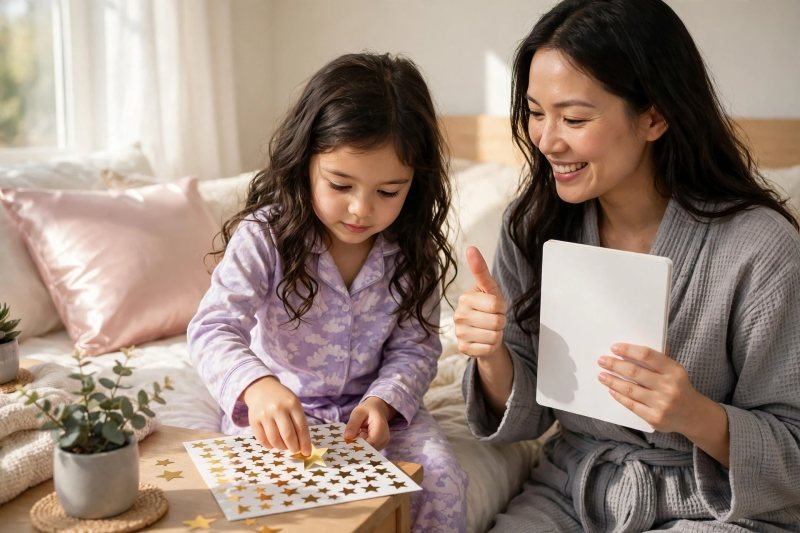
Scientist upgrade: your child keeps the morning tangle chart themselves with stickers (one to three stars) and announces the two-week verdict. Braid skills: graduate from a loose single braid to two loose braids, which some curly hair prefers — your child holds sections while you cross them. Travel kit: a spare pillowcase packed for sleepovers so the routine (and the data) survives nights away.
Other ways to play it
- Both at once: bonnet plus satin pillowcase for the most active sleepers or the longest hair — the pillowcase catches what the bonnet misses when it slips.
- Sibling version: matching "sleep hats" turn the ritual into a shared one; keep each child's fit checked individually.
- Summer adjustment: hot sleepers may prefer the pillowcase alone in warm months and add the bonnet back when nights cool.
How it changes by age
- Ages 2–3: pillowcase only, adult-managed; skip bonnets for toddlers who pull at headwear, and keep all hair ties out of the crib or bed if your child still mouths small items.
- Ages 4–5: the guide as written — child chooses the format, learns the prep script, and can co-judge the trial.
- Ages 6–8: hand over the whole routine (prep, fit check, wash-day palm test) and let your child run their own before/after notes like a real product test.
- All ages: comfort is the veto — any format a child finds hot, tight, or itchy will not survive the week, whatever it does for hair.
What they're learning
Cause and effect: friction versus glide is real physics, felt firsthand — hair that slides does not knot the way hair that rubs does. Fair testing: baselines, one change at a time, and two weeks of notes before a verdict is the scientific method at bedside scale. Routine ownership: a fixed bedtime order with a job of their own builds independence and sleep associations together. Gentle self-care: ends-up detangling and kind morning handling teach that care routines should not hurt.
Clearing up
Nightly cleanup is nil — the bonnet lives on the pillow or a bedside hook, the pillowcase stays on the pillow. Weekly, the used piece goes to the laundry basket and the rotation piece goes on. Once a month, do the palm-glide check on both pieces and retire any that have gone rough to the rag or guest-pillow pile.
Questions parents ask
Do satin pillowcases really help kids' hair?
Is a bonnet or a satin pillowcase better for a child?
What should I look for when buying a satin pillowcase or bonnet for kids?
Does satin help all hair types equally?
How do I wash a satin pillowcase or bonnet?

save it for later
Pin this for the next rainy afternoon
Keep it on a board so it is there when you need it, rather than when you happened to find it.
Save to Pinterest


