


Safari Birthday Party Ideas: A Wild Jungle Adventure
A complete safari birthday party for ages 4–5: turn your living room into jungle base camp, kit out little explorers with paper hats and binoculars, run an animal scavenger hunt and field games, then gather at the watering hole for snacks and a five-candle safari cake.
Plan a two-hour expedition: send jungle invitations, turn the room into base camp with streamers, leaves, and a footprint trail, then kit out explorers with paper hats and tube binoculars. Run a picture-checklist scavenger hunt for 8–12 hidden toy animals, play animal statues and an elephant relay, serve watering-hole snacks, sing over a five-candle safari cake, and send everyone home with a field-kit favor bag.

The short version
- The arc is the party: kit up, hunt, games, snacks, cake, field kits — two hours, three zones.
- Decor needs no words: vines, leaves, footprints, and resident stuffed animals say safari.
- The hunt is built for pre-readers: picture checklists, whisper-spotting, animals stay hidden until every team finds them.
- Gear is functional: hats and binoculars turn arrivals into explorers and star in the group photo.
- Games are elimination-free: animal statues and a trunk-arm relay burn energy without losers.
- The birthday explorer leads: first flashlight, ceremonial collection, and handing out the field kits.
- Age
- Ages 4–5
- Prep
- 180 min
- Play time
- 120 min
- Mess
- Some
- Difficulty
- Easy
- Where
- Both
Why kids love this
Four- and five-year-olds don't attend a safari party; they enlist. There's a hat, there are binoculars, there are animals hiding in the plants that only explorers can find. Every child gets a job (spotter, tracker, ranger), the jungle is full of discoveries, and the birthday explorer leads the expedition.
What you'll need
- Green streamers, paper leaves, and green/brown balloons for the jungle canopy
- Cardboard or craft paper, tape, and child-safe scissors for explorer hats and binoculars (two paper tubes per child)
- 8–12 small toy safari animals (or printed animal pictures) for the scavenger hunt
- Plain paper for hunt checklists (draw or print simple animal pictures — pre-readers track by image)
- Animal-print or leaf-green paper plates, cups, and napkins; a plain table cover
- Snack supplies: fruit skewers, animal-shaped crackers, sandwiches, and drinks for the "watering hole"
- A birthday cake (homemade or bakery) decorated with toy animals or leaves, plus exactly 5 candles
- Favor supplies: small paper bags, a toy magnifier or animal figure and stickers per child
- A speaker for jungle sounds or party music, and a camera for the expedition photos
Before you start
1. The week before: send invitations (step 2), make the explorer hats and tube binoculars with your birthday child, and buy or gather the toy animals for the hunt. 2. The day before: bake or collect the cake, prep snack items that keep, and cut all streamers and paper leaves. 3. Party morning: transform the room (step 3), hide the scavenger animals (step 6) after guests' arrival is imminent — or hide them and guard the room — and set the safari table (step 5) in a separate zone. 4. Brief your fellow rangers: who runs the hunt, who runs snacks, who owns the camera. Two hours, three zones: base camp (decor/table), the field (games/hunt), the watering hole (food).
How to do it
-
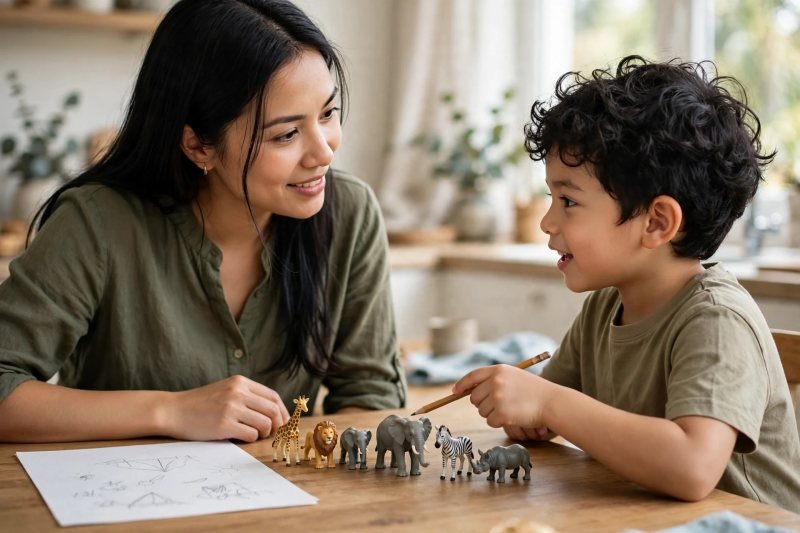
Plan the expedition before you decorate anything. A great safari birthday party starts with the route, not the streamers: for ages 4–5, plan a two-hour expedition with a clear arc — explorers arrive and get kitted out; the jungle opens for the scavenger hunt; field games burn the big energy; the watering hole serves snacks; the cake ceremony closes the adventure; field kits send everyone home. Keep the guest list to a size your space and your rangers can honestly track (a good rule for this age: around the child's age plus a couple). Say the theme out loud to your birthday explorer: "You're leading a safari. These are your explorers." Every later choice — decor, games, food — serves that story. If you want the same two-hour arc in a different flavor, fifth-birthday party themes run the identical sequence — this guide keeps the safari version. Route mapped, call the explorers in.
-
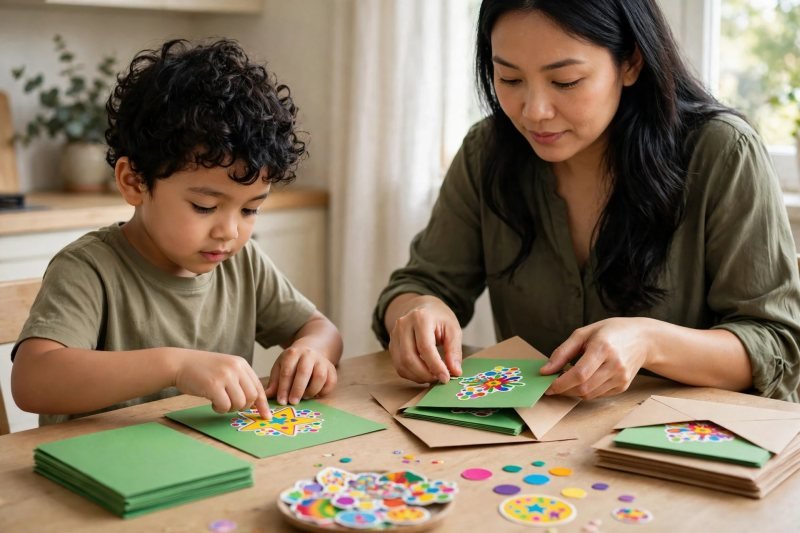
Send the call of the wild: invitations that start the story. Invitations set the expedition tone a week early: jungle-green cards or messages with the essentials (who, when, where, what to wear — "explorer clothes you can crawl in"), plus one line that builds the fiction: "Report to base camp at 2. Bring your best animal roar." Ask about allergies and photo preferences on the reply, because the watering-hole menu depends on it. If your birthday child is crafty, let them stamp or sticker each invitation — an explorer who issued the summons owns the party differently. Keep a simple list of who's coming; the hunt teams and hat count in later steps are built from it. Invitations out: on party morning, the jungle grows.
-
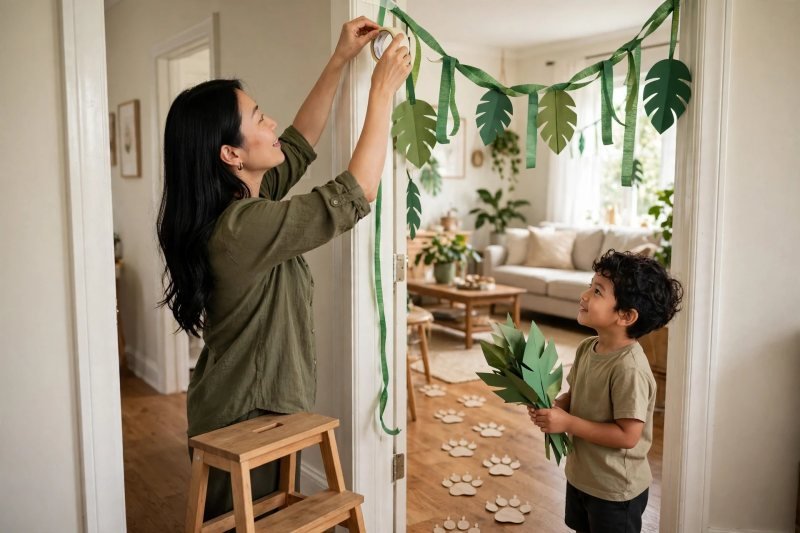
Turn the room into jungle base camp. Decorate for immersion, not for photographs: green streamers hang from the ceiling and doorways as vines (low enough to duck under, high enough not to tangle), paper leaves cluster in corners and around the snack table, and a trail of paper animal footprints leads from the front door to base camp. Stuffed animals your family already owns perch in plants and on shelves — instant jungle residents at zero cost. A few green and brown balloons make canopy clusters. Nothing needs words on it: leaves, prints, and animals say "safari" louder than any banner. Say, as the first explorers arrive: "Base camp! Grab your gear — the jungle is waiting." Room transformed, kit out the expedition.
-
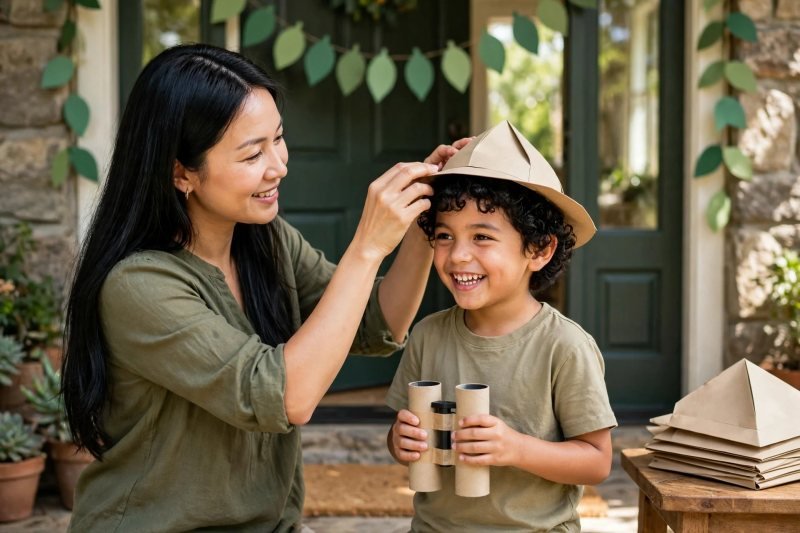
Kit out every explorer: hats, binoculars, and a mission. At the door, each child receives their field kit: a paper explorer hat (a wide paper band stapled to size, with a paper brim — made in advance or decorated on arrival with stickers and crayons) and binoculars made from two paper tubes taped side by side with a yarn strap. The gear does real work: hats make the group photo, binoculars slow children down and focus them, and both turn shy arrivals into explorers in ninety seconds. Want one more piece of gear? Paper-plate animal masks let each explorer arrive as a different animal — a mask, a hat, and binoculars is a full safari uniform. Announce the mission with full ranger ceremony: "Explorers! Wild animals have escaped into our jungle. Your mission: find them all." The birthday explorer gets one extra — a special badge or the first turn with the ranger's flashlight. Kitted and missioned: feed time is scheduled later, but the table is set now so the day has no gaps.
-
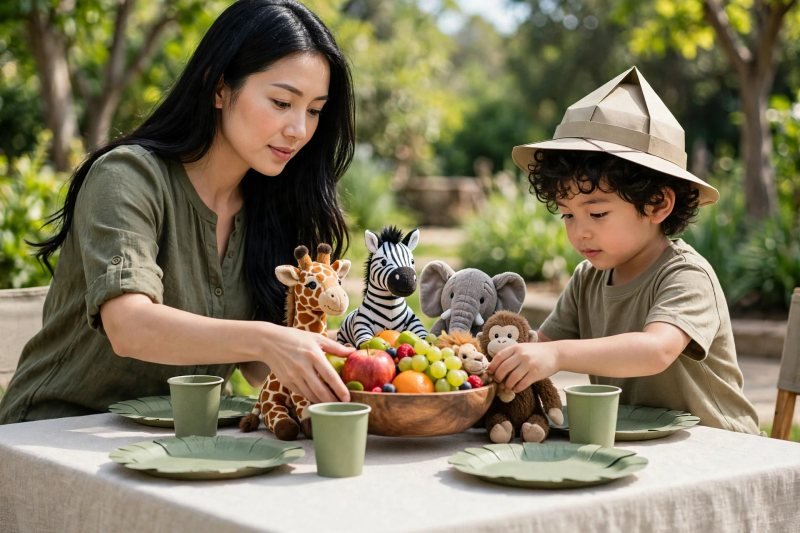
Lay the safari table at the watering hole. In the food zone, set the table before the games begin: a plain cover, leaf-green or animal-print paper plates and cups, and a centerpiece made from your nicest stuffed animals guarding a bowl of fruit. Label the zone with a picture sign if you like (a drawn elephant, no words needed) — the watering hole is where animals, and explorers, come to drink. Keep the cake out of sight until its moment; a spotted cake ends all hunting discipline. Water cups stay filled and reachable all party long — real safaris are thirsty work. Table ready, it's time to release the explorers into the field for the mission itself.
-
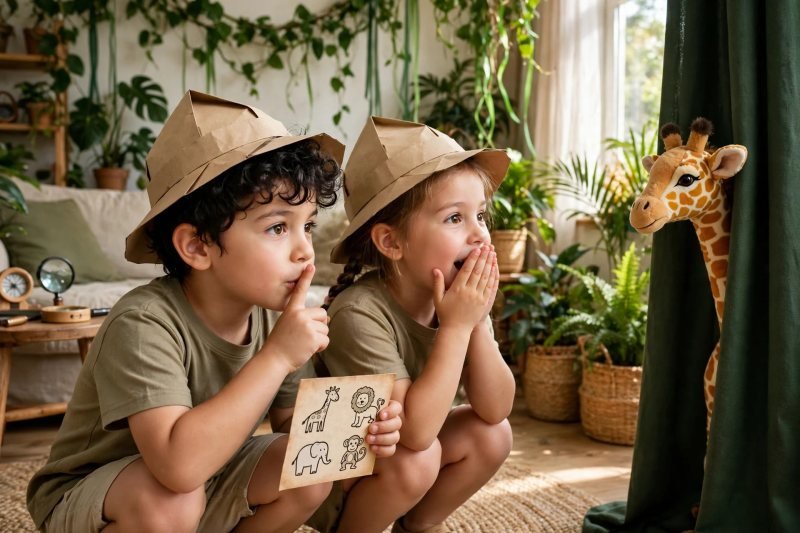
Run the great animal scavenger hunt. The hunt is the heart of the party, so build it for pre-readers: 8–12 toy animals (or sturdy picture cards) hidden at explorer height around the jungle — a lion in the plant pot; a giraffe behind the curtain; a zebra under the cushion — each findable with effort, none requiring climbing. Every explorer carries a picture checklist and crosses off animals with a crayon as their team finds them (teams of 3–4 with one ranger each work best). The rule that keeps it joyful: "Find it, point, whisper — don't grab. Every explorer must spot every animal." Spotted animals stay in place until all teams have found them, then the birthday explorer leads the ceremonial collection. The same hide-and-seek logic powers an egg hunt that scales with age — the hiding spots grow with the hunters. Hunting is memory work in disguise — the same skill these memory games for preschoolers train at the table, scaled up to a whole jungle. All animals recovered: celebrate with the loudest part of the day.
-
Burn the energy with two field games. Game one, Animal Statues: music plays, explorers prowl, hop, and slither; when it stops, the ranger calls an animal — "Freeze like a flamingo!" — and everyone balances, perches, or curls accordingly; the wobbling is the comedy, and nobody is ever "out." Older explorers can name the animal's home as they freeze — animal habitats for kids gives you the pairs to call. Game two, the Elephant Relay: explorers carry a balloon or soft ball tucked under one arm — their "trunk" arm stays pinned down — down the course and back, tagging the next explorer in line. Keep both games short, silly, and prize-free; the victory is the roaring. Rangers watch for the energy dip that means the pack needs the watering hole — which is exactly where the expedition goes next.

-
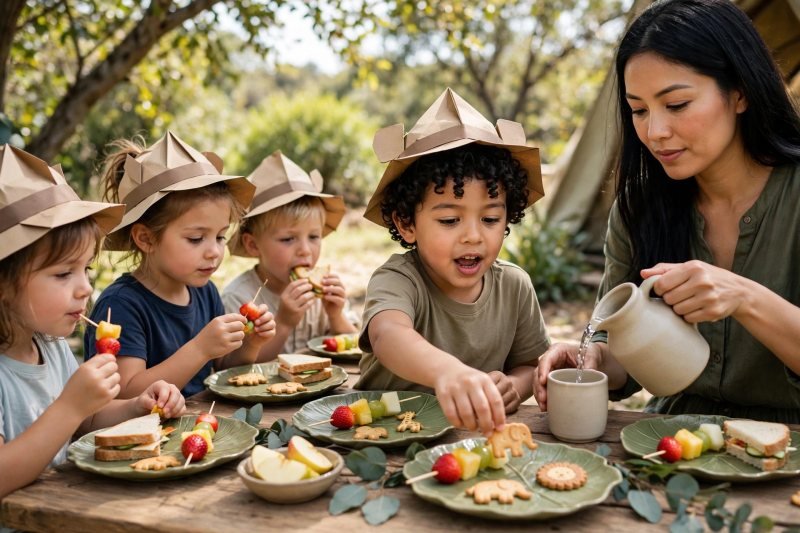
Serve watering-hole snacks the explorer way. Seat the expedition and serve safari fuel: fruit skewers (grapes halved lengthwise for the youngest, melon, banana — "jungle fruit"), animal-shaped crackers, small sandwiches, cheese cubes, and veggie sticks, with water and juice at the watering hole. Serve food before cake, always — hungry explorers are chaos agents, and the snack course is the party's calm center where rangers finally sit down too. Ask the table for field reports: "What was the hardest animal to find?" Stories from the hunt are the entertainment; no screen required. When plates slow down and stories wind up, a ranger quietly fetches the cake. Snacks done: the ceremony every explorer has been waiting for.
-
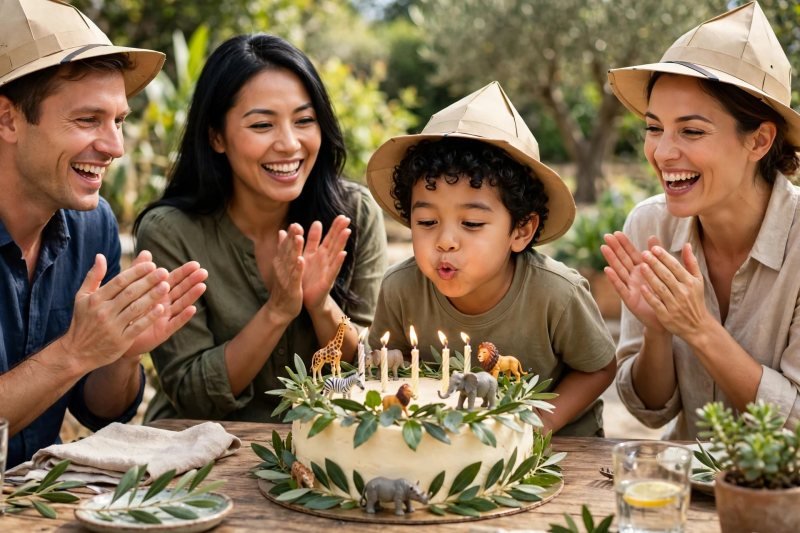
Gather round the safari cake — five candles for the birthday explorer. Dim nothing, gather everyone, and bring in the cake: decorated with leaves and toy animals (washed, and lifted off before serving) and exactly five candles for the explorer turning five. Sing the song at full jungle volume, let the birthday child make a wish "for the whole expedition," and blow. Serve cake with the ranger system — one adult cuts, one serves, one manages the crowd of critics reviewing frosting. Photograph the cake before the first cut and the birthday explorer mid-blow; those two frames are the day's history. If your cake is homemade and gloriously lopsided, even better: real expedition food is never perfect. Cake eaten, energy softening: close the expedition properly.
-
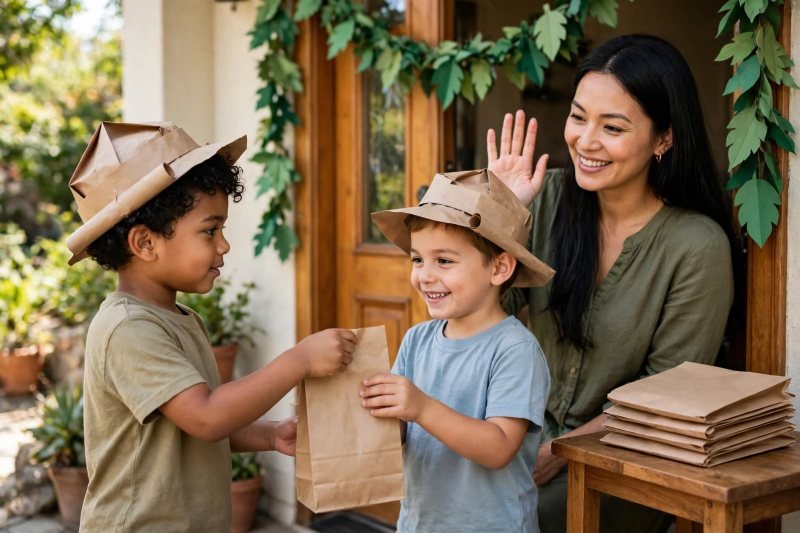
Send explorers home with field kits and a final roar. End on ceremony, not drift: explorers line up at base camp to receive their field kits — a paper bag with a toy magnifier or small animal figure, stickers, and one leftover treat — and their hats and binoculars go home on their heads, which parents secretly love (the gear IS the favor). The birthday explorer, as expedition leader, hands out the kits and thanks each explorer by name — a first, supported round of the gratitude habit. Finish with the whole troop's loudest group roar for the final photo, then doors open to waiting parents. Rangers' debrief is mercifully simple: streamers to recycling, stuffed animals back to their shelves, leftovers to the fridge, and one exhausted birthday explorer asleep before dinner. Expedition complete.


Make it easier
Toddlers in the mix: shorten the hunt to 5 big, obvious animals in one room, let little ones hunt with a ranger buddy, and serve their snacks first. Smaller scale: the whole party works with 4 guests — the hunt becomes a family expedition and the games become follow-the-leader animal parades. Borrow the planning skeleton from these 2nd birthday party ideas for toddlers — young-party timing and food basics transfer up an age.
Make it harder
Add a map: a simple drawn jungle map with X-marks where animals hide, read by the birthday explorer — early map skills and a glorious prop. Upgrade the hunt into field science: each found animal earns a fact card the ranger reads ("Giraffes sleep standing up!") and explorers sort the animals into "big/small" or "spots/stripes" at base camp. Let crafty guests make their own hats from scratch on arrival — cutting, stapling (adult-run), and decorating is a full fine motor activities for preschoolers session disguised as party prep.
Other ways to play it
- Backyard expedition: move base camp outside — the hunt hides animals in bushes and pots, statues happen on grass, and a paddling pool becomes the watering hole's main attraction.
- Night safari (for older 5s): dim the room, hand out flashlights, and hunt animals by torchlight — the same party with the thrill doubled; keep rangers plentiful.
- Zoo-breakfast safari: a morning party with pajama explorers, pancake "safari tracks," and the hunt run before the day gets hot or the sugar does.
How it changes by age
- Ages 2–3: a "safari-lite" — 60–90 minutes, 5-animal hunt in one room, no relay racing, constant snack access, and hats that are optional (some toddlers find gear annoying, and that's fine).
- Ages 4–5: the guide as written — full hunt with picture checklists, both field games, two-hour arc, and the birthday explorer in a real leadership role.
- Ages 6–8: add clue cards with simple words, a timed team hunt, harder hiding spots, and a night-safari flashlight round; the ceremony and field-kit close scale up unchanged.
- All ages: every game in this guide is elimination-free on purpose — at a birthday, nobody's job is to lose. Adjust challenge, never belonging.
What they're learning
Observation and memory: the hunt trains visual search, checklist tracking, and recall — explorers remember hiding spots the way rangers remember waterholes. Gross motor range: prowling, hopping, balancing like flamingos, and trunk-arm relays build coordination through pure play. Leadership and gratitude: the birthday explorer leads the collection and thanks each guest by name — social milestones wearing a safari hat. Classification thinking: sorting found animals by size, spots, or habitat at base camp is early science, smuggled into a party.
Clearing up
The jungle folds fast: streamers and paper leaves go straight to recycling (they're single-party decor and proud of it), stuffed animals return to their home shelves, hunt animals are counted back into their box — count them, explorers hide things in genius places — plates and cups are disposable by design, and leftover snacks refrigerate within the hour. The footprint trail peels off last, because it makes everyone smile during cleanup. Twenty minutes and base camp is a living room again.
Questions parents ask
How long should a safari birthday party last for 4- and 5-year-olds?
How do you do a scavenger hunt for kids who can't read yet?
What food do you serve at a safari party?
What are good safari party favors that aren't junk?
How many kids should you invite to a 4th or 5th birthday party?

save it for later
Pin this for the next rainy afternoon
Keep it on a board so it is there when you need it, rather than when you happened to find it.
Save to Pinterest


