


How to Read Aloud to a 2-Year-Old: 9 Tricks That Build Future Readers
Nine read-aloud tricks for 2-year-olds: short cozy sessions, playful voices, child-led page-turning — any reading together counts toward a future reader.
Read aloud to your 2-year-old in short, cozy, child-led sessions of about 5–10 minutes. Let them choose the book and turn the pages, point at pictures and name them, ask one simple question per page, and stop while it's still fun. Reread favorites as often as they ask — repetition is how toddlers learn. Any reading together counts; there is no quota and no guilt.

The short version
- 5–10 happy minutes beat 20 restless ones — watch your child, not the clock.
- Let your toddler choose the book and turn the pages; feeling in charge keeps them coming back.
- Point at pictures, name them slowly, and pause so your child can respond.
- One simple question per page ("Where's the doggy?") — an invitation, never a quiz.
- One funny voice, used sparingly, delights; a whole cast exhausts everyone.
- Rereading favorites is ideal — memorized "reading" is a real milestone, not cheating.
- Any reading together counts: half a book, skipped days, picture-only "reading" — zero guilt.
- Age
- Ages 2–3
- Prep
- 5 min
- Mess
- None
- Difficulty
- Easy
- Where
- Indoor
Why kids love this
Reading to toddlers benefits your child most when it is short, cozy, and child-led — not when it's a perfect start-to-finish performance. Real read-aloud time with a 2-year-old includes wiggling, skipped pages, and the occasional attempt to eat the corner of a board book. And every bit of it counts: hearing new words, pointing at pictures, and learning that stories are a cozy place to be.
You don't need a method, a curriculum, or a quiet child who sits still. You need a few sturdy books, a soft spot to sit, and about five minutes. The nine tricks below are small, practical, and guilt-free — and they work precisely because they follow your toddler's lead instead of fighting it.
At two, books are toys that talk. Toddlers love read-aloud time because it's cozy, it's about them — their finger does the pointing, their hand turns the page — and the same beloved book is always exactly where they left it. Funny voices, peekaboo flaps, and chanting the familiar line together make them feel clever. Because they are. Sung rhymes like Twinkle Twinkle Little Star lyrics hold wiggly attention the same way a funny voice does.
What you'll need
- A small basket or low shelf of 5–10 sturdy board books (favorites plus a couple of new ones)
- A cozy reading spot: a couch corner, a rug with cushions, or your child's bed
- Optional: a favorite stuffed animal to "listen" along
- Optional: one or two waterproof books for bathtime reading
Before you start
1. Gather 5–10 sturdy board books in a basket or on a low shelf your toddler can reach. 2. Set up one cozy spot — a couch corner with a blanket, a rug with big cushions, or the bed. 3. Pick a regular-ish moment in the day: after breakfast, before nap, or as part of bedtime. 4. Put your phone on silent and out of sight, so your attention is fully theirs. 5. Set your own expectation: five warm minutes count. There is no test at the end.
How to do it
-
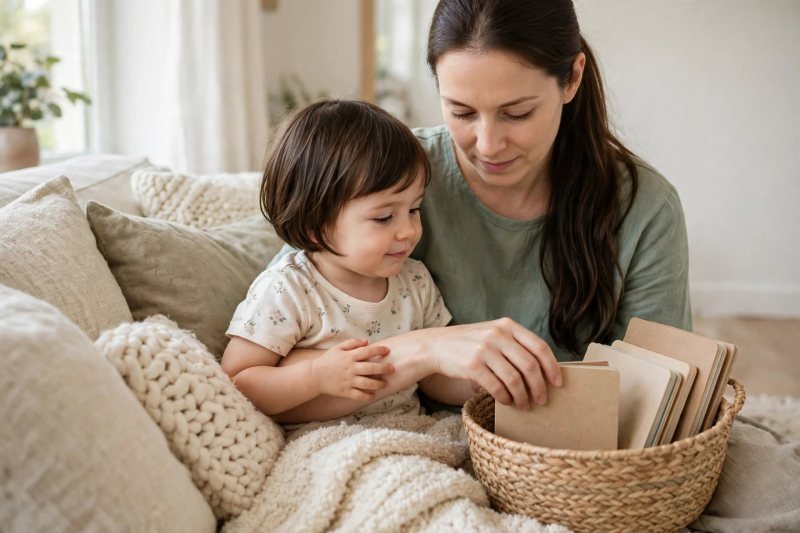
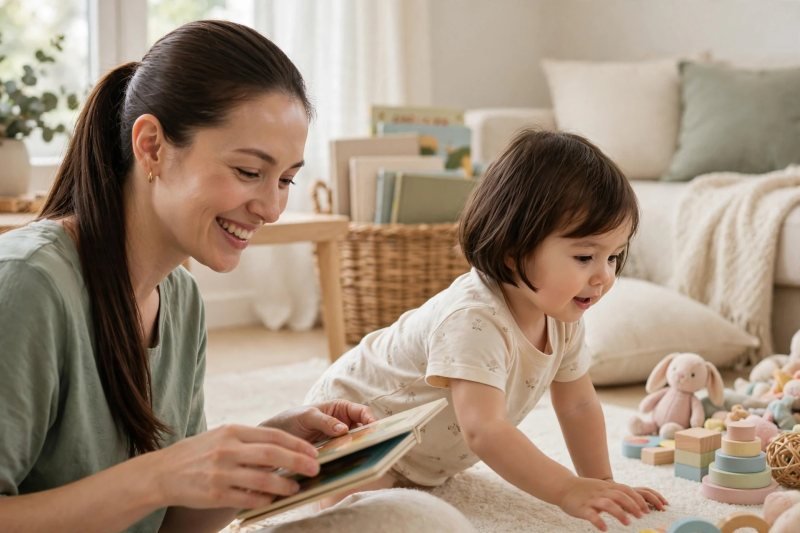
Cozy up first. Settle into your reading spot with your toddler tucked against you and the book basket within their reach.
-
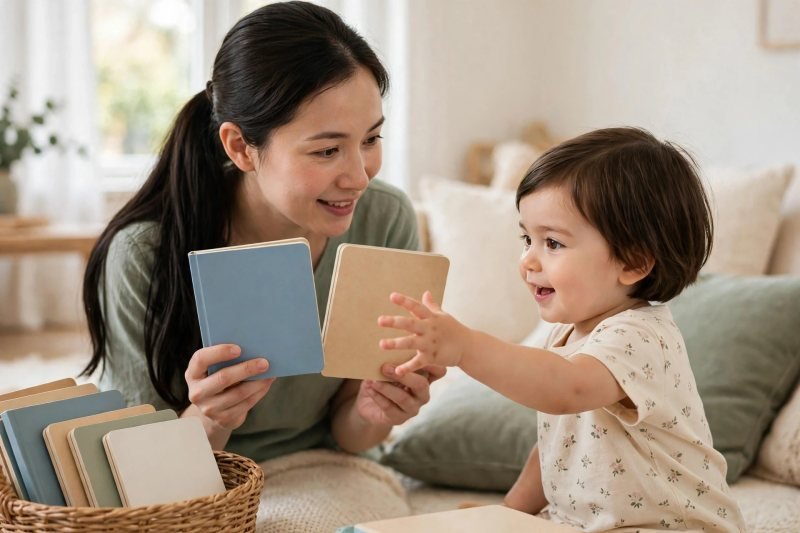
Let them choose. Hold out two books, or let them grab one from the basket — their pick, not yours.
-
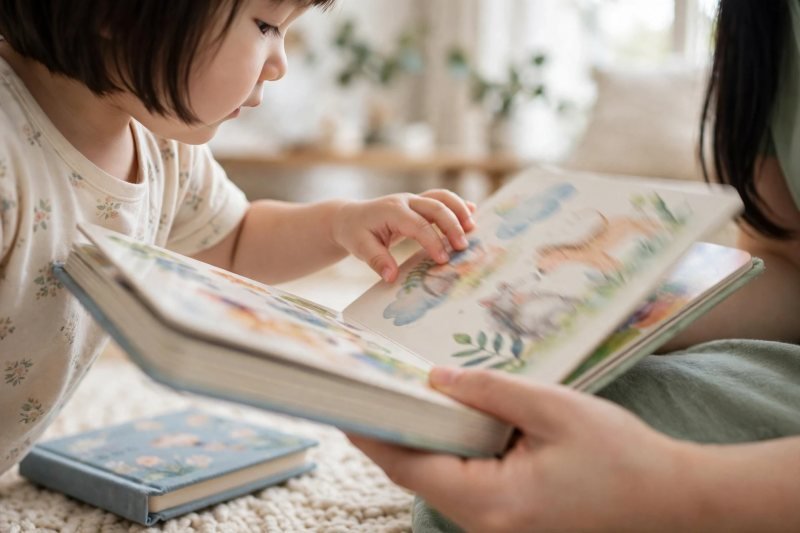
Hand over the pages. Let your toddler turn the pages, even if they skip three at once — their hands, their pace.
-
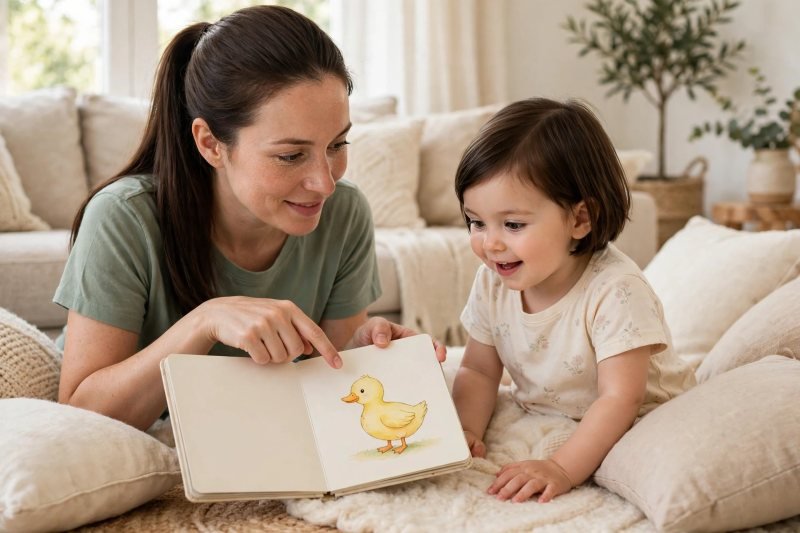
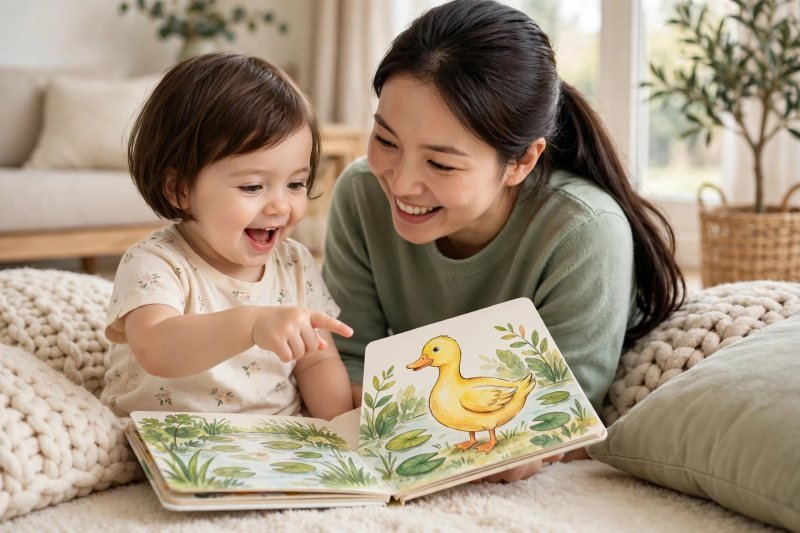
Point and name. As you read, point at pictures and name them slowly — "Look, a big yellow duck!" — then pause so they can point or babble back.
-
Ask one simple question per page. "Where's the baby?" or "What does the cow say?" — never a quiz, always an invitation.
-
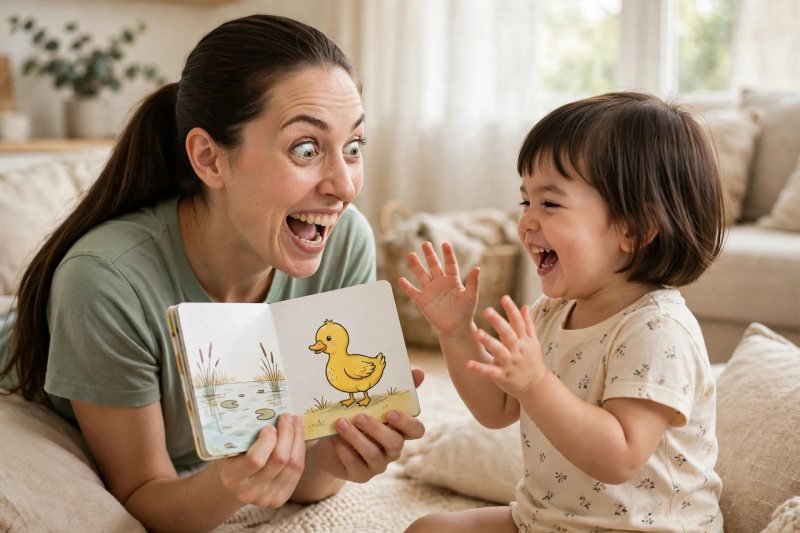
Do one funny voice, sparingly. Give a single character a silly voice, just now and then, so it stays a treat.
-
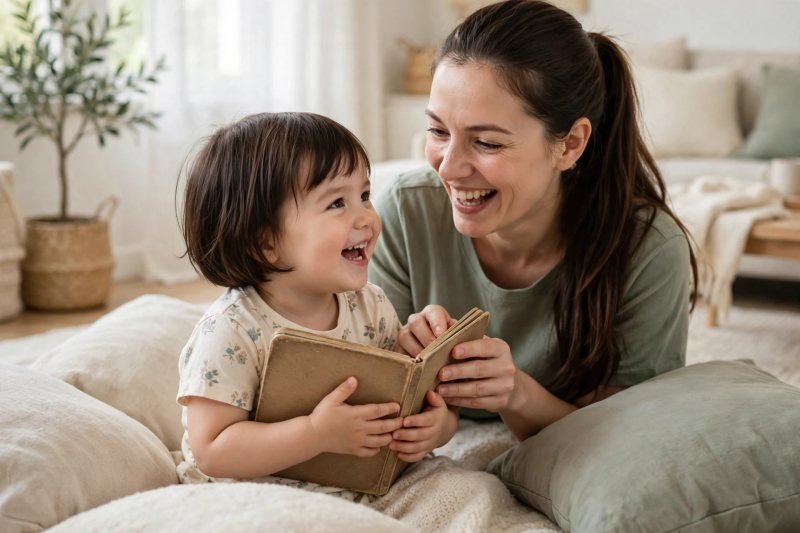
Say yes to "again!" When they beg for the same book, read it with real enthusiasm — repetition is how the learning happens.
-
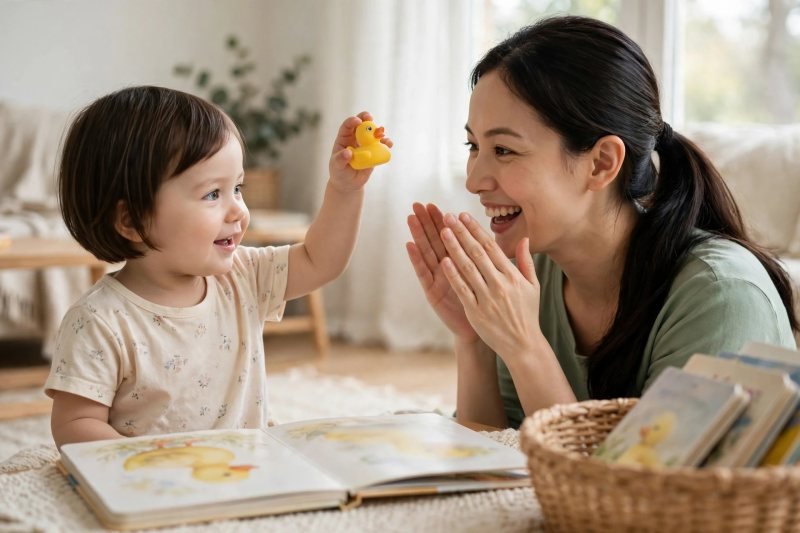
Link the book to real life. After a duck book, quack at real ducks; after a bedtime book, tuck teddy in the same way.
-
Stop while it's still fun. When the wiggling starts, close the book with a smile and a "more tomorrow!" — quitting happy beats finishing grumpy.


Make it easier
One book, one minute: even a single page before nap counts as reading together. Skip the words: just point at pictures and name what you see — that's real reading time for a 2-year-old. Read during snack time: a captive, contented audience in a high chair. Keep books everywhere: a basket by the couch, two in the car, one in the diaper bag.
Make it harder
For older 2s nearing 3: Ask "what happens next?" before turning the page, and celebrate any guess. Hunt the same object across pages: "Can you find the red ball on every page?" Act out one page together — stomp like the elephant, whisper like the mouse. Try slightly longer stories with a simple problem and a happy ending.
Other ways to play it
- Bedtime-only reading: the same two books nightly as a sleep cue.
- Bathtime books: waterproof books turn the tub into story time.
- Big-sibling storyteller: let an older child "read" — recite or invent — to the toddler.
- Grandparent video-call reading: the same book at both houses, read "together" over the phone.
- Library story time: free, social, and someone else does the funny voices.
How it changes by age
- Younger 2s (24–30 months): expect 1–3 minute bursts, mostly picture-pointing and page-flipping; the words are optional. Follow them completely.
- Older 2s (30–36 months): simple stories start to land; they'll chant refrains and "read" favorites from memory. Add one question per page.
- Signs to stop: page-flapping, climbing off your lap, throwing the book. All normal — close cheerfully and try later.
What they're learning
Vocabulary: book words (enormous, grumbled, peekaboo) they'd rarely hear in daily chat. Listening and attention: following a story builds focus in small, joyful doses. Print awareness: pages turn one way, books have a front and a back, stories have a beginning and an end. Speech sounds: rhymes, refrains, and silly voices tune their ear to language patterns. Emotional security: being read to in a warm lap wires books to comfort — the root of a lifelong reading habit.
Clearing up
Pop the books back in the basket or on the low shelf together — tidying can be part of the ritual. That's it. No mess, no supplies to wash.
Questions parents ask
How long should I read aloud to a 2-year-old?
What if my 2-year-old won't sit still for a book?
Is it okay to read the same book to my toddler every day?
Should I ask my toddler questions while reading?
What are the benefits of reading to toddlers?
Do I need special books to read aloud to a 2-year-old?
Why does reading aloud matter so much at age 2? At two, your child is in the middle of a language explosion — new words arriving daily, sentences stretching from one word to two and three. Every time you read aloud, you hand them words they'd rarely hear in everyday chat: enormous, grumbled, peekaboo. They also learn how books work — that pages turn one way, that a story has a beginning and an end, that pictures and words travel together. Perhaps most important of all, they learn that reading feels good: it happens in your lap, in a warm voice, with your full attention. That feeling is what turns a toddler who is read to into a child who reaches for books on their own.
How long should a read-aloud session last for a 2-year-old? Shorter than you think. Five happy minutes beat twenty restless ones, every time. Watch your child, not the clock: bright eyes and pointing mean keep going; squirming, page-flapping, or wandering off mean it's time to close the book with a smile. Ending while it's still fun teaches your child that books are a treat, not a task — and they'll come back for more tomorrow. There is no daily quota here. One book before bed counts. Half a book at breakfast counts. Skipping a day counts as nothing at all — just pick it up again when you can.
What if my toddler won't sit still for a whole book? Then don't ask them to. Two-year-olds learn with their whole bodies, and plenty of excellent "reading" happens standing up, upside down, or halfway across the room. Let them wander and come back. Let them flip pages out of order. Read the pictures instead of the words when that's what holds them. If they only want the truck page, read the truck page five times. Following their lead isn't giving up on reading — it is the trick. A child who feels in charge of book time will choose book time again. If your toddler loves the sound of words, try our nursery rhymes for toddlers between books — the rhythm holds wiggly attention beautifully.
How can I make read-aloud time more interactive? Two-year-olds aren't an audience; they're participants. Point at pictures and name them, slowly and clearly: "Look — a big red bus!" Then wait. That pause is where the magic happens — many toddlers will point, babble, or attempt the word back. Ask one simple question per page, not a quiz: "Where's the doggy?" Let them turn the pages, even if they skip three at once. And try a funny voice for one character — just one, and just now and then. A single silly voice used sparingly delights a toddler; a whole cast of characters on every page exhausts everyone, including you.
Is it okay to read the same book over and over? Yes — it's better than okay, it's ideal. Rereading is how toddlers learn: the first time they notice the pictures, the fifth time they chant the repeated line, the twentieth time they "read" it to their teddy bear from memory. That memorized "reading" is a genuine milestone, not cheating — it shows they understand how stories flow. Lean into favorites, and stretch them into real life: after a book about ducks, point out ducks at the park; after a bedtime book, tuck the teddy in the same way. When books and life echo each other, words stick. Toddlers adore wordplay of every kind — simple games for teaching rhyming to preschoolers build the same sound awareness that makes read-aloud time click.
Any reading together counts — books, photo albums, the back of a cereal box. Audiobooks and sung nursery rhymes count too. Skipped days don't erase anything; just pick up the next book whenever you can, with zero guilt. For more ideas that build on book time, explore toddler learning activities at home. Alphabet activities for toddlers are a natural next step once a favorite book is memorized.

save it for later
Pin this for the next rainy afternoon
Keep it on a board so it is there when you need it, rather than when you happened to find it.
Save to PinterestTry this next
-
Row Row Row Your Boat Lyrics + Rowing Game for Toddlers
Ages 2–3
-
Reading Readiness in Toddlers: 12 Signs Your 2-Year-Old Is Ready for Words
Ages 2–3
-
Itsy Bitsy Spider Lyrics and Fingerplay: A Toddler Rhyming Favorite
Ages 2–3
-
Old MacDonald Had a Farm Lyrics: Animal Sounds That Teach Rhyming
Ages 2–3


