


Reading Readiness in Toddlers: 12 Signs Your 2-Year-Old Is Ready for Words
Twelve reading readiness signs your 2-year-old may show — and exactly what to do for each one. No pressure, no deadlines: just warm invitations to play with words.
The clearest reading readiness signs in a toddler: handling books correctly, pretend-reading familiar books aloud, noticing print in the world, and asking "what does that say?" Answer each sign with play — more books, more rhymes, more pointing at words. A few signs is plenty; readiness at two says nothing about later success, so follow their curiosity and never drill.

The short version
- Watch for behaviors, not birthdays: readiness shows up as what a child does, not the age they turn.
- Pretend-reading and picture-naming are real pre-reading work, even with no letters involved.
- A child who notices print in the world is discovering that marks carry meaning — the heart of reading.
- Answer each sign with play, never lessons: more stories, more rhymes, more pointing together.
- No single sign matters much alone; what counts is the pattern over a few weeks.
- Zero signs at two is completely fine. Many strong readers showed nothing until well past three.
- Age
- Ages 2–3
- Prep
- 5 min
- Play time
- 10 min
- Mess
- None
- Difficulty
- Easy
- Where
- Both
Why kids love this
There is nothing to get wrong, nothing to perform, and no one keeping score. Your toddler gets to flip books upside down, shout the rhyming word, scribble "letters," and be read to as many times as they ask. Every part of this activity is play that happens to be exactly what their brain needs.
Every parent wonders how to tell when a toddler is ready to start learning about words and letters. The answer is kinder than most expect: readiness doesn't arrive as one moment you can miss. Spotting reading readiness signs in your toddler is simply knowing what to watch for.
One rule for this article: these signs are invitations, not deadlines. Nine signs at 26 months is not "ahead"; two at 34 months is not "behind." Below are twelve behaviors that appear before words and letters click — treat each as a green light for gentle play, and an empty checklist as permission to wait.
Sign 1: They hold books right-side up. They pick up a book the correct way around and turn pages roughly front to back — they've absorbed how books work. What to do: Make them the page-turner; sit slightly behind them and never correct a skipped page.
Sign 2: They pretend to read out loud. They flip through a familiar book producing babbles or a recitation from memory — performing reading without reading a word. What to do: Be an appreciative audience. Ask "then what happened?" Never say "you're not really reading."
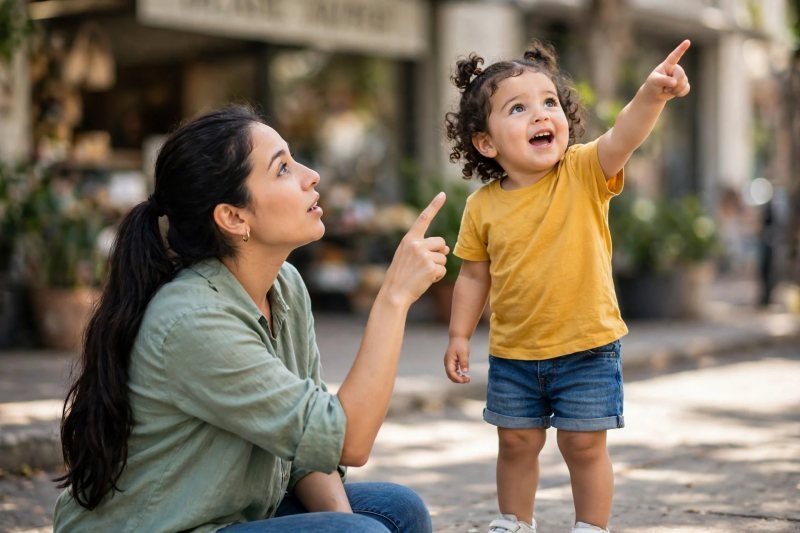
Sign 3: They point at pictures and name what they see. They jab a finger at the dog, the moon, the truck — sometimes before you read the page — linking pictures to meaning and training eyes to scan. What to do: Play "find it": "Where's the sleepy bear?" Then let them lead.
Sign 4: They notice print in the world. They spot a letter on a cereal box, point at a shop sign, or recognize a favorite restaurant's logo — tasting the idea that marks carry messages. What to do: Read the world out loud together: "That sign says STOP — the cars wait."
Sign 5: They ask "What does that say?" Your child has grasped reading's central secret: those marks hold information, and grown-ups can unlock it. What to do: Always answer briefly and warmly — "It says 'bananas.'" Then stop; short answers protect curiosity.
Sign 6: They sit through a whole short story. They settle in your lap and stay to the last page — wiggling, maybe interrupting, but not leaving. Even three minutes is a readiness muscle developing. What to do: Choose short books and quit while they're happy.
Sign 7: They bring you books to read. They toddle over, book in hand, and back into your lap — the clearest vote for reading time. At two, motivation matters more than any skill. What to do: Say yes whenever you can; even two pages counts.
Sign 8: They recognize their own name or a favorite letter. They find "their" letter on a block or point out their name on a cup — first steps in distinguishing symbols inside the blur of print. What to do: Label their world playfully: a name tag on the door, letter magnets on the fridge. No quizzing.
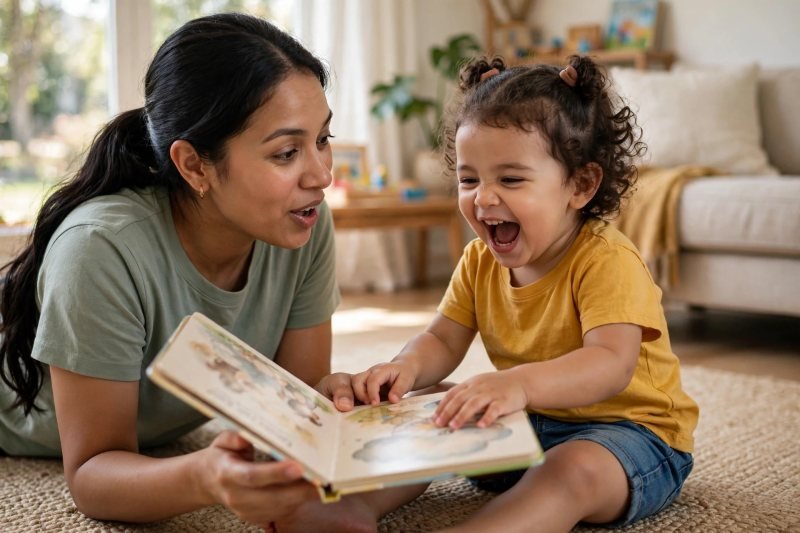
Sign 9: They fill in rhymes and repeated lines. You pause — "Hickory dickory…" — and they shout "dock!" They're listening closely to how words sound and how stories are built. What to do: Pause more. Leave the last word of repeated lines for them to supply. Later, teaching rhyming to preschoolers builds on exactly this pause-and-supply game.
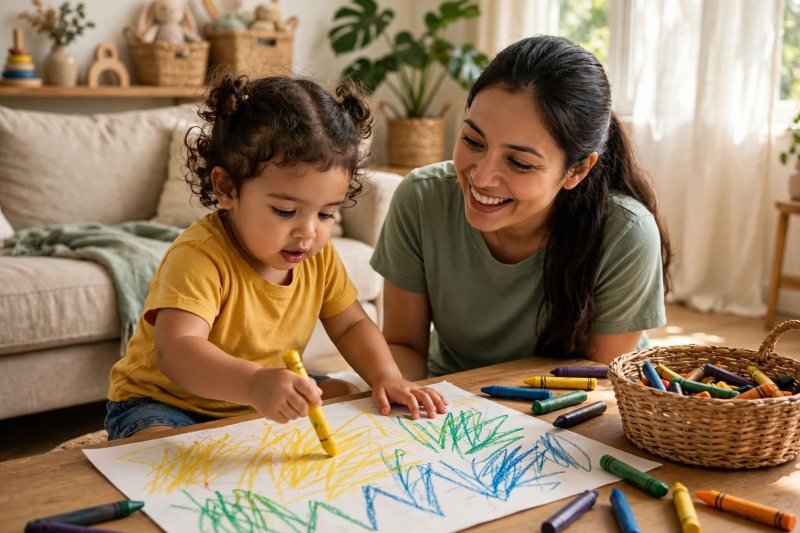
Sign 10: They scribble "writing" and ask you to read it. They push a page of zigzags toward you and say "read it" — marks on paper can carry a message someone else receives. What to do: Read it back, deadpan and delighted: "Oh! It says the dinosaur is hungry."
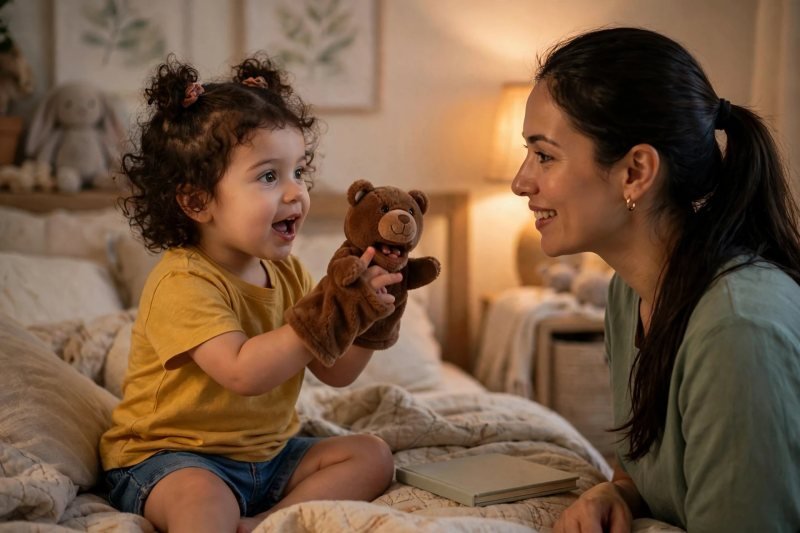
Sign 11: They retell a favorite story in their own words. They narrate "the bear lost his hat and then he found it!" — details wrong, shape right — tracking narrative: characters, problems, endings. What to do: Ask at bedtime: "What was your favorite part today?" Just listen.
Sign 12: They choose books during free play. Given free choice, they wander to the bookshelf as well as the toy box — a self-chosen habit that predicts a lifelong reader. What to do: Make books the easiest choice: low baskets, covers facing out, a cozy corner.
How many signs does my toddler need to show before I start doing something? Fewer than you think. Three or four signs over a few weeks is plenty of reason to lean in with more books, rhymes, and print-talk — all play, never instruction. Each sign is your child opening a door; walk through it with them, at their speed.
What if my 2-year-old shows none of the reading readiness signs? Then you have a normal two-year-old. The age range for these signs is enormous — many children show none until well past three and read beautifully later. Keep reading aloud anyway; it builds vocabulary and warmth regardless. Nearing four with very little interest in books or speech, or a gut feeling of unease, is worth mentioning to your pediatrician.
Is it too early to teach my 2-year-old to read? Sounding out words on purpose is too early for almost all two-year-olds, and pushing it can make print feel like work before it has felt like pleasure. What is never too early is everything around reading: daily read-alouds, rhymes, pointing at words, pretend-reading. These feed readiness the way sunlight feeds a plant — steadily, no hurrying the bloom. Sound play comes before letter work — phonics activities for preschoolers show the same sounds-first order for older children.
How can I encourage reading readiness without pushing? Make words unavoidable and delightful, and let your child set the pace. Keep books within reach. Sing the rhymes they love. Point at words in stores and on walks, and answer every "what does that say?" warmly. Never quiz, never correct pretend-reading, never compare. The goal is a child who believes books are for them.
What you'll need
- 5–6 sturdy board books your child already likes
- A low basket or crate for the books
- Paper and chunky crayons
- A notebook or phone notes app for you (to jot down signs you spot)
Before you start
1. Gather 5–6 board books — short, sturdy, with big pictures — and put them in a low basket where your child can reach them unaided. 2. Pick a cozy, well-lit corner with a cushion or small chair: this becomes the reading spot for the week. 3. Put paper and chunky crayons on a low table or tray nearby, ready for "writing" play. 4. Keep your notebook or phone handy — you'll be recording which signs you notice, not testing anything.
How to do it
-
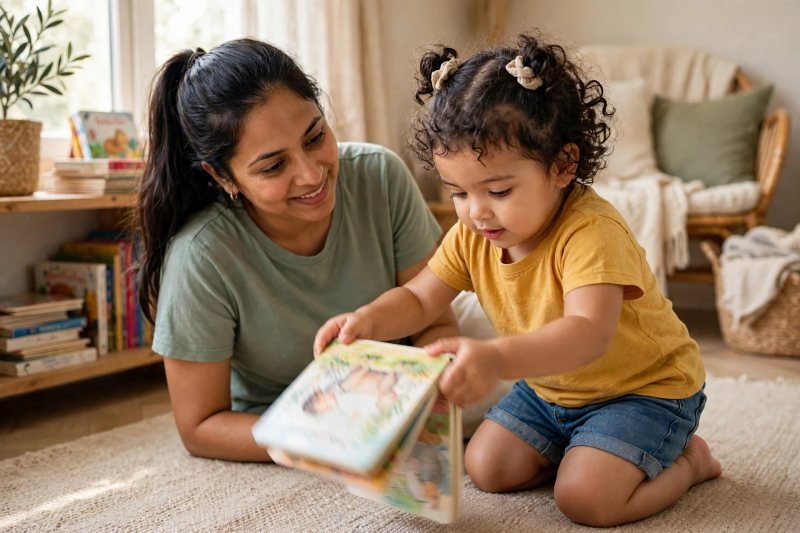
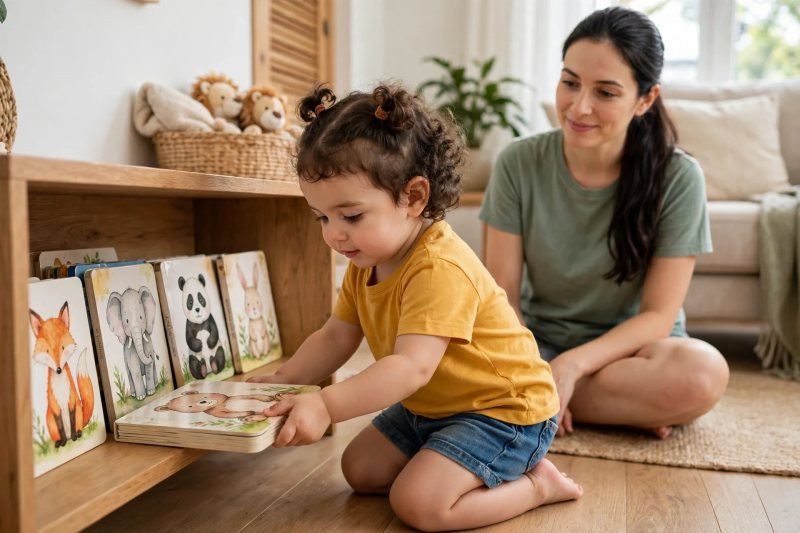
Watch how they pick up a book. Place a board book upside down on the rug and notice whether your toddler turns it right-side up before opening it — sign 1 in action.
-
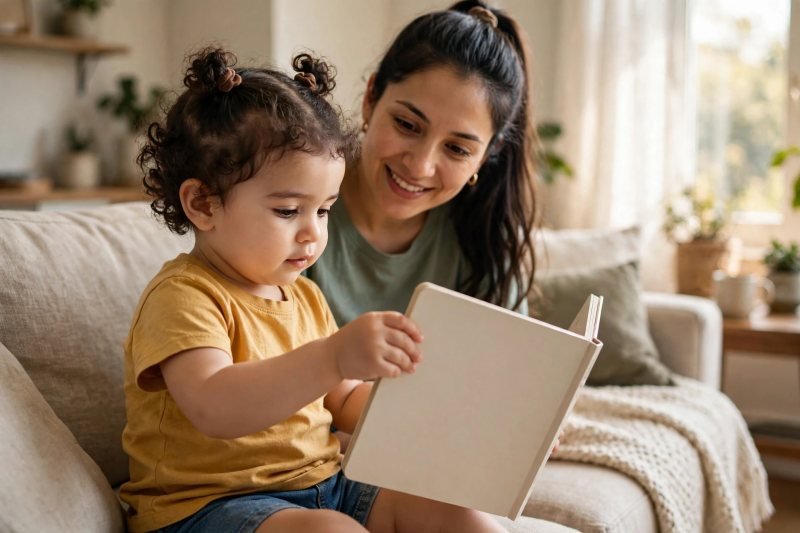
Hand over page-turning. Read a short favorite together with you sitting slightly behind them, and let them turn every page while you watch for front-to-back order.
-
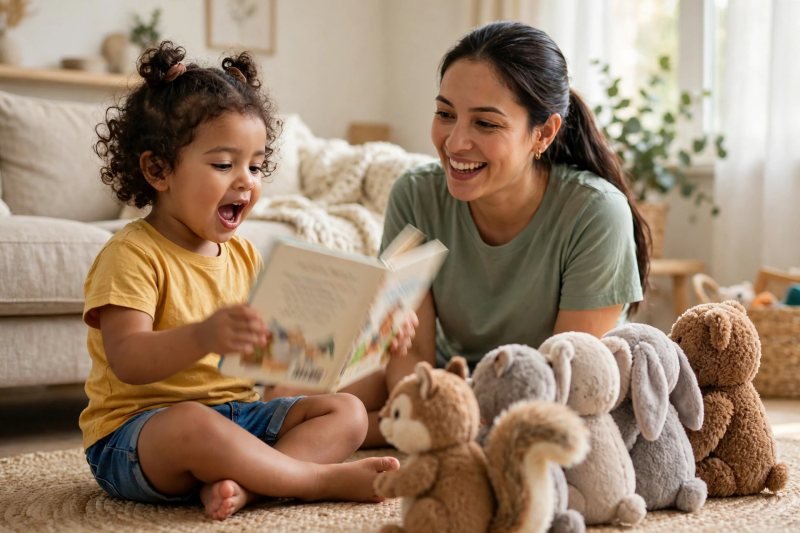
Listen for pretend-reading. Later, during free play, stay close enough to hear if they "read" a familiar book aloud to themselves or a toy — babbles and recitations both count.
-
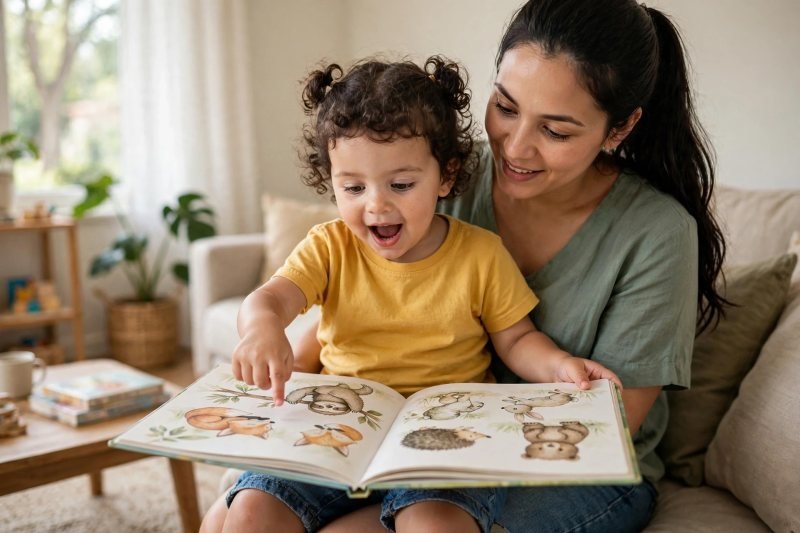
Play "find it." Open a picture book and ask "where's the sleepy bear?" — then let them lead, pointing and naming whatever catches their eye.
-
Take the words outside. On a walk or in a store, pause at a familiar sign or label and see if your child notices it; read any print they point at, out loud, as you point.
-
Leave the rhyme hanging. Read a rhyming book and stop just before the final rhyming word — "Hickory dickory…" — and listen for whether they supply "dock!"
-
Offer the crayons. Set out paper and chunky crayons and see if your child scribbles "writing" and brings it to you to "read" — then read it back with a straight face and delight.
-
Ask for the story. At bedtime, ask "what happened in the bear book today?" and listen to their retelling without correcting the details.
-
Notice their free-play choice. Over the next few days, glance at what they wander toward when nothing is planned — bookshelf visits count as sign 12.
-
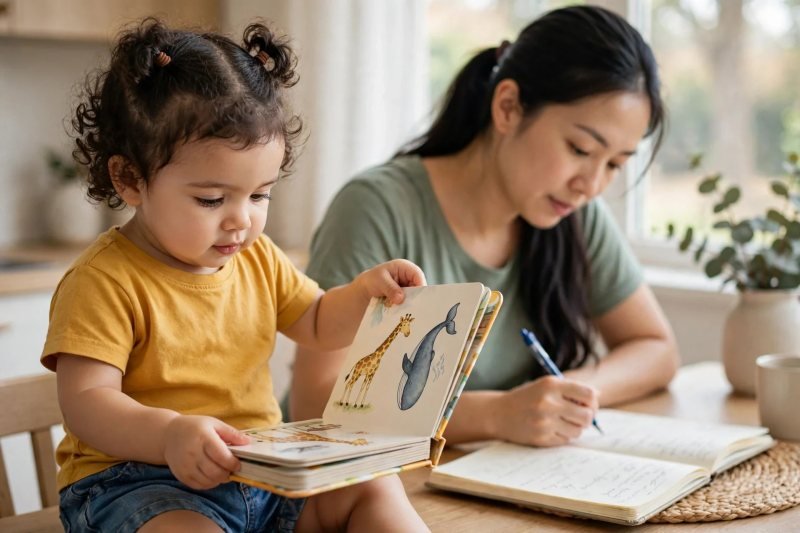
Write down what you saw. In your notebook, list the signs that appeared, and pick one gentle response for the week ahead: one new library book, one new rhyme, or one labeled bedroom door.


Make it easier
Skip the notebook entirely and just enjoy the week — simply noticing one or two signs in passing is plenty. Use only books your child already loves rather than introducing new ones.
Make it harder
For an older or very verbal 3-year-old, add first-sound play: "I'm thinking of something that starts with /mmm/… milk!" Keep it to a minute, always as a game, and stop at the first sign of boredom.
Other ways to play it
- Library trip: let your child choose two books themselves; choosing is sign 12 in the wild.
- Grandparent call: have your toddler "read" a memorized book over video to a grandparent — a proud audience supercharges pretend-reading.
- Rainy-day rhyme basket: put three rhyming books in the book basket and rotate only those for a week. Rhyming books work even better alongside nursery rhymes for toddlers sung from memory.
How it changes by age
- For young 2s, expect mostly physical signs — book handling, page turning, picture pointing — and keep sessions to a few minutes. Closer to 3, print curiosity often blooms: "what does that say?" and name recognition. Both are right on time.
What they're learning
Print awareness: books have a right way up, pages have an order, marks carry meaning Narrative sense: stories have beginnings, middles, and endings worth retelling Phonological play: rhymes and repeated lines train ears for the sounds inside words Vocabulary growth: naming pictures and asking about print builds word knowledge fast Intrinsic motivation: choosing books freely is the root of a lifelong reading habit
Clearing up
Return books to the low basket so they stay within reach and in good shape — board books wipe clean with a damp cloth. Toss dried-out crayons and recycle scribbled paper; keep your sign notes somewhere you'll find them in a few months.
Questions parents ask
What are the first signs of reading readiness in a 2-year-old?
Should I teach my 2-year-old letter names or sounds?
How long should I read to my 2-year-old each day?
My toddler only wants the same book every night. Is that okay?
My 2-year-old chews books instead of reading them. Is that a bad sign?
This is an observation week, not a program — there is nothing to complete and no score to keep. If your child shows no signs at all, the week still "worked": you spent it reading together, and that always counts. Revisit the signs in two or three months; toddlers change fast. For the next step when print curiosity blooms, see our alphabet activities for toddlers. For the weeks when no sign appears yet, toddler learning activities at home keep books in the mix without any pressure.

save it for later
Pin this for the next rainy afternoon
Keep it on a board so it is there when you need it, rather than when you happened to find it.
Save to Pinterest

