


Rhyming Words for Toddlers: 50 Easy Pairs to Say Together (Cat–Hat, Dog–Frog)
Fifty easy rhyming words for toddlers — cat–hat, dog–frog, moon–spoon — sorted into five playful groups, with simple say-sing-clap games that build listening skills and early reading readiness.
Rhyming words for toddlers are short, simple word pairs that share an ending sound — like cat–hat, dog–frog, and moon–spoon. This list of 50 pairs is grouped into animals, food, home, play, and silly themes. Say each pair slowly with your two-year-old, clap along, and play the silly swap game to build the listening skills reading grows from.

The short version
- 50 easy rhyming pairs for ages 2–3, in animals, food, home, play, and silly groups.
- Start with just 3 pairs — repetition beats variety for toddlers.
- Stretch the ending sounds, clap along, and let your toddler pick the next pair.
- The silly swap game ("cat… DOG!") reveals when your toddler truly hears rhymes.
- Not hearing rhymes yet is normal — keep chanting and their ears will catch up.
- Age
- Ages 2–3
- Prep
- 2 min
- Play time
- 15 min
- Mess
- None
- Difficulty
- Easy
- Where
- Both
Why kids love this
The best rhyming words for toddlers are short, concrete, and a little bit silly: cat–hat, dog–frog, moon–spoon. This is not a lesson plan — it is a word list of 50 pairs in five playful groups, with easy games for practicing them together. Say them in the car, chant them at snack time, whisper one at bedtime. A few minutes of rhyming play a day builds the listening skills that reading grows from. It sits happily alongside other toddler learning activities at home that need no setup at all.
Two-year-olds are sound collectors. They repeat the funny part of a word forty times and light up when two words click together. Rhyming turns talking into a sound game with nothing to get wrong — your toddler just listens, echoes, claps, and giggles. The sillier the pair (moo–you, boo–shoe), the faster the sounds stick.
What you'll need
- Nothing required — your voice is the whole activity.
- Nice to have: 2–3 stuffed animals (a cat, a dog, a bear) for acting out the animal pairs.
- Nice to have: a small basket for the rhyming basket game in Step 7.
- Nice to have: real snack foods — actual apple slices beat flashcards.
Before you start
1. Skim the animal group and pick 3 pairs to start — cat–hat, dog–frog, bee–tree. 2. Choose a happy, unhurried moment — after breakfast, in the car, during a diaper change. Tired toddlers do not rhyme well. 3. That is it. No printing, no setup, no cleanup.
How to do it
-
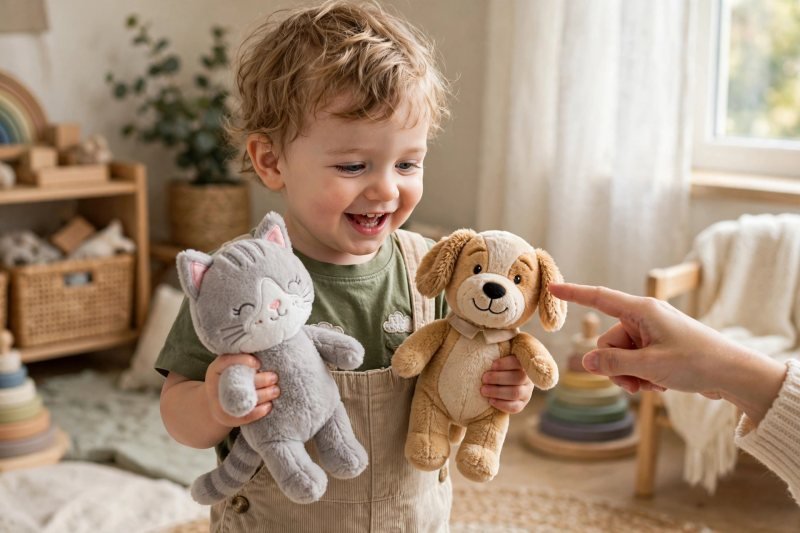
Start with just 3 pairs from the animal group. Chant them through the day like a little song: "Cat… hat! Dog… frog! Bee… tree!" Three pairs is plenty — toddlers learn through repetition, not variety.
-
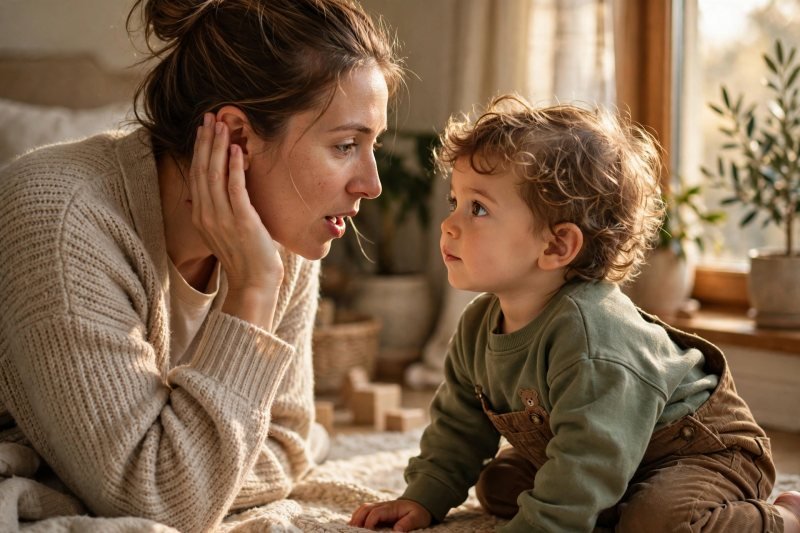
Say each pair slowly, stressing the ending sound. Stretch it: "caaat–haaat." Tap your ear like you are listening hard. You are showing your toddler where to listen — the ends of the words.
-
Clap on the rhyming words. Say "cat" (clap), "hat" (clap), and invite your toddler to clap along. Most twos will clap along weeks before they can say the pairs.

-
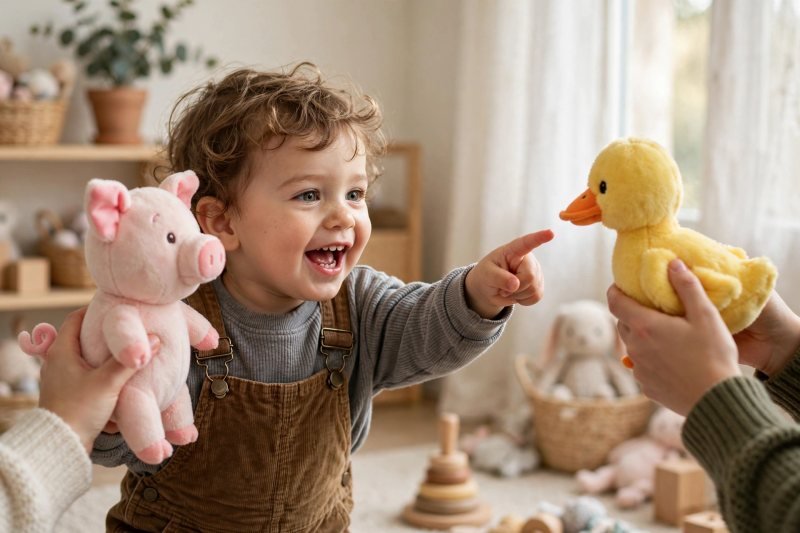
Let your toddler pick the next pair. Hold up two toys: "Which one next — the PIG or the DUCK?" Choice keeps it a game, not a lesson — even if they pick the same pair for the tenth time.
-
Play the silly swap game. Once a pair is familiar, sneak in a wrong word with a straight face: "Cat… DOG!" When your toddler giggles or corrects you, they are proving they hear the rhyme — the whole goal, disguised as mischief.

-
End with the bedtime rhyme ritual. Make one pair your goodnight rhyme — moon–spoon was made for this. Whisper it three times as the lights go down. A tiny ritual beats a long session.

-
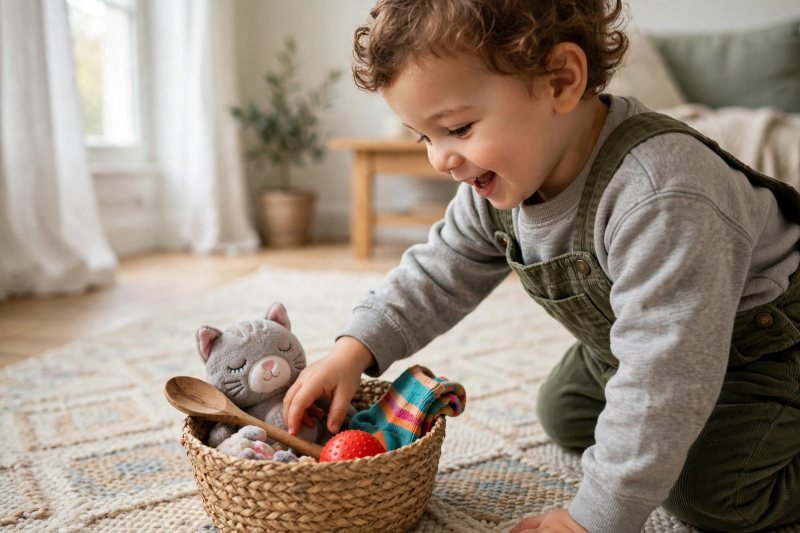
Grow a rhyming basket through the week. Each time you learn a new pair, drop a matching object in a basket — a toy cat, a spoon, a sock. Tipping it out Friday to name every pair is a game by itself.


Make it easier
Do one pair per day — the same pair at breakfast, in the car, and at bath time. Attach a gesture: flap your arms for hen–pen, stomp for fun–run. Movement gives the ears a backup. Accept any echo. If "dog–frog" comes back as "daw–faw," cheer like they nailed it.
Make it harder
Pause before the second word: "Cat… ?" Wait a full five seconds — silence is thinking time. Play "which one rhymes?": "Does CAT rhyme with HAT or SHOE?" Two choices, big drama, huge cheers. Let your toddler invent nonsense pairs — "zog–wog" counts. Making up rhymes means they cracked the pattern.
Other ways to play it
- Snack-time rhymes: chant the food pairs while eating them. "Peas… keys!" somehow tastes better.
- Rhyme walk: stroll the house hunting pairs — point at the door ("door–four!"), the light ("light–night!").
- Stuffed-animal parade: march toy animals past, chanting each animal's pair as it goes by.
How it changes by age
- Younger twos (24–30 months): just listen and echo. Clap along and enjoy the silliness — you are tuning their ears.
- Older twos to young threes (30–40 months): pause for fill-ins and play the silly swap. Catching the wrong word is rhyme awareness switching on. Letter play through alphabet activities for toddlers fits naturally once fill-ins start working.
What they're learning
Phonological awareness: hearing shared ending sounds is one of the earliest building blocks of reading. Every "cat–hat" now makes sounding out words easier later. Simple phonics play builds on the same listening skills. Listening and attention: picking rhymes out of speech trains focused listening — the same skill story time runs on. Vocabulary: fifty pairs means around ninety different words, many brand-new (wig, horn, grin). The rhyme makes new words memorable. Memory and pattern: chanting in rhythm exercises working memory and teaches the brain to hunt for patterns.
Clearing up
Nothing to clean — no mess. Just drop the basket toys back in their box.
Questions parents ask
What are easy rhyming words for toddlers?
When do toddlers start to hear rhymes?
My toddler doesn't notice rhymes — is that normal?
How many rhyming pairs should I practice at a time?
Can rhyming games help my toddler learn to read?
Every pair uses short, concrete words most two-year-olds already know. Start with animals — every toddler's favorite topic — and add a group whenever the old one gets boring. Say each pair back-to-back, slowly, with a grin.
Animal rhymes: Cat – hat; Dog – frog; Bee – tree; Pig – wig; Bear – chair; Cow – wow; Duck – truck; Fox – box; Hen – pen; Bug – hug.
Snack-time rhymes: Rice – nice; Jam – ham; Cheese – bees; Bread – head; Pear – bear; Peas – keys; Corn – horn; Meat – feet; Milk – silk; Soup – group.
Around-the-house rhymes: Bed – red; Ball – tall; Cup – up; Chair – bear; Book – cook; Light – night; Door – four; Sock – clock; Rug – mug; Pan – can.
Playtime rhymes: Fun – run; Play – day; Jump – bump; Sing – ring; Hop – pop; Wiggle – giggle; Clap – tap; Dance – pants; Hide – slide; Bounce – pounce.
Silly giggles: Moo – you; Boo – shoe; Zip – lip; Tin – grin; Mop – top; Sun – fun; Star – car; Moon – spoon; Toot – boot; Zoom – room.
What if my toddler doesn't hear the rhyme yet? Completely normal. Hearing that "cat" and "hat" share a sound unfolds over months — most children tune in sometime between two and three, each on their own timetable. Keep chanting without testing or correcting, and echo whatever comes back. The day they catch your silly swap — laughing at "cat… DOG!" — you will know their ears have arrived.
When do toddlers start to notice rhymes? Many begin around two and a half, usually in favorite nursery rhymes first — they shout the rhyming word at the end of a line they know by heart. Spotting rhymes in brand-new pairs comes later, often closer to three. Daily chanting speeds it up, which is exactly what this list is for.
Repetition is the entire method. The tenth "duck–truck" is when it clicks, not the first.
Three happy minutes beat fifteen forced ones. Stop while it is still fun.
Every language rhymes — play the same games in both if your home speaks two.
When your toddler turns three and starts asking how rhymes work, try teaching rhyming to preschoolers with the same chant-and-clap games at a slightly older level.

save it for later
Pin this for the next rainy afternoon
Keep it on a board so it is there when you need it, rather than when you happened to find it.
Save to PinterestTry this next
-
Old MacDonald Had a Farm Lyrics: Animal Sounds That Teach Rhyming
Ages 2–3
-

Twinkle Twinkle Little Star Lyrics, Actions and Why Toddlers Love It
Ages 2–3
-
Nursery Rhymes for Toddlers: 20 Classics That Build Early Reading Skills
Ages 1–3
-

Why Nursery Rhymes Matter for Reading: What the Research Says for Parents
Ages 2–3


