


Why Nursery Rhymes Matter for Reading: What the Research Says for Parents
The benefits of nursery rhymes go beyond cute songs: rhymes build the sound awareness, vocabulary, and memory toddlers need for reading. A parent guide.
Yes — nursery rhymes support early reading. Researchers find that rhyme play builds phonological awareness: the ability to hear and manipulate the sounds inside words, which strongly predicts later reading success. Rhymes also grow vocabulary, memory, and pattern recognition. A few joyful minutes a day is one of the simplest things parents of toddlers can do.

The short version
- Rhymes build phonological awareness — hearing rhymes and word endings — which researchers link to easier early reading.
- Repetition is the engine: one rhyme all week beats many rhymes heard once.
- Pausing before the final rhyming word turns listening into active prediction.
- Rhymes plant rare vocabulary in a memorable, musical context.
- Clapping the beat and adding hand motions anchor new words through movement.
- A few minutes a day is enough — your voice, not an app, is the whole curriculum.
- Age
- Ages 2–3
- Mess
- None
- Difficulty
- Easy
- Where
- Indoor
Why kids love this
Toddlers are wired to love nursery rhymes. The rhythm feels like music, the words are wonderfully silly, and the repetition is deeply satisfying: your child can predict what comes next, and being right feels fantastic. Best of all, rhymes mean your full attention — your voice, your eyes, your lap. That closeness is the whole point, and the learning sneaks in underneath.
What you'll need
- Just your voice — no purchases needed
- (Optional) A favorite stuffed animal or doll to "sing to"
- (Optional) A small drum or wooden spoon to tap the beat
- (Optional) A cozy blanket for your rhyme spot
Before you start
Pick one rhyme you know by heart — "Twinkle, Twinkle, Little Star" or any family favorite. Choose one regular moment: after breakfast, before nap, or at bedtime. Consistency matters most. Settle in face to face, phones away. Eye contact turns a rhyme into a conversation.
How to do it
-
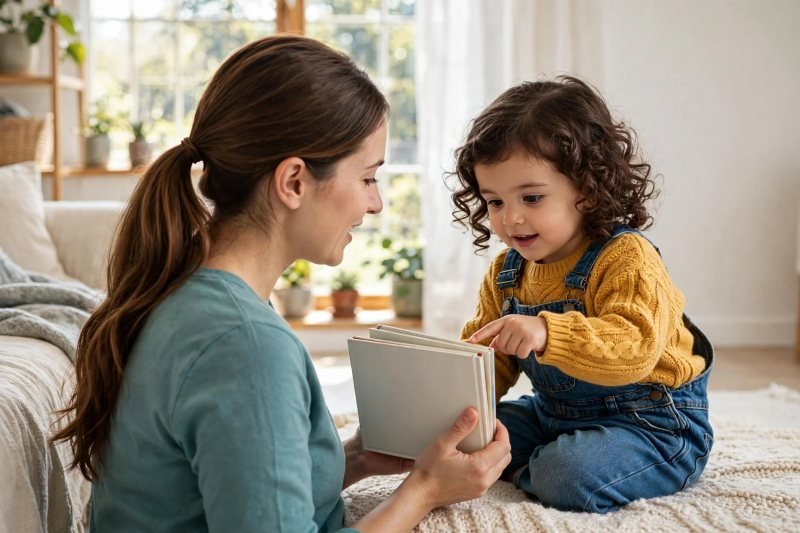
**Choose this week's rhyme.** One rhyme repeated all week beats ten rhymes heard once.
-
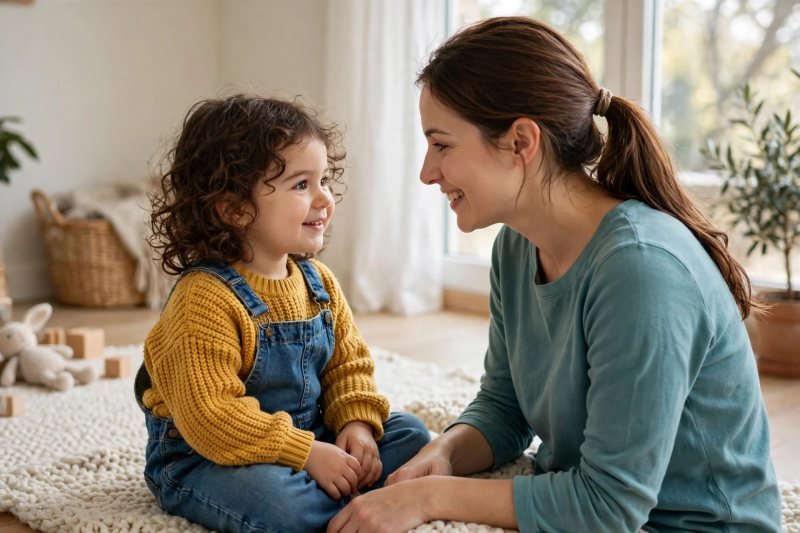
**Get cozy and face to face.** Sit knee to knee so your toddler can watch your mouth.
-
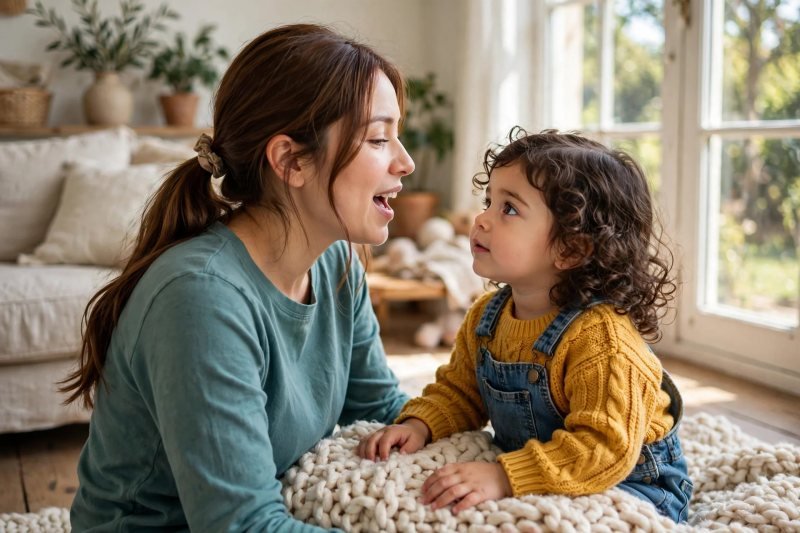
**Say it slowly the first time through.** Go clear, warm, and unhurried — your child is mapping brand-new sounds.
-
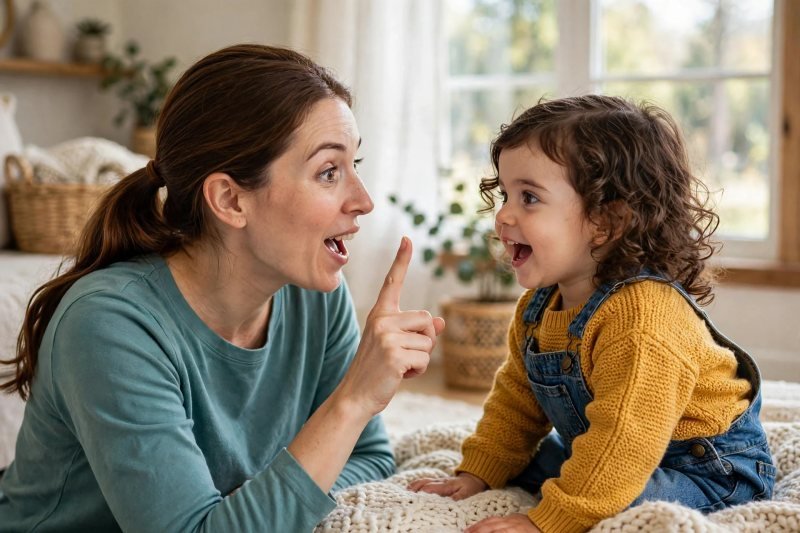
**Pause before the final rhyming word.** Say "Twinkle, twinkle, little…" and wait — the pause teaches your child to anticipate rhyme.
-
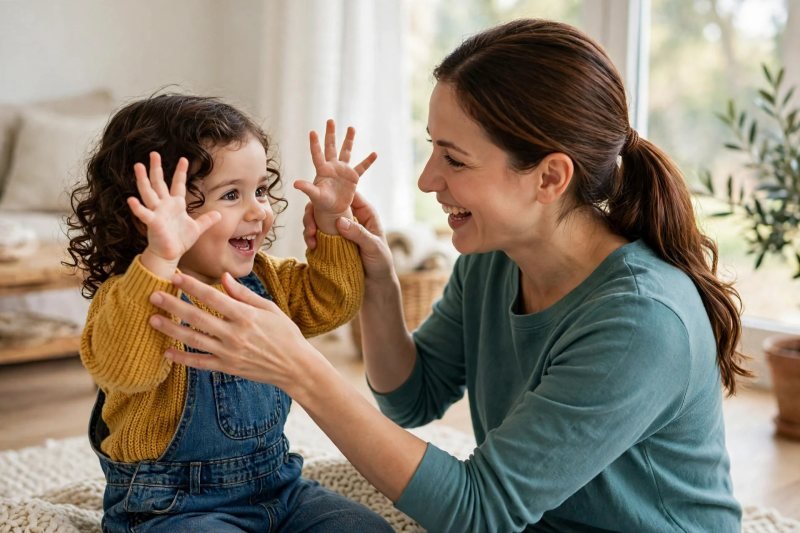
**Clap, pat, or tap the beat together.** Feeling the rhythm in their body helps toddlers notice the pattern of the words.

-
**Add simple hand motions.** Rock for the boat, twinkle fingers for the star — movement anchors words in memory.
-
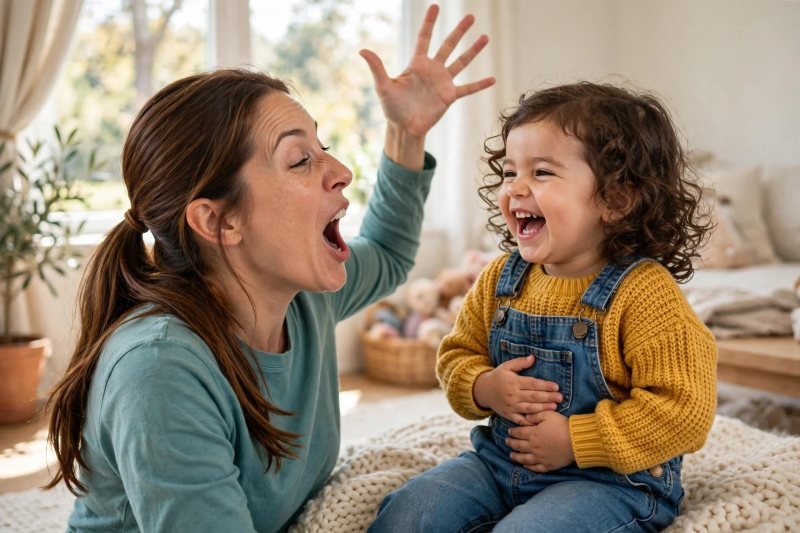
**Say it again in a silly voice.** Super-fast, super-slow, whisper-quiet, opera-loud — playful repeats keep the ritual fresh.
-
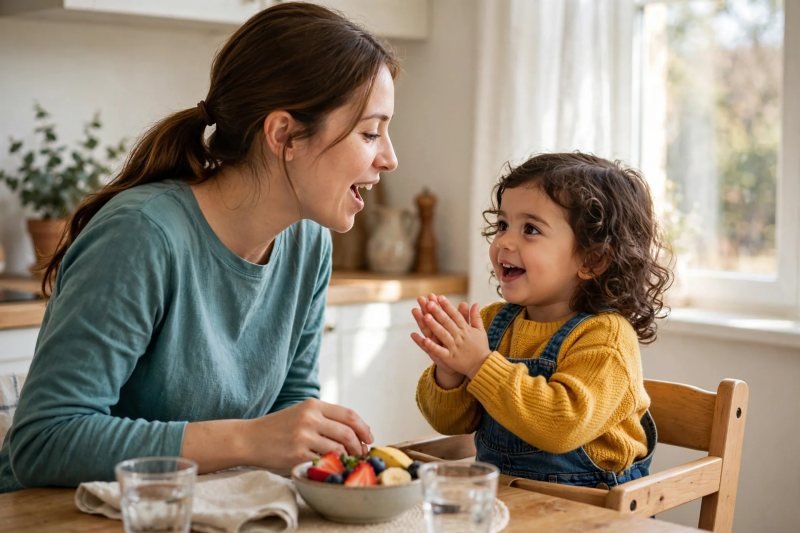
**Weave the rhyme into your day.** Sing it in the car, at bath time, in line at the store.
-
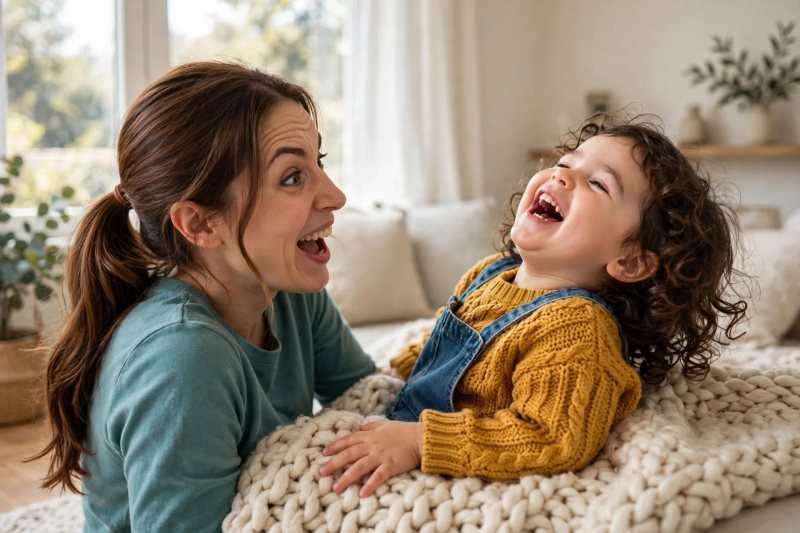
**Swap in a silly word.** Trade "star" for "car" — playing with rhyming words shows sound awareness growing.
-
**Keep the ritual going.** Same rhyme, same moment, every day. When your child chants it unprompted, move on.


Make it easier
Just listen together at first — hearing rhymes counts. Keep it to two or three minutes if attention wanders. Short and sweet wins. Use rhymes your family already knows; no need to learn new ones.
Make it harder
Pause before more words and let your child fill in longer stretches. Ask "what rhymes with cat?" and celebrate gloriously silly answers. Try a longer story rhyme, told over several days like a serial.
Other ways to play it
- **Rhyme walk:** Chant a marching rhyme on a walk around the block.
- **Stuffed-animal concert:** Line up the toys and perform this week's rhyme for them.
- **Rhyme basket:** Keep matching props handy — a toy star, a toy boat.
- **Two-language rhymes:** Sing in both family languages; the sound-play carries over.
How it changes by age
- This ritual fits ages 2–3, when toddlers start anticipating rhymes and filling in missing words. Younger babies benefit too — newborns soak up the rhythm and your voice before they understand a word. By 4–5, children can play with rhymes on purpose: inventing rhyming pairs and spotting rhymes in books. If your two-year-old just listens and sways, that is exactly right.
What they're learning
In plain parent language, here is what researchers care about: **Sound awareness.** Rhymes teach children that words share sound parts and endings — what researchers call phonological awareness, one of the strongest early predictors of later reading ease. The US National Reading Panel's 2000 review of reading research named phonemic awareness as one of the five essential components of learning to read, and nursery rhymes are phonemic-awareness practice disguised as play. **Vocabulary.** Rhymes introduce words children rarely hear in daily talk — "fetch," "pail," "tuffet." Unusual words stick when they arrive in a memorable, musical package. **Memory and sequencing.** Remembering what comes next exercises auditory memory and order — both of which reading will later demand. **Rhythm and pattern recognition.** A rhyme's beat is a pattern, and noticing patterns is foundational thinking that supports both language and early math. **Listening focus.** Following a rhyme from start to finish practices sustained attention — a skill every classroom will ask of your child. None of this needs flashcards or apps. Early-childhood educators widely agree that a few minutes of joyful rhyming a day is one of the simplest things a parent can do for later reading.
Clearing up
Nothing to clear up — no supplies, no mess. Just enjoy the quiet moment together.
Questions parents ask
Do nursery rhymes really help kids learn to read?
At what age should I start singing nursery rhymes?
How many nursery rhymes should my toddler know?
Do I need books, apps, or flashcards for nursery rhymes?
What if my child doesn't like nursery rhymes?
A note on honesty: no single famous study "proves" nursery rhymes cause reading success, and any article citing one with a precise statistic is likely overselling it. Instead there is a broad, well-established consensus: children who can hear and play with word sounds — recognizing rhymes, clapping syllables, noticing endings — consistently find the first steps of reading easier. Nursery rhymes build that skill naturally, wrapping sound-play in rhythm, repetition, and fun.
A few happy minutes of rhymes a day gives your child genuine early-literacy practice — plus something no study can measure: the memory of your voice, your lap, and a shared giggle.

save it for later
Pin this for the next rainy afternoon
Keep it on a board so it is there when you need it, rather than when you happened to find it.
Save to Pinterest


