


Old MacDonald Had a Farm Lyrics: Animal Sounds That Teach Rhyming
A parent's guide to the Old MacDonald had a farm lyrics for ages 2–3: each animal verse with its sound and a movement, how the E-I-E-I-O chorus builds rhythm and vowel sounds, and playful ways to extend the song.
The Old MacDonald had a farm lyrics follow one easy pattern: the chorus "Old MacDonald had a farm, E-I-E-I-O!" and one verse per animal — a cow says moo-moo, a pig says oink-oink, a duck says quack-quack, and so on. Best for ages 2–3, the song builds rhyming, animal-sound phonics, memory, and rhythm.

The short version
- Chorus first: teach "E-I-E-I-O" with clapping before any animal verse.
- One verse = one sound + one movement (cow/moo/horns, pig/oink/nose-wiggle, duck/quack/arm-flap).
- Let the toddler choose the next animal — choice keeps them singing.
- The guessing game (sound without the name) builds listening skills.
- Age
- Ages 2–3
- Mess
- None
- Difficulty
- Easy
- Where
- Both
Why kids love this
Every toddler knows the best part of Old MacDonald is the noise. The chorus never changes, so your two-year-old can join in by the second verse with total confidence. Each animal is a new permission slip to make a silly face — and every silly face earns the same delighted laugh from you. That loop of sound, movement, and reaction is what keeps a 2-year-old singing for twenty minutes straight.
What you'll need
- None. Optional: a few soft or plastic farm animals for the "pick your animal" verse.
Before you start
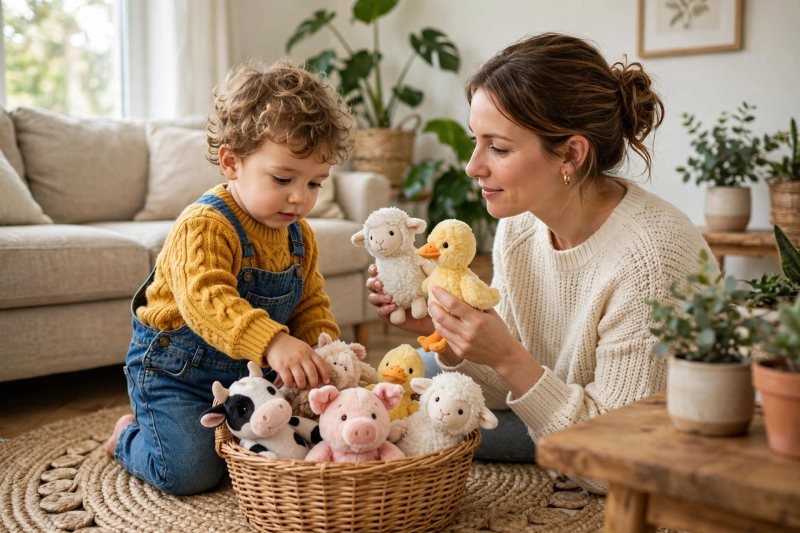
None. If you have animal toys, put 5–8 of them in a small basket so your toddler can reach in and choose.
How to do it
-
Start with just the chorus and clap the E-I-E-I-O. Sing the one line everybody knows — "Old MacDonald had a farm, E-I-E-I-O!" — and clap on each letter sound. The five-beat chant is the anchor of the whole song.

-
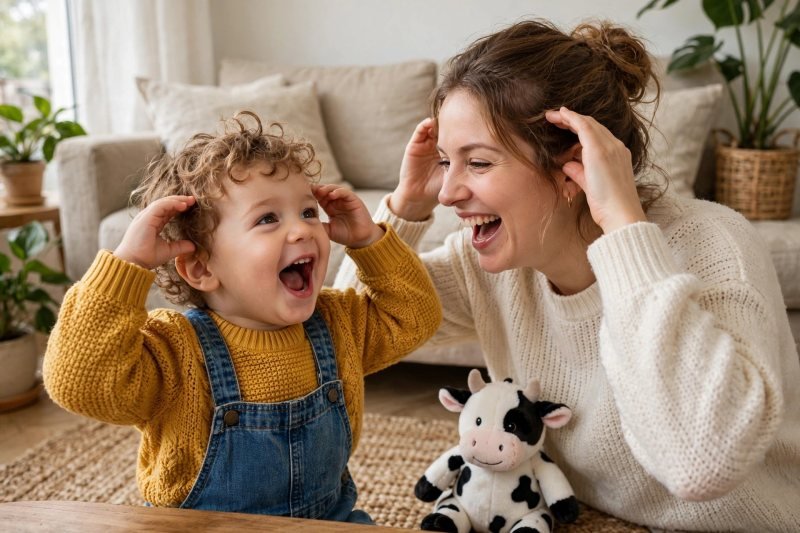
Add the cow verse with a big moo. "And on that farm he had a cow, E-I-E-I-O! With a moo-moo here and a moo-moo there, here a moo, there a moo, everywhere a moo-moo." Cup your hands into horns and make the biggest, silliest moo you can. Your toddler will copy the horns before the words — the sound comes next.
-
Let your toddler pick the next animal. Hold up two animal toys and ask, "Who should live on the farm next?" Two-year-olds love being the boss of the song. If they pick a duck, the next verse is the duck verse — follow their lead.
-
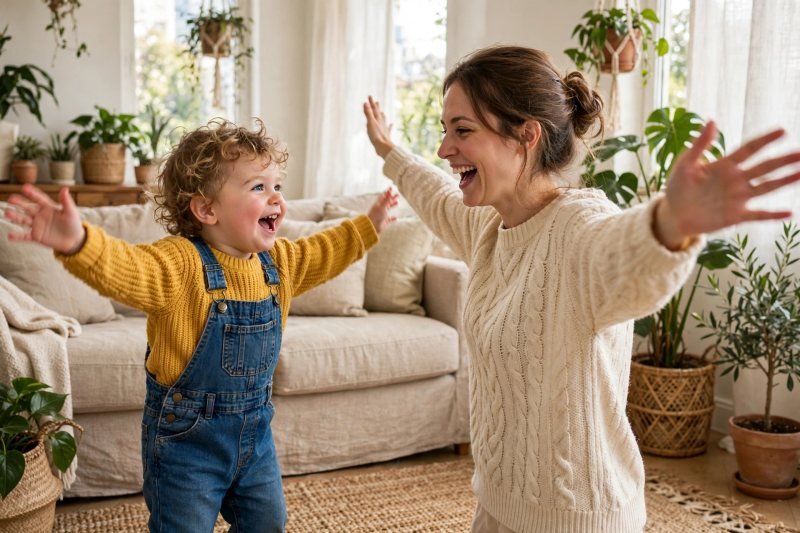
Add the movement with the sound. Every animal gets one simple motion: pig — wiggle your nose and oink-oink; duck — flap your arms and quack-quack; sheep — shrug and baa-baa; horse — gallop in place and neigh; dog — clap on woof-woof; cat — stretch tall and meow; hen — peck with fingers and cluck-cluck; rooster — arms wide, crow cock-a-doodle-doo; goat — bend low and maa-maa. Do the motion first, then the sound, then both together.
-
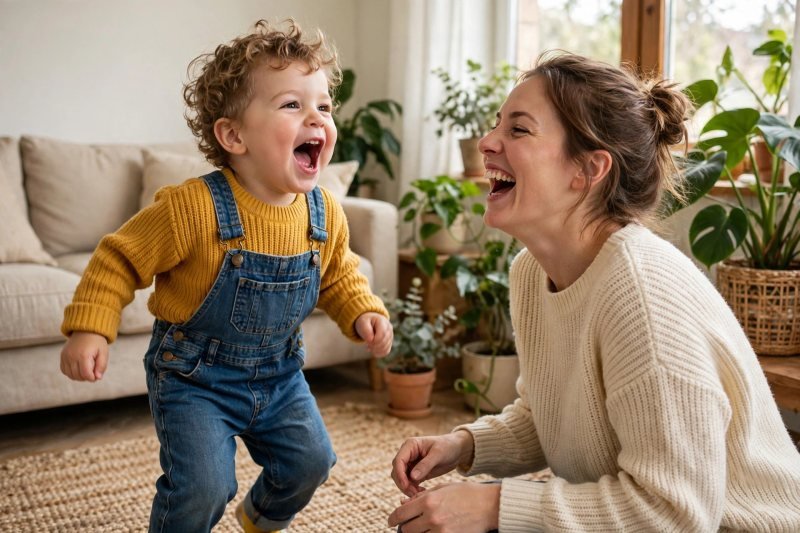
Sing it faster. Once your toddler knows three or four verses, sing the whole thing at double speed — a hilarious jumble, and a secret memory workout.
-
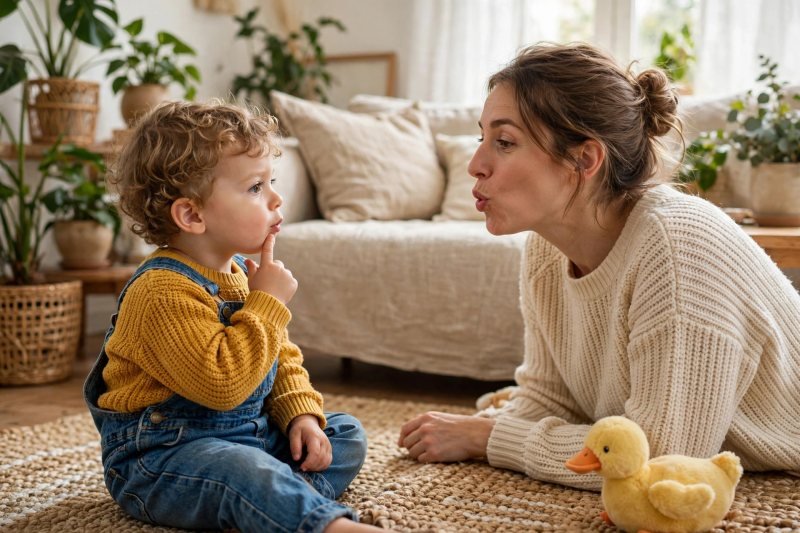
Play the sound-guessing game. Make an animal sound WITHOUT naming the animal — just "quack-quack" — and let your toddler shout the animal. Swap roles; getting it wrong on purpose is the funniest thing in the world at age two.
-
March it as an animal parade. Sing the chorus as the marching beat and parade around the living room — gallop like the horse, waddle like the duck, stomp like the cow.

-
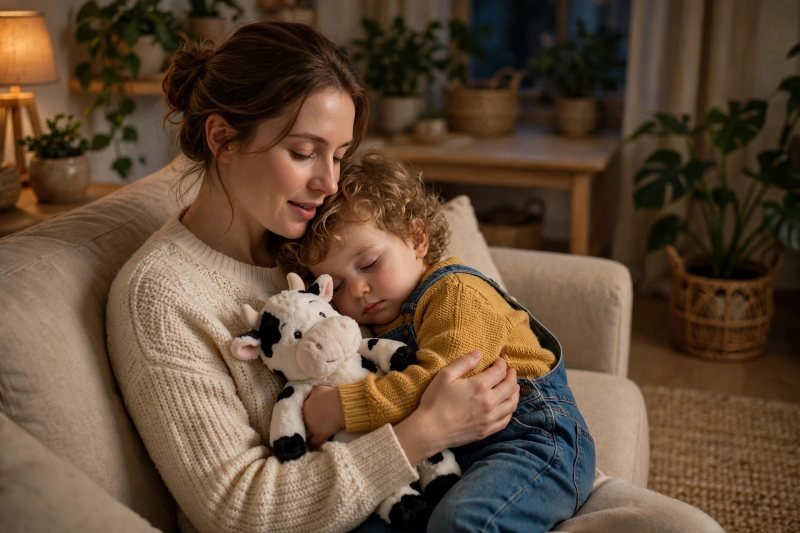
End with the quiet-farm bedtime version. Slow the tempo to a whisper, sing the chorus softly, and make every animal sound tiny — a sleepy little moo, a drowsy little baa. The familiar pattern tells your toddler's body the day is winding down.


Make it easier
Sing only the chorus on repeat with clapping — even that teaches the E-I-E-I-O rhythm. One animal verse at a time is plenty.
Make it harder
Add the hard animals: turkey (gobble-gobble), frog (ribbit-ribbit), or let your child invent a sound for a made-up farm animal.
Other ways to play it
- One-word verse: For very young twos, the verse is just the sound: "With a quack here and a quack there."
- Signed version: Add a simple sign per animal — horns for the cow, flapping hands for the duck.
- The Itsy Bitsy Spider lyrics pair well with Old MacDonald on the same sing-along afternoon — one fingerplay, one full-body song.
- Twinkle Twinkle Little Star lyrics make a calm follow-up when the farm parade winds down.
How it changes by age
- Perfect for ages 2–3. Twos join the chorus and the sounds; threes can lead a verse and play the guessing game both ways. Babies enjoy the bounce, and fours love the speed rounds and the parade.
What they're learning
Rhyming and vowel sounds: The "O" in E-I-E-I-O anchors a predictable rhyme pattern; the vowel chant trains little ears to hear sounds inside words. That same listening skill is the starting point for teaching rhyming to preschoolers when they turn three. Early phonics: Moo, baa, and oink are distinct sound units — playing with them is the same skill as playing with letter sounds later. Short sound games in phonics activities for preschoolers build directly on moo, baa, and oink. Memory through repetition: The unchanging chorus lets toddlers predict what comes next, which is how memory for sequences develops. Rhythm: Clapping the five beats of E-I-E-I-O builds the beat sense that later supports reading fluency. Vocabulary: Each verse bundles a word, a sound, and an action into one package.
Clearing up
Nothing to clean — a zero-mess activity.
Questions parents ask
What are the old macdonald had a farm lyrics?
What animal sounds are in Old MacDonald?
What age is Old MacDonald good for?
How does Old MacDonald teach rhyming?
Can I sing Old MacDonald as a bedtime song?
Old MacDonald works anywhere: car rides, waiting rooms, grocery lines. The chorus-only version is an instant calm-down tool — the familiar rhythm steadies big feelings faster than words. For more songs in the same age band, browse more nursery rhymes for toddlers to sing next.

save it for later
Pin this for the next rainy afternoon
Keep it on a board so it is there when you need it, rather than when you happened to find it.
Save to PinterestTry this next
-

Itsy Bitsy Spider Lyrics and Fingerplay: A Toddler Rhyming Favorite
Ages 2–3
-

Rhyming Words for Toddlers: 50 Easy Pairs to Say Together (Cat–Hat, Dog–Frog)
Ages 2–3
-

Best Body Wash for Toddlers: Gentle Picks for Sensitive Skin
Ages 2–3
-

Twinkle Twinkle Little Star Lyrics, Actions and Why Toddlers Love It
Ages 2–3


