


How to Help a Struggling Reader in 1st Grade: 9 Evidence-Based Steps
How to help a struggling reader in 1st grade: 9 practical, evidence-based steps — daily read-alouds, phonics games, decodable books, teacher partnership, and when to ask for extra support.
To help a struggling 1st grade reader, read aloud together for 15–20 minutes daily, play short phonics games, use decodable books they can read with high accuracy, try echo reading, reread favorite books for fluency, keep a reading log, and partner with their teacher. Most children improve steadily with consistent, low-pressure practice. If little progress shows after several weeks, talk to the teacher about extra support.

The short version
- Read aloud 15–20 minutes daily — it builds vocabulary and keeps reading joyful while decoding catches up.
- Five-minute phonics games (sound matching, stretching words) build the letter-sound skills reading depends on.
- Decodable books at the right level give repeated success, which builds confidence and fluency.
- Echo reading and rereading favorites teach the rhythm of fluent reading.
- Partner with the teacher so home practice matches classroom instruction.
- Keep a reading log; if progress stalls after several consistent weeks, ask the teacher and pediatrician about extra support — and never try to diagnose a learning disability at home.
- Age
- Ages 6–8
- Prep
- 15 min
- Play time
- 15 min
- Mess
- None
- Difficulty
- Easy
- Where
- Indoor
Why kids love this
This is not tutoring. It is the cozy part of the day — curled up with a parent, a stack of library books, and zero pressure to be perfect. Kids who struggle with reading usually love being read to; it is the reading-out-loud part that feels hard. So this plan starts where it feels safe: your voice, their ears, their choice of book. The games are short and silly, the sticker chart fills up fast, and within a couple of weeks most kids notice the books getting easier — and nothing motivates like feeling the pages turn faster.
What you'll need
- A stack of picture books your child enjoys — library books are perfect; 3–5 decodable books at your child's level, chosen with the teacher's or librarian's help; 20–30 blank index cards and a thick marker; a simple reading log of plain paper, crayons, and stickers; a quiet, comfortable reading spot with cushions, a blanket, and good light; a kitchen timer or phone timer.
Before you start
1. Read this plan once, then pick ONE step to start — daily read-aloud time is the best opener. 2. Add a new step every few days; most families have all nine running within two or three weeks. 3. Set up the reading spot together — cushions, blanket, good light — and let your child arrange it; when it feels like theirs, they show up. 4. Ask your child's teacher which reading level or series your child is working on, then pick books at that level where they can read nearly every word. For books you read to them, go bigger: rich stories and funny poems they cannot read yet but can love hearing.
How to do it
-
Read aloud together for 15–20 minutes every day. This is the single most powerful thing you can do for a struggling reader: hearing expressive reading builds vocabulary and models fluency, while keeping books feeling like fun as decoding catches up. Let your child choose the books, talk about the pictures, predict what happens next — comprehension grows in conversation, not in drills. Read-aloud time is the foundation everything else in this plan builds on, and this guide on how to teach a child to read shows how read-alouds fit the wider sequence from sounds to sentences. Daily reading aloud in place, add five minutes of play with sounds.

-
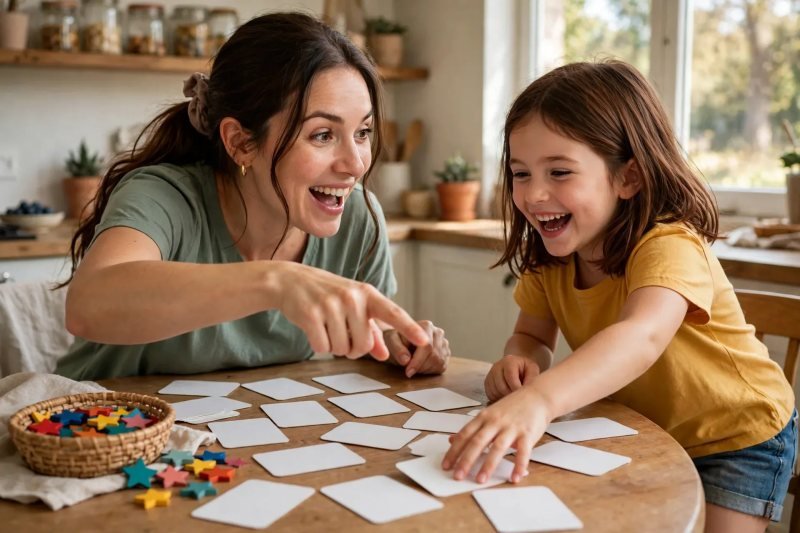
Play short phonics games — five minutes is plenty. Try "sound shopping": lay out letter cards, say a sound like "mmm," and have your child grab the matching card. Or stretch words like rubber bands — sss-aaa-t — and let your child guess the word. Keep it fast and silly; five joyful minutes beat thirty grudging ones, and a game that ends with laughter gets played again tomorrow. Combine the card games with these blending sounds activities for a full week of phonics play that never feels like a lesson. Sounds warmed up, give your child books they can actually finish.
-
Give them decodable books they can actually read. Nothing builds confidence like finishing a book without help. Decodable books use words your child can already sound out, so most pages go smoothly — and if your child breezes through a book twice, move up a level. Real, repeated success is the engine of progress: a child who finishes books believes they are a reader, and a child who believes that will pick up the next book on their own. Use this decodable books guide when shopping for "just right" books at your child's level. Success tasted, make fluent reading something they can hear first.

-
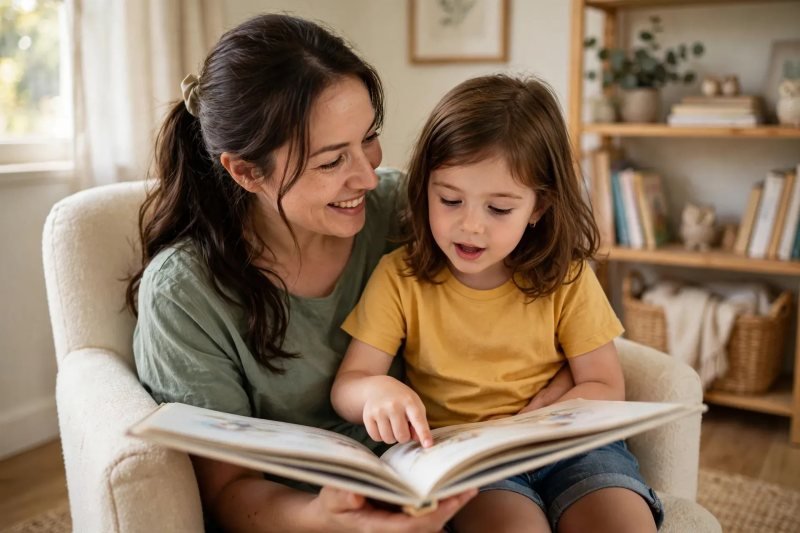
Try echo reading: you read, then they read. Read one sentence with warmth and expression; your child echoes it back, matching your pace. Then trade pages. Hearing the sentence first teaches the brain the rhythm of fluent reading before the eyes can manage it alone — your child borrows your fluency for a sentence, then keeps a little of it for the next one. Choose a sentence with a feeling in it — excitement, worry, a joke — because expression is easier to echo than flat words, and the sillier your voices, the harder your child will try to match them. Echoes flowing, take the sound play on the road.
-
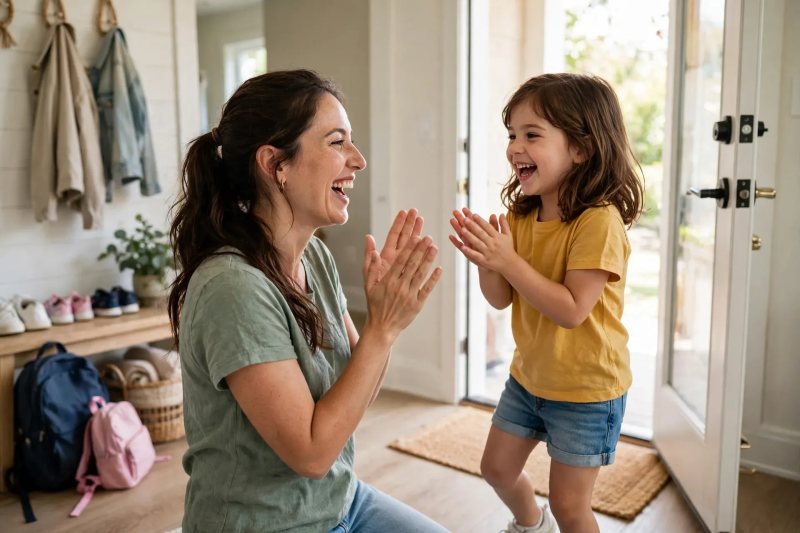
Play with sounds and rhymes on the go. Hearing and playing with sounds inside words is one of the strongest predictors of early reading success. In the car, play "a word that rhymes with..." or clap the syllables in menu words — keep a rhyming words list in mind for car games, and let your child invent the silliest rhymes they can. No materials needed: these tiny games wire the sound system decoding depends on, and they fit into journeys, queues, and bath time without stealing a minute from the day. Ears tuned, let repetition do the heavy lifting.
-
Reread favorite books until they are easy. Let your child read the same beloved book five or ten times. Repetition is not a waste — it is how fluency is built: the first read is work, the fifth is music. Encourage showing off easy favorites to grandparents or stuffed animals — feeling fluent is motivating, and an audience makes the rereading feel like a performance instead of practice. This reading fluency guide explains why the fifth read sounds so different from the first. Fluency growing, make the progress visible.

-
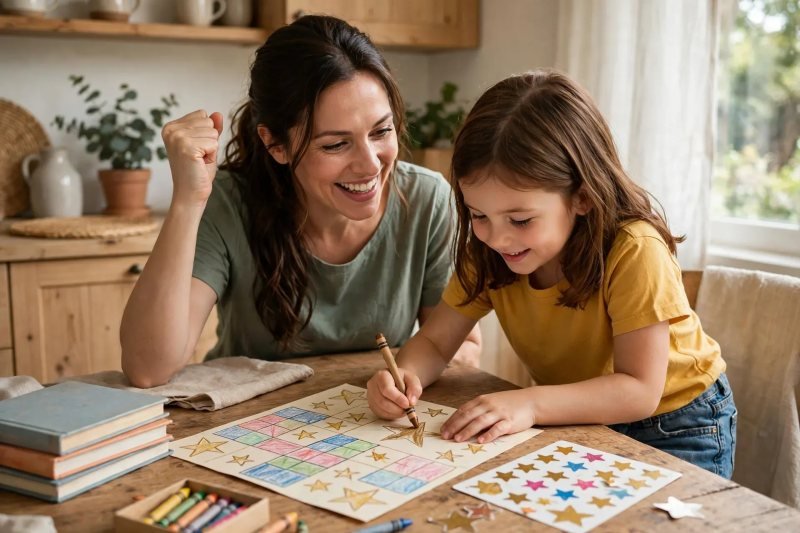
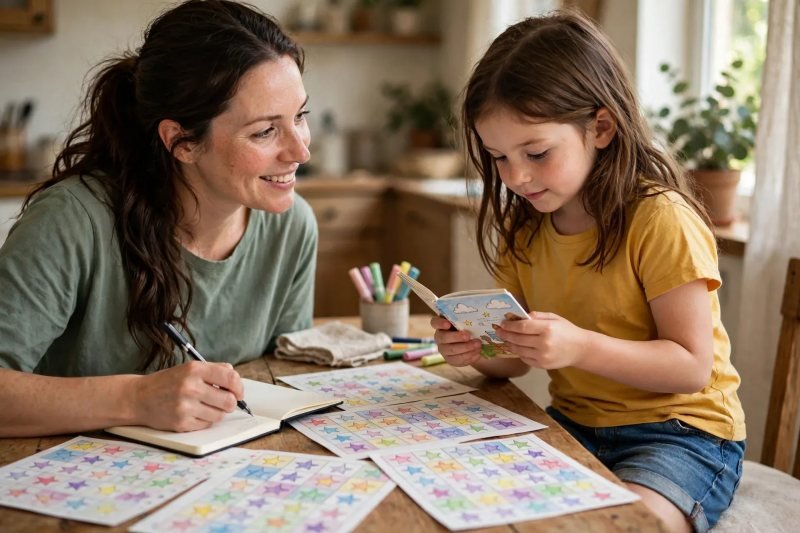
Keep a simple reading log and celebrate loudly. Color in a star for every book finished. Set tiny goals — five stars earns a library trip, ten earns a new book. Notice effort out loud: "You sounded out that tricky word all by yourself!" Most children try harder when effort gets celebrated rather than mistakes getting corrected. Celebrate the words they now read on sight too — a first-grade sight words list gives you quick wins to tick off together. Progress logged, line the home practice up with school.
-
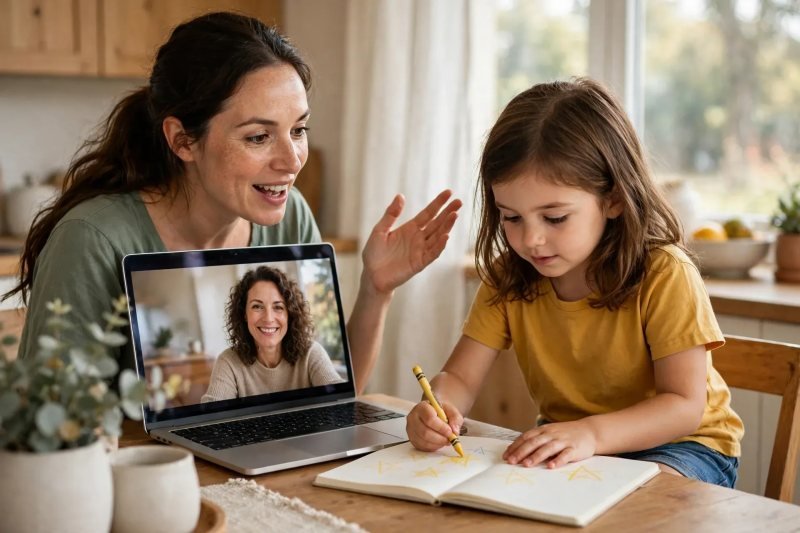
Partner with your child's teacher. Ask: What letter patterns is my child working on? Which reading level should I shop for? Then echo the classroom work at home — if the teacher is teaching short "a" words, your card games use short "a" words too. One ten-minute chat aligns your home practice with school and multiplies everything else, because your child hears the same patterns in two places instead of two different ones. Keep the conversation going with a quick check-in each term, not just when you are worried. Aligned with school, watch the progress over weeks.
-
Watch progress over weeks, and ask for extra help when needed. With consistent daily practice, most children show steady improvement within a few weeks. Keep your reading log as your evidence. If your child shows little progress after several consistent weeks, often guesses instead of sounding out words, struggles to remember letter sounds, or starts avoiding reading, talk to the teacher about extra support. Mention concerns to your pediatrician too, who can check vision and hearing. This is not about diagnosing anything at home; it is about getting the right help early, when it helps most.


Make it easier
Shorten everything. On tough days, five minutes of reading aloud counts — consistency beats duration. Let audiobooks help. Pair an audiobook with the print book so your child follows along, or just let listening count on busy evenings. Your child chooses every book. Comic books, joke books, and how-to books all count as reading.
Make it harder
Add retelling. After a book, ask your child to retell the story in their own words — this builds comprehension muscles. Make predictions. Pause mid-book: "What do you think happens next?" Graduate to early chapter books. When decodables feel easy, try a gentle early chapter book series together, trading pages.
Other ways to play it
- Sibling reading time: an older sibling reads to the younger one and both get practice. Grandparent video calls: grandma reads a picture book over video while your child follows along in their own copy. Move the slot: some kids read best right after school while others are freshest in the morning.
How it changes by age
- Age 6: Focus on steps 1 and 2 — read-aloud time and sound games. Letter sounds and blending are the main event.
- Age 7 (typical 1st grader): Work through all nine steps — blending sounds into words and reading short texts.
- Age 8: Add the Make it harder options — retelling, predicting, early chapter books — as fluency grows.
- Older children reading at a 1st grade level: Every step still applies; start at step 1.
What they're learning
Phonics and decoding: connecting letter sounds to spellings and blending them into words. Phonemic awareness: hearing and manipulating sounds inside spoken words. Reading fluency: reading smoothly, accurately, and with expression. Vocabulary and comprehension: understanding and talking about stories. Reading confidence: seeing themselves as someone who can read.
Clearing up
Memorizing a favorite book is a great sign — it means your child loves the story — so point at the words as you read together and use decodable books for the decoding practice. Phonics and sight words work together rather than competing: phonics teaches children to decode new words while high-frequency words like the make reading smoother, and the steps above weave in both. And pictures are a support, not a cheat — teach your child to check the letters too by covering the picture, sounding out the word, then checking the picture to confirm.
Questions parents ask
How long does it take a struggling 1st grader to catch up in reading?
Should my child learn phonics or sight words first?
What should I do if my 1st grader guesses words instead of sounding them out?
How many minutes a day should a 1st grader read?
When should I worry about my 1st grader's reading?

save it for later
Pin this for the next rainy afternoon
Keep it on a board so it is there when you need it, rather than when you happened to find it.
Save to Pinterest

