


1st Grade Sight Words List: All 41 Dolch Words
The complete 1st grade sight words list: all 41 Dolch words in four easy practice groups, with a 10-step daily routine, playful games, and parent answers for ages 6–8.
The 1st grade sight words are the 41 Dolch words (after, again, an, any, as, ask, by, could, every, fly, from, give, going, had, has, her, him, his, how, just, know, let, live, may, of, old, once, open, over, put, round, some, stop, take, thank, them, then, think, walk, were, when). Practice 10–15 minutes a day with games; most kids master them in two weeks.

The short version
- The 1st grade sight words list is the standard 41-word Dolch first-grade set, used in most US schools.
- Group the 41 words into four sets — quick wins, tricky spellers, people words, story words — and work one set at a time.
- Practice 10–15 minutes daily: flash review, 2–3 new words, tracing, a word hunt, and a memory game.
- Most children ages 6–8 finish the full list in about two weeks.
- End every session reading a real book, letting your child read each list word solo.
- Age
- Ages 6–8
- Prep
- 10 min
- Play time
- 13 min
- Mess
- None
- Difficulty
- Easy
- Where
- Indoor
Why kids love this
The 1st grade sight words list is short enough to conquer yet big enough to feel like a real mission. Forty-one words sounds like a lot until your child realizes they already recognize a third of them — an, as, by, how, fly — and the rest fall in about two weeks of short sessions. Every session ends with a win: five cards read in a flash, a word hunt through the living room. These are the exact little words that make early chapter books suddenly readable — and when a six-year-old sails through them, reading starts feeling like a superpower.
What you'll need
- 41 blank index cards or paper slips, and one thick dark marker
- 4 envelopes, small baskets, or rubber bands for the four groups
- A shallow tray of salt or fine sand for tracing
- A kitchen timer or phone timer
- Stickers and a simple progress chart (plain paper works)
- A child-size magnifying glass
- Your child's current early readers
Before you start
1. Do not hand your child all 41 cards at once. Write one word per card in big lowercase letters, then sort them into the four practice groups below — rubber-band each group and mark the bands A through D. Group A builds confidence fast, Group B tackles the trickiest spellings early, Group C bundles familiar people-words, and Group D holds the story-glue words in every tale. 2. Pick one practice slot and keep it for two weeks — right after school or before bed works for most families. Group A — Quick wins (10): an, as, by, fly, how, just, let, old, put, ask Group B — Tricky spellers (11): could, know, live, of, once, open, round, some, take, thank, think Group C — People and helpers (9): her, him, his, may, them, then, had, has, were Group D — Story words (11): after, again, any, every, from, give, going, over, stop, walk, when
How to do it
-
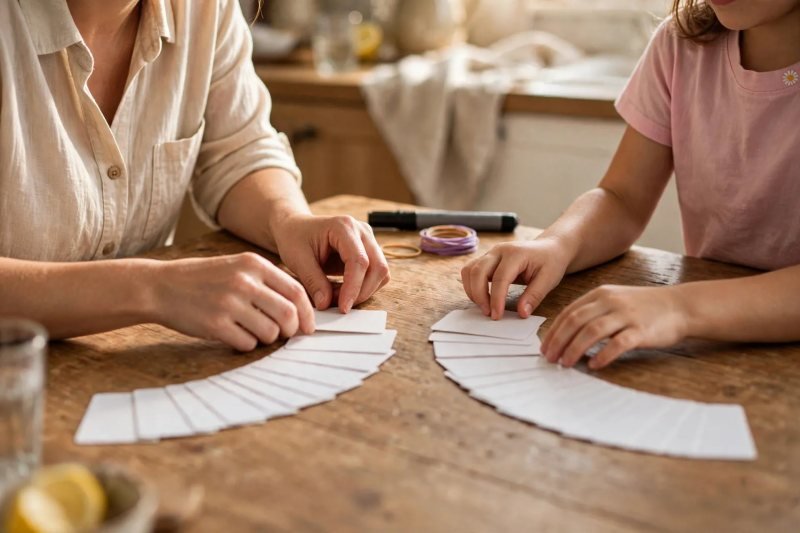
Deal the deck. One action per step, one to three minutes each — stop while it is still fun. Pull out 8–10 cards: new words from the current group plus a few known ones. Spread them face-down. Work one group at a time — most children master a group in two or three days, so the full list takes roughly two weeks.
-
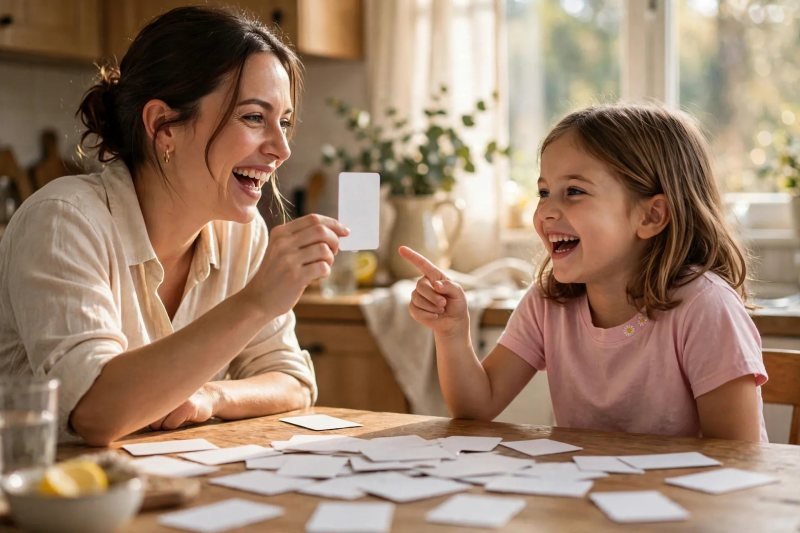
Lightning review. Flip through known cards fast while your child reads each aloud; cards that cause a pause go in the "wobble pile." Aim for 80% easy wins. If many cards wobble, loop back to our kindergarten sight words list first.

-
Meet three new words. Take up to three cards. For each: point, say it together, spell it aloud, use it in a silly sentence. See it, say it, spell it, use it — every time. New to teaching words? Our how to teach sight words guide shows the routine in detail.
-
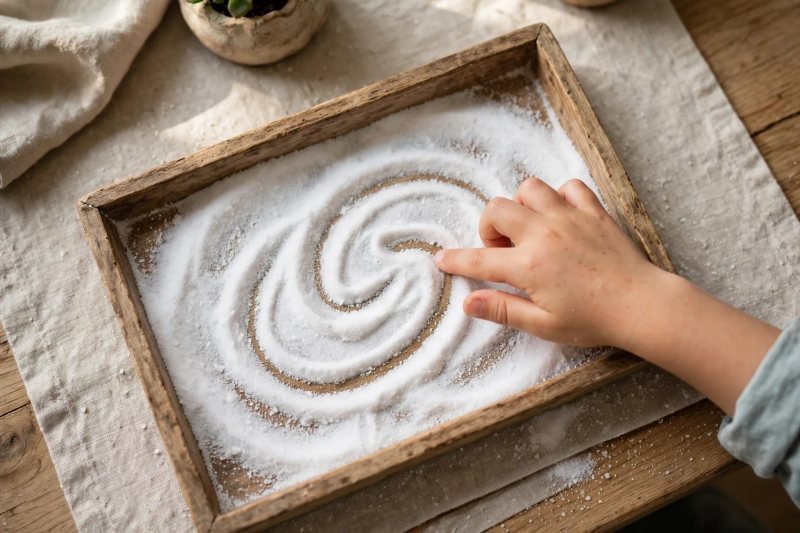
Trace the new words in salt. Your child traces each new word in the salt tray, saying the letters as they write — the tactile loop locks spelling in far better than staring. Start with the shortest words — this CVC words for kids guide lists the easiest ones to trace first.
-
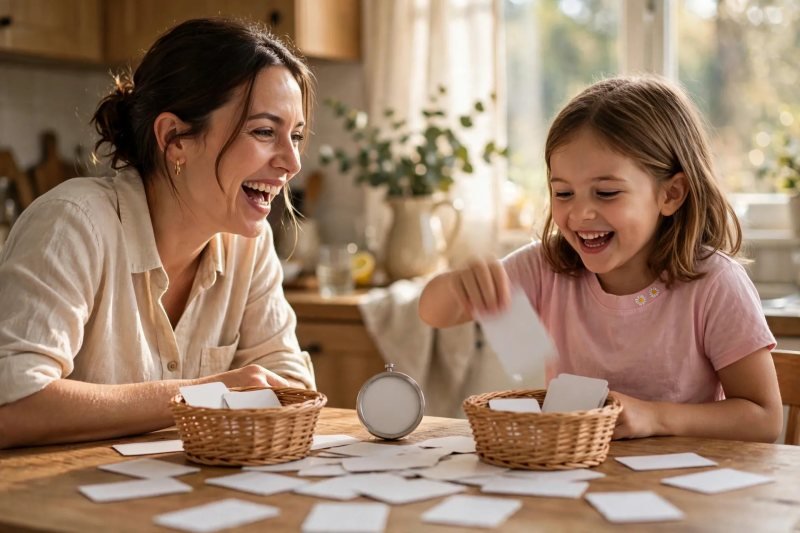
Sort race: know it or learning it. Mix old and new cards, set a one-minute timer, and sort them into "know it" and "still learning" piles. Speed forces quick recognition — the whole point of sight words.
-
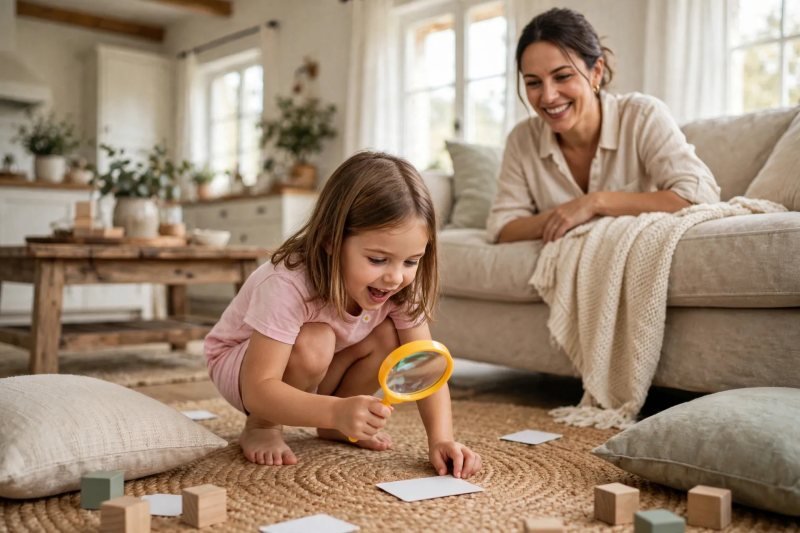
Word detective hunt. Hide five cards around one room; your child reads each one aloud with the magnifying glass before collecting it. Movement and a tiny thrill beat sitting still.
-
Build a silly sentence. Your child picks two cards and dictates a sentence using both; you write it down fast, then read it back together, pointing at the list words. Words become jokes, and jokes become reading.

-
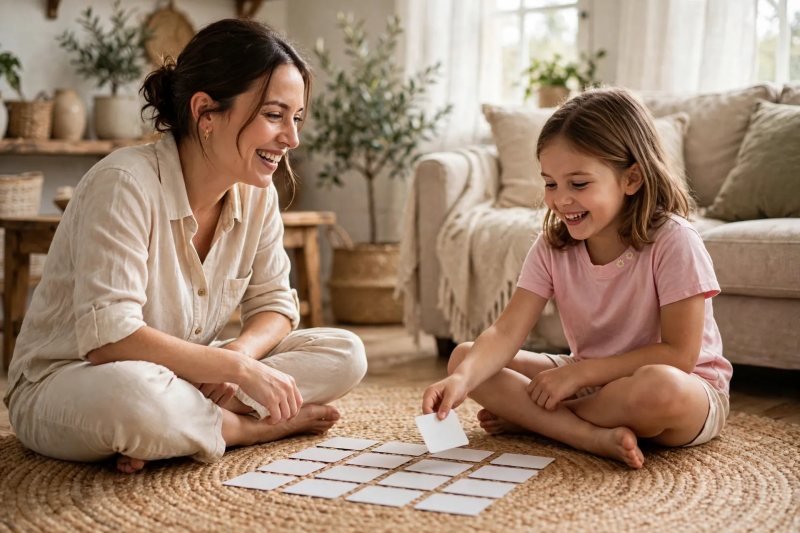
Play memory match. Copy six known cards and lay all twelve face-down; players flip two at a time, reading each aloud, and keep matched pairs. Every flip is a read. More matching games live in our sight-word games bank.
-
Sticker the chart. For every word read instantly today, your child stickers it on the chart; a full row retires those cards to a "mastered" envelope. Children love watching it get fat.

-
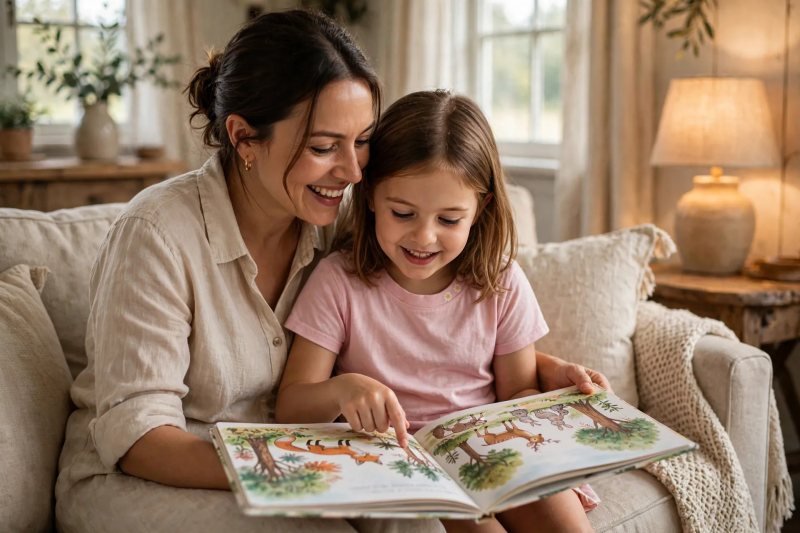
Finish in a real book. End every session the same way: five minutes reading together from your child's book, letting them read each list word solo — and celebrate it. This is where cards turn into confidence. If sounding out is still shaky, our how to teach your child to read guide pairs with this routine.


Make it easier
Work on just three words at a time, all from Group A. You read each card first; your child repeats or points. Skip the sort race — just read, trace, and hunt. Keep sessions to five minutes.
Make it harder
Dictate words for your child to write from memory. Level up to two-word phrases: "once again," "after that," "could you." Time the lightning review; try to beat yesterday's pace. Graduate to the 46-word second-grade Dolch list when all 41 are instant.
Other ways to play it
- Backyard chalk edition: write the words in big chalk letters on the driveway; read them while hopping between them.
- Car-trip cards: keep the current group in the glove box for red-light reading.
- Sibling tag-team: an older sibling runs the lightning review.
- Bedtime-only version: skip the hunt and match game — just new words, tracing, stickers, and the book, curled up together.
How it changes by age
- This list is built for ages 6–8 — the heart of first grade, when leveled readers get serious. A ready five-year-old who knows the kindergarten 52 can start too — the sign is halting reading where small glue words trip them. If your seven- or eight-year-old is still working through these, loop back to our kindergarten list first, then return here. Never let a word list become a race.
What they're learning
These 41 words appear on nearly every page of first-grade books, and many — could, know, of, once, think — cannot be sounded out with the phonics a six-year-old knows yet. Recognizing them instantly frees up energy for decoding the bigger words around them — the engine of reading fluency. Along the way your child practices real spelling patterns (the -ould in could, the silent k in know) and the habit of noticing "I read that one fast" — small wins that build automaticity.
Clearing up
Are these the same 41 words my child's school teaches? Almost certainly — the Dolch first-grade list is the standard in most US schools and reading programs. Some teachers mix in Fry words (a separate frequency-based list), which explains any words missing here. What about "giving" vs "going"? Some printable lists show "giving" instead of "going" — a common publisher swap. The standard Dolch set uses "going," so practice that.
Questions parents ask
How many sight words should a 1st grader know?
What are the hardest 1st grade sight words?
How long does it take to learn all 41 words?
Should my child learn sight words if they are also learning phonics?
How do I know when my child has truly mastered a word?
What comes after the 1st grade sight words list?
The group order is deliberate: Group A proves the child can do this, Group B clears the hard spellings while motivation is high, Group C leans on everyday words, and Group D's story words make book-reading noticeably smoother — the reward that carries them through. For a printable version, photograph your sorted card groups — a phone album works as well as any download. This article follows our kindergarten 52-word list as the next step; our sight-word games bank is there whenever the routine needs fresh energy.

save it for later
Pin this for the next rainy afternoon
Keep it on a board so it is there when you need it, rather than when you happened to find it.
Save to Pinterest


