


Decodable Books for Kindergarten: 12 Series That Teach Phonics Properly
Decodable books for kindergarten let 5-year-olds read real books using only the letter sounds they know. These 12 series, plus a 10-step plan, match each book to your child's phonics phase.
Decodable books for kindergarten are short books written with only the letter sounds a child has already learned, so a 5-year-old can sound out nearly every word. Strong series include Bob Books, Dandelion Launchers, and Bug Club Phonics. Pick the series that fits your child's sounds, read together in short sessions, and reread favorites for fluency.

The short version
- Decodable books use only taught letter sounds; leveled readers don't.
- Match the book's sound list to your child's known sounds.
- All 12 series here are genuinely published and widely available: Bob Books, Dandelion Launchers, Jolly Phonics Readers, Read Write Inc. Phonics Storybooks, Big Cat Phonics, Songbirds Phonics, Usborne Phonics Readers, Bug Club Phonics, Little Wandle books, Rocket Phonics, Flyleaf Publishing books, and Primary Phonics.
- Echo-reading keeps it joyful; rereading builds fluency.
- Level up when 9 out of 10 words come easily.
- Age
- Ages 5–6
- Prep
- 15 min
- Play time
- 15 min
- Mess
- None
- Difficulty
- Easy
- Where
- Indoor
Why kids love this
Decodable books for kindergarten feel like treasure hunts. The first time a five-year-old sounds out every word and realizes she read a whole book herself, the grin is enormous — and that grin is the whole point. These books never ask a child to guess or fake it: every word is one they can actually crack with the sounds they know, so finishing a book feels earned. Short stories, funny pictures, and a new book every few days keep the wins coming, and the basket of finished books on the shelf becomes proof your child can see.
What you'll need
- 1–2 decodable book series matched to your child's phonics phase (menu in the steps)
- A small basket or low shelf for the current books
Before you start
1. Find out which letter sounds your child knows. 2. Pick a starting series from the menu below. 3. Gather 3–4 books from that one series so the sounds build in order.
How to do it
-
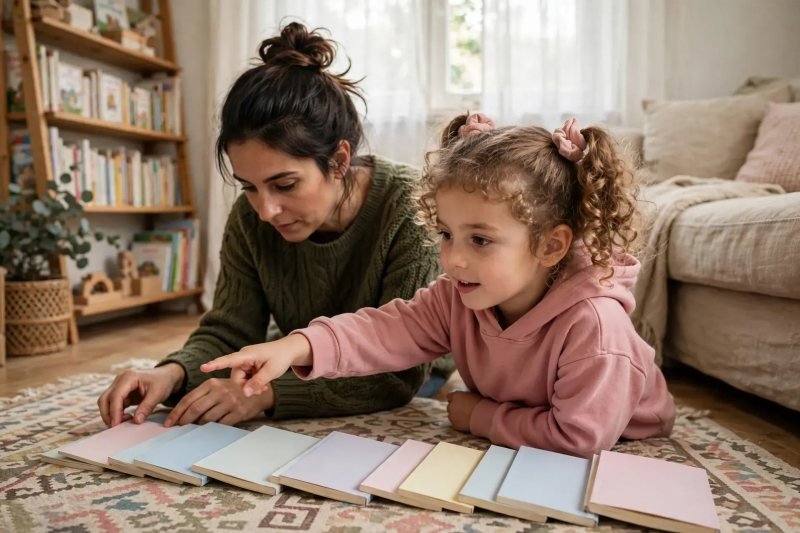
Match the book to known sounds. A decodable book works when nearly every word uses sounds your child has learned. Dandelion Launchers by Phonic Books introduces a few sounds at a time in teaching order, covering the alphabet code sound by sound. Bob Books by Bobby Lynn Maslen start just as simply.
-
Start with the smallest books. Tiny books finish fast, and finishing fast builds courage. Bob Books Set 1: a handful of sounds, a few words per page, one very short story. Primary Phonics Storybooks Set 1 (Educators Publishing Service) moves at the same gentle pace.

-
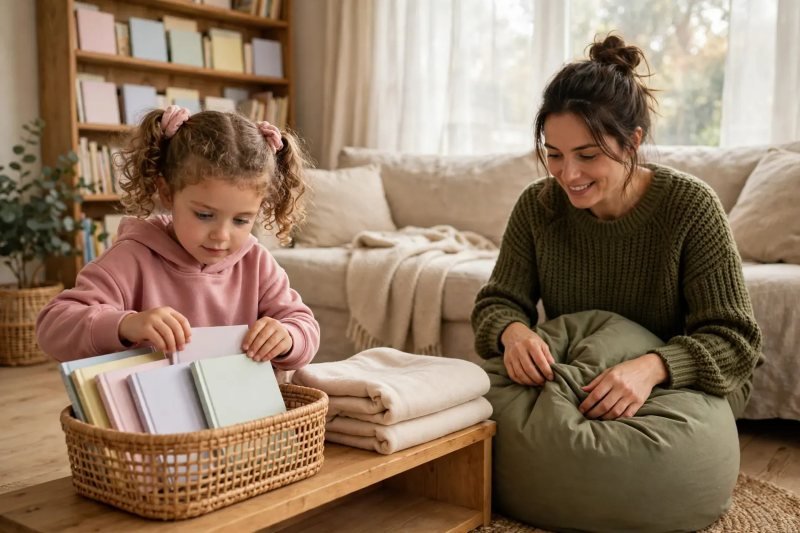
Give the books a special home. Keep the current books in a basket on a low shelf — a beanbag, a blanket, and the basket is plenty. These are my reading books, the ones your child reads herself. Rotate the basket at each new level.
-
Preview each book yourself. Preview each book alone for two minutes, noting the sounds it practices. Bug Club Phonics (Pearson) prints parent notes and tricky words inside the front cover. Big Cat Phonics from Collins is banded by level, so the progression is clear.

-
Take turns reading. You read a page, then your child reads it back — nobody is put on the spot. Songbirds Phonics from Oxford Reading Tree, written by Julia Donaldson, is full of bouncing, patterned language that begs to be read twice. Usborne Phonics Readers are short, funny stories that make the echo round feel like a game.

-
Coach sounding out, don't tell. When your child stalls, slide your finger under the word and wait. Offer the first sound, then let them finish. For more blending games, see our blending sounds activities — five quick games that build the same skill. Jolly Phonics Readers line up with the program's sounds and actions. Read Write Inc. Phonics Storybooks, from Ruth Miskin's program (Oxford University Press), match the lessons sound by sound.

-
Reread on purpose. Three reads isn't failing — it's how reading gets smooth: decoding, confidence, fluency. Rocket Phonics (Reading Planet) repeats small sound groups for practice. The Little Wandle Letters and Sounds books (with Collins) are matched to each phase, so rereading is the plan.

-
Talk about the story. Decoding without understanding is just noise. After reading, ask: What happened? Who was your favorite? Flyleaf Publishing's Emergent Reader Series tells real stories with fine-art illustrations — always something to discuss. Bug Club Phonics weaves in familiar Alphablocks characters.

-
Level up when it's easy. When every word comes without pausing and boredom creeps in, celebrate — then hand over the next level. Big Cat Phonics uses clearly marked bands; Songbirds Phonics steps up the same way. Aim for books where your child reads about 9 out of 10 words alone.

-
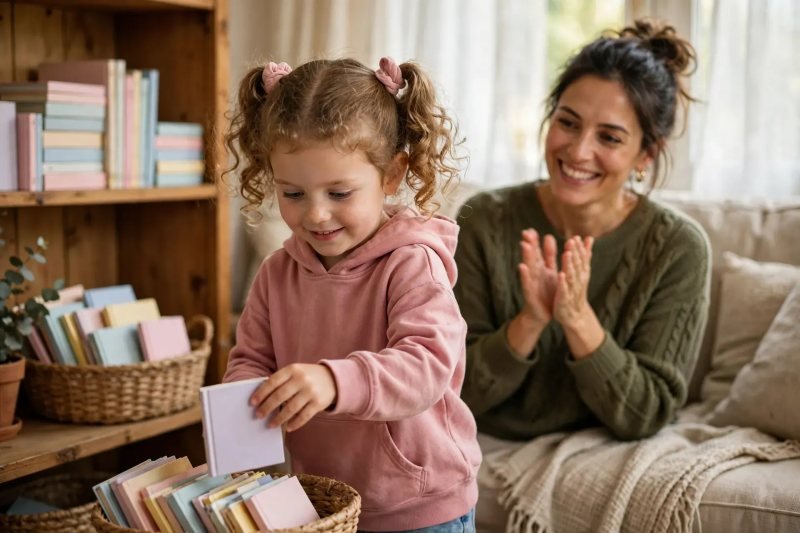
Keep a finished-books basket. Each finished book goes in a special basket; watching the pile grow motivates. Bob Books are in many public libraries — borrow whole sets and swap when done.


Make it easier
Read one page, not the whole book. Stop while it is still fun. Let your child choose which book from the basket to read.
Make it harder
After reading, have your child write 2–3 words from the book from memory. Pause before the last page and ask what they think will happen.
Other ways to play it
- Library first: borrow one series at a time before buying.
- UK series in the US: Songbirds, Big Cat Phonics, Rocket Phonics, and Read Write Inc. are UK-published but easy to order from US booksellers.
- Match the school: ask the teacher which sounds have been covered.
How it changes by age
- Written for ages 5–6. A confident 4-year-old who knows a dozen letter sounds can start with the very first books; a 6- or 7-year-old still building decoding skills can use later stages. The method never changes — only the starting point does.
What they're learning
Decoding: turning letters into sounds and blending sounds into words Fluency: reading smoothly through rereading at the right level Comprehension: understanding and discussing a real story Confidence: finishing books independently
Clearing up
Are decodable books the same as leveled readers? No. A decodable book controls its words by sounds your child has been taught. A leveled reader expects guessing from pictures or patterns — the wrong habit for a kindergartner learning phonics. Should my kindergartner memorize sight words instead? High-frequency words like the appear in decodable series too. But memorizing whole words is the side dish — sounding out is the main engine, and decodables practice exactly that. When should we stop using decodable books? When your child reads grade-level text fluently without sounding out most words — usually in first grade.
Questions parents ask
What are decodable books for kindergarten?
When should my child start reading decodable books?
Are Bob Books decodable?
How many decodable books per day for a kindergartner?
Decodable or leveled readers for kindergarten?
One well-matched series beats a shelf of mismatched books. For more phonics practice, see our guides to CVC word games, blending sounds activities, phonics activities for preschoolers, how to teach your child to read, and sight words vs phonics — which explains when memorization helps and when sounding out should lead.

save it for later
Pin this for the next rainy afternoon
Keep it on a board so it is there when you need it, rather than when you happened to find it.
Save to Pinterest


