


Toddler Boy Summer Outfits: Cool, Comfy Looks for Hot Days
Toddler boy summer outfits made simple: breathable basics, six ready formulas for playground, beach, photos, parties, rain, and evenings, plus the shoes, hat, and weekly layout that end the morning outfit scramble.
Build toddler boy summer outfits on breathable basics — loose cotton tees and elastic-waist shorts in light, mix-and-match colors — then run six formulas: playground (tee, shorts, closed toes), water days (long-sleeve swim top, swim shorts), photos (button-up and chinos), parties (a polo), rain (light jacket and boots), and evenings (one light layer). Add a strapped sun hat and a weekly layout.

The short version
- Fabric first: loose, breathable cotton or cotton blends in light colors; if it doesn't bend and breathe, it leaves the drawer.
- Six formulas cover summer: playground, water, photo, party, rain, and evening layer — all built from one mix-and-match capsule.
- Shoes make or break it: closed toes and straps for play, water shoes for wet decks, and a standing fit check.
- Sun protection is an outfit feature: wide-brim hat by the door, covered shoulders, sunscreen as a parent task on top.
- Lay out five days of outfits on Sunday and offer a two-option choice each morning — the scramble ends.
- Age
- Ages 2–3
- Play time
- 15 min
- Mess
- Low
- Difficulty
- Easy
- Where
- Both
Why kids love this
Two-year-old boys experience clothes as either freedom or friction, and everything in this guide is chosen for freedom: shorts that do not fight a climb, tees that go over a head without a wrestling match, shoes he can nearly manage himself, and a hat that stays on because it was chosen before the sun made it urgent. Toddlers also love predictability — the same layout on the bed each morning, the same "which one?" choice between two good options — because dressing becomes a game he can win instead of a battle he is dragged through. And on the days this guide is really for, he will not think about his outfit at all: he will think about the slide, the puddle, and the ice pop. That is the review summer clothes are chasing.
What you'll need
- Breathable basics: cotton or cotton-blend tees and tanks, soft shorts with elastic waists, in light colors
- One swim set: a long-sleeve swim top (rash-guard style) and swim shorts
- One button-up shirt and one polo for dressed-up moments
- A light rain jacket and rain boots for summer storms
- Shoes: closed-toe sneakers or sport sandals that fit now, plus water shoes if you beach or pool
- A wide-brim or legionnaire-style hat with a strap, sunscreen you apply, and a light long-sleeve layer for evenings
- A bed or clear floor space for the weekly layout (step 10)
Before you start
1. Pull everything summer into one place before you judge any of it — outgrown pieces leave the drawer today, because a drawer of only fits is the whole secret. 2. Check every shoe against a foot, standing: toes need wiggle room, heels need to stay put. Summer feet grow mid-season. 3. Set up the choice system: two outfit options offered each morning, both pre-approved by you — toddler picks, nobody negotiates with a hanger. 4. Keep the hat and sunscreen by the door with the shoes, not in a drawer — sun protection applied at the threshold happens; sun protection remembered later does not.
How to do it
-
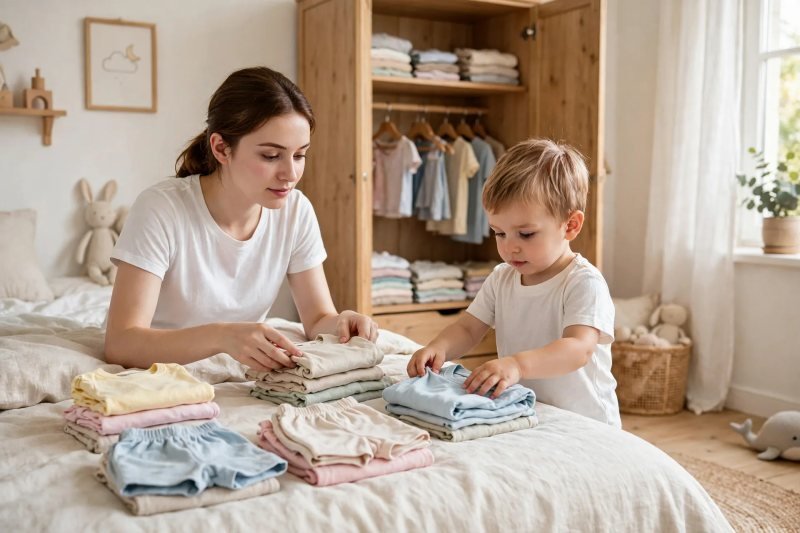
Step 1: Start with breathable basics — summer dressing is a fabric decision. Every toddler boy summer outfit in this guide stands on the same foundation: soft cotton or cotton-blend pieces, cut loose, in light colors that shrug off the sun's heat. Hold each tee and short up to the test a 2-year-old would set: can he squat, climb, and sit cross-legged in it; does the waistband give when he bends; does the fabric feel cool and slightly airy in your hand rather than stiff or plasticky? Say: "If it doesn't breathe and bend, it doesn't make the drawer." Build the basics in a tight color family — say navy, white, gray, red, and one cheerful print — so everything mixes with everything; toddler summer outfits shows more combinations built the same way. A capsule that matches itself is what makes steps 2 through 10 take minutes instead of morning-ending effort.
-
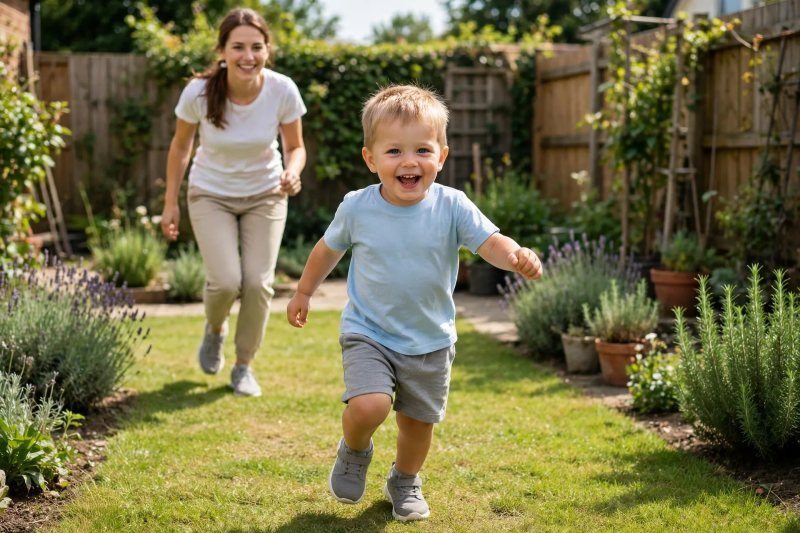
Step 2: Build the playground outfit: tee, soft shorts, closed toes. This is the uniform of summer, worn more than everything else combined: a breathable tee (sleeveless tanks on the fiercest days), soft pull-on shorts that end above the knee for climbing clearance, and closed-toe shoes that stay on at speed. Say: "Playground rules: nothing dangling, nothing precious, nothing that slows the slide." Skip long ties, decorative belts, and stiff denim — a toddler at the park needs clothes that disappear. Keep two full playground sets clean at all times, because the day's second set is not an emergency outfit, it is a statistical certainty: water tables, mud pies, and juice boxes have never once respected a first set. Pair the outing itself with ideas from our summer activities for children. This is the outfit the other nine steps are variations on, so get its formula into your hands until it is automatic.
-
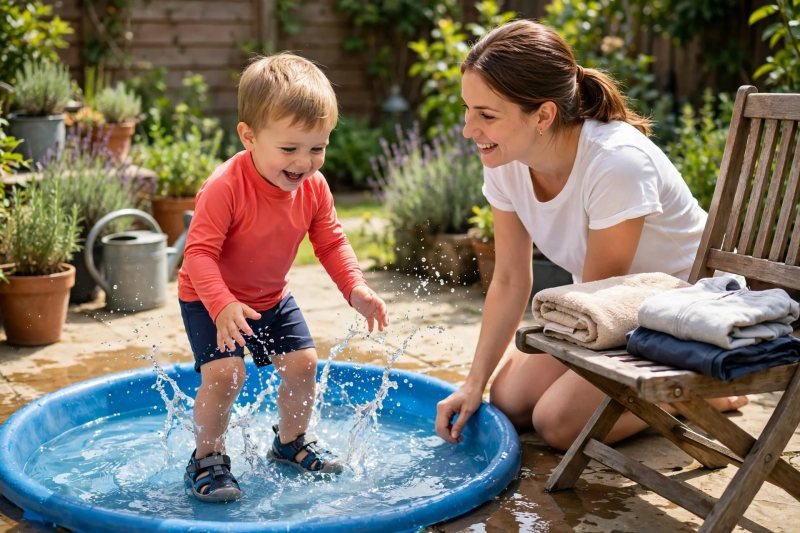
Step 3: Dress for water days: swim top, swim shorts, and a dry change. Beach, pool, splash pad, and backyard sprinkler days get their own formula: a long-sleeve swim top in a bright color (easy to spot, covers shoulders and arms while he plays), swim shorts that stay up when wet, and water shoes or sandals with straps for slippery ground. Say: "Bright top for spotting, sleeves for the sun, shoes for the splash zone." Pack the dry change — a full playground set plus a small towel — in the bag before you leave, because the ride home in wet shorts is how good beach days sour at the last mile. A sun hat that can get wet (and a spare dry one for after) finishes the kit; step 8 gives the full sun-protection reasoning this formula leans on.
-
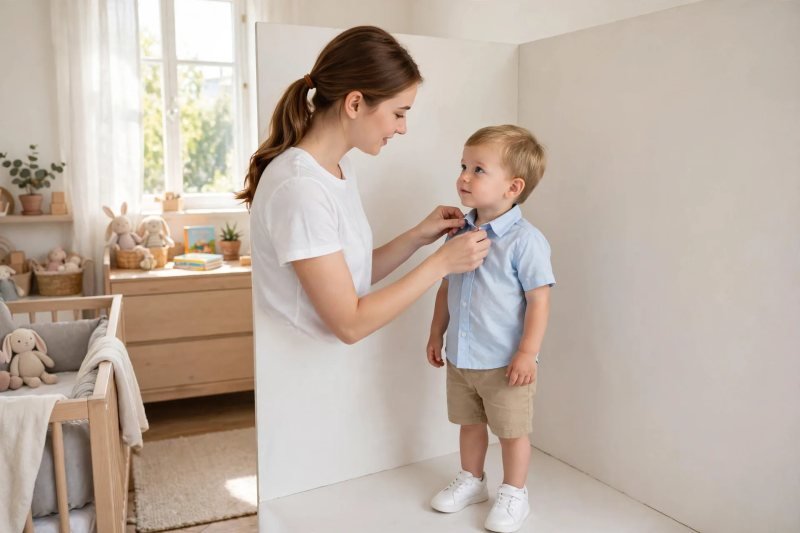
Step 4: Put together the family-photo outfit: one step up, still fully him. Photos need an outfit that reads tidy for exactly one hour and then releases him back to summer: a short-sleeve button-up shirt (soft, not stiff) with chino-style shorts in a solid color, and his cleanest shoes. Say: "Photo outfit rules: no words, no giant logos, colors that love each other — timeless beats trendy in a frame." Dress him at the last responsible moment, carry a backup tee that coordinates, and take the dressed-up pictures first while the shirt is still a shirt and not a napkin. If your family's photo outfits coordinate loosely — same color family, different pieces — the picture looks intentional without anyone wearing a costume, and preschool summer outfits shows more photo-ready combinations in the same color families. Your winter version of this thinking lives in this site's toddler winter outfits for the cold half of the year.
-
Step 5: Style the party outfit: a polo does the whole job. Birthdays, family dinners, and places of worship ask for one notch above the playground, and a polo shirt is the toddler boy's entire answer: polo plus his nicer shorts (or the photo outfit's chinos), clean sandals or shoes, hair given a quick smooth. Say: "One collar, and the outfit is dressed — that is the toddler formal code." The mercy of this formula is that it changes in thirty seconds in a parking lot if the playground ran long, and comes off just as fast when the party turns to cake and grass. Keep the polo in a color that hides a juice incident gracefully (navy forgives everything), and never let a party outfit be the only clean thing standing between you and leaving the house — summer parties are remembered for the dancing, not the dressing stress.

-
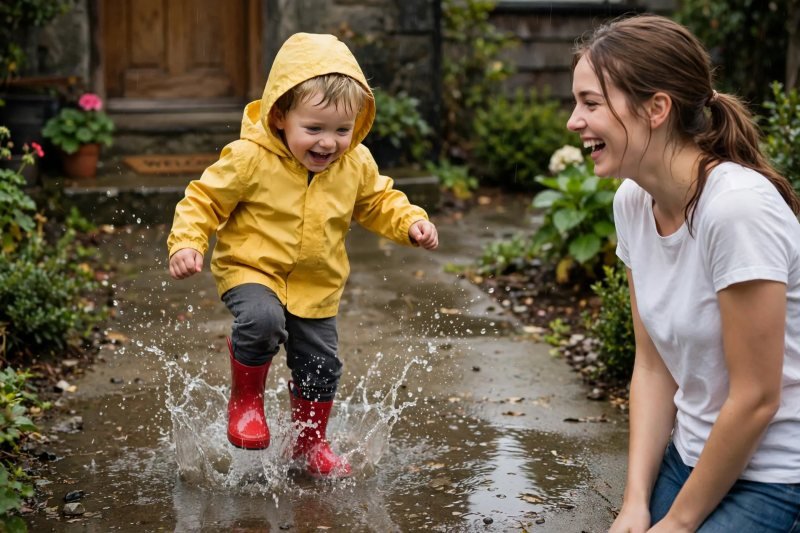
Step 6: Plan the rainy-day outfit: light jacket, longer bottoms, boots. Summer storms arrive warm, so the rainy formula stays light: a breathable rain jacket with a hood, shorts or light pants that can get splashed without tragedy, and rain boots he has practiced walking in before the puddle moment (new boots and first puddles are a slapstick combination). Say: "Rain gear is an invitation, not a barrier — we dress to splash on purpose." Skip umbrellas as toddler equipment — they become swords and eye-level hazards — the hood does the job and keeps both his hands free for the serious business of puddle science. After the storm, the wet set goes straight to the wash and the playground formula resumes; a rainy day costs one outfit, not the day.
-
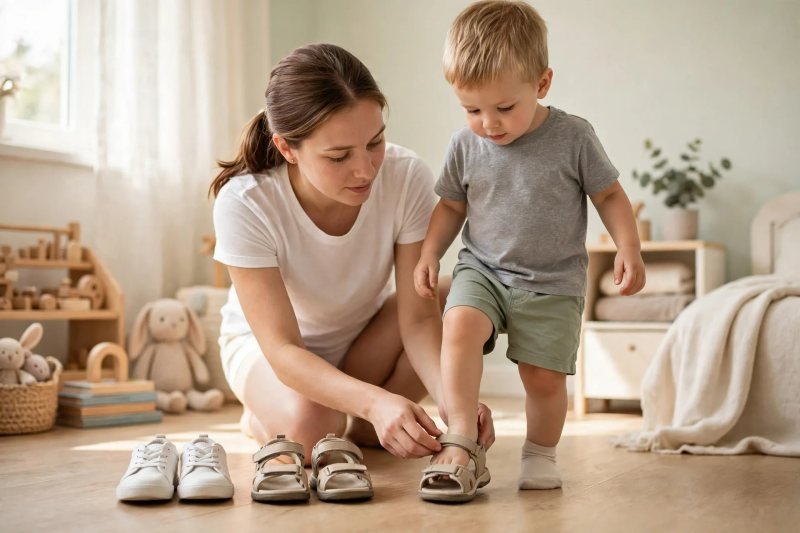
Step 7: Fit the shoes like summer depends on them — it does. Every formula above stands or falls on footwear, so fit it deliberately: closed-toe sneakers or sport sandals with straps for the playground and park; strapped water shoes for beach and pool decks; rain boots for storm days; and dressier clean shoes only for photos and parties. Say: "Toes covered, straps snug, soles that grip — that is the whole shoe law." Check fit standing, with a thumb's width of growing room at the longest toe and no heel-slipping; barefoot is glorious at home and in the grass but parks, pavements, and splash decks are shoe territory. One warning from every experienced parent: summer is not the season to break in stiff new shoes on a big day out — new shoes debut on short trips first, always.
-
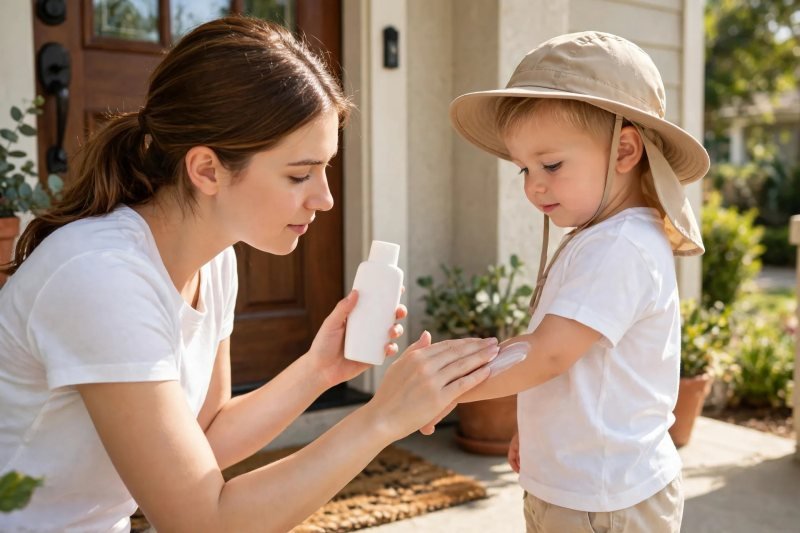
Step 8: Layer on sun protection: hat, shade habits, covered shoulders. The outfit itself is your first sun tool: a wide-brim or legionnaire hat (flap at the back) with a strap he cannot easily defeat, the long-sleeve swim top on water days, and light colors that keep him cooler in direct sun. Say: "Hat on at the door, every door, no debates — it lives with the shoes." Sunscreen is a parent's task layered on top of the clothing strategy — applied before you leave and reapplied through the day as its own instructions direct — and it belongs to the same gentle-care family as the rest of this site's approach in the simple kids skincare routine: shade at midday, covered shoulders during long play, and skin checked at bath time. Choose the hat together at the store if you can; a hat he picked is a hat that survives the car ride.
-
Step 9: Keep an evening layer ready: the light long-sleeve save. Summer evenings have two surprises — air conditioning that thinks it is winter, and mosquitoes that think your toddler is dinner — and one light layer answers both: a thin long-sleeve tee or the lightest cardigan or overshirt, kept in the going-out bag from June onward. Say: "The evening layer lives in the bag, so we never have to remember it." Over the playground set it buys you the restaurant, the grocery run, and the sunset walk home without a full change; on buggy evenings, swap the shorts for light long pants as well and the mosquitoes lose their easiest targets. It weighs nothing, it washes with everything, and it is the difference between leaving early and staying for the fireflies.

-
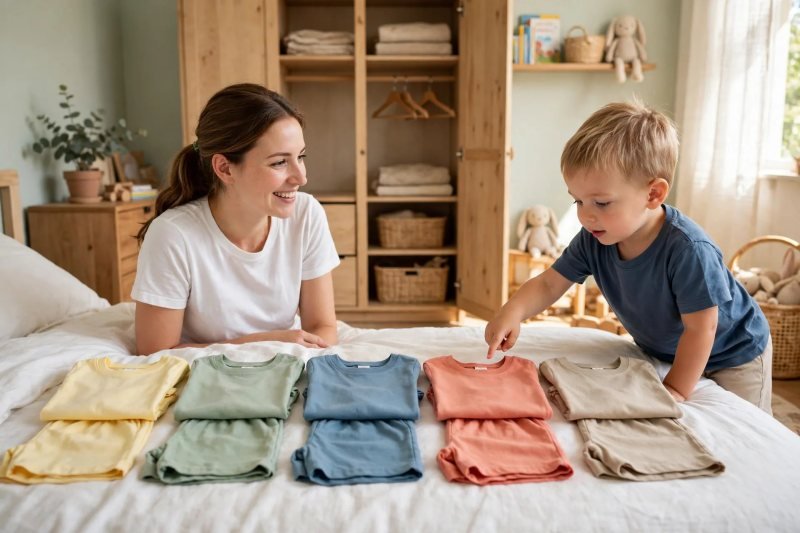
Step 10: Lay out the week's outfits once, and end the daily scramble. On Sunday, build five playground sets from the capsule (five tops, three bottoms that all match, worn in rotation) plus the week's special sets — swim, photo, party, rain — and lay them along the bed or in a hanging organizer, each day's set complete: top, bottom, underwear, socks where needed. Say: "Five minutes on Sunday buys five calm mornings." Each morning becomes the two-option choice from Preparation: "Red shirt or blue shirt?" — a decision a 2-year-old can own completely. When a set gets destroyed by lunch (it will), tomorrow's set slides forward and laundry day absorbs it, because the capsule was built with spares. Update the layout as he grows — a mid-summer refit is normal — and the system, like the winter outfit system on this site, becomes the invisible machinery under an easy season.


Make it easier
Shrink the capsule further: three colors, all tops matching all bottoms, one shoe for everything except water — decision-free dressing at its most peaceful. Dress him in tomorrow's playground set as pajamas on chaotic weeks — cotton tees and soft shorts sleep fine, and the morning starts already dressed. Put a complete spare set (in a zip bag) in the car permanently; summer incidents do not schedule themselves, and the car set has saved more outings than any other item in this guide.
Make it harder
Let your 3-year-old run the morning choice fully: he picks the full set from the drawer of fits, you hold only a weather veto — dressing independence is a real preschool skill. Add a laundry apprenticeship: he carries his set to the hamper, sorts lights from darks by color family, and "helps" fold the shorts; the capsule becomes his system, not your service. Plan a color-of-the-day game across the week (red day, blue day) using the capsule — the layout survives because everything matches, and he gets a reason to be excited about Tuesday's shirt.
Other ways to play it
- The beach-week version: double the swim sets and water shoes, drop the photo outfit entirely, and let the capsule shrink to swim, playground, and evening layer on rotation — sand in everything is the tax, and it is worth it.
- The very-hot-climate version: tanks outnumber tees, every bottom is the lightest cotton, the evening layer is for air conditioning only, and the hat is upgraded to non-negotiable from breakfast — midday moves indoors, and outfits follow the shade clock. See our summer activities for children for the season's wider plans.
- The daycare version: every set must survive being changed by another adult in a hurry — elastic waists only, no buttons except the photo shirt, shoes he can nearly manage himself, and his name in everything, because summer sets all look alike in a cubby row.
How it changes by age
- Age 2: At two, elastic waists and pull-on everything rule — zips and buttons are for your fingers only. Offer the two-option choice daily; it heads off most dressing resistance before it forms. Expect two full outfit changes on active days and plan laundry accordingly: his wardrobe works harder than yours. For potty-training days, favor the pull-on shorts and rompers with the simplest fastenings in this guide — a look he cannot get down in time is a look that will not survive the week, however cool it looks on the rack.
- Age 3: Threes can dress themselves in this system almost completely — pull-on shorts, tees, strapped shoes — and they care about favorites with real passion. Give the favorite shirt a fixed day in the rotation ("red shirt Fridays") rather than fighting for variety; a capsule with one beloved star still functions perfectly.
What they're learning
Independence: pull-on clothes, manageable shoes, and a two-option choice are dressing skills and self-confidence built at exactly the right age. Decision-making: choosing between two good outfits every morning is a toddler's first real exercise in preference, consequence, and being done with a decision. Weather literacy: swim set for water days, jacket for storms, layer for evenings — clothing teaches cause and effect about the sky more concretely than any chart. Care for belongings: a laid-out week, a hamper habit, and a spare set in the car are the toddler-sized beginnings of being responsible for your things.
Clearing up
Summer laundry is the lightest of the year and still somehow constant, so run it as a system: the day's destroyed set goes straight into a small daily wash or the hamper by the bathroom door, sunscreen-marked tees get a rinse the same evening, and swim sets are rinsed and hung immediately or they ripen overnight. The weekly layout is the tidy moment — five minutes rebuilding the organizer while the folded basics are in your hands anyway. Hats live by the door, shoes in one basket, and the car spare set gets checked and refreshed after every use, so the system you built in step 10 just quietly keeps working until he grows out of it.
Questions parents ask
How many summer outfits does a toddler boy need?
What should a toddler boy wear on a very hot day?
Which fabrics are best for toddler summer clothes?
Are sandals or closed-toe shoes better for toddler boys in summer?
How do I keep a sun hat on my toddler?

save it for later
Pin this for the next rainy afternoon
Keep it on a board so it is there when you need it, rather than when you happened to find it.
Save to Pinterest


