


Best Shampoo for Kids and Toddlers: How to Choose a Tear-Free One
Choosing the best shampoo for kids is simpler than the shelf suggests: pick a tear-free, gentle wash made for children, use a coin-sized amount, and rinse well. This calm bath routine shows what to look for and how to wash toddler hair without fuss.
The best shampoo for kids is a tear-free wash made for children, fragrance-free or very lightly fragranced, with gentle cleansing ingredients and no adult treatments. Use a coin-sized amount on wet hair, lather at the scalp with fingertips, and rinse with the head tipped back. Most toddlers need two or three washes a week.

The short version
- Choose by criteria, not hype: tear-free, made for children, fragrance-free or very lightly fragranced, with gentle cleansers.
- A coin-sized amount is enough for a toddler head — more shampoo only means more rinsing.
- Lather with fingertip pads, never nails, and rinse with the head tipped back so water runs away from eyes.
- One wash is the default; save a second wash for sunscreen, sweat, or very messy days.
- Most toddlers rarely need conditioner — detangle wet ends gently with a wide-tooth comb instead.
- Patch-test new products for 24 hours, and store all bath products up high and out of reach.
- Age
- Ages 2–3
- Prep
- 5 min
- Play time
- 10 min
- Mess
- Low
- Difficulty
- Easy
- Where
- Indoor
Why kids love this
Toddlers love a job in the bath — their own cup to hold, bubbles to watch, and a cozy towel at the end. When you choose the best shampoo for kids and keep the wash short and gentle, hair time becomes a game they help lead.
What you'll need
- One plain bottle of shampoo made for children — tear-free, fragrance-free or very lightly fragranced, gentle cleansers
- A plastic rinsing cup
- A folded towel on the tub edge, plus a dry towel for afterward
- A wide-tooth comb and a soft brush
- Lukewarm bath water, with plain bubbles for play if liked
- A high, out-of-reach spot for storing products afterward
Before you start
1. Run a lukewarm bath — never hot — and test the water with your wrist or elbow first. 2. Lay the shampoo, cup, towel, and comb on the tub edge in wash order, so you never turn away. 3. Patch-test any new shampoo a day ahead: a tiny dab on the inner forearm, then wait 24 hours. 4. Decide tonight's plan — one wash normally, a possible second only after sunscreen, sweat, or sandbox hair.
How to do it
-
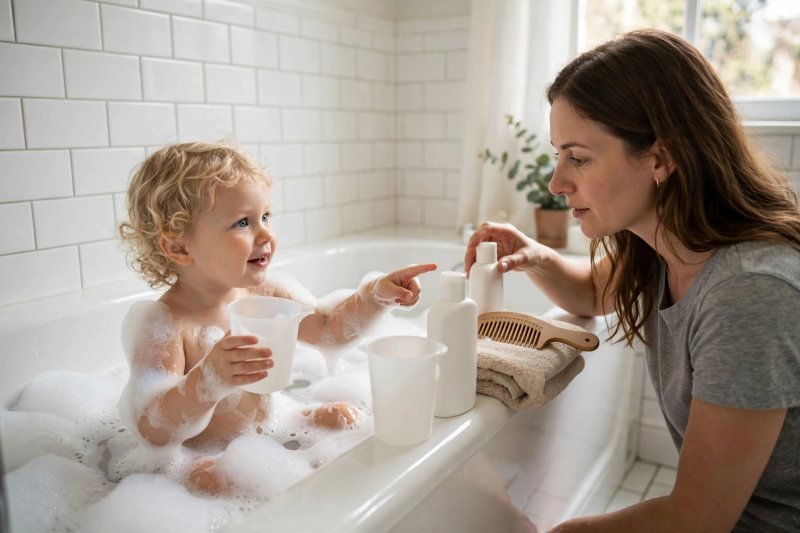
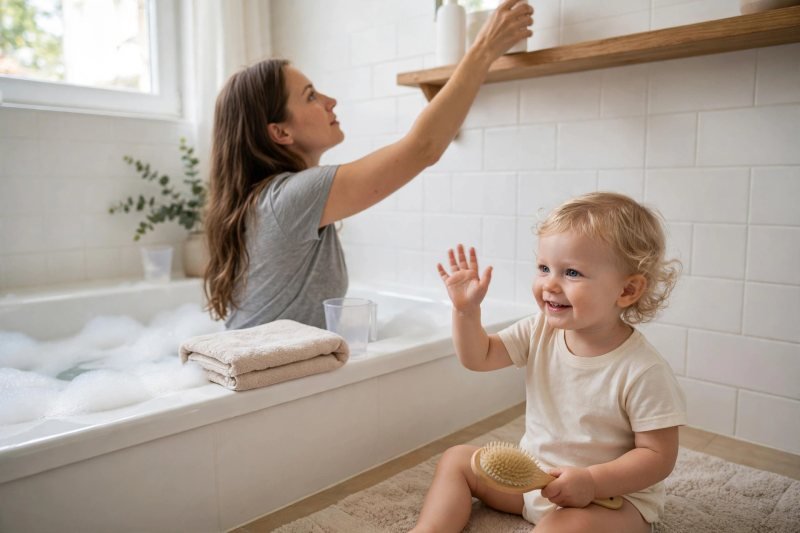
Gather the bath-time supplies. Settle your child in the bath, staying within arm's reach, and line up the bottle, cup, towel, and comb on the tub edge. Say: "Everything we need is right here — bottle, cup, towel — so we can wash and play without stopping." Let your child hold the cup and point to the bottle as you name each item. Point out that this bottle is made just for kids. Supplies familiar, it is time to examine that bottle like detectives.
-
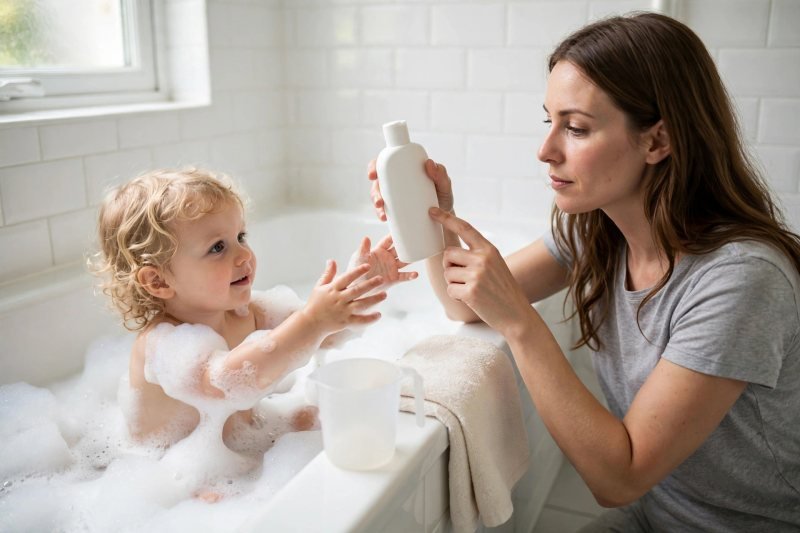
Read the label like a detective. Pick up the bottle, turn its plain side toward you both, and run your finger along it, hunting for clues. Say: "Good shampoo for kids says tear-free, smells very light or not at all, and is made just for children." Talk through the checklist — tear-free so accidental suds are less upsetting; fragrance-free or very lightly fragranced; gentle cleansers that lift dirt without stripping soft hair; and made for children, not adult formulas. Let your child hold the bottle with both hands and shake it gently. Bottle approved, measure out just enough.
-
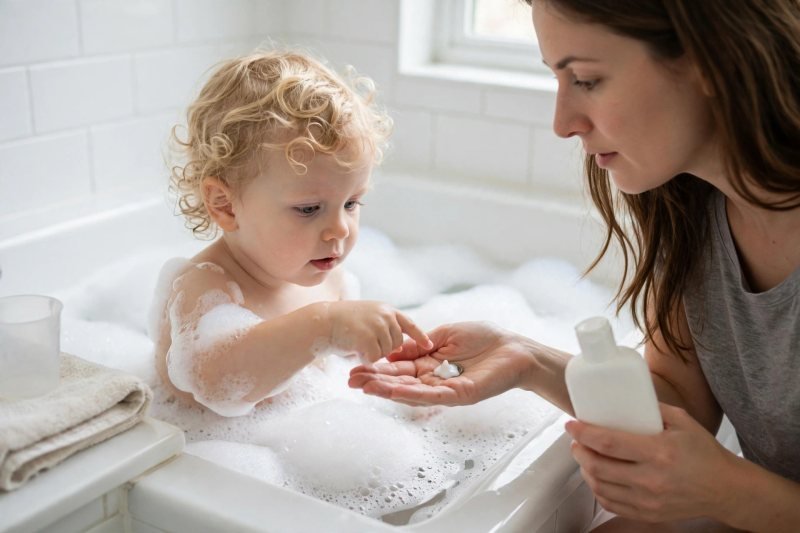
Start with a coin-sized amount. Squeeze a coin-sized amount into your palm and show your child how little there is. Say: "See how small? A coin is plenty — more shampoo does not mean cleaner hair." Extra shampoo only means extra rinsing and drier hair. Remind yourself that any new product was patch-tested 24 hours earlier, with no reaction. Let your child poke one fingertip into the dab. Next, soak the hair so that little dab spreads evenly.
-
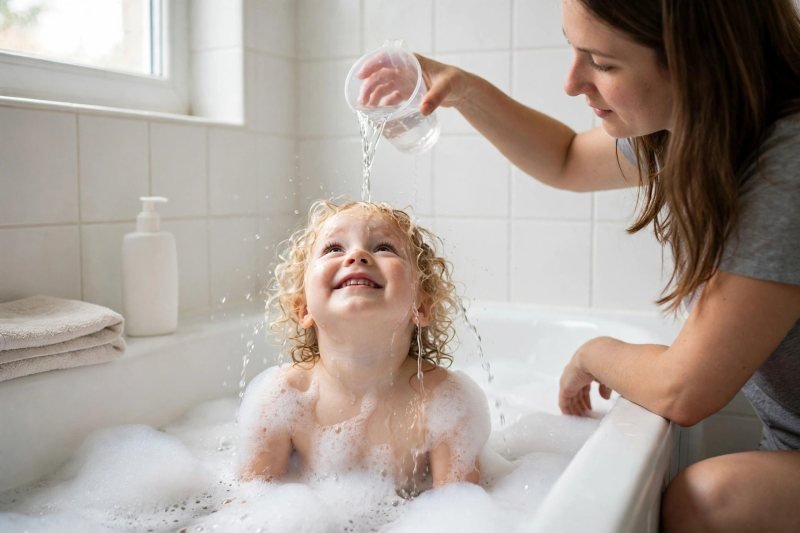
Wet the hair all the way through. Fill the cup, ask your child to tip their chin up and look high on the tiles, and pour slowly from front to back so water runs away from the face. Say: "Chin up, eyes up — here comes the warm rain, running backward like a waterfall." Pour cup after cup until every strand is soaked, including the back, because shampoo spreads evenly on wet hair and tugs less. Let your child hold the cup for one pour with your hand guiding theirs. Hair soaked, your dab can finally do its work at the scalp.
-
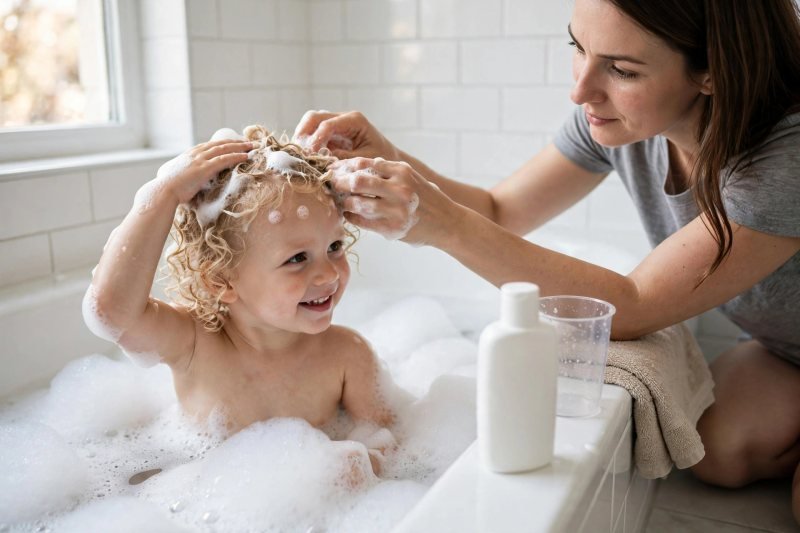
Lather at the scalp with fingertips. Smooth the shampoo between your palms, then work it onto the scalp with only the soft pads of your fingertips, in small, slow circles from hairline to crown and behind the ears. Say: "Soft fingertips only, round and round like tiny snails — never scratchy nails." Keep nails out of the job, since a toddler's scalp is tender. Draw the lather down with open palms, not piled on top, which creates tangles. Let your child pat their own crown with flat hands while you finish the edges. Scalp lathered, rinse it all away carefully.
-
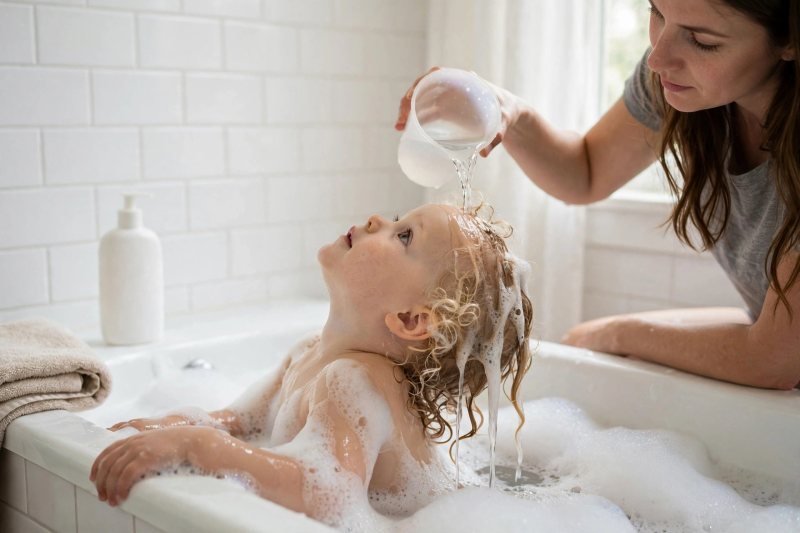
Rinse with the head tipped back. Refill the cup, ask your child to tip their head back, and pour slowly from the front hairline backward so sudsy water streams away from the eyes. Say: "Head back, waterfall backward — the bubbles swim away behind you, not into your eyes." Rinse again, running your fingers through the hair, until the water runs clear and hair no longer feels slippery. Tear-free means suds sting less, not that shampoo belongs in eyes, so technique matters most. Let your child shake their head like a puppy after the last cup. Hair rinsed clean, make one honest decision before reaching for the bottle again.
-
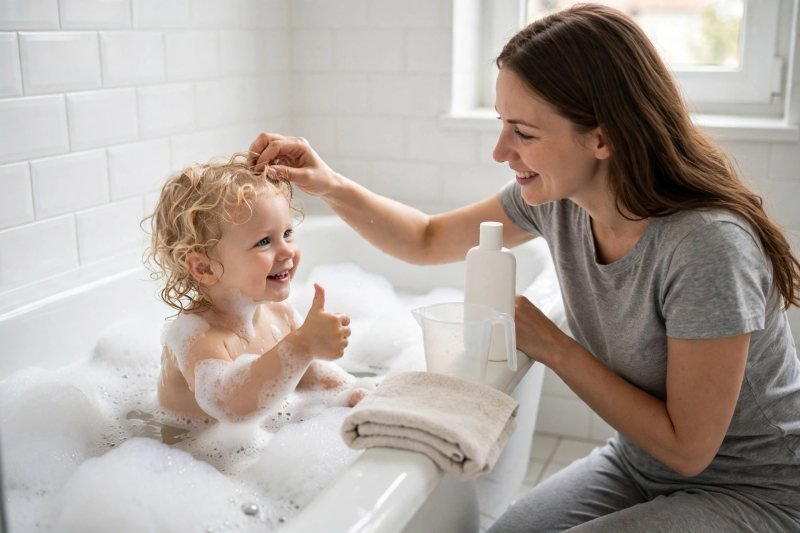
Decide on a second wash. Run your fingers through the wet hair and feel for what is left — if it feels clean and free of grit, one wash stays the rule for most nights. Say: "Let's feel — clean and soft? Then one wash was just right tonight." Save a second wash only for heavy days — sunscreen in the hairline; sweat under a hat; sand or lunch in the curls. If tonight is one, repeat the coin-sized amount, fingertip lather, and backward rinse, keeping it quick. Let your child vote thumbs up or down on how their hair feels. Decision made, skip the extras with a clear conscience.
-
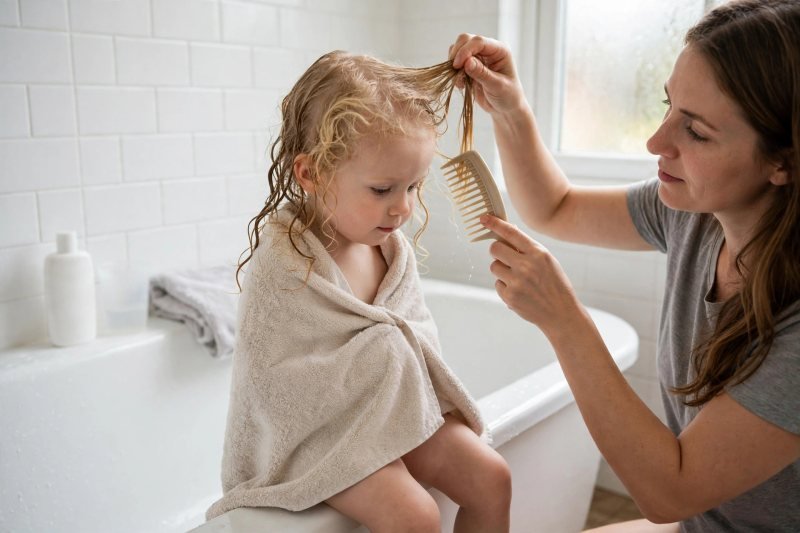
Skip the conditioner, detangle gently. Lift your child onto the bath mat, wrap the towel around their shoulders, and sit them at the tub edge or on your lap, explaining that toddlers rarely need conditioner. Say: "Your hair is soft already — no extra bottle needed, just gentle combing at the ends." Work the wide-tooth comb through the wet ends first, holding hair above a tangle so nothing pulls, and ease knots apart with your fingers first. Let your child take one comb turn on a smooth section. Hair tangle-free, think about how often this wash really needs to happen.
-
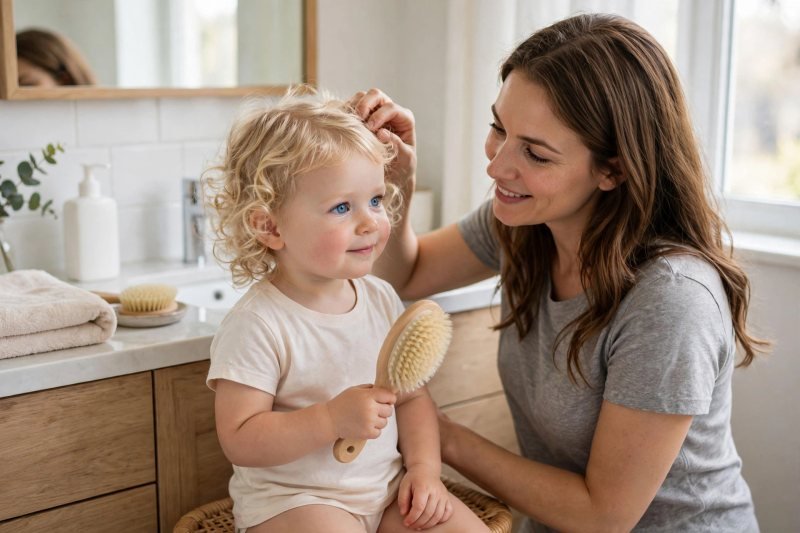
Match wash days to your child's hair. Sit at the vanity afterward and feel your child's clean, dry hair while you think through the week — fine hair that flattens quickly; curly hair that stays fresh longer; sweaty days that earn a wash sooner. Say: "We wash when your hair needs it — after sweaty, sunscreen, or messy days, not every bath." Most toddlers do well with two or three washes a week, with plain water rinses in between, because daily shampooing can dry young hair. Wash days matched to real hair, only the cozy finish and safe storage remain.
-
Finish soft, dry and stored safely. Pat the hair dry with the soft towel — pressing and lifting, never rough rubbing — then glide the soft brush through once mostly dry. Say: "Pat, pat, soft and dry — all done, and your hair feels clean and soft." Give your child a mirror moment and a cuddle in the towel, because praise makes the next wash welcome. Then cap the bottle tightly and put it, and every bath product, up high and out of reach. Let your child wave goodbye to the bottle on its high shelf. Tub empty, hair soft, products stored — done.


Make it easier
Wash hair at the end of the bath, after play, so the wash feels like a short closing act; if rinsing still ends in tears, try the calmer approach in wash toddler hair without tears. Use your free hand as a shield at the hairline if tipping back is still new and wobbly. On non-wash bath nights, rinse with plain water only — familiar, without over-washing young hair.
Make it harder
Let your child squeeze the coin-sized amount into your palm, your hand guiding the bottle. Turn label reading into a game: hunt together for the words tear-free before bath time. Let your toddler hold the cup and do the final backward rinse pour with your hands steadying theirs.
Other ways to play it
- Curly hair version: wash a little less often, detangle only when wet with the wide-tooth comb, and never brush dry curls into frizz.
- Sensitive skin version: stay fragrance-free, rinse extra thoroughly, and use the same gentle approach as a kids' skincare routine — plain, gentle products across bath and skin. The same fragrance-free, gentle checks help when choosing a best body wash for toddlers for the rest of bath time.
- Quick sink-wash version: for one messy-hair emergency, wash over the sink, head tipped back, same coin-sized amount.
How it changes by age
- Age 2: you do everything — measuring, lathering, rinsing — while your child holds the cup and practices tipping their chin up. Keep it to a few unhurried minutes.
- Age 3: threes can help — holding the bottle, poking the dab, patting their own crown, and taking a guided turn with the cup. It is also a lovely age to connect hair care with firsts like a calm toddler's first haircut, since a child who trusts gentle hair handling usually sits happier in the chair. For how the two-or-three-times-a-week rhythm looks across ages, see how often to wash toddler hair.
- When to get help: see your pediatrician if a rash, redness, or flaking does not settle; if there are sores or crusting on the scalp; or if a product causes a reaction despite a patch test. Never diagnose a scalp problem yourself.
What they're learning
Self-care habits: hair washing becomes a predictable part of bath time, like toothbrushing, rather than a surprise to resist. Sequencing: wet, lather, rinse, decide, detangle, dry — a clear order they can recite, predict, and eventually help lead. Body awareness and trust: tipping the head back and telling you if something stings builds confidence in the bath. Early decision-making: feeling whether hair needs a second wash shows them that care responds to real needs, not rigid rules.
Clearing up
"Tear-free means it cannot sting at all." Not quite — tear-free is gentler near eyes, but shampoo in eyes still hurts, which is why the head-back rinse matters. "More shampoo means cleaner hair." The opposite: a coin-sized amount cleans a small head well. "Toddlers need conditioner like adults." Most do not — young hair detangles with a wide-tooth comb on wet ends. "Hair needs washing every bath." Two or three washes a week is plenty.
Questions parents ask
What is the best shampoo for toddlers?
What does tear-free actually mean?
How often should I wash my toddler's hair?
Can I use baby shampoo on a 3-year-old or my own shampoo on my child?
What ingredients should I avoid in kids' shampoo?

save it for later
Pin this for the next rainy afternoon
Keep it on a board so it is there when you need it, rather than when you happened to find it.
Save to Pinterest


