


Toddler Winter Accessories: Hats, Gloves, and Scarves That Stay On
The toddler winter accessories that earn their keep are the ones that stay on: earflap hats with straps, mittens on clips instead of gloves, and a neck gaiter instead of a loose scarf. Choose by fit and fastening, dress in order, dry in one spot.
The toddler winter accessories that stay on are an earflap hat with a chin strap (or a balaclava), mittens — not gloves — clipped to the coat cuffs, and a fleece neck gaiter instead of a loose scarf. Dress in a fixed order, check the fit at five minutes outside, and dry everything in one spot by the door.

The short version
- Hats: ear coverage plus a chin strap, or a one-piece balaclava — perched beanies get lost.
- Mittens beat gloves at 2–3: warmer, faster to put on; waterproof with long cuffs for snow.
- Mitten clips or a sleeve string turn a dropped mitten into a dangling one.
- Loose scarves are a playground hazard — a neck gaiter does the same job safely.
- Car seats: nothing bulky under the harness; warmth goes over the buckles.
- Age
- Ages 2–3
- Prep
- 15 min
- Mess
- Low
Why kids love this
Toddlers love winter accessories exactly as long as the accessories behave: a hat that slips over her eyes is an enemy, mittens that abandon her hands mid-snowball are a betrayal, and a scarf that itches or drags is a wrestling opponent. The toddler winter accessories in this guide are chosen by one toddler-approved standard — they stay on, they stay put, and they don't need re-fixing every thirty seconds. A chin-strapped earflap hat she forgets she's wearing, mittens clipped to her sleeves that survive being waved at a dog, and a soft neck warmer that just lives under her chin: with the gear handled, your 2- or 3-year-old gets to do the actual job of winter, which is falling down in snow on purpose.
What you'll need
- A warm hat that covers the ears — earflap style with a chin strap, or a balaclava (criteria in steps 2–3)
- Mittens (not finger gloves) sized for toddler hands, ideally waterproof for snow play, plus a pair of mitten clips or a mitten string
- A fleece neck gaiter or balaclava instead of a loose scarf (step 6 explains why)
- A thin fleece layer for car-seat trips, plus a blanket for over the buckles (step 7)
- A backup set — cheap hat and mittens kept in the bag or car for the inevitable loss
- One drying spot at home: low hooks or a small rack by the door (step 10)
Before you start
1. Shop by the criteria in steps 2, 4, and 6 — fit and fastening first, cuteness last; try hats on the actual toddler whenever possible. 2. Attach the mitten clips before the first outing (step 5) and set up the one drying spot by the door (step 10) on day one. 3. Wash new hats, mittens, and gaiters before the first wear, and check seams and straps for loose threads or scratchy edges while they are still easy to return. 4. Read the Safety notes — especially the scarf and car-seat rules, which are the two places winter accessories can genuinely hurt a toddler.
How to do it
-
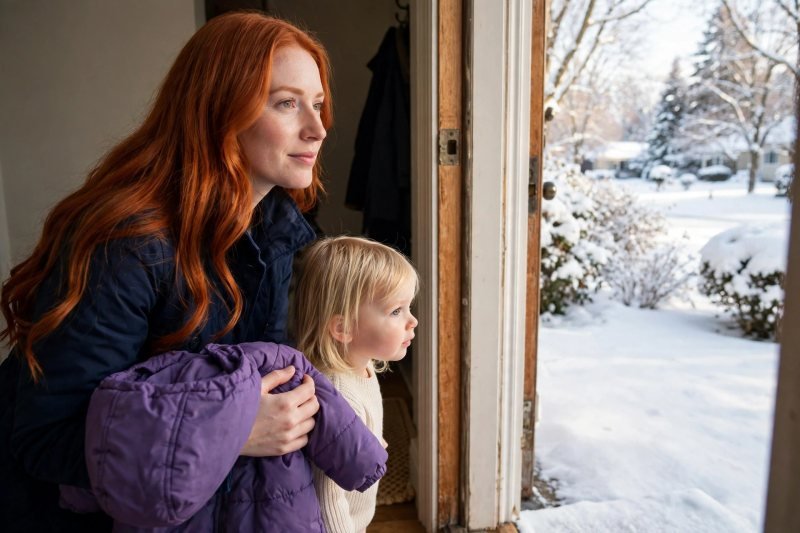
Check the weather and plan layers before accessories. Accessories finish a system, so look at the whole picture first: how cold, how windy, how long outside, and what is she wearing underneath? Wind is what turns a fine hat into a useless one, and twenty minutes at a bus stop is a different mission from two hours at a sledding hill. Say, "Cold and windy: full kit. Mild and quick: hat and mittens only." If you are still building the layer system itself, the layering order in these toddler winter outfits pairs directly with this guide — accessories are the final layer of that plan, chosen last and deliberately.
-
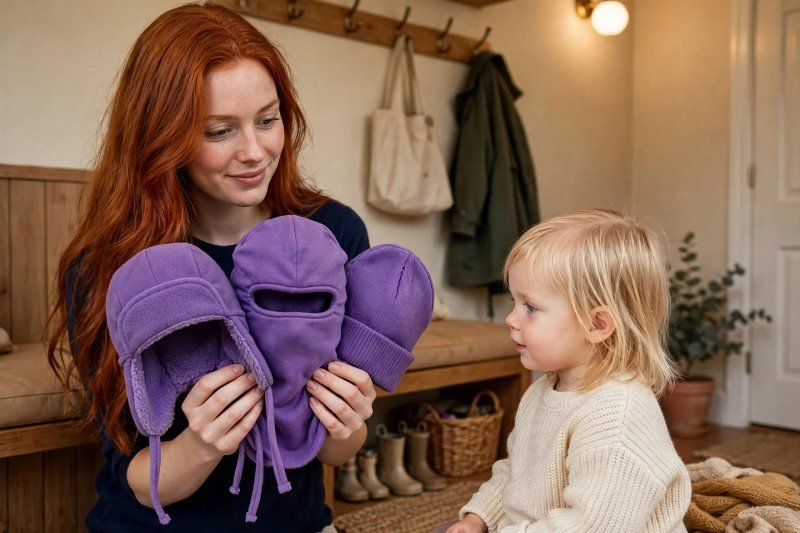
Choose a hat that covers the ears and fastens under the chin. The hat that stays on a toddler has three features: ear coverage (earflaps or a balaclava cut), a soft chin strap or ties that keep it seated when she shakes her head, and a snug-but-not-tight fit in a warm, low-itch fabric like fleece or a knit with a fleece lining. Fashion beanies that perch on top are the hats found in snowbanks. Say, "Ears covered, strap on — that's a hat that works." A balaclava is the one-piece cheat code for the hat-haters: hat, ear cover, and neck warmer in a single pull-on she cannot fling out of a stroller.
-
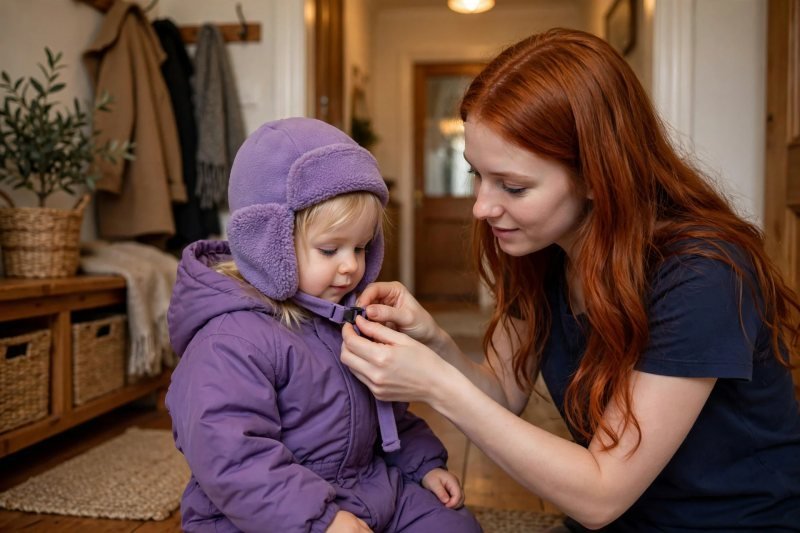
Fit-test the hat like you mean it. Put it on, fasten the strap, and run the toddler tests: she shakes her head (does it ride up?), looks up at a bird (does it slide back?), and bends for a toy (does it cover her eyes?). You should fit two fingers under the strap, the earflaps should fully cover her ears without folding them, and the brim or edge should sit above the eyebrows, not on them. Say, "Shake test! …Still on. That hat passed." Size by her head, not her age — toddler heads vary wildly — and if you are between sizes, the strap makes the bigger one work while the smaller one just pops off.
-
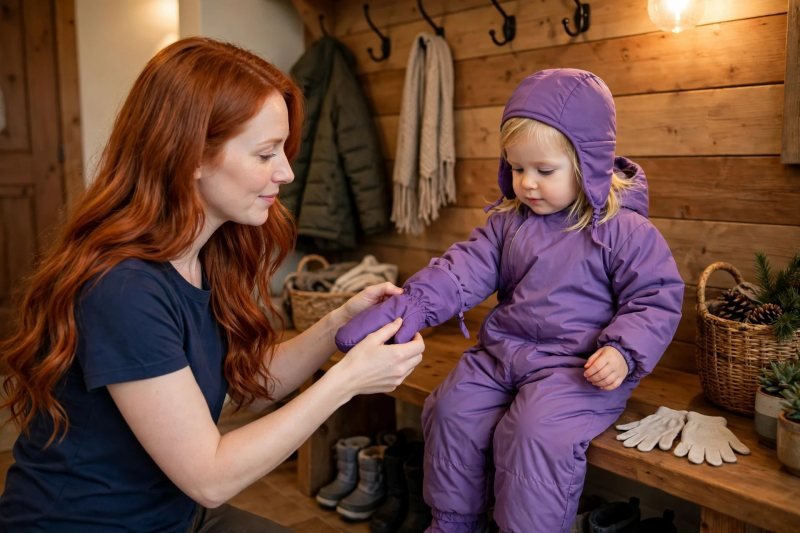
Pick mittens over gloves, and make them waterproof for snow. Two- and three-year-old hands belong in mittens: finger gloves are a five-minute frustration for everyone, while mittens slide on in seconds and keep fingers warmer because the fingers share heat. For snow play, choose a waterproof or water-resistant shell with a long cuff that goes OVER the coat sleeve (snow sneaks in at the wrist gap, not through fabric), plus a soft fleece pair for dry-cold days and car trips. Say, "Mitten hands are snow hands." Buy the fit slightly roomy — a mitten she can flex in — and accept now that one mitten from every pair is destined to vanish; that is what the backup set is for.
-
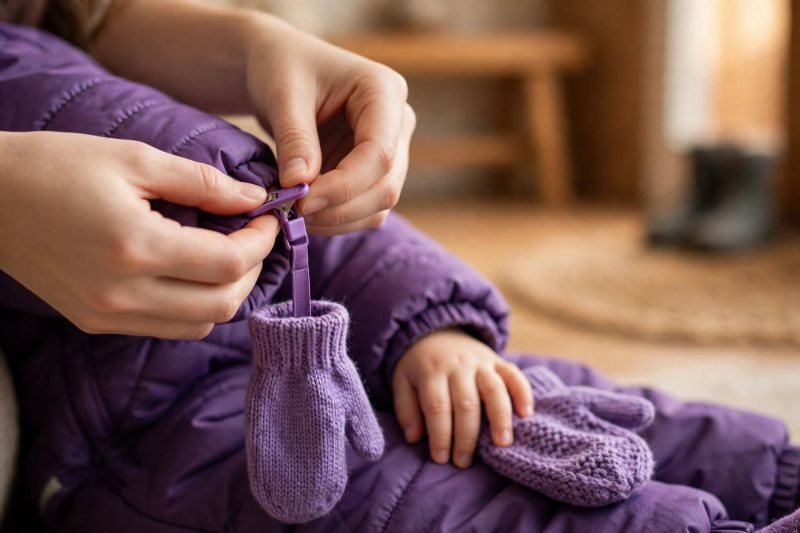
Clip the mittens to the coat before the first outing. Attach a mitten clip to each cuff, or thread a mitten string through the coat sleeves, so a mitten that comes off dangles instead of dropping. Clips beat strings for quick changes; strings beat clips for determined mitten-flingers. Do it at home, once, slowly — not with cold fingers in a parking lot. Say, "Click, click — your mittens live on your coat now." Then teach her the small magic: when she pulls a mitten off herself, it hangs right there waiting. Fewer lost mittens also means the pair stays a pair, which matters more than any feature on the label.
-
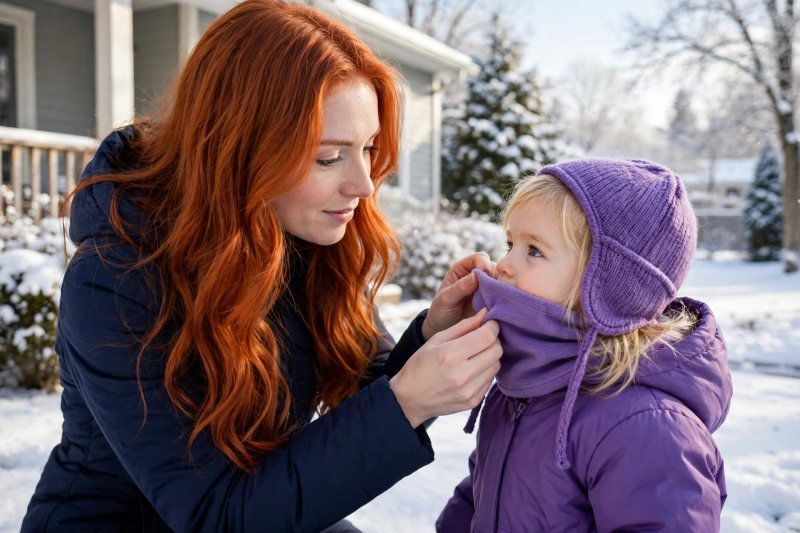
Swap the loose scarf for a neck gaiter or balaclava. A traditional long scarf is the wrong tool for a toddler: it unravels, drags in slush, itches, and — the serious reason — loose ends can catch on playground equipment and car doors. A fleece neck gaiter (a soft tube she pulls up over her chin) or a balaclava does the neck job with nothing dangling, nothing to tie, and nothing to strangle on. Say, "The tube scarf can't fall off — it IS on." Pull it up to cover cheeks on windy days and down under the chin when she overheats; it also wipes a runny nose in an emergency, which is not glamorous but is real January parenting.
-
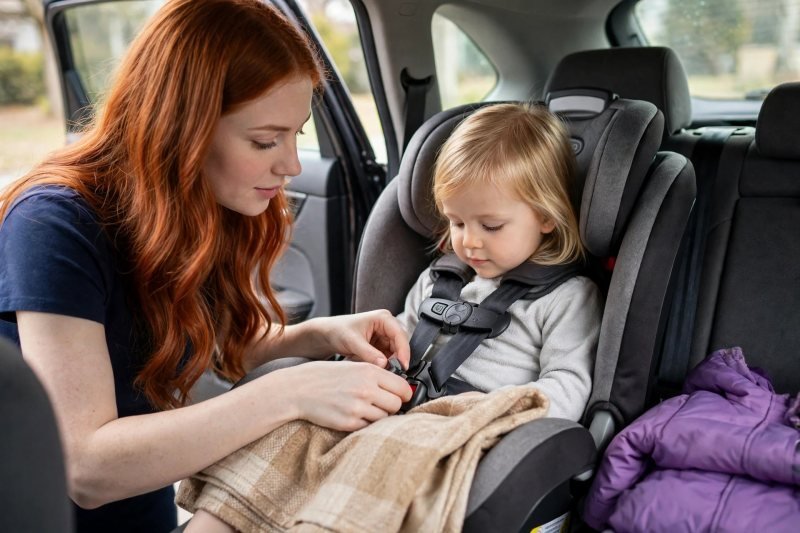
Keep car-seat trips thin under the harness, warm over it. Bulky coats and puffy layers compress in a crash and leave harness straps dangerously loose — so for car rides, the snowsuit stays off or unzipped, and your toddler rides in her regular clothes plus a thin fleece, harness snug, with a blanket or her coat laid over the buckles once she is strapped in. Her hat and mittens can stay on in the car; the gaiter pulls down. Say, "Thin under the straps, blanket on top — same warm, safe straps." This rule changes nothing about your accessories — it just decides which layer the car seat gets to approve. The layer guidance in these preschool winter outfits follows the same principle for older kids.
-
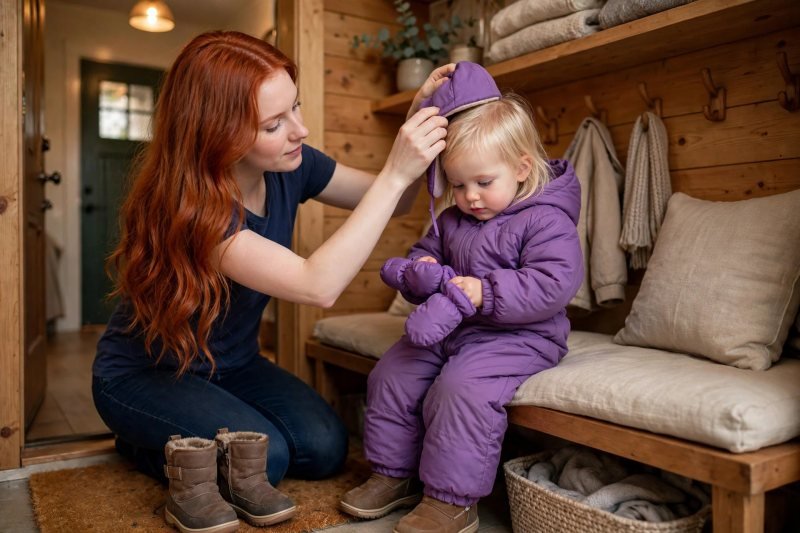
Dress in the same order at the door, every time. Sequence is a toddler's best friend, so gear up in one fixed order: snowsuit or coat, boots, hat, gaiter, mittens last (mittens first means she can't help with anything and overheats indoors). Sit her on the same step or bench, narrate the order until she starts chanting it, and let her do the jobs she can — pushing hands into mittens, pulling the gaiter up. Say, "Coat, boots, hat, tube, mittens — go!" The routine takes three minutes once it is a routine, and the day it clicks, getting out the door stops being a negotiation and becomes a song.
-
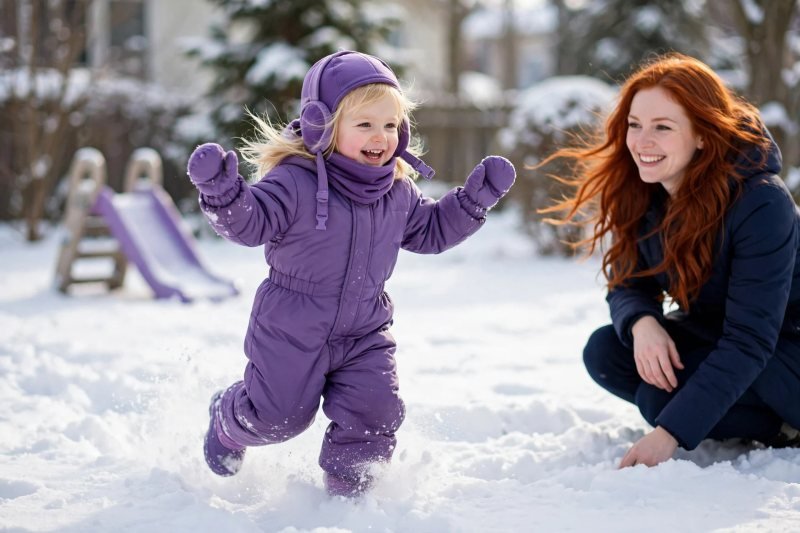
Do a stay-on check at the playground's five-minute mark. The first five minutes tell you everything: after the initial run, slide, and fall, glance at the system — hat still covering ears? Mittens still on hands or dangling by clips? Gaiter up or forgotten around her neck? Fix failures once, properly — strap snugged, cuff pulled over the sleeve — rather than six half-fixes. Say, "Five-minute check: hat, hands, neck — all still on. Play!" If one item fails the check every single outing, replace the item, not the toddler: a hat that won't stay on a moving 2-year-old is a design flaw, not a discipline issue. Plan the longer outings that test the system from our winter activities for kids.
-
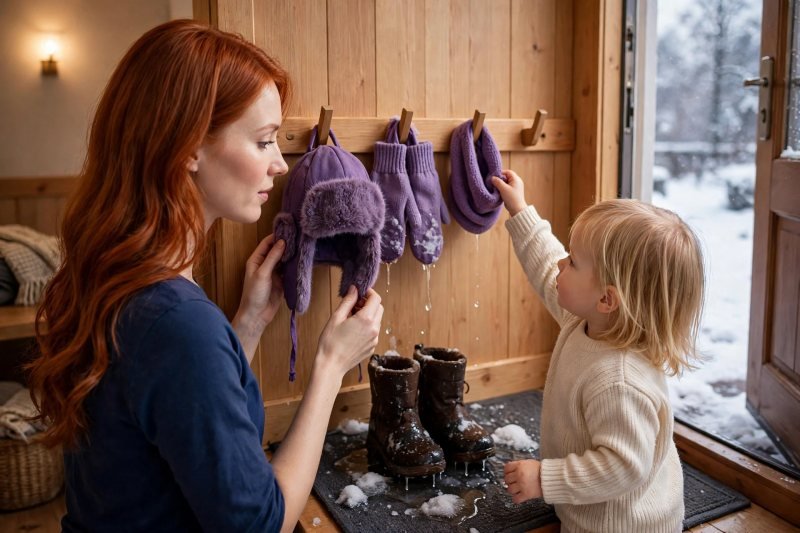
Bring everything in to one drying spot, every time. Winter gear scattered across three rooms is winter gear lost. Choose one spot by the door — low hooks she can reach, a small rack, a basket — and make homecoming as ritual as leaving: mittens unclipped and laid open, hat and gaiter draped, everything where the warm air reaches it so it is dry by morning. Say, "Hats sleep here, mittens sleep here." Teach her to park her own gear on the low hooks; a 3-year-old who owns the landing strip also owns the memory of where her mittens are, which is the entire long game of toddler winter accessories.


Make it easier
Buy the balaclava and skip two decisions: it is hat, ear cover, and neck warmer in one pull-on piece. See how the coat, hat, and mittens sit together in our winter outfits for girls before you buy a second set. Keep the cheap backup set permanently in the car or diaper bag so a lost mitten is an errand, not an emergency. Dress her by a picture chart on the door (coat, boots, hat, mittens) — she checks the pictures; you keep your hands free.
Make it harder
Let your 3-year-old clip her own mittens and fasten her own hat strap, with you as quality control — fine-motor practice with a purpose. Add hand warmers inside adult-managed mittens for genuinely frigid days, following the product's own safety directions. Rotate two full sets so she chooses "today's hat" — a small autonomy upgrade that speeds up the doorway.
Other ways to play it
- Deep-winter upgrade: add ski-style mittens with the longest cuffs, a fleece layer under the hat strap on the coldest days, and set a stricter playground check (step 9) every few minutes for exposed-cheek patrols. For the season's wider plans, see our winter hub.
- Mild-climate winter: fleece mittens and a simple strap beanie cover most days; the gaiter becomes an on-call item for windy mornings only.
- Stroller and wagon riders: seated toddlers move less and chill faster — add the blanket over legs even for short rides, and check that hat straps don't loosen against headrests. On days too cold for a long outing, keep the dressing routine in practice with indoor snow and ice play.
How it changes by age
- Age 2: At two, the balaclava-plus-mittens-on-clips combination does nearly all the work — fewest pieces, fewest losses, fastest dressing. Expect to re-fix the system at every outing's five-minute check and to carry the backup set everywhere; independence is a step-8 chant she joins, not a job she owns.
- Age 3: Threes can work the doorway routine properly: clipping mittens, parking gear on low hooks, and reporting a missing item. Gloves remain a frustration for most 3-year-olds in real snow; mittens still win. A "big kid" gaiter she pulls up herself is a genuine pride point at this age.
What they're learning
Sequencing and routine: a fixed dressing order is early executive function — and she can recite it. Fine motor skills: clips, straps, and pulling a gaiter up are real two-handed challenges scaled to toddler hands. Body awareness: learning to report "my ears are cold" connects sensations to solutions — the root of dressing herself one day. Responsibility: parking her own gear in its spot is ownership of belongings in its earliest, most practical form.
Clearing up
Homecoming takes ninety seconds: unclip the mittens and lay them open over the rack or radiator-adjacent spot (never sealed in a bag wet), drape hat and gaiter beside them, shake snow off boots onto the mat, and put the blanket back in the car or by the door. Wet-through items get the warmest drying spot or a spare-set swap tomorrow. A weekly once-over — clips still gripping? strap stitching holding? — prevents the mid-January gear failure. The backup set returns to the bag the same day it is used, washed if it came home soggy.
Questions parents ask
Are mittens or gloves better for toddlers?
How do I keep a hat on my toddler's head?
Are scarves safe for toddlers?
Can my toddler wear her winter coat in the car seat?
How many sets of winter accessories does a toddler need?
What is a balaclava, and is it better than a hat and scarf?

save it for later
Pin this for the next rainy afternoon
Keep it on a board so it is there when you need it, rather than when you happened to find it.
Save to Pinterest

