


Toddler Winter Layering: How to Dress for Freezing Days
Toddler winter layering works on one simple rule: three layers — a moisture-wicking base, a warm insulating middle, and a waterproof outer shell. This guide dresses your toddler step by step, covers the car seat coat rule, and shows the warmth check that tells you it is right.
Toddler winter layering uses three layers: a snug moisture-wicking base of merino or synthetic fabric (never cotton), an insulating fleece or wool middle, and a waterproof outer snowsuit or jacket and pants. Add wool socks, insulated boots, a hat over the ears, and mittens — and never buckle a puffy coat into a car seat.

The short version
- Three layers, three jobs: move sweat away, trap warm air, block wind and wet.
- No cotton against the skin — it holds cold sweat and chills toddlers fast.
- One pair of wool-blend socks beats two pairs, which bunch and restrict circulation.
- Car seat rule: buckle snugly in thin layers, then lay the coat or a blanket over the harness.
- Check warmth at the chest or back of the neck — warm and dry is right; sweaty means remove a layer.
- Choose a neck warmer or balaclava instead of a loose scarf, and keep spare mittens in your bag.
- Age
- Ages 2–3
- Prep
- 5 min
- Play time
- 10 min
- Mess
- None
- Difficulty
- Easy
- Where
- Both
Why kids love this
Toddlers love dressing routines they can join: pulling on their own hat, stomping into boots, choosing which mittens today. The right layers also mean they can actually move, bend, and play in the snow instead of waddling like a tiny astronaut — warm kids play longer and cry less. Once the layers are proven outside, indoor snow and ice play keeps the winter fun going on days too cold to stay out long.
What you'll need
- Base layer: a snug long-sleeve top and leggings in merino wool or synthetic fabric (not cotton)
- Mid layer: a fleece jacket or wool sweater, plus fleece pants on very cold days
- Outer layer: a waterproof snowsuit, or a waterproof jacket plus snow pants with elastic cuffs
- Warm socks in wool or a wool blend, and insulated waterproof boots that fit over thick socks
- A warm hat that covers the ears, mittens (easier than gloves at this age), and a neck warmer
- A thin fleece jacket or car seat poncho plus a blanket for car rides
- A spare pair of mittens and socks in your bag — toddler winter gear gets wet and lost
Before you start
1. Lay the three layers out in dressing order by the door the night before or while your toddler eats breakfast. 2. Check the forecast and wind: dress for the wind chill and for how long you will actually be outside. 3. Loosen boot straps, unzip the snowsuit fully, and put mittens on their string through the coat sleeves. 4. Warm the car up if you can, and move the blanket and thin fleece to the car seat ahead of time.
How to do it
-
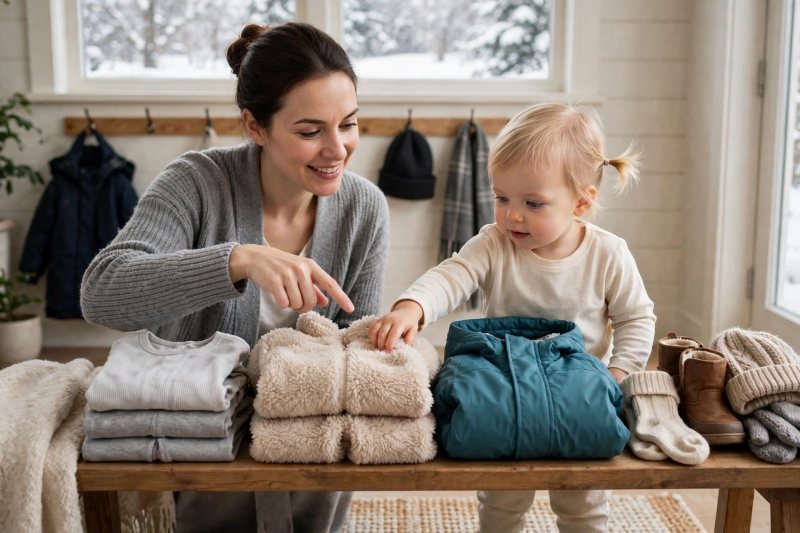
Lay out the three layers in order. Set three piles on the bench: base; middle; outer — plus socks, boots, hat, and mittens at the end of the line. Say: "Three layers keep you warm — first the soft one, then the fluffy one, then the snow-proof one." Let your toddler touch each pile and name the order back to you. Dressing beside the door, in the same order every day, turns a wrestling match into a routine, and full outfit ideas in these toddler winter outfits for ages 2–3 show how the layers look together. Piles ready — start with the layer against the skin.
-
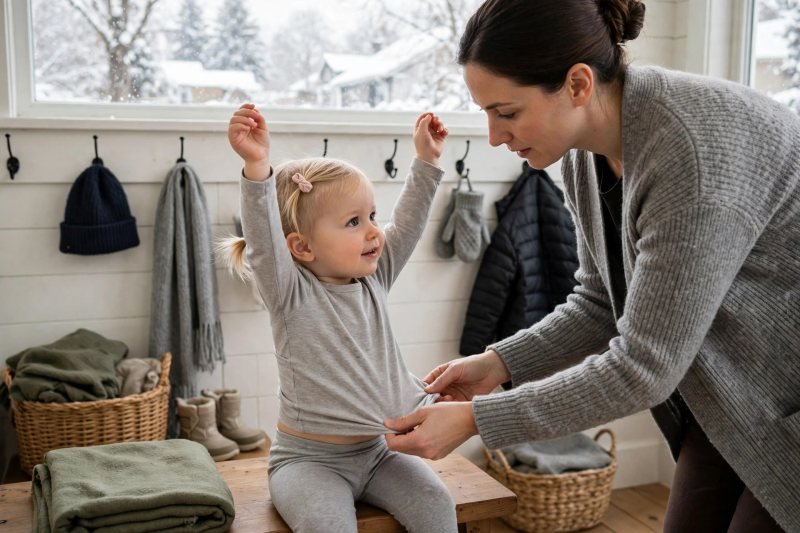
Dress the base layer first. Pull on the snug long-sleeve base top and leggings over a fresh diaper or underwear: merino wool or synthetic fabric, fitted close but never tight. Say: "This layer is your second skin — it keeps sweat away so you stay warm." Smooth out wrinkles at the armpits and waist, because bunched fabric rubs and cools. Skip cotton here entirely: cotton holds cold sweat against the skin, which is how toddlers get chilled even in a good coat. Skin layer smooth — warmth goes on top of it.
-
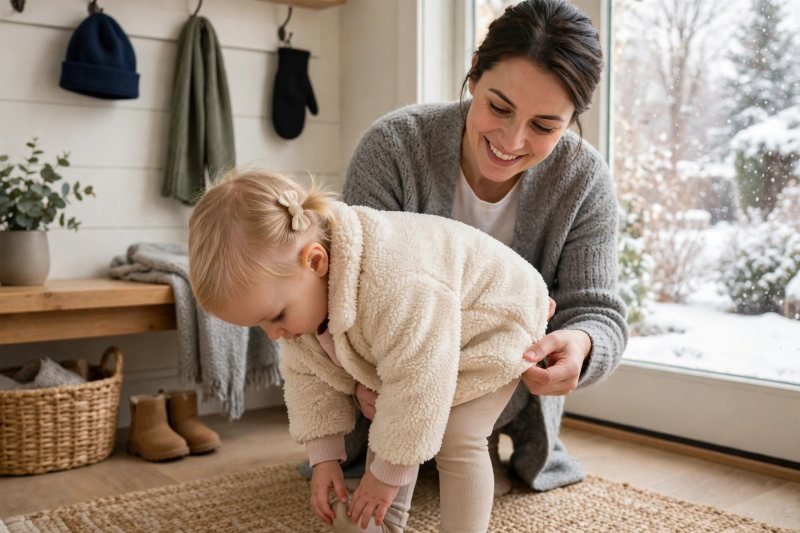
Add the insulating mid layer. Zip or pull on a fleece jacket or wool sweater and, on freezing days, fleece pants over the base leggings. Say: "This fluffy layer is a blanket you wear — it traps the warm air." Check that sleeves reach the wrists and the hem covers the lower back when your toddler bends — bend together and peek. The mid layer does the actual warming, so it should feel cozy, not bulky: if your toddler cannot bend or reach, swap to a thinner fleece rather than adding more. Warmth trapped — feet come next, before the outer shell seals everything in.
-
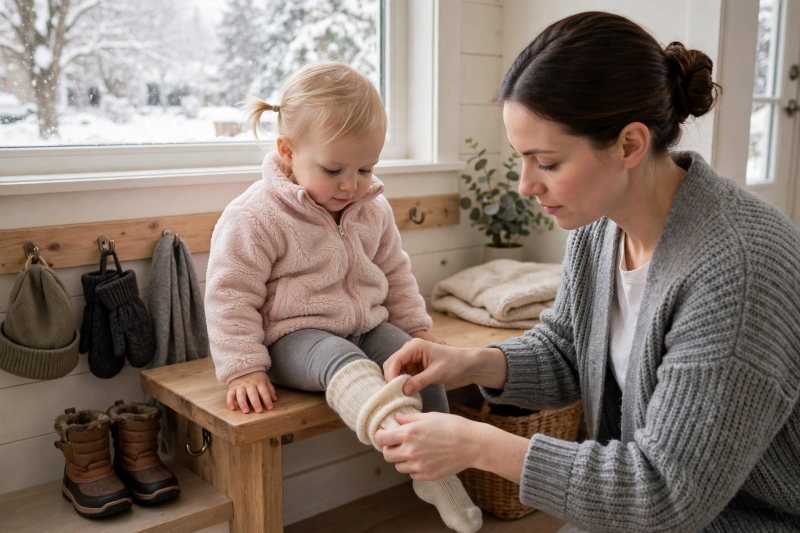
Put on warm socks and boots. Pull wool-blend socks up smooth over the base leggings so no skin gap opens at the ankle, then guide each foot into its insulated waterproof boot. Say: "Socks hug your legs, boots fight the snow — stomp twice to check." Have your toddler stomp and walk a few steps indoors: boots should grip the heel without flopping, with a thumb's width of wiggle room for toes over thick socks. One pair of good socks beats two pairs, which can bunch, cut circulation, and actually make feet colder. Feet sealed — the waterproof shell goes over everything.
-
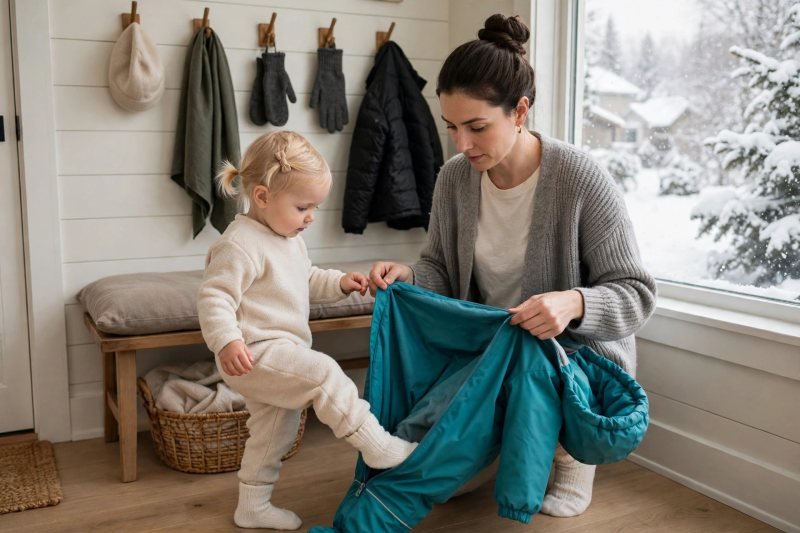
Zip up the waterproof outer layer. Help your toddler step into the snowsuit, or pull on snow pants first and then the waterproof jacket, zipping right up to the chin over a tucked-in mid layer. Say: "This is the raincoat for snow — it keeps the wet out and the warm in." Check the seals: elastic cuffs over boot tops so snow cannot fall in; sleeves over the mid layer with mitten cuffs to come over them; and no gap at the waist when your toddler reaches up. The outer layer stops wind and wet — it does not need to be thick to do its job. Shell sealed — finish with the head and hands, where heat escapes fastest.
-
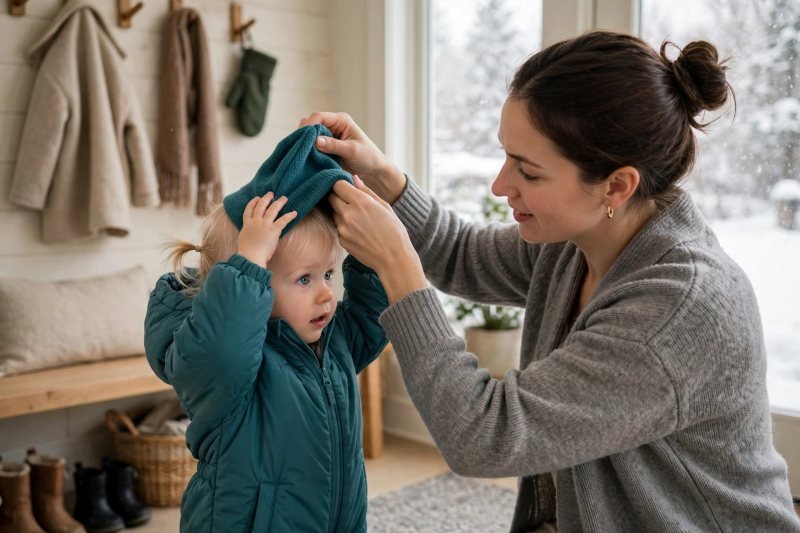
Add hat, mittens, and a neck warmer. Pull the hat down over the ears, thread mittens onto their string inside the sleeves, push little hands in, and pull the jacket cuffs over the mitten tops. Say: "Hat on ears, mittens on hands — no cold gaps allowed." Choose a neck warmer or balaclava instead of a loose scarf, which can catch on play equipment and car seat straps. Let your toddler pick today's mittens from the two pairs you offer; that one choice prevents most door-step standoffs. Fully layered — but before any car ride, one safety change matters more than warmth.
-
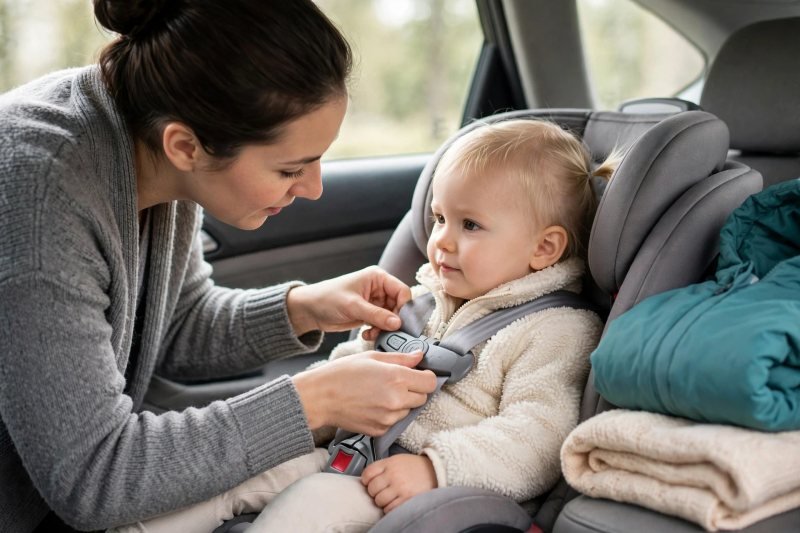
Buckle the car seat without the puffy coat. In the car, take the thick outer coat or snowsuit top off before buckling: puffy layers compress in a crash and leave harness straps dangerously loose. Say: "In the car we buckle snug, then the blanket keeps you cozy." Buckle your toddler in their base and mid layers (or a thin fleece), pull the harness straps snug so you cannot pinch a fold of strap at the shoulder, click the chest clip to armpit level, then lay the coat or a warm blanket over the buckled harness. Bigger siblings follow the same no-puffy-coat rule, as the layering guidance in preschool winter outfits also notes. Buckled safely — head outside and test the whole system in real cold.
-
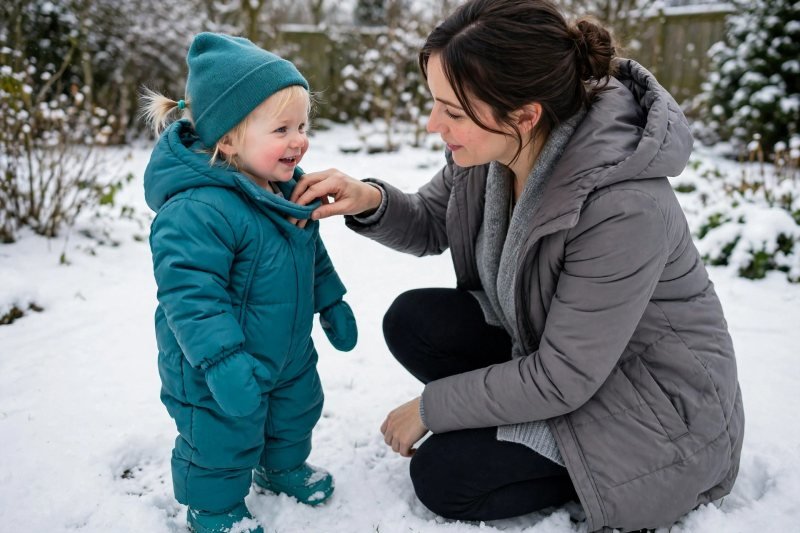
Do the warmth check outside. After about ten minutes outdoors, slide two fingers inside the layers at your toddler's chest or the back of the neck. Say: "Warm check — your chest tells the truth, not your hands." Warm and dry there means the layers are right. Cool means add a layer or head in soon; hot or sweaty means vent the zip or drop the mid layer, because a sweaty toddler chills fast when they stop moving. Hands and feet run cooler than the core, so judge by the chest and neck, and watch for pink, comfortable cheeks and a child who keeps playing happily. Layers proven — the last step keeps it working all winter.
-
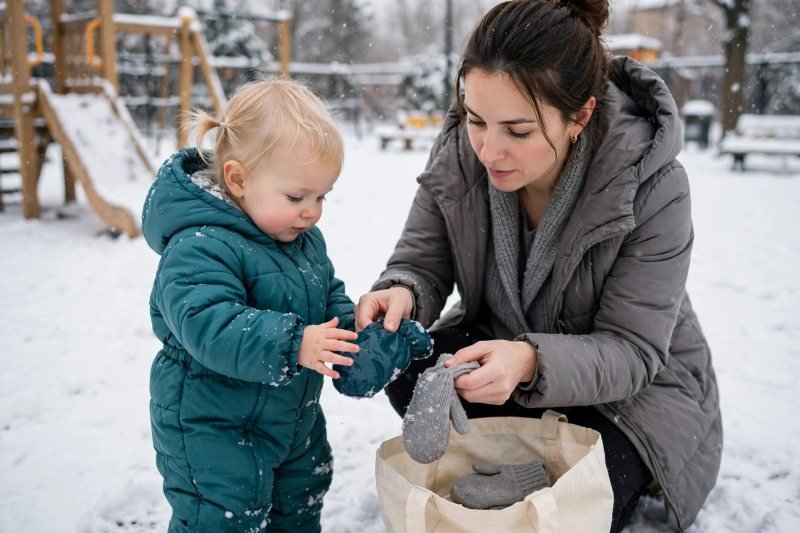
Adjust layers as the outing changes. Stay flexible out there: unzip at the playground if the sun comes out, swap in the spare mittens when the first pair soaks through, and head inside for a warm drink before little complaints turn into a freezing meltdown. Say: "Grown-ups check, layers change — that is how winter works." Re-run the chest warmth check after any big change in activity or weather, because a running toddler warms up fast and a tired one cools down faster. Adjustments done — the routine finishes back at the door where it started.
-
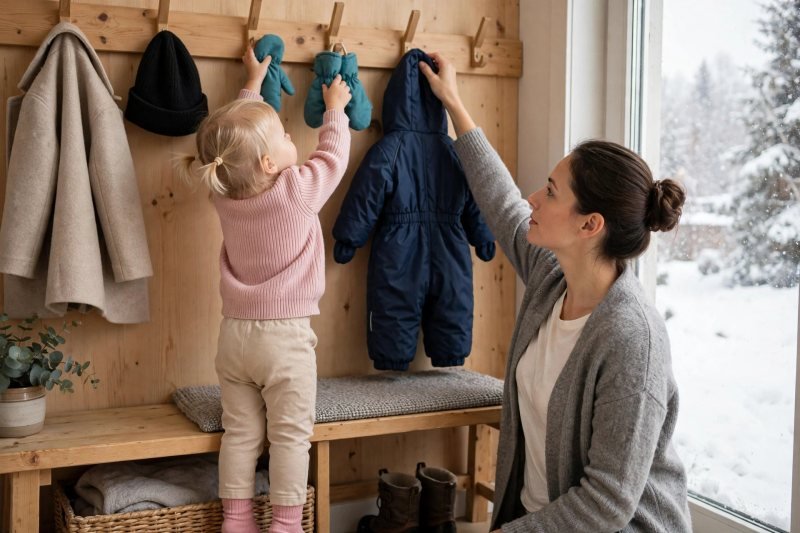
Hang everything up and celebrate the routine. Back home, work the layers in reverse as a game: outer off; hat and mittens in the basket; boots upside down on the tray; mid and base layers in the laundry pile if they are damp. Say: "You dressed for winter like a pro — tomorrow you can be the boss of the piles." Hang wet gear to dry the same day so tomorrow starts with warm, dry layers. After a week of the same order — base, middle, outer, socks and boots, hat and mittens — most toddlers start fetching their own pile before you ask. Winter dressing: officially a routine, not a battle.


Make it easier
Use a one-piece snowsuit as the outer layer — one zip, no waist gap, faster on a wriggly toddler. Dress in the same spot, in the same order, with a picture list on the wall your toddler can point to. Practice boots, hat, and mittens as a game on a mild day so freezing mornings hold no new skills.
Make it harder
Let your toddler dress their base and mid layers solo while you narrate — allow extra time and praise every layer. Give them the warmth-check job for a stuffed animal dressed in layers beside them. Hand over real choices throughout: which fleece, which hat, mittens or the balaclava today.
Other ways to play it
- Stroller version: add a footmuff or blanket over the legs — a sitting toddler generates less heat than a walking one.
- Mild-day version: base layer plus the waterproof outer shell, skipping the mid layer, with hat and mittens in your pocket just in case.
- Deep-freeze version: balaclava under the hat, fleece pants plus snow pants, and shorter outings with warm breaks built in.
How it changes by age
- Ages 2–3: you lead every step; expect help with hats and boots and resistance to mittens — mitten clips and one offered choice keep it moving. Dressing takes about ten minutes once the routine sticks. The same fixed order anchors a morning of activities for 2-year-olds at home.
- Younger toddlers (12–24 months): use a bunting-style snowsuit with fold-over hand covers, keep outings shorter, and do the warmth check more often, since they cannot tell you they are cold.
- Ages 4–5: the same 3-layer rule applies — children this age can dress almost fully alone with the layers laid out, and can learn the car seat coat rule as their own safety job.
What they're learning
Sequencing and routines: first, next, last — the dressing order is a daily logic lesson they can recite. Self-care independence: pulling on hats, mittens, and boots builds the skills and pride of "I did it." Body awareness: the warmth check teaches them to notice and report hot, cold, and sweaty. Cause and effect: layers on, warm; layer off, chilly — winter physics a two-year-old can feel.
Clearing up
Hang the snowsuit, mittens, and hat to dry as soon as you come in — a radiator-safe rack or hooks by the door work best — and shake snow out of boots and stand them upside down over a tray. Restock the spare mittens and socks in your bag while you unpack it. Gear that dries overnight is gear that is warm and ready tomorrow. For more cold-weather ideas, browse the winter hub.
Questions parents ask
What is the 3-layer rule for dressing a toddler in winter?
Why should toddlers not wear cotton in winter?
Can my toddler wear their winter coat in a car seat?
How can I tell if my toddler is warm enough outside?
How many layers does a toddler need in a stroller?

save it for later
Pin this for the next rainy afternoon
Keep it on a board so it is there when you need it, rather than when you happened to find it.
Save to Pinterest


