


Kids Winter Photo Outfits: Holiday Card Looks That Photograph Well
Kids winter photo outfits photograph well when they coordinate instead of match: pick a palette of three colors, dress Mom first, lean on velvet, knits, and corduroy, skip logos, and test the whole look at home in daylight before photo day.
Kids winter photo outfits work when they coordinate instead of match: choose three colors, dress the hardest-to-style adult first, build each child's look around one rich texture like velvet or knit, skip logos and big graphics, then test the full outfit in a home photo and pack a backup for photo day.

The short version
- Coordinate, don't match: one three-color palette for the whole family.
- Dress Mom (or the pickiest adult) first; build the kids' outfits around that anchor.
- Texture is the camera's friend — velvet, cable knit, corduroy — one hero texture per outfit.
- No logos, characters, or words; small patterns only.
- Home test photo in daylight, try-on days ahead, rescue tote on the day.
- Age
- Ages 4–5
- Prep
- 30 min
- Play time
- 10 min
- Mess
- Low
Why kids love this
Kids love photo day when the clothes let them be kids. The kids winter photo outfits in this guide are chosen for the camera, yes — but every pick is also soft, non-scratchy, easy to move in, and tried on at home first, so nothing itches, pinches, or surprises her in front of a photographer. A 4- or 5-year-old who feels pretty AND comfortable cooperates; one in a stiff, tag-scratching outfit performs a countdown to meltdown that shows in every frame. The secret the stylists know: the best holiday-card photos are not of the best-dressed children, they are of relaxed children in coordinated colors — and relaxed is a clothing choice you make days earlier, at home, with snacks nearby.
What you'll need
- A palette of three colors (step 1) chosen from the winter-photo-friendly families: deep jewel tones, warm neutrals, or classic holiday reds and greens used sparingly
- Mom's (or the lead adult's) outfit, decided first (step 2)
- Textured pieces: velvet, cable knit, corduroy, soft plaid, tulle or satin accents for twirl
- Plain shoes or boots that suit the setting (step 6) — cleaned the day before
- Simple hair things: a brush, one bow or clip, nothing that needs rebuilding hourly
- A phone or camera for the home test photo (step 8)
- A tote with a backup outfit, wipes, a lint roller, and a non-messy snack (step 9)
Before you start
1. Decide the setting before the clothes — our winter hub shows the season's range — indoor tree-side photos, outdoor snowy photos, and studio minis all dress differently — and outdoor shoots add a warm-coat-over-the-outfit plan (step 9). 2. Pull candidate clothes from closets before buying anything; most families own a full palette already and just haven't seen it as one. 3. Do the try-on and test photo on a calm day that is NOT photo day (steps 5 and 8), when fixes are still free.
How to do it
-
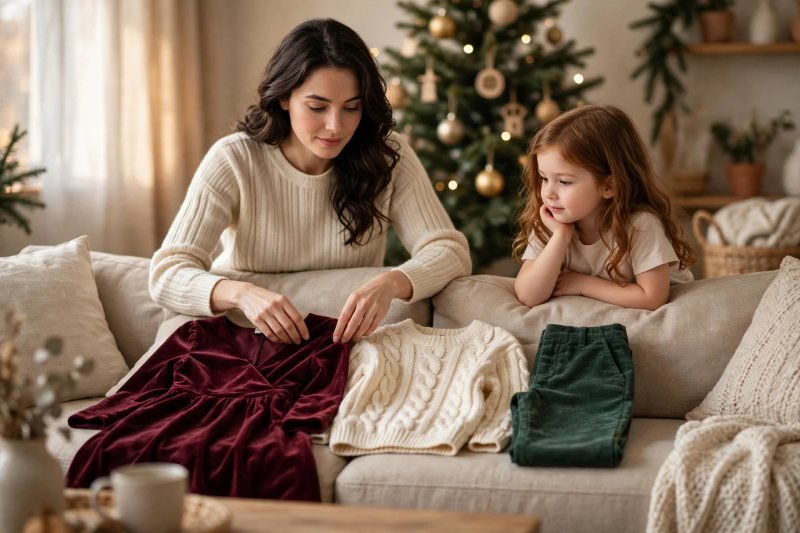
Choose a three-color palette before touching a single hanger. Coordinated beats matched: identical outfits read as costumes, while a shared palette reads as a family. Pick three colors that love winter light — for example burgundy, cream, and forest green; or navy, camel, and cranberry; or charcoal, blush, and ivory — and let every person's outfit be built from those three. Say, "Our colors are burgundy, cream, and green — everything we pick lives in those." Deep, rich tones photograph beautifully against snow, trees, and indoor greenery, while very pale pastels can wash out in bright winter glare and neon shades hijack every photo's color balance. Palette first turns shopping — and closet-raiding — from chaos into a checklist.
-
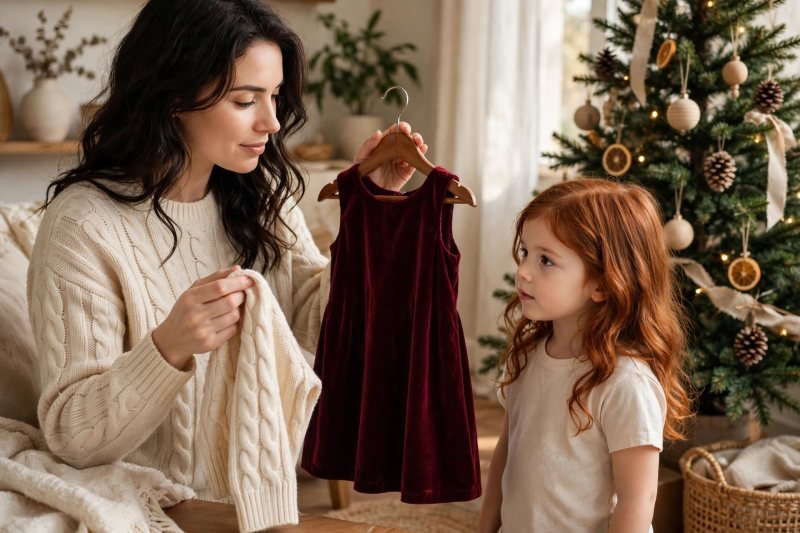
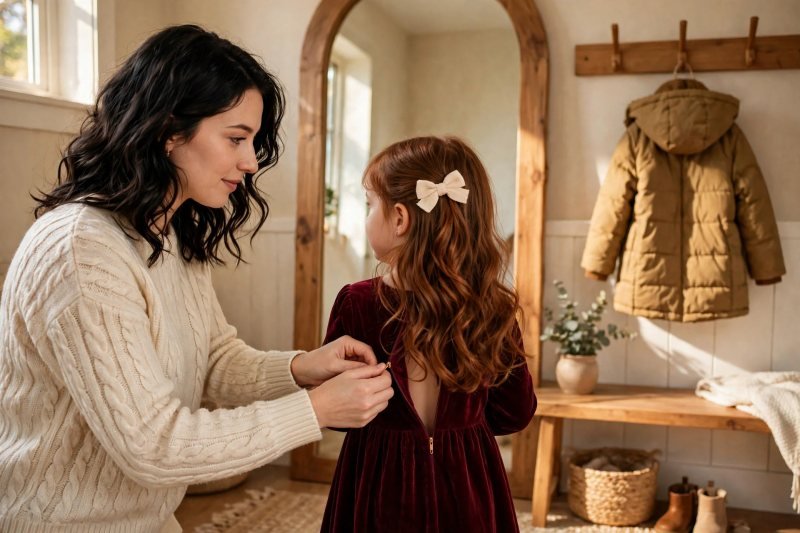
Dress the hardest person first — usually Mom — then build the kids around her. The family-photo law nobody tells you: the adult who is hardest to dress (and most likely to hate the photos) should be styled first, in the outfit she feels genuinely good in, drawn from the palette. Everyone else's outfit is then a supporting color, which is easy. Say, "Mom's cream sweater is the anchor; the kids echo it." For our worked example, Mom anchors in a soft cream knit, and her 5-year-old wears the burgundy velvet that becomes the photo's jewel tone. Working this order prevents the classic failure: adorable kids, and a mother who cropped herself out of her own holiday card.
-
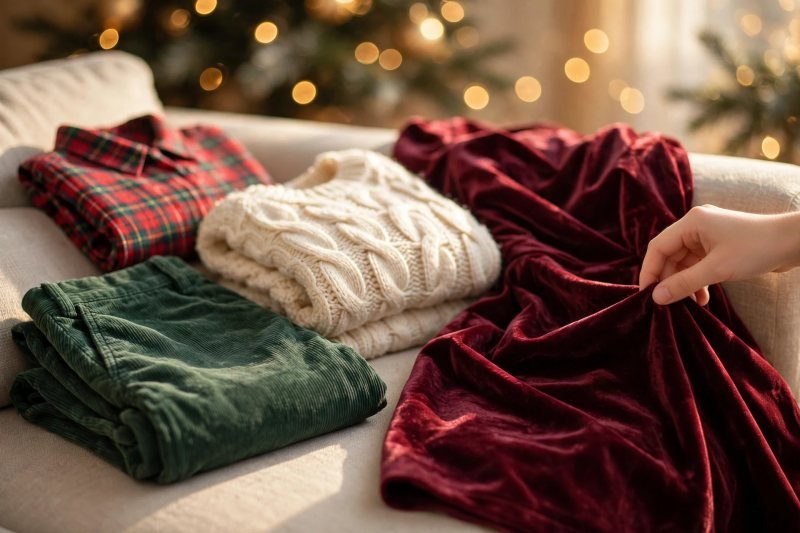
Build each outfit from texture, not from matching items. Cameras love texture because it gives light something to do: velvet drinks the light, cable knit throws soft shadow, corduroy adds fine lines, and a small plaid contributes pattern without shouting. Put one hero texture per outfit — the velvet dress, the knit sweater — and keep the rest simple: plain tights, plain pants, a plain layer underneath. Say, "One special texture each; the rest stays quiet." Layers do double duty in winter: a cardigan over a dress or a vest over a plaid shirt adds the texture story AND warmth, and a layer can come off indoors, giving you two looks for one shoot.
-
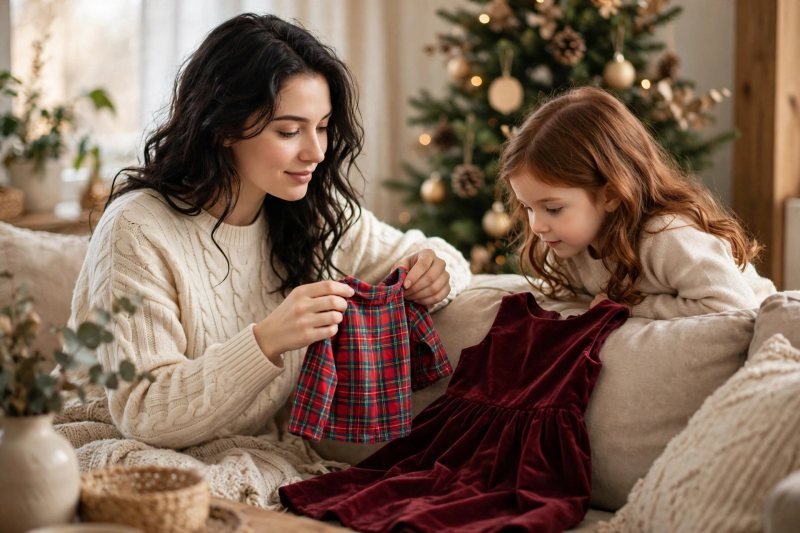
Keep patterns small, and banish logos, characters, and words. A small plaid, a fine stripe, or a tiny dot behaves beautifully on camera. What doesn't: big graphics, cartoon characters, brand logos, and any words at all — they date the photo instantly, pull the eye off faces, and can shimmer oddly in digital photos. Say, "If it has words on it, it stays home." Check both siblings and adults for this one — the comedy holiday sweater with the slogan is beloved and must be bravely left behind. If a younger sibling is in the frame, the same palette-and-texture logic from these toddler winter outfits keeps the little one coordinated without a matching costume.
-
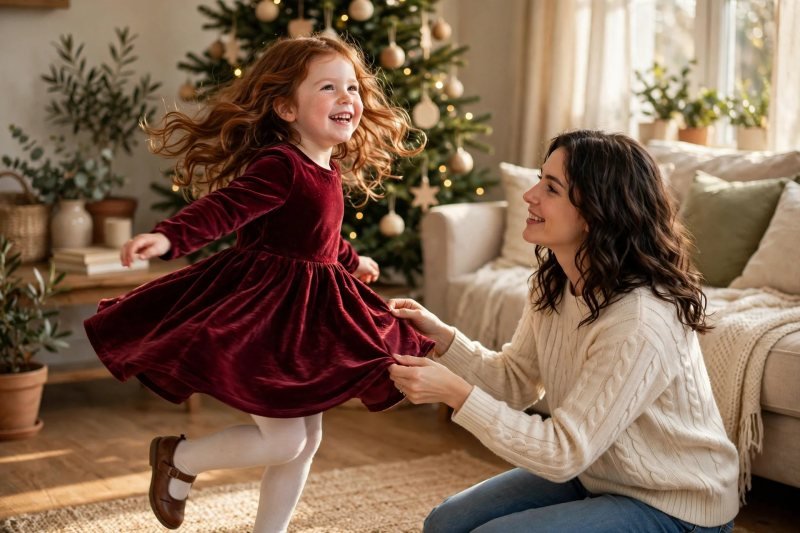
Do a full try-on days ahead — comfort is a photo feature. Have each child wear the complete outfit, shoes included, for ten minutes of real life: sitting, twirling, reaching, being hugged. Watch for the comfort killers: scratchy seams and tags, stiff collars, waistbands that dig, tights that slide, dresses that can't be sat in. Say, "Wear it like a normal day — if anything bugs you, tell me now, not at the photos." Fix or swap offenders at home where the closet is; a child who has already approved her outfit at home walks into the shoot with the argument pre-won, and you spend photo day photographing instead of negotiating.
-
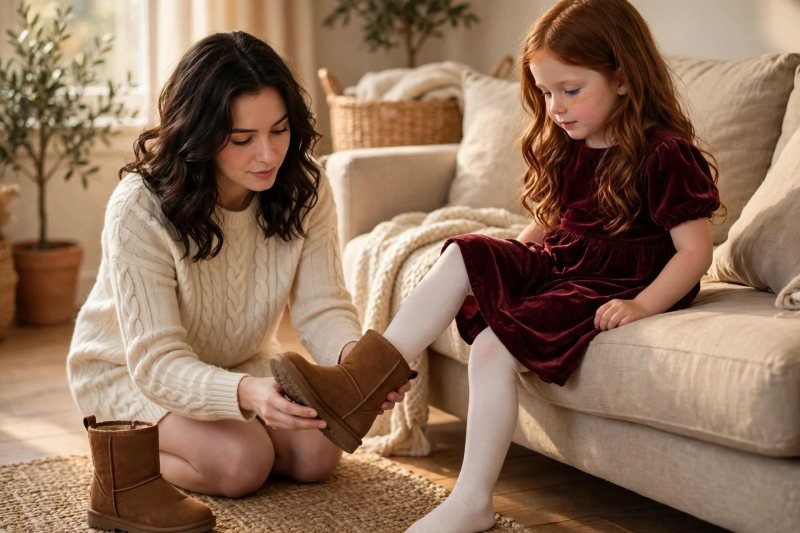
Finish every look at the feet — shoes are in more photos than you think. Full-length holiday shots include feet, so shoes get the same palette discipline: plain boots, simple ballet flats, or clean loafers in a palette color or a quiet neutral. Scuffed everyday sneakers undo a velvet dress faster than any other single item. Say, "Shoes are part of the outfit, not an afterthought." Clean and lay them out the night before, check that boot zips and buckles work with tights, and for outdoor shoots, bring the photo shoes to change into on site so the walk through slush happens in the everyday boots (step 9's tote earns its keep again).
-
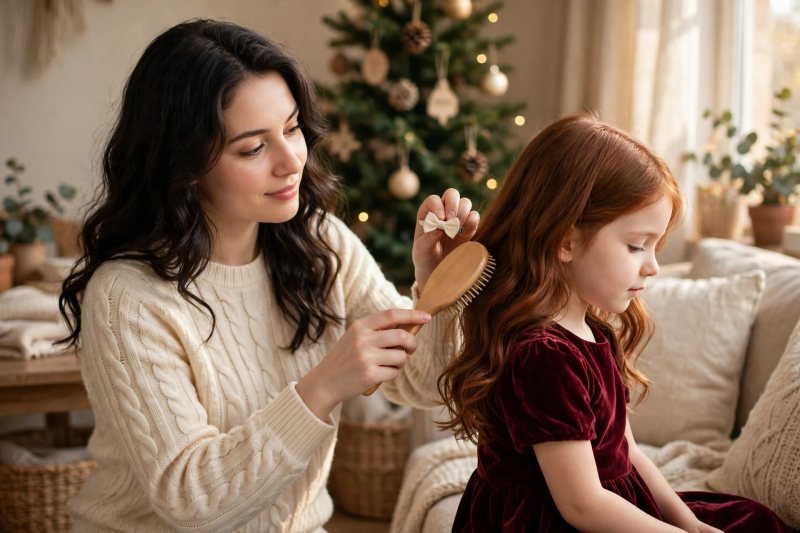
Keep hair simple, soft, and fixable in thirty seconds. The hairstyles that photograph best at 4 and 5 are the ones closest to how she actually looks: brushed smooth, maybe a soft wave, one simple bow or clip in a palette color to keep the front tidy. Elaborate updos collapse, itch, and get pulled at; loose hair plus one clip survives hugging, coat changes, and an hour of being five. Say, "Your hair, but tidier — one clip, done." Pack the brush and the spare clip in the tote; a thirty-second brush-out between locations makes the second half of the shoot look like a fresh start.
-
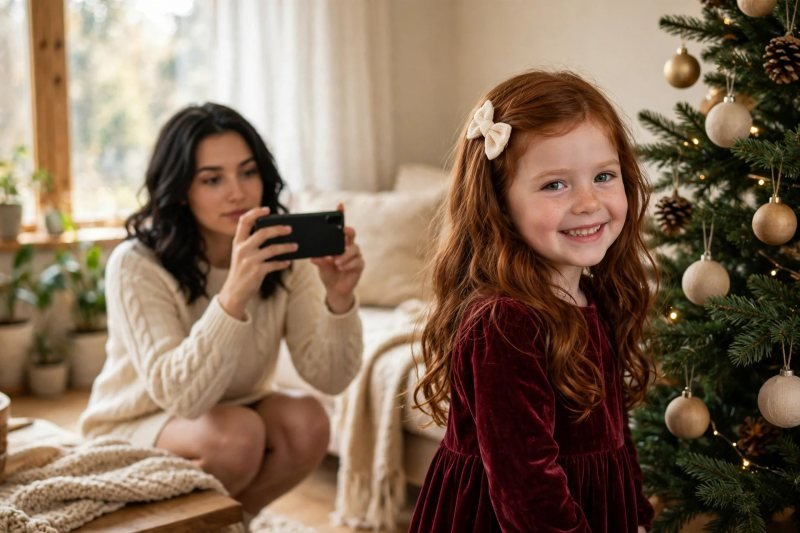
Take a home test photo in daylight before you commit. Stand your child in her full outfit near a bright window or by your own tree, and take phone photos from a few steps back — the distance real photos happen at. Then actually look: does the palette sing or fight? Does the dress read burgundy or black in low light? Are tights the wrong white? Any logos you missed? Check the palette against her hair and skin in the same photo: a color that flatters one child can wash another out, so the test photo has to feature the child who will wear the outfit, not just the clothes on a hanger .See how palettes read at full length in these big-kid winter outfits. Say, "The phone tells the truth before the photographer does." This five-minute rehearsal is the highest-value step in the guide; every fix it inspires costs nothing at home and would have cost the whole shoot on the day.
-
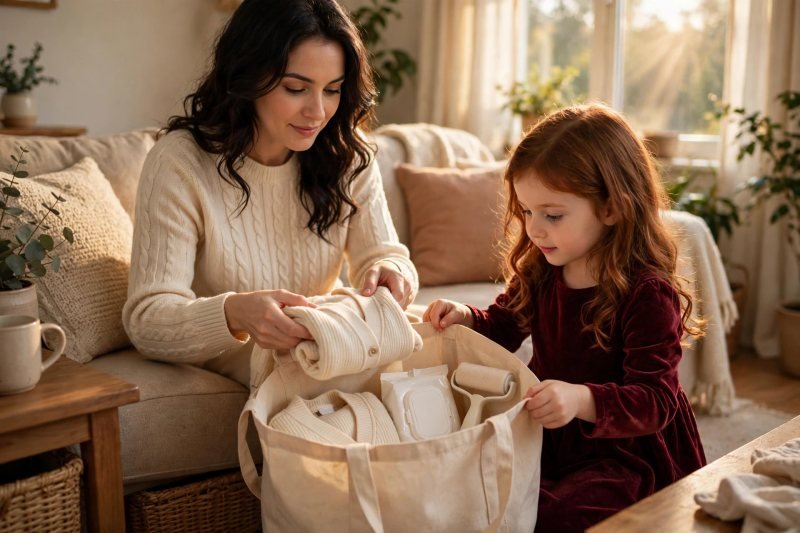
Pack the rescue tote: backup outfit, wipes, lint roller, snack. Photo days with small kids run on contingency. Pack a complete backup outfit in the palette (spills happen precisely to velvet), baby wipes for faces and hands, a lint roller for the knitwear-pet-hair reality, hairbrush and spare clip, and a non-messy, non-staining snack plus water. For outdoor photos, add the warm system: her real coat goes OVER the photo outfit between shots and in transit — the practical layer logic from these preschool winter outfits — so she arrives warm and peels to photo-ready in thirty seconds. Say, "The tote is our insurance policy; we will probably not need it, which is why we bring it."
-
On photo day, dress her last, feed her first, and shoot while she's fresh. Run the morning backwards from the camera: snack or meal first (a fed child smiles with her whole face), hair early, and the photo outfit goes on at the last possible moment — at home right before leaving, or on site for the mess-prone. Keep your own energy boring-calm; kids read adults like weather. Book the shoot around naps and meals, not around the light alone — a rested child in ordinary light photographs better than a tired one in golden light — and tell the photographer in advance which poses or props are off limits for your child. Say, "Outfit on last, smiles on first." Start with the full-family and whole-group shots while everyone's freshness is at its peak, let the photographer's fun prompts do their work, and save the silly, jumping, twirling frames for the end, when formality no longer matters. Then change her back into play clothes and let the velvet retire undefeated.


Make it easier
Reduce the palette to two colors and one hero piece per child — coordination reads even in the simplest version. Choose the dress or outfit she already loves and build the family palette around it, instead of shopping for a vision. Shoot at home by your own tree: no travel, no weather, the tote is the whole house, and the test photo IS the location scout. Browse toddler-girl winter outfits for more palette-and-texture combinations before you settle the three colors.
Make it harder
Coordinate three generations: extend the palette across grandparents with texture assignments (his plaid, her knit) for a true heirloom frame. Plan two looks with one layer swap — cardigan on/off, bow change — for card-front and card-back photos in a single session. Style an outdoor golden-hour shoot: palette tuned to low warm light, blankets in palette colors as props, warm layer choreography rehearsed.
Other ways to play it
- Siblings without matching: give each child a different palette color and a different texture — her burgundy velvet, his forest corduroy — same family, zero costume effect.
- Budget refresh: keep every outfit from the closet and spend only on the one hero texture per child (a velvet dress found secondhand photographs exactly like a new one).
- Studio mini-session: simpler wins in a small set — drop one palette color, lean harder on texture, and bring the backup outfit because there is no rescheduling a mini. The same palette-and-texture logic scales down for school in our picture day outfits for girls.
How it changes by age
- Age 4: At four, comfort outranks everything: choose the softest version of every piece, rehearse the outfit twice (familiar clothes are calm clothes), and expect the shoot to be short — plan the must-have shots first. A bow she chose herself does more for cooperation than any styling.
- Age 5: Fives can hold a pose, follow a photographer's game, and care about looking "fancy" — give her one real choice inside the palette (which bow, boots or flats) and let her review the home test photo with you. Her buy-in at five converts directly into smiles at the shoot.
What they're learning
Color sense: living inside a chosen palette for a day teaches harmony and contrast more vividly than any worksheet. Self-presentation: choosing, approving, and wearing a "special" outfit with care is early confidence and occasion-awareness. Patience and poise: holding a smile, waiting for a turn, following a photographer's directions — social stamina in a pretty dress. Family ritual: the annual photo, prepared together, becomes a tradition she helps build — memory-making as a participation sport.
Clearing up
After the shoot, the hero pieces get hung up the same evening — velvet shaken out and hung away from crushing coats, knits folded rather than hung to keep their shape, tights to the wash before the runs spread. Wipe the photo shoes before they return to the box so next year's scuffs don't pre-load. Check the tote back in as the standing "photo kit" (wipes and lint roller replaced, snack eaten and restocked next season) and — the important part — actually order the prints or cards while the shoot is fresh, instead of letting the best photo live and die in a camera roll.
Questions parents ask
What colors photograph best for kids' winter photos?
Should siblings wear matching outfits for holiday photos?
How do I keep my child warm during outdoor winter photos?
What should kids avoid wearing in family photos?
When is the best time of day for winter family photos?
How many outfits should I plan for a kids' photo session?

save it for later
Pin this for the next rainy afternoon
Keep it on a board so it is there when you need it, rather than when you happened to find it.
Save to Pinterest

