


Big Kid Winter Outfits: Cold-Weather Style for Ages 6-8
Big kid winter outfits for ages 6–8 that balance style and warmth: a base layer, a cozy middle and the right coat — with a routine big kids run themselves.
Big kid winter outfits for ages 6–8 layer up like this: a wicking base (merino or synthetic top and leggings), a cozy middle (fleece, sweater or flannel), bottoms matched to the day, and a parka or snow gear — plus a hat, gaiter, gloves and the right boots. Plan looks ahead in cubbies so style survives school mornings.

The short version
- The formula never changes: wicking base, cozy middle, shell — style lives in the middle and accessories.
- Plan the week's outfits in cubbies on Sunday; school mornings become dressing, not deciding.
- Never use cotton as the base layer; it stays cold and damp. Merino or synthetic only.
- Boots answer to the ground — everyday insulated boots for dry cold, tall waterproof boots for snow and slush.
- Never buckle a seat belt over a puffy coat — buckle snug first, then lay the coat over like a blanket.
- Age
- Ages 6–8
- Mess
- None
- Difficulty
- Easy
- Where
- Both
Why kids love this
Six- to eight-year-olds care about how they look — and big kid winter outfits treat that as a feature, not a problem. The cubby system hands her the stylist job for the week: she builds the looks, picks the hat-and-glove combos and runs the movement check like a pro. Because the warmth rules are built into the system underneath, her choices cannot accidentally produce a freezing outfit — the base layer, ear coverage and boot rules hold no matter which sweater wins. Kids who dress themselves from a plan also stop the morning renegotiation, because Sunday's decisions are already made and hanging in a row.
What you'll need
- Base layers: merino or synthetic long-sleeve tops and leggings (no cotton)
- Middle layers: chunky cardigans, fleece pullovers, flannel shirts, sweater dresses
- Bottoms: fleece-lined jeans, soft pants, corduroys, leggings, snow pants
- An everyday warm parka plus a longer waterproof coat or snow gear
- Hats that cover the ears; a neck gaiter or short scarf
- Gloves for school days; waterproof mittens for snow play
- Insulated everyday boots and tall waterproof snow boots
- Spare socks for the school bag
Before you start
1. Set up one cubby (or basket) per weekday and build the week's outfits together on Sunday. 2. Check the week's forecast — snow days and mild days get different coats and boots in the plan. 3. Keep a drying tray under the cubbies so wet hats, gloves and socks reset overnight.
How to do it
-
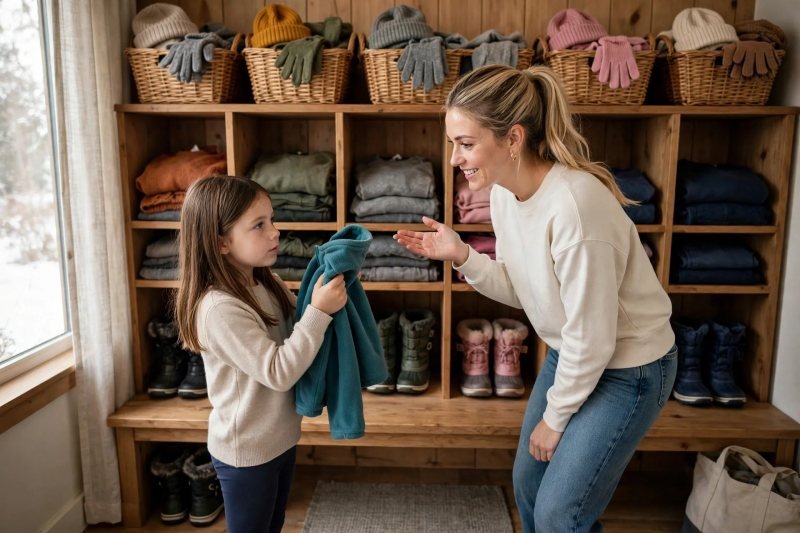
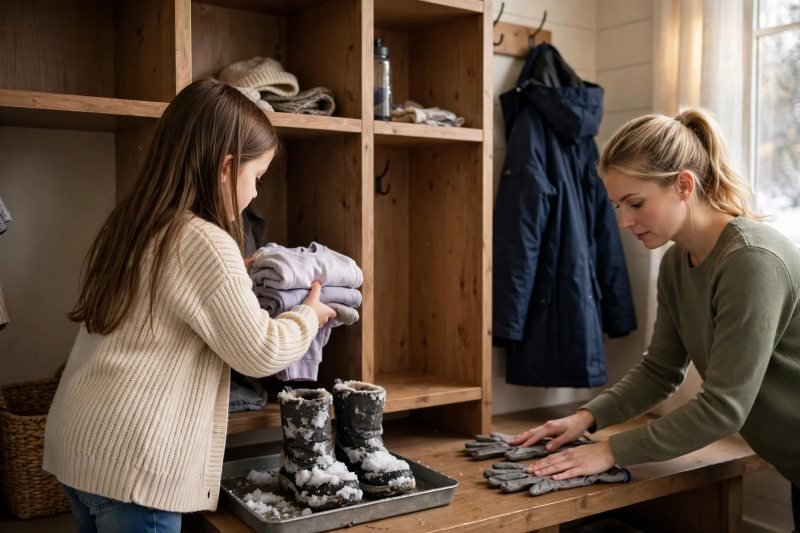
Plan the week's looks at the cubbies. Big kid winter outfits start the night before, at the mudroom cubbies: one cubby per day, each holding a full outfit in dressing order — base layer; middle; bottoms; coat — with boots underneath and hat and gloves in the basket. Say, "You're the stylist this week — build five school-day looks and one snow-day look," and let her arrange them. Planning ahead is how style survives a school morning: the choices get made calmly on Sunday, not argued at 7 a.m. Families building the same habit earlier will recognize the runway idea from toddler winter outfits for ages 2–3 — this is that routine, grown up and handed over.
-
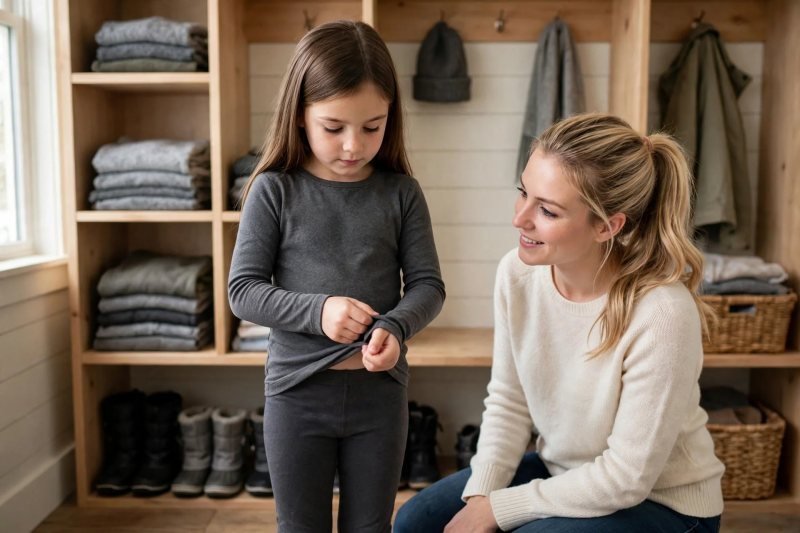
Start with the base layer — the invisible foundation. Every look in this guide sits on the same foundation: a snug merino or synthetic long-sleeve top with leggings or long underwear, never cotton, which stays cold and damp against the skin. Say, "Base first — smooth, snug, no bunching," and let her smooth the wrists and waist herself and tuck the top in. It is the layer nobody sees and the one that decides whether the outfit actually works at recess. If the base itches or rides up, swap it now; a base layer that bothers her at the cubbies will bother her through math, lunch and the whole walk home.
-
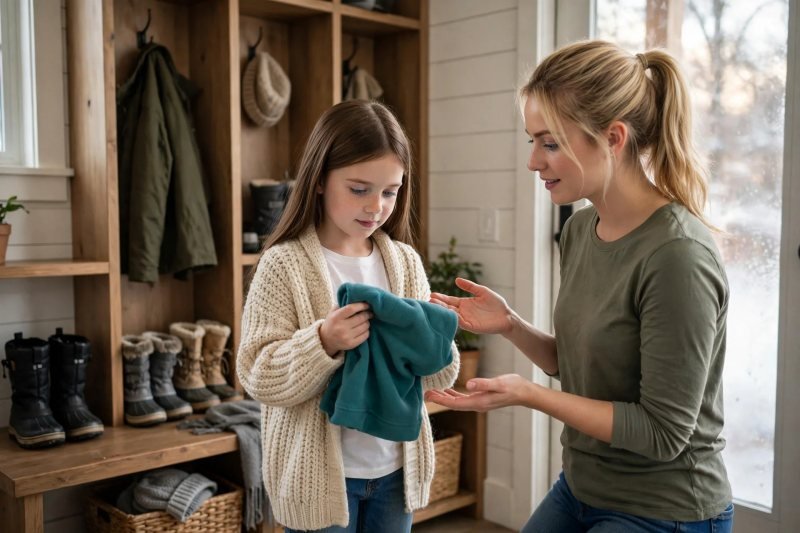
Build the cozy middle — where the style lives. This layer traps warmth and carries the look: a chunky cardigan over a tee with jeans; a fleece pullover with leggings and a skirt; a flannel shirt over a thermal top with corduroys; a sweater dress with fleece tights. Say, "Pick today's middle — cozy is the dress code," and let her choose between the two cubby options you approved on Sunday. The test never changes: arms overhead without the hem pulling the base out of its tuck, and a squat without anything binding. A middle layer she chose herself is a middle layer that stays on at recess instead of being stuffed into a backpack.
-
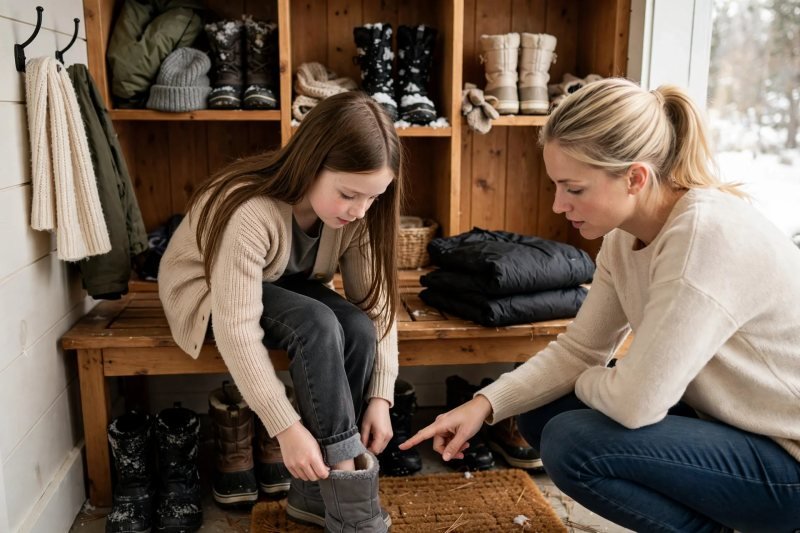
Pair the bottoms with the plan. Bottoms follow the day's schedule, not just the weather: fleece-lined jeans or soft pants for regular school days; leggings under a skirt or sweater dress when she wants the dress look; snow pants over the base layer for sledding afternoons and snowy recesses. Say, "What's the day asking for — classroom, snow, or both?" and let her match the bottom to the answer. One pair of snow pants living at school during snowy weeks saves the whole routine on surprise-snow mornings. Check length at the boot: bottoms should meet the boot top with no bare ankle gap when she sits down.
-
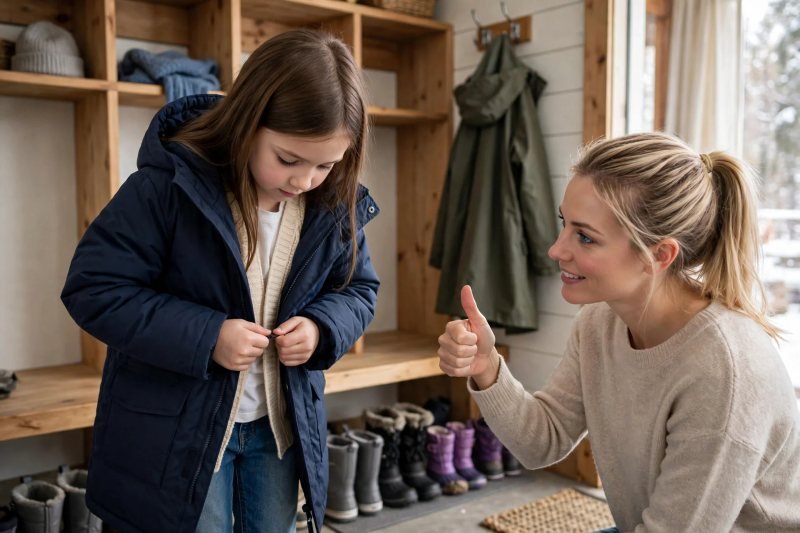
Choose the coat the day actually needs. Two coats cover almost everything: a warm everyday parka for school and errands, and a longer waterproof coat or full snow gear for storms and snow play. Say, "Parka day or snow-gear day?" and have her check the hook by the door where yesterday's verdict is written in the plan. The coat must close over the day's middle layer without compressing it flat — squashed insulation is cold insulation. The same choose-the-shell logic appears in preschool winter outfits for younger kids; by 6 to 8 she can run the check herself: zip it, bend, reach, sit.
-
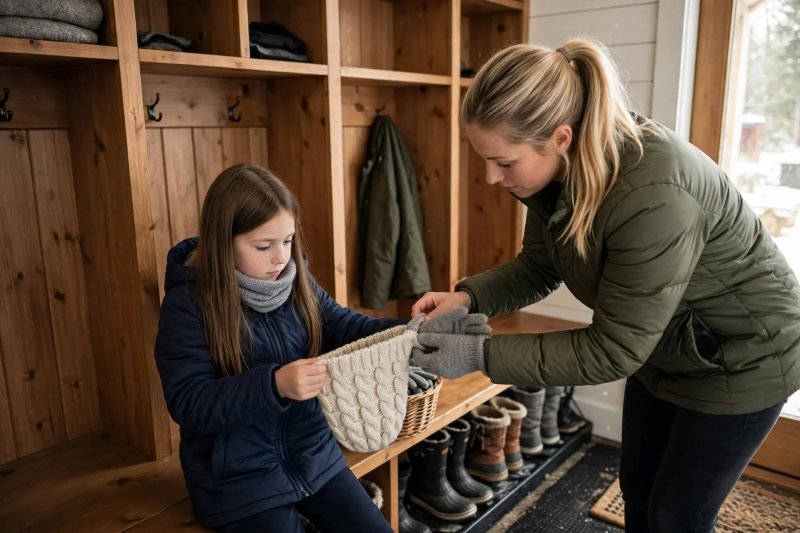
Finish the look — hat, gloves and neck. Accessories are where big kids put their personal stamp, and where warmth is won or lost: a hat that fully covers the ears; a neck gaiter or short scarf tucked inside the coat; gloves for school days, waterproof mittens for snow. Say, "Ears covered, neck sealed, cuffs tucked — then make it yours," and let her pick the hat and glove combo from the basket. Style freedom lives safely here — colors and patterns can be as bold as she likes, because the warmth rules are already handled by coverage and fit. Skip long scarves for climbing frames and slides, and choose coats without hood or waist drawstrings, a strangulation risk on playground equipment.
-
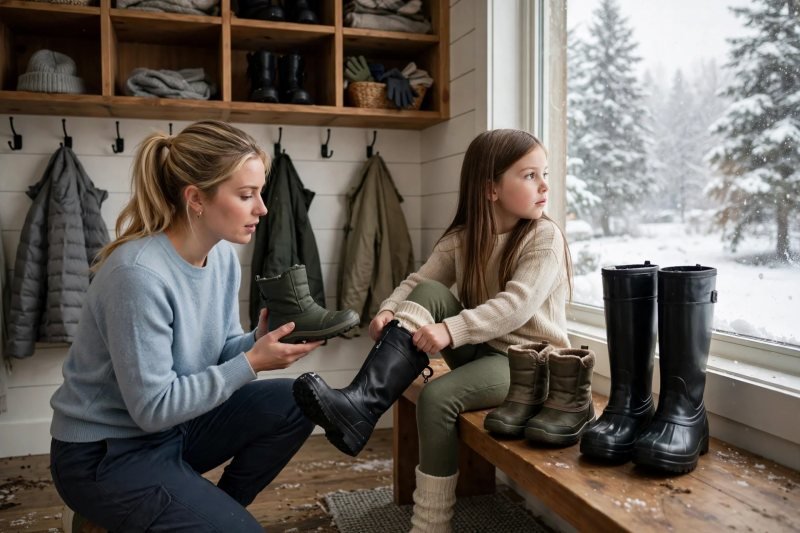
Pick boots for the ground, not the outfit. Boots answer to the ground: insulated everyday boots for cold dry days; tall waterproof snow boots for slush, snow and puddle season; a spare pair of socks in the school bag either way. Say, "Dry ground or snow ground?" and let her check the window and choose. Boots should leave a thumb's width of growing room with wiggle space for toes in thick socks, and every strap and zipper should close without a wrestling match — she has to manage them alone at school. Keep the rejected pair on the tray by the door so the morning choice stays a choice between two, never a search through the whole house.
-
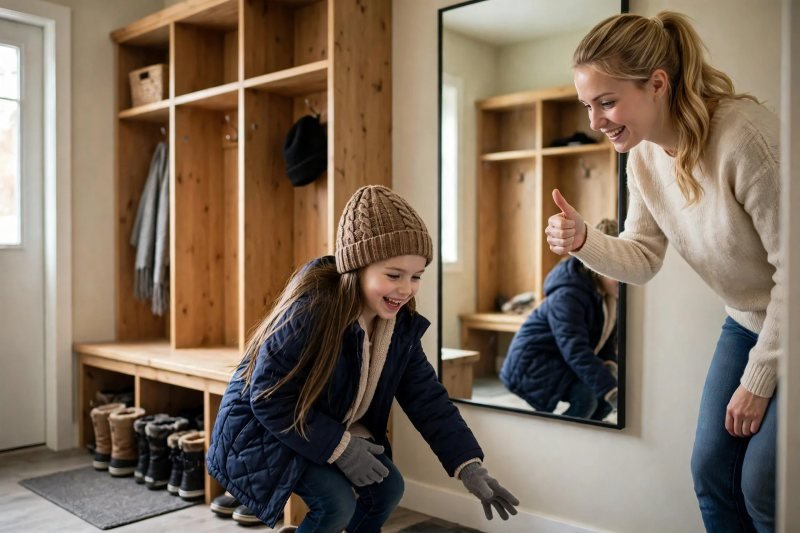
Run the movement-and-mirror check. Style that cannot survive recess is not a school outfit, so test the full look before the door opens: squat and touch the floor; reach both arms to the sky; twist side to side; march ten steps; then a final mirror pass. Say, "If you can move in it, you can own it — anything that pinches gets swapped now." This is also where she learns the car rule by heart: the puffy coat comes off before buckling, because seat belts cannot tighten snugly over bulky layers — buckle first, then the coat goes over her lap like a blanket. Two minutes of checking prevents the mid-day text from school about the outfit that is driving her crazy.
-
Come home and reset the cubbies. End the day by restoring the system: boots on the tray; coat on its hook; damp hat, gloves and socks spread to dry; tomorrow's cubby checked and refilled if the plan changed. Say, "Reset your cubby — tomorrow-you says thanks," and let her run it while you spot-check. Anything soaked goes to the drying spot and its spare takes its place, so a wet Tuesday never sabotages Wednesday. Once a week, do a five-minute fit check together — wrists and ankles are where 6- to 8-year-olds outgrow layers first, usually mid-season, usually all at once.


Make it easier
Photograph each finished cubby outfit on your phone — rebuilding the week's plan takes minutes. Keep only two choices per slot (two middles, two hats) so decisions stay quick and calm. Leave snow pants and a spare hat at school during snowy weeks.
Make it harder
Hand her the forecast: she reads the week and drafts the cubby plan for your approval. Add a one-new-combination challenge each week — one look she has never worn before. Let her run the Sunday fit check: wrists, ankles and boot room, reported to you. On snow days that stay indoors, swap sledding for indoor snow and ice play and run the same base-middle-shell check before the trip out.
Other ways to play it
- Snow-day look: base layer, fleece middle, snow pants and the long waterproof coat, waterproof mittens and the warmest hat — built for all-day snow.
- Mild winter day (around 40°F): base layer, flannel or light fleece and the parka unzipped is plenty; snow gear stays home.
- Dressier day: sweater dress with fleece tights and a cardigan, her best boots and the neat hat — same warmth rules, polished pieces. For holiday versions of the same polished formula, Christmas outfits for girls show how the warmth rules dress up without losing the movement check.
- Sports and sledding afternoon: merino base, insulated joggers, fleece plus shell, and a balaclava-style gaiter for wind.
How it changes by age
- Age 6: sixes can dress from a filled cubby and run the movement check with you, but still need help judging weather and coat choice. Keep the two-choice rule strict — open-ended closets overwhelm at 6 — and narrate the warmth rules out loud until they become her own checklist.
- Age 7: sevens can build the week's cubbies with spot checks and handle their own drying reset. Expect strong style opinions; channel them into the middle layers and accessories where choice is safe, and keep base, coverage and boots as the standing rules. More ideas for 7-year-olds in the age hub cover the next independence steps in the same routine-first spirit.
- Age 8: eights can own the system end to end — forecast, plan, dress, reset, weekly fit check. Your role shrinks to restocking outgrown pieces. An 8-year-old's growth spurt usually shows first in base-layer sleeves and boot room, so the fit check matters more, not less, as independence grows.
What they're learning
Planning: building a week of outfits ahead is real executive function — sequencing, forecasting, deciding. Independence: a full dressing, checking and reset system she runs herself. Systems thinking: base, middle and shell each have a job; the outfit works because the system works. Body awareness: reading her own signals — too warm, too cold, just right — and adjusting one thing. Vocabulary: forecast, waterproof, insulate, wick and wind chill, used in real decisions. Safety judgment: why belts sit snug without a puffy coat, and why drawstrings stay off playground gear.
Clearing up
The big mix-up at this age is style versus warmth, as if an outfit must pick one. In a layered system they live in different layers: warmth is engineered in the base, coverage and shell, while style is free to roam across the middles, colors and accessories. The second mix-up is the single statement coat bought for looks, worn over a cotton tee. It fails for the same reason it always does — the foundation is wrong. Get the base layer and coverage right, and almost any look she loves can be made genuinely warm on top of it.
Questions parents ask
What should a 7-year-old wear to school in winter?
How do I balance style and warmth for big kids in winter?
Should big kids wear gloves or mittens in winter?
Why should kids avoid cotton in winter outfits?
How many winter outfits does a 6- to 8-year-old need?
How do I know if my child's winter outfit is warm enough?

save it for later
Pin this for the next rainy afternoon
Keep it on a board so it is there when you need it, rather than when you happened to find it.
Save to Pinterest


