


Hand Washing and Dry Hands in Kids: How to Fix Them
Frequent washing often leaves the dry hands kids complain about feeling tight, rough, and sore. Here is a gentle wash-then-cream routine for ages 4-5 that cleans well without drying skin out — lukewarm water, a tiny drop of soap, and cream right after, every time.
To fix dry hands from washing, change how you wash: lukewarm water only, a pea-sized drop of gentle fragrance-free soap, a full twenty-second scrub, a thorough rinse, and a gentle pat dry. Then apply a pea-sized amount of fragrance-free cream within a few minutes, while skin is still slightly damp — and repeat that wash-then-cream pairing after every wash, including before bed.

The short version
- Lukewarm water only — hot water strips the skin's own oils and is a common cause of dry, sore hands.
- A pea-sized drop of gentle, fragrance-free soap is enough; more soap does not mean cleaner hands.
- Scrub for a full twenty seconds — palms, backs, between fingers, thumbs, fingertips, nails — then rinse every bubble away.
- Pat hands completely dry, including between the fingers; dampness and rubbing both invite dryness.
- Cream within a few minutes of washing, while skin is slightly damp, after every wash, including before bed.
- See a pediatrician for skin that cracks, bleeds, oozes, or develops a spreading rash — never diagnose at home.
- Age
- Ages 4–5
- Prep
- 5 min
- Mess
- Low
- Difficulty
- Easy
- Where
- Indoor
Why kids love this
Kids love a job they can run themselves: their own stool, their own towel, a song to scrub to, and a dab of cream as a finishing touch. When washing stops stinging and hands feel soft again, the job feels good instead of sore — and most four- and five-year-olds will remind you about the cream before you do.
What you'll need
- A sturdy step stool so your child can reach the sink comfortably
- A gentle, fragrance-free liquid soap in a plain pump bottle
- A plain, fragrance-free cream in a tub — thicker than a lotion
- One soft hand towel, just for your child's hands
- A lukewarm tap — never hot water
- A favorite short song your child can hum twice for the scrub
- Soft mittens for cold, windy days outdoors
Before you start
1. Set the stool, pump soap, cream tub, and towel within easy reach at the sink, in routine order — wash first, cream last. 2. Show your child the right amounts: a pea-sized drop of soap and a pea-sized scoop of cream are plenty. 3. Patch-test any new cream: a dab on the inner forearm, 24 hours before first full use. 4. Agree that wash and cream are one single job — the cream always follows the wash.
How to do it
-
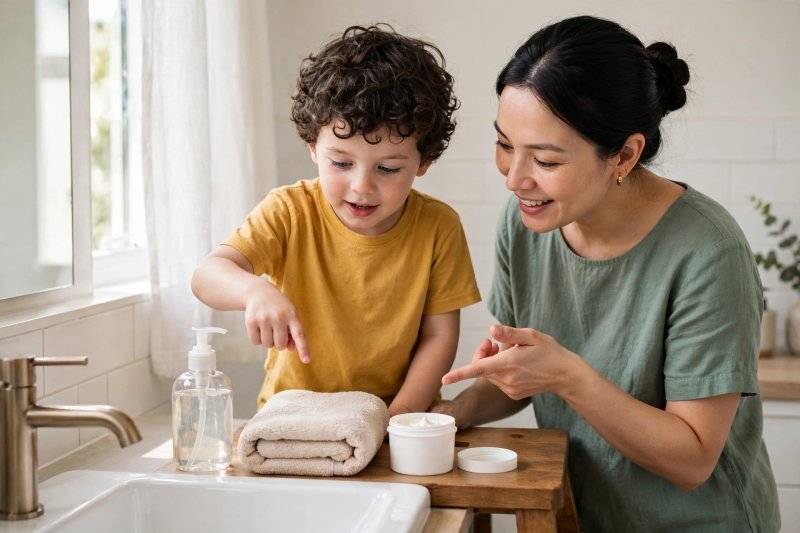
Set up the hand-washing station. Place the sturdy step stool in front of the white sink and set the plain pump soap bottle, the plain tub of white cream, and a soft folded towel on the counter within easy reach — soap first; then towel; then cream. Say: "Everything lives here, in order, so your hands get washed and creamed the same way every time." Let your child climb up and point to each item as you name its job. A ready station stops skipped steps — and before water touches skin, the temperature needs checking.
-
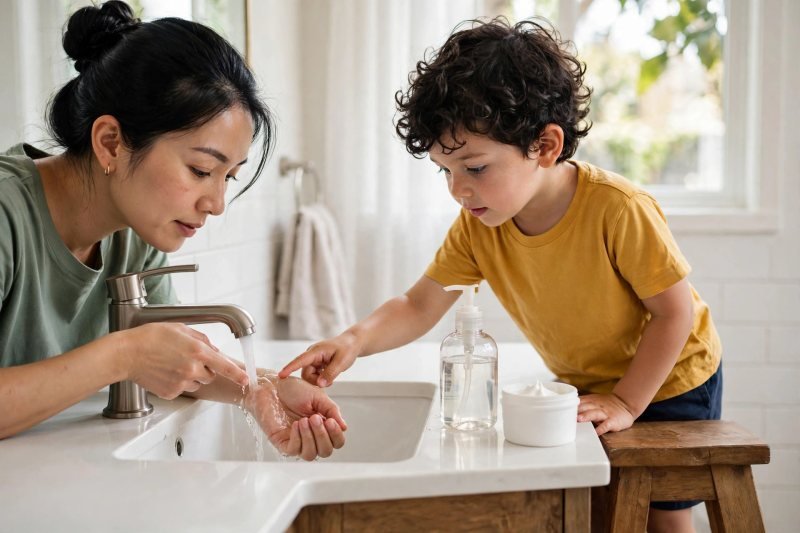
Check the water on your wrist. Run the tap and hold your wrist under the stream until the water feels lukewarm — comfortably warm, never hot. Say: "Grown-ups test first — hot water feels fine to us and still dries little hands." Let your child hold a fingertip under the water to feel what lukewarm means, and explain that hot water washes away the skin's own soft oils — one common reason hands end up dry and sore. Cool it down and test again if it ever feels hot; only when the temperature is right is it time for soap.
-
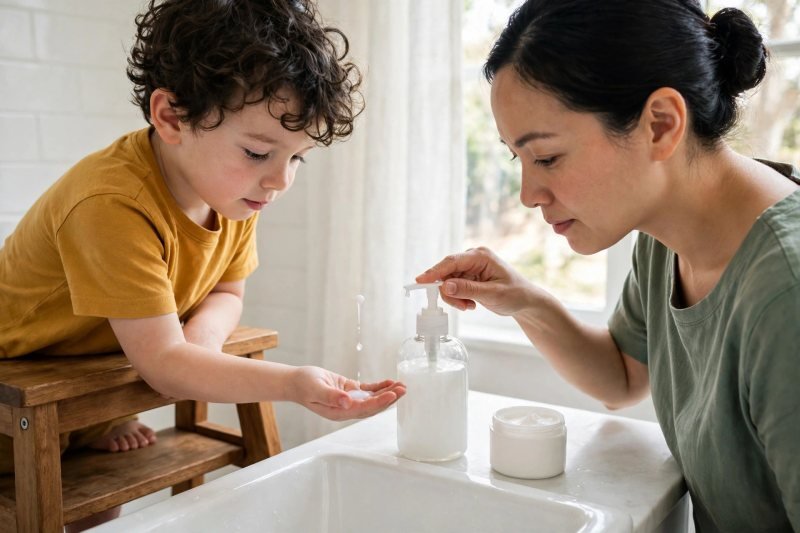
Use a pea-sized drop of gentle soap. Press the pump just once so a single pea-sized drop of gentle, fragrance-free soap lands in your child's palm. Say: "One little pea is enough — more soap does not mean cleaner hands, it just means more drying and more rinsing." Talk through what makes it kind: gentle; fragrance-free; made for everyday washing. If a second pump sneaks out, rinse the extra away and carry on — the real cleaning happens in the scrubbing, which is the very next step.
-
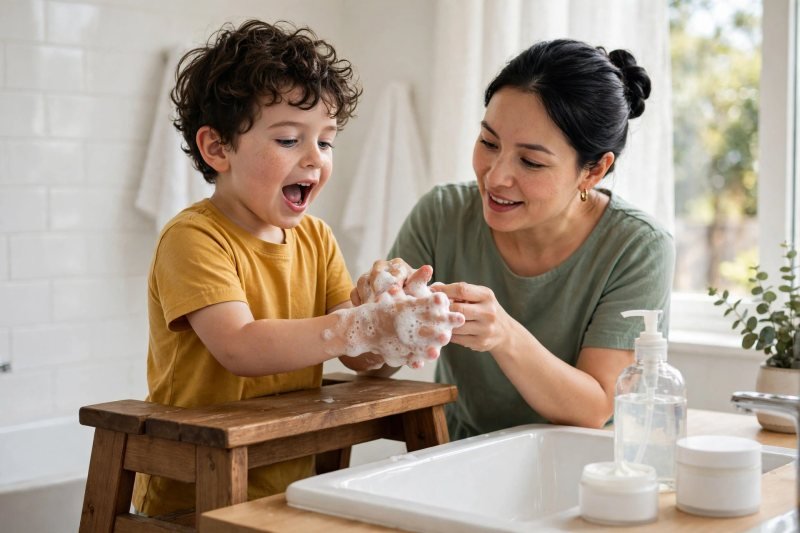
Scrub the full twenty seconds. Hum a favorite short song together, twice through, while your child rubs the soap over every surface — palms together; backs of the hands; between each finger; around both thumbs; fingertips and nails scrubbed against the opposite palm. Say: "The song is our timer — we keep scrubbing until the song ends twice, and no corner gets skipped." Guide their hands with yours if a thumb gets missed — the friction is what lifts the dirt away. When the song ends, those soapy hands are ready to lose every bubble under the tap.
-
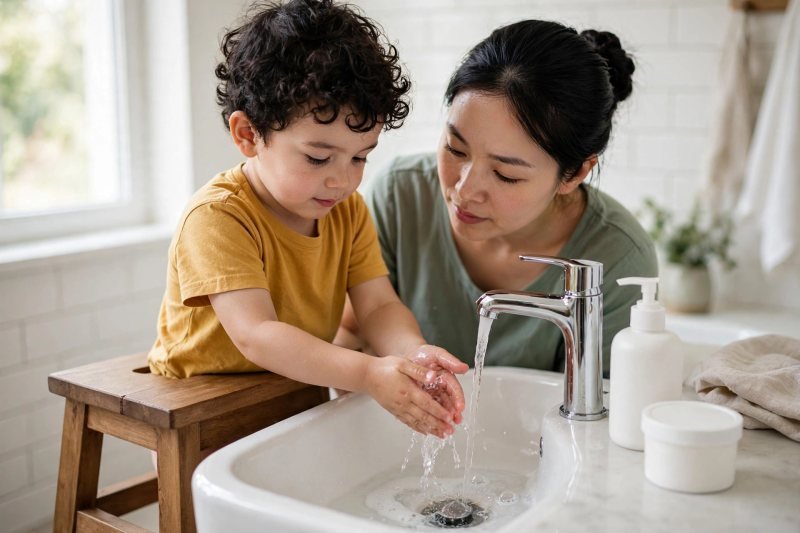
Rinse every bubble away. Hold both hands under the lukewarm water, palms down then palms up, turning them until every bubble and slippery trace of soap is gone — including between the fingers and around the wrists, where foam hides. Say: "We rinse until your hands feel clean, not soapy — leftover soap keeps drying your skin even after you walk away." Let your child inspect their hands like a detective, hunting for stray bubbles in the finger webs. Fully rinsed skin is ready for gentle drying, which comes next.
-
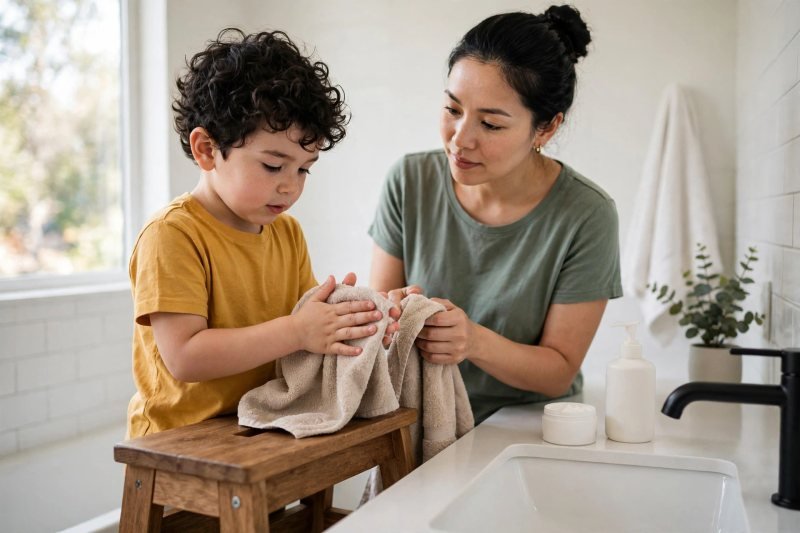
Pat hands completely dry. Hand over the soft towel and show the move: press over the backs, lift, press the palms, lift, then dab between each finger until no dampness remains. Say: "We pat, never rub — rubbing drags on sore skin, and wet webs between fingers are where dryness loves to start." Let your child do the whole job, checking each web with a fingertip to prove it is dry. Thoroughly dried hands chap less — and the window to seal in comfort with cream is short, so move straight to the tub.
-
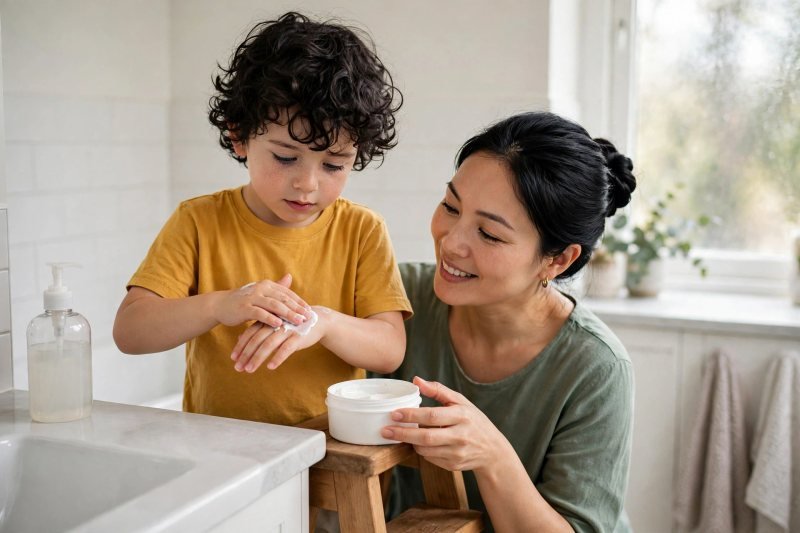
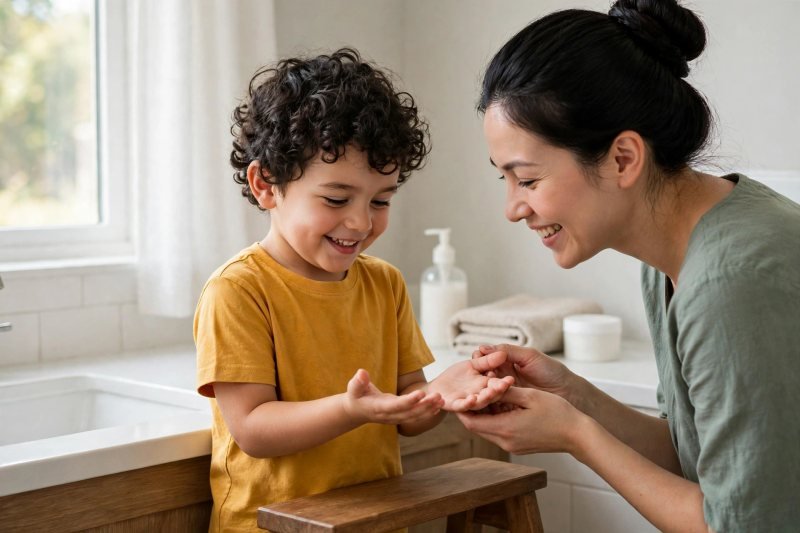
Cream within a few minutes. Open the plain tub and scoop out a pea-sized amount of white cream for your child to rub over the backs first, then the palms, then between each finger. Say: "Cream is the blanket that keeps the good water in — it works best now, while your skin is still a tiny bit damp." Let them spread until hands feel soft rather than sticky, adding one tiny extra dab only on a rough patch. Done after every wash, this step leaves hands comfortable — and sets up the habit that makes the routine work.
-
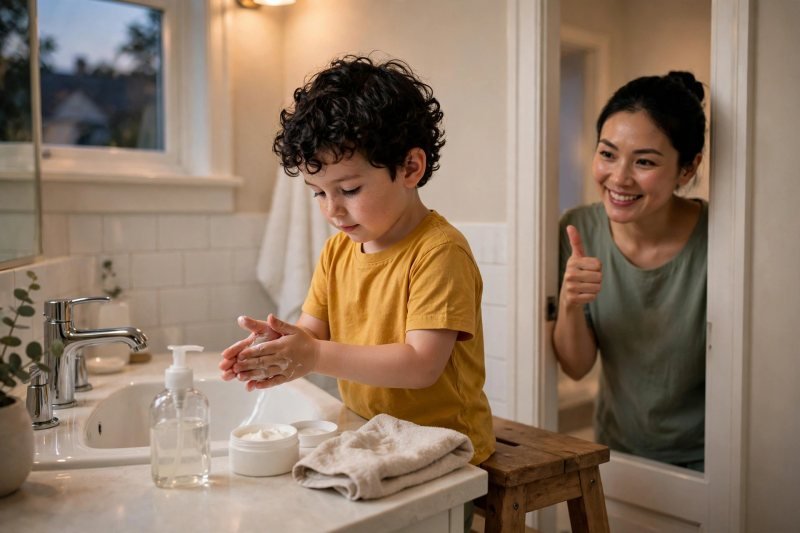
Repeat the routine after every wash. From now on, treat wash and cream as one habit with two halves, so every wash — after the toilet; before eating; after playing outside; after painting or playdough — ends at the cream tub. Say: "Washing is only half the job — the job is finished when the cream is on." Add a last, slow routine before bed, when creamed hands rest undisturbed all night. A sticker chart for every completed pair helps the habit stick — and once it feels automatic at home, the same thinking travels outdoors.
-
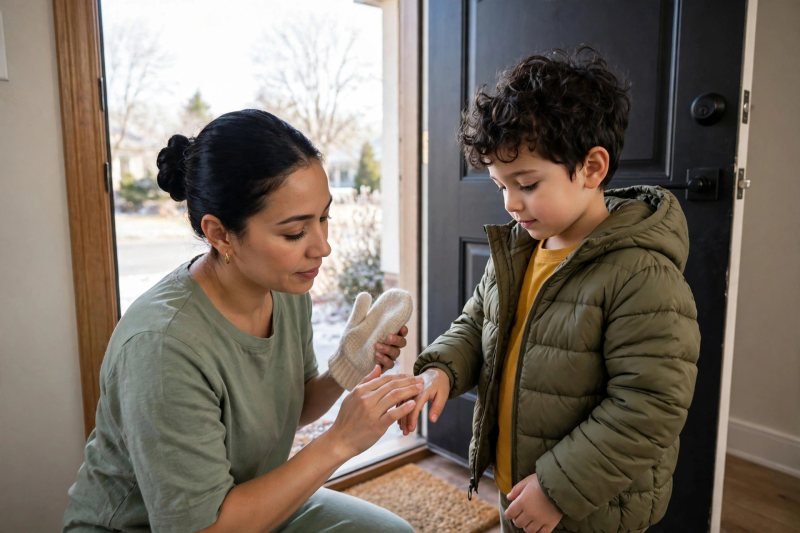
Protect hands outdoors. Before going outside on cold or windy days, rub a pea-sized amount of cream over the backs and between the fingers, then pull on soft mittens so chilly air cannot keep drying the skin out. Say: "Cream first, mittens second — like a coat for your hands before the cold gets to them." Keep mittens on during long outdoor play, and reapply cream after coming inside and washing as usual. Protecting hands outside protects your progress — and it leads into the final step, watching the skin itself.
-
Watch the skin and know when to get help. Once a day, look at your child's hands together in good light — softer backs; smoother knuckles; less redness; no new rough patches are what improving skin looks like — and celebrate out loud. Say: "See how soft they feel now? That is your routine working — always tell me if anywhere stings." Be clear about the line where home care is not enough: skin that cracks; bleeds; oozes; develops a spreading rash; or stays sore after a week or two needs your pediatrician, not more cream. Finish by leaving the station set up as in step one, so tomorrow's wash-and-cream is just as easy.


Make it easier
Do the water check and the creaming yourself at first; let your child own just the scrub song and the patting. Keep the cream tub right beside the soap so the second half of the job is impossible to forget. On days with fewer washes, still cream at bedtime — one reliable daily application beats occasional big ones.
Make it harder
Let your child run the full ten steps solo while you watch from the doorway, calling out nothing. Teach the detective checks: they test the water on their own wrist, hunt for leftover bubbles, and check every finger web is dry. Pair this routine with a full kids' skincare routine so face and hands get the same gentle, less-is-more care.
Other ways to play it
- Winter version: cream a little more generously, add mittens for every outing, and keep baths short and lukewarm. Cheeks dry out in the same weather — see the gentle fixes for dry skin on kids' faces for the face version of this routine.
- Messy-play version: after painting, gardening, or playdough, wash as usual but take extra care rinsing under the nails before creaming.
- Away-from-home version: carry a small plain tub of the same cream in your bag so the pairing survives school, travel, and grandparents' houses.
How it changes by age
- Ages 4-5: the sweet spot for this routine. Fours and fives can climb the stool, pump once, scrub to a song, rinse, pat, and spread cream with light coaching, and they take real pride in finishing a grown-up sequence. Keep doing the wrist water check yourself — judging temperature is still a grown-up job — and remind them about the cream step until the pairing is automatic. Independent hand washing is also a genuine school skill, which is why it appears on every kindergarten readiness checklist — a child who can wash, dry, and cream without help walks into the classroom bathroom with confidence.
- When to get help: see your pediatrician if your child's skin cracks, bleeds, or oozes; if a rash spreads; if hands stay sore after a week or two of gentle washing and regular cream; or if anything worries you. If a rash looks like eczema, read the signs of eczema in kids so you can describe what you see clearly to your pediatrician. Never diagnose skin conditions at home, and never use a prescription cream prescribed for someone else.
What they're learning
Hygiene habits: washing thoroughly and kindly becomes automatic self-care, like brushing teeth — done well, without damaging the skin it protects. Sequencing: temperature, soap, scrub, rinse, dry, cream — a six-beat sequence they can recite, repeat, and eventually run alone. Fine motor control: pumping once, scrubbing thumbs and fingertips, and spreading cream between fingers build hand strength and control. Body awareness: noticing how skin feels — tight, rough, soft, sore — gives your child words to tell you early when something needs attention.
Clearing up
"More soap means cleaner hands." No — a pea-sized drop plus a full twenty-second scrub does the cleaning; extra soap mostly means extra dryness. "Hot water kills more germs, so it must be better." For everyday home washing, lukewarm water with soap and friction does the job, and hot water strips the skin's own oils and can scald. "Dry hands just need cream once in a while." Occasional cream cannot keep up with daily washing — the fix is the pairing: gentle washing, then cream, every time. "Any rich cream is fine for kids." Scented creams can sting sore little hands — gentle and fragrance-free, patch-tested first, is the reliable default. If patches stay dry despite the routine, our guide to the best moisturizer for kids with dry skin explains what to look for when choosing one. "Hand sanitizer is kinder to hands than soap and water." Sanitizer can dry hands out too, and at home soap and water with cream afterward is the kinder routine. Save sanitizer for when there is no sink, then cream once hands are dry.
Questions parents ask
Why are my child's hands always dry?
How do I fix dry hands from hand washing?
What cream is best for kids' dry hands?
How often should kids moisturize their hands?
When should I worry about dry hands in kids?
A gentle bath-time routine for dry winter skin. Choosing hand soap and cream by label criteria. Independent bathroom routines before school.

save it for later
Pin this for the next rainy afternoon
Keep it on a board so it is there when you need it, rather than when you happened to find it.
Save to Pinterest


