


Color Mixing Activities for Preschoolers: 14 Mess-Free Ideas (Ages 3-4)
14 genuinely mess-free color mixing activities for preschoolers ages 3-4: sealed paint bags, dropper trays, milk swirls, bath mixing and more — plus a simple mixing chart, the brown fix, and a 3-minute cleanup promise. Fourteen ways to mix red, yellow, and blue into brand-new colors — with the mess locked inside bags, trays, and tubs
These 14 color mixing activities for preschoolers keep every drop contained — paint sealed in zip bags, colored water in trays with edges, and swirls that happen in the bathtub. Kids ages 3-4 mix red, yellow, and blue to discover orange, green, and purple through predicting and play. Setup takes five minutes, cleanup takes three, and washable supplies keep the mess promise.

The short version
- - 14 low-mess ideas: sealed bags, dropper trays, squeeze bottles, coffee-filter tie-dye, celery, milk swirls, melting colored ice, chromatography, playdough, bath mixing, and light paddles.
- - The core chart: red + yellow = orange, yellow + blue = green, blue + red = purple.
- - Start with just two colors; three at once usually turns brown.
- - Brown isn't failure — celebrate it, reset with fresh materials, and put brown to work on tree trunks.
- - Containment rules: rimmed tray, sealed taped bags, washable supplies, smocks, adult handles food coloring.
- - Cleanup promise: about three minutes — seal, tip, rinse, wipe.
- Age
- Ages 3–4
- Prep
- 5 min
- Mess
- Low
- Difficulty
- Easy
- Where
- Indoor
Why kids love this
Preschoolers live to ask "what will happen if…?" and color mixing answers in seconds, with a result they can see. The moment red touches yellow and orange appears, your child feels like a scientist who discovered something. And because nothing here can spill across the table, you get to say "yes, try it!" instead of "careful!" — exactly the freedom 3- and 4-year-olds need.
What you'll need
- - Gallon-size zip bags and painter's tape (seal and tape bags to the table)
- - Washable tempera or finger paint in red, yellow, blue, and white
- - A rimmed baking sheet or tray with edges — your containment headquarters
- - Ice cube tray and plastic droppers or pipettes
- - Squeeze bottles (cleaned condiment bottles work) of water tinted with food coloring
- - Washable, child-safe food coloring in red, yellow, and blue
- - Coffee filters, washable markers, and a small spray bottle of water
- - Celery stalks with leaves and clear cups
- - Shallow white dish, whole milk, liquid dish soap, cotton swabs
- - Colored ice cubes (freeze tinted water overnight)
- - White paper strips and a black washable marker
- - Red, yellow, and blue playdough
- - Clear jar with screw-on lid, colored salt, small funnel
- - Bath-safe color tablets (or a few drops of food coloring) for the tub
- - Transparent color paddles (or colored cellophane) and a sunny window
- - Smocks or old shirts, and a damp cloth
Before you start
Set the rimmed tray on the table — nearly everything happens inside it. Fill the squeeze bottles, seal red and yellow paint into a zip bag, and put smocks on. Keep food coloring bottles in your hands, not your child's — you dispense, they mix. Five minutes, done.
How to do it
-
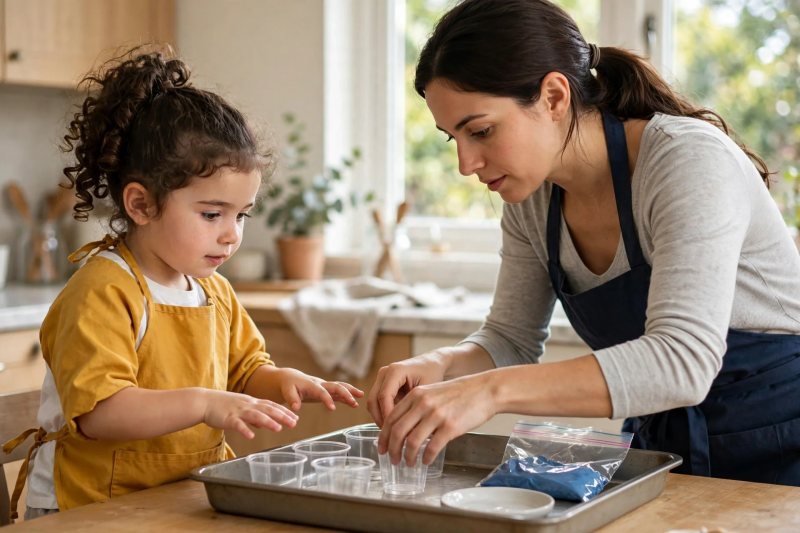
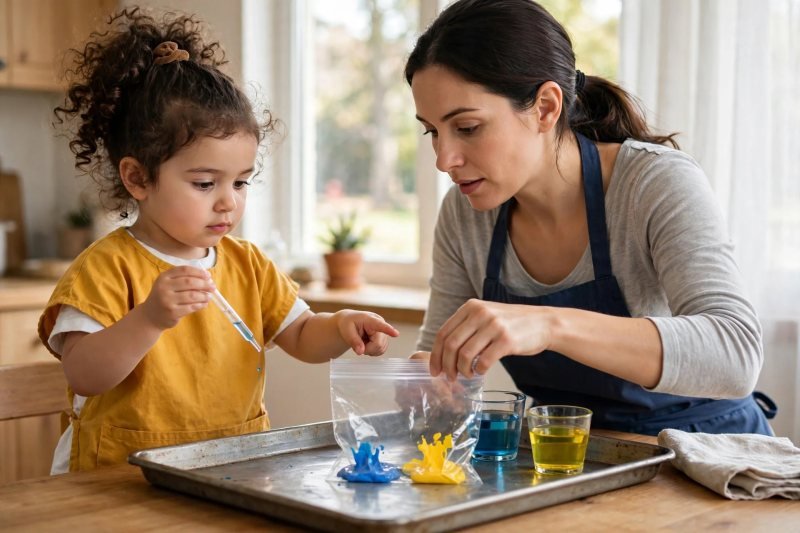
1. **Set up a contained station.** Put the rimmed tray mid-table and say the rule out loud: "Colors stay on the tray." Cups, bags, and dishes all live inside those edges — this one rule is the whole secret.
-
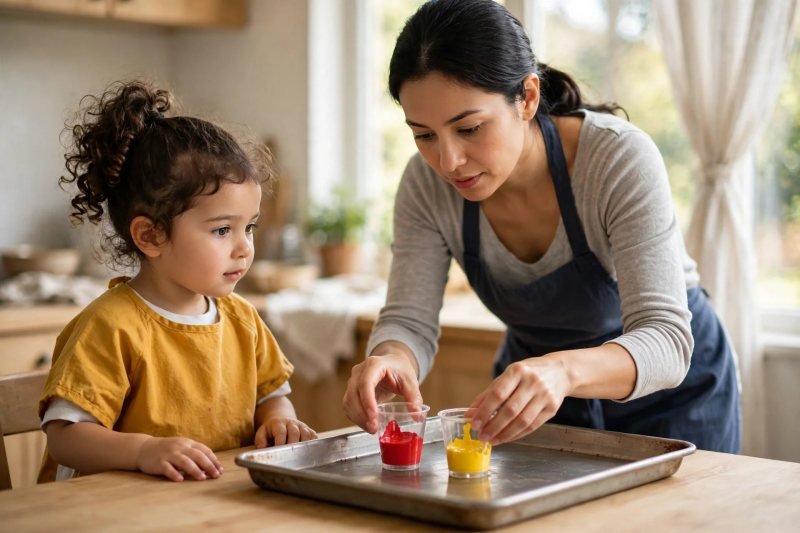
2. **Start with just two primary colors.** Red and yellow only. Two colors make one clear discovery (orange!); three at once usually make brown and end the learning early.
-
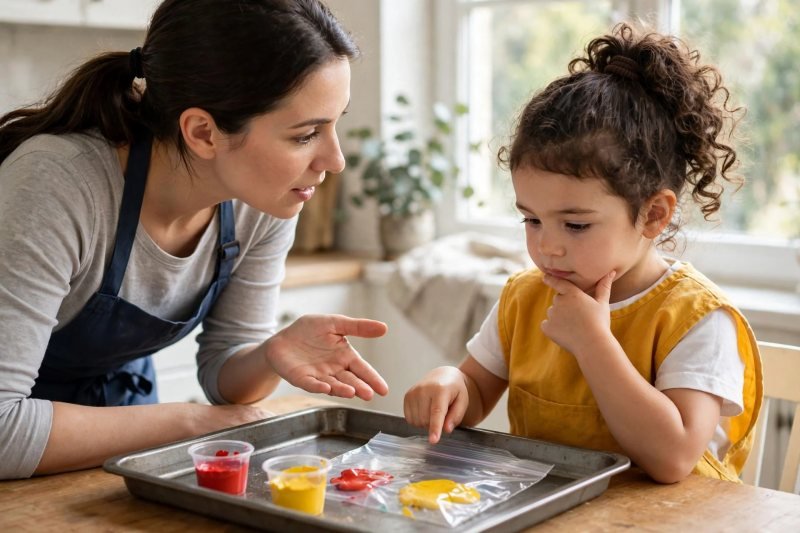
3. **Let your child predict.** Before mixing, ask: "What do you think red and yellow will make?" No wrong guesses — predicting is the skill, not being right.
-
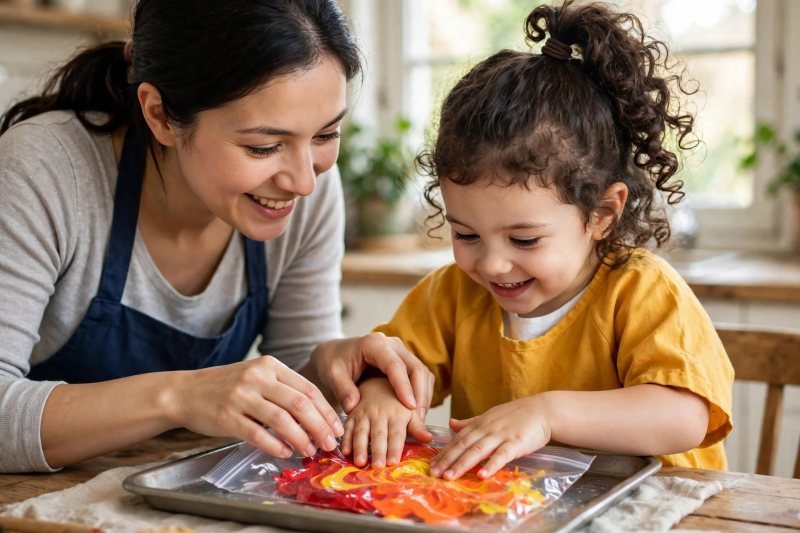
4. **Mix and name the new color together.** Squish the bag or squeeze the dropper, then name it together: "We made orange!" Naming cements the learning.
-
5. **Try a second combination.** Fresh materials, then blue and yellow. Ask for a prediction again — this time they'll have a theory, and testing it is real science.
-
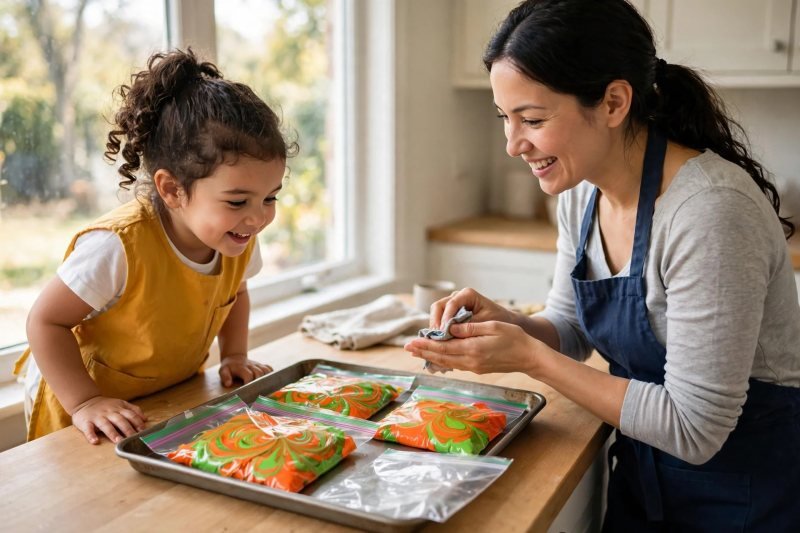
6. **Finish before everything turns brown.** Stop each round while the new color is still bright. Muddy colors mean the round is over — fresh materials, new round. (If brown happens anyway, see the brown fix below.)
-
## What are the best mess-free color mixing activities for preschoolers?
-
Pick one for a quick session or string two or three together. Each idea names the colors to mix and the discovery your child will make.
-
1. **Sealed paint-bag squish.** Blob red and yellow washable paint into a gallon zip bag, press out the air, seal it, and tape the zipper shut. Your child squishes the paint through the plastic and watches orange bloom — zero paint on skin, clothes, or table.
-
2. **Ice cube tray + droppers.** Fill ice cube tray wells with plain water. Your child droppers red water into one well and yellow into the next, then mixes a drop of each in an empty well — orange in miniature, plus a serious fine-motor workout.
-
3. **Squeeze bottles over a tray.** Stand clear cups inside the rimmed tray and let your child squirt red, yellow, and blue tinted water into them. Red plus blue makes purple — every drip caught by the tray.
-
4. **Tray marbling, no shaving cream.** Pour a shallow layer of water into the rimmed tray, drip red and yellow paint on the surface, and swirl once with a toothpick. Press paper on top for five seconds and lift — a marbled orange print, and the tray held every drop.
-
5. **Coffee-filter tie-dye.** Your child dots red and blue washable markers over a coffee filter set inside the tray; you spritz it lightly with water. The dots bleed into purple tie-dye — all dye stays on the filter and tray.
-
6. **Celery color walk.** Stand celery stalks in clear cups of red and blue water. Over a few hours the leaves blush with color, and your child discovers that plants drink. Check back together and narrate the change.
-
7. **Milk + food coloring + soap swirls.** Pour whole milk into the shallow white dish (on the tray), add red and yellow food coloring drops, then touch the surface with a soap-dipped cotton swab. Colors burst and swirl into orange marbling.
-
8. **Colored ice melting.** Set red, yellow, and blue ice cubes on white paper inside the rimmed tray. As they melt, puddles creep together and blend — red meets yellow and turns orange, leaving a watercolor painting behind.
-
9. **Marker chromatography strips.** Draw a thick black dot near the bottom of a white paper strip and stand its tip in half an inch of water in a clear cup. Water climbs and the black separates into hidden greens, blues, and purples.
-
10. **Playdough color mixing.** Knead a small ball of red playdough with a small ball of yellow. It marbles, then fully blends, into orange — a color-mixing workout for little hand muscles, with nothing wet at all.
-
11. **Finger painting inside a sealed bag.** Tape a zip bag flat to the table, squirt in blue and yellow paint, seal and tape the zipper. Your child finger-paints swirls through the plastic and discovers green — all the sensory fun, zero cleanup on hands.
-
12. **Colored salt jar.** Funnel layers of red, yellow, and blue colored salt into the clear jar and screw the lid on tight. Tip it gently and watch layers shift and blend where they meet — then keep it as a rainbow keepsake.
-
13. **Bath color mixing.** At bath time, tint the water blue with a bath-safe tablet, then add yellow — the whole tub turns green around them. The bathtub is nature's most mess-proof art studio.
-
14. **Light-table color paddles.** Overlap red and yellow transparent paddles on a sunny window. Where they overlap, orange glows; try blue over yellow for green. Completely dry, endlessly re-mixable.
-
## What colors will preschoolers discover? (the simple mixing chart)
-
- **Red + yellow = orange** (traffic cones, basketballs)
-
- **Yellow + blue = green** (grass, frogs)
-
- **Blue + red = purple** (grapes, eggplants)
-
- **Any color + white = a lighter version** (red + white = pink)
-
- **Red + yellow + blue = brown** (mud, tree trunks)
-
Chant the pairs — "red and yellow make orange!" — and they'll memorize the chart through play within days.
-
## What should you do when all the colors turn brown?
-
Celebrate it — brown is a discovery, not a failure. "You mixed ALL the colors and found brown!" Then the reset ritual: tip the muddy mix away together, wipe the tray, and start the next round with fresh materials and just two colors. Give brown a job — it's perfect for tree trunks and mud pies on paper. Brown simply means the round is over and a fresh, bright one is about to begin.
-
## How do you clean up after color mixing? (the cleanup promise)
-
The promise: about three minutes, because the mess was never allowed out. Seal used bags and toss them. Tip tray liquids into the sink, rinse, wipe dry. Cups and droppers go in a soapy soak. Hands wash with soap and water — a dab of cooking oil lifts stubborn food-coloring stains. The bath idea cleans itself when the tub drains. Make your child the "tray wiper" and cleanup becomes the satisfying final step of the science.


Make it easier
- For younger threes, stick to the sealed-bag ideas (1 and 11) and the paddles (14) — no droppers, no open cups. You do the squeezing and pouring; they squish, watch, and name. One color combination per session is plenty.
Make it harder
- For older fours, make prediction a game: point to the expected color on the chart before mixing. Try tints — "what does white do to red?" Let them run the chromatography strip start to finish and narrate it like a sportscaster. The milk-and-soap swirls above make a perfect next-step challenge.
Other ways to play it
- - **Outdoor big-tray version:** Squeeze bottles and cups outside on a warm day — the tray rule still applies, and sunshine makes colors glow.
- - **Frozen paint cubes:** Freeze thinned washable paint into cubes and let them melt-paint on paper in the tray.
- - **Color scavenger hunt:** After discovering orange, hunt the house for five orange things — it locks in the new color word.
- - **Test a storybook:** Read a color-mixing picture book first, then test whether the book was right.
How it changes by age
- - For ages 3-4. Threes do best with sealed bags and paddles while you run the droppers — their delight is in the reveal, and containment matters most while impulse control is still growing. Fours can manage droppers, squeeze bottles, and the chromatography strip beside you, and many will repeat an idea three times to check the result — that's the scientific method in action. The science hub (/learn/science) holds the full collection.
What they're learning
- Color theory basics (primaries make secondaries); prediction — guessing before trying; observation of gradual change (the celery! — for a longer growing observation, try our [bean in a bag experiment](/activities/bean-in-a-bag-seeds-sprout/)); fine-motor control from droppers, swabs, spray bottles, and kneading (more hand-strengthening ideas in our [fine motor activities for preschoolers](/activities/fine-motor-activities-for-preschoolers/)); and new vocabulary: mix, blend, predict, swirl, tint, dissolve. Underneath it all: they can wonder about the world and test their wondering.
Clearing up
- Seal used bags and toss. Tip tray liquids into the sink, rinse, wipe dry. Cups, droppers, and the ice cube tray get a soapy soak. Hands wash with soap and water (oil first for stubborn stains). The salt jar and dried coffee filters are keepsakes. About three minutes, total.


