


Words That Rhyme With Dog: 20 Fun Rhymes (Frog, Log, Hog)
Twenty real words that rhyme with dog — frog, log, hog, fog and more — taught through a playful frog-pond adventure with four simple games.
Words that rhyme with dog include frog, log, hog, fog, jog, bog, clog, and smog, plus playful extras like cog, slog, tog, prog, grog, agog, and blog, and longer words such as dialogue, prologue, epilogue, monologue, and catalog — twenty genuine rhymes in all. The best way to teach them to a 3- or 4-year-old is through listening games: chanting, hopping, and fill-in-the-blank rhymes in a frog-pond theme.

The short version
- Dog rhymes with every word in the -og family: frog, log, hog, fog, jog, bog, clog, and smog are the eight every preschooler should meet first.
- Longer words rhyme too — dialogue, prologue, epilogue, monologue, and catalog all share dog's ending sound.
- Hearing rhymes (not reading them) is the goal at ages 3-4; listening games build the phonological awareness reading depends on.
- A frog-pond theme — lily-pad hopping, fishing for rhymes, "the frog sat on the ___" — turns repetition into play.
- Keep sessions short (15-25 minutes) and echo-based for threes; let fours invent their own fill-in-the-blank rhymes.
- Always check that a "rhyme" is genuine before teaching it — near-rhymes like "dodge" confuse young ears.
- Age
- Ages 3–4
- Prep
- 5 min
- Mess
- None
- Difficulty
- Easy
- Where
- Indoor
Why kids love this
Three- and four-year-olds light up when words start sounding alike, and a frog pond is the perfect place to hear it happen. There is a plush frog to carry around, lily pads to hop between, a toy hog hiding in pretend fog, and a fishing net for scooping rhymes out of the water. Every game is really the same happy trick — saying "dog" and "frog" out loud and noticing they match — but to your child it feels like four brand-new adventures. The fill-in-the-blank chant ("the frog sat on the ___!") turns them into the star of the story, which is exactly when rhyming clicks.
What you'll need
- A frog plushie or toy frog (any small frog works)
- A blue blanket or sheet (the pond)
- 4-6 green pillows, cushions, or paper plates (the lily pads)
- A small wooden block, cardboard tube, or stick (the log)
- A toy hog or pig
- Cotton balls or a thin white cloth (the fog)
- A small tub, basket, or inflatable pool (the fishing pond)
- A toy fishing rod, net, or kitchen tongs
- Two small baskets or bins (for sorting)
Before you start
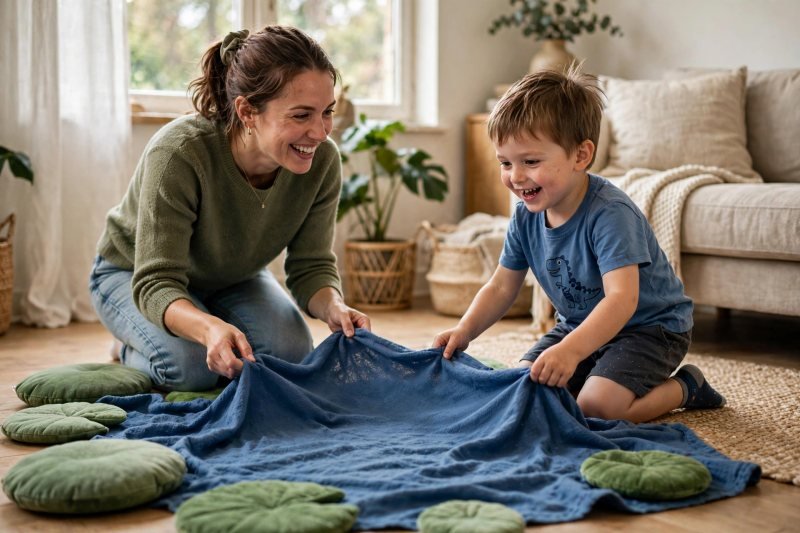
1. Spread the blue blanket on the floor and arrange the green cushions around it as lily pads, leaving hopping gaps between them. 2. Gather the frog plushie, toy hog, wooden log, cotton balls, fishing pond, rod or net, and two sorting baskets, and set them beside the pond. 3. Keep any printed word cards face-down or turned away so no letters are visible; this activity is all about listening, not reading.
How to do it
-
Lay out the pond together. Invite your child to smooth the blue blanket on the floor and place the lily-pad cushions around it, leaving hopping gaps between them, and say "pond" slowly as you work so the game starts before the first rhyme.
-
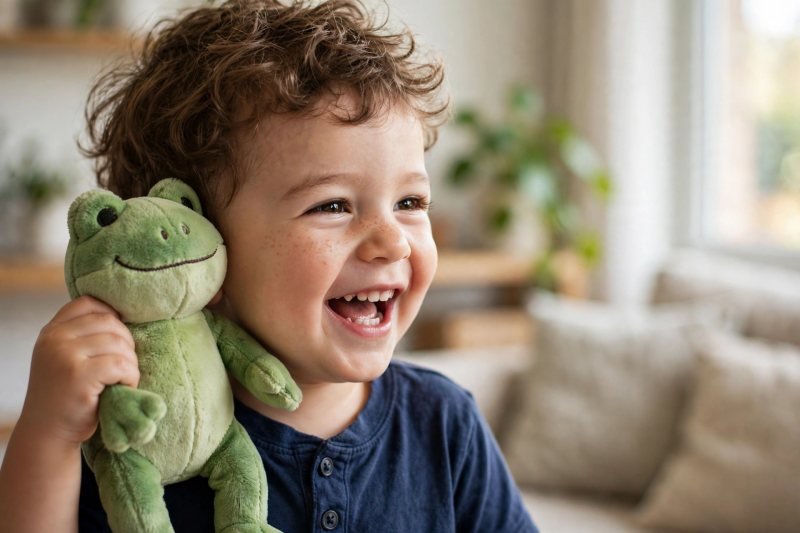
Listen for the match. Hand your child the frog and say "dog" slowly, then "frog" slowly, asking them to listen for how the endings sound exactly the same; repeat the pair until they grin at the match, then let them say it back to you.
-
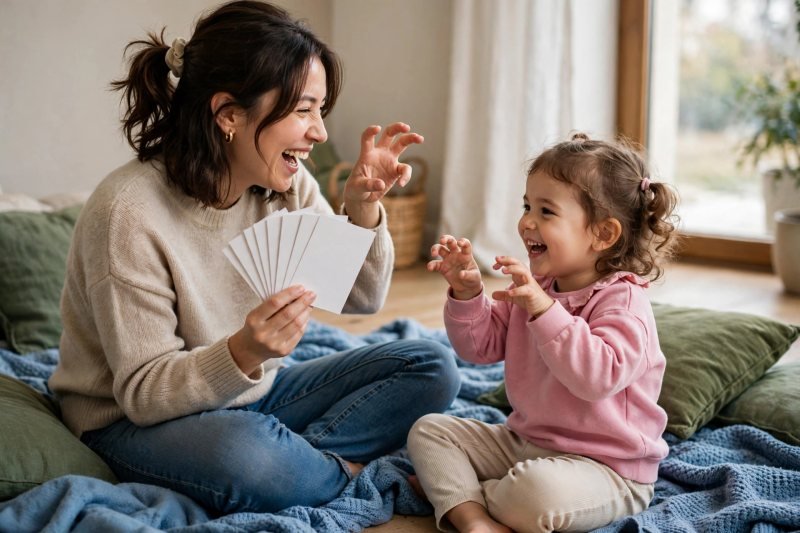
Chant the pond words together. Read the eight pond words out loud together — frog; log; hog; fog; jog; bog; clog; smog — acting out the easy ones, hopping like a frog and pretending to jog, and let your child echo each word back, with the blank picture cards face-down so listening leads, not reading; save the playful extras — cog; slog; tog; prog; grog; agog; blog — and the longer grown-up words — dialogue; prologue; epilogue; monologue; catalog — for another day.
-
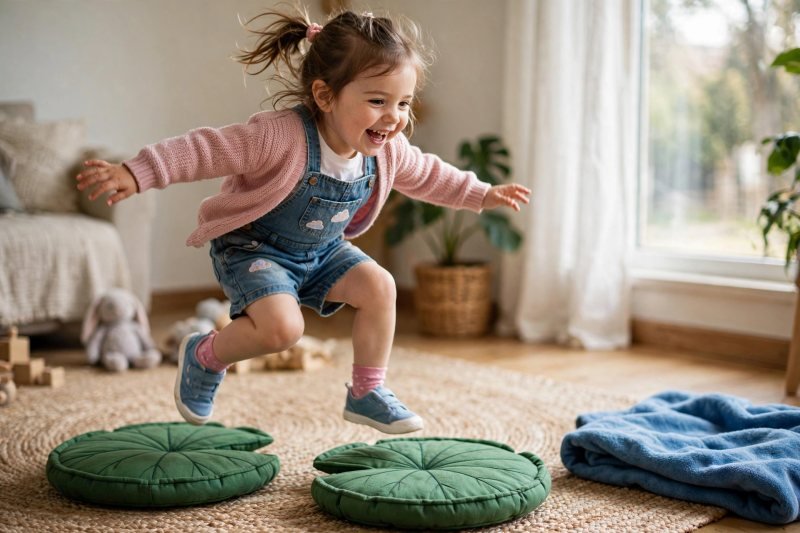
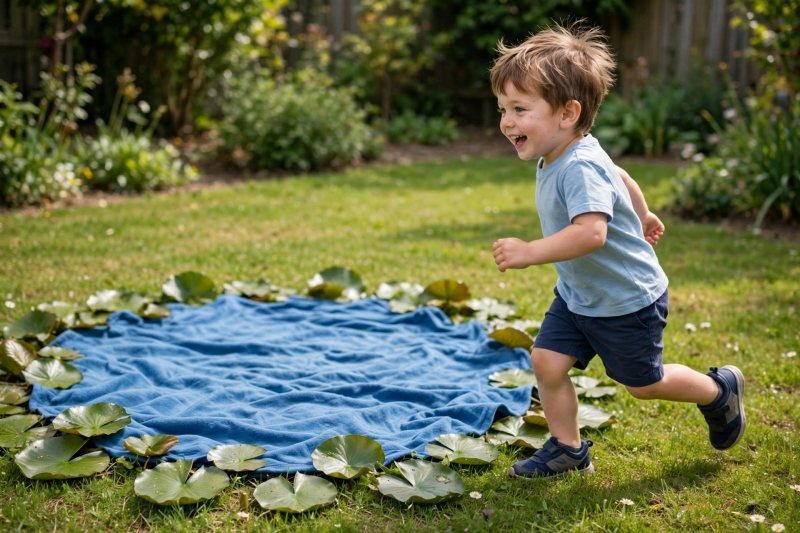
Hop the lily pads. Play lily-pad rhyme hop: your child hops from pad to pad, and on each landing you call out one rhyme from the list for them to repeat, cheering each landing before the next hop.
-
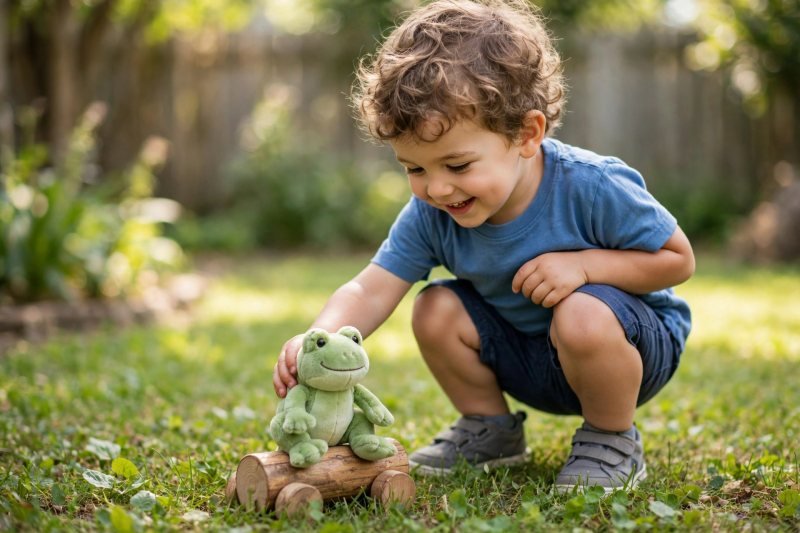
Sit the frog on the log. Set the log on the pond's edge and let your child place the frog on top while you both chant "the frog sat on the log!"; swap the frog for the hog and chant a new line together.
-
Find the hog in the fog. Scatter the cotton-ball fog over part of the pond, hide the toy hog inside it, and have your child search while chanting "a hog in the fog!"; keep the cotton balls away from mouths and noses while you play.

-
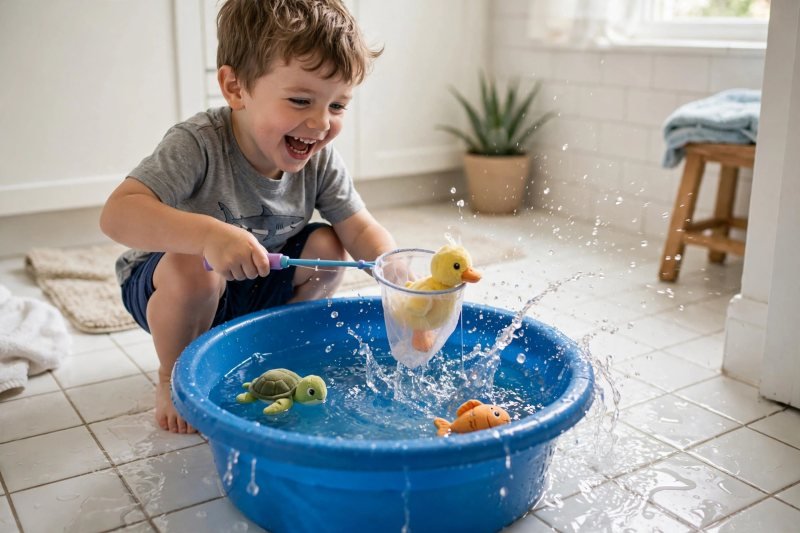
Fish for rhymes. Drop the frog, hog, and log toys, plus a few non-rhyming toys, into the fishing pond and let your child fish one out, name it, and decide if it rhymes with dog, celebrating the listening even when the answer needs a second listen.
-
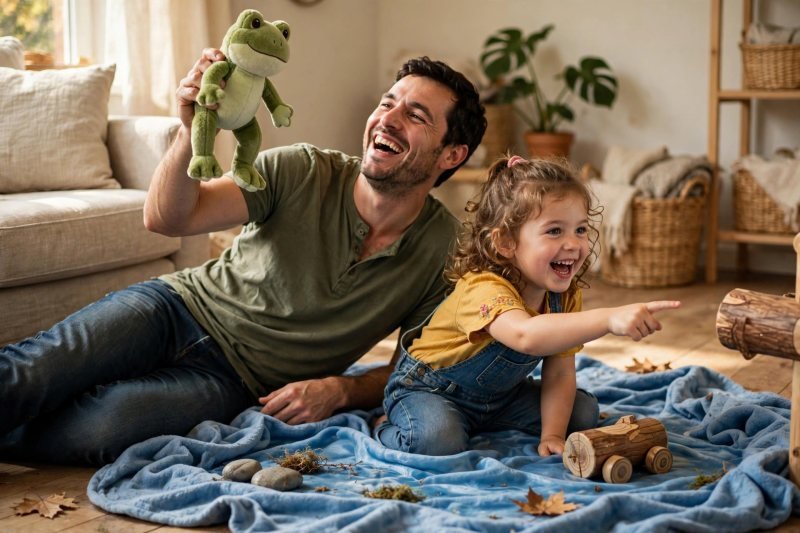
Play the fill-in game. Say "the frog sat on the ___" and pause, letting your child shout the rhyme; swap in new starters like "the hog hid in the ___" and let your child invent one for you to finish.
-
Jog the rhyme chain. Take one lap jogging around the pond together while chanting the chain "dog, frog, log, hog, jog!" and freeze on the last word, jogging it again, faster, if your child asks.
-
Sort the catch and cheer. Sort the catch: your child drops every fished toy into the "rhymes with dog" basket or the "does not rhyme" basket, then ends with a big rhyme cheer, naming one favorite rhyme from the game.


Make it easier
Stick to the eight pond words — frog, log, hog, fog, jog, bog, clog, smog — and let your child simply echo each one after you. Hop the lily pads yourself first so they can copy the movement, and accept any happy sound-alike as a win; at three, joyful repetition is the whole lesson.
Make it harder
Challenge your child to invent their own sentence starters ("the frog jumped over the ___") and to name a rhyme before you say it. Ask them to sort the toys silently, then explain out loud why each one landed in its basket. Older fours can try clapping the syllables of the bonus grown-up words like "dialogue" and "prologue."
Other ways to play it
- Bathtub pond: Run the fishing-for-rhymes game in the tub with floating toys — the splashing keeps the chanting going longer.
- Backyard bog: Play lily-pad hop on the grass and hunt for a real muddy patch to call the "bog," stomping in rain boots.
- Stuffed-animal parade: Line up every plush in the house and let the frog "interview" each one — only rhymes with dog may join the pond crew.
How it changes by age
- This activity is tuned for ages 3-4. Three-year-olds will mostly echo words, hop, and fish — that is exactly right; the goal is hearing the matching -og sound, not producing new rhymes on demand. Four-year-olds often start filling in the blanks and inventing their own -og words (real or silly), which is a wonderful sign their ears are tuning in. If your child is under three, just play the chanting games and skip the sorting.
What they're learning
Phonological awareness: Hearing that dog, frog, and log share the same ending sound is the core skill behind later reading. Word families: The -og family is one of the first predictable spelling patterns children meet when they start decoding words. Listening and turn-taking: Fill-in-the-blank chants teach children to wait, listen, and respond — early conversation skills. Vocabulary: Bog, clog, smog, and the bonus words stretch their word bank in a playful, memorable context. Gross motor play: Hopping, jogging, and fishing keep their bodies busy while their ears do the learning.
Clearing up
Stack the cushions, fold the pond blanket, and return the frog plushie, hog, and log to the toy basket. Toss used cotton balls in the trash (don't flush them) and shake out the blanket before folding. Wipe down any tub or pool used for fishing and leave it to air-dry upside down.
Questions parents ask
What words rhyme with dog?
Do frog and log really rhyme with dog?
At what age do kids start recognizing rhymes?
How can I help my 3-year-old hear rhyming words?
What is the -og word family?
Why do rhyming games help preschoolers learn to read?
You don't need the full list of twenty in one sitting — eight pond words make a complete, happy session, and you can meet the silly extras and grown-up bonus words on another day. If your child invents a "rhyme" that isn't quite right (like "dodge"), celebrate the listening effort first, then model the correct sound playfully: "Dodge is so close! Listen — dooog, frooog." The pond setup also works beautifully as a rainy-day invitation: leave it out and let them replay the games on their own terms. Keep the rhyming going with more listening play: our phonics activities for preschoolers turn the same listening skill into new games; the word families guide shows how the -og pattern sits beside other families; and how to teach rhyming to preschoolers lays out a simple four-step method for the weeks ahead. Younger siblings can join in with rhyming words for toddlers, while older preschoolers will enjoy the longer lists in rhyming words for preschoolers, and the phonics learning hub gathers all of these starting points in one place.

save it for later
Pin this for the next rainy afternoon
Keep it on a board so it is there when you need it, rather than when you happened to find it.
Save to Pinterest


