


What Order to Teach Letters and Sounds: Sounds First, Here's Why
Wondering what order to teach letters and sounds in? Sounds come first — they unlock blending and reading. Get the research-backed order plus a 10-step sounds-first session for 3–4-year-olds. Sounds unlock reading — letter names don't. Here's the order that works, and a guided session that teaches it to you and your child in one sitting.
Teach letter sounds first, letter names second. Sounds unlock blending and reading — names alone don't. Start with a few easy sounds like s, m, and a, play listening games, add the letter shape while saying its sound, then blend sounds into syllables and words. Bring in letter names once sounds are solid — names are for the alphabet song and spelling aloud.

The short version
- Sounds first, names second: letter sounds are the tools children use to read; names are labels for singing and spelling.
- Begin with a few easy continuous sounds (s, m, a), taught through play — robot talk, treasure hunts, mouth games.
- Add the letter shape while saying its sound, then blend two sounds, then read a first three-sound word.
- Teach letter names once sounds stick — model "name for singing, sound for reading."
- Five to ten minutes daily beats one long weekly session.
- Age
- Ages 3–4
- Prep
- 5 min
- Mess
- Low
- Difficulty
- Easy
- Where
- Indoor
Why kids love this
No worksheets, no drilling — just silly voices, treasure hunts, and the magic moment of reading a real word out loud for the first time.
What you'll need
- A small hand mirror
- A shallow tray with a thin layer of flour or salt
- 2–3 plain wooden blocks (no letters on them)
- A basket of 5–6 familiar small objects: sock, spoon, ball, apple, cup, sun toy
- Two small bowls for sorting
- 2–3 soft toys for the "first word" moment
Before you start
Lay the tray, mirror, blocks, and bowls on a rug or low table. Keep the basket of objects beside you — you'll introduce them one game at a time. Five minutes, done.
How to do it
-
If you've been wondering what order to teach letters and sounds in, you're asking one of the most useful questions in early reading — and the answer is simpler than the alphabet song makes it look: teach sounds first, letter names second. Here's why, plus a 20-minute guided session that puts the sounds-first method into your hands.

-
Follow the steps in order — one continuous 20-minute session demonstrating the sounds-first method while your child plays. Each step tells you what to set up, what to say, what your child does, and how it hands off to the next step.

-
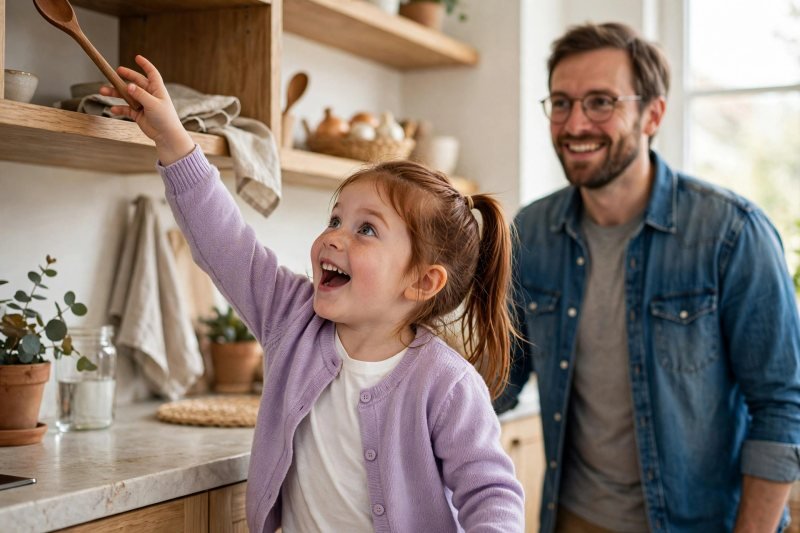
1. Hear the difference: names vs sounds. Set up: just your voices, sitting face to face. Say: "Listen — I'm going to say something two ways. 'Bee'... now 'buh.' The first is the letter's name. The second is its sound." Put your child's hand on your throat, then on their own, and repeat both. Your child does: copies both versions, feels the voice buzz, and tells you which one sounds like the start of "ball" (they'll pick "buh"). Say: "Reading uses the sound. So today we play with sounds first — names can wait." Bridge: "Now let's stretch sounds like robots — no letters yet, just voices."
-
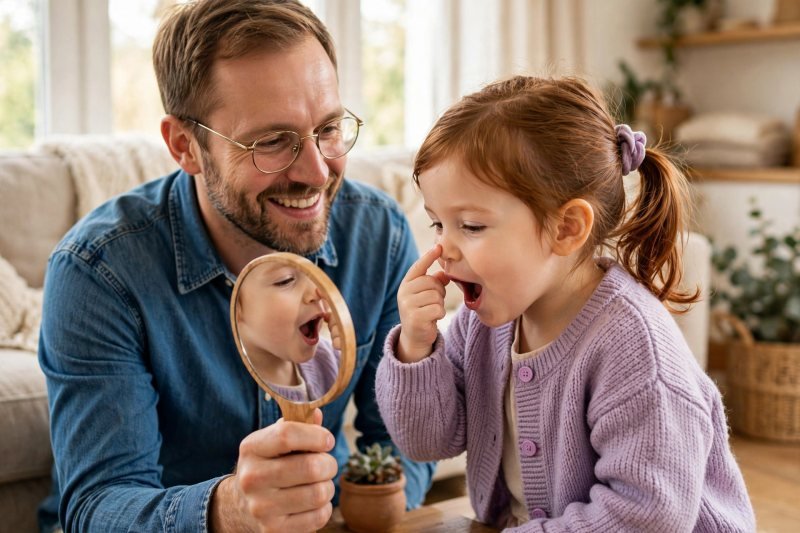
2. Robot talk: play with sounds only. Set up: nothing — pure listening game. Say: "I'm a robot: sss-aaa-mmm. Copy me!" Stretch each sound slowly, then swap roles — your child becomes the robot and you copy. Try "mmm-aaa" (ma) and "sss-uuu-nnn" (soon). Be silly; let them correct you. Your child does: echoes your stretched sounds, then leads, inventing sound strings for you to copy. Why it matters: they're hearing that speech is made of separate sounds that pull apart and push together — the foundation of blending, with zero letters in sight. Bridge: "Ears warmed up. Now let's hunt sounds hiding around the room."
-
3. Sound treasure hunt: one sound, many finds. Set up: the room itself. Choose ONE easy sound — "sss" is perfect. Say: "I'm thinking of sss. Find me something that starts with sss — go!" If they stall, model it: hold up a sock — "sss-ock! Sock starts with sss!" Your child does: runs around finding objects, brings each back, and stretches the beginning sound: "sss-poon!" Celebrate every find, even wrong ones: "Cup! Good listening — cuh-cup starts with 'cuh,' not 'sss.' Try again!" Why it matters: beginning-sound awareness using ears only — pure sound play. Bridge: "We've been hearing sounds — now let's see where they come from."
-
4. Mouth detectives: feel where sounds live. Set up: the hand mirror, face to face. Say: "Watch my mouth. Mmm — lips closed. Your turn — fingers on your nose, feel the buzz? Now sss — teeth together, air hissing. Feel it on your hand. Puh — a little pop! Feel the puff." Your child does: copies each mouth shape in the mirror, touching nose, teeth, and palm to feel the buzz, hiss, and pop. Older 4s can guess a sound from your silent mouth alone. Why it matters: mouth awareness gives children a physical anchor — when stuck on a sound later, the mouth shape brings it back. Bridge: "Those sounds have shapes too. Let's meet just one."
-
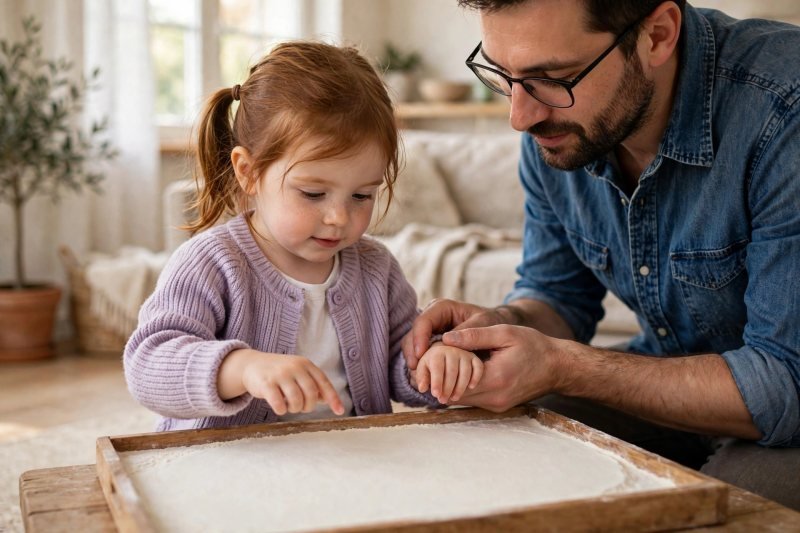
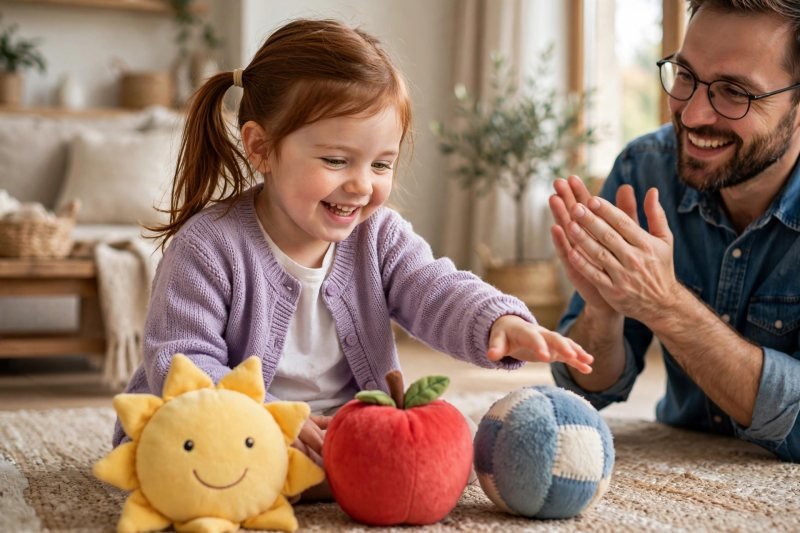
5. Meet one letter: shape + sound, never the name. Set up: the flour tray, surface smoothed flat. Use M — you've played with "mmm" already. Say: "This is what mmm looks like." Trace a big M slowly while saying "mmm" — sound only, never "em." Then: "Your turn — trace it and say mmm with me." Three or four traces, sound each time, then once with eyes closed. Your child does: traces the shape while saying the sound, linking hand, eye, and ear to one sound. If they say "em," smile: "That's its name — but when we read, it says mmm." The rule you're modeling: touch the shape, say the sound. Bridge: "One sound has a shape. Now let's push two sounds together."
-
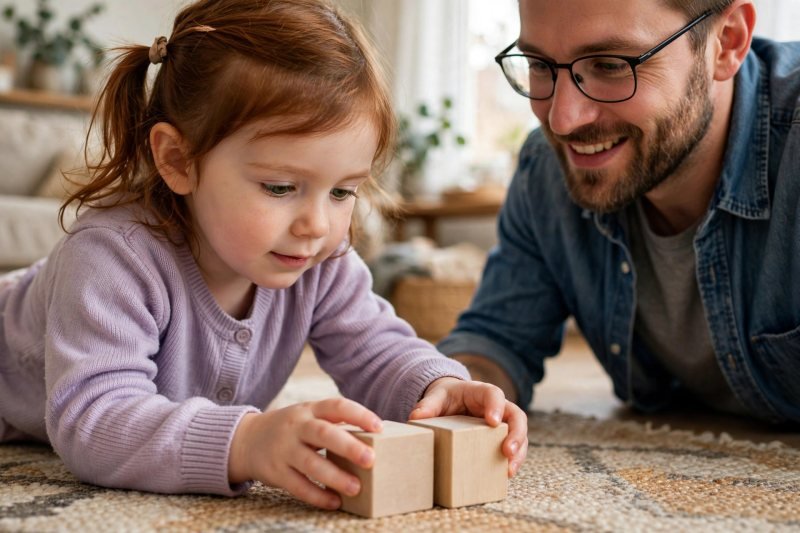
6. Blend two sounds: push them together. Set up: two plain wooden blocks side by side. Say: "Listen: mmm... aaa. Watch — I push them together." Slide the blocks together while saying the sounds faster: "mmm-aaa... ma!" Three times, faster each time. Then: "Your turn — you push." Your child does: slides the blocks together while you say the sounds, then tries it herself: "mmm... aaa... ma!" Five or six repetitions — repetition is the point. Older 4s can try "sss-aaa" (sa) solo. Why it matters: blending in miniature — the exact skill reading depends on. She just read her first syllable using sounds, not names. Bridge: "Two sounds made 'ma.' What can three sounds make?"

-
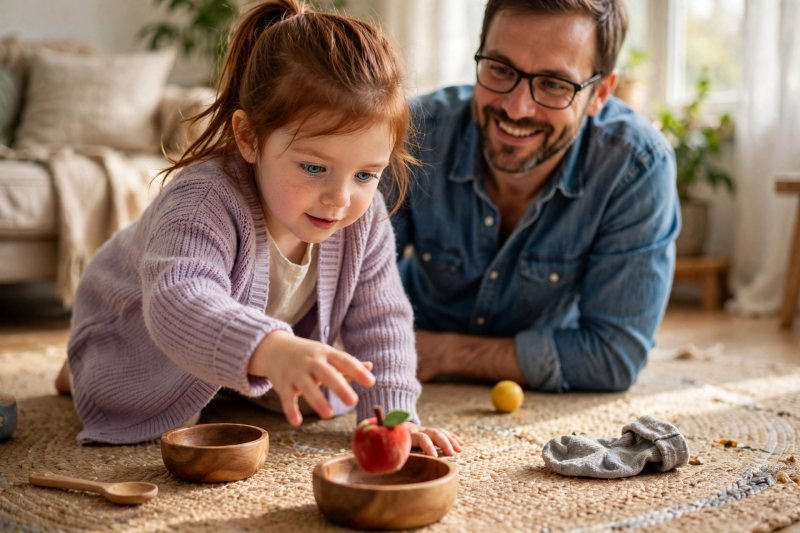
7. Read the first word: three sounds, one triumph. Set up: three soft toys in a row, left to right. Use sounds she knows: "sss-uuu-nnn" (sun) or "mmm-aaa-tuh" (mat). Say: "Touch each toy as we say its sound: sss — uuu — nnn. Now sweep across all three, fast: sun!" She touches while you say the sounds first, then tries the whole sweep herself. When she gets it: "You just READ a word! With sounds!" Your child does: taps left to right, blends, and reads her first word — expect a huge grin and an immediate demand to do it again. Do it again. Why it matters: left-to-right touching wires in reading direction, and the success belongs entirely to sounds-first teaching. Bridge: "Sounds just helped you read! So where do letter names fit in?"
-
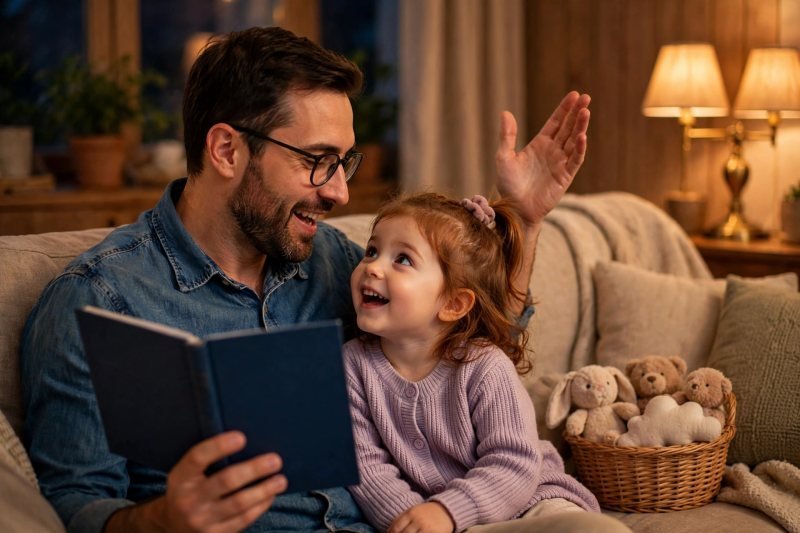
8. Where names fit: the alphabet song moment. Set up: just your voices. Say: "Letters have names AND sounds. The name is for singing." Sing the alphabet song together, clapping along. Then: "But when we READ, we use sounds. This one's name is 'bee' — what does it say?" If she answers "bee," grin: "That's its name! Now its sound — 'buh!'" Your child does: sings the song (names!), then switches to sounds on "what does it say?" Play rapid-fire: you call "name or sound?" and she gives the right one. Why it matters: she now holds both systems and knows which one reading needs — names for singing and spelling aloud, sounds for reading. Bridge: "You've got the method. Now here's the game you'll play all week."
-
9. The sorting game: beginning sounds on repeat. Set up: the two bowls and the basket of objects. Say: "Two teams: the sss team and the mmm team. Sock — sss-ock — which bowl?" She sorts all five or six objects, stretching each beginning sound. Mix them up and sort again — speed round. Your child does: picks up each object, says its beginning sound, drops it in the right bowl. Wrong sorts are gold: "Apple — ah-ah-apple — hmm, sss or mmm? Neither! Apple starts a new team." Younger 3s sort 3 objects with very different sounds; older 4s sort 6–8 and name the odd one out. Why it matters: this two-minute game, repeated daily, cements the beginning sounds that make blending possible. Bridge: "One session done — here's how the week goes."
-
10. The week's sounds-first routine. Set up: nothing — this is your plan. Tell your child the fun version: "We're sound collectors! This week: sss and mmm." The routine: one or two new sounds per week, always taught sound-first with the steps above. Start with easy stretchable sounds — s, m, a, t, p, f — before bouncy stops like b, d, g. Five to ten minutes a day: one round of robot talk, one treasure hunt, one sort. Revisit old sounds constantly. Add letter names only once a few sounds are solid, keeping the rule: names for singing, sounds for reading. Watch for: if your child "reads" by reciting names ("em-ay-tee spells mat!"), redirect gently — "That's spelling with names — now read it with sounds: mmm-aaa-tuh... mat!" Your child does: picks the week's sounds and hunts for them everywhere — books, signs, the grocery store.
-
Why do letter sounds come before letter names?
-
Reading is built from sounds. A child who knows that m says "mmm," a says "ah," and t says "tuh" can push those sounds together and read "mat" — that's blending, the engine of early reading. Letter names can't do that job: knowing the letter is called "em" doesn't tell a child what sound to make when they see it. That's why early-reading teachers and phonics programs typically start with sounds — sounds are the tools children actually use to read, while names are labels that become useful later for the alphabet song and spelling aloud. No guilt if your child already knows letter names: that's a head start on the alphabet. You're simply adding the sounds that turn those letters into reading.
-
What if my child already knows the alphabet song?
-
Keep singing it — the song teaches the letter-name sequence, which is genuinely useful. The only adjustment: when you sit down to "read" letters rather than sing them, ask for the sound. Point to B and ask "what does it say?" not "what's it called?" Model it out loud: "B — that's its name — but it says 'buh.'" If your child answers with the name, smile: "That's its name! Now give me its sound." Within a week or two, sounds become the default.


Make it easier
Do just steps 1–4 the first time — pure sound play with no letters is a complete session for a younger 3. Let your child lead; if robot talk runs for ten happy minutes, that's the whole lesson. Repeat the same two sounds for two weeks if needed.
Make it harder
Older 4s who blend easily can try three-sound words with new vowels (sip, mop, fun), or play "sound swap" — "if 'mat' starts with 'sss' instead of 'mmm,' what word is it?" Ask them to teach the game to a stuffed animal, explaining each step.
Other ways to play it
- Bathtub version: stretch sounds while pouring water — "sss" pours are long and hissy, "puh" splashes are short pops.
- Walk version: treasure-hunt sounds on a walk — "find something that starts with mmm" works beautifully outdoors.
- Sibling mode: an older sibling becomes the "sound teacher" for steps 2–4 while you coach.
How it changes by age
- Younger 3s: steps 1–4 (listening and mouth games) are the sweet spot — pure sound play, no letters, short bursts.
- Older 4s: the full arc through blending and the first word (steps 5–7), plus the sorting game and sound swaps. If blending frustrates, drop back to sound games for a week.
What they're learning
Phonemic awareness — hearing, separating, and blending speech sounds — the strongest foundation for learning to read. They also learn the sounds-first habit itself: when stuck on a letter, reach for its sound, not its name. Plus listening focus, mouth awareness, left-to-right directionality, and the confidence of reading a first real word.
Clearing up
Tip the flour or salt back into its jar for next time — two-minute tidy. The blocks, bowls, and mirror go back in the basket: your "sound games" kit for the week.
Questions parents ask
What order should I teach letters and sounds in?
Should I teach letter names or sounds first for a 3-year-old?
Is it bad if my child already knows letter names but not sounds?
What are the first letter sounds to teach a preschooler?
How long should a letter sounds session be for a 4-year-old?
When should I start teaching letter names?
Short and daily beats long and weekly — five minutes of robot talk at breakfast does more than a 30-minute weekend lesson. If your child resists, drop the structure and just play steps 2 and 3 as games for a week; the method works even when it doesn't look like a lesson.
Keep reading: - Phonics Activities for Preschoolers (link to https://brightplaydays.com/activities/phonics-activities-for-preschoolers/) — more playful ways to practice the sounds you've started here. - Blending Sounds Activities (link to https://brightplaydays.com/activities/blending-sounds-activities/) — the next bridge when beginning sounds feel easy. - Alphabet Activities for Toddlers (link to https://brightplaydays.com/activities/alphabet-activities-for-toddlers/) — when you're ready to add letter shapes and names alongside sounds.
Try this next
-
Alphabet Recognition Activities for Preschool: 10 No-Worksheet Games for Ages 3–4
Ages 3–4
-
20 Letter Sounds Games in 10 Steps for Preschool
Ages 3–4
-
Beginning Sounds Activities for Preschool: Listen First, Letters Later
Ages 3–4
-
30 Hands-On Letter Recognition Ideas in 10 Steps for Preschoolers
Ages 3–4


