


Washing Toddler Hair Without Tears: 10 Bathtime Tricks
If your toddler hates hair washing, you are not doing bath time wrong — most toddlers go through this phase. These 10 in-the-tub tricks — a visor shield, doll washing, goggles, a wash song, and more — turn wash night into play, step by step.
When a toddler hates hair washing, make the wash a game they control: rehearse on a doll, add a visor shield and swim goggles, sing one short wash song, let your toddler pour the water, distract with foam shapes and a mirror, shield the eyes with a washcloth for the rinse, and end with a real choice and specific praise.

The short version
- Rehearse the whole wash on a bath doll first — being the washer melts the fear of being washed.
- Barriers help: a foam visor, swim goggles, and a washcloth held over the eyes keep water off the face.
- Control calms: let your toddler pour their own rinse water and signal when they are ready.
- One short wash song sets the wash's length — when the song stops, the washing stops.
- Distract at the peak moments: mirror foam crowns during lathering, foam shapes on the tiles during the final rinse.
- End with a real choice and specific praise, and keep shampooing to regular wash days — most toddlers need it only 1–3 times a week.
- Age
- Ages 2–3
- Prep
- 5 min
- Play time
- 15 min
- Mess
- Low
- Difficulty
- Easy
- Where
- Indoor
Why kids love this
Toddlers who scream at shampoo usually love everything else about the bath — pouring, foam, songs, silly goggles, and being in charge. This routine gives them all of that, in an order where the washing quietly happens inside the play. When the bath is a game they lead, the hair wash stops being the enemy.
What you'll need
- A gentle, tear-free toddler shampoo
- A plastic rinse cup with a soft, flexible pouring edge
- A foam bath visor or shower cap shield that keeps water off the face
- A washable bath doll or waterproof toy with hair
- Toddler swim goggles
- A soft washcloth
- A hooded towel
- A small unbreakable mirror (a suction-cup bath mirror works well)
Before you start
1. Lay everything out beside the tub before the bath: visor, goggles, doll, rinse cup, washcloth, shampoo, mirror, towel. 2. Run the bath lukewarm and let your toddler climb in for plain play first — never start with the wash. 3. Agree on the order together: doll first, then goggles, then the song; a toddler who knows what comes next protests far less. 4. Keep wash night to your regular hair-wash days only — most toddlers need shampoo just 1–3 times a week, so most baths can be wash-free play.
How to do it
-
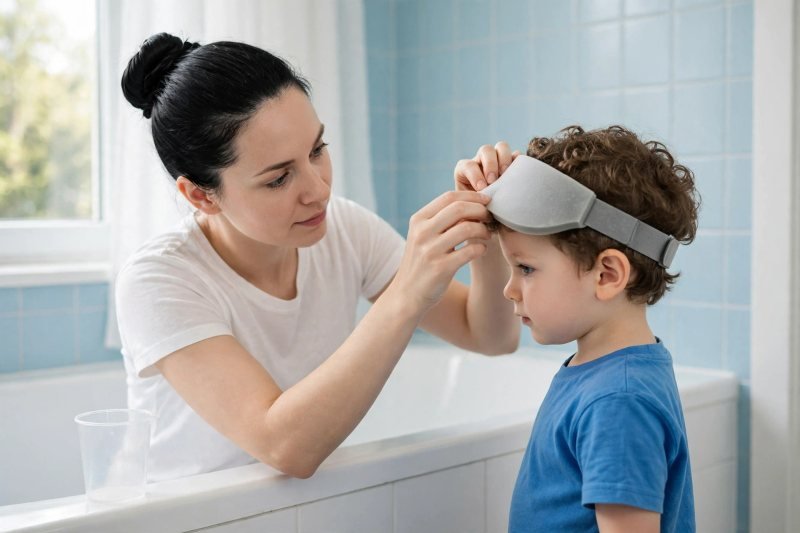
Set up the shield and the rinse cup first. Before your toddler gets in, place the foam visor and the soft-edge rinse cup on the tub rim and say: "This hat keeps the rain off your face, and this cup makes gentle rain." Let your toddler try the visor on dry, adjust it together, and admire how silly it looks; a shield they have already worn for fun is equipment they trust when the water starts, and this little fitting session hands straight into the doll rehearsal.
-
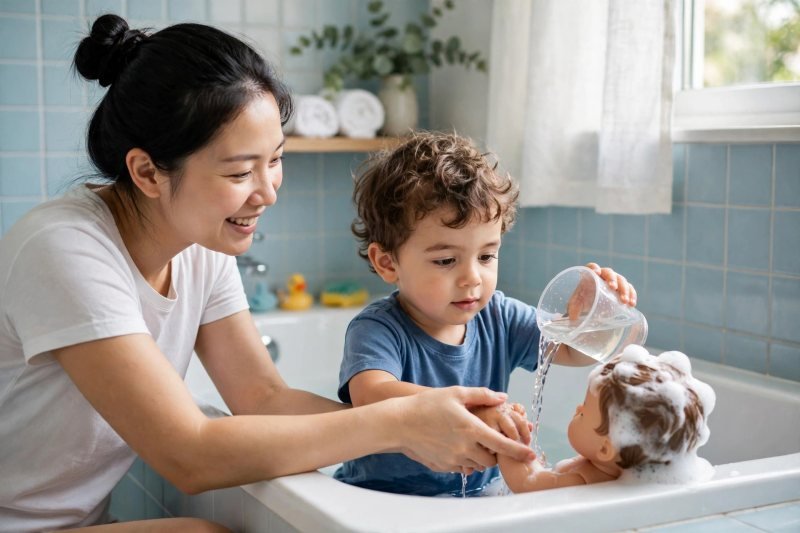
Wash the doll's hair before theirs. Sit the bath doll at the tub edge, hand your toddler the rinse cup, and say: "Dolly's hair is dirty — you be the hair washer." Guide them through the whole mini-wash — pour, lather with a pea-sized dab, pour again — narrating each move; toddlers who have just performed a wash know exactly what will happen to their own hair, and rehearsing it as the powerful washer, not the washer's target, melts most of the fear before their turn begins.
-
Put the goggles on like a game. Pull out the swim goggles, put your own pair or an imaginary pair on first, and say: "Diver time — nothing can splash a diver's eyes." Let your toddler snap their goggles on and practice a superhero face in the air; goggles give sensitive toddlers a real physical barrier and a brave character to be, and once the diver is ready, the wash song can start.

-
Sing the wash song while you wet the hair. Start your family's one wash song — any short, silly song works — and pour the first cup of water over the back of the head as the song begins, saying: "When the song is on, the rain is on — when it stops, we stop." Keep pouring slowly, back to front, visor and goggles doing their jobs; the song sets the wash's length, gives your toddler an ending they can hear coming, and hands the next move to their own hands.

-
Let your toddler do the pouring. Refill the rinse cup, hold it with them, and let them pour the next rinse over their own hair — or over yours, leaned over the tub edge — saying: "Your turn to make the rain." Self-poured water almost never frightens the pourer, because they control the timing completely; this is the turning-point step for most toddlers who hate hair washing, and it carries you into the lather with a child who now feels in charge.

-
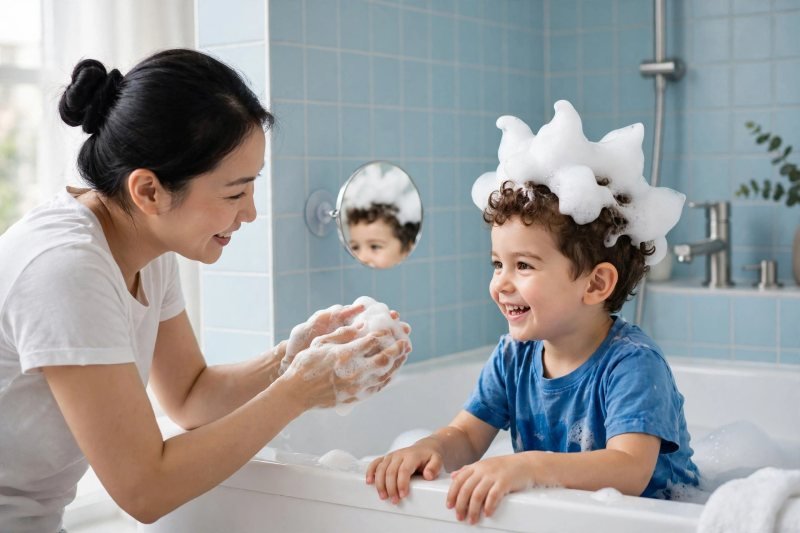
Lather while the mirror steals the show. Stick the bath mirror to the tiles at eye level, work a pea-sized dab of shampoo into a lather on the scalp with your fingertips, and say: "Let's make you a foam hat — look, a bubble crown." Toddlers sit remarkably still for foam sculptures they can watch — crowns, spikes, one silly curl — and the mirror turns the longest step of the wash into the one they ask to do again, which buys you a thorough, unhurried scalp massage.
-
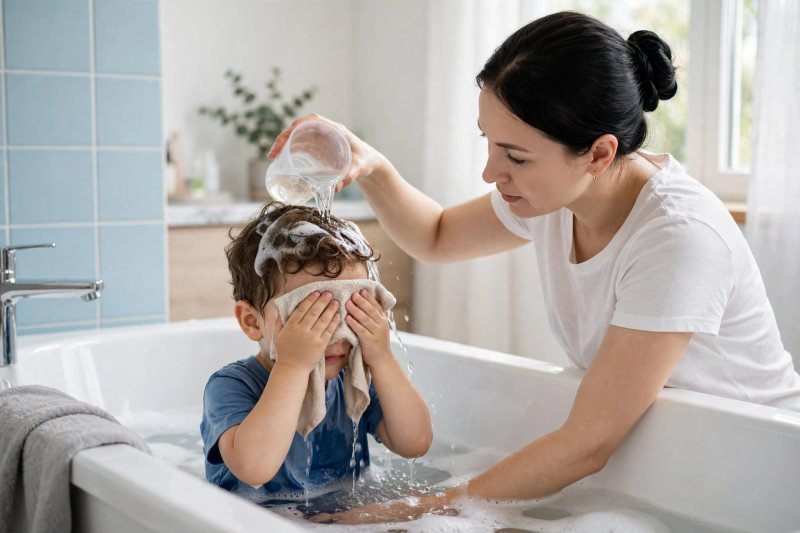
Shield the eyes with the washcloth for the rinse. For the big rinse, hand your toddler the washcloth to hold pressed gently over their eyes and forehead, goggles underneath if they want both, and say: "Hold your shield tight — here comes the waterfall." Pour from the back of the head so the water runs backward, away from the face; a shield they hold themselves works better than your hand, because letting go is also in their control, and the rinse finishes into the reward step.
-
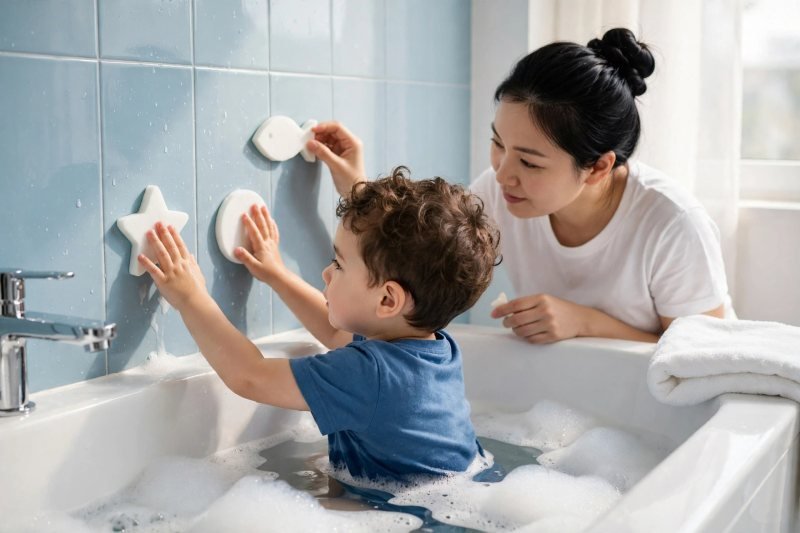
Make foam shapes on the wall tiles. While the last of the lather rinses out, scoop bath foam and press simple shapes onto the wet tiles together — a star, a circle, a wobbly fish — saying: "One more shape before the water goes." This is pure distraction placed exactly where impatience peaks, at the very end of the wash; toddlers study their foam gallery while the final cups rinse clean, and the shapes set up the last real decision of the bath.
-
Give a real choice to close the wash. Hold up two good options — the hooded towel or the big towel; one more song or a quiet cuddle — and ask: "Wash is done. What happens next — you pick." Choice-giving at the end teaches your toddler that the bath follows their signals in both directions, which is what makes them walk to the tub willingly next time; whatever they pick, honor it immediately, and move into the calm close.

-
Wrap up calmly and praise the specifics. Lift your toddler out, wrap them in the chosen towel, squeeze the hair dry gently — never rub — and praise exactly what they did, saying: "You held your shield, you poured the rain, you were a brave diver — all clean." Specific praise beats a vague "good job" because it tells them which brave behaviors to repeat; end every wash night with the same warm close, and hair washing quietly becomes just another bath game they know how to win.



Make it easier
Split the wash across two baths: wet and lather one night, and count a plain-water play bath as practice on the others. Let your toddler wear the visor and goggles around the house first, so the gear is a costume, not a surprise. Wash hair first while energy is high, then let the rest of the bath be pure play as the reward.
Make it harder
Let your toddler run the entire doll wash solo, narrating the steps in their own words. Teach them to squeeze the washcloth shield themselves and signal "ready" before each pour. Build the confidence outward with a calm, playful first haircut guide for toddlers — salon visits get easier once water and hair touch feel safe.
Other ways to play it
- The song swap: rotate the wash song weekly; short, funny songs with actions work best — the actions in the Itsy Bitsy Spider lyrics are a ready-made hand-play distraction during rinsing. Short songs pull double duty: the benefits of nursery rhymes for reading start with exactly this kind of sung play.
- Shower-sprayer families: if your tub has a handheld sprayer, let your toddler hold it with you at the lowest, gentlest setting — control beats pressure every time.
- Sink-wash option: for toddlers who love baths but dread hair washing in them, try a kitchen-sink hair wash lying back on a folded towel, salon-style; a change of scene sometimes resets the whole association.
How it changes by age
- Ages 2–3: expect to run every trick yourself at first; your toddler's jobs are holding the shield, wearing the goggles, pouring with help, and choosing. Keep the actual shampooing to about two minutes inside a longer play bath. Fear of water on the face is developmentally normal at this age — it is a phase most children grow out of as their control and confidence grow, not a behavior problem.
- Very sensitive toddlers: if even gentle pouring causes real distress, shrink the wash further — a washcloth squeezed over the hair can wet and rinse short toddler hair with almost no running water. Build back up one trick at a time over several baths.
- When to check in: mention persistent, intense bathtime distress, ear pain, or a scalp that looks red, flaky, or irritated to your pediatrician at the next visit; hair washing should never hurt, and discomfort sometimes has a simple physical cause worth ruling out.
What they're learning
Coping and bravery: facing a disliked sensation inside a safe game builds real emotional resilience. Cause and control: pouring their own water teaches that their actions steer what happens — the core of the whole routine. Sequencing: doll, goggles, song, pour, foam, shield, shapes, choice — an eight-beat bath sequence they can predict and recite. Language: visor, rinse, lather, shield, and diver land through play — the same learning-through-doing spirit as these toddler learning activities at home.
Clearing up
Pull the plug and let your toddler drop the doll, cup, and goggles into a mesh bath bag as the water drains — the last game of the night. Shake the visor and washcloth out and hang them to dry, stick the mirror flat to the tiles for next time, and give the tub a quick rinse so no shampoo film stays slippery. Two minutes of tidy keeps every trick in its place, ready for the next wash night. The same calm, predictable routine carries the rest of bathtime care — a simple kids skincare routine uses the same soak, pat, and moisturize rhythm.
Questions parents ask
Why does my toddler hate hair washing?
How do I wash my toddler's hair without water on their face?
Should I force hair washing if my toddler screams?
What if my toddler will not wear a visor or goggles?
How do I make the rinse less scary for my toddler?

save it for later
Pin this for the next rainy afternoon
Keep it on a board so it is there when you need it, rather than when you happened to find it.
Save to Pinterest

