


How to Trim Toddler Bangs at Home (Without the Crooked Fringe)
Learning to trim toddler bangs at home comes down to three rules: cut dry, cut long, and finish with point cuts that forgive wobbles. This step-by-step walks you from the right scissors and setup to the final daylight cross-check — a tidy fringe in about ten minutes.
Trim toddler bangs at home by cutting DRY hair (wet bangs spring up shorter), sectioning only the fringe triangle with the rest clipped away, making a first straight pass slightly longer than your target, then point-cutting the ends vertically to soften the line. Keep sessions to about ten minutes with a show or stickers for stillness.

The short version
- Dry-cut is the master rule: wet hair hangs long and dries short — the cause of most too-short fringes.
- Use real hair shears, not kitchen scissors; dull blades chew hair and invite over-cutting.
- Section the triangle, clip the rest away — hair outside the section can never be cut by mistake.
- First pass straight and a little long; point-cutting the ends does the polishing and hides wobbles.
- Cross-check, daylight-check, then stop: two tiny corrections per side, maximum.
- Age
- Ages 3–4
- Prep
- 5 min
- Play time
- 10 min
- Mess
- Low
- Difficulty
- Easy
- Where
- Indoor
Why kids love this
No salon trip, no stranger with clippers, no sitting still in a booster under bright lights — just home, their favorite show, a cape like a superhero, and a parent who's done in ten minutes. Kids who help hold the comb and "inspect" the results in the mirror treat the trim like a game, not a procedure.
What you'll need
- Real hair-cutting shears (sharp, small, with a comfortable grip — not kitchen scissors)
- A fine-tooth comb
- Two hair clips or small claw clips for sectioning
- A towel or cape to catch clippings
- A spray bottle of water (for taming flyaways only — the cut itself is dry)
- A sticker book, tablet with a favorite show, or snack cup for distraction
- A small brush or old makeup brush for sweeping clippings off the face
- A mirror your child can hold for the big reveal
Before you start
1. Choose the moment like it matters — it does: after a snack, not near nap time, when your toddler is in their calmest, happiest gear. 2. Set the stage before the star arrives: chair at your eye level, cape ready, tools laid out in order, show queued and paused. 3. Ban the audience: siblings and pets out of the room. One cutter, one child, one distraction. 4. Wash your hands, and put the shears somewhere only you can reach until the second you're ready.
How to do it
-
Set up for a calm ten minutes, not a wrestling match. Seat your toddler at your eye level — a booster or high chair at the bathroom counter works beautifully — drape the towel cape, and start the favorite show or sticker book before any tool appears. Say: "Cape on — you're the boss of this salon." The entire trim lives or dies on this setup: a settled child gives you straight lines for free, and a squirmy one defeats the sharpest shears ever made. If the mood collapses before you begin, postpone without drama — bangs survive another day, trust doesn't always. Setup done, the tools themselves get a hard look.

-
Use real hair shears — and keep them sacred. Hair-cutting shears are sharper, finer, and far more controllable than kitchen or craft scissors, which chew hair instead of slicing it and are the hidden cause of many "why does it look hacked?" fringes. Say: "These are Mommy's salon scissors — they only ever touch hair." Check the blades close smoothly and the tips are intact; dull shears fold hair over rather than cutting, which tempts you to press harder and cut more. From this moment the shears stay in your hand or in their case out of reach — never on the counter edge, never handed to small admirers. Tools checked, the wet-or-dry question decides the whole result.

-
Trim dry — wet bangs lie about their length. This is the rule beginners break and regret: wet hair stretches and hangs longer, then springs up as it dries, turning a careful trim into a surprise micro-fringe. Say: "We cut the hair the way it actually lives." For a bang trim, work with clean, dry hair in its natural fall; use the spray bottle only to mist a cowlick flat or calm static, then let it dry again before cutting. The one exception: if your child's fringe dries in a wildly different shape than it falls damp (very wavy hair), mist lightly and cut even more conservatively — step 7's leave-it-long rule doubles. Hair dry and natural, now isolate exactly the hair you're allowed to cut.

-
Section the fringe triangle and clip everything else away. Find the fringe's natural territory: comb all the hair forward from a soft triangle whose point sits a couple of inches back from the hairline and whose corners land roughly above the outer eyebrows. Say: "Only this hair is bangs — the rest goes in time-out." Comb that triangle smoothly down over the forehead, then clip every other strand back and out of the zone. This sectioning step is what separates a fringe trim from a haircut accident: hair outside the triangle can never be cut by mistake, and the triangle's shape is what makes the finished fringe sit right. Section isolated — now comb it down and agree on length.
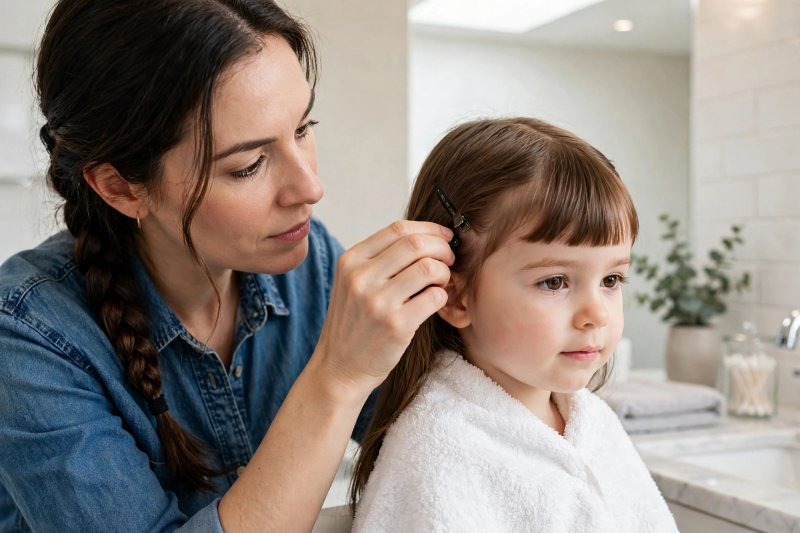
-
Comb down, let it fall naturally, and pick a longer target. Comb the fringe straight down and watch where it settles on its own — for most toddlers, the sweet spot sits between the eyebrows and the top of the eyelid line, and this week's target is the LONGER end of that range. Say: "We're cutting to here today — we can always take more next time." Note how the fringe behaves at the corners: outer edges usually need to stay a whisper longer than the center to avoid a shelf look. Mark the target with your comb held horizontally at that line and memorize it; every cut that follows answers to this comb line. Target set — the first pass begins, deliberately too long.
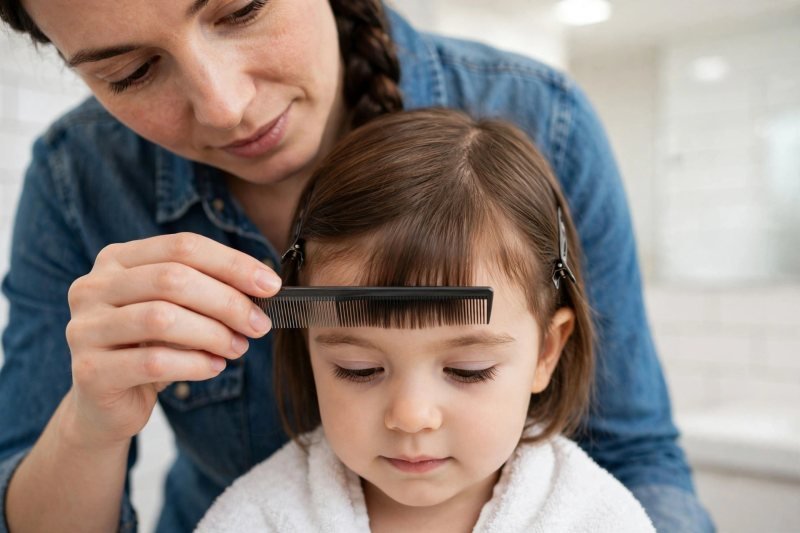
-
Make the first pass straight across, in small sections, below your target. Hold a narrow section of fringe (about an inch wide) between two fingers at the target line, fingers parallel to the floor, and cut just BELOW your fingers with the shears — small snips, moving left to right, never one heroic chop. Say: "Little bites, all the way across." Keep the comb re-checking the fall between sections, because toddlers move and hair shifts. This first pass should end with the fringe looking tidy but noticeably a touch long — that's not timidity, that's strategy: length is the raw material the finishing steps shape, and it cannot be glued back. First pass done, the professional secret comes out: the points.
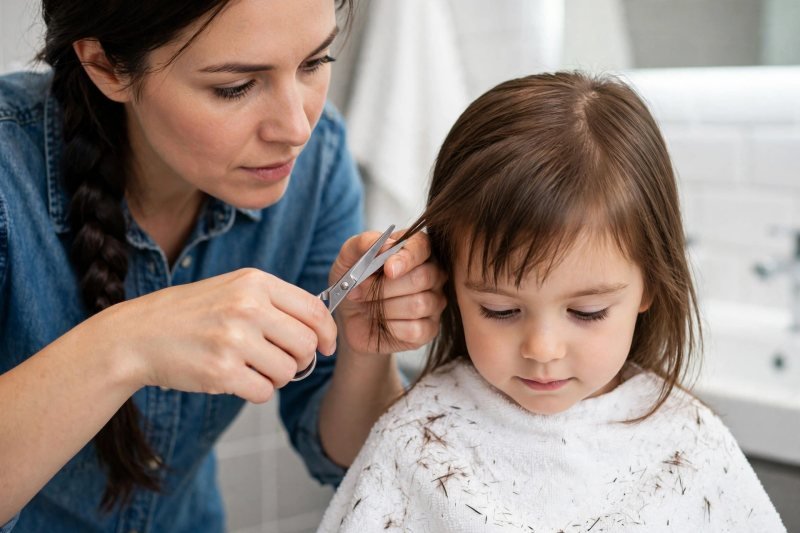
-
Point-cut the ends to soften the line and erase wobbles. Turn the shears vertical and snip tiny V-notches UP into the very ends of the fringe — a millimeter or two deep, spaced along the whole edge. Say: "Now we make it soft, like the salon does." Point-cutting does three jobs at once: it removes the blunt shelf that screams "home haircut," it blends any slight unevenness from the first pass into invisibility, and it lets the fringe sit and move naturally instead of helmeting. Work slowly across once, comb down, and repeat only where the edge still looks thick or straight. This step, more than any other, is the answer to "without the crooked fringe." Softened, it's time for the honest mirror: the cross-check.
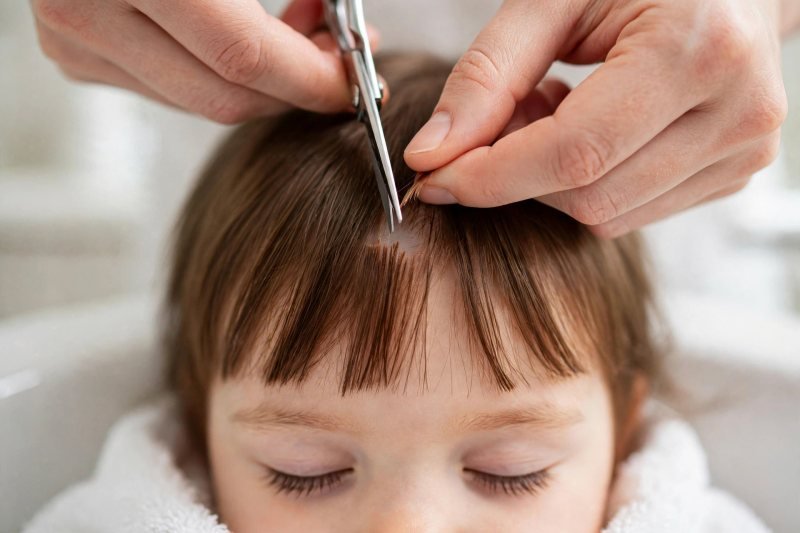
-
Cross-check with fresh eyes — and correct only in whispers. Comb the fringe down one final time, step back to arm's length, and compare the two sides at the corners and center; then let your toddler sit up tall and move their head — hair lies differently in motion. Say: "Inspector time — what do we see?" Correct only clear winners: a strand visibly longer than its neighbors gets one tiny snip, re-combed and re-checked before any second touch. The cross-check is where home trims go wrong in reverse — chasing perfection strand by strand shrinks a fringe to the hairline — so the rule is two corrections per side, maximum, then the shears close. Checked and balanced, there's one more reveal: daylight never lies.

-
Do the daylight check and the wiggle test. Carry the mirror (or the toddler) to a window or step outside for thirty seconds: bright natural light shows strays and shelves that bathroom bulbs forgive. Say: "Sunshine check!" Then shake-test: ask for a big head wiggle and watch the fringe resettle — a good trim falls back into shape; strands that spring sideways get one final whisper-snip, nothing more. If everything passes, the cutting is officially done even if you can imagine it 5% better: at this age, done-and-happy beats perfect-and-traumatized every single time. Shears away — now the salon closes properly.

-
Clean up, record the trim, and celebrate the reveal. Sweep clippings off your toddler's face and neck with the soft brush (itchy strays are the main post-trim complaint), cape off outside the bathroom for a good shake, and hand over the mirror for the official reveal with full ceremony. Say: "Open your eyes — salon superstar!" Then write two things on the calendar or your phone: today's date and how the length landed ("cut to brow line, point-cut ends") — in about three or four weeks you'll thank yourself for the map. Shears get cleaned, cased, and stored with the adult things. The whole appointment, cape to calendar: ten minutes.



Make it easier
Two-adult method: one parent entertains face-to-face (bubbles, silly faces, the sticker book) while the other cuts — the classic salon division of labor. Practice on a doll first: five minutes of snipping doll hair teaches your hands the angles with zero stakes. If a full fringe is too much, learn the foundations from our toddler's first haircut guide and book the salon with confidence instead.
Make it harder
Graduate to the sides: once the fringe is easy, the same section-and-point-cut method tidies the hair over the ears. For the full haircut, see our guide on how to cut toddler hair at home. Let your toddler "run" their own doll salon after your trim — combing and (safety-scissor) snipping builds their comfort for every future cut. Photograph the fringe straight-on after every trim: your own before/after library is the fastest teacher there is.
Other ways to play it
- Curly fringe: cut even less per pass — curls spring up dramatically when dry; point-cut only the very ends, and judge length after a full head-shake.
- Grow-out mode: when you're growing bangs out, skip the straight pass and only point-cut — it removes bulk and blends the awkward stage without losing length. Between trims, our guide on how often to wash toddler hair keeps the growing fringe clean.
- Side-swept finish: comb the triangle diagonally before the first pass and the fringe will naturally sweep — point-cut as usual.
How it changes by age
- Ages 2–3: shorter sessions and lower ambitions — a two-section trim with a second adult entertaining is plenty; many families stick to salons until three for exactly this reason. For the bath-time side of hair care, see our guide on washing toddler hair without tears.
- Ages 3–4: this guide's design age. Cooperation is real but rented, not owned — keep it to ten minutes and end on the reveal, not the last snip.
- Ages 5+: kids can hold their head still on request and give feedback ("it's in my eyes here"); photo-day and school-picture trims become genuinely collaborative — our kindergarten readiness checklist season is when most families level up this skill.
What they're learning
Body autonomy and consent: the trim happens with their agreement, their mirror, and their veto — grooming as something done WITH them. Patience in small doses: ten seated minutes with a payoff is a perfect early lesson in waiting for results. Tool respect: watching sharp tools handled carefully, cased, and stored teaches safety by example, not lecture. Cause and effect: dry-versus-wet, long-versus-short — the fringe is a physics lesson they wear.
Clearing up
Shake the cape outside, sweep the floor before little feet track clippings through the house, and brush the chair down. Shears: wipe the blades, close, case, and store high with adult-only items — treat them like medication, not stationery. Toss the calendar note where next month's you will find it. If a few strays escaped onto the neckline, a quick shirt change kills the itch complaints before they start.
Questions parents ask
Should you cut toddler bangs wet or dry?
How do you keep a toddler still for a bang trim?
What scissors should you use to trim toddler bangs?
How often do toddler bangs need trimming?
What if I cut my toddler's bangs crooked?

save it for later
Pin this for the next rainy afternoon
Keep it on a board so it is there when you need it, rather than when you happened to find it.
Save to Pinterest

