


Sight Words for Pre-K: The Complete 40-Word Starter List
All 40 Dolch pre-primer sight words for pre-K, put into a week-by-week learning order: 4 phases of 10 words, each with playful practice games, a 5-minute daily routine, and a checkpoint that tells you when to move on.
The best order for pre-K sight words is easiest-first: Phase 1, the 10 quickest wins (the, I, a, is, my…); Phase 2, sentence builders (to, in, can…); Phase 3, early-reader words (play, look, come…); Phase 4, tricky spellings like said plus number and color words. Teach 10 words per phase for about two weeks each, five playful minutes a day, moving on when your child reads each phase's words instantly.

The short version
- The same 40 Dolch pre-primer words, sequenced into 4 phases of 10 — quick wins first, tricky spellings last.
- About two weeks per phase at 5 minutes a day, always ending while your child still wants more.
- Each phase has its own practice games plus a clear "ready to move on" checkpoint.
- Review weeks after Phase 2 and Phase 4 lock the words into long-term memory — no new words, no pressure.
- When all 40 are solid, the kindergarten sight-word list is the natural next step.
- Age
- Ages 4–5
- Prep
- 10 min
- Play time
- 5 min
- Mess
- None
- Difficulty
- Easy
- Where
- Indoor
Why kids love this
Children love this plan because it never feels like a lesson. The words arrive in an order designed for winning — the easiest, most useful words first, so your child succeeds from day one. Every phase brings fresh games, every checkpoint feels like leveling up, and five minutes ends before the wiggles start.
This sight words for pre-K plan sequences the full 40-word Dolch pre-primer list into a learning order for 4–5-year-olds: quick wins first, sentence builders next, early-reader words after that, tricky spellings last. Four phases, ten words each, about two weeks per phase, five playful minutes a day.
A plain list tells you which words; this plan tells you which order and what to do with them. Each phase pairs its 10 words with the games that teach them best, a pacing guide, and a checkpoint — "you're ready for the next phase when…" — so you never guess. The sequence is the value, not the list.
What you'll need
- Index cards or paper cut into cards, and a thick marker pen
- 4 envelopes or a pocket chart, labeled Phase 1 to Phase 4
- A ball, toy cars, a fly swatter, a magnifying glass (for the games)
- Magnetic letters or playdough (optional, for word-building)
- A kitchen timer for the 5-minute routine
Before you start
1. Write the 10 Phase 1 words on cards, one word per card, in clear lowercase letters: the, I, a, is, my, me, we, you, go, see. 2. Put the Phase 1 cards in the Phase 1 envelope. Don't write the other phases yet — out of sight means no overwhelm. 3. Pick a regular 5-minute slot — after breakfast or before bath, whenever your child is cheerful.
How to do it
-
How the sequence works. Phase 1: the 10 easiest, most useful words (the, I, a, is…). Phase 2: sentence builders (to, in, can, not). Phase 3: early-reader words (play, look, come). Phase 4: the trickiest spellings (said, funny, away) plus number and color words. Review weeks follow Phase 2 and Phase 4; nothing moves on until the checkpoint is met. Slow is the point: one word learned deeply beats ten learned shallowly.
-
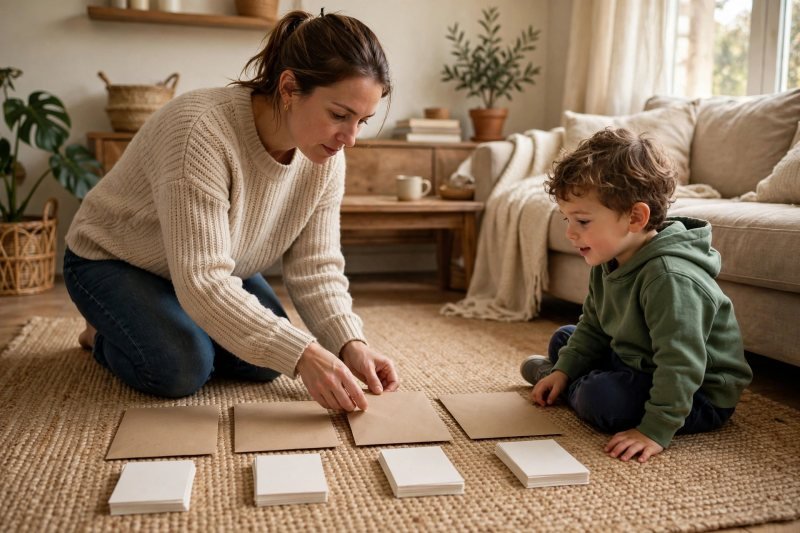
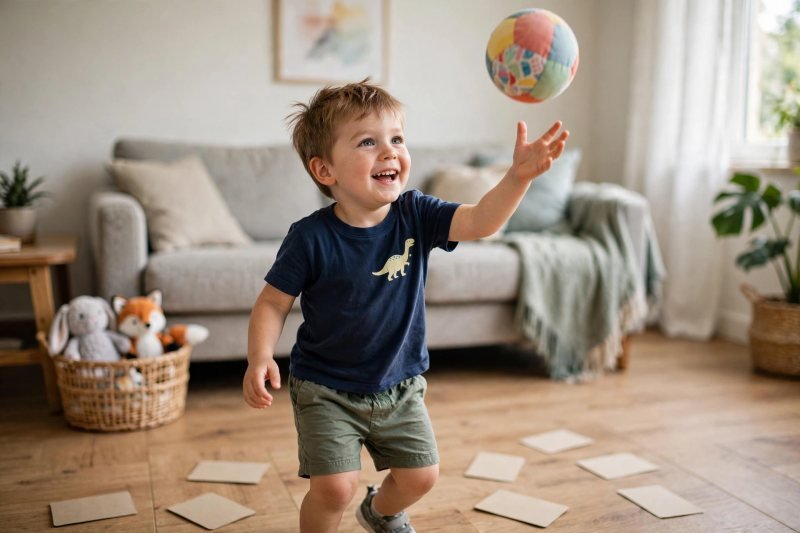
Phase 1 — weeks 1–2, the easy wins. The words: the, I, a, is, my, me, we, you, go, see. Games: Say it and do it (show go, race across the room); treasure hunt (find face-down cards, flip and read to keep); ball toss read (whoever catches reads the top card). Checkpoint: reads all 10 without hesitation on two different days, and inside a tiny sentence like "I see you."
-
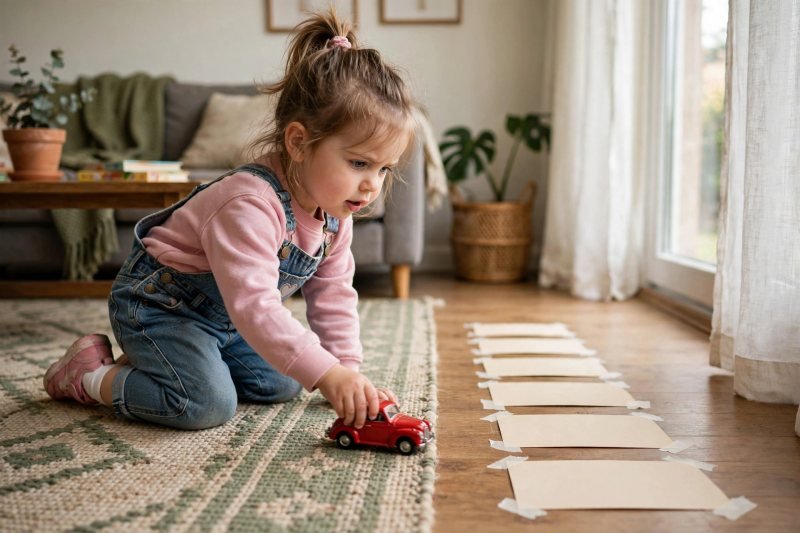
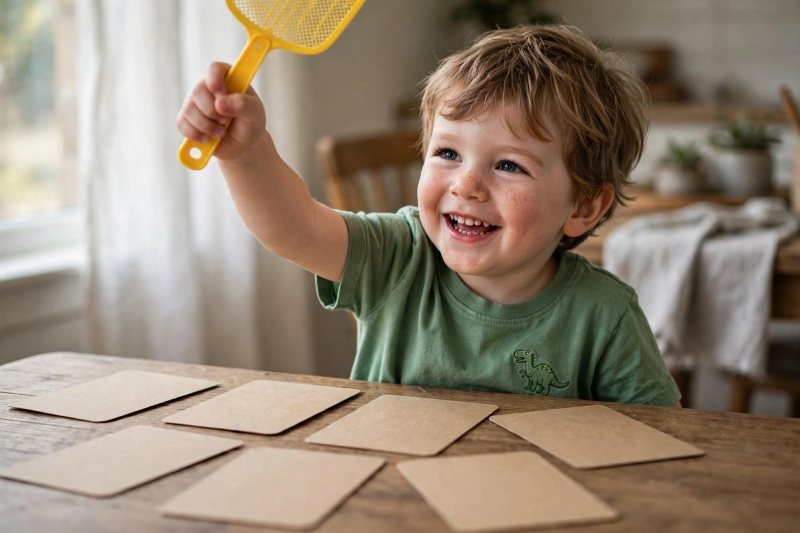
Phase 2 — weeks 3–4, the sentence builders. The words: to, in, it, and, up, can, not, red, big, run. Games: Word parking lot (drive a toy car to the named face-down card — "park on can!" — flip and read); fly swatter splat (splat the called word, read it aloud); sentence parking (build two- and three-word sentences in the pocket chart). Checkpoint: reads at least 8 of 10 instantly, plus two short sentences like "I can run" and "We go up."
-
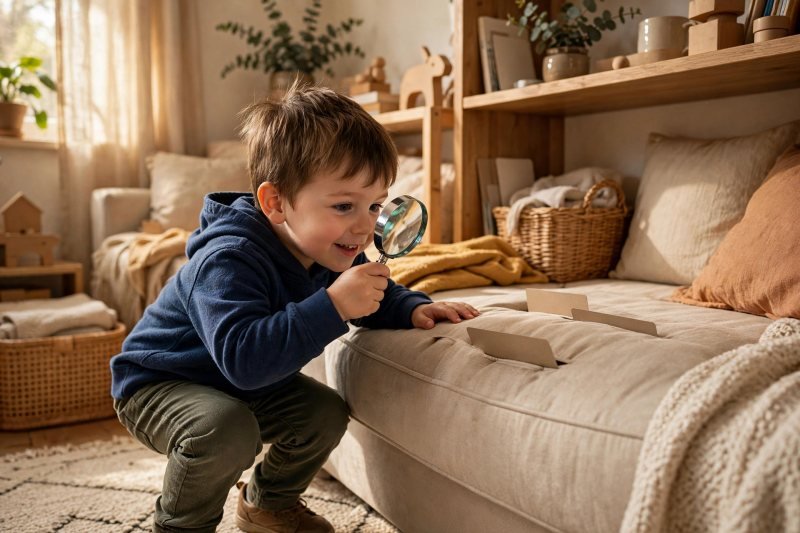
Phase 3 — weeks 5–6, reading real sentences. The words: play, look, come, here, down, where, help, find, make, jump. Games: Word detective (hide cards; clue with the words: "The jump card is down low — can you find it?"); word fishing (magnetic rod; read each catch); action charades (act the card — jump! look! play! — then read it). Checkpoint: reads a sentence card like "Come and play with me" smoothly, without getting stuck.
-
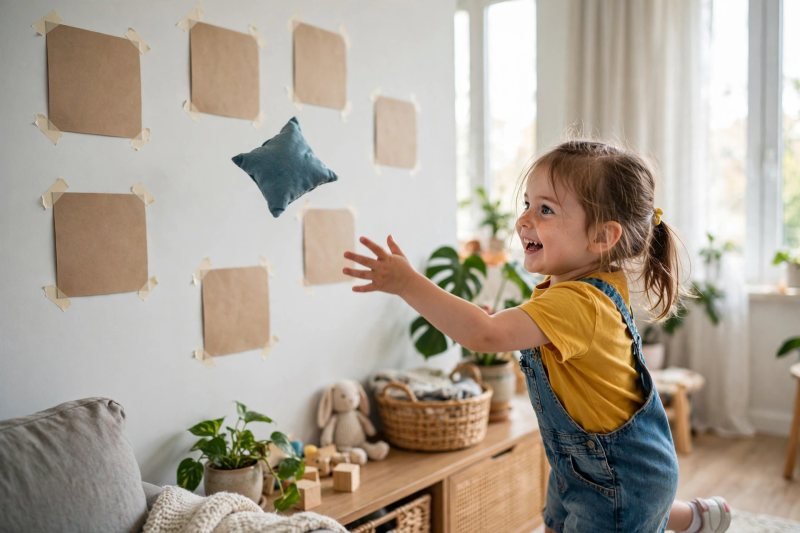
Phase 4 — weeks 7–8, the tricky ones. The words: said, funny, away, little, blue, yellow, one, two, three, for. Games: Word basketball (toss a beanbag at the called face-down card on the wall, then read it); color and count hunt ("Find something blue — now read the card!"); silly sentence factory (build silly sentences from all four phases; read in your silliest voice). Checkpoint: reads all 40 end to end at a calm pace; the odd wobble on said or funny is normal.
-
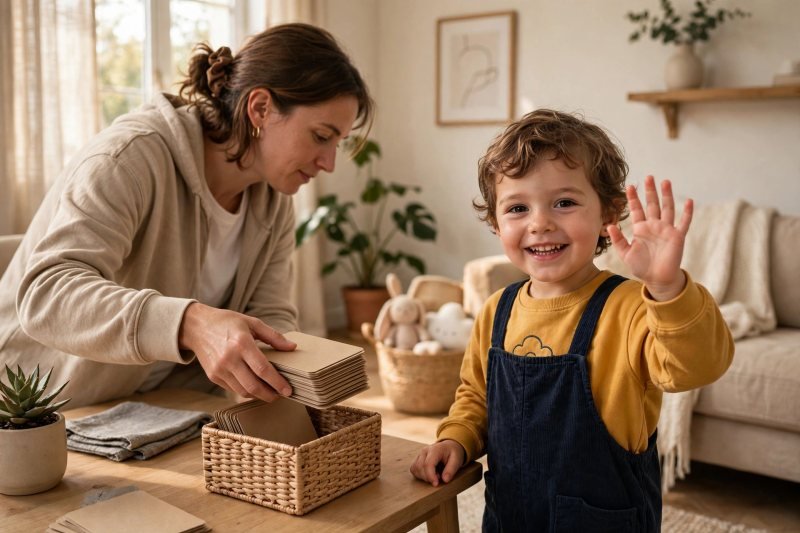
The 5-minute daily routine. Same shape daily: minute 1, warm up with 3 old words — fast, fun, all praise. Minutes 2–3, one phase game; new words enter here, two or three at a time. Minute 4, build and read one sentence together, finger tracking under the words. Minute 5, celebration — your child's pick. End while they still want more. Timer visible; when it dings, practice ends, even mid-game.

-
Game bank for any phase. Rotate freely — novelty fuels repetition: memory match (two copies face-down; flip two, read both, keep pairs); hopscotch words (hop to the called word); bath words (bath crayons — read, then wash away, supervised); window words (markers on a low window); flashlight find (shine, read, collect); sand tray write (trace, then read); silly voice read (robot, whisper, opera); word of the day (one card on the fridge).
-
Review weeks without pressure. After Phase 2 and after Phase 4, take a week with no new words — just games with the whole collection. Pulling a word from memory during play (retrieval practice) is what locks it into long-term memory. A wobbly word rejoins the daily game; nothing is "failed." Keep it pressure-free: the moment practice feels like a test, learning slows.
-
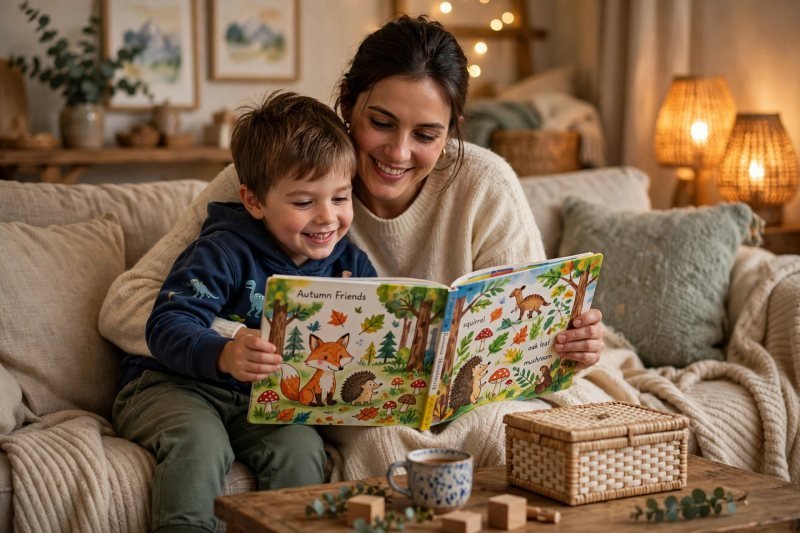
When to move beyond the 40. When all 40 are read instantly — on cards and spotted in beginner books — move to the kindergarten list (the 52-word Dolch primer set). Our sight words for kindergarten guide continues the same phased approach. Meanwhile: point words out in picture books, borrow decodable readers, let your child "read" a familiar book to a stuffed animal.

-
What to avoid. Drills past 5 minutes — the timer is sacred. Tricky words first — teaching said early convinces a four-year-old that reading is hard. Quiz energy — narrate and celebrate instead of interrogating. New words before old ones are solid — trust the checkpoints. Comparing to siblings or classmates. Skipping the games — the games aren't the reward; they are the learning.


Make it easier
Split any phase into two half-phases of 5 — the sequence still works, it just runs longer. For children who tire quickly, Phase 1 alone is a complete win: those 10 words unlock more reading per word than anything else you'll teach this year. Pair card sessions with pointing the words out in a favorite picture book.
Make it harder
Build sentences with three or four sight words, add a gentle timer to the ball-toss game, or let your child write the words in the sand tray or with chunky crayons — writing a word cements it. Confident fives can spot the words in library books and read a page of a very easy reader aloud to you. For more game ideas, our sight word games turn the same 40 words into races, hunts, and relays.
Other ways to play it
- Car ride: keep the current phase's cards in the glove box for red-light reading.
- Bath time: bath crayons on the tub, supervised.
- Outside: chalk the words big on the driveway and hop to each one.
- Big-kid teacher: an older sibling "teaching" the words is practice in disguise — for both.
How it changes by age
- Written for 4–5-year-olds — children who know most letter names or sounds and are starting to notice words in the world. Eager threes can try just the first 5 words of Phase 1, or start with our guide to the first 10 sight words. Fives and sixes who already read these 40 easily should move to the kindergarten list. No deadline: finishing solid at five-and-a-half beats rushing at four.
What they're learning
High-frequency word recognition (these 40 words make up a huge share of early-reader text), left-to-right tracking, reading words inside sentences, retrieval and recall — and the belief that reading is something they can do. Each phase also sneaks in turn-taking, listening, and following multi-step game rules. The same playful approach powers our phonics activities for preschoolers, which build the sounding-out side of early reading.
Clearing up
Store each phase's cards in its labeled envelope; finished phases live in a "word box" your child can revisit anytime. Wipe bath crayons and window markers the same day. Rotate games before boredom sets in — a fresh game makes old words feel new again.
Questions parents ask
What order should I teach sight words in for pre-K?
How many sight words should a 4-year-old know?
How long does it take to learn 40 sight words?
What if my child keeps forgetting sight words?
Should I teach sight words or letter sounds first?
When is my child ready for kindergarten sight words?
No child is "behind" on this plan — the checkpoints, not the calendar, decide the pace. If life interrupts for a week, pick up with a review game, not guilt. And read aloud together every day regardless: the 40 words are a tool, but the love of stories is the engine they'll run on for years.

save it for later
Pin this for the next rainy afternoon
Keep it on a board so it is there when you need it, rather than when you happened to find it.
Save to Pinterest


