


Short I CVC Words: 40 Words (Pig, Pin, Sit) for Kindergarten Readers
40 short i words for kindergarten readers — pig, pin, sit and friends — taught as a five-day reading week: one word family a day, with sort-and-hunt games.
Short i CVC words are 40 three-sound words with the quick "ih" vowel — pig, pin, sit, lip, tick — in five families: -ig, -in, -it, -ip, -ick. Teach one family a day for a week: warm up the "ih" sound, read and act — hatching egg words, sliding words down a ramp — and end each evening with a sort-and-hunt: hide the cards, find them, read them, sort them.

The short version
- All 40 are genuine CVC words with a true short-i sound, verified against a pronunciation dictionary: -ig, -in, -it, -ip, -ick.
- Five days, one family per day, 10–15 minutes — practice stays light.
- Sort-and-hunt is the nightly routine: hide, find, read, sort into family baskets.
- Act each word (wigs, kicks, sips) so meanings stick through movement.
- Two minutes of evening re-reading keeps the words fresh.
- Age
- Ages 5–6
- Prep
- 5 min
- Play time
- 10 min
- Mess
- None
- Difficulty
- Easy
- Where
- Indoor
Why kids love this
Short i words sound like giggles — "ih, ih, ih." The week itself is the game: Monday is the pig family, Friday is the chick family, and every evening ends with a treasure hunt for word cards: hatching eggs, sliding words down ramps, pinning words to a board.
What you'll need
- 40 index cards or small slips of paper
- A marker
- A pig plush or toy pig
- A corkboard or cushion with big pushpins (or tape)
- A toy slide, wooden ramp, or cookie sheet propped on books
- 6 plastic eggs that open
- A toy chick or small stuffed bird
- 5 small baskets or bowls (one per word family)
Before you start
1. Write the 40 words on cards, one per card, lowercase: the -ig pile (pig, big, dig, fig, jig, rig, wig, zig), the -in pile (pin, win, fin, bin, tin, kin, gin, sin), the -it pile (sit, hit, bit, fit, kit, lit, pit, wit), the -ip pile (lip, hip, dip, sip, tip, rip, nip, zip), and the -ick pile (tick, pick, kick, lick, sick, nick, wick, chick). 2. Put each pile in its own basket. Hide the four later-day baskets in a closet until their day.
How to do it
-
Warm up the "ih" sound. Short i words make a bright, quick "ih," like the start of "itchy." Scratch your arms like a mosquito bite itches, saying "ih, ih, ih" with a grin. Then catch it in words: "p-ih-g… pig! m-ih-lk… milk! f-ih-sh… fish!" No cards yet — just ears and giggles, two or three minutes.

-
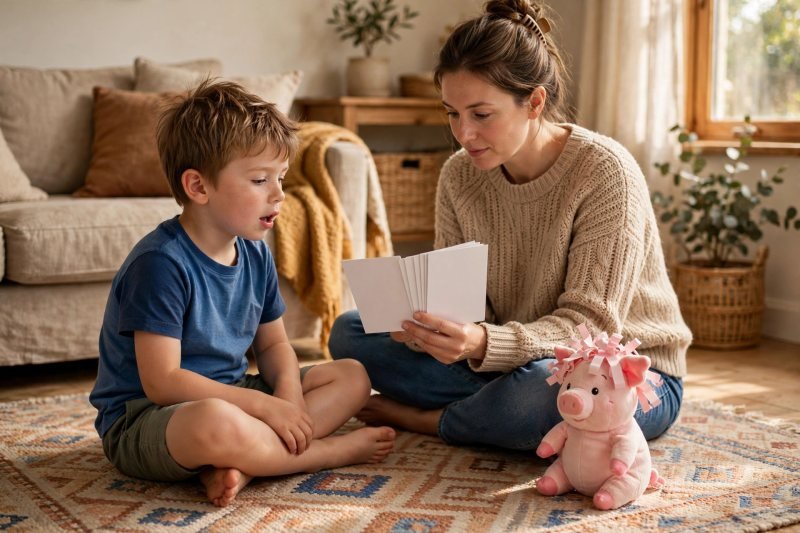
Day 1: meet the pig family (-ig). Bring out pig, big, dig, fig, jig, rig, wig, zig. Stretch the first card together — "p–ih–g… pig!" — then your child reads the rest: wiggle for "jig," march for "zig," and put a pretend wig on the pig plush.
-
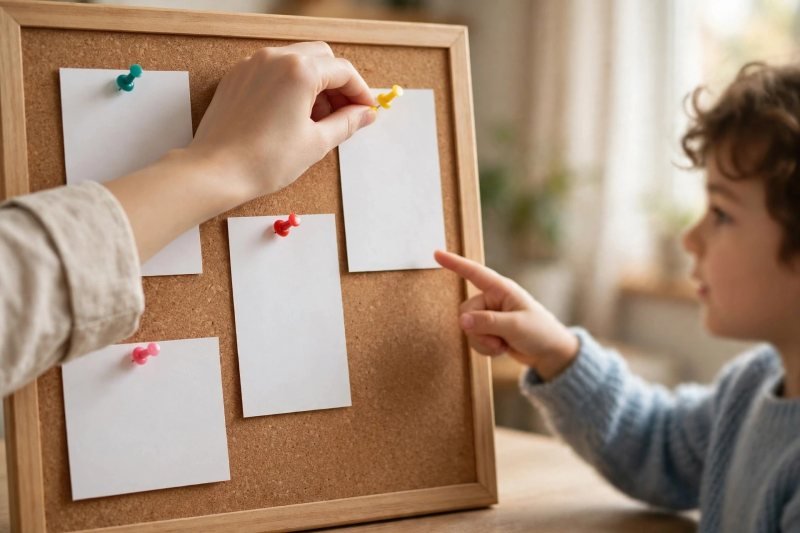
Day 2: pin up the -in family. Out come pin, win, fin, bin, tin, kin, gin, sin. You pin each card to the board after your child reads it — "p–ih–n… pin!" — building a word wall through the week. Whisper the tricky meanings: "kin" means family.
-
Day 3: sit down with the -it family. Read sit, hit, bit, fit, kit, lit, pit, wit from a cushion and act as you go — everybody sits for "sit," shows muscles for "fit," mimes lighting a candle for "lit."

-
Day 4: race the -ip family down the zip slide. Read lip, hip, dip, sip, tip, rip, nip, zip at the top of the ramp, then release each card — "z–ih–p… ZIP!" — and read it again at the bottom. Sip pretend juice for "sip," point at hips for "hip."

-
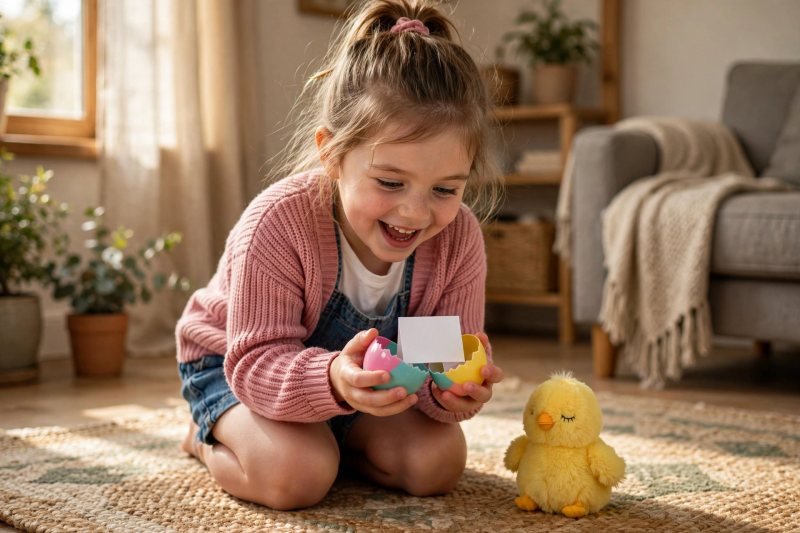
Day 5: hatch the chick family (-ick). Tuck tick, pick, kick, lick, sick, nick, wick, chick into the eggs and hide them around one room. Your child cracks each egg and reads the word inside. Note: "ck" makes one /k/ sound, so these stay true three-sound words.
-
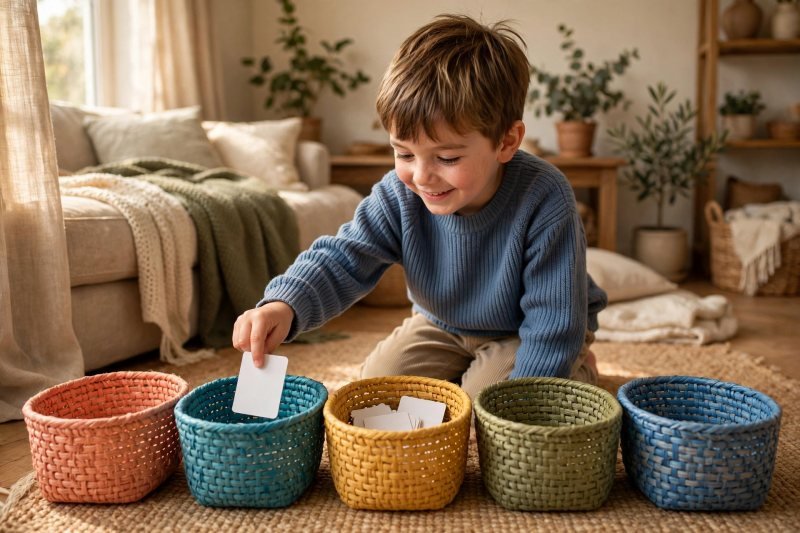
Every evening: the sort-and-hunt. The routine that glues the week together. After reading the day's family, you hide its cards around one room while your child covers their eyes. They hunt, read each find aloud, and drop it into the right family basket.
-
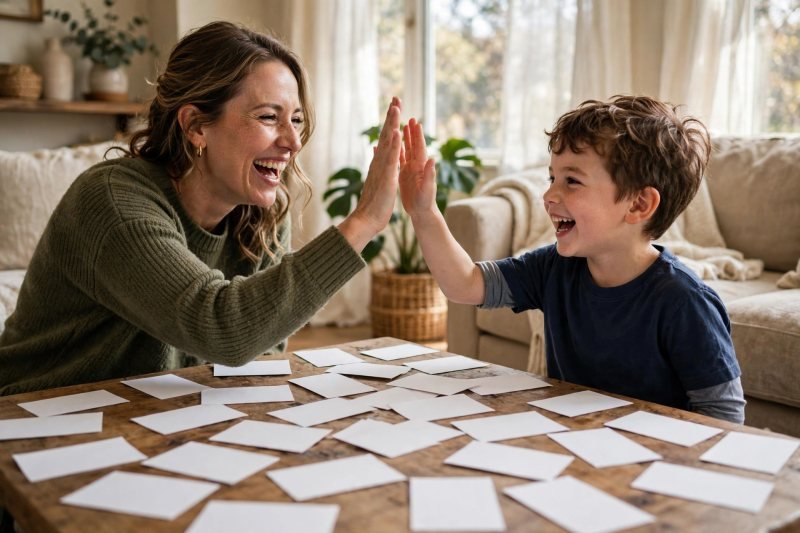
Weekend round-up: the grand hunt. Scatter all 40 cards around the living room. Your child hunts them down, reads each find, and sorts them into the five baskets. Cheer the fast ones; stretch the tricky ones together ("w–ih–ck… wick!").

-
The victory lap: read every basket. Line up the five baskets and read each family start to finish, with a drumroll pat on the knees between families. End on an easy favorite — "pig" or "zip."
-
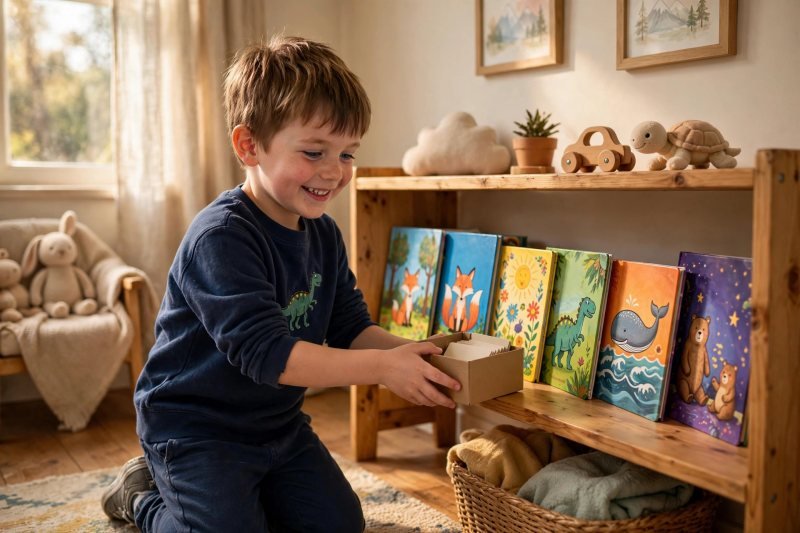
Keep the box for next week. Stack all 40 cards in one basket where your child can reach it. Two minutes re-reading a favorite family each evening keeps the words fresh.


Make it easier
Read just four words per family per day; finish the family tomorrow. You read each card first; your child echoes, then sorts it into the right basket. Keep cards face down and flip one at a time. If a family stalls, replay the "ih" warm-up (step 1) as a listening game for a few days.
Make it harder
Mix two baskets (pig, pin, sit) so your child reads the whole word, not just the pattern. Let your child hunt and sort all 40 with no reading help — you only check the baskets. Ask for a two-word phrase with each find: "big pig," "tin bin," "lit wick." For review, revisit our short a CVC words. To check real decoding instead of memory, try alien words phonics practice once the -it family is solid. For extra sound play between families, try rhyming words for preschoolers.
Other ways to play it
- Bathtub version: foam letters spell the day's family on the tub wall.
- Sidewalk version: chalk the words on the driveway; hop and read each landing.
- Toy-shop version: stuffed animals order words ("Pig, please!") and your child reads the card to serve them.
- Speed round: pile all 40 face down; take turns flipping and reading, and the reader keeps the card.
How it changes by age
- Built for ages 5–6 who know their letter sounds and have sounded out short a words. Younger fours can echo words in the egg hunt and slide games. If your six-year-old reads all 40 cold on day one, skip to the grand hunt. If letter sounds are still wobbly, start with beginning sounds activities for preschool before the -ig family.
What they're learning
Blending with a new vowel: the same sound-out skill, now with "ih" — proof blending transfers across vowels. Onset-rime awareness: pig, big, and dig share an ending; -in and -it differ by one letter. Sorting by pattern: the sort-and-hunt trains children to notice word structure — the seed of spelling. Print stamina: 40 words across a week, with no long sessions. Vocabulary: real meanings for kin, fin, wit, wick, and chick, acted out so they stick. Next step: for the full sequence these families fit into, see how to teach your child to read.
Clearing up
Cards back into their five baskets, eggs nested together, pins in the box. Leave today's basket on the coffee table — seeing it invites an unprompted re-read tomorrow.
Questions parents ask
What are short i CVC words?
How many short i words should my kindergartner learn?
How do I keep the five short-i families straight when they sound alike?
My child reads "pig" easily but freezes on "chick" — what should I do?
Is the "-ick" ending really a CVC word?
Which short vowel should my child learn after short i?
Short i is the natural second vowel after short a: same method, new middle sound. If your child mixes up -in and -it, tap one finger per sound while stretching — the difference lives in the final sound. When all five families feel easy, mix them in the full CVC words list.

save it for later
Pin this for the next rainy afternoon
Keep it on a board so it is there when you need it, rather than when you happened to find it.
Save to Pinterest


