


Dry Skin on Kids' Faces: Causes and Gentle Fixes
Dry skin on kids' faces is usually winter air, drool, and over-washing at work. These gentle fixes — lukewarm water, soak-and-seal moisturizing, and a barrier layer before going outside — calm winter cheeks fast.
Dry skin on kids' faces usually comes from cold wind, drool and repeated wiping, over-washing, and fragranced products. Fix it gently: wash with lukewarm water only, moisturize with a fragrance-free cream while skin is still damp, paint on a barrier layer before cold outings, and dab — never drag — when wiping. Call your pediatrician for cracked, weeping, or spreading patches.

The short version
- Most winter face dryness is a pile-up of small causes — wind, drool, wiping, hot washing, fragrance — not one big problem.
- Wash faces with lukewarm water and barely any cleanser, then pat dry and moisturize while skin is still damp.
- A barrier layer of cream or ointment before cold, windy outings prevents classic winter cheeks.
- Dab with a soft damp cloth instead of dragging dry tissues or fragranced wipes across dry skin.
- Cracked, weeping, crusting, or spreading patches — or no improvement in a couple of weeks — mean a pediatrician visit.
- Age
- Ages 2–3
- Play time
- 5 min
Why kids love this
A toddler cannot say "my cheeks sting," but dry skin on a kid's face announces itself anyway — in rubbing, face-scratching, and fussiness at washing time. Kids love this routine because it replaces the sting with comfort: warm water that never shocks, a soft dab of cream that feels like a cuddle, a magic "shield" painted on before the cold park, and cheeks that stop bothering them. Gentle and predictable beats every battle at the sink.
What you'll need
- A fragrance-free moisturizing cream or ointment for sensitive skin (plain, no scent)
- Lukewarm water and a soft washcloth or your clean hands
- A soft towel for patting dry — kept just for faces if you can
- A small amount of plain petroleum-style ointment for the outdoor barrier layer, if your pediatrician agrees
- Soft cotton bedding and pajamas for the nighttime round
- A notebook or phone note to track which days and triggers make cheeks worse
Before you start
1. Take one honest look at the face in daylight before changing anything — you are checking for warning signs (see Safety notes) as much as dryness. 2. Line up the simple daily flow first — this article follows the same gentle rhythm as a simple skincare routine for kids: wash less, moisturize more, protect before weather. 3. Move any fragranced wipes, scented lotions, and bubble bath away from face care for the next two weeks, so you can see what actually helps.
How to do it
-
Look closely at the face in good daylight. Sit your child by a window or in bright bathroom light and look slowly — cheeks, chin, around the mouth, the nose folds, and behind the ears. Say, "We are cheek detectives today! Show me where it feels rough or itchy." Dry skin on kids' faces usually looks like pale, flaky patches, rough pink cheeks, or fine scaling that catches the light. What you are really checking for is what dry skin is not: cracks, weeping or oozing spots, honey-colored crusts, or rapidly spreading redness belong to the pediatrician list in the Safety notes, not to home fixes — spotting the difference first is the most important step in this whole guide.

-
Match the patches to the cause in your child's day. Think through the last week like a checklist, out loud if it helps — cold wind on walks and at the park; drool and runny noses wiped a dozen times a day; face washing with warm water and soap morning and night; fragranced wipes after every snack; dry heated indoor air all night. Say, "I think the cold wind and all that wiping made your cheeks thirsty." Most winter face dryness is a pile-up of small causes, not one big one, and naming them tells you exactly which fixes below matter most for your child — barrier before wind, gentler wiping, less washing, more moisturizing.

-
Wash the face gently — lukewarm water, barely any cleanser. At the sink or bath, splash or wipe the face with lukewarm water only — never hot, and never cold straight from a winter tap. For a normally grubby toddler face, plain water is enough most days; when you do need cleanser, use a tiny amount of a gentle fragrance-free one, only where dirt actually is, and rinse with more lukewarm water. Say, "Warm and gentle — we are rinsing, not scrubbing." Then pat dry with the soft towel, leaving the skin just slightly damp. Every scrub, hot rinse, and soapy wash strips the face's thin natural oils, and a face this age has very little oil to spare.

-
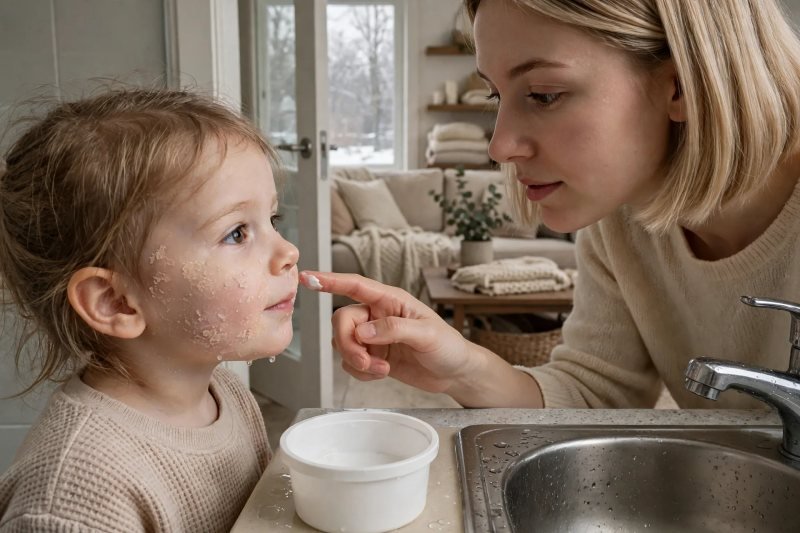
Moisturize right away — the face version of soak and seal. While the skin is still damp from washing, smooth a fingertip amount of fragrance-free cream over each cheek, the chin, and any dry patch, using soft upward dabbing motions rather than rubbing. For the driest, roughest patches, a thin layer of ointment over the cream adds a protective seal. Say, "Dab, dab — we are sealing the water in so your cheeks stay soft." If this is a brand-new product for your child's face, patch test it first on one small area — inside the elbow or a tiny spot along the jaw — and check it over the next day before going all-in. Faces get moisturized at least twice a day in winter: after the morning wash and as part of the bedtime round.
-
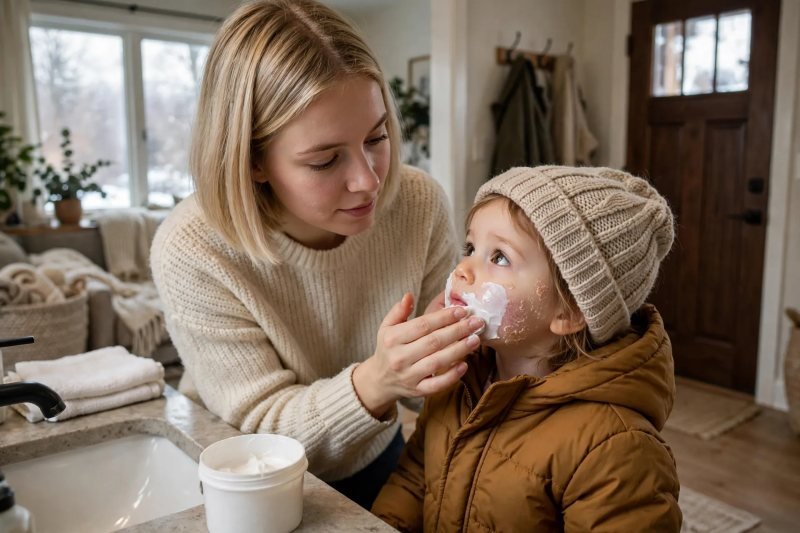
Paint on a barrier shield before cold or windy outings. Ten minutes before you head out into cold or windy weather, smooth a slightly thicker layer of your cream — or a thin layer of plain ointment, if your pediatrician is happy with it — over the cheeks, chin, and nose. Say, "Shield on! Now the cold wind cannot steal your soft cheeks." This barrier sits between the skin and the weather, slowing the moisture loss that creates classic winter cheeks in a single park visit. Wipe drool and runny noses during the outing with a soft cloth dabbed, not dragged, and reapply the shield when you come back inside if cheeks look pink and feel rough.
-
Soothe through the day with dabbing, not wiping. Between washes, the kindest tool you own is technique — when food, drool, or snot needs removing, press a soft damp cloth against the skin and lift; never drag a dry tissue or fragranced wipe across a dry cheek again and again. Say, "Press and lift — gentle like a butterfly landing." Keep a small tube of your fragrance-free cream where meals happen, and dab a little onto cheeks after lunch clean-ups so the afternoon does not undo the morning. Every rough wipe is friction a dry face feels for hours, so this one habit change often improves cheeks faster than any new product.

-
Do the thicker nighttime round before bed. After the evening wash and pat-dry, repeat the moisturizing step with a slightly more generous layer — cheeks, chin, mouth corners where drool pools overnight, and behind the ears. Dress your child in soft cotton pajamas, keep the bedroom air from getting desert-dry if you can, and let the long night do the repair work. A bedtime routine chart on the bedroom wall makes the night round as predictable as brushing teeth. Say, "Night cream on — your cheeks get to drink while you sleep." Night is when undisturbed skin recovers best, and many parents see the clearest morning-to-morning improvement from this round alone, which makes it the anchor of the whole routine.

-
Track one week, then judge — and know your exit signs. Give the routine a fair week, noting in your little log which days cheeks looked better or worse and what the weather, washing, and wiping were like that day. Say to yourself, honestly, "Better, same, or worse?" Faces following this gentle pattern usually calm noticeably within a week or two. If patches are not improving, are spreading, or show any of the warning signs — cracked, weeping, crusting, swelling, fever alongside, or sleep-breaking itch — stop troubleshooting at home and call your pediatrician, and keep following a steady gentle skincare routine for kids in the meantime. Dry faces are common; stubborn or changing ones deserve a professional look, not a stronger cream.



Make it easier
Keep the routine to wash–moisturize–shield, three moves you can do half-asleep; skip everything else on busy days. A morning routine chart by the sink helps the sequence stick. Put the cream by the sink and a small tube by the high chair so every step happens where life happens. Let your toddler hold the tub lid and "call" the cheek checklist — helping hands wipe less.
Make it harder
Teach an older three-year-old to dab their own cheeks with a fingertip of cream you hand them, while you do the barrier layer. Let them be the weather reporter — "Windy today!" means they remind you the shield goes on before the park. Review the week's log together with stickers on calm-cheek days so progress is something they can see.
Other ways to play it
- Drool-heavy weeks (teething, colds): the barrier layer is your best friend — reapply a thin dab around the mouth and chin after every wipe, and change wet bibs and tops promptly so damp fabric does not sit on skin.
- Extremely cold or windy days: shorten outdoor sessions, cover cheeks with a soft scarf held by an adult or a balaclava-style hat, and do an extra moisturizing round the moment you come in. More ideas for the coldest weeks live on the winter hub.
- Summer dryness (sun, pool, air conditioning): the same routine holds — gentle rinsing after swimming, moisturizer after, and shade plus a hat as the summer version of the shield; ask your pediatrician about sun protection for your child's age and skin.
How it changes by age
- Age 2: twos get the routine done to them, fast and narrated, with a toy in hand at the sink. Expect to reapply after every meal and nose-wipe; at this age the dab-don't-wipe habit is the whole game, and it is your habit, not theirs.
- Age 3: threes can dab their own cheeks, announce "shield time," and report which cheek feels itchy. Give them the mirror at the sink — a child who can see the flaky patch understands why the cream matters, and cooperation jumps.
What they're learning
Body awareness: naming cheeks, chin, and "rough" versus "soft" builds the body map and feeling words. Cause and effect: wind today, pink cheeks tonight; shield on, cheeks fine — weather science they can feel. Gentle touch: press-and-lift dabbing teaches control of their own hands on delicate things. Habit building: a twice-daily face routine is early self-care — one of the life skills they will still own at ten. Observation: a week-long log with stickers teaches that tracking beats guessing.
Clearing up
Cap the tub immediately — face cream lives by the sink, not in the bath toy basket. Launder the face towel frequently, because it collects cream and drool, and keep a second one rotating so a clean soft towel is always ready. Wipe the sink rim of ointment smears (slippery), and store the small meal-time tube out of your toddler's unsupervised reach. Check the log weekly and retire anything that made cheeks worse.
Questions parents ask
What causes dry skin on a kid's face?
How do I fix dry skin on my toddler's face?
Why are my child's cheeks always red and dry in winter?
Can I use my own moisturizer on my toddler's face?
When should dry skin on a child's face see a pediatrician?
Should I stop washing my toddler's face if it is dry?

save it for later
Pin this for the next rainy afternoon
Keep it on a board so it is there when you need it, rather than when you happened to find it.
Save to Pinterest


