


Alliteration Activities for Preschoolers: Silly Sound Games That Teach Listening
Ten laugh-out-loud alliteration games for preschoolers — silly sound play with names, toys, and tongue twisters that trains little ears to hear beginning sounds.
Alliteration activities for preschool build beginning-sound awareness through silly games like the Silly Name Game, Toy Parade, and tongue-twister chants. These ten sound-play games help 3- and 4-year-olds hear that "silly" and "snake" start with the same sound — the key listening skill for early reading. No materials needed, 15–25 minutes, zero mess.

The short version
- Alliteration means words that start with the same sound ("silly snakes," "bouncy bears").
- Ten games in play order: names and toys first, chanting next, make-your-own silliness last.
- Trains beginning-sound awareness — the foundation of phonics and early reading.
- Ages 3–4, 15–25 minutes, no prep beyond favorite toys, zero mess.
- Age
- Ages 3–4
- Prep
- 5 min
- Mess
- None
- Difficulty
- Easy
- Where
- Both
Why kids love this
Alliteration activities for preschool are one of the simplest ways to build early reading skills. The whole idea in one plain line: alliteration just means words that start with the same sound, like "silly snakes" or "bouncy bears." Play the ten games below in order — if the giggles come, the learning is already happening.
How to do it
-
**Bestow a silly-sound name.** Sit on the floor facing your child with a basket of toys nearby, pull your silliest face, point at them playfully, and announce a nickname built from the first sound of their name — "I dub you... Jumpy Jayden!" — then have them echo it back in the same silly voice; nickname the rest of the family next ("Marvellous Mum," "Dizzy Dad"), stretching each first sound before the giggles take over; when they're roaring along, line up five favourite toys on the low table — the parade is about to begin.

-
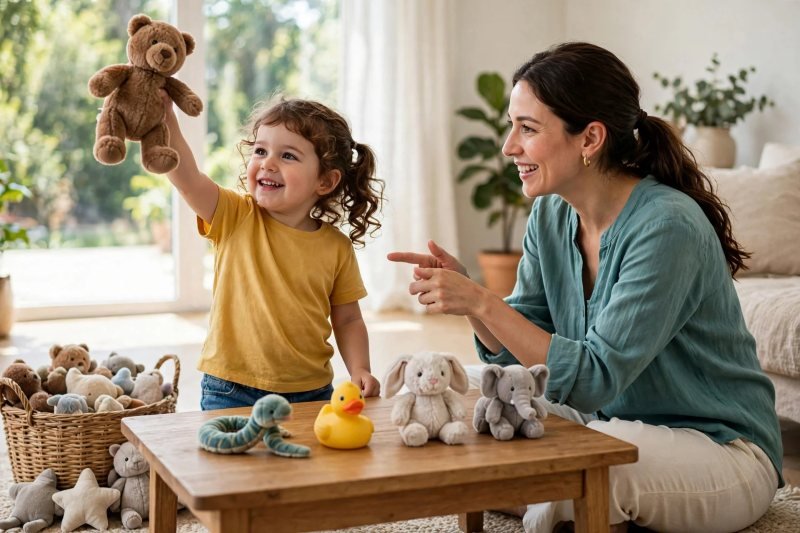
**Parade the toys.** Stand the toys in a row — a snake, a duck, a rabbit, an elephant — and let your child pick up the first one and hold it high overhead; chant its new alliterative name together ("Bouncy Brown Bear!") while they march it down the table, then echo it back to them; work through the row one toy at a time — "Slithery Green Snake," "Dizzy Yellow Duck," "Bouncy White Bunny," "Gentle Grey Elephant" — then hand the naming job to your child and applaud every invention; when the last toy has paraded, drop to the rug together — the snakes are about to slither.
-
**Slither like silly snakes.** Lie tummy-down side by side on the rug with arms stretched out ahead like a snake's body, and hiss a long "ssssss" together; then chant, stretching every first sound — "ssssilly sssnakes ssslither and sssslide" — and wriggle slowly across the rug as you say it; take turns leading a new line each while the other echoes — "sassy snakes sing," "sleepy snakes snooze" — until the hissing fills the room; then jump to your feet, because a bouncing bear is barging in.

-
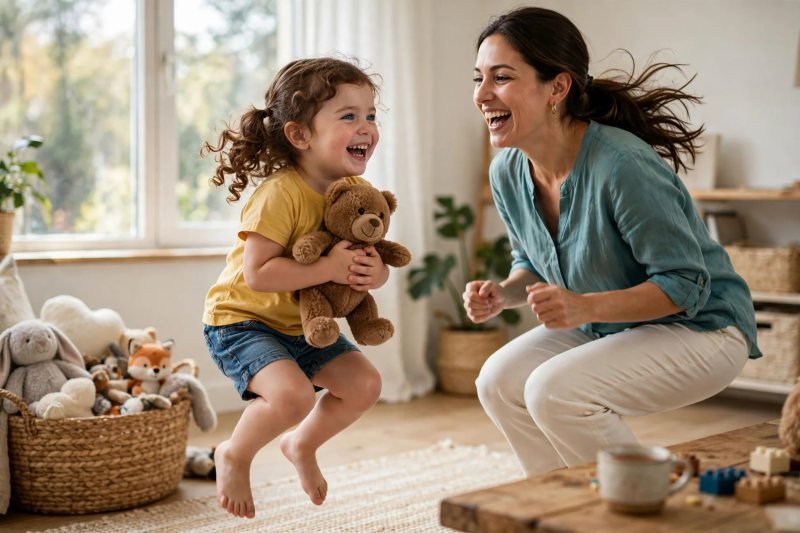
**Bounce like bouncy bears.** Crouch down together, tuck a teddy bear under one arm, and chant "bouncy, bouncy bears!" while hopping in place; add a fresh line every round — "big brown bears bounce," "bouncy bears bump" — clapping the beat as you hop; let your child lead the chant while you copy their speed, going faster and faster until you both collapse laughing; when the bouncing burns out, sit back down face to face — the trickiest sounds are next.
-
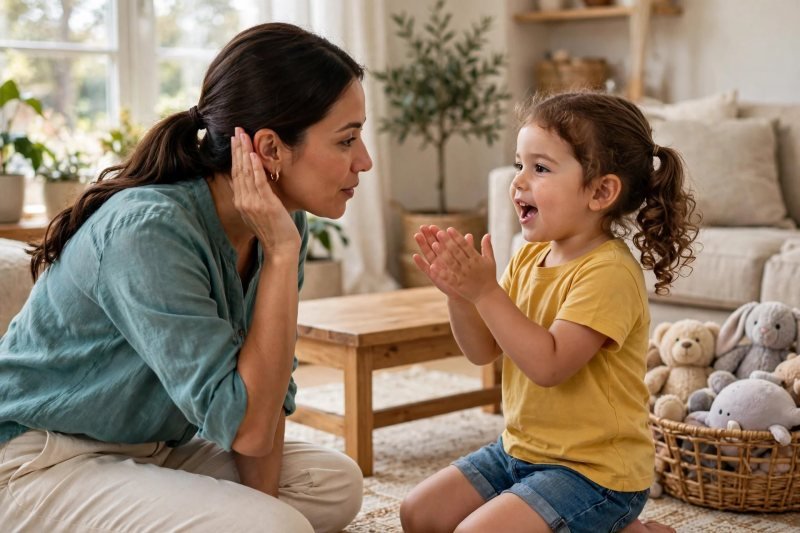
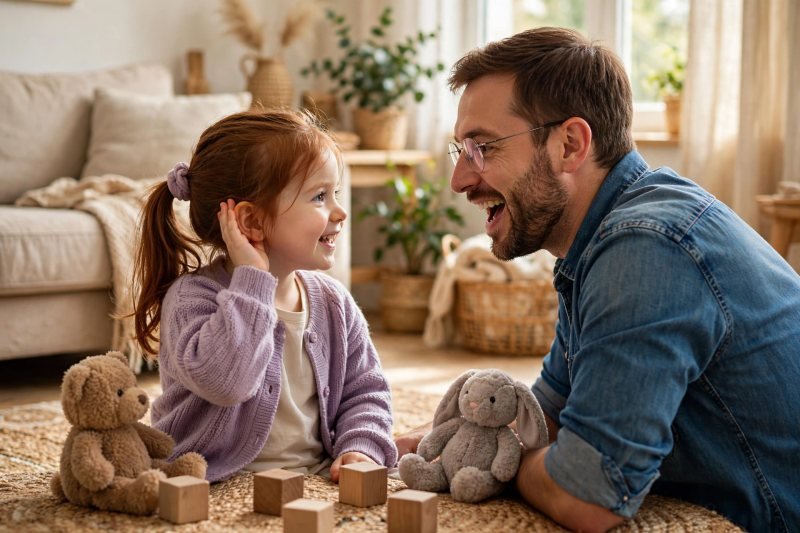
**Clap out tongue-twister chants.** Cup your hand to your ear as if straining to hear, and have your child chant while clapping the beat — you say a line, they echo it: "Silly Sammy sang a song"; start slowly, then go quicker, then as fast as mouths allow — falling apart is the whole fun; try more — "Busy bees buzz by," "Tiny turtles tip-toe" — and swap roles so they get to test your tongue too; when the twisters are well and truly tied, bring out the bag waiting on the table.
-
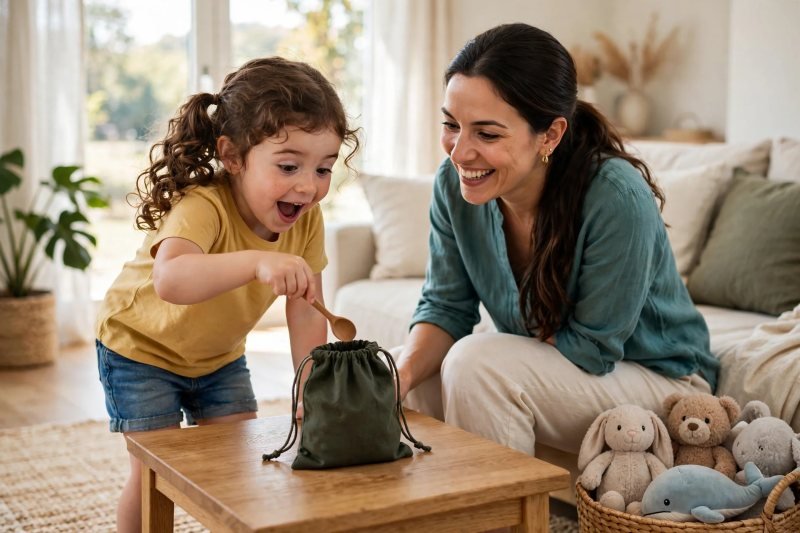
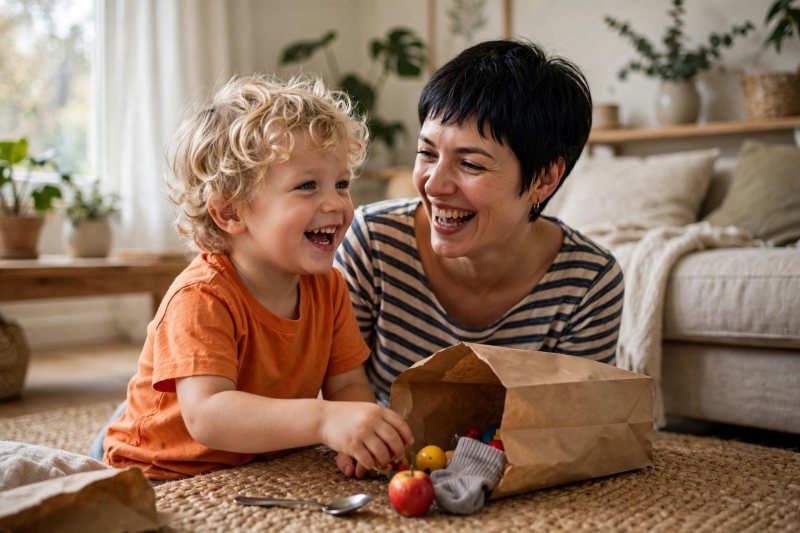
**Pull surprises from the mystery bag.** Set a drawstring bag of small household objects on the table and let your child reach in, feel around, and pull one out with a flourish — a wooden spoon earns a gasp; hold it up and christen it together: "silly spoon!" — then hunt for more matching words: "super spoon," "shiny spoon"; draw the next object and name it alliteratively each time — "super sock," "crazy car," "wobbly whisk" — until three or four surprises are lined up; then push the furniture back — the animals are ready to march.
-
**March the animal parade.** Lift your knees high, stretch your arms out like wings, and stomp-march round the room chanting "tall tigers tip-toe"; take turns choosing the animal and the action — "happy hippos hop," "proud penguins paddle," "lazy lions lounge" — echoing each other's picks as you go; roar, stomp, and waddle the full circuit of the room, then march the parade back to the rug — the picnic blanket is about to be spread.

-
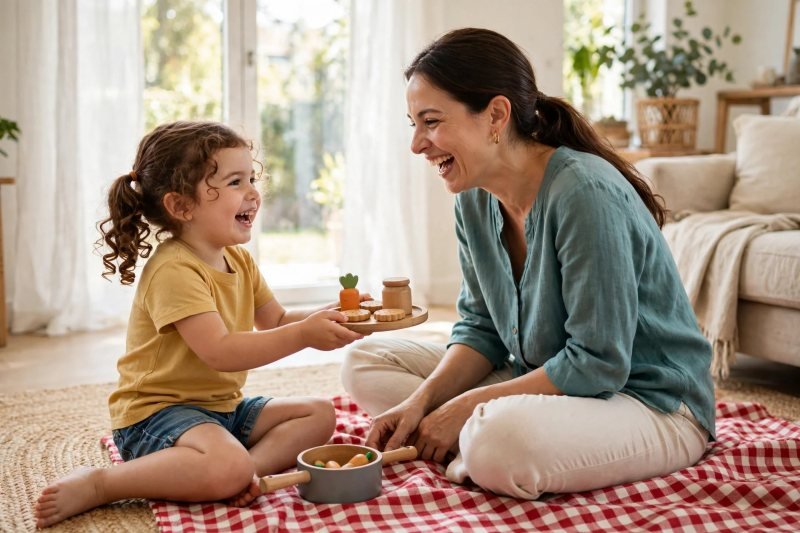
**Host a silly-food picnic.** Spread a red-and-white chequered cloth on the floor, set out the wooden play food, and let your child "cook" and serve — every dish gets an alliterative name as they present the tray: "crunchy carrot coins!"; place your order in kind — "I'll have juicy jelly jars, please!" — and take turns as chef and customer, inventing sillier menus each round — "wobbly watermelon," "soggy spaghetti" — clinking cups to toast every course; when the picnic is polished off, hand the menu-writing to your little chef for one grand finale.
-
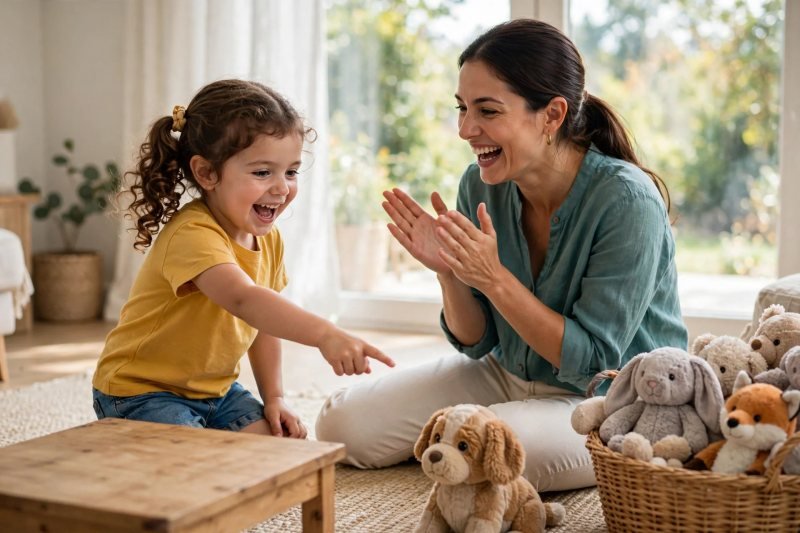
**Crown the name inventor.** Point at each toy in turn — the plush dog, the bunny, the fox — and challenge your child to invent its silliest alliterative name; clap and cheer every attempt, perfect or preposterous ("Wobbly Watermelon!" for the dog earns a standing ovation), and when they hesitate, nudge with "what else starts with that sound?"; take turns so they can rename you too, and once they're inventing three in a row, they're ready for [trickier challenges](https://brightplaydays.com/activities/letter-sounds-games-preschool). Then gather the toys toward the basket — it's time for the goodbye giggle.
-
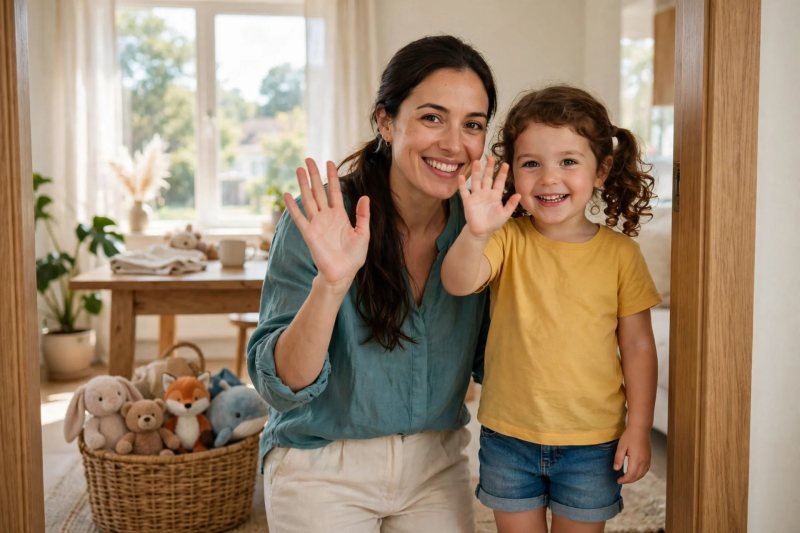
**Wave out with the goodbye giggle.** Stand together in the doorway and pop the toys back into their basket as you go, naming each one a final time — "bye-bye, Bouncy Bear!"; then wave big and trade alliterative farewells: you say "See you soon, silly superstar!" and they answer "Bye-bye, bouncy buddy!"; keep the round going until the giggles fade, then promise the sounds will be waiting tomorrow. Keep the sound play going with these [phonics games](https://brightplaydays.com/activities/phonics-activities-for-preschoolers) or a round of [sound I-spy](https://brightplaydays.com/activities/sound-i-spy-phonics-game).


Make it easier
Slow down and shrink the choices: offer two options ("silly snake or bouncy bear?"), repeat one favorite for days, while your child jumps in on the funniest word. At three, listening and giggling counts as full participation.
Make it harder
Ask them to spot the odd one out ("silly snake, sassy sun, bouncy bear — which doesn't belong?"), or to invent three alliterative words for a sound you pick. Write their best ones down so they see spoken sounds become written words.
Other ways to play it
- **Alliteration walk:** name what you pass with matching sounds ("tall tree").
- **Bedtime round:** whisper the games — "sleepy, sleepy stars."
- **Stuffed-animal audience:** perform chants for the toys.
- **Silly voices:** one round as a robot, a mouse, or an opera singer.
- **Sound of the day:** pick one beginning sound each morning and hunt for it all day.
How it changes by age
- Three-year-olds are sound sponges — they chant along happily but may not invent their own alliterations yet, and that is fine. Four-year-olds start spotting beginning sounds alone and love a wrong one ("bouncy... apple!" gets huge laughs).
What they're learning
**Beginning-sound awareness:** hearing and matching first sounds — the heart of phonemic awareness. **Vocabulary:** reaching for new words to keep each game going. **Memory:** chants build auditory memory. **Language confidence:** silly inventions reward playful risk-taking with words. **Focused listening:** tuning the ear to sounds, not just meanings.
Clearing up
No prep beyond gathering a few toys, no cleanup at all. If your child only wants games 1 and 4 on repeat for a week, that is not a problem — repetition is the learning. Laugh along with "wrong" alliterations.
Questions parents ask
What is alliteration in simple terms for preschoolers?
At what age can kids understand alliteration?
How do alliteration activities help with reading?
What are easy alliteration games for 3-year-olds?
How long should alliteration games last?
Can alliteration games help with speech development?
Why do alliteration games help preschoolers learn to read? Reading starts with the ears, not the eyes. Before children connect letters to sounds, they must notice sounds — and beginning sounds are easiest to catch. When your preschooler shouts "bouncy bear!" and grins, they are doing real phonemic awareness work, matching first sounds across words. Ten giggly minutes beats thirty drilled minutes, every time.
These games pair beautifully with rhyming play. Once your child reliably hears beginning sounds, they are ready for simple letter-sound matching — point out the starting letter of silly words in picture books.

save it for later
Pin this for the next rainy afternoon
Keep it on a board so it is there when you need it, rather than when you happened to find it.
Save to PinterestTry this next
-
Letter of the Week Activities for Preschool: A Complete 10-Step System for 3–4-Year-Olds
Ages 3–4
-
What Order to Teach Letters and Sounds: Sounds First, Here's Why
Ages 3–4
-
Alphabet Recognition Activities for Preschool: 10 No-Worksheet Games for Ages 3–4
Ages 3–4
-
20 Letter Sounds Games in 10 Steps for Preschool
Ages 3–4


