


Activities
Every activity here tells you the three things you actually need to know before you start: how old it suits, how long it takes, and how much mess to expect.
Activities
-

A Thankful Tree
A branch in a jar and a paper leaf each day. Small, slow, and it ends up being the thing everyone reads at the table.
-

Scooping Out a Pumpkin
The insides are the best part. Scooping is a proper sensory activity, and the washed seeds do a week of counting afterwards.
-

Collect the Leaves, Then Sort Them
A bag, a walk, and a kitchen table. The collecting is half of it and the sorting is the other half.
-
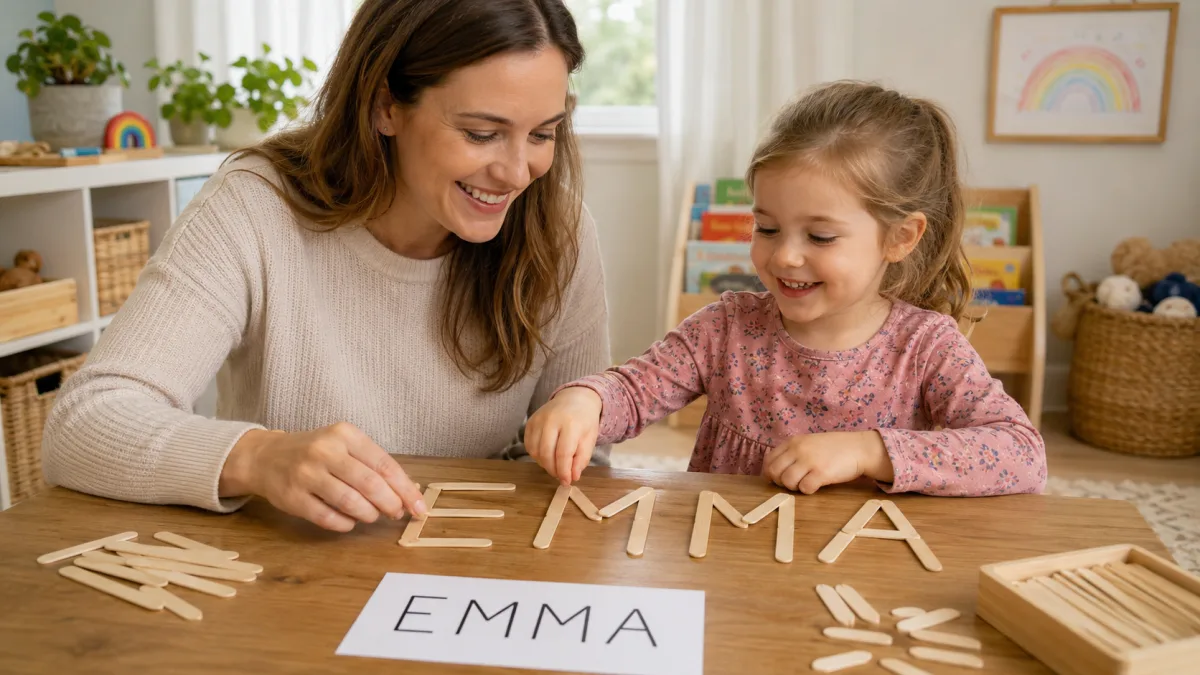
Building Your Name Out of Sticks
Straight lines make most capital letters. Lolly sticks, twigs or straws turn letter shapes into something you build rather than draw.
-
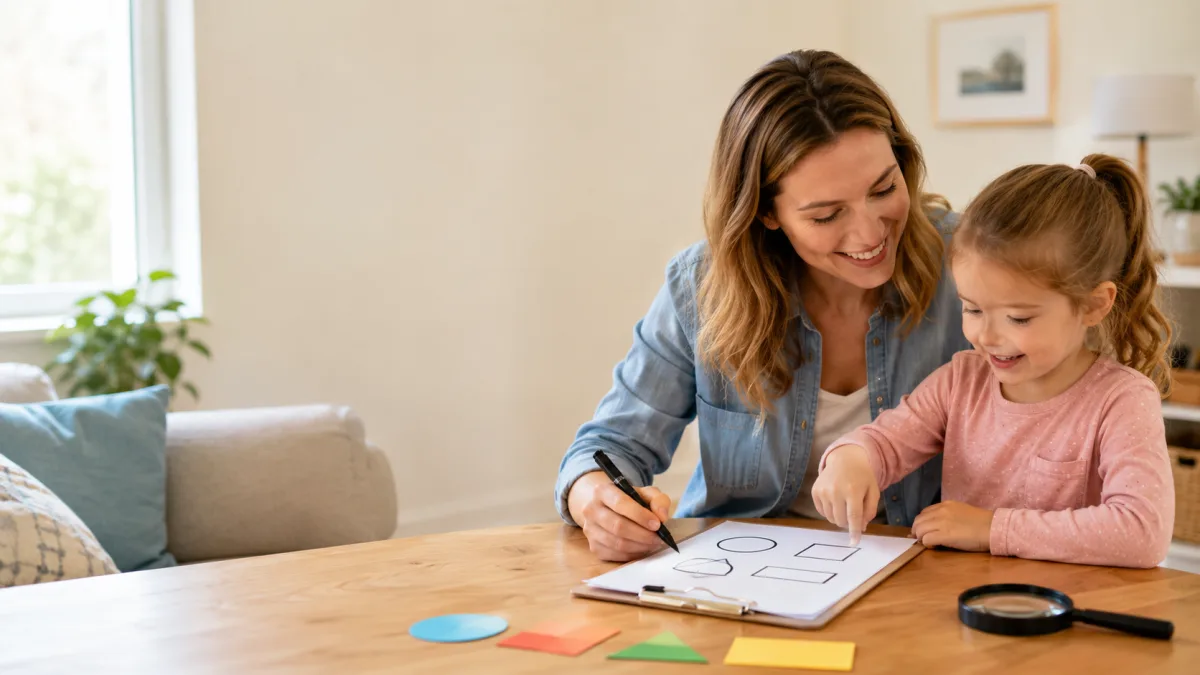
A Shape Hunt Round the House
Circles, squares and triangles are already everywhere. Give them a list and let them find them.
-
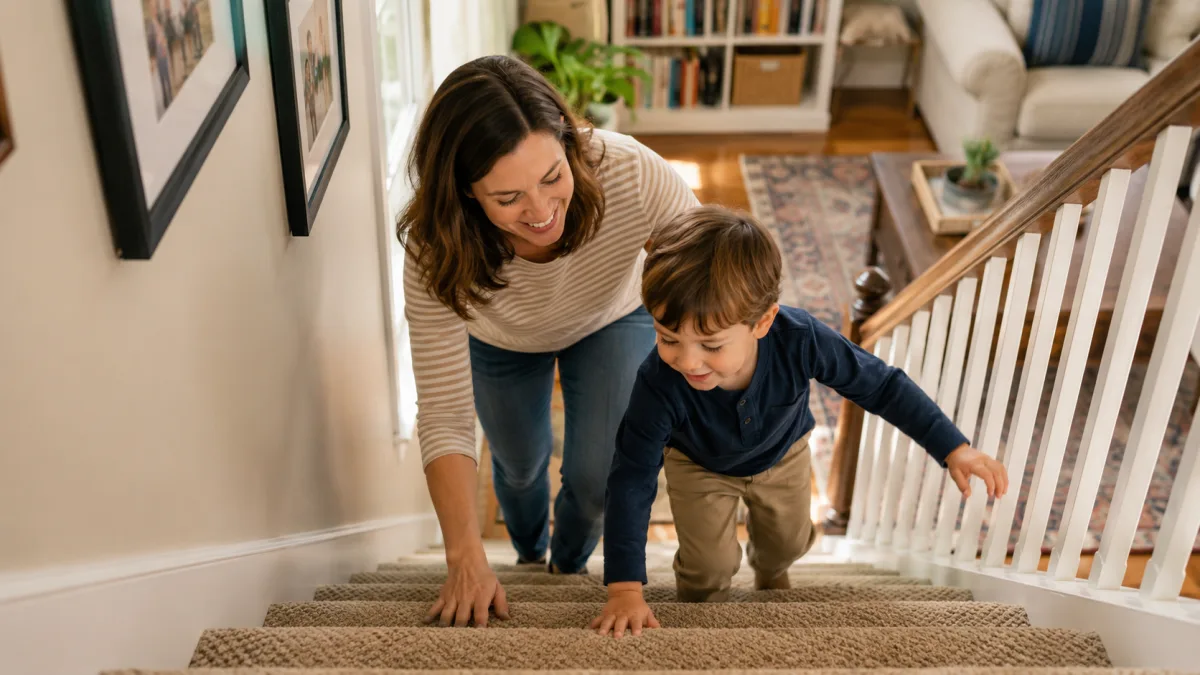
Counting the Stairs (and Everything Else)
Not really an activity — a habit. Counting things out loud all day does more for early maths than any worksheet.
-

I Spy, But With Sounds
The same game you already know, played with the sound a word starts with instead of the letter. Needs nothing at all.
-
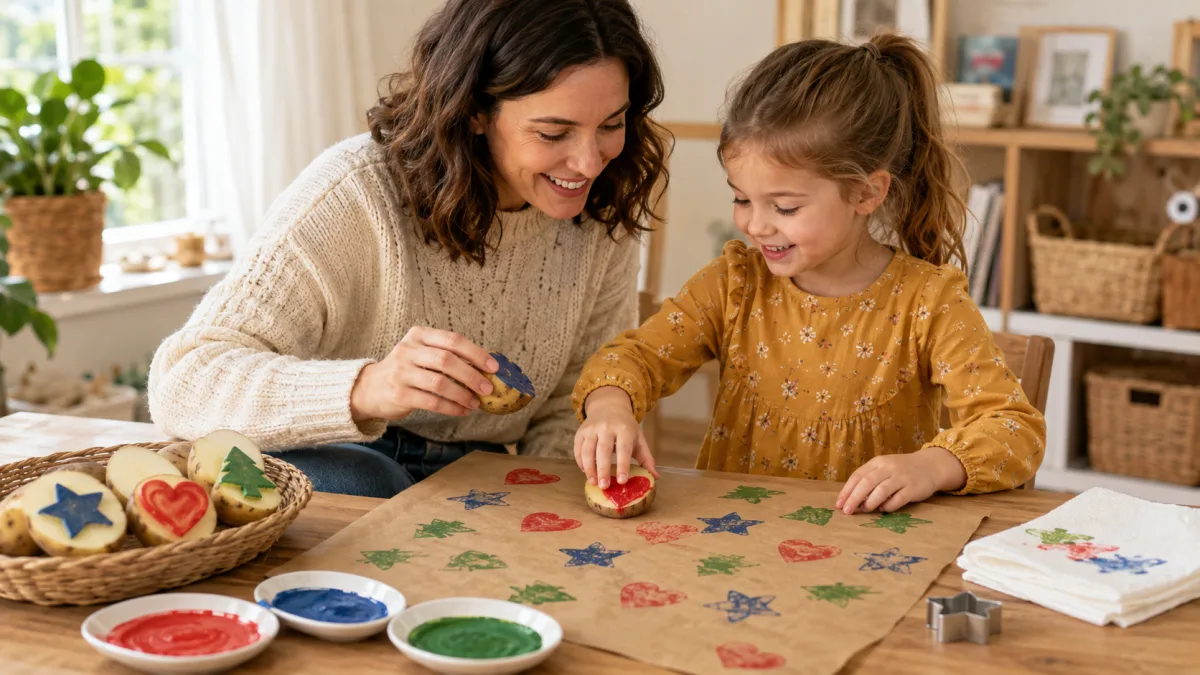
Printing Your Own Wrapping Paper
A halved potato, a shape cut into it, and a roll of plain paper. It looks far better than it has any right to.
-
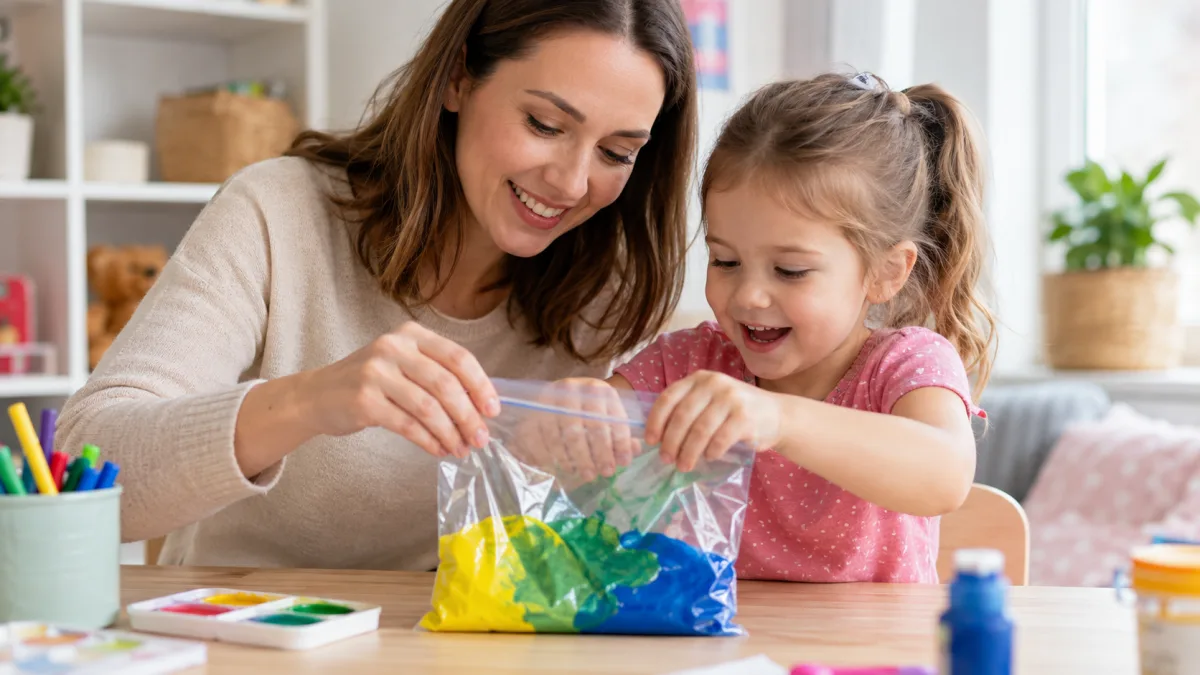
Mixing Colours Without the Mess
Two blobs of paint sealed in a freezer bag. They squash it, the colour changes, and nothing gets on anything.
-
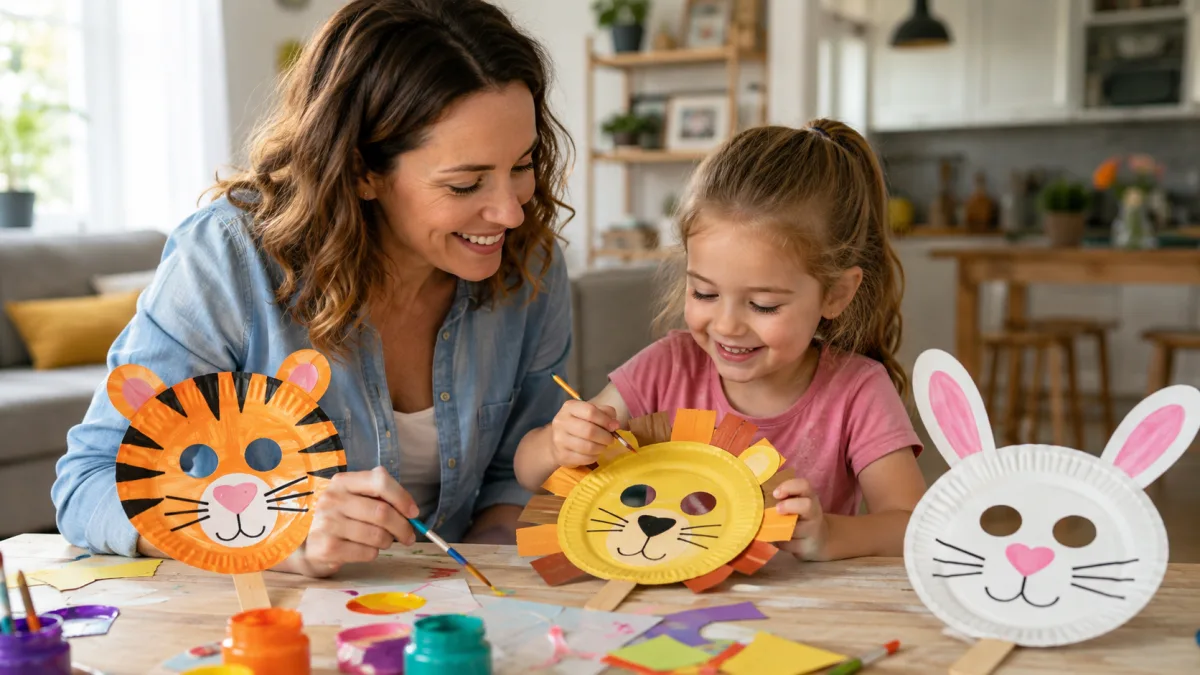
Paper Plate Animal Masks
One paper plate, some paint and a lolly stick. Twenty minutes of making and an afternoon of being a tiger.
-
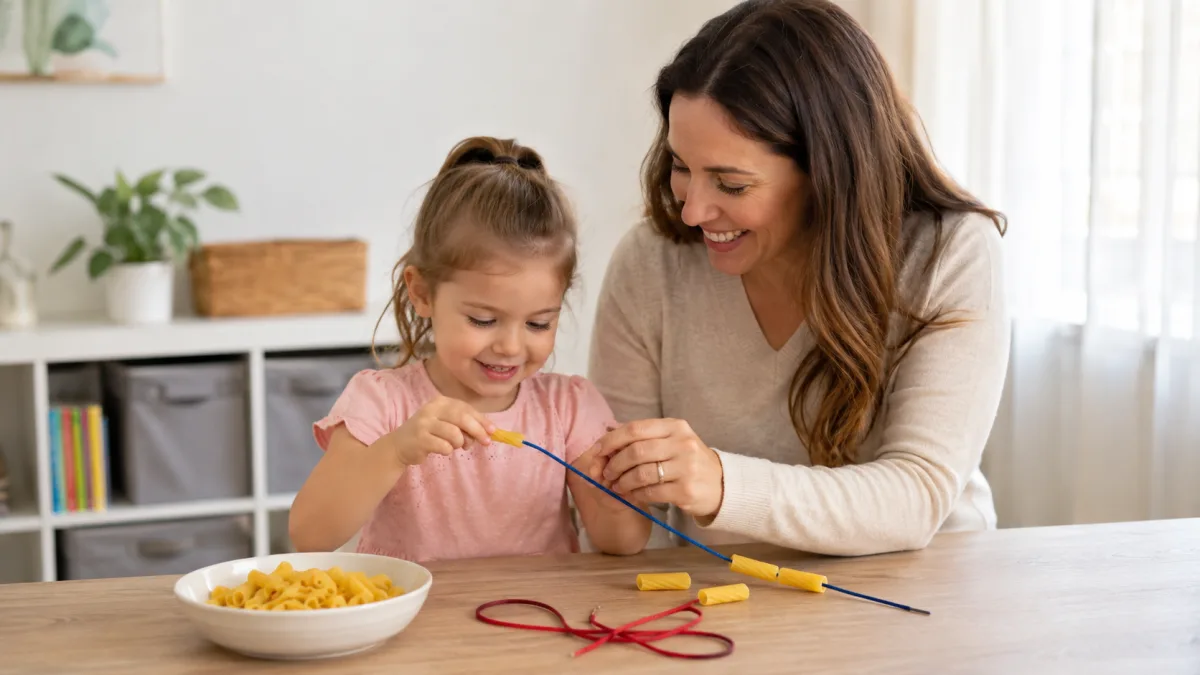
Threading Pasta Necklaces
Dry pasta tubes and a shoelace. Quiet, absorbing, and one of the best things you can do for a small hand.
-
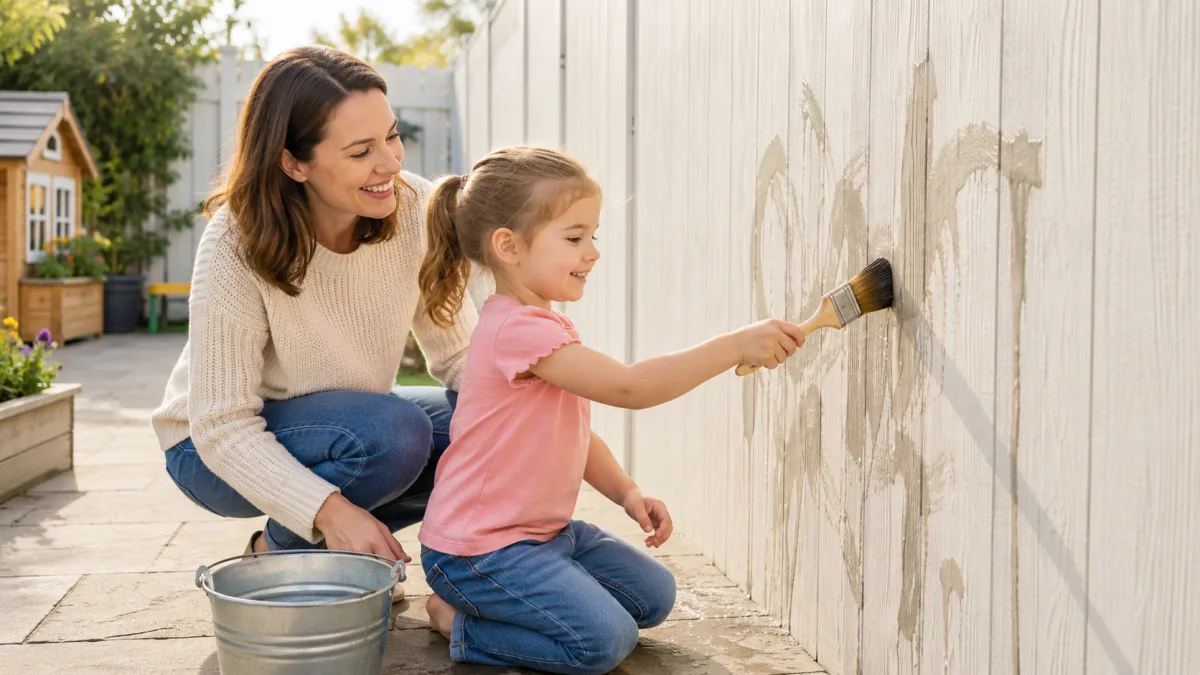
Painting With Water
A bucket of water and a big brush. They paint the wall, the fence and the path, it dries, and they do it again. No mess at all.
-
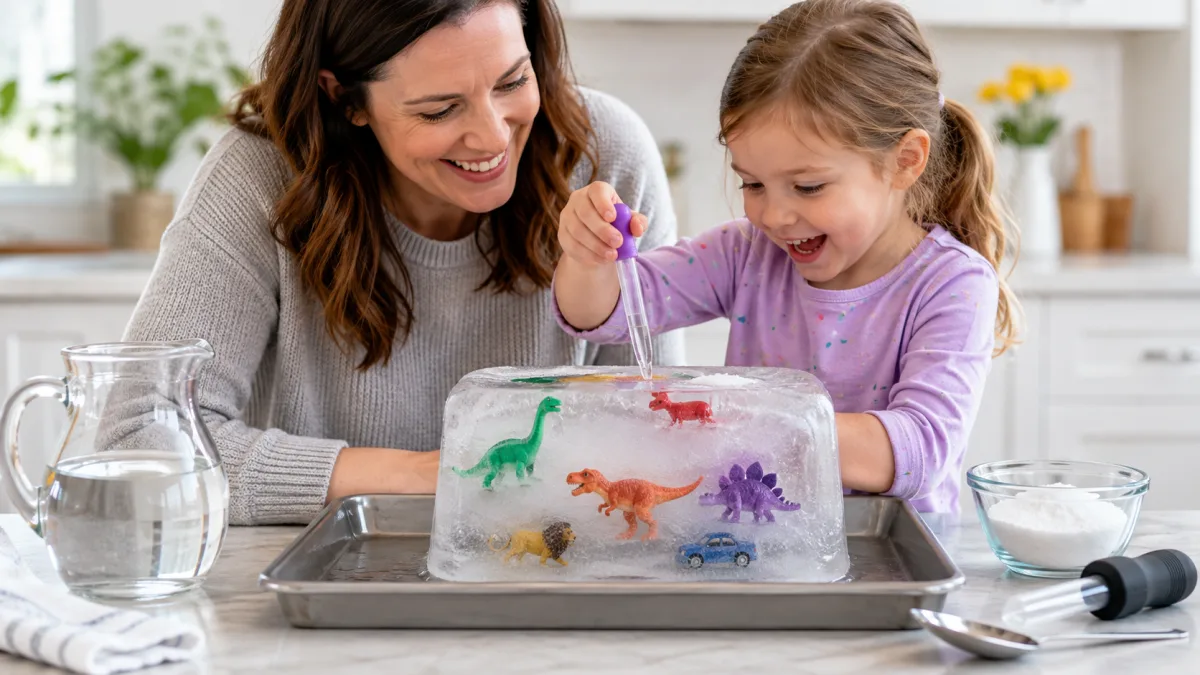
Rescue the Frozen Toys
Freeze small toys in a tub of water overnight, then hand over warm water, salt and a spoon. It buys a genuinely quiet hour.
-
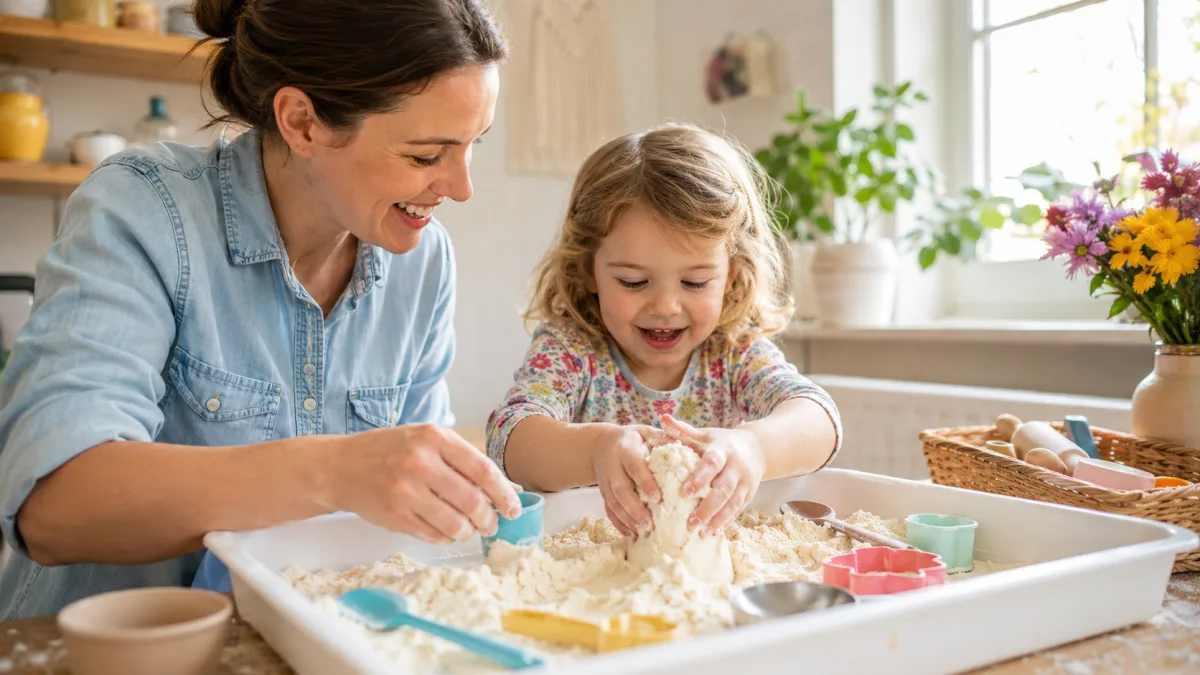
Cloud Dough You Can Make in Two Minutes
Flour and oil, mixed in a bowl. It holds its shape when you squeeze it and collapses into powder when you poke it, which is the whole appeal.
-
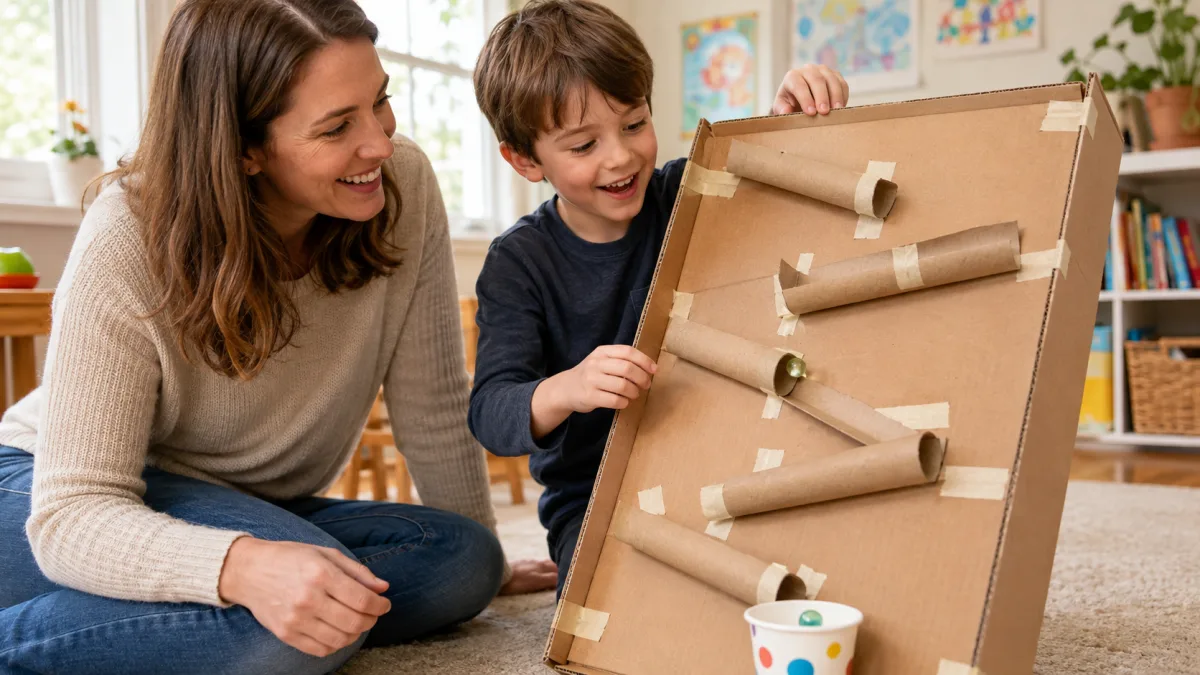
Cardboard Box Marble Run
Cut a delivery box into ramps and tape them inside the lid. It never works first time, and that is the entire point of it.
-
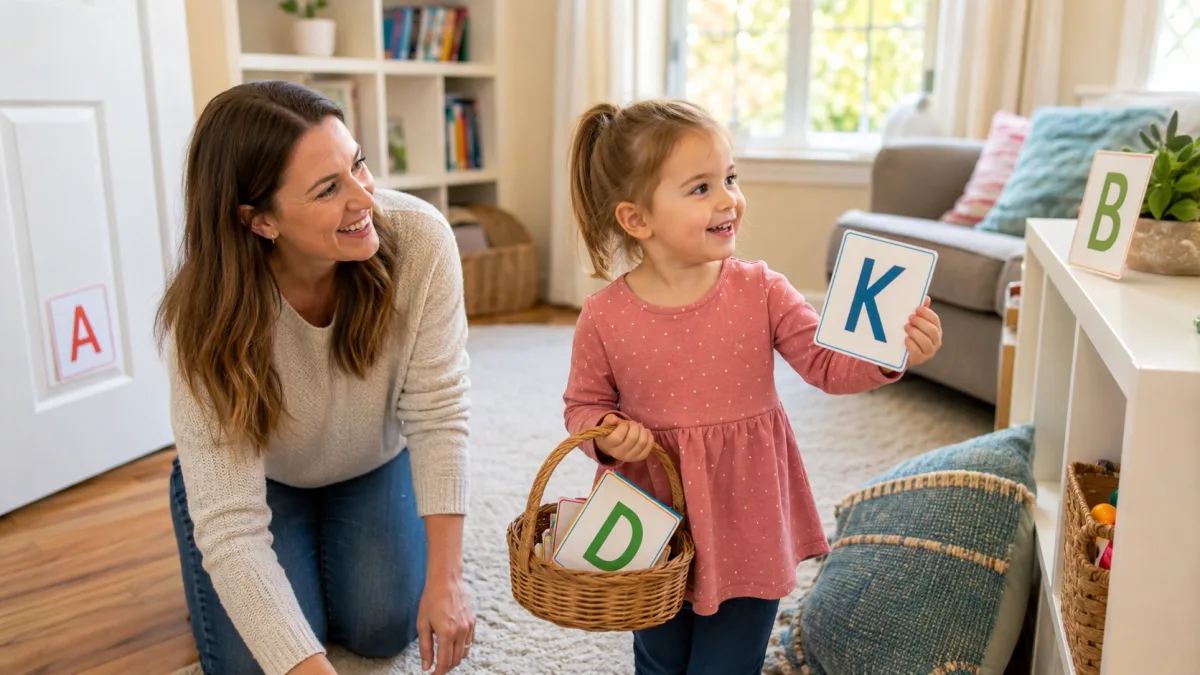
Alphabet Hunt Around the House
Hide letters around one room and send your child to find them. No preparation beyond writing on some paper, and it teaches letter recognition better than a worksheet.
-
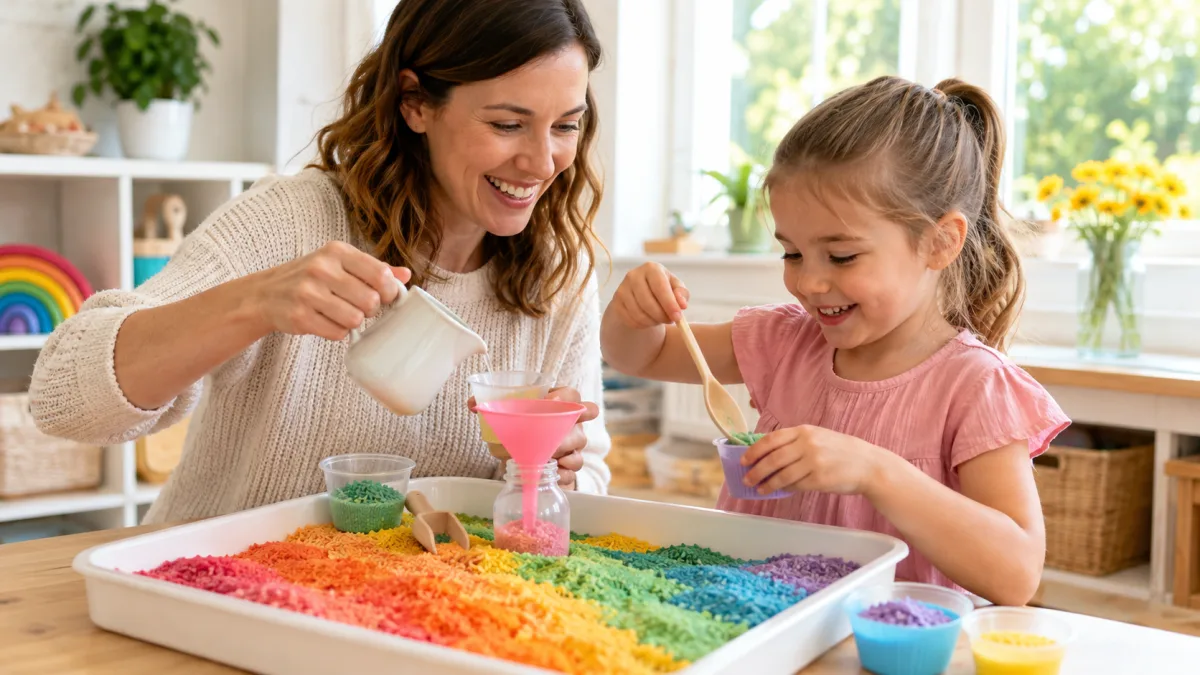
Rainbow Rice Sensory Tray
Dye a bag of rice in five colours, tip it into a tray, and hand over some cups and spoons. Ten minutes of setting up buys an hour of quiet scooping.
Browse activities
- Christmas Crafts for Kids
- Indoor Play
- No-Prep Activities
- Rainy Day
- Sensory Play
- 5-Minute Setup
- Arts & Crafts
- Outdoor Play
- Restaurant
- Low-Mess Activities
- Road Trip
- Science & STEM
- Airplane
- Fine Motor
- Gross Motor
- Waiting Room
- After School
- Pretend Play
- Before Dinner
- Montessori-Inspired
- Quiet Time
- Weekend
- Bedtime Wind-Down
- Household Items
- Independent Play
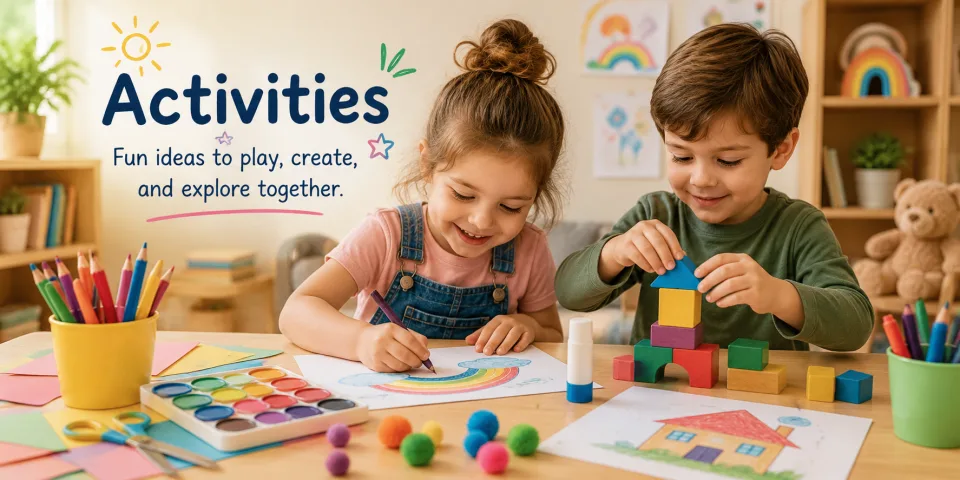
Most days the question is not "what is the best possible activity for my child". It is "what can we do right now, with what is already in this house, before someone melts down".
So activities are sorted the way that question actually works — by age, by how long you have, by whether you are stuck indoors, and by how much clearing up you can face. Pick the constraint that matters most today and start there.
What you'll find here
-
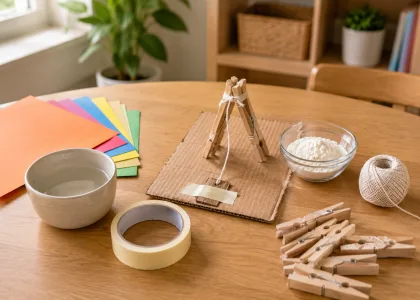
Sorted by what you have
Paper, tape, water, cardboard, pegs, flour, string. If an activity needs something less ordinary, it says so at the top — before you have read the steps and got your hopes up.
-

Honest about mess
A "low mess" activity means it wipes up. A "high mess" one means put a towel down and roll their sleeves up. We would rather warn you than surprise you at bath time.
-
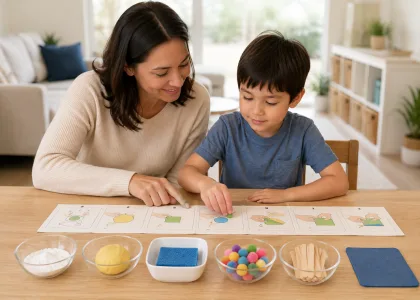
Written to be followed
A real list of materials, steps in the order you do them, and a note on what usually goes wrong. No thousand-word story before the instructions.
Not sure where to start? The activity finder asks four quick questions and gives you something you can begin in the next ten minutes.