


Rhyming Activities for Preschool: 15 Hands-On Ideas Beyond Worksheets
15 hands-on rhyming activities for preschoolers ages 3–4 — fill rhyme baskets, fish for rhyming pairs, stack rhyme towers, cook rhyme soup, and stage a puppet show. No worksheets, just children making and playing with rhymes.
These 15 hands-on rhyming activities for preschoolers move kids ages 3–4 from hearing rhymes to making them: filling rhyme baskets, picking pairs from a grab bag, stacking rhyme towers, fishing for pairs, spinning rhyme wheels, cooking rhyme soup, staging puppet shows, and more. Every activity uses household items and toys — no worksheets. Start with two pairs and let your child produce the rhymes.

The short version
- 15 production-first rhyming activities for ages 3–4 — children make rhymes, not just hear them.
- No worksheets: baskets, blocks, toy pots, puppets, and playdough do the job.
- Start with two pairs (cat/hat, dog/frog) and add families as the pattern clicks.
- One activity per session is plenty — stop while it's still fun.
- Nonsense rhymes count: invented pairs prove your child owns the sound pattern.
- Listening games are the warm-up; these activities are the workout — try rhyming games for preschoolers first if rhymes are brand new.
- Age
- Ages 3–4
- Prep
- 5 min
- Mess
- Low
- Difficulty
- Easy
- Where
- Both
Why kids love this
Rhyming activities for preschool work best when children produce rhymes themselves. Listening is the warm-up; making rhymes is the workout. When a child hunts the house for something that rhymes with "cat," builds a tower for every "hat," or cooks "soup" from rhyming toys, the word ending becomes something they own — no worksheets anywhere.
They are the chef, the builder, the fisher, and the star of the show. Every activity ends with something they made — a full basket, tall towers, a puppet show with real rhyming lines.
Listening games train the ears — "do these two words sound the same?" These activities train the mouth. Your child hunts, builds, cooks, and performs the rhyme, retrieving the pattern from memory instead of just recognizing it. If your child already enjoys nursery rhymes for toddlers, these fifteen are the next step.
What you'll need
- 2–3 baskets, bowls, or boxes
- Small familiar toys and objects (toy cat, hat, spoon, ball, block, cup, sock, toy car)
- Wooden blocks, a grab bag or pillowcase
- Paper plates, card stock, clothespins, stickers
- A magnetic toy fishing rod (or a stick with string and a clothespin)
- Paper fish with sticker pictures
- A large pot or bowl, a wooden spoon, popsicle sticks, crayons
- A blanket, music, and playdough
Before you start
1. Gather 8–10 small objects forming 4–5 rhyming pairs — cat/hat, dog/frog, bee/tree, sun/fun. 2. Keep pairs close at first; scatter them once your child is rolling. 3. One or two activities per session — a full basket is enough. Play in any order, one or two per session; your child produces the rhyme every time.
How to do it
-
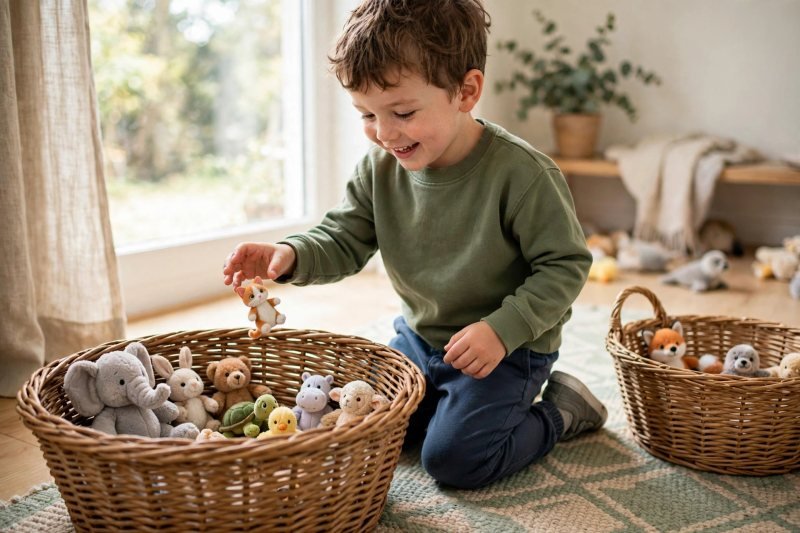
Fill the Rhyme Basket. Tape a toy cat to a basket: "This basket only holds things that rhyme with CAT." Your child hunts the room — a hat, a bat, a mat — chanting: "Cat… HAT! It rhymes!"
-
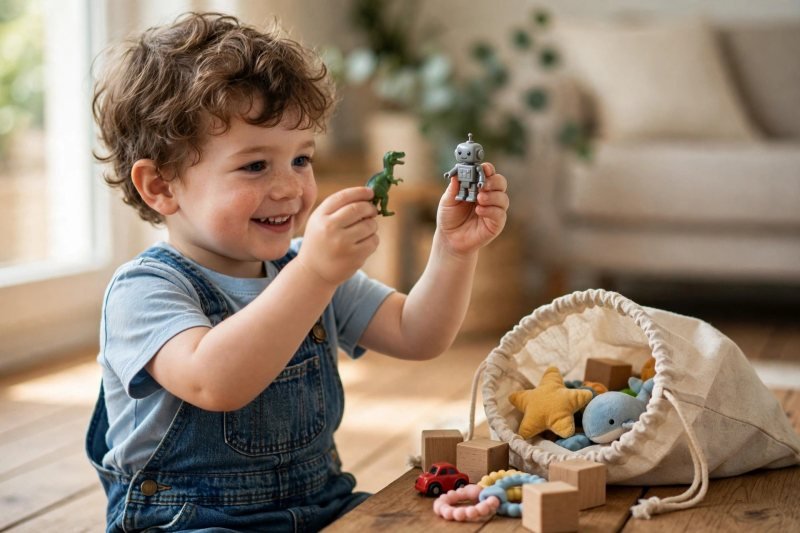
Pick a Pair. Fill a grab bag with the paired toys. Your child pulls out two, names them both, and declares "They rhyme!" or "No rhyme!" — saying both words to decide is the work.
-
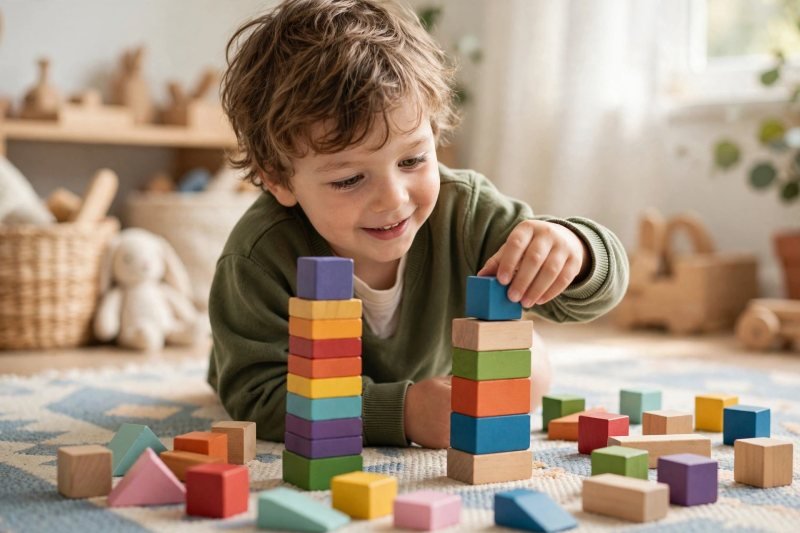
Stack Rhyme Towers. Stick picture stickers on blocks — a cat, a hat, a dog, a frog. Two towers: one grows for the first word of a pair, the other for the rhyme. "Cat!" — block on tower one. "HAT!" — block on tower two.
-
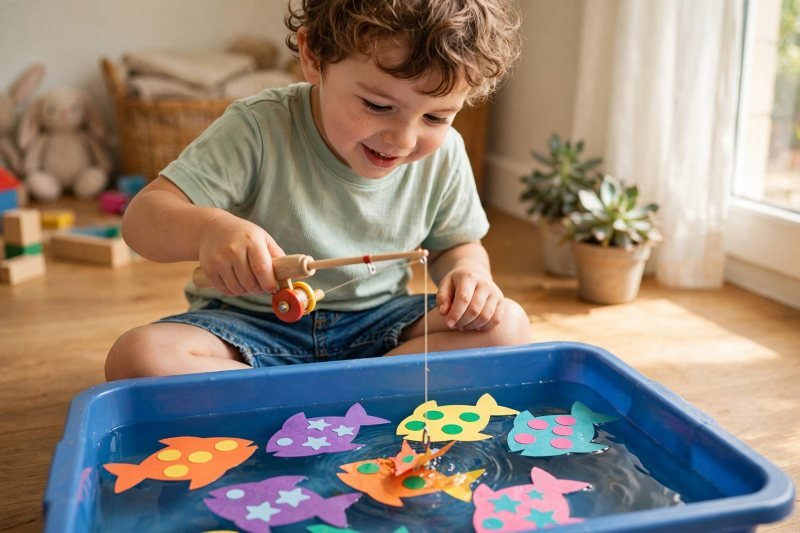
Go Rhyme Fishing. Float paper fish with sticker pictures in a bin. Your child fishes one up — "Sun!" — then keeps fishing until they catch its rhyme. "Sun… I need FUN!" Caught pairs go into a "rhyme pond" bowl.
-
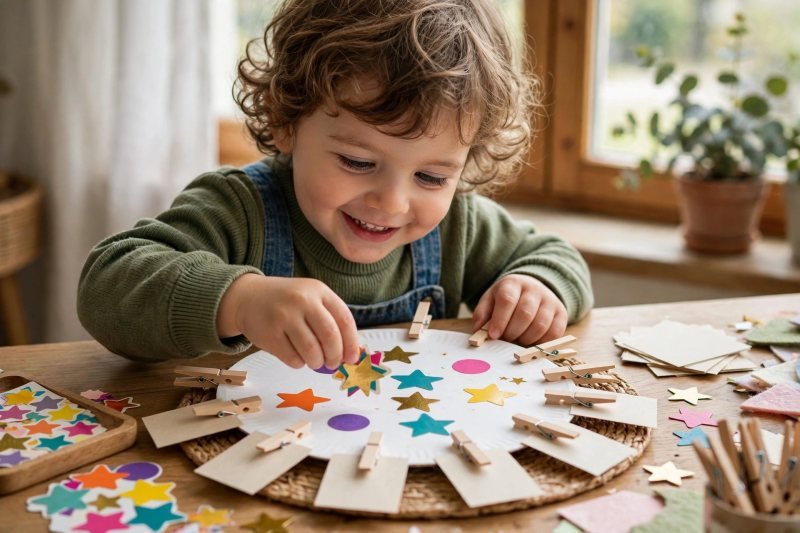
Spin a Rhyme Wheel. Clip blank cards around a paper plate with clothespins and draw quick pictures — a ball, a tall tower. Your child matches pairs around the wheel, then spins it and reads off every pair: "Ball… TALL!"
-
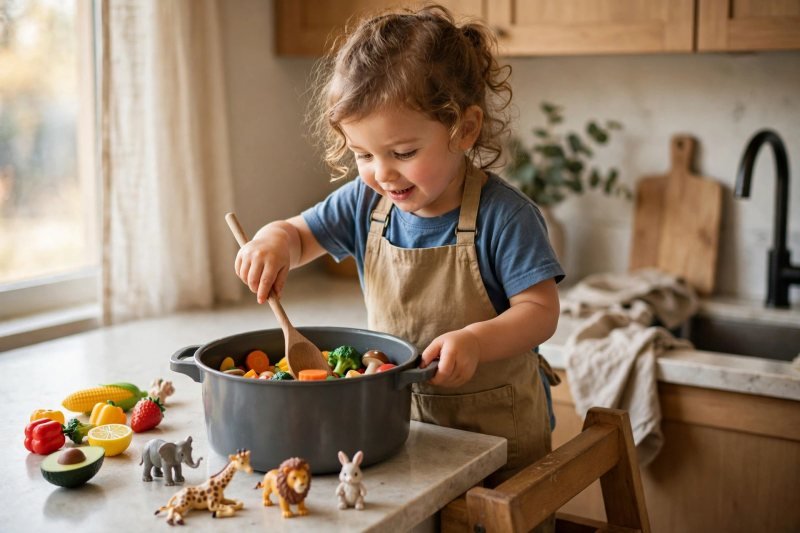
Cook Rhyme Soup. Hand your child a pot and declare the soup word: "We're making LOG soup!" They hunt for rhyming ingredients — a toy dog, a frog — stir them in chanting: "Dog goes in the LOG soup!" Non-rhyming items get tossed with a dramatic "BLECH!"
-
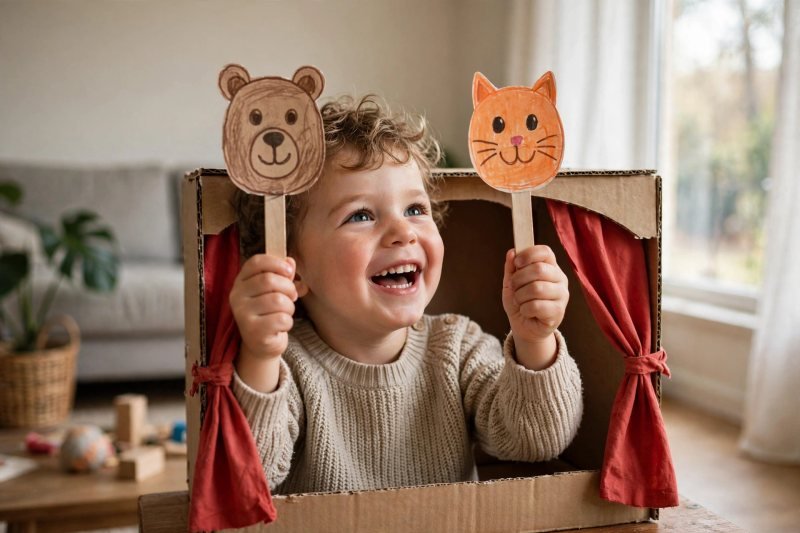
Stage a Puppet Show. Make two stick puppets — a cat and a hat, a pig and a wig. One rule for the cardboard-theater performance: the puppets must speak in rhymes. "The frog sat on the LOG!" Inventing rhyming lines is pure production.
-
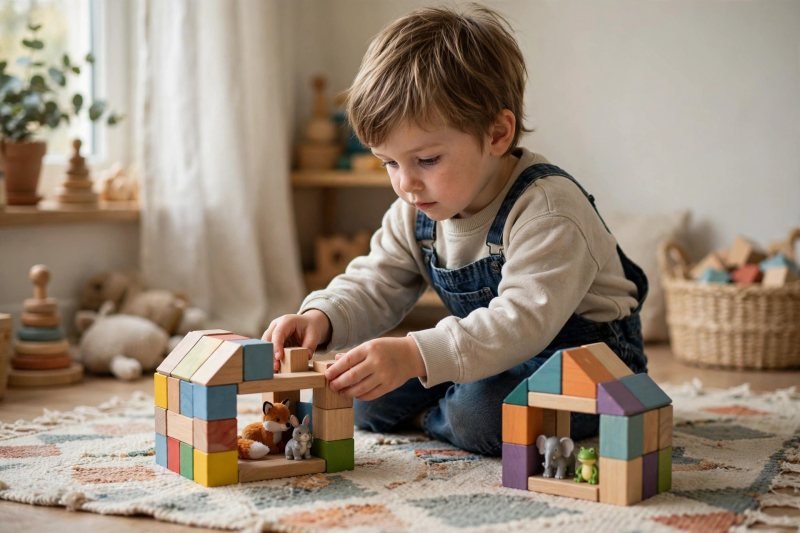
Build Two Rhyme Houses. Two block houses side by side — one for CAT, one for HAT. Your child moves toy tenants in, announcing each move: "The mat goes in the HAT house!" Every move means producing a rhyme.
-
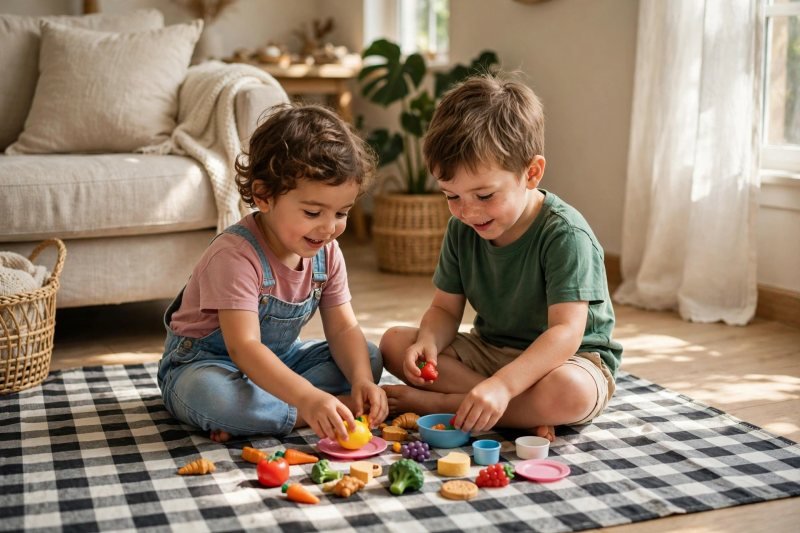
Pack a Rhyme Picnic. Spread a blanket and announce the picnic word — "CAKE!" Your child packs only things that rhyme: a toy snake, a rake, a cotton-ball "flake" — each item set down means saying its rhyme.
-
Freeze-Dance Rhyme Remix. Dance to music; when it stops, everyone freezes — and the freeze only ends when the frozen child shouts a rhyme. You call the word: "FUN!" They call back: "SUN!" The sillier the freeze, the bigger the laugh.



Make it easier
Start with two pairs — cat/hat and dog/frog. Name the objects yourself at first and let your child repeat. Feed the rhyme first: "The basket wants things like… CAT. What goes with cat?" One activity per session; stop while it's fun.
Make it harder
Try two-syllable rhymes: "PUPPY… GUPPY!" "TABLE… CABLE!" Let nonsense words count: "zake" proves they own the pattern. Let your child choose the target word and run the game while you "get it wrong" for them to catch. Mix three families into one hunt: -at, -og, and -ake baskets.
Other ways to play it
- Egg Carton Rhyme Cups. Drop one object per cup in an egg carton and close the lid. Your child opens two cups, names both objects, and keeps the pair only if they rhyme.
- The Rhyme Train. Line up toy cars into a train. The first car carries a cat; your child loads the next with something that rhymes (a hat), then another rhyme (a bat). The train only moves when every car carries a rhyme of the car before it.
- Playdough Rhyme Pairs. Your child molds two objects and names them: "I made a pig… and a WIG!"
- Rhyme Obstacle Course. Set up stations — under the table, around the chair, over the pillow. At each station your child names a rhyme to move on: "Mat — rhymes with CAT!"
- Two-Phone Rhyme Calls. Two toy phones. One caller says a word; the other must answer with a rhyme before hanging up. "Ring ring — I say tree!" "BEE!"
How it changes by age
- Younger threes (36–42 months): start with activities 1–3. Naming real objects they can hold makes rhymes concrete; repeat the same two pairs for days.
- Older threes to fours (42–54 months): most can run all ten. Fours often invent their own rhymes without prompting — let them lead.
- Not producing yet? That's normal — play the naming parts yourself and celebrate every echo, or warm up with beginning sounds activities for preschool.
What they're learning
Rhyme production: retrieving and generating rhyming words — the bridge from hearing rhymes to playing with language. Phonemic awareness: the sound-play foundation early reading grows from — try phonics activities for preschoolers next. Vocabulary: rhyming hunts pull in words like "mat" and "flake" — our word families for kindergarten page offers more -at, -og and -ake word sets to grow the word bank. Confidence: being the chef, builder, and performer puts them in charge.
Clearing up
Baskets back on the shelf, toys back in the bag, playdough sealed. The plate wheels and fish keep for tomorrow.
Questions parents ask
How can I teach rhyming without worksheets?
What is the difference between rhyming activities and rhyming games?
What if my preschooler can hear rhymes but can't say one yet?
How long should a rhyming activity last for a 3-year-old?
Do silly or nonsense rhymes count?
At what age can children start making up rhymes?
One activity per session is complete — stop while it's still fun. Nonsense rhymes count every time: "wug–zug" is real sound-play. Rhyming works in every language — play in yours too. For more sound play, try alliteration activities for preschool and phonemic awareness activities for toddlers.

save it for later
Pin this for the next rainy afternoon
Keep it on a board so it is there when you need it, rather than when you happened to find it.
Save to PinterestTry this next
-

First 10 Sight Words for Preschoolers: Where to Start (and What to Skip)
Ages 3–4
-

Preschool Sight Words List: The First 40 Words (Dolch Pre-Primer)
Ages 3–4
-

Rhyming Games for Preschoolers: 12 Playful Ways to Hear the Rhyme
Ages 3–4
-

Words That Rhyme With Sun: 15 Bright Rhymes for Little Learners
Ages 3–4


