


How to Prepare Your Child for Kindergarten This Summer: An 8-Week Plan
A week-by-week summer plan for how to prepare your child for kindergarten: gentle 10–15-minute daily activities covering letters, numbers, fine motor skills, independence, and confidence.
This 8-week summer plan shows how to prepare your child for kindergarten with about 15 minutes of playful daily activities. After a relaxed skills snapshot and a simple daily rhythm, each week targets one area — letters, numbers, fine motor skills, independence, social confidence, routines, curiosity — ending with a confidence week before school starts.

The short version
- Fifteen to twenty minutes a day of playful missions beats workbooks and cramming for kindergarten readiness.
- The eight weeks build in order: letters, numbers, strong hands, independence, social confidence, routines, curiosity, then a confidence week.
- Independence skills (dressing, lunchbox, shoes) matter as much as letters and numbers for a smooth start.
- A consistent daily slot and a visible calendar keep the rhythm going without nagging.
- Follow your child's pace: skip, repeat, or swap any activity — protecting their love of learning comes first.
- Age
- Ages 4–5
- Prep
- 30 min
- Mess
- Low
- Difficulty
- Easy
- Where
- Both
Why kids love this
Each week is a new "mission" — hunting for name letters, counting shells, packing a real backpack — and your child crosses every week off a big paper calendar. Short sessions, real-world games, and a celebration at the end make it feel like a summer adventure, not schoolwork.
If you've been wondering how to prepare your child for kindergarten, here's the good news: you don't need workbooks, apps, or a tutoring schedule. What children need most in the eight weeks before school is a gentle rhythm of short, playful missions — letters, numbers, strong hands, independence, and confidence — about fifteen minutes a day, woven into an ordinary summer. The plan works because it follows how young children actually learn: through play, repetition, and real life. A child who hunts for the letters of their name remembers them longer than one who traces them on a worksheet. A child who packs a pretend lunchbox in July opens a real one without panic in September. Keep sessions short, follow your child's energy, and treat the calendar as a celebration record, not a scorecard.
How much time does kindergarten prep really take each day? Fifteen to twenty minutes of focused activity is plenty — plus the read-aloud time most families already do. Short and consistent beats long and occasional: daily practice builds habits and memory far better than a weekend cram. If a mission flops, drop it and try the next one tomorrow. Protecting your child's love of learning matters more than finishing every activity.
What should my child know before kindergarten starts? Less than most parents fear. The foundations that genuinely smooth the start: recognizing their own name in print, knowing some letters (especially in their name), counting to 20, managing their own coat, shoes, and lunchbox, following two-step directions, and taking turns. Formal reading, writing, and math are the school's job — teachers expect to teach them from scratch. For a full inventory, see our kindergarten readiness checklist. Formal sight-word lists can wait — sight words for kindergarten are best met through read-alouds once school starts.
How do I keep summer learning fun and pressure-free? Three rules. First, play beats drill — every mission here is a game, a hunt, or a real-life rehearsal, never a worksheet. Second, let your child lead the pace: skip, repeat, or swap activities freely. Third, celebrate effort, not correctness — "You kept trying with those scissors!" builds the persistence school rewards. If summer starts feeling like school, take a week off. The plan will wait.
What you'll need
- Blank paper, index cards, and crayons
- Picture books from your shelf or the library
- Magnetic letters (start with the letters of your child's name)
- Playdough and child-safe scissors
- Large beads and a shoelace or string
- Building blocks, plus a cup of shells, buttons, or dried beans
- A small backpack and a lunchbox with containers your child will actually use
- A large paper calendar or 8-box grid on poster paper, plus stickers
Before you start
Spend 30 minutes one weekend gathering everything into a single tray — your "kindergarten corner." Stick the 8-week calendar on the fridge, pick one consistent daily slot (right after breakfast works well), and tell your child: "This summer we're going on a kindergarten adventure — one little mission every day." Run the skills snapshot in Step 1 across a few ordinary days before Week 1 begins.
How to do it
-
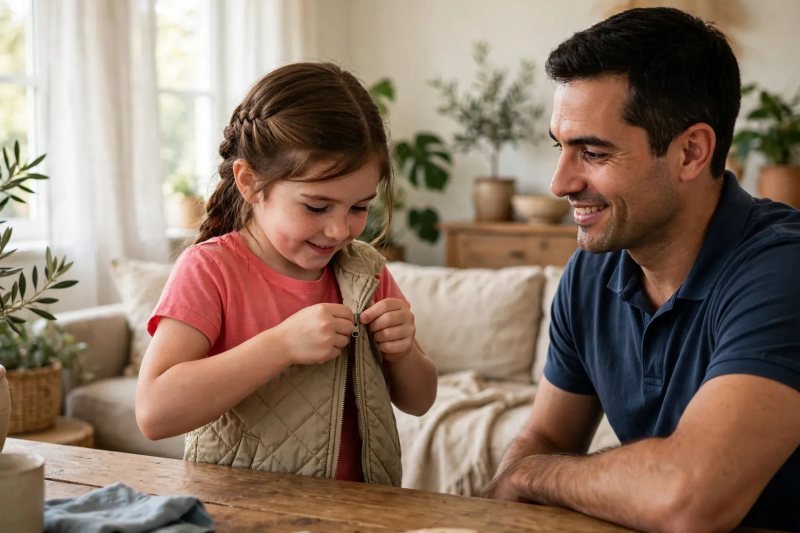
Take a relaxed skills snapshot (before Week 1). For three or four ordinary days, simply notice what your child already does: dress themselves, zip a coat, open a snack container, recognize their name, count a small pile of objects, sit through a picture book. Sort what you see into three loose groups — "confident," "growing," "brand new." No quizzing; watch real life. For a fuller inventory, see our kindergarten readiness checklist — this snapshot is just your starting map, not a verdict.
-
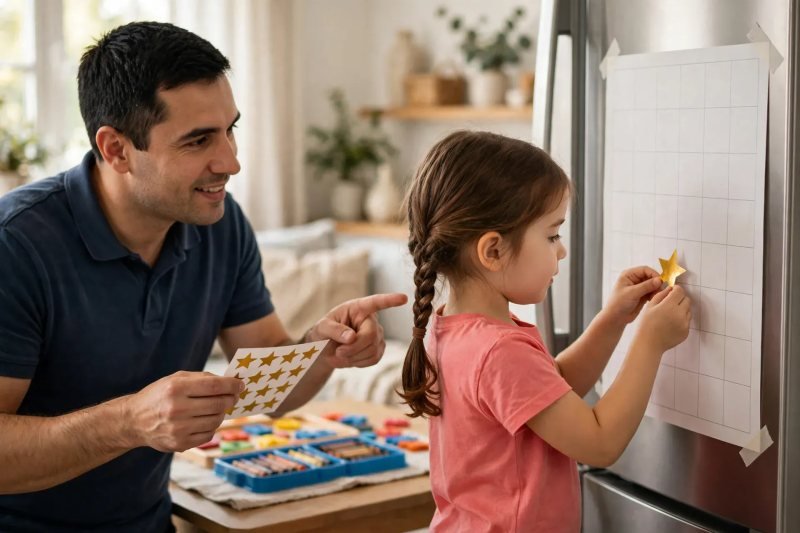
Set up your summer rhythm. Consistency matters more than curriculum. Keep one daily 15–20-minute slot all summer — same time, same spot. Keep the kindergarten tray stocked so there's no setup friction, let your child decorate the calendar, and explain the deal: one small mission a day, a sticker at the end of each week. When children can see the plan and count down, they own it.
-
Week 1 — Letter and name play. Focus: early literacy — start with a name treasure hunt, writing your child's name on five index cards, hiding them around one room, and letting them hunt, match, and read the letters they know; follow with a read-aloud plus chat, ten minutes of a picture book daily, then one question — "What was your favorite part?"; and finish with letter fishing, burying magnetic letters of their name in a bowl of dry rice so they dig, name, and line up each letter. For more letter play, see our letter recognition activities for preschool.

-
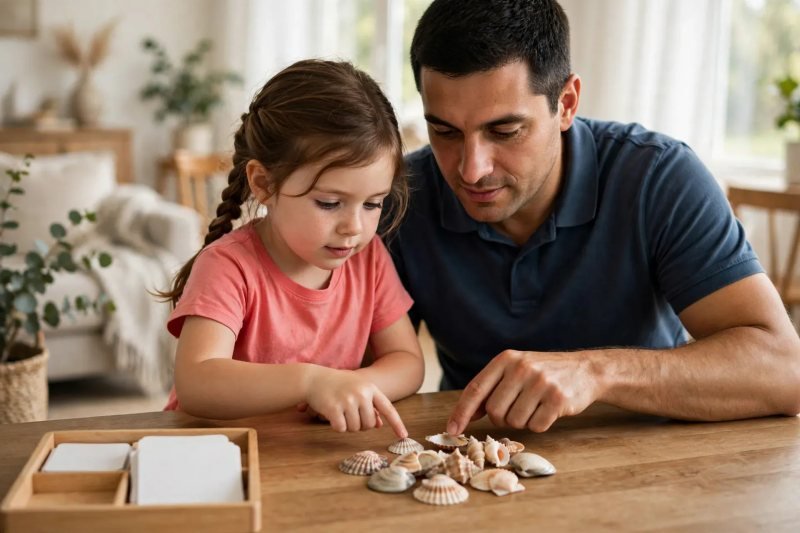
Week 2 — Number sense through play. Focus: early math — count collections by pouring a cup of shells on the table, counting slowly while pointing at each one, then counting again a different way; count steps going up and backward coming down, a great brain workout; and run a pattern parade, starting a block line (red, blue, red, blue…) and letting your child continue it, then invent their own. These counting to 20 activities build the same one-to-one counting through play.
-
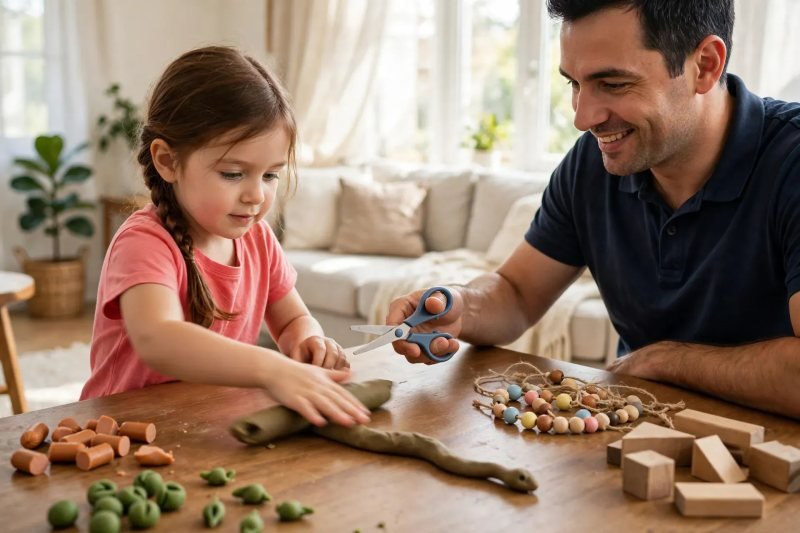
Week 3 — Strong hands. Focus: fine-motor strength, the hidden foundation of writing — give hands a playdough workout, rolling snakes, pinching peas, and snipping rolled "sausages" with child-safe scissors; practice cutting by drawing wavy lines on blank paper and letting them cut along, steering with the helping hand; and thread and build, stringing large beads onto a shoelace, then building the tallest tower they can with small blocks. More ideas for the same grip are in our fine motor activities for preschoolers.
-
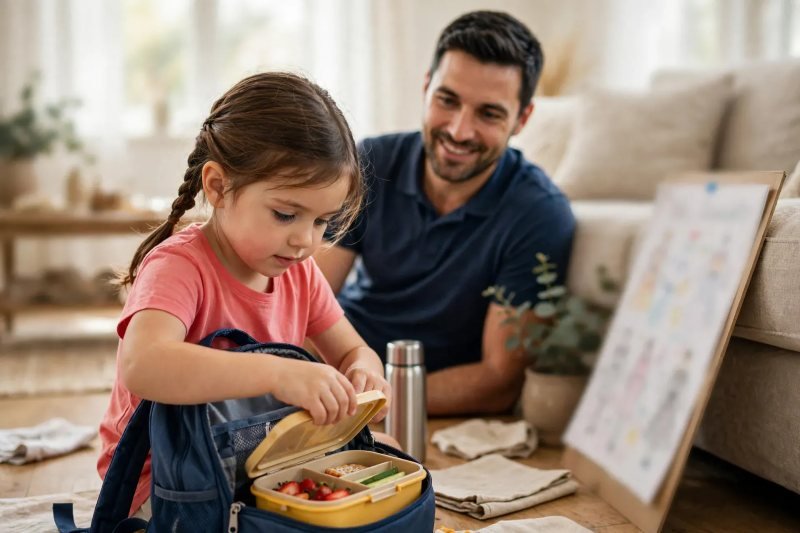
Week 4 — Doing it myself. Focus: independence, which most kindergarten teachers hope for most — draw a dressing chart together, a simple picture chart (shirt, pants, socks, shoes), and let them follow it alone each morning, helping only when asked; run a lunchbox rehearsal, packing a pretend school lunch and having them open every container at a "school picnic" on the living-room floor; and try a shoe drill, practicing getting shoes on and off quickly, timed like a game — "Can you beat yesterday?"
-
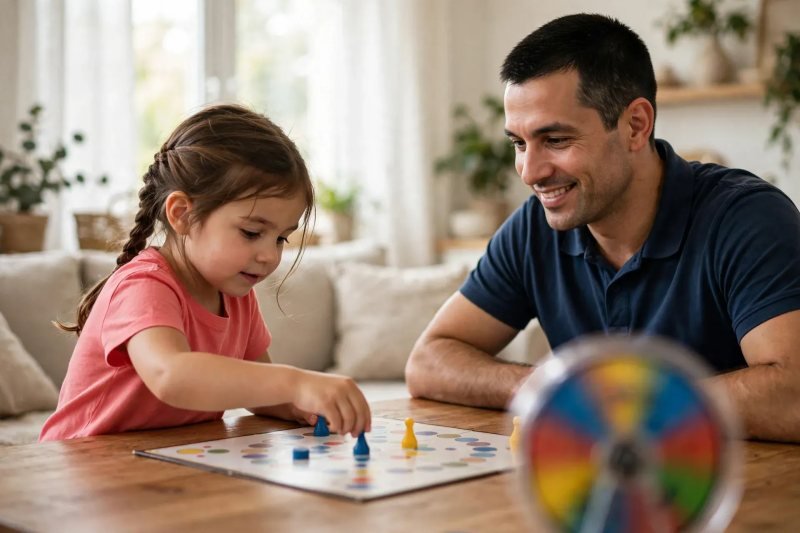
Week 5 — Friends and feelings. Focus: social confidence — play turn-taking games, a simple board or matching-card game where waiting for a turn is the whole point, narrating it warmly: "Waiting is hard! My turn, then yours."; practice joining in at the park, role-playing the exact words — "Can I play too?" — then letting them try for real while you stay close; and make feelings faces, taking turns making a face in a mirror, naming the feeling, and telling a tiny story about a time you felt it.
-
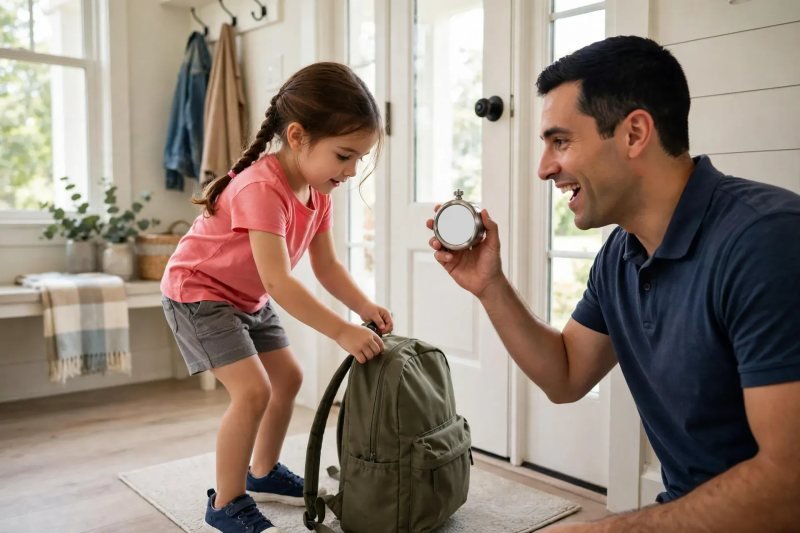
Week 6 — School-day rhythms. Focus: routines that make September feel familiar — run a morning rehearsal, the real sequence (dressed, teeth brushed, backpack by the door) with a kitchen timer, keeping it game-like; practice listening by reading a ten-minute story, then retelling it together: "What happened first? Then what?"; and pack the night before, letting them choose tomorrow's clothes and pack the backpack each evening, so mornings start calm.
-
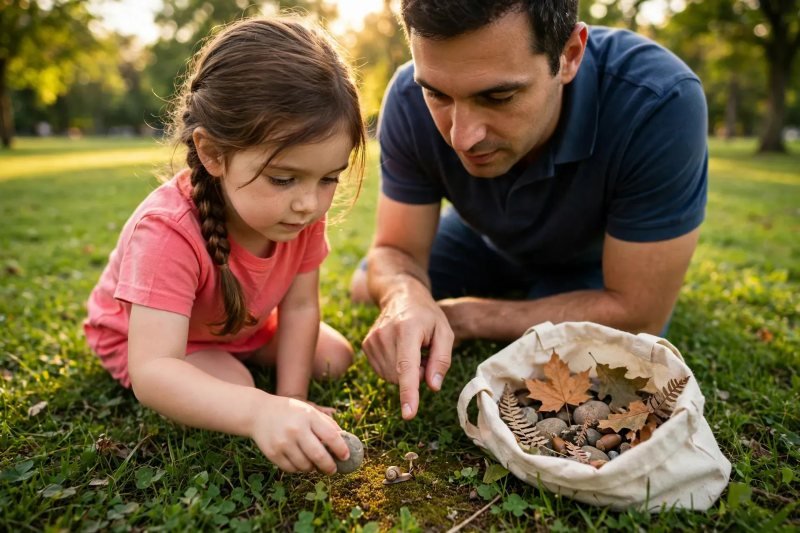
Week 7 — Curious minds. Focus: the thinking habits behind all learning — go on a nature scavenger hunt, "Find five smooth stones, three yellow leaves, and something tiny," since sorting and observing are early science; ask wonder questions, "Why do you think the clouds move?", and guess together, with no wrong answers, only interesting ones; and set up a sorting lab, tipping out a mixed pile of toys and sorting it by color, then by size, then by "things that roll."
-
Week 8 — Confidence week. Focus: walking in feeling like they belong — visit the school, walking or driving the real route, finding the entrance, and peeking at the playground, since familiar ground removes first-day fear; practice introductions, role-playing "Hi, I'm ___" with a wave, plus asking a teacher for help: "Excuse me, I need help please."; and celebrate, looking back at the calendar together, naming everything they learned, and throwing a small "kindergarten-ready" party.



Make it easier
Do one activity a day instead of two or three — fifteen minutes total is plenty. Repeat a favorite week instead of pushing through a hard one, and give younger fours more hand-over-hand help with cutting and threading. The routine matters more than finishing every mission.
Make it harder
For quick finishers: write the whole first name instead of just recognizing it, count to 30, retell a story in order without prompts, or run a two-step tidy-up mission ("Put the blocks in the bin, then wash your hands"). Extend the play — don't rush into formal academics.
Other ways to play it
- Rainy-week swap: move the scavenger hunt indoors (find five soft things, three red things) and add extra playdough and board games.
- Grandparent week: let a grandparent run the daily missions — children try harder for an audience.
- Library week: make Week 1's read-alouds a library trip; let them choose the books and carry the card — and borrow ideas from our preschool learning activities at home for the weeks after.
How it changes by age
- For ages 4–5, the summer before kindergarten. Younger fours may still need help with scissors, zips, and sitting through a full story — completely normal. Older fives who are flying can take the "make it harder" extensions. Every child develops at their own pace; this plan is a typical rhythm, not a deadline.
What they're learning
Early literacy (letter knowledge, print awareness, vocabulary from read-alouds), early numeracy (one-to-one counting, small quantities, patterns), fine-motor strength for writing (grip, cutting, threading), self-care independence (dressing, lunchbox, shoes), social-emotional skills (turn-taking, naming feelings, joining in), and school routines (morning sequence, listening, multi-step directions) — the confidence and independence that make the first weeks of kindergarten feel easy.
Clearing up
Paper scraps, playdough crumbs, and beads go back in the tray — make the five-minute tidy part of the daily mission. The calendar stays on the fridge as a proud record of the summer.
Questions parents ask
How long should I spend preparing my child for kindergarten each day?
What should my child learn the summer before kindergarten?
Does my child need to read before starting kindergarten?
How do I get my child used to the kindergarten morning routine?
What if my child is shy about starting kindergarten?
When should we start preparing for kindergarten?

save it for later
Pin this for the next rainy afternoon
Keep it on a board so it is there when you need it, rather than when you happened to find it.
Save to Pinterest
