


Measurement Activities for Preschoolers: Length, Weight and Capacity
Ten hands-on measurement activities for preschoolers: compare length with hand spans and block trains, explore weight with balance scales and hefting games, and play with capacity through pouring, cup-counting, and bath-time fun. No rulers needed — just everyday objects.
Measurement activities for preschoolers work best with non-standard units: hand spans, blocks, cups, and steps instead of rulers and scales. In this set of 10 hands-on ideas, kids compare length (hand spans, block trains, step-counting), weight (balance scales, heavy-light sorting, hefting bags), and capacity (pouring, cup-counting, bath play), finishing with a scavenger hunt that ties all three strands together.

The short version
- Preschoolers learn measurement best with non-standard units: hand spans, blocks, cups, steps — not rulers or numbered scales.
- The three strands are length, weight, and capacity; comparing and ordering come before counting units.
- Using one consistent unit (blocks touching end to end) is the key skill that bridges to real measuring later.
- Predicting before testing ("which holds more?") turns play into early scientific thinking.
- Arm's-reach adult supervision for all water play; wipe spills promptly and keep heavy objects off toes.
- Age
- Ages 3–4
- Prep
- 5 min
- Play time
- 15 min
- Mess
- Some
- Difficulty
- Easy
- Where
- Indoor
Why kids love this
Measurement feels like magic to a preschooler. One day a tower is "big," and the next day they can prove it is "five blocks tall." That shift — from vague describing to confident comparing — is thrilling for three- and four-year-olds, who are wired to sort, stack, and declare winners.
These measurement activities for preschoolers lean into that instinct. Everything uses non-standard units: hand spans, blocks, cups, steps, and scoops. There is no wrong answer, no fiddly numbers, and no waiting for a grown-up to read a scale. Kids pour, heft, line things up, and argue (lovingly) about whether the teddy is heavier than the truck. It is math they can feel in their hands — and it builds the exact foundation early math standards expect before formal measuring begins: comparing, ordering, estimating, and using consistent units.
What you'll need
- Wooden blocks or linking cubes (any building blocks work)
- A set of measuring cups or small plastic cups
- A clear plastic jug or pitcher
- Assorted bowls, cups, and containers in different sizes (for pouring)
- A simple two-pan balance scale (or make one with a coat hanger and two cups on strings)
- A shallow tray or baking sheet (to catch spills)
- Small tote bags or paper bags (for hefting)
- Stuffed animals and toys in different sizes
- Towels and a mop or rag
- Optional: a big piece of paper and a crayon for recording "how many"
Before you start
1. Gather containers of clearly different sizes for the capacity activities — a tall thin jug, a wide short bowl, and a few cups in between. 2. Set up a "pouring station" on a tray near the sink or on a wipeable floor, with a towel underneath. 3. If you do not own a balance scale, make one: tie two small cups to opposite ends of a coat hanger with equal-length strings, and hang it from a doorknob or a hook. 4. Fill two hefting bags ahead of time — one with something light (cotton balls, a scarf) and one with something heavy (dry rice, a small book). Keep them the same size so the difference is a surprise. 5. Clear a stretch of floor for the step-measuring and scavenger-hunt activities.
How to do it
-
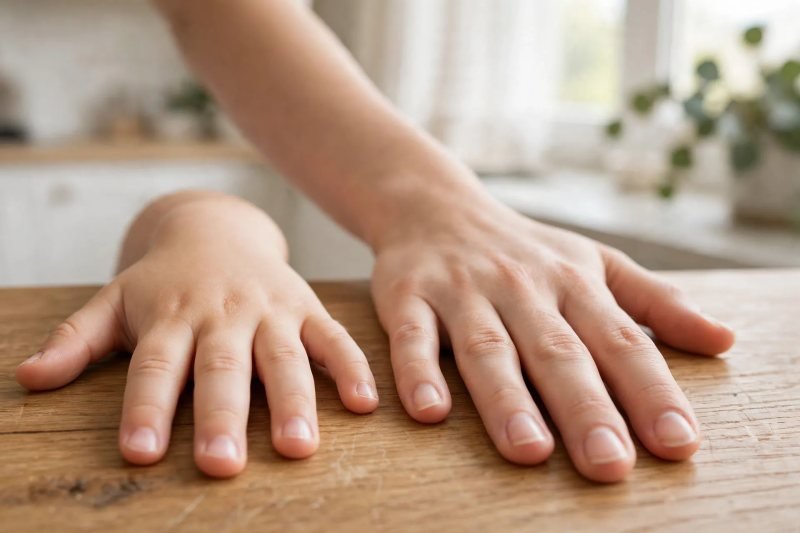
How many hand spans long is the table? Show your child how to lay a hand flat, thumb tucked in, and mark where the pinky ends — then hop the hand forward, heel to fingertip. Measure the coffee table together, counting each span out loud: "One… two… three!" Compare hands: is the table more of your hand spans or more of theirs? (Little hands always win this one, and they love it.) This is the classic first measurement insight: the same object can be a different number of units, depending on the unit.
-
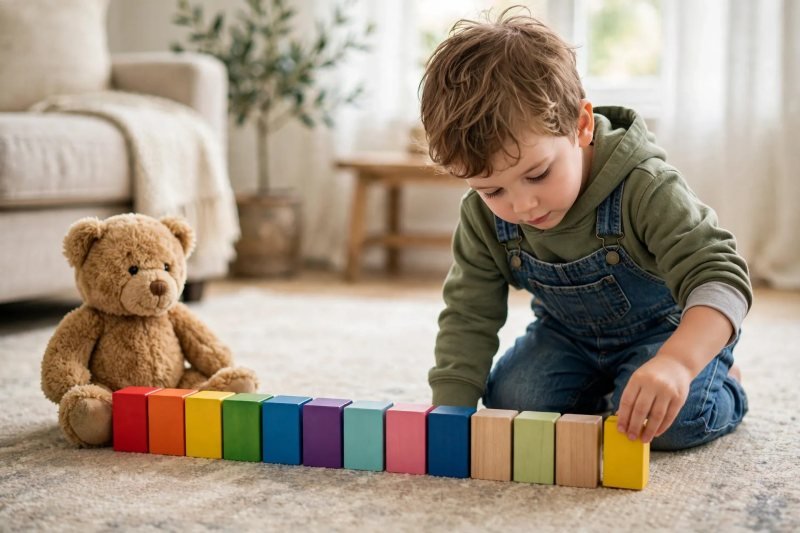
Build a block train as long as the toy. Pick a favorite stuffed animal or toy car. Challenge your child to build a straight "train" of blocks that is exactly as long as the toy — no gaps, no overlaps, blocks touching end to end. Counting the blocks doubles as counting practice — see our counting activities for toddlers. Count the blocks together when the train matches. Then measure something bigger (a shoe, a pillow, the cat if it cooperates) and compare: which took more blocks? This builds the habit of using one consistent unit, the heart of real measuring.
-
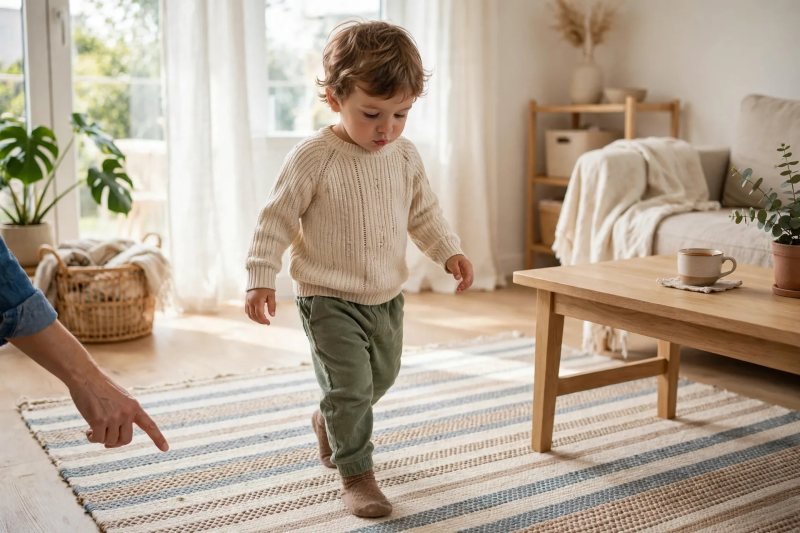
Count steps across the rug. Stand at one edge of a rug and walk heel-to-toe across it, counting steps aloud. Our counting stairs and steps turns the same heel-to-toe counting into a staircase game. Now let your child do it — their steps are smaller, so the number will be bigger, which is always a fun surprise. Try the hallway next, or the kitchen floor from sink to stove. Ask, "How many of your steps long is the sofa?" Let them predict first, then check. Predicting and checking is early estimating, a genuine math skill hiding inside a giggle.
-
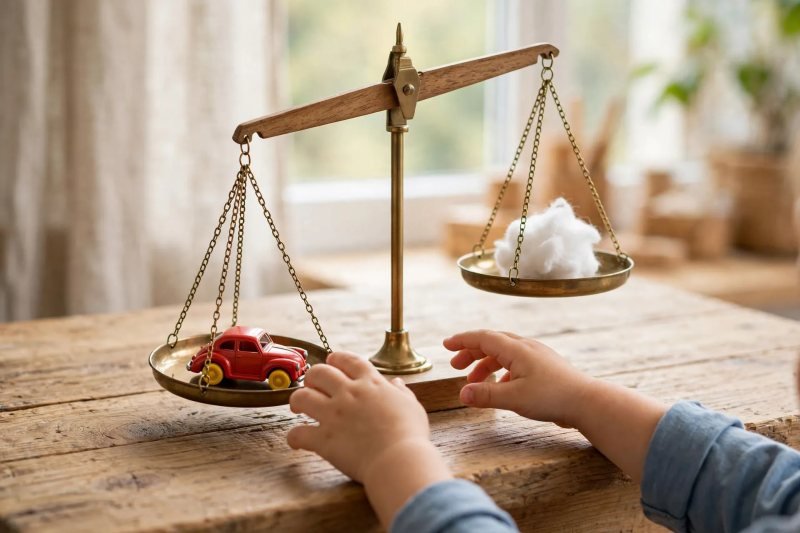
Which side goes down? (balance-scale comparisons) Introduce the balance scale with two objects that are obviously different — a block and a feather, a toy car and a cotton ball. Put one in each pan and watch together: "Which side went down? That one is heavier!" Then try trickier pairs: a big empty box versus a small full one, two toys of similar size. Let your child guess before each weigh-in and cheer the correct guesses. End with their own toys: "Find something heavier than the teddy."
-
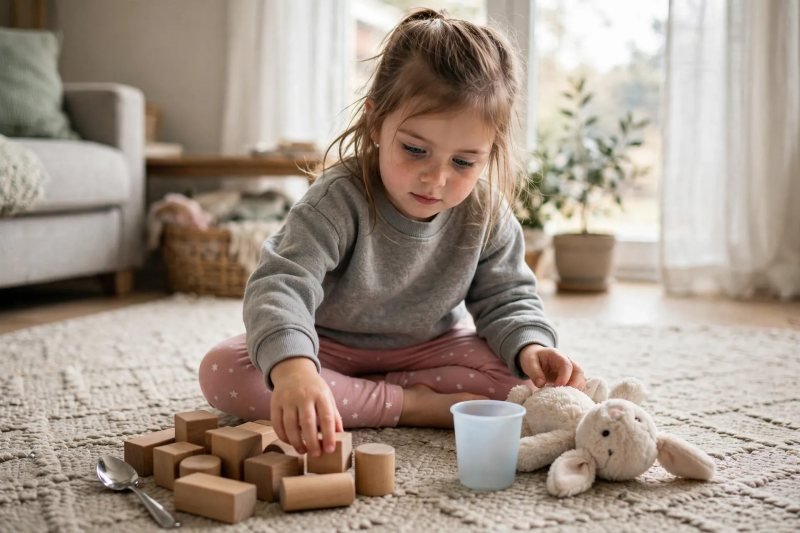
Sort the toy box into heavy and light. Dump a basket of mixed toys and household objects on the floor and make two piles: HEAVY and LIGHT. A wooden block, a stuffed bunny, a metal spoon, a plastic cup, a small book, a ball. Encourage your child to pick each item up first — "Give it a heft!" — before deciding. Disagreements are the best part: is the big teddy heavy, or just big? Size and weight are not the same thing, and discovering that is a genuine "aha" moment.
-
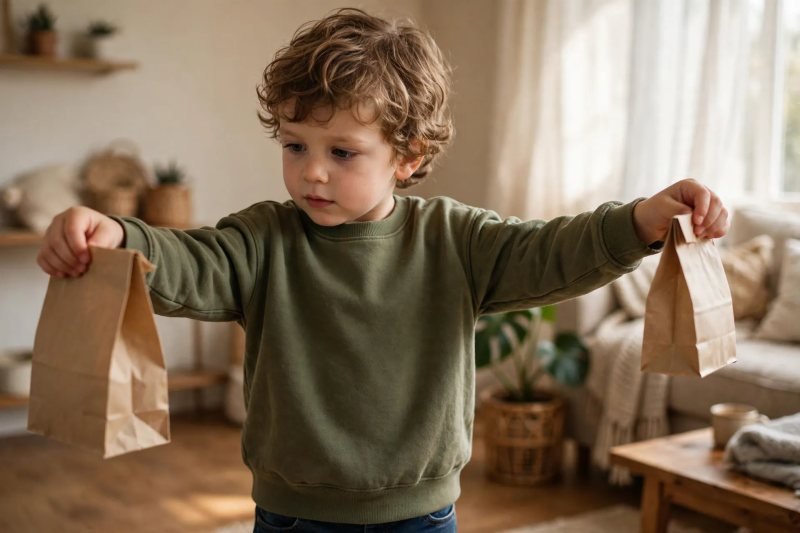
The mystery hefting bags. Hand your child two closed bags (or let them close their eyes). One bag is light, one is heavy — but they look identical. Let them lift one in each hand: "Which one is heavier? How can you tell?" Switch hands, try again. Then reveal the contents and talk about it: the heavy bag had rice, the light one had scarves. For a twist, fill two new bags with different amounts of the same thing and ask them to order three bags from lightest to heaviest. Hefting builds the muscle sense of weight that no worksheet can teach.
-
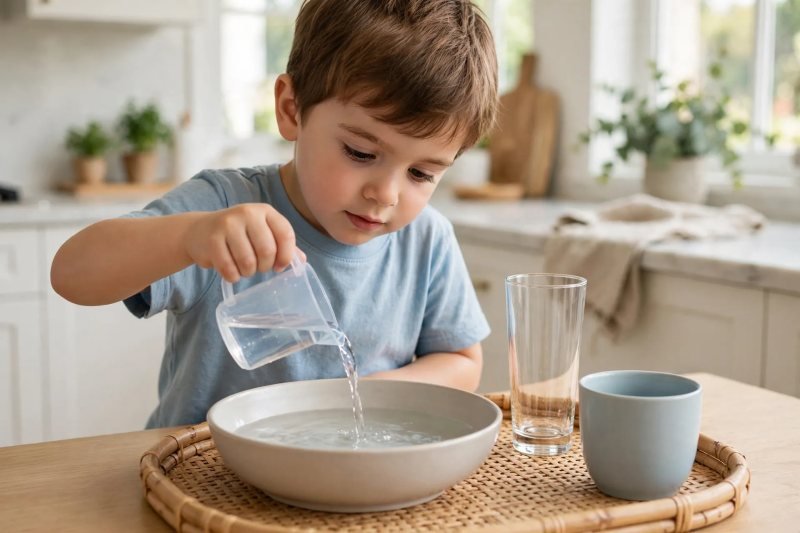
Pour between containers — which holds more? At the pouring station, give your child a jug of water and three very different containers: a tall thin glass, a short wide bowl, and a medium cup. Ask them to predict: "Which one do you think holds the most water?" Then let them test it by filling one container and pouring it into the others. The tall-thin versus short-wide comparison is famously tricky for preschoolers (tall "looks" bigger), so the surprise when the wide bowl holds more is a real learning moment. Spills are part of the experiment — that is what the tray is for.
-
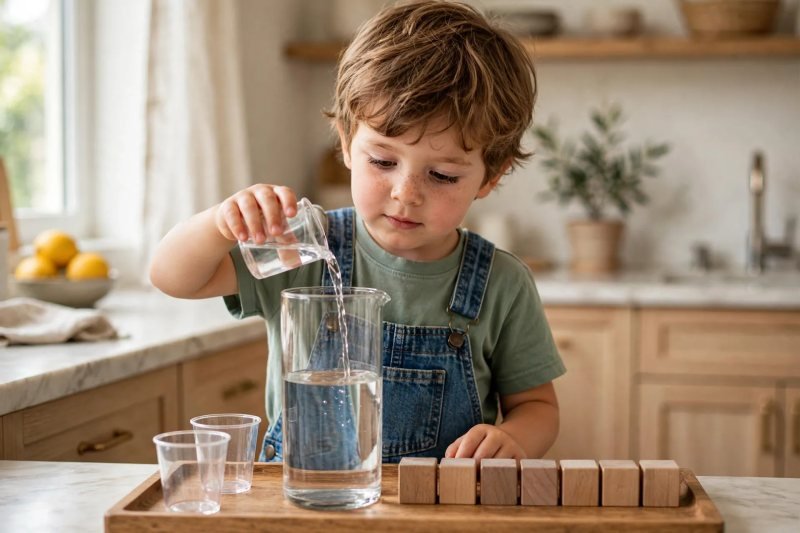
How many cups fill the jug? Set the clear jug in the tray and hand your child a small cup. "Let's find out how many cups of water fill this jug!" For more cup-counting, try our counting to 10 activities. Count together as they pour: one, two, three… Make a mark on a piece of paper each time, or line up a block per cup as a visual tally. When the jug is full, count the blocks: "It took seven cups!" Try again with a bigger cup — fewer scoops needed. You have just taught the relationship between unit size and number of units, which is genuinely the foundation of all measurement.
-
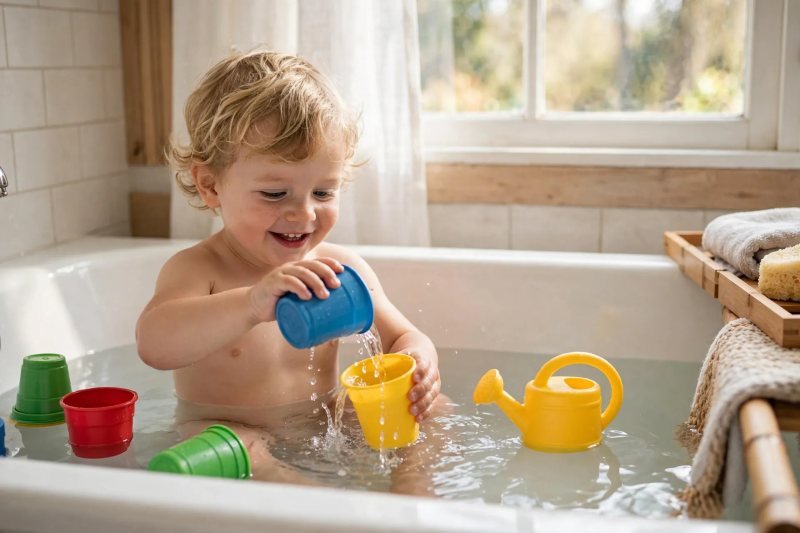
Bath-time capacity laboratory. Take the containers to the tub. Give your child cups, funnels, a small watering can, and squeeze bottles, and let them pour freely — with one job: "Find the container that holds the most." They will fill, pour, compare, and re-test on their own loop for ages. Add food coloring to one cup of water (a drop or two) so they can watch colors mix and levels rise. Ask comparison questions as they play: "Can you fill the big cup using only the little one? How many little cups did it take?" Bath time is capacity's natural habitat.
-
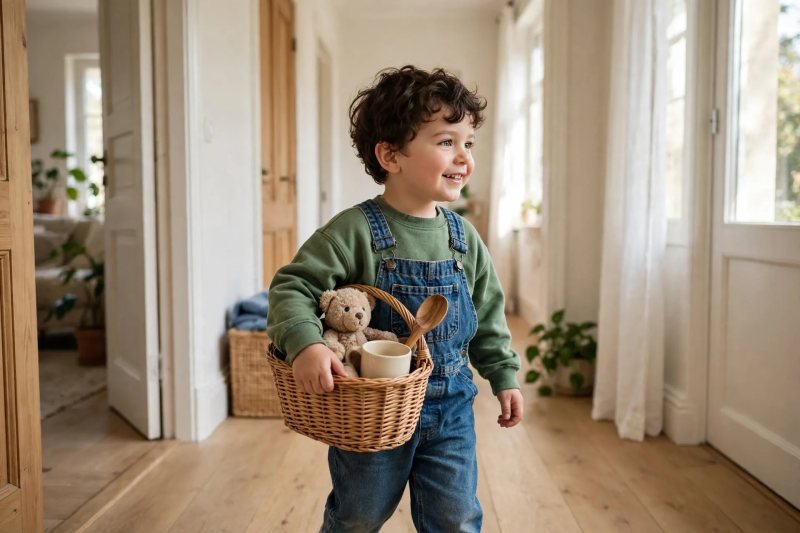
The great measurement scavenger hunt. Grab a basket and send your child around the house with three missions: find something LONGER than your arm; find something HEAVIER than the block in the basket; and find a container that holds MORE than this cup. Let them test each find on the spot — lay it against their arm, heft it against the block, pour water or dry rice to compare. Finish with a "measurement museum": line up everything they found and let them give you a guided tour, explaining each comparison. It is the perfect victory lap through all three strands.


Make it easier
Start with only one strand per day (length on Monday, weight on Wednesday, capacity on Friday) so the vocabulary does not blur together. Use bigger, more obvious contrasts at first: a very heavy versus a very light object, a very tall versus a very short container. Count alongside your child for every activity — keep the numbers small (under 10) and let them do the pouring while you do the tallying. For the balance scale, begin with pairs where the answer is obvious before moving to tricky ones.
Make it harder
Ask for ordering instead of just comparing: line up four containers from "holds least" to "holds most," or three bags from lightest to heaviest. Introduce estimation first: "Before we pour, how many cups do you THINK will fill the jug?" Record guesses and compare. Combine strands: "Find something that is both longer than the spoon AND heavier than the apple." Let your child make their own unit: "Let's measure the hallway in shoe-lengths" using one of their shoes, heel to toe, like the hand spans.
Other ways to play it
- Outdoor version: Measure the garden in giant steps, compare the weight of rocks and pinecones, and use buckets and watering cans for capacity in the yard or at a water table.
- Cooking version: Let your child measure rice or flour with cups and spoons for a real recipe — the most delicious capacity lesson there is.
- Sibling version: Each child measures the same object with their own hand spans and compares results — a gentle, memorable lesson that unit size changes the number.
- Quiet version: Line up stuffed animals from shortest to tallest, or nesting cups from smallest to biggest, for a calm sorting activity before bed.
How it changes by age
- Three-year-olds are mostly exploring the vocabulary: longer, shorter, heavier, lighter, more, less, full, empty. Keep comparisons dramatic and let them handle everything — the learning is in the lifting, pouring, and lining up. Four-year-olds can go further: consistent units (all hand spans the same, blocks touching end to end), counting the units, simple estimating, and ordering three or more objects. If your four-year-old keeps asking "how many," lean into steps 2, 3, and 8 — the counting is the bridge to real measuring.
What they're learning
These measurement activities for preschoolers build the three strands of early measurement — length, weight, and capacity — through non-standard units, which is exactly how early childhood standards introduce the concept. Along the way children practice comparing and ordering, one-to-one counting, estimating and checking predictions, and the key insight that the size of the unit changes the number (more small steps, fewer big ones). The vocabulary alone — longer, heavier, holds more, full, empty — feeds directly into kindergarten math, and the hands-on pouring, hefting, and lining up strengthen fine-motor control — see our fine-motor activities for preschoolers — and scientific thinking: predict, test, observe.
Clearing up
Pour leftover water into the sink or onto plants, and stack the containers back where they live. Towel-dry the tray and the floor around the pouring station. Return blocks, toys, and bags to their basket or shelf — sorting them back is one last tidy-up comparison game ("heavier toys on the bottom shelf!"). Hang the balance scale up out of reach if younger siblings are around.
Questions parents ask
At what age can preschoolers start learning measurement?
What are non-standard units of measurement for preschoolers?
How do you teach capacity to a 3-year-old?
How do you teach heavy and light to preschoolers?
Should preschoolers use rulers and scales?
What is the difference between weight and size for kids?

save it for later
Pin this for the next rainy afternoon
Keep it on a board so it is there when you need it, rather than when you happened to find it.
Save to Pinterest