


30 Hands-On Letter Recognition Ideas in 10 Steps for Preschoolers
Thirty playful activities for letter recognition for preschoolers: your child learns to identify and name letters through water play, letter hunts, playdough, songs and sorting — no worksheets needed. Thirty playful ideas in 10 guided steps: water play, name games, sensory drawing, letter hunts, sorting, playdough and movement — no worksheets.
Thirty playful activities for letter recognition for preschoolers, organized as one guided session: water play, name games, sensory drawing, letter hunts, sorting, playdough, pretend mail and book spotting — all built around naming and identifying letters, no worksheets.

The short version
- 30 hands-on ideas in 10 guided teaching steps, each with what to set up, what to say, and what your child does.
- Focused on letter recognition (identifying and naming letters) — the step that comes before letter sounds.
- Age flags for younger 3s vs older 4s, plus easier, harder and outdoor variations.
- Everyday household items; most steps need 0–5 minutes of prep.
- Age
- Ages 3–4
- Prep
- 5 min
- Mess
- Low
- Difficulty
- Easy
- Where
- Indoor
Why kids love this
Letters are secret codes, and cracking them feels like magic. Every idea lets your child touch, splash, hunt and squish letters — the fastest way a 3- or 4-year-old learns. Note: letter recognition (spotting and naming a letter) is its own skill, separate from letter sounds. Children usually learn the shapes first.
What you'll need
- Magnetic letters (uppercase set)
- large foam letters
- a shallow tray of water
- a small sieve
- flour or rice in a baking tray
- masking tape
- playdough
- picture books with big print
- letter cards
- a shoebox
- pegs
- string
Before you start
Five minutes: float magnetic letters in a bowl of water, pour a flour tray, tape three big letter shapes to the floor. The rest comes out as the steps call for it.
How to do it
-
Work the steps in order — they move from touching letters to hunting them to playing with them, the way a good learning session flows. Each step tells you what to set up, what to say, and what your child does.

-
Warming up with letters (steps 1–2)

-
1. Go fishing for letters in a water tray. Float magnetic letters in a shallow bowl of water with a small sieve beside it. Scoop one out first, hold it up and say its name — "This is B! Big B!" — then hand over the sieve: "Now you fish for one!" Name each catch together. Older 4s can try naming before you do; younger 3s just catch and listen. When the splashing beats the naming, dry hands and move on.

-
- Press foam letters onto the wet bath wall — your child names each before it slides down (bath wall letters).

-
- Call out a letter name; your child taps the matching floater with a fly swatter (letter splash tag).
-
2. Build their name, letter by letter. Write your child's name large on card, cut it into one square per letter and mix them up. Tape a masking-tape "train track" on the floor: "Here come the carriages of your name!" Their job: stick the squares back in order, naming each as it joins — "S… A… M — that's ME!" Celebrate every arrival. Older 4s try ordering before you name them; younger 3s do it hand over hand with you.

-
- Hide their name letters around the room to find (name-letter hunt).
-
- Peg one letter square to their shirt each morning; spot that letter on packets and toys all day (letter-of-the-day badge).
-
Letters you can feel (steps 3–4)

-
3. Draw letters big in a flour tray. Spread flour or rice in a baking tray. Draw a big letter with one finger while naming it — "Watch — big curves — O!" — smooth the tray and hand the "pen" over: "Your turn — draw M!" Guide their hand if needed, naming the shape together. Older 4s draw a named letter from memory; younger 3s trace over yours first.
-
- Press big foam letters into rolled-out playdough, naming each pop-out (playdough press).
-
- Finger-paint letters in shaving cream on a tray, chanting the names together (shaving-cream letters).
-
4. Stomp the letters on the floor. Tape three big letter shapes to the floor, starting with half-known ones. Stand at the far end: "Run and stomp on B!" They dash over, stomp and shout: "B!" Big movement plus naming wires letters in through a different channel. Swap roles once they're confident — teaching you cements it. Older 4s name before they stomp; younger 3s stomp after you name.
-
- Jump from one taped letter to the next, naming each landing (letter hopscotch).
-
- Hide foam letters around one room; name each during the "rescue" back to base (letter rescue run).
-
Letters that match and sort (steps 5–6)
-
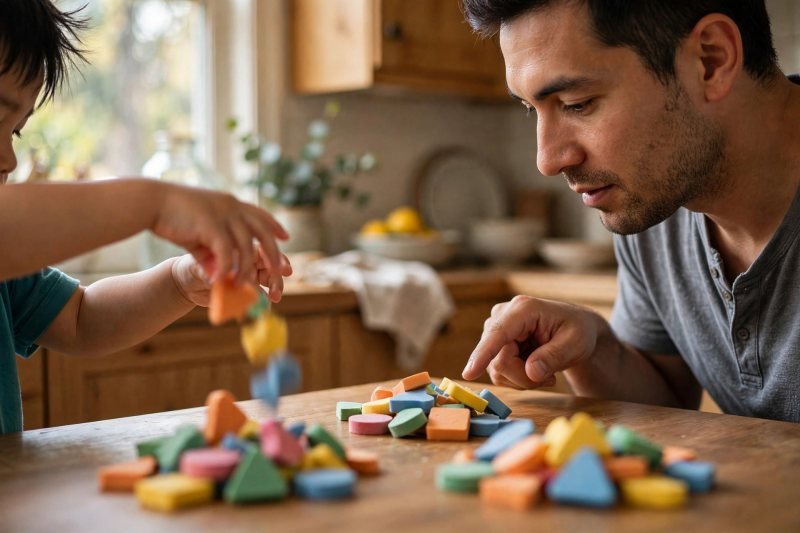
5. Sort letters into matching piles. Dump mixed magnetic letters on the table — two or three different letters to start. Hold one up: "All the A's live here, all the B's live there — where does THIS one go?" Your child studies each shape, drops it in its pile and names it: "A! In the A pile!" Add a new letter once two feel easy. Older 4s sort uppercase and lowercase together; younger 3s sort two very different shapes (O and T).
-
- Flip two letter cards at a time to find pairs, naming each turn (letter pairs memory).
-
- Match magnetic letters to twins drawn on a big sheet (letter match-up).
-
6. Go on a letter hunt around the house. Pick one "letter of the hunt" — start with a letter from their name. Hand over a small basket: "Find the letter M hiding in this room!" Letters hide on book spines, cereal boxes, toy packaging, fridge magnets. Name every find, and count the haul together at the end. Older 4s hunt two letters at once; younger 3s hunt one small spot, like the bookshelf.
-
- Tape one letter card to five objects; race to name-tap each (letter sticker dash).
-
- Spot letters together on a walk — "STOP sign — S! S!" (street-sign spotting).
-
Letters at play (steps 7–8)
-
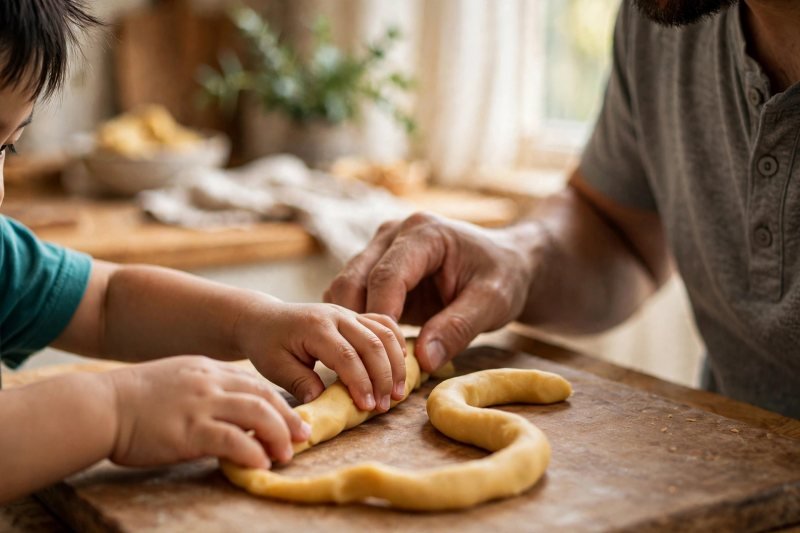
7. Squish letters out of playdough. Hand your child a ball of playdough and call out a letter's name: "Make me a big B!" Roll it into a snake and bend it into the shape, naming the whole way — "One tall line, two bumps — B!" Then squash it flat and try another. Older 4s build a named letter alone; younger 3s roll while you bend.
-
- Press letter cookie cutters into rolled dough, naming each one (letter cookie cutters).
-
- Hide foam letters in a playdough ball; dig one out and name the "treasure" (letter treasure dig).
-
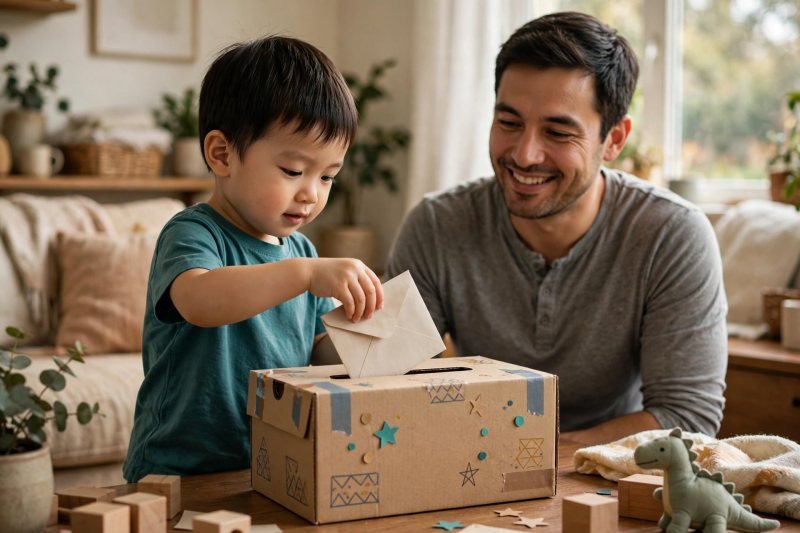
8. Play the post office with letter mail. Cut a slot in a shoebox "postbox." Hand your child folded-paper "letters," each with one letter card inside. Announce the name: "This one is for… T!" They march it over and post it, naming it on the way down — "T! Posted!" Older 4s can be postmaster and call out names for you to post; younger 3s post one at a time with you.
-
- Peg letter cards on a washing line; your child "delivers" the one you call (washing-line letters).
-
- Hide letter cards in envelopes around the room, naming each find (mailbox treasure hunt).
-
Letters in stories and songs (steps 9–10)
-
9. Spot letters in books and songs together. Open a favorite picture book: "I spy the letter O on this page — can you find another O?" Name every find. Then sing the alphabet song slowly, pointing at letter cards as each name is sung. Older 4s find a named letter alone; younger 3s point while you name. Try these [simple alphabet activities](https://brightplaydays.com/activities/alphabet-activities-for-toddlers/) for more dedicated letter play together.
-
- Read an alphabet book, naming each page's star letter before turning (alphabet book parade).
-
- Invent a silly chant where every line starts with their favorite letter's name (letter-name chant).
-
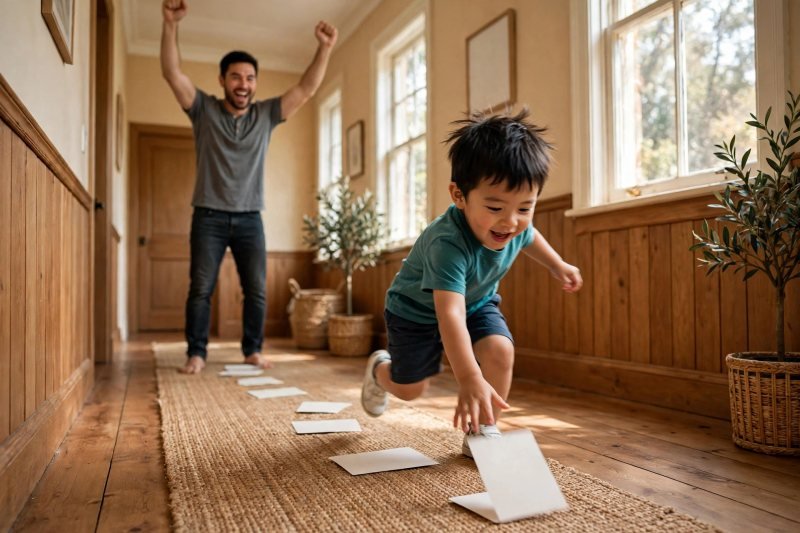
10. Run the letter review relay. Line up four letter cards along the hallway, face-down. Stand at one end together: "Run, flip ONE card, shout its name, run back!" Sprint, flip, shout "S!", sprint back — letters named under excitement stick best. End with the victory lap: hold up each letter and let them name them all, applauding every one. Stop while they beg for more. For sounds next, [these playful phonics activities](https://brightplaydays.com/activities/phonics-activities-for-preschoolers/) pick up where this session ends.
-
- Toss a beanbag onto taped floor letters, naming wherever it lands (beanbag letter toss).
-
- Play letter bingo, dabbing each named letter as you call it (shout-it letter bingo).


Make it easier
Start with just their name letters, or very different shapes (O, T, X). Name every letter yourself alongside them, in ten-minute sessions.
Make it harder
Add more letters, or uppercase-to-lowercase matching. Ask them to name a letter before you confirm it. For toddlers who already name letters, introduce the letter's sound as a bonus.
Other ways to play it
- Outdoor version: take the hunt, stomp and hopscotch outside with chalk-drawn letters.
- Rainy-day rotation: five steps, eight minutes each, rotating like stations.
- Sibling mode: older 4s call out letters and "check" younger 3s — teaching cements their own learning.
- Bath-time bonus: foam letters on the wall every bath = free daily practice.
How it changes by age
- Younger 3s: steps 1, 3, 4, 7 first, with you naming letters, in ten-minute sessions.
- Older 4s: add steps 5, 6, 8, 9, 10 and invite them to name each letter first.
- See these [preschool learning activities at home](https://brightplaydays.com/activities/preschool-learning-activities-at-home/) if unsure where to start.
What they're learning
Letter recognition — identifying and naming letters by shape (steps 1–10), distinct from letter sounds. Plus visual discrimination (5, 6), fine motor control (3, 7), gross motor skills (4, 10), early print awareness (6, 9), and memory and turn-taking (5, 8, 10).
Clearing up
Water tray: tip it in the sink, letters back in their tub — two minutes. Flour tray: funnel flour back into a jar on a wipeable mat. Taped letters peel off and store in an envelope. Make tidy-up a game: "How fast can the letters jump back in the box?"
Questions parents ask
What are the best activities for letter recognition for preschoolers?
How do I teach my 3-year-old to recognize letters?
What's the difference between letter recognition and letter sounds?
How many letters should a 4-year-old recognize?
How long should letter recognition activities take?
You don't need all 30 — eight or ten ideas a week is plenty. Repetition is the point: naming the same letters in new games is what makes them stick.


