


What Is Eczema in Kids? Signs Parents Should Know
Eczema in kids is a common condition where patches of skin become dry, itchy, and inflamed. This general-information guide explains the signs parents can look for, common triggers, and the clear warning signs that mean it is time to see a doctor.
Eczema in kids is a common, long-term skin condition where the skin barrier holds moisture poorly, so patches become dry, itchy, and inflamed. In toddlers, look for dry, rough, red or discolored patches in the elbow and knee creases, on cheeks, wrists, and neck, plus scratching and disturbed sleep. Only a doctor can diagnose it — see yours promptly for spreading, oozing, or cracked skin.

The short version
- Eczema is a common skin-barrier condition: skin loses moisture and reacts easily, causing dry, itchy, inflamed patches. It is not contagious and not caused by poor hygiene.
- Typical toddler spots: elbow and knee creases, cheeks, wrists, ankles, and neck folds; in babies, cheeks and scalp are most common.
- Common triggers include fragrance, harsh soaps, heat and sweating, and rough fabrics like wool.
- Observe and note: date, spots, look and feel, and what changed — dated notes make the pediatrician visit far more useful.
- Gentle first responses: short lukewarm baths, fragrance-free cleanser and moisturizer, soft cotton clothing.
- See a doctor promptly for spreading rash, oozing or yellow crusts, cracked or bleeding skin, sleep disruption, or no improvement with gentle care.
- Age
- Ages 2–3
- Prep
- 5 min
- Play time
- 10 min
- Mess
- None
- Difficulty
- Easy
- Where
- Indoor
Why kids love this
Kids love being looked after gently, and this guide is built around calm, unhurried moments — a cozy skin check after the bath, soft cream, soft cotton clothes, and a parent who notices without fussing or worrying aloud. When skin checks feel like cuddle time instead of inspections, toddlers relax, cooperate, and show you exactly what you need to see.
What you'll need
- Good natural light (near a window is ideal)
- A plain notebook or notes app for tracking what you observe
- A gentle, fragrance-free moisturizer for after baths
- Soft cotton clothing for after the check
- Your phone or a pen for noting dates, spots, and possible triggers
- A short list of questions to bring to your pediatrician
Before you start
1. Read this guide as general information only — it cannot diagnose your child; only your pediatrician or a dermatologist can do that. 2. Choose a calm moment, ideally right after a bath, when your toddler is relaxed and skin is easy to see. 3. Have your notebook ready so you can jot down where patches are, how they look, and what changed recently. 4. Keep the tone light: this is a look-and-notice routine, never a worried examination.
How to do it
-
Pick a calm moment in good light. Sit with your toddler near a window or in a bright room after a bath, and say: "Let's have a cozy look at your skin, like we do after bath time." Natural light shows color and dryness honestly, without the yellow cast of bathroom bulbs; a relaxed child in a familiar moment gives you a true picture, and this calm setup hands into knowing where to look first.

-
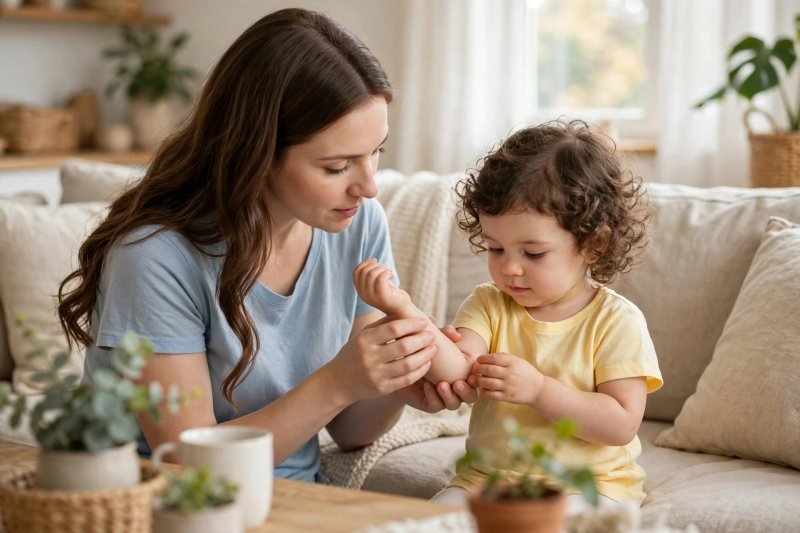
Look at the common spots for this age. Gently look over the places eczema most often shows up in toddlers — the creases inside the elbows; the backs of the knees; the cheeks and chin; the wrists, ankles, and neck folds — saying: "Let's check your elbows and knees, our usual spots." In babies, patches often appear on the cheeks and scalp first, while in toddlers the elbow and knee creases become the classic places; you are simply learning your child's usual map, which makes changes easy to spot next time.
-
Notice how the patches look and feel. Look for the typical signs — dry, rough-feeling patches; red or inflamed-looking areas; skin that looks slightly darker, lighter, or scalier than the skin around it — and run your fingertip lightly beside, not on, a patch while saying: "This bit feels dry, like sandpaper." You are describing, not diagnosing: eczema patches vary a lot from child to child, and your job is an honest description your pediatrician can use, which is why the next step watches what your child does, not just what you see.

-
Watch for itch and scratching cues. Notice whether your toddler scratches, rubs, or fusses at particular spots, especially during or after baths, when getting dressed, or at night, and say: "Show me where it itches, love." Itching is often the sign that matters most — eczema is sometimes called "the itch that rashes," because scratching can make patches angrier; noting when the itch peaks (after baths, in heat, at bedtime) gives your pediatrician real clues, and it leads naturally into tracking what touches the skin.

-
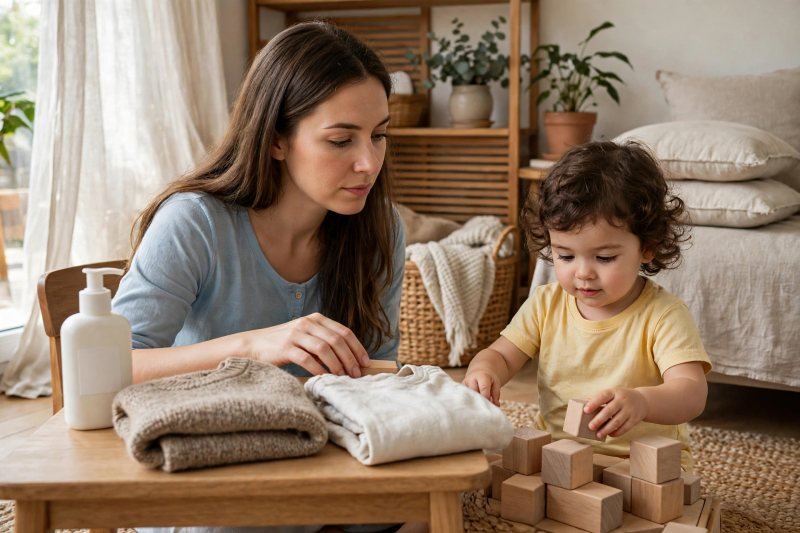
Think through what touches the skin. Run a mental list of recent contacts — new or scented soaps and laundry products; a new outfit, especially wool or scratchy fabrics; a hot, sweaty day; a new food or a dusty play space — and say to yourself: "What was different this week?" Common triggers for many children include fragrance, harsh soaps, heat and sweating, and rough fabrics like wool; you are not hunting for a single culprit, just building the honest background notes the next step records.
-
Write down what you observe. Open your notebook and record four things — the date; where the patches are; how they look and feel; what changed recently (products, fabrics, weather, illness) — while your toddler plays nearby, saying: "I'm writing our skin notes so we remember." Simple dated notes beat memory every time: patterns that are invisible day to day jump out over two or three weeks, and these notes become the most useful thing you bring to the doctor, especially once you have paired them with gentle first responses at home.

-
Respond gently at home first. For everyday care while you observe, keep things simple and kind — short, lukewarm baths; a gentle, fragrance-free cleanser only where needed; no scrubbing, no scented bubble bath, no adult products — and say: "Warm, not hot, and nice and quick." Gentle basics support the skin barrier without irritating it further; the mild daily habits in this simple kids skincare routine are a good baseline for the whole family, and they set up the moisturizing step that matters most.

-
Moisturize right after the bath. Within a few minutes of the bath, while the skin is still slightly damp, smooth a fragrance-free cream or ointment over the dry areas with clean hands, saying: "Cream time — this helps your skin hold its water." Moisturizer on damp skin helps lock water in, which is the heart of gentle eczema-friendly care; use enough to leave the skin feeling soft, not sticky, and note in your log how the skin looks the next morning — that response is useful information, not a verdict.

-
Dress for comfort in soft cotton. Choose soft, smooth cotton clothing over patches, skip wool and scratchy seams against irritated areas, and wash new clothes before wearing, saying: "Soft clothes today, so your skin can rest." Fabric friction and heat are everyday triggers you can actually control; loose cotton layers keep skin cooler and calmer through play and sleep, and a comfortable child scratches less — which protects the patches while you prepare for professional advice.

-
Prepare for the pediatrician visit. Gather your notes, list your questions, and book the appointment — sooner if you see any warning signs below — saying: "We're going to tell the doctor all about your skin, and they'll help us." Bring the dates, spots, triggers you noticed, and what gentle care you have tried; ask what type of skin condition it is, what care routine they recommend, and what should prompt a faster return visit. Only a doctor who examines your child can diagnose eczema or rule out other causes — and a parent who arrives with calm, dated notes makes that visit genuinely more helpful.



Make it easier
Fold the skin check into the after-bath routine you already have — no separate "examination" needed. A bedtime routine chart can carry the skin-check step so it happens without a separate examination. Use the same four note headings every time: date, spots, look and feel, what changed. Take a dated photo of a patch (for your pediatrician, not social media) if describing it feels hard — change over time is what doctors find most useful.
Make it harder
Track possible triggers for two weeks — products, fabrics, heat, foods, illness — to look for patterns before your visit. Note sleep quality on itchy nights; sleep disruption is important information for your pediatrician. Prepare your toddler for the visit with simple role play: a toy stethoscope, a pretend skin check on a doll — the same gentle first-time preparation that helps with a toddler first haircut guide.
Other ways to play it
- Baby signs (under 1 year): patches most often appear on the cheeks and scalp, sometimes with weepy or crusty areas; babies cannot tell you about itch, so rubbing against bedding and disturbed sleep are common clues — always check baby rashes with your pediatrician promptly.
- Older toddler and preschool signs: creases dominate — inside elbows, behind knees, wrists, ankles, neck — and patches may look thicker or more leathery where scratching is frequent.
- Skin-tone note: inflammation does not look the same on every child — on darker skin, patches may look brown, purple, or gray rather than red, and dryness can look ashy; judge by texture, itch, and change from your child's normal skin, not by color alone.
How it changes by age
- Ages 2–3: parents do all observing and noting; toddlers help by pointing to itchy spots and choosing their cotton outfit. Keep checks brief, warm, and matter-of-fact. More ideas for toddlers in the age hub cover the same calm, routine-first approach. Eczema is common in young children — health organizations describe it as one of the most common skin conditions in childhood — so you are far from alone in watching a patch and wondering, and wondering is exactly what pediatricians are for.
- What eczema is, in plain language: eczema is a long-term skin condition — atopic dermatitis is the most common type in children — where the skin barrier does not hold moisture well and reacts more easily to everyday irritants. Skin becomes dry and itchy, and patches flare and settle over time. It is not contagious, it is not caused by poor hygiene, and it is not something parents cause by doing something wrong.
- SEE A DOCTOR promptly if you notice: a rash that is spreading quickly; oozing, yellow crusts, blisters, or other signs of infection; cracked or bleeding skin; swelling or pain; itching that regularly disrupts sleep; or patches that do not improve with gentle care — or any time you are worried. These signs need an in-person examination, not home guesswork.
What they're learning
Body awareness: naming itchy, dry, and sore spots builds the vocabulary toddlers need to tell you how they feel. Trust and calm: gentle, regular care teaches your child that skin discomfort gets a kind, unhurried response. Early health habits: moisturizing after baths and choosing soft clothes become normal self-care routines — everyday life skills toddlers build one calm routine at a time. Communication: pointing, showing, and telling where it itches are real health-communication skills.
Clearing up
There is almost nothing to clear: put the notebook back where bath things live, cap the moisturizer, and toss the day's cotton clothes into the laundry as usual. The one habit worth keeping tidy is the log itself — two lines after each check keeps it useful without becoming a chore. If you took a dated photo for your pediatrician, file it with the notes by date so the story of the patch is easy to show at the visit.
Questions parents ask
What is eczema in kids?
What are the first signs of eczema in toddlers?
What triggers eczema flare-ups in kids?
Can eczema in kids be cured?
When should I take my child to the doctor for eczema?

save it for later
Pin this for the next rainy afternoon
Keep it on a board so it is there when you need it, rather than when you happened to find it.
Save to Pinterest


