


Counting Activities for Toddlers: 25 Easy Ways to Start at Home
Twenty-five easy counting activities for toddlers that turn everyday moments into number play. Count stairs, snacks, splashes and socks — no worksheets, no flashcards, no pressure. Just simple, joyful ways to build early maths skills at home from age 2. Start counting today: twenty-five simple, no-prep counting activities for ages 2–3 — woven into meals, baths, walks and playtime.
Most toddlers start enjoying counting games from around 18 months and begin rote-counting near age 2. Start by counting everyday things out loud — stairs, snacks, splashes — touching each object. Invite them to join without pressure, repeat favourite games daily, and celebrate effort rather than correct the sequence.

The short version
- Count everyday things out loud — stairs, snacks, splashes, socks.
- Touch each object as you count; it builds one-to-one matching.
- Let your toddler join in without pressure — watching counts too.
- Repeat the same game daily; routine is what makes it stick.
- Celebrate effort, never correct the sequence mid-flow.
- No worksheets or flashcards needed — real objects teach best.
- Age
- Ages 1–3
- Prep
- 5 min
- Play time
- 10 min
- Mess
- Low
- Difficulty
- Easy
- Where
- Both
Why kids love this
Toddlers love these counting games because they never feel like learning — just fun with you. The rhythm of counting out loud is catchy, and little ones adore the repetition: the same stairs, the same snacks, the same splashes, counted again and again. Joining in feels grown-up and exciting, and being cheered for reaching "three!" feels enormous. There is nothing to get right and nothing to get wrong — just joyful number play woven into everyday life.
What you'll need
- Everyday objects — stairs, snacks, socks, bath toys, fingers and toes
Before you start
None — pick an activity that fits what you're already doing.
How to do it
-
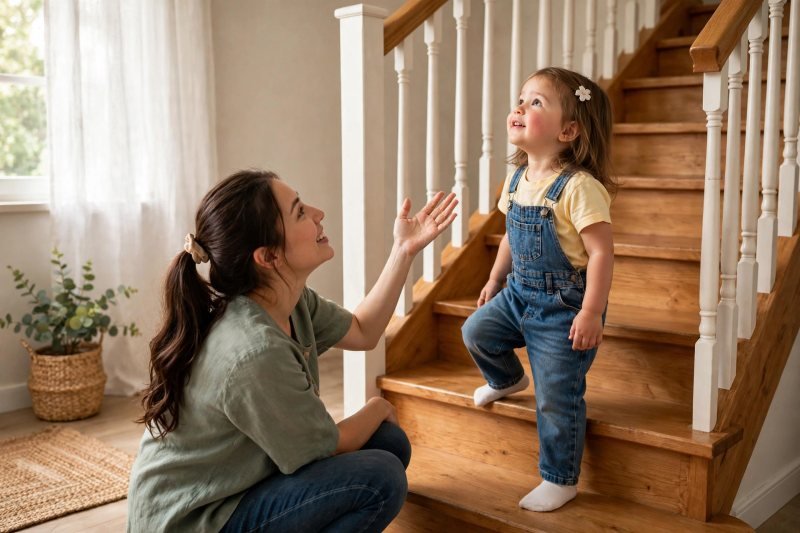
1. Pick one activity that fits what you're already doing — stairs if you're going up, snacks if it's snack time.
-
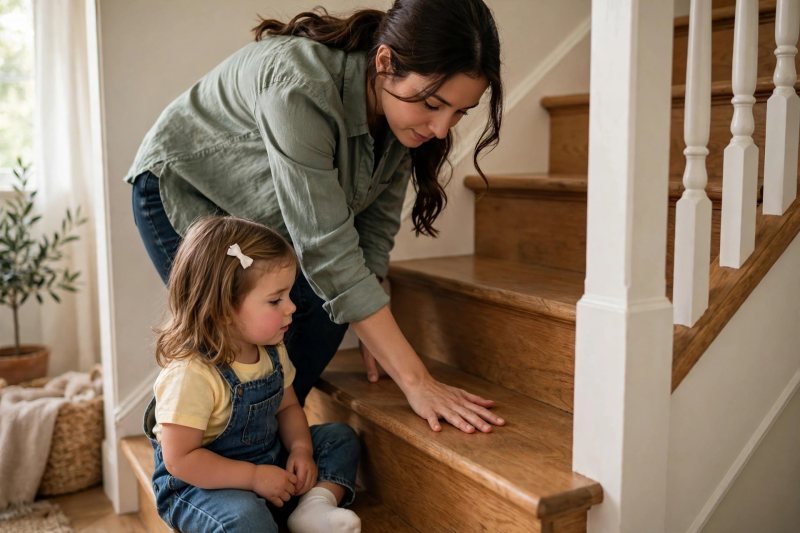
2. Count out loud slowly yourself, touching each object.
-
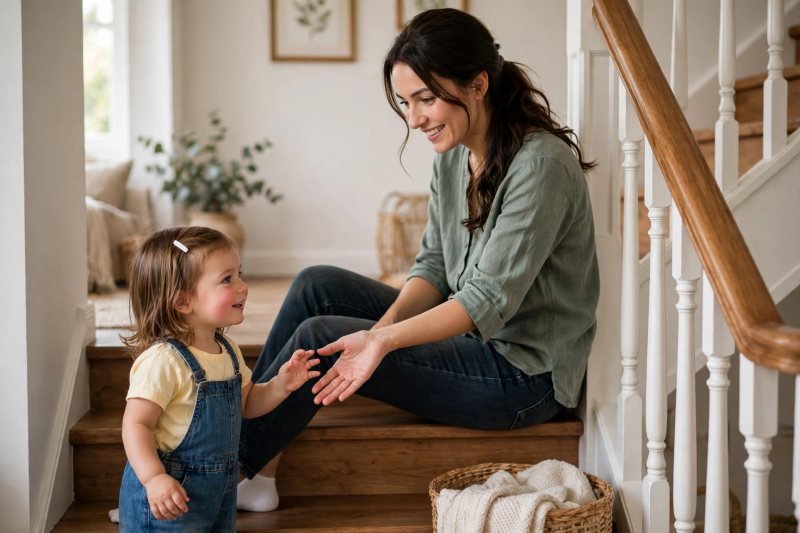
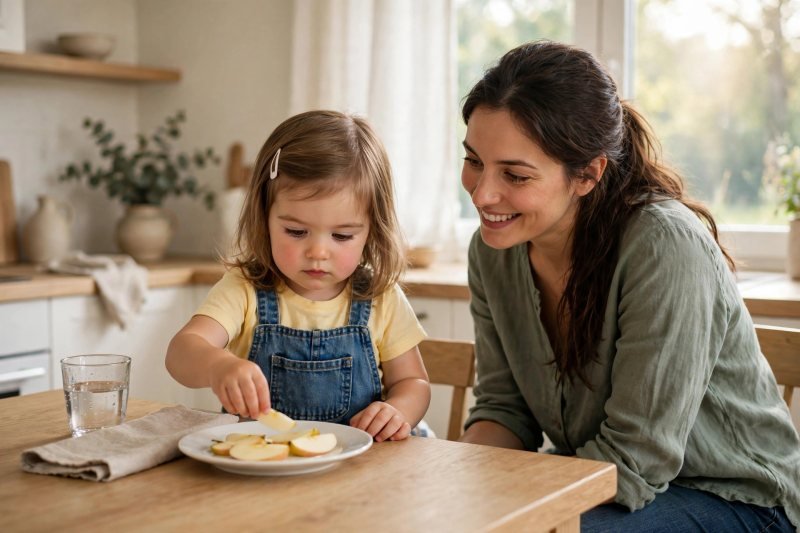
3. Invite your toddler to join: "can you count with me?" — no pressure if they just watch.
-
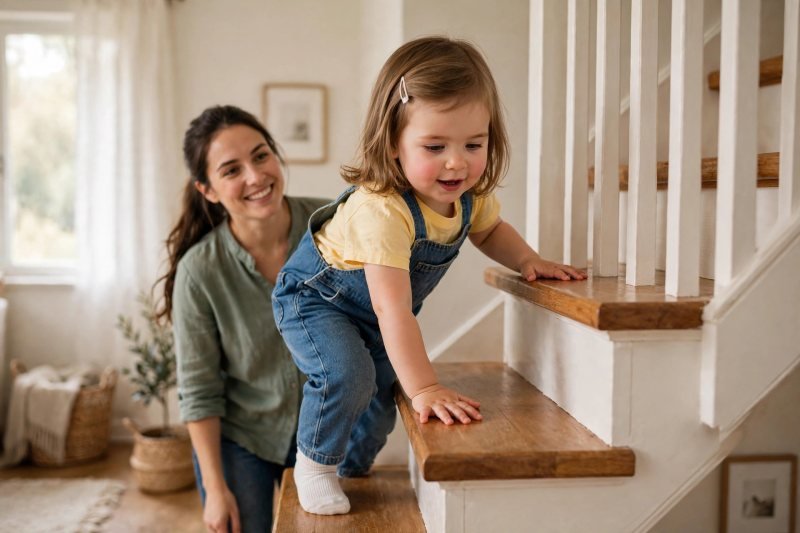
4. Repeat the same activity daily for a week; routine is what makes it stick.
-
5. Add a new activity when the old one gets easy or boring.
-
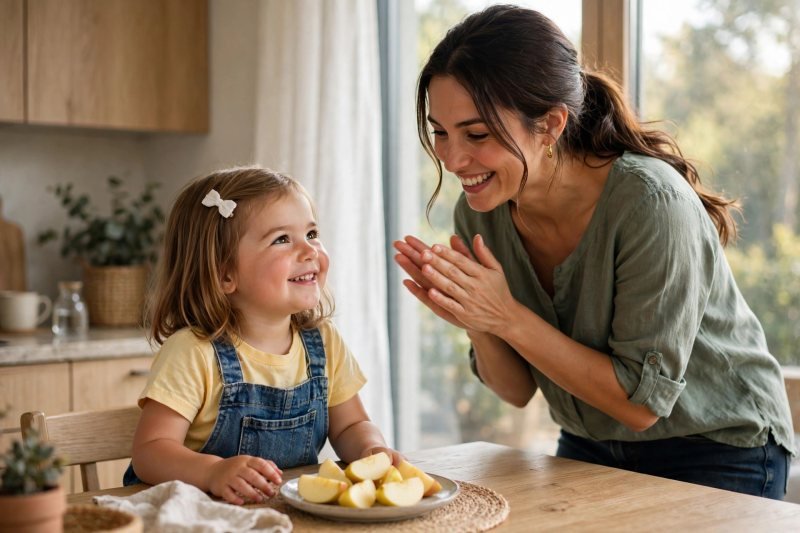
6. Celebrate effort and joining-in, never correct the sequence mid-flow.
-
## 25 easy counting activities
-
### At home
-
1. Count the stairs — one number per step, every time you go up or down.
-
2. Count snack pieces onto the plate: "one, two, three apple slices!"
-
3. Pair the socks and count them as they go into the drawer.
-
4. Count fingers and toes at changing time.
-
5. Stack blocks, counting each one as it goes on.
-
6. Line up toy cars and count the traffic jam.
-
7. Count the animals on each page of a picture book.
-
8. Clap, stomp or jump — count every one together.
-
9. Count cushions, chairs or teddies around the room.
-
### Outdoors
-
10. Count your steps on the way to the park.
-
11. Count birds on the fence or in the sky.
-
12. Count flowers in the garden or at the park.
-
13. Count the leaves you collect on a walk.
-
14. Count puddles — then splash in each one.
-
15. Count the dogs you spot from the pushchair.
-
16. Count buses, lorries or red cars from the window.
-
17. Count the pushes on the swing: "one more push!"
-
### Bath time and mealtimes
-
18. Count the splashes — big ones and little ones.
-
19. Count bath toys as they swim past.
-
20. Count cupfuls as you pour water from one cup to another.
-
21. Count peas, berries or pieces of pasta on the plate.
-
22. Count spoonfuls of yoghurt or porridge.
-
23. Count plates and cups as you lay the table together.
-
24. Count bubbles — and pop each one as you count.
-
25. Line up ducks or boats on the edge of the bath and count them.
-
## Do I need any special toys?
-
No. The whole point is that counting lives in ordinary moments — stairs, snacks, socks, bath toys, fingers and toes. Real objects teach better than any gadget, and you already own everything you need.
-
## What if my toddler just watches?
-
That is learning too. Most toddlers listen for weeks before they join in — they are soaking up the rhythm and the words. Keep counting out loud, keep inviting them ("can you count with me?"), and never apply pressure. Interest often arrives all at once.
-
## Should I correct the number order?
-
No — never mid-flow. "One, two, five, ten!" is completely normal at this age; your toddler is practising rhythm, not exact sequence. Celebrate the joining-in and the right order will sink in over time. For more number play ideas, see our [toddler learning activities at home](/activities/toddler-learning-activities-at-home/) and [preschool learning activities at home](/activities/preschool-learning-activities-at-home/).
-
## How do I fit counting into a busy day?
-
You don't add it — you notice it. Stairs, snacks, socks and splashes are already there. Pick one moment that repeats daily (stairs are perfect) and make it your counting ritual. One game, done daily for a week, beats ten games done once. Little hands get extra practice in our [fine motor activities for preschoolers](/activities/fine-motor-activities-for-preschoolers/).


Make it easier
You do all the counting while your toddler watches and listens — joining in comes later. Count to 3 only; tiny numbers feel like a win. Count big, easy-to-see objects like stairs or cushions. Slow right down — one number per touch, with a big pause between.
Make it harder
Count all the way to 10 and beyond. Count without touching — just pointing. Try counting backwards from 5 before a splash or a jump. Ask "how many?" and let them have a go at answering.
Other ways to play it
- Sing the numbers instead of saying them.
- Count in a silly voice — robot, mouse or giant.
- Whisper-count at bedtime: fingers, toes, teddies.
- Let a teddy do the counting and "get it wrong" for giggles.
How it changes by age
- At 18 months: just listens — you do the counting while they soak up the rhythm.
- At 2: joins in with rote counting — "one, two, five, ten!" is perfect.
- At 3: starts matching one number to one object; counts meaningfully to 5, then 10.
What they're learning
Early number sense: the rhythm of the count sequence, one-to-one correspondence (one number per object), and the idea that numbers tell us "how many". Along the way they practise listening, turn-taking and plenty of new words.
Clearing up
None — that is the beauty of it. Counting leaves no mess at all. (Bath-time splashes aside, and those were happening anyway.)
Questions parents ask
At what age should a toddler start counting?
My toddler skips numbers when counting. Is that normal?
Should I use flashcards to teach counting?
How high should my 2-year-old count?
What if my toddler isn't interested?
When move beyond 10?
The magic is repetition, not variety. One favourite counting game, repeated daily for a week, builds more number sense than a dozen one-off activities. Follow your toddler's lead — when they ask to count the stairs "again!", the learning is working.